

You're probably here because someone at a cars-and-coffee, swap meet, or local VW show mentioned a “volkswagen kombi 2024” and the conversation immediately went sideways. One person meant the electric ID. Buzz. Another meant the latest Transporter. Someone else was talking about a diecast release. And the old-school purist in the corner was hoping for an air-cooled miracle.
That mix-up is completely fair. In Australia, “Kombi” still means much more than one exact badge. It means road trips, surfboards, family memories, trade vans, camping weekends, and that unmistakable shape that makes people smile before they even know why.
So let's sort it out properly, in plain English, with an Aussie enthusiast's eye. The Kombi story in 2024 isn't about one single van. It's about how the badge's spirit now lives across modern Volkswagen vans, electric nostalgia, and the collectibles that keep the legend close at hand.
The Great Kombi Comeback or Just a Rumour Mill?
At any decent VW gathering, this topic comes up fast. Someone says, “Have you seen the new Kombi?” and suddenly half the group is picturing split screens, safari windows and two-tone paint, while the other half is thinking batteries, touchscreens and LED lights.
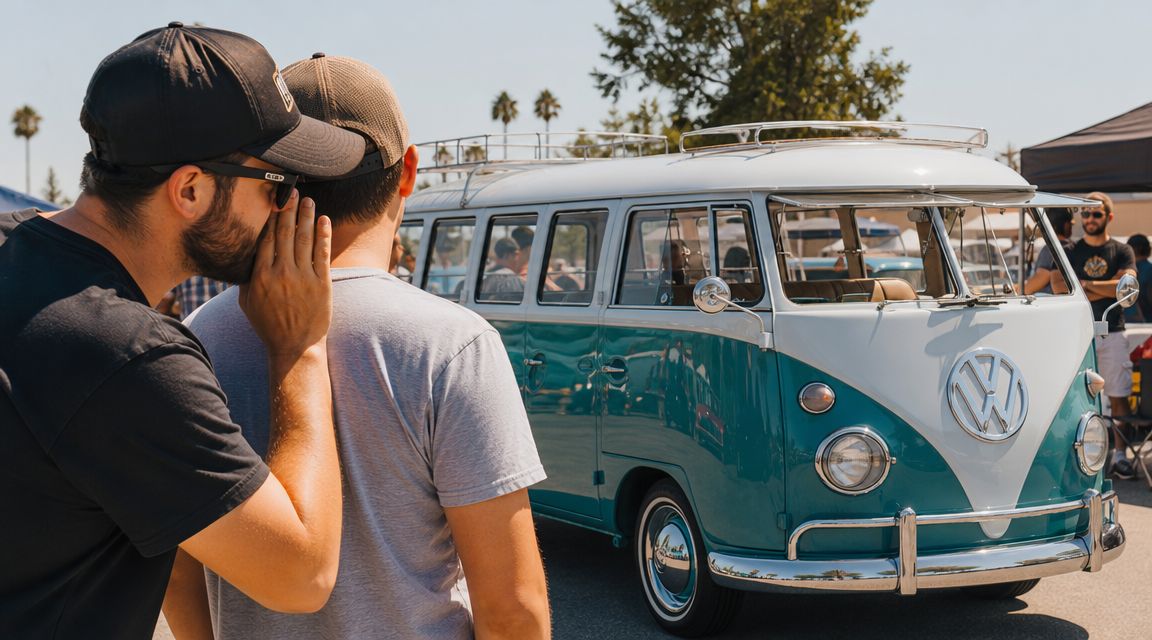
That's the heart of the confusion. In Australia, people often use Kombi as a broad, affectionate label for Volkswagen's van family. The historic original is one thing. The current showroom reality is another. In 2024, Volkswagen Commercial Vehicles reported 404,412 global deliveries, down 4.3% year on year, while the wider Brand Group Core reported 88.26 billion euros in sales revenue and an operating result of 2.59 billion euros after restructuring pressures, according to Volkswagen's 2024 Brand Group Core results.
Why Aussies keep saying Kombi anyway
For local enthusiasts, the word isn't just about badge accuracy. It's shorthand for a whole style of VW motoring.
- Classic fans still mean the original Type 2 and all its charm.
- Modern buyers often mean the current van line that carries the same practical spirit.
- Collectors might mean the models, art, and replicas that keep the old look alive.
The Kombi never really disappeared from conversation in Australia. The meaning just widened.
If you're drawn to the modern electric take on the idea, a VW ID. Buzz camper-inspired collectible shows how strongly that shape still connects old memories with new design.
The rumour versus the reality
There wasn't a surprise return of the old air-cooled Kombi in 2024. What did happen is more interesting. Volkswagen pushed the van lineage forward in two directions. One is retro-flavoured and electric. The other is practical, load-focused and work-ready. Both matter if you care about what “Kombi” means now.
What Exactly Is the Volkswagen Kombi 2024
The cleanest way to understand volkswagen kombi 2024 is to split it into three meanings people commonly use. Once you do that, the fog lifts pretty quickly.
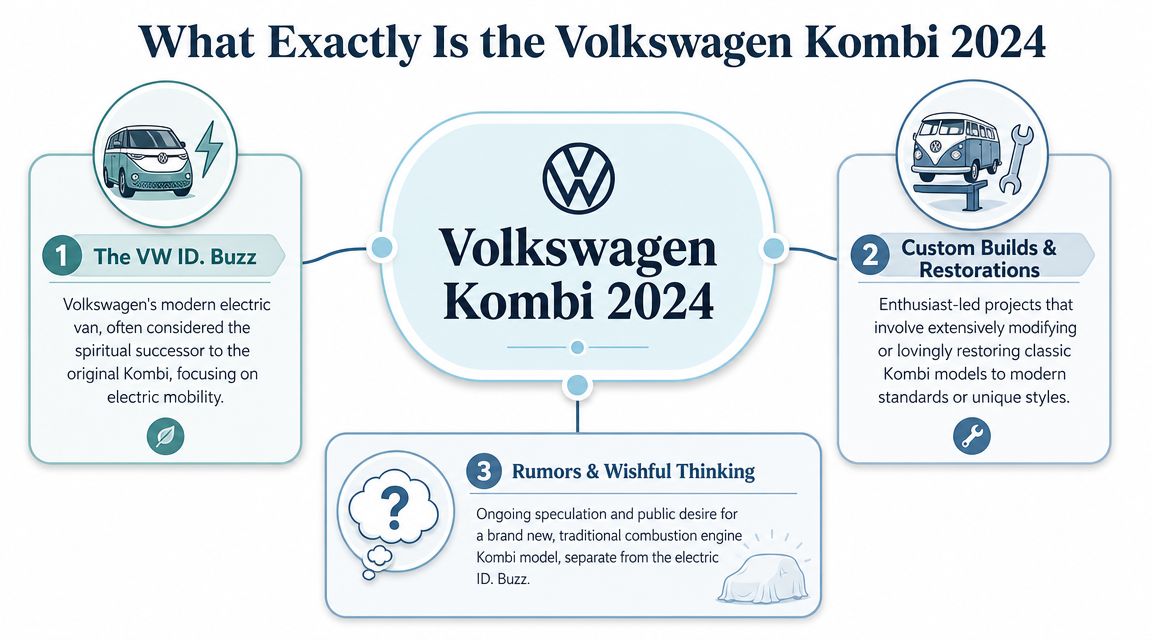
Meaning one, the ID. Buzz
This is the one that grabs attention first. The ID. Buzz is the emotional heir. It looks back to the old bus shape, but it does it with a modern electric platform and a much more family-focused brief.
A key point for Australian families is usability, not just style. Volkswagen's launch material says the long-wheelbase Pro S has a second-row bench and seats up to seven passengers, while the 1st Edition AWD uses captain's chairs and seats six, according to Volkswagen's ID. Buzz launch material. The same material lists range figures of 234 miles for the rear-wheel-drive Pro S and 231 miles for the 4Motion AWD.
That sounds clear enough until you start asking real-life questions. Can it take school bags, sports gear and a pram without becoming a game of interior Tetris? That's where many headlines stop short.
Meaning two, the latest Transporter family
If you're thinking less about nostalgia and more about the direct continuation of the old Kombi's practical role, the Transporter is the direct descendant. It sits in the same workhorse-meets-lifestyle territory that Australians have long associated with the Kombi name.
A major 2024 milestone was the seventh-generation Transporter reveal at IAA Transportation 2024, detailed in Volkswagen's IAA Transporter announcement. Volkswagen said the long-wheelbase version can fit three Euro pallets, and the maximum trailer weight rises to 2.8 tonnes, up from 2.5 tonnes previously. It also added a plug-in hybrid eHybrid producing 171 kW, plus diesel engines with 310 Nm and 360 Nm torque outputs, with more torque in higher-output variants.
Meaning three, the collectible world
For plenty of enthusiasts, “Kombi 2024” doesn't mean a showroom vehicle at all. It means the latest crop of model vans, display pieces and giftable memorabilia inspired by the classic buses we all know.
That's not a lesser form of enthusiasm. For many people, it's the most realistic way to enjoy the shape, colour and heritage every day.
| What people say | What they usually mean |
|---|---|
| “New Kombi” | The ID. Buzz |
| “Kombi van for work” | The Transporter or Kombi/Crew Cab format |
| “2024 Kombi model” | A diecast or memorabilia release |
| “I wish VW made the old one again” | Rumour and wishful thinking |
Practical rule: Before you judge the “new Kombi”, ask which Kombi people are actually talking about.
Meet the New Generation Vans for Aussie Roads
For Australian buyers, the choice isn't old versus new. It's which kind of new VW van suits your life.
The Transporter as the true do-everything van
The Australian-spec Transporter Kombi/Crew Cab is still the clearest modern version of the old mixed-use Kombi idea. Volkswagen Vans lists it with seating for up to 6 people, payload up to 1,078 kg, and load length up to 2,032 mm, according to Volkswagen Vans Transporter Kombi specifications.
That tells you a lot straight away. It's not pretending to be a soft lifestyle van. It's built for people who need to carry humans and gear in the same vehicle without compromise becoming the whole story.
The next-generation Transporter also launched with up to 1.33 tonnes payload, up to 2.8 tonnes towing capacity, and three new 2.0-litre TDI outputs of 81 kW, 110 kW and 125 kW, as outlined in the earlier 2024 Volkswagen commercial vehicle reporting. For Aussie use, that matters if your weekends involve a trailer, a camper, tools, boards, or a long haul where diesel practicality still makes sense.
If that modern van lane interests you, the broader idea is nicely reflected in this look at the electric van trend in Australia.
The ID. Buzz as the style-first family mover
The ID. Buzz takes a different path. It's the van for the person who loves the old bus silhouette but wants an EV with flexible seating and a more premium family feel.
An Australian review noted that the ID. Buzz includes radar cruise, lane-keeping, blind-spot warning, rear cross-traffic alert and parking sensors, but also flagged missing items such as a 360-degree camera and rear autonomous emergency braking. The same review says the ID. Buzz starts at A$59,995 before on-road costs, with destination at A$1,550, and an AWD 1st Edition at A$69,995, according to Drive's 2024 Volkswagen ID. Buzz review.
That's why Aussie buyers keep asking whether it's a true people-mover substitute or more of a design-led family EV.
A simple Aussie-minded comparison
- Choose the Transporter if your first question is “What can it carry or tow?”
- Choose the ID. Buzz if your first question is “Will my family love living with it every day?”
- Choose carefully if you want one vehicle to be both a heavy-duty work van and a premium EV people mover. Those goals don't always line up neatly.
For Collectors The Best VW Diecast Models
Not everyone can bring home a full-sized van. Plenty of us scratch the itch by collecting the next best thing. And a well-made VW model can deliver a lot of joy for a lot less shed space.
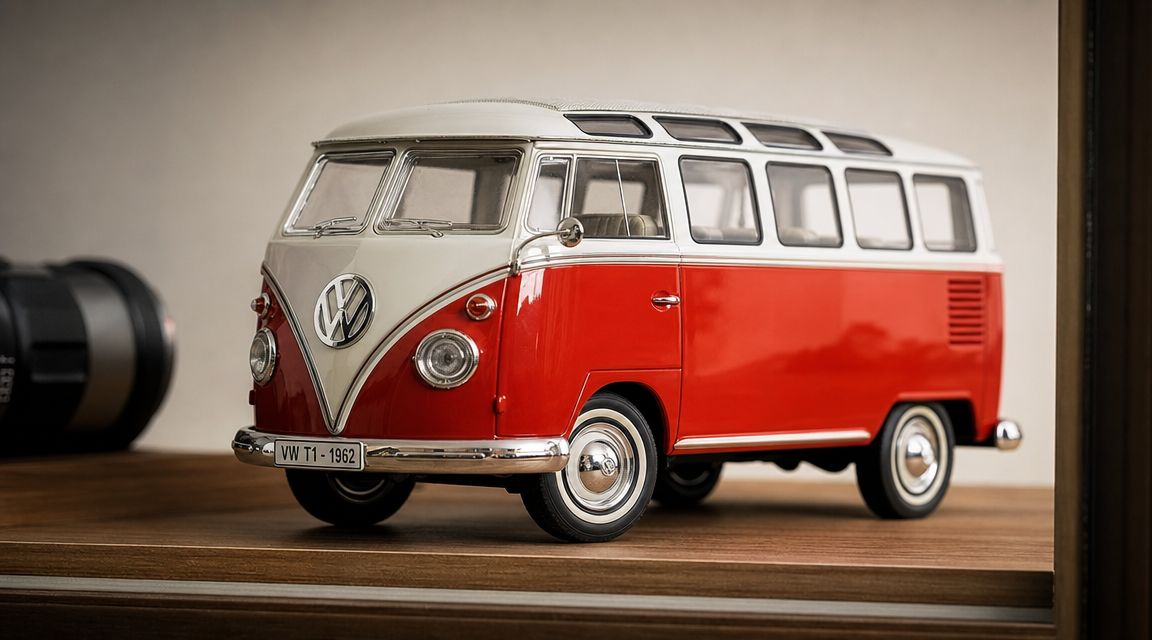
The beauty of diecast is that it lets you enjoy the most loved eras of VW history side by side. A split-window Samba. A cheerful Beetle. A surfy camper. Even a modern-inspired van can sit in the same display and still feel part of the same story.
What makes a Kombi model worth collecting
Collectors usually care about a few things more than flashy packaging.
- Body shape accuracy matters first. If the roofline or window layout looks wrong, you'll spot it from across the room.
- Licensed detailing gives a model that proper Volkswagen feel.
- Colour and theme often decide whether a piece feels factory-clean, surf-culture fun, or properly nostalgic.
- Display fit is practical. Some collectors want a hero piece. Others want a shelf full of mixed scales.
A good place to browse that style range is Volkswagen model cars in different themes and formats, especially if you enjoy classic Kombi and Beetle designs more than generic toy-shop pieces.
Classic shapes still win hearts
The reason Kombi diecast remains popular is simple. The old van shape has warmth. It feels friendly on a shelf in a way few vehicles do. The 23-window Samba Bus style, in particular, still has that instant “stop and have a look” quality.
A detailed VW model works best when it does more than copy a vehicle. It should bring back a memory, a road trip, or a person.
If you enjoy watching collector-style walkarounds and model appreciation, this clip suits the mood nicely.
Good collecting habits beat impulse buying
A smart collection usually grows around a theme. That theme might be classic buses, beach colours, Beetles, or a mix of old and new VW design.
Try one of these approaches:
The heritage shelf
Focus on classic Kombis and Beetles only.The coastal look
Pick surf-inspired colours, campers and playful flower-power pieces.The timeline display
Put early bus designs beside later interpretations so the evolution is easy to see.The giftable collection
Smaller models, magnets and decor pieces that are easy to wrap and fun to receive.
Styling Your Life with That Kombi Cool
The Kombi has always been bigger than the vehicle itself. It's a mood. Relaxed, colourful, adventurous, a little nostalgic, and very at home in Australian coastal style.
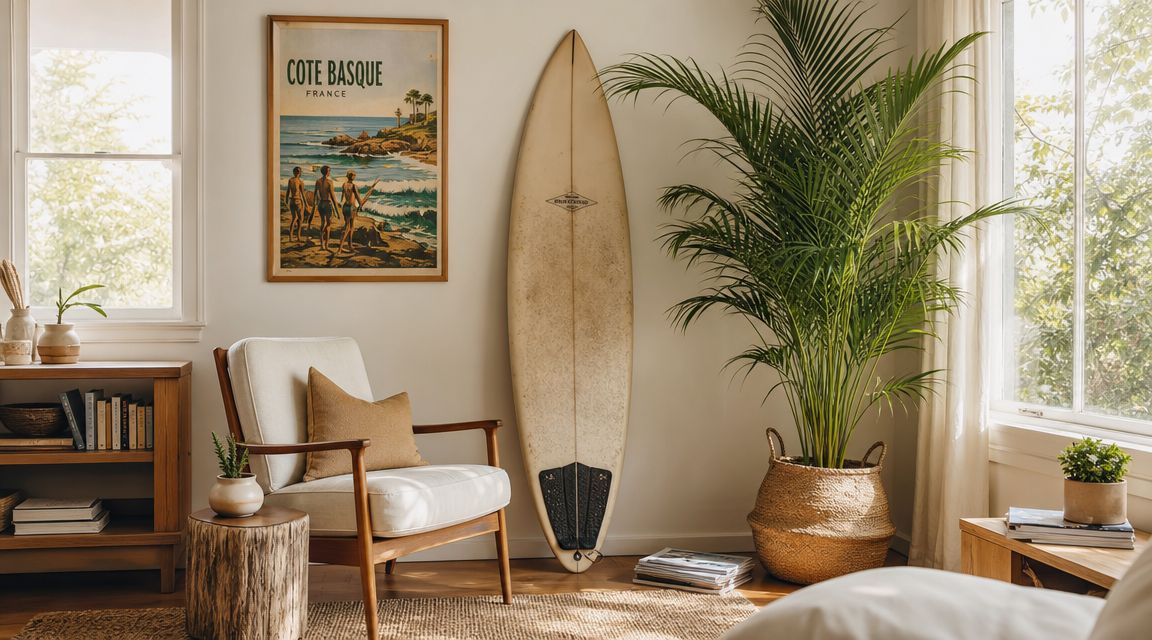
Easy ways to bring that feeling home
You don't need a garage queen or a full display room to enjoy VW style at home. A few well-chosen pieces can do the job.
- Start with one focal piece such as a Kombi model or metal van decor item on a shelf or console.
- Build around colour. Teal, cream, red, pastel tones and beachy neutrals all suit VW-inspired spaces.
- Mix memories with memorabilia by pairing model vans with travel photos, old rally snaps or family beach shots.
- Keep it breathable. Kombi styling works best when it feels relaxed, not crowded.
Where it works best
A Kombi-inspired look can suit more rooms than people realise.
| Space | What works well |
|---|---|
| Living room | Statement model, framed coastal prints, subtle VW decor |
| Home office | A neat diecast lineup and one conversation-starting hero piece |
| Kids' room or rumpus | Colourful Beetle and Kombi models with surfy accents |
| Gift corner | Small collectables ready for birthdays, Father's Day or Christmas |
A good display feels lived-in, not staged. That's very Kombi. A bit of sunshine, a bit of colour, and something with a story behind it.
Keeping the Unstoppable Kombi Spirit Alive
So what is volkswagen kombi 2024 for an Australian enthusiast? It's not one single answer, and that's the beauty of it.
For some, it's the ID. Buzz, carrying the old bus silhouette into the electric age. For others, it's the Transporter, still doing the hard yards as a proper van with modern capability. And for plenty of us, it's also the world of collectibles and display pieces that lets the legend live on without needing a second car space at home.
That's why the Kombi still matters. It connects generations of VW fans who don't all want the same thing, but who recognise the same spirit when they see it. Freedom. Practicality. Personality. Community.
You can hear it in the chat around a show field. You can see it in a family loading up for a weekend away. And you can feel it when a tiny diecast bus on a shelf somehow brings back a whole era.
Quick answers enthusiasts often ask
Is there a brand-new old-school Kombi in 2024?
No. The modern conversation is really about the ID. Buzz and the latest Transporter family, not a revived air-cooled original.
Which modern VW is closest to the old Kombi idea?
If you mean practical, mixed-use van duty, it's the Transporter. If you mean nostalgic design with a modern electric twist, it's the ID. Buzz.
Is the ID. Buzz the better family choice?
It depends on what your family needs most. The styling and seating flexibility are attractive, but many buyers also want to weigh missing convenience and safety items noted in local review coverage.
Why do collectors still love the classic Kombi most?
Because the original shape has charm that's hard to beat. It's playful, recognisable, and tied to decades of memories.
If you'd like to bring that VW spirit home, have a look through Volkswagen Memorabilia. It's a terrific local spot for VW Kombi diecast Australia shoppers, gift buyers, and anyone chasing Volkswagen diecast models for sale, classic Beetle pieces, or coastal VW-inspired decor. With local stock and fast Australian shipping, it's an easy way to find a Kombi or Beetle collectible that feels right at home on your shelf, desk or gift table.