

You're probably here because something small has already hooked you. Maybe it was an old Beetle badge in a market tray, a sun-faded brochure tucked into a glovebox, or a little Kombi model on a shelf that somehow carried the smell of summer holidays, servo pies, and beach car parks. That's how it starts for a lot of us. Not with a grand investment plan. Just with that familiar Volkswagen feeling.
That Volkswagen Feeling
I still reckon some of the strongest memories in Australian motoring live nowhere near a trophy cabinet. They live in ordinary moments. A pastel Kombi parked near the surf. A Beetle buzzing into a country town on a hot afternoon. A row of old VWs at a local show while someone leans over an engine bay and another person argues, cheerfully, about hubcaps.

That's why vintage Volkswagen memorabilia matters. It isn't just stuff. It's a shortcut back to a particular sound, shape, or season of life. One collector keeps a dealer keyring beside his restored Bug. Another frames an original poster in the rumpus room. Someone else starts with a diecast Samba Bus and ends up building a whole shelf around it.
If you're chasing your first piece, or trying to sort the genuine gems from the random retro knock-offs, a bit of practical know-how goes a long way.
More Than Just Models A World of VW Collectibles
Last summer at a VW meet on the NSW coast, a bloke beside me passed over a sun-faded dealer brochure from the 1960s. It wasn't rare in the museum-piece sense. The fold lines were soft, the corners were a bit knocked about, and it still stopped people in their tracks. Three minutes later, another collector pulled a little Kombi sign out of a tote bag and suddenly half the table was talking about old camping trips, beach runs, and the first Beetle their family owned.
That's how this hobby usually grows in Australia. It starts with a model car for the shelf, then somehow turns into workshop literature, badges, old showroom bits, framed prints, surf-style wall art, and those cheeky little homewares that suit a shed, rumpus room, or beach house perfectly.
Volkswagen has had a proper place in Australian car culture for decades, so the memorabilia tied to it often feels familiar straight away. The colours, the dealer graphics, the beach-town mood, the rounded shapes of a Beetle or Kombi. They all land differently here because they belong to real memories, not just imported nostalgia.
What counts as memorabilia
The range is wider than plenty of newcomers expect:
- Miniatures and diecast pieces for collectors who want the look of a Beetle, Kombi, or Bus in a cabinet rather than a garage.
- Dealer and workshop items such as brochures, manuals, badges, keyrings, and promotional pieces from the showroom era.
- Display and home pieces that borrow from surf culture, road trips, service stations, and classic VW colour palettes.
- Smaller giftable collectables like magnets, signs, ornaments, and shelf decor that still carry that old-school Volkswagen charm.
A good collection usually has a bit of personality to it.
One Perth collector I know focuses on anything that looks like it belongs near the coast. Kombi wall plaques, retro signs, muted blues and creams, timber-framed pieces with that holiday-house feel. Another mate in regional Victoria only buys paper goods and workshop items. His shelves are full of brochures, service booklets, and old dealer ephemera, and the whole display feels like stepping into a country dealership in 1972.
If you're still working out your lane, start by looking at the categories that pull you in twice. The piece you go back to is usually the clue. For plenty of people, that first step is a shelf-ready model, and a look through these Volkswagen model cars can help you figure out whether you're drawn to Beetles, Kombis, buses, or the smaller details that come after.
The Collector's Garage Iconic Types of VW Memorabilia
Some collect what fits in a cabinet. Others collect what belongs on a wall. The smartest move is to choose a lane that matches your budget, your space, and the kind of VW story you want to tell.
Diecast Models A World in Miniature
Diecast is where many Australian collectors begin, and for good reason. It's accessible, display-friendly, and satisfying in a way only a properly shaped little Kombi can be. If you're searching for VW Kombi diecast Australia or trying to buy diecast Kombi pieces locally, scale is the first thing to understand.
| Quick Guide to Diecast Model Scales | |||
|---|---|---|---|
| Scale | Typical Size (Kombi) | Level of Detail | Best For |
| 1:18 | Large display piece | High | Feature shelves, office display, serious collectors |
| 1:24 | Mid-sized display piece | Balanced | Most home collectors, gift buyers |
| Smaller scales | Compact shelf item | Simpler | Mixed displays, stocking fillers, desk pieces |
A 1:18 model tends to feel like the hero piece. You notice the curves, trim, windows, and stance from across the room. A 1:24 piece is often the sweet spot for people who want detail without sacrificing shelf space. Smaller scales are ideal when you want variety, colour, or a whole lineup of Kombis and Beetles in one cabinet.
If you're comparing options, the range of Volkswagen model cars makes those differences easier to picture.
Coastal and Home Décor The Surfy Vibe
Not every collector wants a cabinet full of models. Plenty of VW fans want their hobby to blend into the house, the holiday shack, or the covered patio.
That's where Kombi wall pieces, beach-themed décor, metal signs, and relaxed coastal styling come in. They don't need to be museum-grade to feel right. A faded aqua van silhouette, a retro surfboard motif, or a playful Beetle print can give a room that old-road-trip warmth without turning it into a workshop.
This category works especially well for gift buyers. It says, “I know what you love,” without requiring the recipient to know chassis codes or trim years.
Paper Ephemera and Rare Finds
This is the lane where collecting gets wonderfully particular. Paper goods and original promotional pieces carry a kind of quiet authority. You can often see the era in the typography, printing method, paper stock, and layout before you even read the words.
The most sought-after pieces are often dealer brochures, original advertising posters, and factory accessories, because they carry serial-era printing details and model-year specificity that are harder to fake than decorative reproductions, as reflected in this VW memorabilia collector market reference.
A few things are worth keeping in mind:
- Brochures reward close looking. Printer marks, period fonts, and market-specific details often matter more than bright colours.
- Posters need condition and context. Pinholes, folds, and backing can affect how desirable they feel to the next collector.
- Accessories tell a car-specific story. A small factory item linked to the right model year can mean more than a generic “retro VW” piece.
Spotting a Gem How to Identify Authentic Memorabilia
Authenticity is where enthusiasm meets homework. Plenty of items look old. Far fewer belong to the period, model, or market the seller claims.
For modern collectables, the first pass is straightforward. Look for official Volkswagen licensing, clean manufacturing marks, proper packaging, and consistent branding. A good licensed model usually feels deliberate. The proportions are sorted, the logos are clean, and the finish doesn't rely on fake distressing to sell the nostalgia.
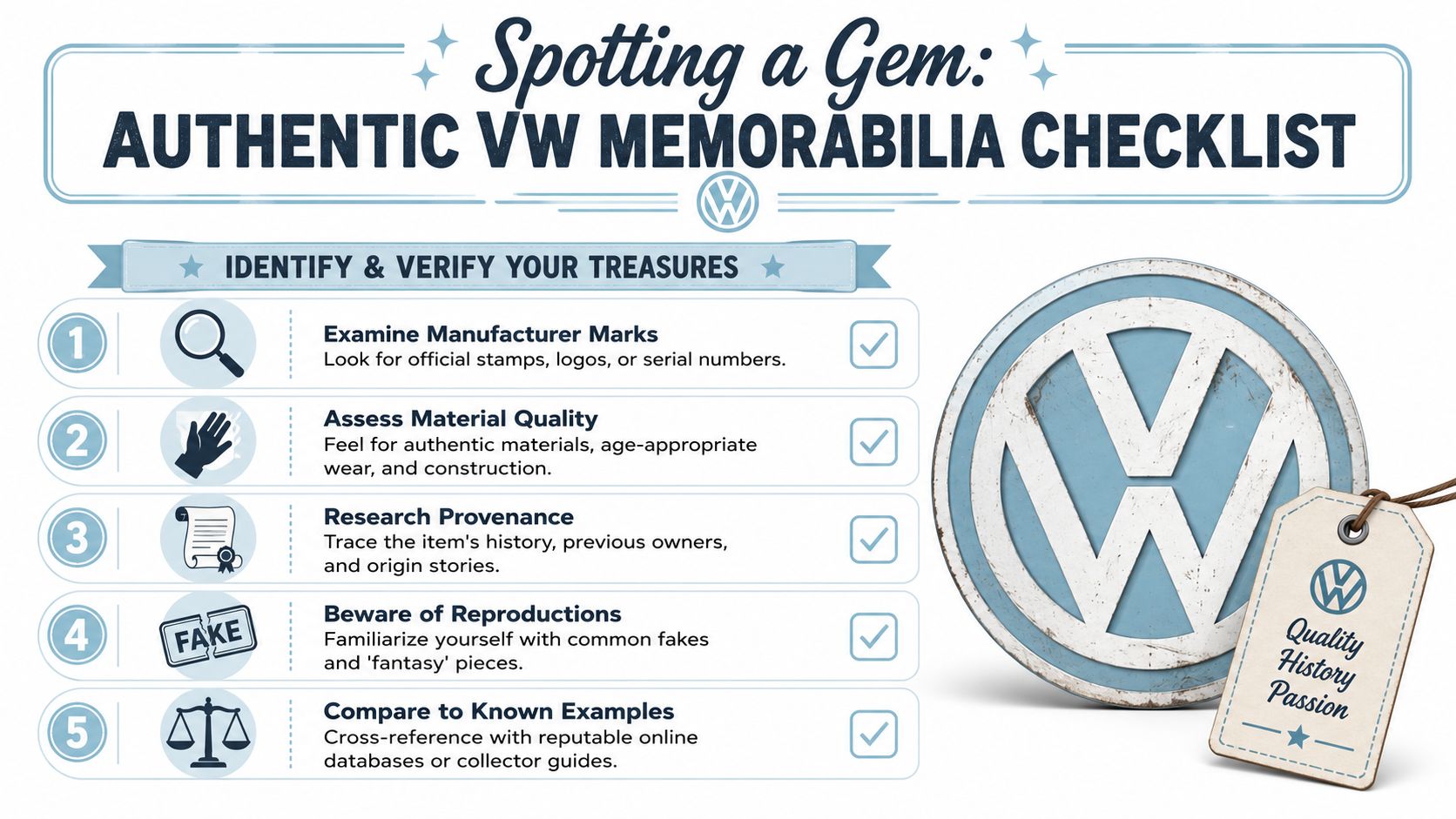
Vintage items need a sharper eye.
What to check first
- Manufacturer marks matter. Turn the item over. Check the edges, back, base, staples, fasteners, and print margins.
- Materials should make sense for the era. Paper, inks, metal weight, and finish often tell you more than the artwork.
- Wear should look honest. Sun fade, shelf wear, and ageing usually appear unevenly. Artificial distressing often looks too neat.
Practical rule: If an item's condition, colours, and story all feel a little too perfect, slow down and verify before you buy.
For Australian-market pieces
For serious collectors, one of the most useful ways to verify memorabilia tied to Australian-market Volkswagens is to cross-check details against M-code data and chassis numbers. Archives such as TheSamba's VW technical information can help separate factory-issued accessories from later reproductions.
That matters most with items claimed to belong to a specific Beetle, Kombi, or model year. If a badge, brochure, accessory, or dealer item doesn't line up with period-correct coding or production details, the warning light should come on.
A good companion read is this guide to Volkswagen logo history. Logo changes won't authenticate everything on their own, but they can help you spot obvious mismatches fast.
What's It Worth Understanding Value and Price
Value in VW collecting usually comes down to four things. Originality, condition, provenance, and desirability. Age alone doesn't do the heavy lifting.
A cracked old sign with clear dealer history can be more compelling than a cleaner piece with no story. A simple brochure can outshine a flashy repro if it has the right print details and model-year fit. And a licensed diecast model in tidy condition can make more practical sense than a bulky item that's expensive to ship and awkward to display.
One reason small-format pieces are worth a serious look right now is changing buying behaviour in Australia. There's growing collector demand for smaller, high-affect purchases, which makes compact memorabilia such as diecast Kombis, wall art, and fridge magnets a smart buy for gift-givers and new collectors, as noted in this Australian collector demand reference.
A sensible way to think about price
- Buy for appeal first. If you'd still like it even if values never changed, you're probably on safer ground.
- Pay attention to category. Giftable pieces move differently from workshop parts or obscure accessories.
- Don't ignore display value. A piece that fits nicely into everyday life often gets enjoyed more than a rare item hidden in a box.
The best-value piece isn't always the rarest one. It's often the item you can verify, display, and enjoy without fuss.
Caring For and Sourcing Your VW Treasures
A mate of mine brought a lovely little diecast Splitty to a meet in Newcastle. Bright two-tone paint, tidy trim, the lot. Six months later it had gone chalky on one side because it lived on a windowsill cop the afternoon sun. Another bloke stored old dealer brochures in the shed near the beach and ended up with curled corners, foxing, and that damp-paper smell you never quite get rid of.
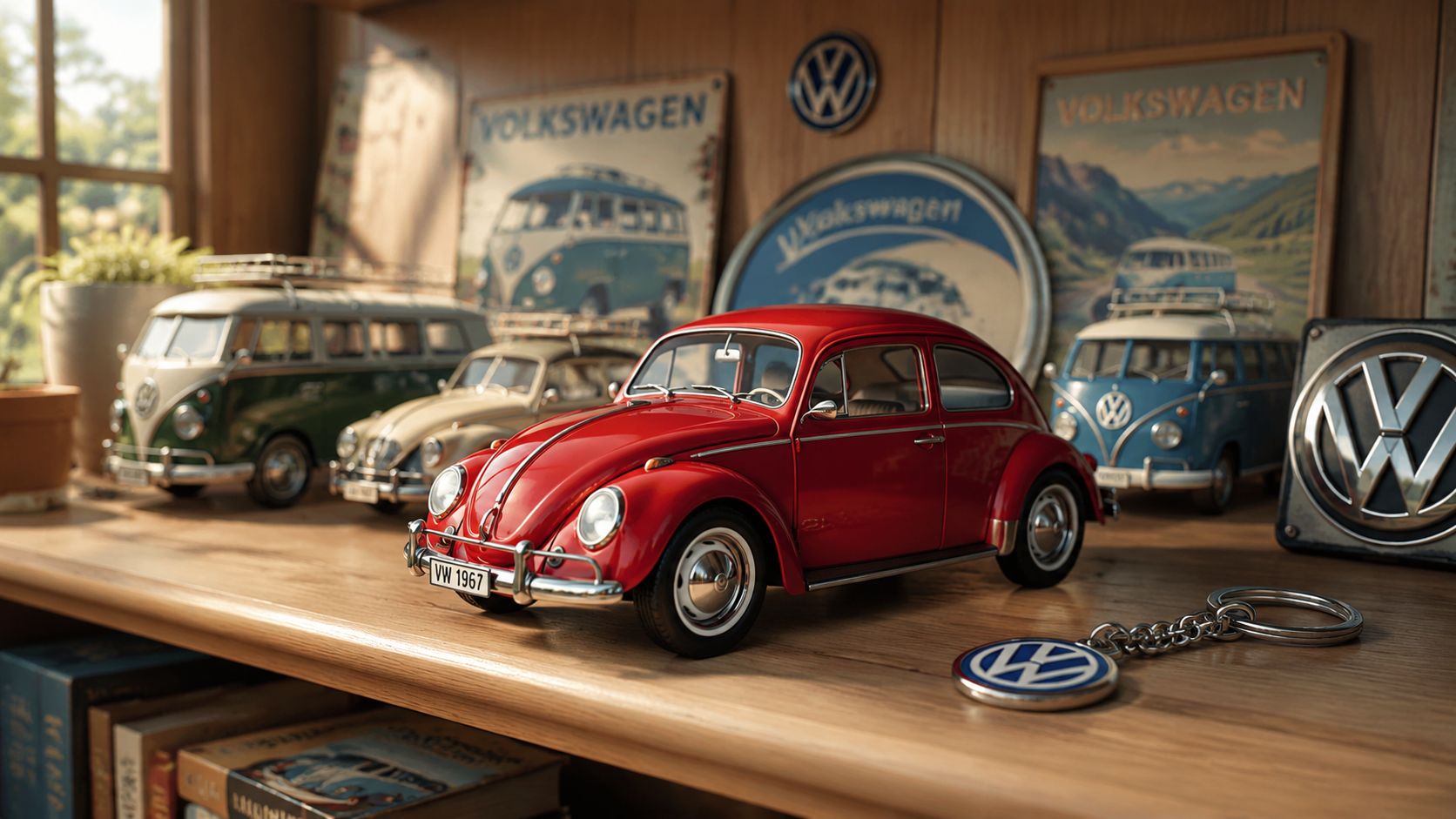
That's how collections get knocked around in Australia. Sun, salt air, dust, and heat do more damage than age if you're not paying attention.
Easy care habits that help
- Keep sunlight off display pieces. UV fades paint, paper stock, and printed tin signs faster than many collectors expect.
- Watch the room, not just the shelf. Garages, sleepouts, and beachside homes can swing from dry heat to damp air in no time.
- Handle paper and gloss items with clean hands. Finger marks show up quickly on plastic windows, chrome-effect trim, and brochure covers.
- Give each piece some space. Metal décor and boxed models get rub marks and corner wear when they're packed in tight.
- Use enclosed storage for favourites. A few well-chosen display cases for models save a lot of dusting and stop the accidental bump that chips a mirror or bumper.
Paper items deserve extra care. If you've found an Australian dealer flyer, registration wallet, or period accessory sheet, store it flat, out of direct light, and away from sheds or spare rooms that get muggy in summer.
Where Australians find good pieces
The best finds still turn up where VW people gather. Swap meets, club runs, Shannons-style auctions, and local shows let you pick things up, turn them over, and ask the owner where they got them. That matters with Australian-market memorabilia because local dealer stickers, distributor branding, and old shop labels can tell you far more than an online title ever will.
You also start noticing patterns after a while. Coastal décor and giftable shelf pieces move quickly because they suit beach houses, garages, and home bars. Small diecast Kombis keep pulling in buyers too, partly because they're easy to post, easy to display, and easy to give. If a seller has three “rare” examples of the same item, all with identical ageing, slow down and inspect the print quality, fixings, base marks, and packaging before you hand over cash.
Local online sellers have their place as well. Buying within Australia can make life simpler if you want smaller VW-themed diecast, décor, or gifts without gambling on rough packing, long waits, or surprise import costs. Volkswagen Memorabilia is one local option collectors use for those kinds of display pieces.
If you like seeing how collectors style and display similar models, this clip is worth a look before you rearrange your shelves:
Share the Love and Find Your Perfect Piece
A mate of mine bought a tiny diecast Kombi for his brother one summer at a swap. Nothing fancy. Just the right colour, the right roofline, and a surfboard on top that looked close enough to the old bus they drove up the coast in the late 90s. It ended up on a workshop shelf, then beside the bar fridge, and now it is the piece everyone points at first.
That is usually how a good VW collection grows in Australia. One piece with a real connection. Then another.
The strongest collections I see at shows are built around memory and taste, not just rarity. A Beetle wall sign for the shed. A dealer badge from an Australian delivery car. A Kombi tin plate that fits a beach house without trying too hard. If you are buying for yourself, pick the item you will still enjoy looking at after the novelty wears off. If you are buying for someone else, go for the clue that ties back to their story: the model they owned, the colour they still talk about, or the shape they always slow down for in the car park.
Gifts work well here because VW memorabilia does not need a lecture to be appreciated. A shelf-sized diecast, a garage sign, or a small coastal piece can feel right at home on day one. As noted earlier, Volkswagen Memorabilia is one of the local places collectors use when they want Australian-stock display pieces and easy gift options without overcomplicating the hunt.
Frequently Asked Questions
Is diecast a good place to start with vintage Volkswagen memorabilia?
Yes. Diecast is easy to display, easier to store than larger items, and gives you a feel for the designs you're most drawn to. Many collectors start with a Kombi or Beetle model before moving into posters, badges, or original paper pieces.
How can I tell if a VW item is vintage or just retro-style?
Check the marks, materials, and construction. Real vintage pieces usually show period-correct printing, ageing, and manufacturing details. Retro-style décor can still be fun to own, but it shouldn't be priced or described like an original.
What makes Australian VW memorabilia a bit trickier?
Australian buyers often have to work harder to confirm whether an item was sold or used in the local market, rather than brought in later. Provenance matters more than many sellers admit.
What makes a good VW gift for someone who doesn't already collect?
Start small. A licensed Kombi diecast, wall piece, magnet, or shelf-friendly Beetle model usually lands well because it carries the nostalgia without needing specialist knowledge.
If you're in the mood to find a piece that feels like your kind of Volkswagen story, take a look through Volkswagen Memorabilia. You might only be after a simple gift or a tidy diecast Kombi, but that's often how a proper collection begins.