
G'day, mate! Imagine waking up to the sound of kookaburras, with the sun warming the side of your van and the whole day stretching out like an open map. This is the heart of van life Australia—a modern movement with a direct line back to the free-wheeling, adventurous spirit of the classic VW Kombi. It’s a lifestyle that celebrates freedom, simplicity, and discovery, trading a fixed address for endless horizons. It’s a feeling that just gets in your soul.
Embracing Freedom on the Great Australian Road Trip
There’s a certain magic to packing your life into a few square metres and hitting the bitumen, isn't there? It’s a feeling that’s been part of our national identity for decades, harking back to when the first sun-bleached surfers loaded boards into a trusty Volkswagen Kombi. That spirit is more alive than ever today, and you see it everywhere, from the coast to the red centre.
The allure of van life isn't just about escaping the 9-to-5. It’s about forging a deeper connection with the incredible landscapes this country offers. It's the freedom to chase the sun, follow the surf, or find a quiet spot in the bush to call home for a night. This lifestyle is defined by experiences, not by possessions, and by the stories you'll tell for years to come.
The Modern Nomad Meets Classic Soul
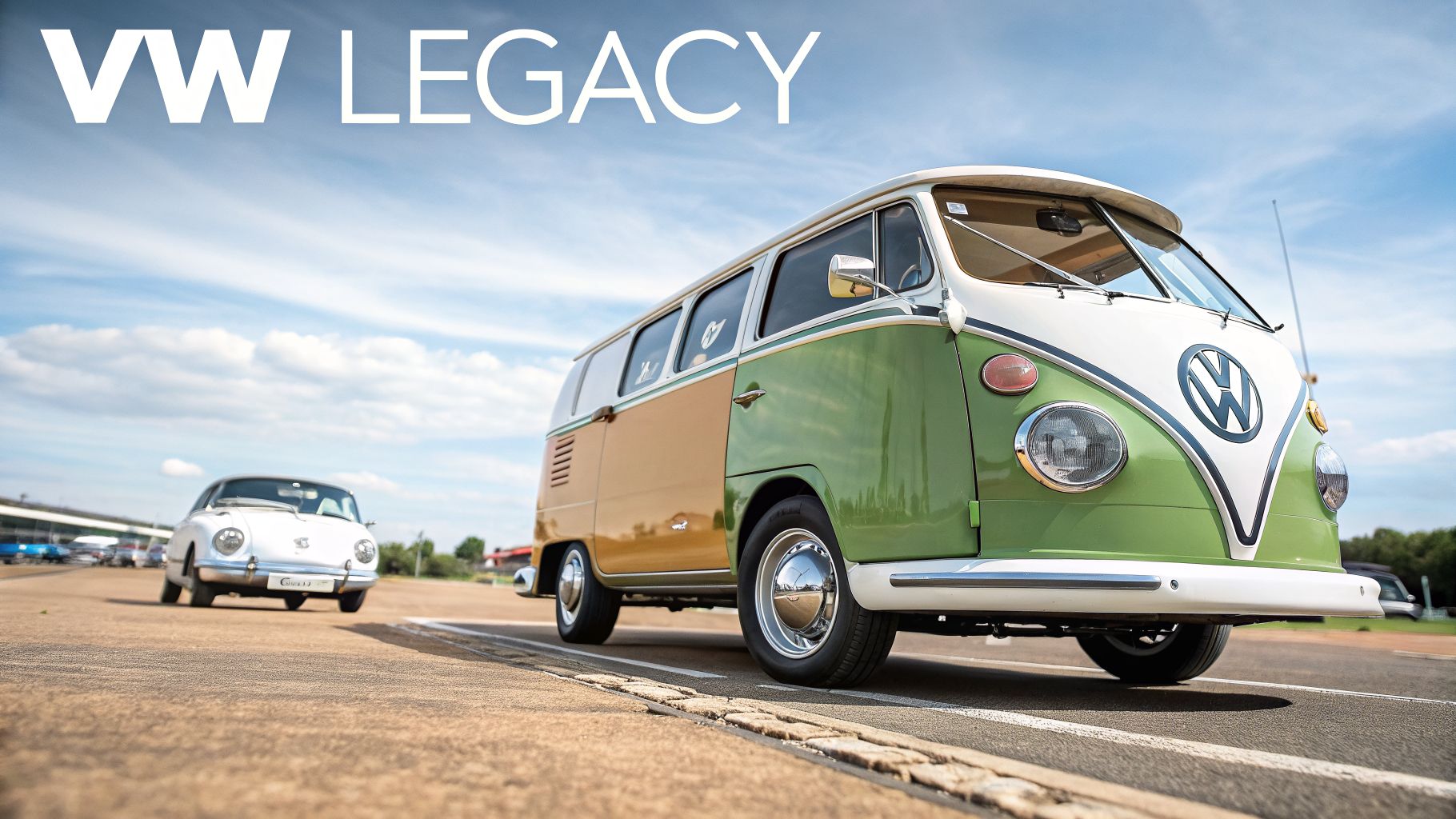
Today’s van life movement is a brilliant mix of old and new. You'll see modern, high-tech rigs parked right next to lovingly restored classic Kombis at a sunny show 'n' shine, and each one has its own story. The core philosophy, however, remains the same: a desire for a simpler, more meaningful way to live and travel. It’s about prioritising what really matters, just like those pioneers of the '60s and '70s did.
The real journey isn’t just about the kilometres travelled; it's about the mindset you adopt. It's realising you need less to feel more, finding pure joy in a sunset, and making memories that last longer than any material possession.
Think of this guide as your friendly co-pilot. It’s for seasoned nomads dreaming of their next trip and for those just feeling the first pull of the open road. We get this passion because we share it—from the iconic, friendly face of a Split-Screen Kombi to the unmistakable rumble of a Beetle engine. It’s a passion that brings people together.
- Discover Stunning Landscapes: From the turquoise waters of the Coral Coast to the rich red earth of the Outback, Australia is a playground for road trippers.
- Join a Vibrant Community: The Aussie van life community is warm and welcoming, always ready with a tip, a friendly wave, or a chat at a VW car show.
- Embrace True Freedom: Set your own schedule, follow your own path, and wake up with a new front yard every single day.
We'll explore everything you need to turn your dream of an Aussie road trip into a wonderful reality. For those who love the heritage that started it all, we'll connect you with the enduring spirit of the original adventure machine. You can explore the history and design of the iconic VW Camper in our dedicated article. Let's get this show on the road!
Is Van Life Legal in Australia? Understanding the Rules
Right, let's talk about the less glamorous side of things. The legal side of van life in Australia is a bit of a patchwork of rules from local councils, state governments, and national parks. There isn’t one simple rule for the whole country, unfortunately.
What's fine in one town might get you a knock on the window from a ranger in another. This is especially true for “freedom camping”—staying overnight in a spot that isn't a paid campground. The romantic dream of pulling up to any beach for the night needs a little bit of planning to avoid a hefty fine.
Where Can You Legally Park and Sleep Overnight?
The most common question you'll ask is, "Where can I sleep tonight?" The answer always depends on your location.
- Council Bylaws: Local councils manage public spaces, and many have clear ‘no camping’ rules. Always look for signage, as fines can be anywhere from $250 to over $1,000. Ouch!
- National Parks: Most parks have designated campgrounds with fees. Freedom camping outside these areas is almost always prohibited. You need to book and pay for a spot, usually online.
- Designated Rest Areas: Major highways have 24-hour rest areas for travellers. They are a legal and safe option for an overnight stop. Signs will clearly state the maximum stay time.
A golden rule for van life: When in doubt, assume you can't. It's always better to find a confirmed legal spot than to risk a fine and a rude awakening.
Navigating Vehicle Registration and Roadworthiness
Your van must be legally compliant. If you convert a van, you may need to re-register it as a 'motorhome' or 'campervan'. This often involves an engineering inspection to check that your modifications like gas, electrics, and furniture meet Australian Design Rules (ADRs).
Proper registration ensures you are insured correctly. Keeping your vehicle roadworthy is also a legal requirement and absolutely essential for safety. Authorities are paying more attention as van life grows. Australia has over 901,000 registered caravans and campervans as of early 2024, a 27% jump since 2021. You can find more data on this from Australia's national tourism research agency.
Choosing Your Home on Wheels: From Classic Kombis to Modern Rigs
Your van is so much more than just a set of wheels. It’s your home, your transport, and your golden ticket to the great Aussie road trip. Picking the right one is the single most important decision you'll make, and it’s where the dream really begins to feel real. For so many of us, that dream has the friendly, unmistakable face of a Volkswagen Kombi.
There's a good reason the Kombi is the undisputed icon of van life Down Under. It’s a masterclass in clever, space-saving design, its mechanics are beautifully simple, and it just radiates character. Waking up in a classic Splitty or Bay Window, pulling back the curtains on a pop-top roof, is a feeling that connects you straight back to the pioneers of this lifestyle. The gentle rumble of its air-cooled engine is the authentic soundtrack to freedom.
The Great Van Debate: Kombi vs. Modern Rigs
But while the soul of van life might live in a classic VW, today’s modern vans bring their own serious advantages in comfort, reliability, and sheer space. It’s the classic Aussie dilemma: old-school cool or new-school convenience?
To help you figure out what's right for you, let’s see how some of the most popular choices on Australian roads stack up.
Van Comparison for Australian Adventurers
This table breaks down the pros and cons of four popular vans you'll see everywhere from the outback to the coast, each with its own personality and perks for life on the road.
| Van Model | Best For | Pros | Cons |
|---|---|---|---|
| Volkswagen Kombi (Classic) | Nostalgia, Community & Style | Iconic design, strong community, simple mechanics, holds its value. | Older mechanics, less power, rust can be an issue, smaller living space. |
| Mercedes Sprinter | Space & High-End Builds | Massive interior space, reliable diesel engines, great for standing height. | Higher purchase price, can be more expensive to maintain. |
| Ford Transit | Customisation & Drivability | Good driving dynamics, multiple height/length options, widely available parts. | Can have a more "work van" feel without significant customisation. |
| Toyota HiAce | Unbeatable Reliability | Legendary dependability, easy to service anywhere, holds value well. | Often less interior height, boxy shape can be less inspiring for some. |
Ultimately, there's no single "best" van. The right one is the one that fits your budget, your DIY skills, and the kind of adventures you’re dreaming of.
To Build or to Buy: A Key Decision
Once you’ve got a model in mind, the next big question is whether to buy a ready-made camper or convert a blank-canvas van yourself. Buying a pre-built rig is fantastic if you want to hit the road yesterday. It’s the perfect choice if you don't have the time, tools, or confidence for a full conversion.
On the other hand, building your own is an incredibly rewarding journey. This path gives you total freedom to design a layout that’s perfectly suited to you—a true one-of-a-kind home on wheels. You get to pour your personality into every choice, from the kitchen layout to the colour of the curtains. If that sounds like your cup of tea, our guide on finding the perfect van for conversion has some great pointers to get you started.
The process of building your van is the first chapter of your van life story. Every cut of wood and every turn of the wrench builds a deeper connection to your future home.
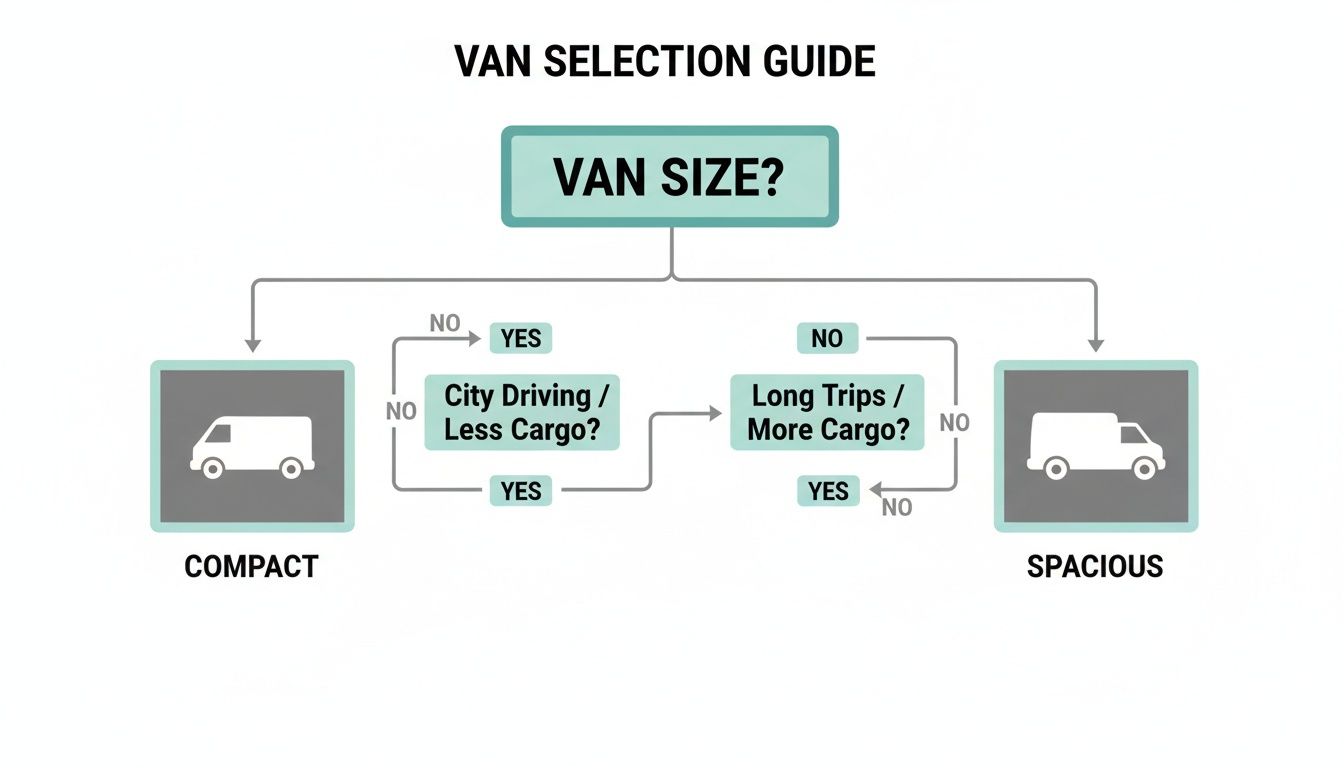
No matter what you're driving, every van lifer eventually asks the same question: "Where am I legally allowed to camp tonight?" This flowchart makes it simple.
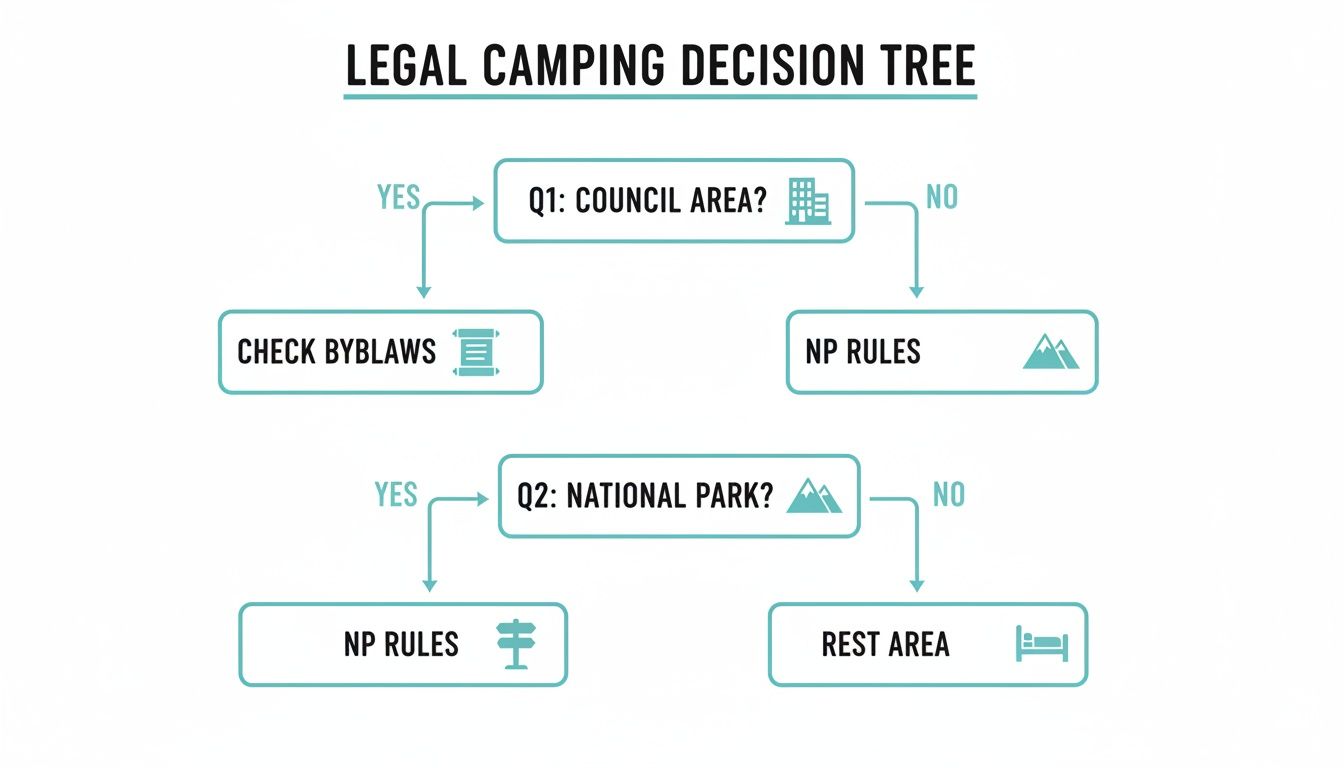
As you can see, the first thing to do is always check the local council rules. If you're inside a national park, then their specific regulations are what you need to follow. It pays to know before you go.
How to Budget for Your Van Life Adventure in Australia
Dreaming about hitting the open road in your own van is one thing, but crunching the numbers can feel like a roadblock. Don't let it be. The beauty of van life in Australia is that it's whatever you make it—from a bare-bones solo trip to a more comfortable tour for two.
Think of your budget as your trusty co-pilot, not a backseat driver. Getting a handle on your finances gives you the freedom to relax and enjoy the ride, knowing you’re prepared. Let's break down what it really costs to chase that horizon.
Upfront Costs The Initial Investment
Before you can even think about finding that perfect beachside camp spot, you’ve got a few big-ticket items to sort. This is where you’ll spend the bulk of your initial savings.
- Vehicle Purchase: This is the big one. You could find an older van that needs some love for a few thousand dollars, or you could go all out on a new or professionally converted rig for $50,000+.
- Conversion or Fit-Out: Building your own home on wheels is half the fun. A simple DIY build using secondhand materials might run you about $5,000, while a full custom fit-out with all the mod-cons can easily push past $30,000.
- Insurance, Rego & Essentials: Don’t forget the essentials! You'll need to cover registration, compulsory third-party insurance, and comprehensive vehicle insurance. On top of that, you'll be stocking up on gear like bedding, cooking supplies, and safety equipment for the first time.
These upfront costs are a hurdle, no doubt, but it’s a one-off investment in your freedom. Think of it as buying the ticket for the adventure of a lifetime.
Ongoing Expenses Fixed and Variable Costs
Once you’re actually on the road, your spending settles into a more regular pattern. I like to split these costs into two groups: the fixed bills you pay every month and the variable expenses that change depending on how far you drive and where you park up.
Fixed Monthly Costs:
These are the predictable bills that hit your account no matter what.
- Insurance: Vehicle and health insurance premiums.
- Phone & Internet: An absolute must for maps, finding camps, and staying in touch.
- Subscriptions: Things like Spotify for your road trip playlists or cloud storage for your photos.
Variable Weekly Costs:
This is where your day-to-day choices really make a difference.
- Fuel: This will likely be your biggest variable cost. The simplest way to save is to drive less and stay in one place for longer.
- Food: Cooking your own meals is worlds cheaper than eating out every night. Hitting up local farmers' markets is a great way to eat well and support small towns.
- Campsites: Your nightly costs can be anything from $0 for a free camp to $60+ for a powered site in a tourist park. An app like WikiCamps is your best friend for sniffing out free and low-cost spots.
- Maintenance: Always keep a "just in case" fund. A good rule of thumb is to put aside $100-$200 a month for regular servicing or those unexpected repairs that always pop up.
A good van life budget isn’t about watching every dollar. It’s about creating a simple plan that lets you keep travelling without the constant stress of money. That’s the real secret to staying on the road long-term.
To really make your van your own, it’s all about the personal touches. For a bit of inspiration on decking out your space with that classic road-tripping spirit, have a look at our great collection of VW van accessories. A little planning goes a long way in making sure your Aussie van adventure is everything you dreamed it would be.
Australia's Most Iconic Road Trips and Hidden Gems
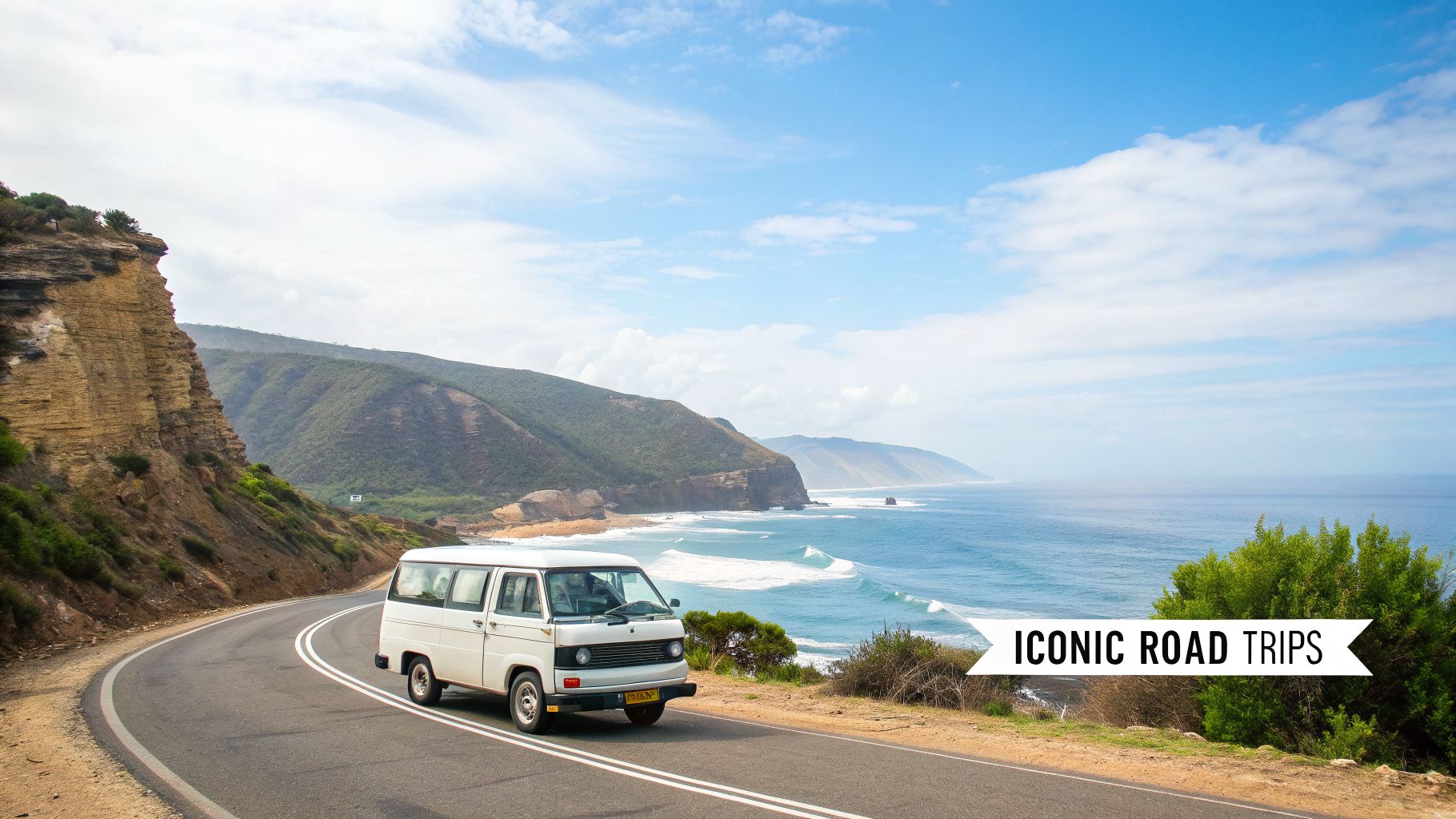
Right, let’s get to the good bit. With the van sorted and the maps spread out on the dashboard, it's time to actually hit the road. This is where the real adventure begins, because Australia is a place practically designed for the open road—a continent where the journey is every bit as important as the destination.
The whole spirit of Aussie van life isn't just about ticking off locations. It's a feeling. It's that moment you crest a hill and an endless coastline opens up before you, or the simple peace of brewing a cuppa while a few kangaroos graze in the morning light. It’s a feeling any Kombi driver from the ‘60s would know in their bones.
The Classic East Coast Pilgrimage
If there’s one road trip that defines Australian van life, it’s the long haul from Sydney to Cairns. This is a true rite of passage, weaving together a stunning tapestry of world-famous beaches, ancient rainforests, and some of the most vibrant towns in the country.
What makes this route so brilliant is its sheer diversity, perfect whether you’re a first-timer or a seasoned road warrior. You can be learning to surf in Byron one week, sailing the Whitsundays the next, and then exploring the Daintree rainforest before snorkelling the Great Barrier Reef. It’s an entire bucket list rolled into one epic drive.
- Must-See Stops: The boho streets of Byron Bay, the incredible sand dunes of Fraser Island (K'gari), the impossibly white silica sand of Whitehaven Beach, and the waterfalls of the Atherton Tablelands.
- Insider Tip: Don’t just blast up the main highway. Duck inland and explore the Sunshine Coast hinterland. Towns like Maleny and Montville offer a complete change of pace and some of the best local produce you'll find anywhere.
The Great Ocean Road and Beyond
For sheer, jaw-dropping coastal drama, nothing beats Victoria’s Great Ocean Road. It’s a relatively short drive, but it packs a serious punch. The Twelve Apostles get all the attention, but the real magic is found in the twists and turns between the famous landmarks.
Every bend in the road reveals another spectacular view, from the legendary surf at Bells Beach to the misty, fern-filled gullies of the Otways. But don't just turn around at the end. Keep pushing on past Warrnambool into South Australia to discover the Limestone Coast—a region of stunning sinkhole gardens, world-class wineries, and the impossibly vibrant Blue Lake in Mount Gambier. This trip truly captures the rugged soul of Australia's southern edge.
Uncovering Australia's Hidden Gems
As amazing as the classic routes are, the real heart of van life is often found on the roads less travelled. For those willing to point their van somewhere a little different, the rewards are immeasurable. This is where you find true solitude, untouched landscapes, and that priceless feeling of genuine discovery.
This sense of adventure is catching on. Van life was once seen as a young person’s game, but it's now being embraced by older Australians as an incredible way to retire. While millennials still make up 52% of the van life community, a growing number of over-60s are hitting the road. And it’s a wonderfully diverse scene, with women making up 42% of all van lifers. You can read more about these evolving van life trends in Australia to see how the community is changing.
Here are a few lesser-known journeys to get your imagination fired up:
- Western Australia's Coral Coast: Head north from Perth to Exmouth. You can swim with whale sharks on Ningaloo Reef, meet the wild dolphins at Monkey Mia, and wander through the otherworldly Pinnacles Desert.
- The Flinders Ranges, SA: Take a trip deep into an ancient landscape. The colours of the outback here are something else, especially as the sun rises and sets over Wilpena Pound. It feels like you’ve driven back in time.
- The Savannah Way: This one’s for the truly adventurous. The route connects Cairns in Queensland all the way to Broome in WA, taking you through rugged cattle country, deep gorges, and incredibly remote national parks.
The best road trip isn’t one you find on a map. It’s the one you create yourself, filled with unplanned detours, friendly chats at roadside stops, and the quiet satisfaction of finding your own perfect slice of Australia.
This is the freedom that a little Volkswagen Beetle model sitting on your dash represents—the pure, simple promise of the open road. No matter which path you end up taking, the memories you make out there will be the best souvenirs you could ever hope for.
Your Adventure Is Calling
Van life in Australia is more than just a holiday; it’s a way of life built on freedom, community, and a real connection to the land. As we’ve covered, getting started is an adventure in itself, carrying on the spirit of the old VW Kombis that first inspired Aussies to chase the horizon.
You don’t need the perfect plan or the fanciest van to get going. The real trip starts the moment you decide to go—to follow that sunset and see what’s just around the next corner.
The journey doesn't begin when the engine turns over. It begins the moment you give yourself permission to explore.
While you're dreaming up your next escape, you can hold onto a piece of the culture that started it all. The soul of that adventure is in every line of a classic VW, a feeling we try to capture in our collection of detailed, officially licensed diecast models.
For any enthusiast, a VW Kombi diecast Australia model is the perfect nod to the adventures you've had and the open road still waiting for you. They’re a small piece of the dream, celebrating the style and heritage that makes this lifestyle so iconic.
Have a browse through our full range of Volkswagen diecast models for sale and find a piece of the journey to keep close. Whether it's a classic Kombi Samba Bus diecast or a loveable Beetle, our collection is stocked right here in Australia, so we can ship it to you fast.
Let that nostalgia fuel your wanderlust. Your journey starts now.
Your Van Life Australia Questions Answered
Right, you've got the dream, but a few practical questions are probably rattling around in your head. It’s the same for everyone before they hit the road. Let’s tackle some of the most common puzzles about day-to-day van life in Australia.
How Do You Receive Mail and Handle Official Documents?
This is the classic logistical hurdle! Getting mail sorted is actually pretty straightforward once you know the system. Most of us rely on Parcel Collect or a 24/7 Parcel Locker from Australia Post. You just have your parcels sent to a post office you know you’ll be driving through, and pick them up. It's a lifesaver for online orders.
For anything official, like rego or bank statements, the best bet is to use the address of a trusted mate or family member. While you want to go digital for almost everything, having a fixed "home base" for that crucial bit of mail is a non-negotiable.
What Are the Best Ways to Stay Safe as a Solo Van Lifer?
Hitting the road alone is an incredible experience, but staying safe is always front of mind. The Aussie van community is fantastic and looks out for one another, but you’re your own first line of defence.
- Trust Your Gut: This is your most important tool. If a campsite or rest stop just feels wrong, leave. No questions asked. Find somewhere else.
- Share Your Location: Keep a friend or family member in the loop with your rough itinerary. A quick text to check in regularly gives everyone peace of mind.
- Use Community Knowledge: Apps like WikiCamps are brilliant. You can see recent reviews from other travellers about specific spots, which helps you vet a place before you even arrive.
- Carry a PLB: If you’re heading even slightly remote or into the outback proper, a personal locator beacon (PLB) is an absolute must-have. When there's zero phone signal, it’s your lifeline.
How Reliable Is Internet Access in Remote Areas?
Ah, the digital nomad's dilemma. Along the coast and in major towns, you'll generally find decent 4G or even 5G. But the minute you push inland, that connection can get patchy or vanish completely. If you need to stay connected for work, Starlink has become the gold standard for reliable internet in the middle of nowhere.
A more budget-friendly setup is a mobile hotspot on the Telstra network (known for having the best rural reach) combined with a signal booster. It can make a huge difference in those fringe reception zones.
How Can I Connect With the Van Life Community in Australia?
The people you meet are easily one of the best parts of this lifestyle! Online, Facebook groups like ‘Van Life Australia’ and ‘Australia – Camp & Travel’ are buzzing with activity. They're perfect for asking questions, finding out about local meetups, and getting real-time advice from people who are out there doing it.
And don't forget the old-fashioned way. A simple “G’day” at a campsite often turns into a shared campfire and stories swapped with new friends. Popping into a van life gathering or a classic car show like Volksfest or the VW Nationals is another awesome way to find your tribe.
At Volkswagen Memorabilia, we’re all about the culture that kicked this whole movement off. While you’re mapping out your big adventure, keep the dream alive with a classic VW Kombi diecast Australia model on your desk—a perfect little reminder of the open road calling your name.