


At a sunny Australian car show, the hard part isn't spotting a gorgeous Beetle or Kombi. It's choosing the miniature version that deserves a place beside your books, tools or treasured VW memorabilia. One collector might reach for a large, highly detailed display piece, while another needs a compact model that fits neatly on a desk. The best diecast models aren't just the biggest or most expensive. They're the ones that match your space, your taste and the Volkswagen story you want to keep close.
Introduction to the Best Diecast Models
Classic Volkswagens still start conversations. A Beetle's curved roof, a Samba Bus's bright paint and a Kombi's split-window profile bring the character of Volksfest or the VW Nationals to a display shelf.
The appeal has history as well as nostalgia. Diecasting as a manufacturing process emerged in the early 19th century, and toy makers adapted it to miniature cars in the early 20th century. The diecast boom gathered pace during the post-war 1950s and 1960s, before a quieter period through the 1970s and 1980s. The category enjoyed a renaissance in the mid-1990s, helped by major brand relaunches. Diecast Toyz Australia now advertises 3,000+ model race cars, showing how established collecting has become locally.
For Australian VW collectors, licensed replicas carry meaning beyond their badges. A well-made Volkswagen Beetle or Kombi model can recall a family road trip, a surf memory or a real car you still hope to own. It can also suit a particular display: a compact licensed model for a crowded cabinet, or a larger piece where body lines and period details deserve attention.
Choose by scale utility and display value first, then check authenticity, construction and finish. That approach helps separate a handsome shelf piece from a model that will genuinely earn its place.
Choosing the Right Diecast Scale
Scale affects nearly everything, from the shelf you'll need to the amount of detail you can enjoy. Australian collector guidance describes 1:43 as a global standard and a popular local choice, while 1:18 and 1:24 suit collectors who prioritise detail and have more display room. 1:64 works well for compact or larger themed collections. Hearn's Hobbies explains the common scale options, including approximate lengths for several formats.
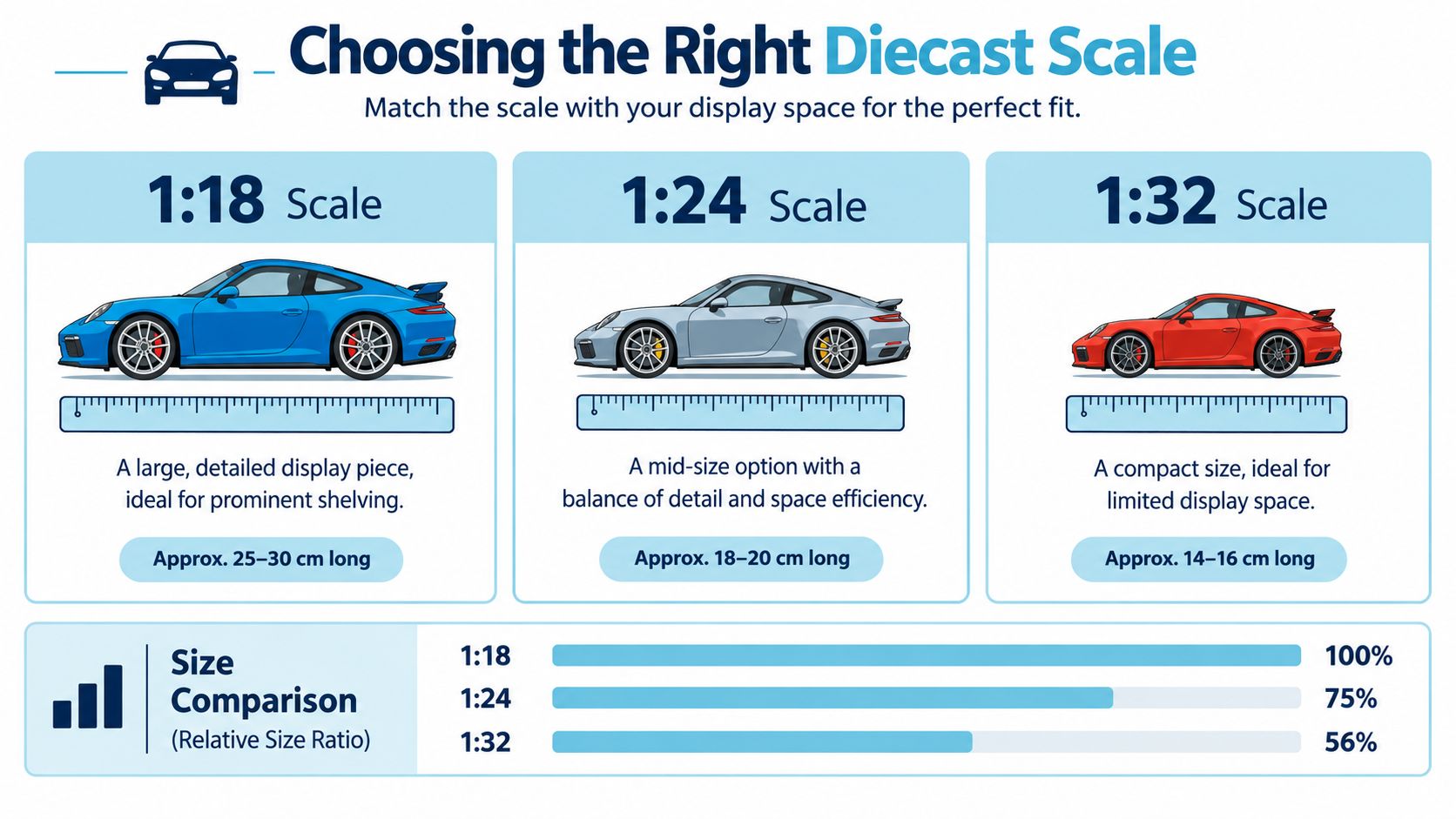
| Scale | Approx. Length | Detail Level | Best For |
|---|---|---|---|
| 1:18 | 25–30 cm | Highest display detail | Feature shelving and serious centrepieces |
| 1:24 | 16–20 cm | Strong detail with manageable size | Balanced collections and gift displays |
| 1:32 | Approx. 14–16 cm | Compact, practical detail | Smaller shelves, desks and limited spaces |
A 1:18 Kombi gives the bodywork, cabin and graphics more visual presence. Larger models are also more likely to include opening doors, bonnets or other functional features, although the exact specification depends on the manufacturer. The trade-off is straightforward: one large model can occupy the space of several smaller cars.
A 1:24 Volkswagen Beetle model often hits the sweet spot for collectors who want recognisable detail without giving an entire shelf to one car. It's large enough to appreciate the roofline, bumpers and interior treatment, yet easier to combine with another classic VW.
For a tighter display, 1:32 offers a sensible compromise. It won't provide the same feature fidelity as a large collector-grade replica, but it can work beautifully in a themed arrangement with a Beetle, Kombi and Samba Bus. If you're comparing more options, this guide to 1:18 diecast models provides a useful starting point for matching size with your available room.
Practical rule: Choose the largest scale your display can comfortably handle, not the largest model your enthusiasm can justify on the day.
The Allure of VW Kombi and Beetle Models
The Beetle and Kombi have earned their place in miniature because their shapes are instantly recognisable. A sports car can impress with speed and stance, but a classic Volkswagen often carries a more personal story. It suggests family holidays, coastal weekends, flower-power colour schemes and the easy-going freedom associated with the air-cooled VW scene.
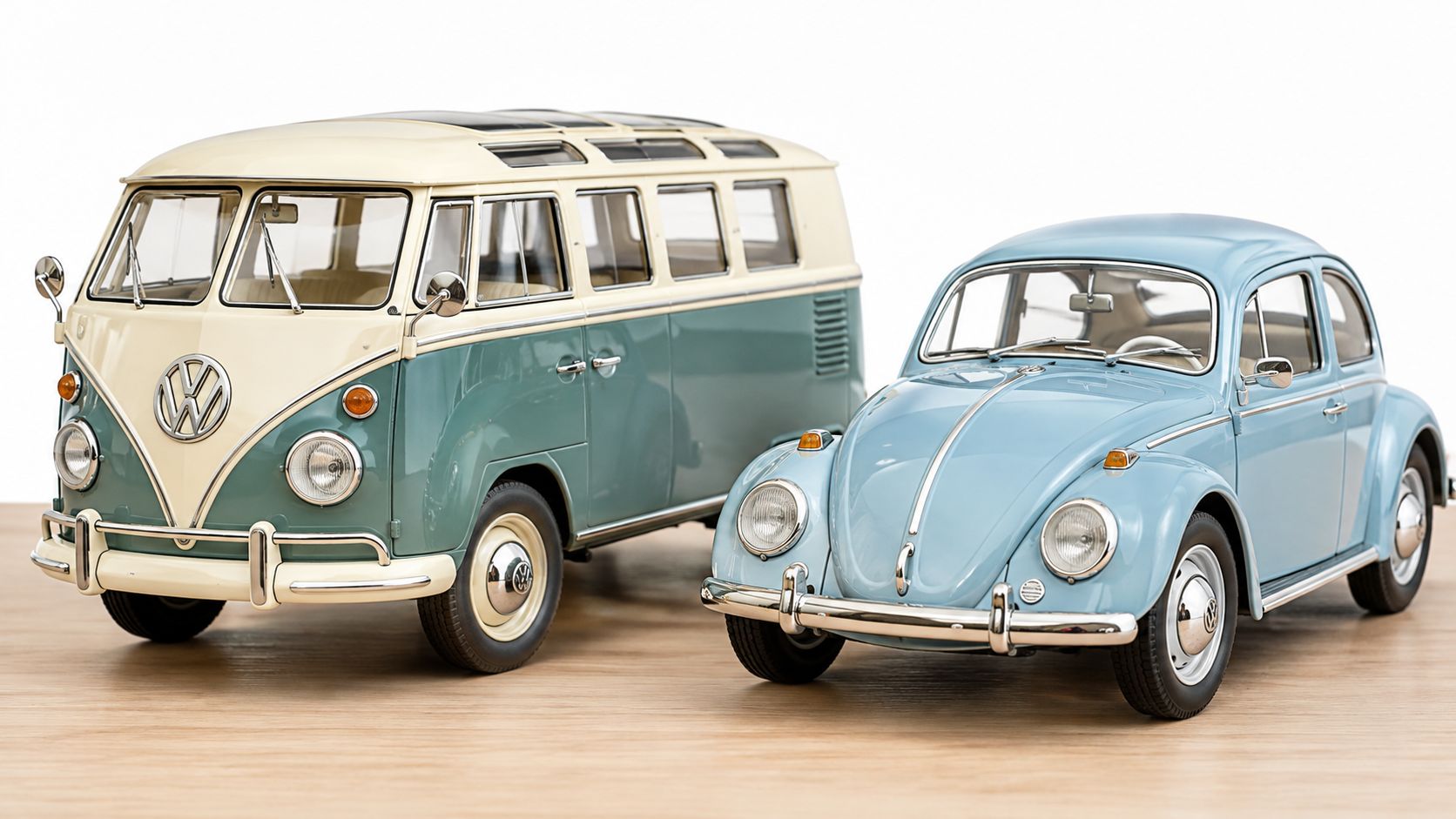
The Kombi's Australian history adds another layer. Volkswagen's first Type 2 vehicles arrived in Australia in 1954 as CKD kits delivered to Martin & King in Clayton South. Local assembly used Australian upholstery, tyres, paint and some mechanical components, and Volkswagen took over local assembly four years later. Retro Rides Australia covers this local history in its Kombi buying guide.
Globally, Volkswagen sold 4.5 million Kombis since 1950, and the first Type 2 pickups were made in September 1952 before sales began in Australia in 1954. Club VeeDub Australia records the Kombi's production and arrival story. Those details help explain why a Kombi diecast Australia collector isn't just buying a colourful van. They're choosing a small representation of a vehicle with genuine local heritage.
Why these shapes work so well in a collection
A Beetle makes a strong single display because its silhouette reads clearly from across a room. A Samba Bus adds more visual drama through its split-window styling, roof details and two-tone paint possibilities. Together, the two create an instant period display, especially when the models share a scale and complementary colours.
That's also why these replicas make reliable gifts. You don't need to know every technical detail of the recipient's collection. If they love classic Volkswagens, a carefully licensed Beetle or Kombi usually connects with the memory first and the specification second.
What Makes a Diecast Model Collectible
A collectible model needs more than a familiar badge. Strong buying decisions combine official licensing, transparent construction and accurate proportions. Australian specialist retailers describe collector-grade replicas as authorised by vehicle manufacturers, based on production designs and finished with detailed paint and graphics. Australian Car Collection outlines these qualities in its licensed model range.
Start with authenticity
Check that the listing identifies the model as officially licensed. Licensing indicates that the maker has worked from approved design references rather than adding a familiar-looking badge to a generic body. For an Australian Volkswagen collection, inspect the front emblem, body shape, wheel design, trim and graphics. Those details decide whether a Beetle or Kombi feels convincing at its chosen scale.
Look beyond the word metal
Many diecast models combine diecast metal with plastic components. Plastic suits glazing, bumpers, interiors and fine trim, while a metal body supplies weight and structure. The practical test is clear product information. The seller should state the materials, dimensions and scale without leaving buyers to guess. An Etsy Australia search for rare diecast shows scale-specific dimensions and mixed material construction in current listings.
Match quality to the role
A cabinet centrepiece deserves closer inspection than a small gift model. Check the paint, graphics, wheel alignment, glazing and packaging. Opening doors or bonnets can add enjoyment, though fixed parts may be the better choice for a tidy, durable display.
Rarity may support resale interest, but it is a poor sole reason to buy. Australian collectables coverage notes that rare diecast pieces can exceed AUD 1,000 on eBay Australia, while die-cast models commonly sit in the AUD 80–150 range, with premium replicas priced considerably higher. Hobbyco discusses Australia's collector market and rare items. Treat those figures as market context, not a promise of future value. Condition, packaging, authenticity and demand still shape what a model is worth.
Display and Storage Tips for Collectors
A beautiful model can lose its impact when dust gathers in the window frames or sunlight fades the paint. Displaying diecast well is mostly about controlling the environment and making the model easy to enjoy without handling it constantly.
Build the display around the car
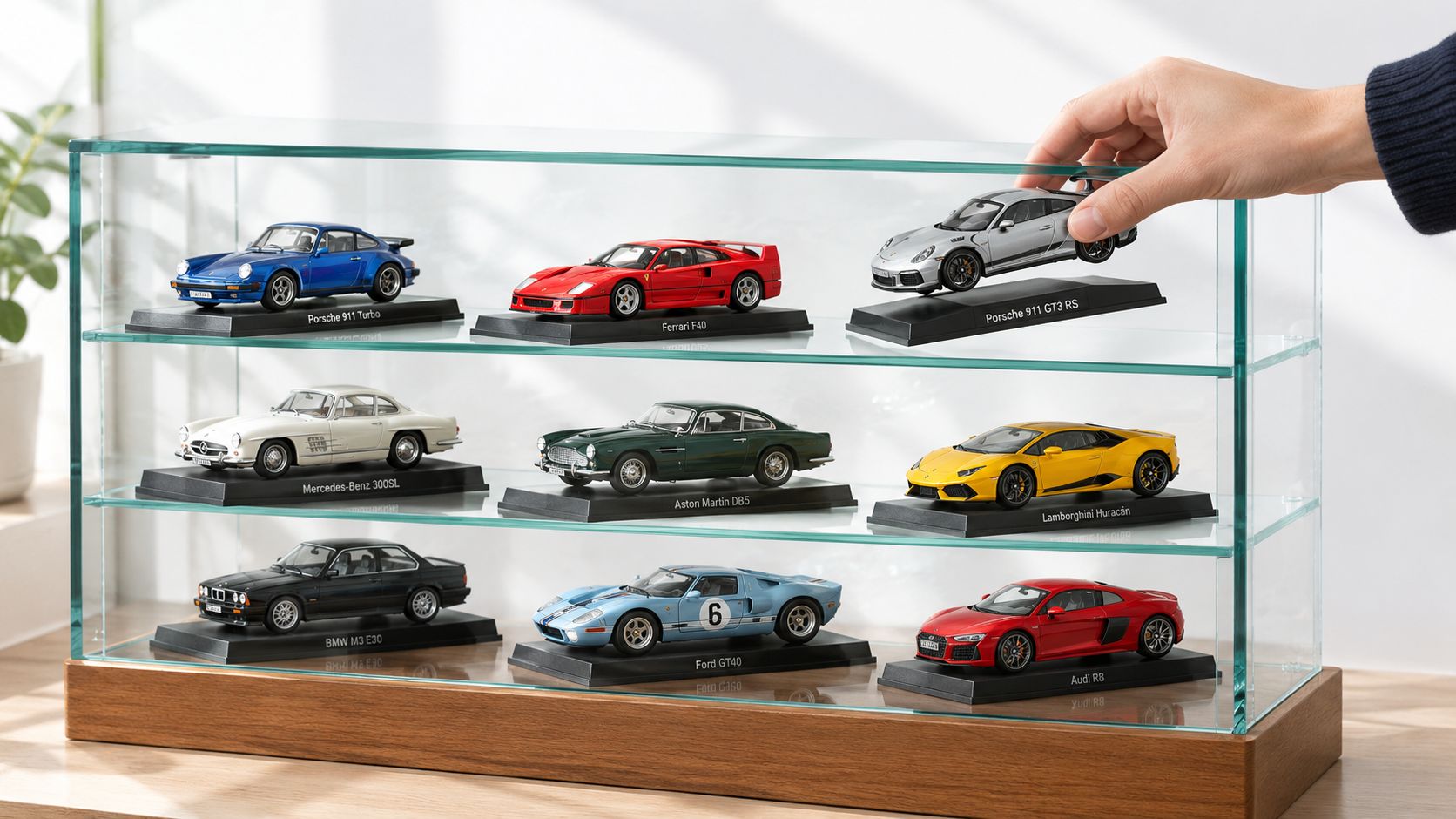
Use a stable shelf or enclosed cabinet, and leave enough room to remove a model without catching its mirrors or aerials. Glass or acrylic protection helps keep dust away, while a simple backing board can make light-coloured Beetles and Kombis stand out.
Protect the finish
Keep models away from direct sunlight. UV exposure can fade paint and affect clear plastic over time. Dust with a soft brush or clean microfibre cloth, and support the model from its base rather than lifting it by a mirror, roof rack or other fine detail.
Organise with intention
A collection looks more considered when you choose a simple organising principle:
- By scale: Keep 1:18, 1:24 and smaller models together so the display feels visually consistent.
- By story: Pair a Beetle with a Kombi or Samba Bus to create a classic road-trip theme.
- By colour: Group pastel, two-tone or Flower Power-inspired finishes for a lively shelf.
- By era: Arrange models around the heritage of the actual vehicles rather than only their brand.
For collectors expanding beyond a basic shelf, these display cases for models can help create a cleaner, more protected presentation. Keep original boxes and paperwork in a dry place, even if you prefer displaying the cars outside their packaging.
Where to Buy Quality VW Diecast Models in Australia
At a sunny car show, a small Beetle can attract just as much attention as a larger display model. Buying locally makes that choice easier. Local stock, faster shipping and accessible support let Australian collectors check scale, dimensions and delivery details before committing to an overseas listing with limited information.
Start with a retailer that understands the difference between a novelty car and a licensed collector piece. Check the stated scale, product dimensions, manufacturer, materials and photographs from several angles. A 1:18 Kombi offers stronger shelf presence, while a smaller Beetle may suit a tighter display or a growing collection.
The range should also match the way you collect. A single Samba Bus can work as a nostalgic gift, while a Beetle, Kombi and surf-inspired van create a more personal scene. Mixed packs suit families, small retailers and collectors who enjoy variety. Buyers building a focused display may get more satisfaction from one carefully selected model with the right colour, body style and scale.
Australia also has an active resale market, giving collectors more ways to find older or harder-to-source pieces. Search classified listings for condition, missing parts, original packaging and seller photographs. Ask about postage protection before buying, especially for models with delicate mirrors, aerials or roof accessories. Browse diecast models in Australia to compare licensed Kombi, Samba Bus and Beetle options by scale, finish and intended display location.
That comparison is more useful than a generic brand ranking. The best model is the one that fits your shelf, budget and collecting story, then still makes you smile each time you walk past it.
Volkswagen Memorabilia brings together licensed VW diecast, including classic Kombi and Samba Bus replicas, Beetle models and colourful surf-inspired pieces, with local support for Australian collectors and gift buyers. Visit Volkswagen Memorabilia to find a miniature Volkswagen suited to your collection, display and the memories behind these cars.