

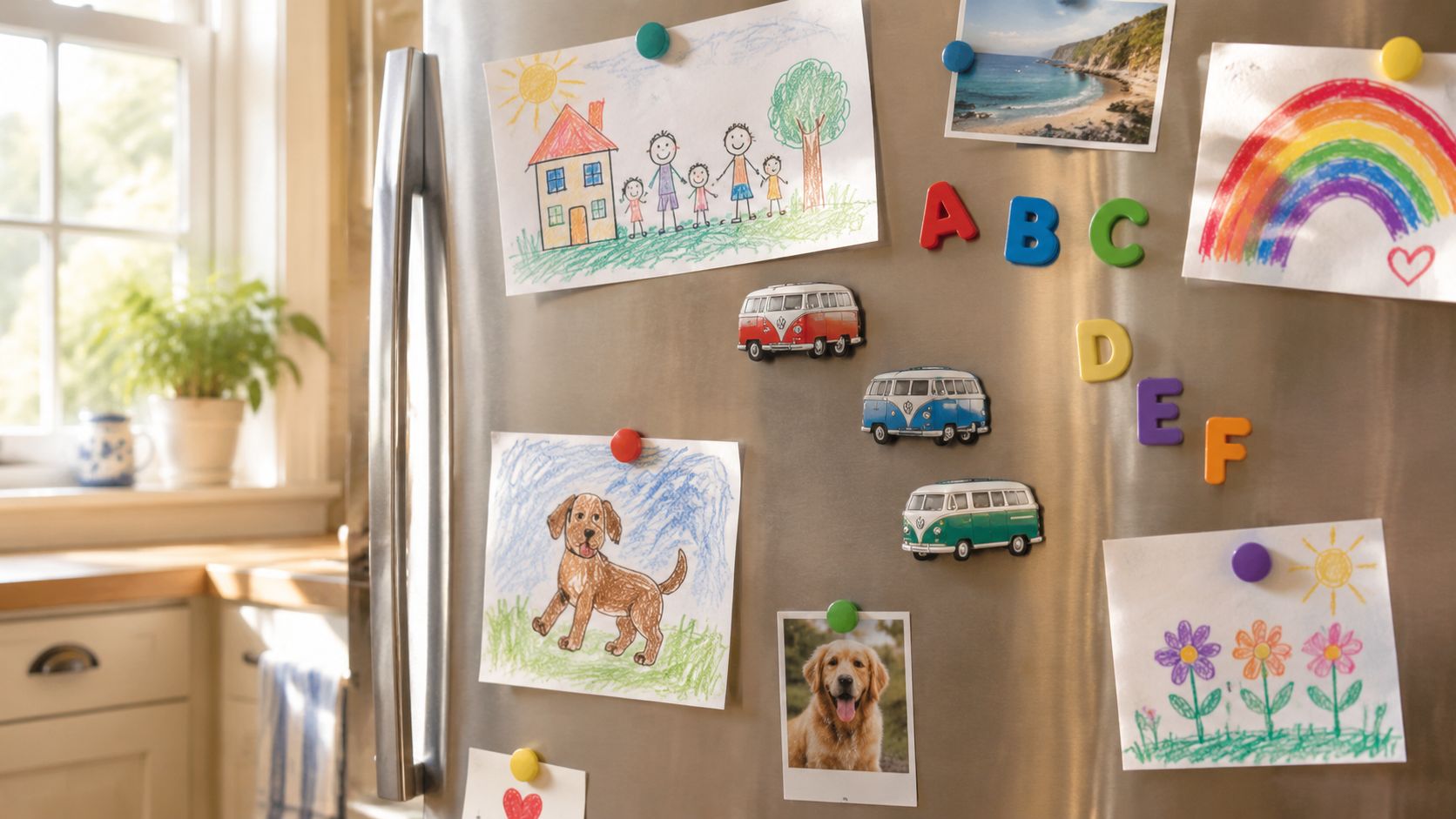
The fridge door is often the busiest wall in the house. A child's latest drawing sits beside holiday photos, alphabet pieces, a shopping list and, if your family has a soft spot for Volkswagens, a cheerful little Kombi or Beetle. It's a warm, familiar display, but the best fridge magnets for kids can do more than brighten the kitchen. They can encourage conversation, imaginative play, early literacy and a shared love of classic car culture.
Safety still comes first, especially for toddlers. The right choice is usually a large, smooth, single-piece magnet with an enclosed, lower-strength magnetic component, rather than a tiny loose magnet or a design with detachable parts. This guide brings together practical selection advice, Australian safety information, age-based ideas and VW-inspired activities for families who like their learning with a little sunshine and surf culture.
Welcome to the Wonderful World of Fridge Magnets for Kids
A child placing a bright magnet on the fridge is doing more than decorating. They're reaching, grasping, choosing, naming and deciding where an object belongs. A simple Kombi magnet can become the van heading to the beach, while a Beetle can “drive” past a row of animal or letter magnets. For a parent, it's a small moment of play during the busy rhythm of breakfast, school preparation and dinner.
That's part of the charm of fridge magnets. They live in a shared family space, so adults can join in without setting up a separate activity table. A parent might ask where the Kombi is going, help sound out a word or invite a child to sort magnets by colour. The kitchen becomes a casual learning spot, not a classroom with a timetable.
VW designs add a lovely thread of nostalgia. The Beetle, Kombi and Samba Bus carry strong associations with road trips, beach days, freedom and Australian car-show culture. A child may not know the history yet, but a parent or grandparent can turn a magnet into a story about a family car, a restoration project or a memorable day at Volksfest or the VW Nationals.
A good family magnet should earn its place twice, first through safe construction, then through the stories and play it encourages.
The rest of this guide focuses on choosing thoughtfully. You'll find ways to judge materials and construction, understand Australian rules, match designs with age and learning goals, and care for a display that remains attractive and practical. The same principles apply whether you're buying a small gift, refreshing a play area or adding a touch of VW memorabilia to the family kitchen.
What Makes a Great Fridge Magnet for Kids
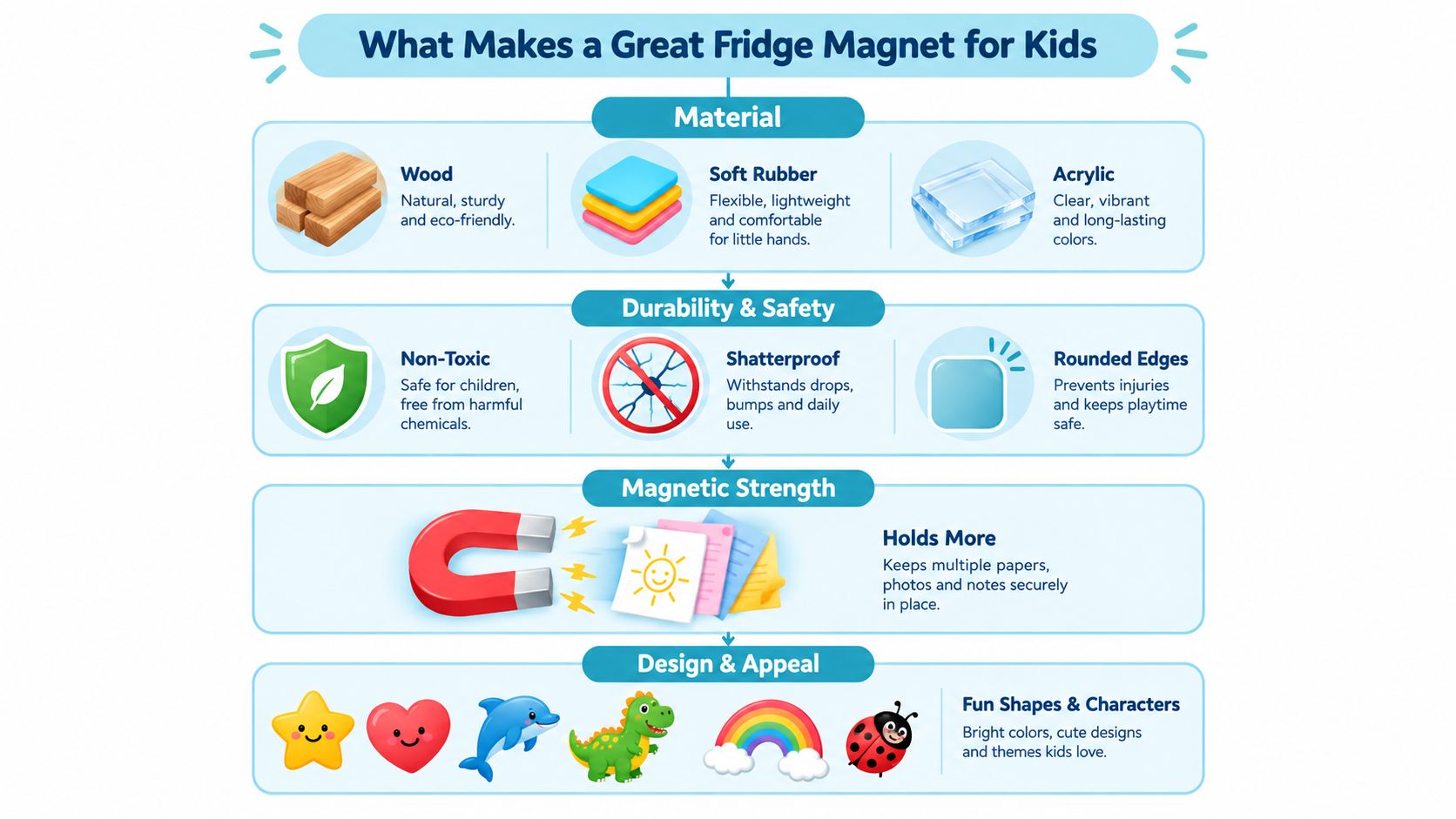
A child-friendly magnet should feel more like a sturdy wooden block than a fiddly novelty. Chunky shapes, smooth edges and single-piece construction make a design easier for small hands to hold and less likely to break into accessible components. A rounded Kombi, animal or letter can invite handling without presenting the same concerns as a thin piece with a brittle surface or a glued-on decoration.
Start with the outer material
Wood can give a magnet a warm, tactile feel, while soft rubber is comfortable to grip and less likely to chip like a hard coating. Acrylic and resin-encased designs can deliver bright colours and detailed artwork, provided the surface stays intact and the magnetic component remains securely enclosed. The material matters, but the construction matters just as much.
Look closely at the edges and joins. A quality piece shouldn't have sharp corners, a loose badge, a cracked coating or a back that flexes enough to expose the magnet. Smooth surfaces are also easier to wipe after little fingers have moved a magnet around the fridge.
Think about size and magnetic hold
A magnet needs enough grip to hold a drawing or note, but stronger isn't automatically better for a child's product. A large decorative face with an enclosed, lower-flux ferrous magnet can be a more sensible choice than a tiny high-energy magnet that's easy to separate or swallow.
Use this quick check before buying:
- One solid piece: Prefer a design that doesn't separate into wheels, badges, beads or small magnetic parts.
- Rounded and smooth: Run your fingers around the edges and inspect the finish for cracks, splinters or sharp points.
- Secure backing: The magnetic element should be fixed inside or firmly behind the main body.
- Readable design: Bold colours and recognisable shapes help children name, sort and use the magnet in play.
- Practical grip: It should stay on the fridge without being so strong that a child must yank it free.
For a VW collector, detail is part of the fun. For a young child, a focus on simplicity and durability over tiny scale details is key. Save delicate collector pieces for an adult display and choose a broad, durable design for hands-on play.
Safety First and What Australian Parents Should Know
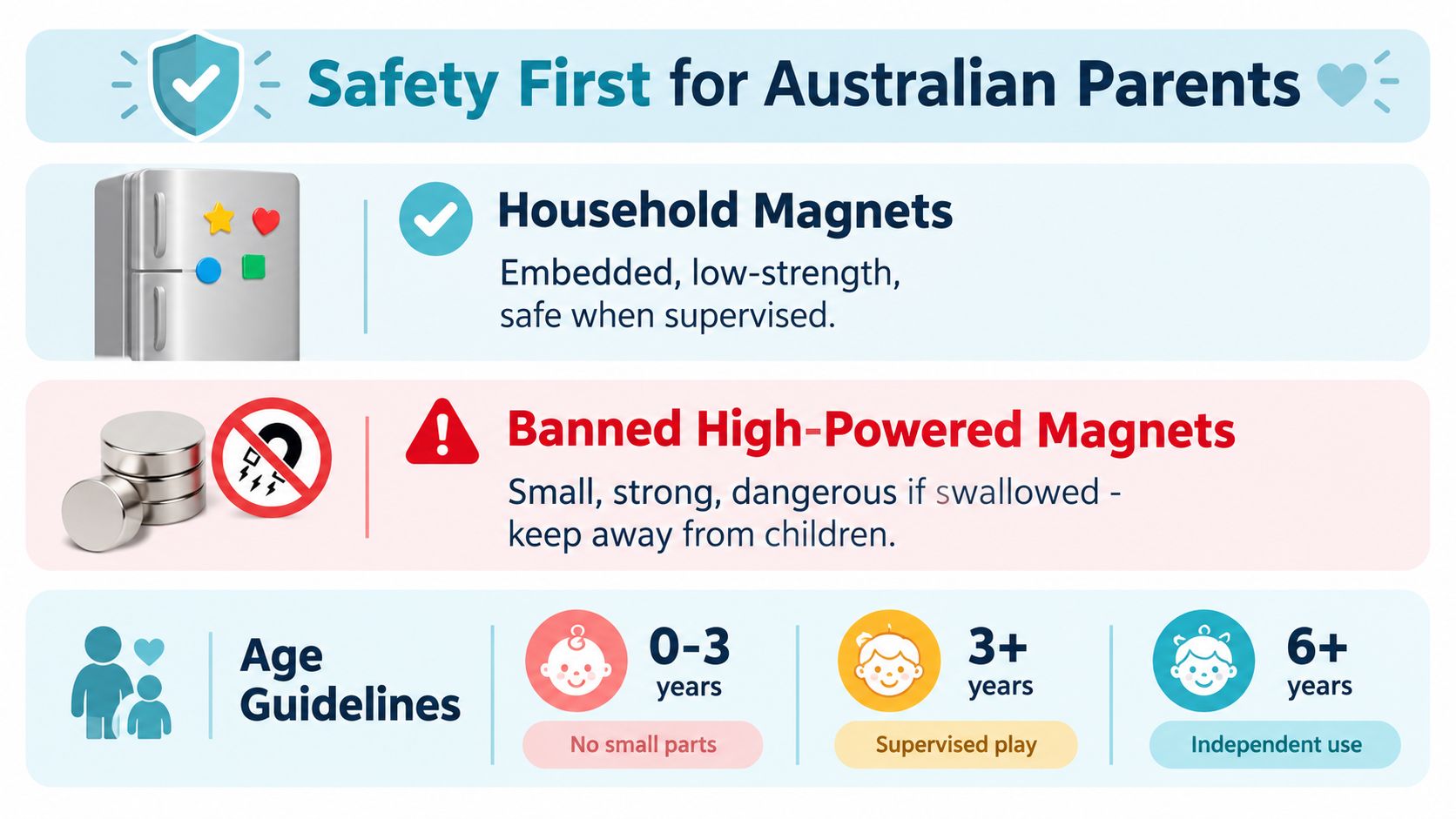
Australian guidance draws an important line between an ordinary household fridge magnet and a small, high-powered, loose or separable magnet. A permanent ban on small, high-powered magnets came into effect in Australia on 15 November 2012. It covers loose or separable magnets small enough to fit the Australian small-parts cylinder when their magnetic flux index is above 50 (kG)² mm², because swallowing them can cause severe internal injuries. The ACCC product safety bulletin explains the ban and its exclusions.
Many ordinary fridge magnets are excluded because the magnet is embedded in plastic or plaster, the item is sold singly rather than as a group of loose magnets, and the magnet is generally a weaker ferrous type. That doesn't make every decorative magnet suitable for a toddler. A cracked casing, detached backing or small removable ornament can still create a risk.
Understand the toy standard
The mandatory Australian standard for toys containing magnets applies to new toys intended for children under 14 years when magnets or magnetic components are present. It aligns with AS/NZS ISO 8124.1:2019 for mechanical and physical safety, and its design requirements aim to prevent children accessing small magnets. The product name isn't the deciding factor. If an item is supplied as a toy or clearly intended for play, the toy requirements can become relevant. The ACCC guide to toys containing magnets outlines the standard and its scope.
Queensland guidance describes a hazardous small magnet as having a magnetic flux index of 50 or more, and gives examples including a disc up to 26 mm in diameter and 5 mm thick. The mandatory-standard information provides these technical details. Parents don't need to perform laboratory testing at home, but they should treat a tiny, powerful, detachable magnet as unsuitable for children.
Choose, check and supervise
Kidsafe Victoria warns that swallowed magnets can lock together inside the body, causing blockages, bowel perforations, infection or death. Its practical advice is to choose fridge magnets large enough that they can't fit into a young child's mouth. Kidsafe Victoria's magnet safety guidance also explains why supervision remains important, even with familiar household products.
Before purchase, check the age guidance, warnings, materials and construction. For a toddler, favour a large, single-piece design that cannot be pulled apart. Keep loose magnet sets and experimental products away from young children. Australian rules allow the only loose, small high-powered magnets in experimental sets for children 8 years and over, so those products aren't a sensible choice for toddler play.
For a practical Australian reference, read the fridge magnet safety rules for families. If a magnet or component is swallowed, seek urgent medical help rather than waiting for symptoms.
Choosing the Right Style for Age and Learning Goals
A good magnet suits the child's hands, interests and stage of learning. A toddler may enjoy moving a broad vehicle shape, while an older child may be ready for alphabet play, sorting or storytelling. Age labels provide a useful starting point, though parents should also consider the child's habits, supervision needs and tendency to mouth objects.
| Magnet Type | Best Age Range | Key Benefit | Safety Tip |
|---|---|---|---|
| Chunky vehicle or animal shapes | Toddlers with close supervision | Grasping, naming and imaginative play | Choose a large, single-piece design with no detachable parts |
| Large alphabet pieces | Preschool years with supervision | Letter recognition, sounds and early word building | Check that each piece is sturdy and keep small parts away from younger children |
| Number and colour shapes | Preschool and early school years | Counting, sorting and matching | Inspect edges and backing regularly |
| Story or scene pieces | Older children with supervision | Sequencing, vocabulary and creative storytelling | Avoid sets containing loose, powerful magnetic components |
| VW Beetle and Kombi designs | Family play across ages, matched to construction | Heritage stories, travel themes and imaginative play | Select broad, secure designs for hands-on use |
A Volkswagen Beetle model can turn a simple game into a language activity. Ask the child to find the red car, move it beside a house or describe where it is travelling. A Kombi or Samba Bus can start a road-trip story, with stops at the beach, a market or a family picnic.
For early literacy, alphabet magnets work best when children use them with purpose. Build a name, make a short word or match a letter with a picture. Older children can arrange map-style or storytelling pieces in order, then ask questions about places, journeys and family memories.
VW designs also bring a useful connection to Australian motoring history. A Beetle or Kombi can prompt conversation about family cars, camping trips and the way people travelled in earlier generations. Choose a licensed piece with clear details, broad surfaces and a secure backing, so the theme adds learning value without making the magnet difficult for small hands to manage.
Match the magnet to the child's hands first, then match the theme to the child's imagination.
For a birthday or classroom reward, check whether the item is intended for play or decoration. A licensed VW piece with simple, secure construction can suit shared family use. A finely detailed collector design may be better displayed on a high shelf, where children can enjoy its shape and VW heritage without handling fragile parts.
Fun and Educational Ways to Use Fridge Magnets at Home
A fridge display works best when it changes with the child's interests. Start with a small group of large, safe pieces and give each one a job. Alphabet magnets can build simple words, while a Kombi, Beetle and a few scenic pieces can turn the door into a tiny Australian road trip.
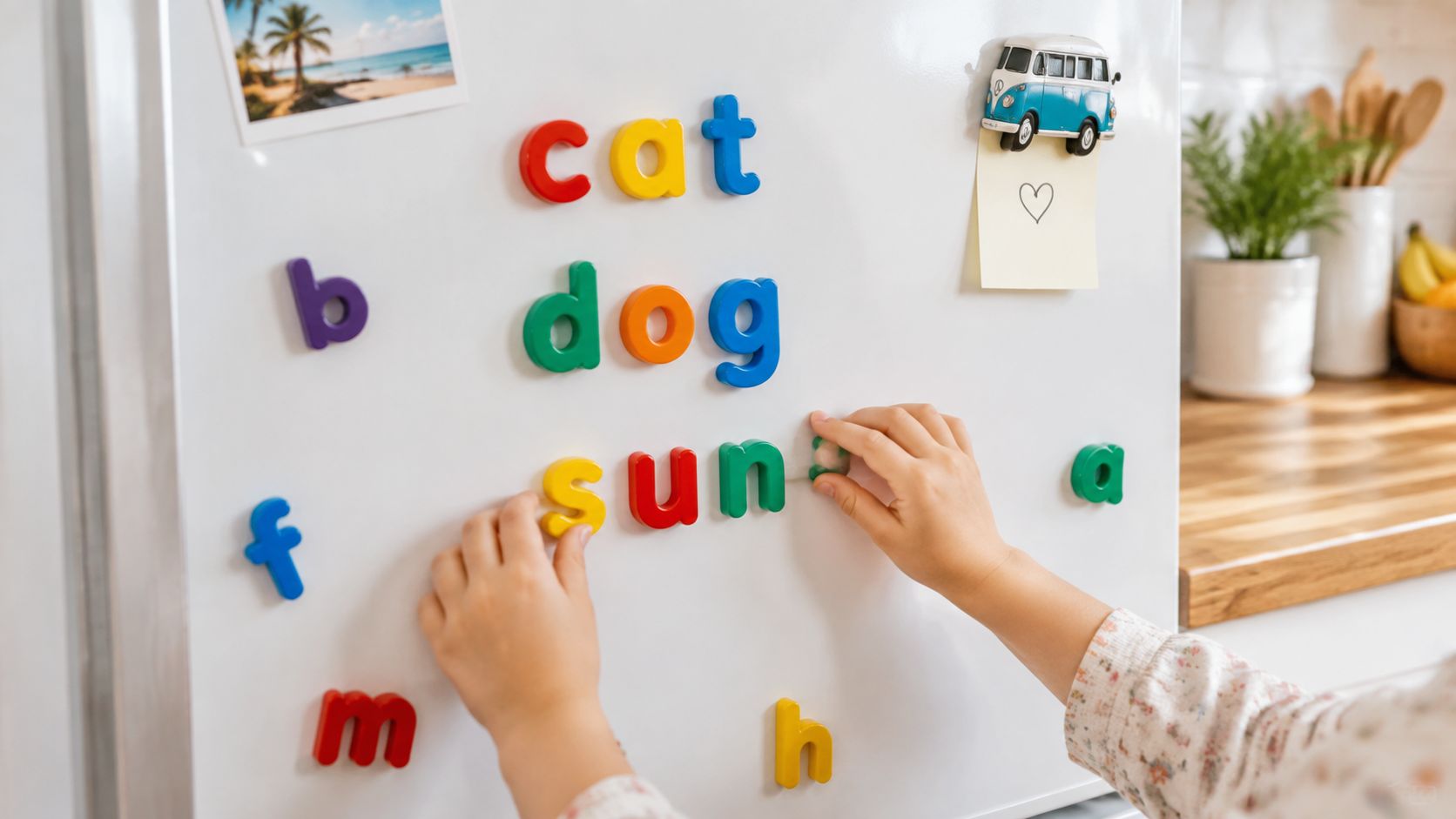
Try these activities:
- Build a travel story: Place a Kombi at the start of a pretend journey and ask where it should stop next. Encourage the child to name objects, describe movement and remember the order of events.
- Sort by a visible feature: Group magnets by colour, vehicle type, shape or size. Then change the rule and ask the child to explain what moved.
- Make a word garage: Use broad alphabet pieces to build a vehicle name, a family member's name or a simple place name. Say each sound together without turning the activity into a test.
- Create a family route: Add a drawing or printed photo beside the magnets and talk about a real outing, beach visit or car show. The VW theme gives children a concrete starting point for questions about travel and history.
- Play “where does it go?”: Move a Beetle above, below, beside or inside a pretend scene. These location words make ordinary play useful for language development.
Writing surfaces can add another layer for children who like drawing roads, signs and destinations. A dedicated write-on fridge magnet collection can help turn the display into a reusable message board, provided the product is used as directed and supervised appropriately.
Keep the activity fresh by rotating the display rather than adding more and more pieces. A tidy group is easier for a child to focus on and easier for an adult to inspect.
A short visual prompt can also get the whole family involved:
Caring for Your Magnets and Keeping the Fridge Safe
Good care protects both the child and the collection. Wipe smooth surfaces with a soft, slightly damp cloth, then dry them before returning them to the fridge. Avoid soaking wood or rubbing printed finishes aggressively, since moisture and friction can damage decorative surfaces.
Inspect magnets during ordinary kitchen clean-ups. Look for a split casing, chipped resin, exposed backing, loose trim or a magnet that has started to shift. Retire any piece that has become damaged or separable, particularly if a child uses the display independently.
A simple household routine
- Keep play pieces accessible: Place approved, sturdy designs at a reachable height and keep delicate collector items higher up.
- Store spare sets securely: Put unused magnets in a closed container where young children can't reach them.
- Protect the appliance: Check that the backing is clean and free from grit, which can mark a fridge surface when a magnet slides.
- Reduce the pull: Teach children to lift or slide magnets gently instead of dragging them across the door.
- Review the display: Remove clutter so adults can see every piece and notice damage quickly.
A strong fridge surface doesn't remove the need for supervision. Children may test magnets on other household objects, move them near electronics or attempt to pull apart a design that looks interesting. Keep the activity in a defined area and explain that magnets stay on the fridge.
For collectors, a rotating display is a smart compromise. Show the sturdy family-friendly pieces at child height, while limited, finely detailed or fragile VW memorabilia stays protected from enthusiastic little hands.
Gift Ideas and Where to Find Quality VW Magnets in Australia
A thoughtful magnet gift can connect generations. For a young VW fan, choose a broad, colourful design that supports supervised play. For a collector or classic-car owner, a licensed piece with recognisable Beetle, Kombi or Samba Bus styling may work better as display memorabilia than as a toy.
A gift buyer can build a small themed bundle around a family interest:
- For a road-trip family: Pair a sturdy VW magnet with a travel note board or a holiday photo display.
- For a car-show regular: Choose a classic Volkswagen design that reflects the family's own Beetle, Kombi or restoration project.
- For a young storyteller: Add vehicle-themed pieces that can support a beach, camping or family journey scene.
- For an adult collector: Consider a Kombi Samba Bus diecast or a detailed Beetle model for a shelf display, not hands-on toddler play.
- For a mixed-age household: Keep child-friendly magnets at the front of the fridge and place delicate diecast models in a separate display area.
Buying from an Australian importer can make the experience simpler. Local stock and fast shipping help with birthdays, Christmas gifts and last-minute car-show presents, while local support makes it easier to ask about product details before ordering. Look for clear descriptions, licensed branding and sensible construction rather than choosing a piece only because the artwork looks nostalgic.
A curated range of VW fridge magnets in Australia can sit comfortably alongside broader VW memorabilia collectibles, including diecast vans, cars and coastal-inspired décor. The key is to choose the right item for the right role. A safe, durable magnet can invite play, while a detailed VW Kombi diecast Australia collectors admire belongs in a protected display.
Volkswagen Memorabilia brings together licensed VW gifts, fridge magnets, Kombi Samba Bus diecast models, Beetle models and coastal décor for Australian enthusiasts and families. Visit Volkswagen Memorabilia to find a thoughtful piece that keeps Volkswagen heritage part of everyday life, from the family fridge to the collector's shelf.