

You're halfway through packing the shopping for a Sunday drive, the fridge is covered in school notices, and the old souvenir magnet holding the list has just slipped onto the floor. A marker that wipes clean would be handy, especially if the same door also has to manage meal plans, bin night reminders and a child's latest masterpiece.
Fridge magnets you can write on solve that small but familiar problem. They combine a magnetic backing with a surface designed for dry-erase ink, liquid chalk, or removable labels. Think of one as a tiny whiteboard, chalkboard, or sticky note that grips a steel fridge door instead of a wall.
The idea has a nice bit of everyday nostalgia to it. Like a well-loved Kombi at a sunny coastal show, a good magnet can be decorative, useful and ready for another trip around the block. The important part is choosing the right surface, backing and marker for your kitchen.
What a Fridge Magnet You Can Write On Actually Is
A writable fridge magnet usually has three parts. The rear layer is magnetic, the middle may provide structure, and the front carries a smooth, chalk-friendly, or label-ready coating. The writing surface is what makes the product reusable. The magnet keeps it in place on a suitable metal surface.
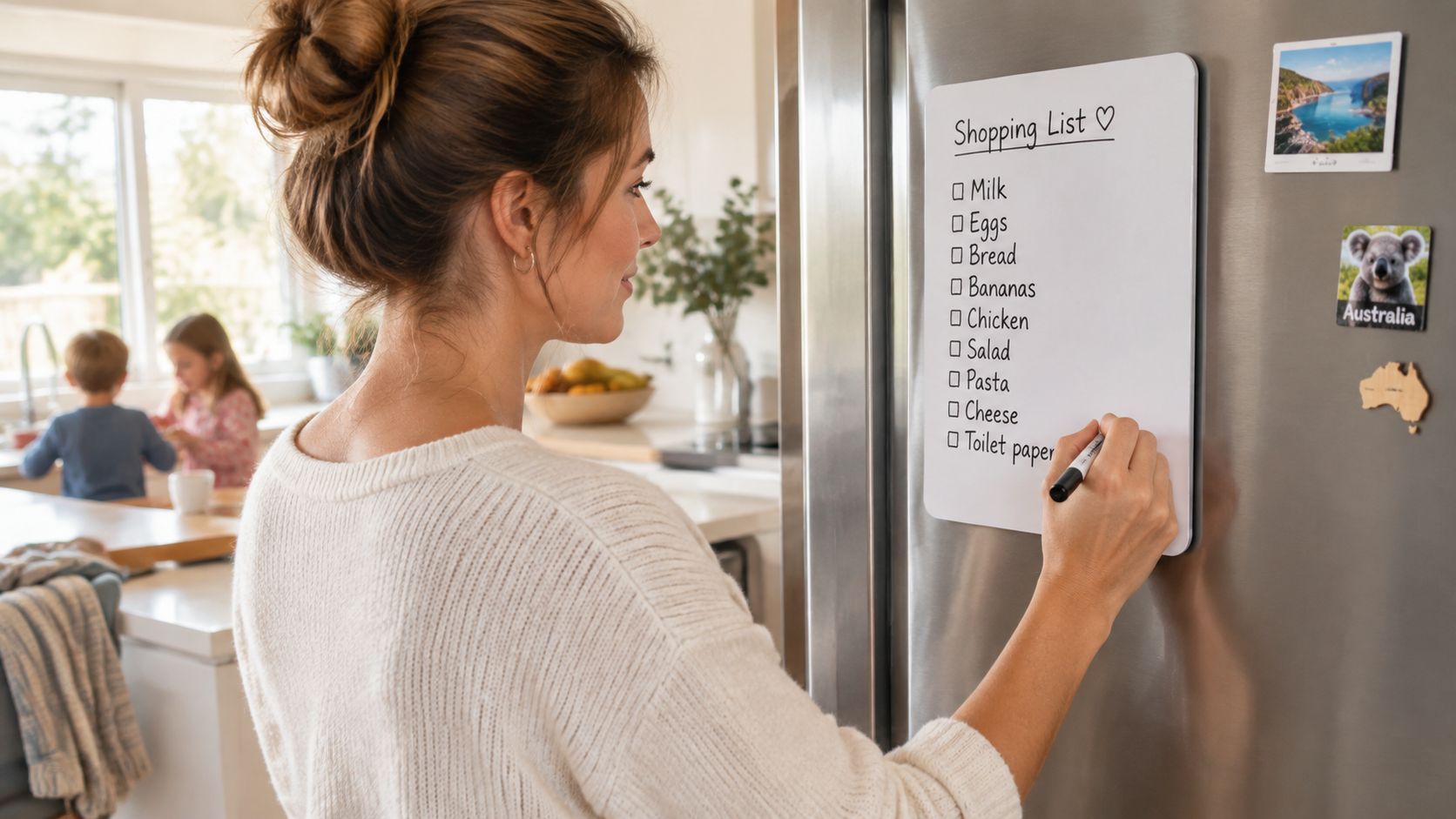
A dry-erase version behaves like a small whiteboard. You write a shopping item, appointment, or reminder with a compatible marker, then wipe it away when the job is done. A chalkboard-style panel gives you a softer matte appearance, while an adhesive label magnet is better suited to short labels that need to move around the fridge.
The simple distinction
A plain decorative magnet has no special writing coating. You can sometimes write on it, but ordinary plastic, resin, or printed paper may stain, smear, or hold the ink permanently. A larger magnetic whiteboard offers more room, yet it can feel excessive if you only need a small list or label.
Australian products show that the writable surface and the magnetic backing are separate considerations. Some magnetic sheets combine a rewritable whiteboard face with a rear that sticks to steel, while other whiteboard sheets are merely magnetic-receptive, meaning they need adhesive backing before they'll attach to a fridge door. Australian whiteboard magnetic sheets explain this difference clearly.
Before buying, check three things:
- Surface: Is it made for whiteboard markers, liquid chalk, traditional chalk, or labels?
- Backing: Does it contain a magnet, or does it only stick with adhesive?
- Fridge door: Will the door attract a magnet?
That last check prevents the classic kitchen surprise. A lovely writable panel is no use if it slides down the door like a runaway roof rack.
A Short Aussie History of Fridge Magnets
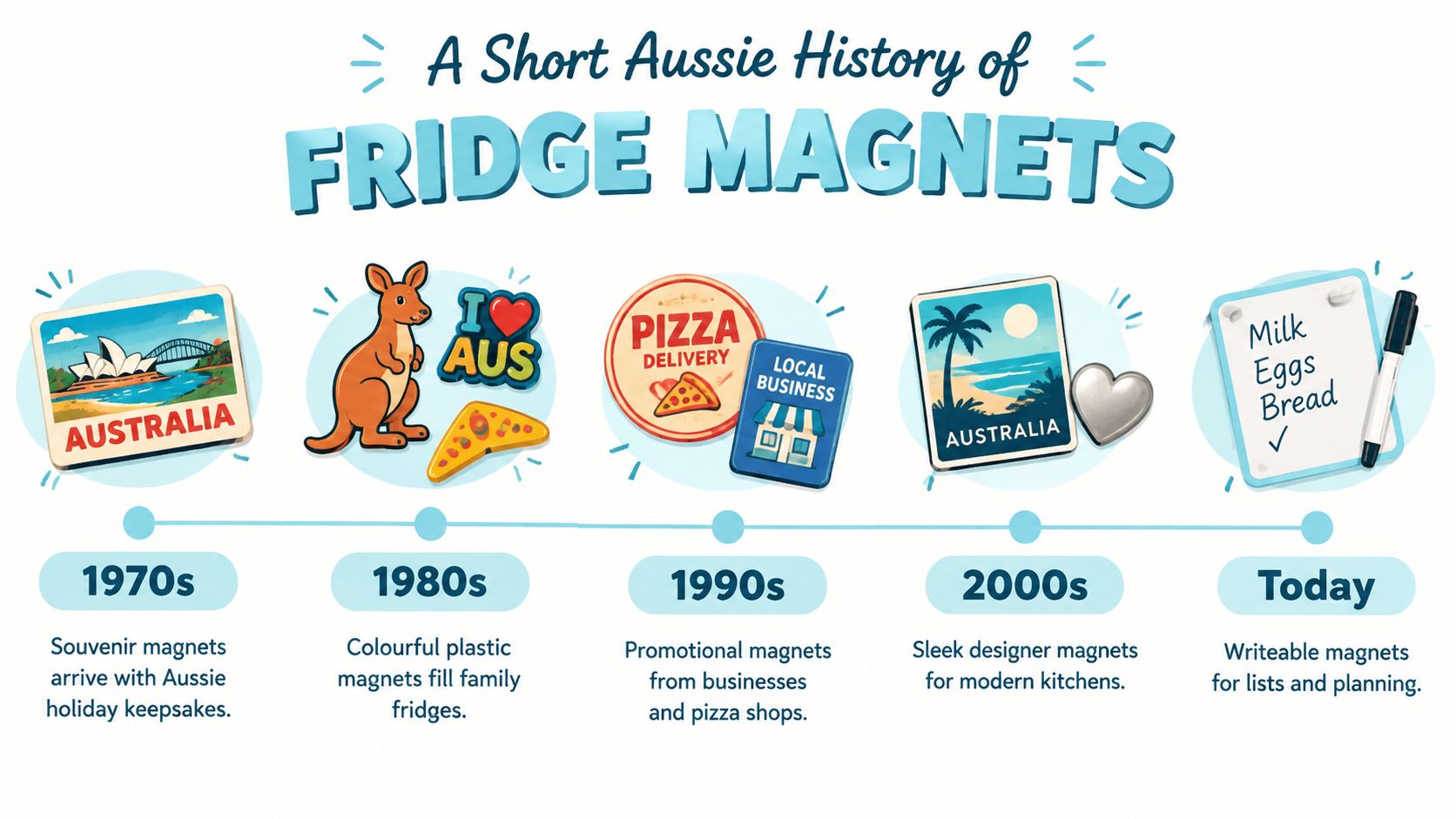
Fridge magnets sit at the intersection of household practicality and holiday nostalgia. Australian sources describe early fridge magnets as useful objects for holding shopping lists and children's artwork, before travel souvenirs helped turn them into familiar decorative pieces. By the 1980s and 1990s, souvenir magnets had become a popular reminder of places visited, from coastal escapes to overseas trips. Mister Magnets' Australian business history places the local custom-magnet category on firmer commercial ground by 1995, when a Melbourne magnet business began after a customer requested fridge magnets.
That progression matters. The same inexpensive magnetic backing and printable face that worked for a holiday image could also hold a note, label, menu, or reminder. Decorative magnets gave the fridge personality, while writable versions added a practical layer without needing a separate noticeboard.
From souvenir to household control centre
The more recent Australian story is tied to reusable whiteboard products. One Australian company describes a Perth-born product launched in 2010, while tracing the underlying whiteboard idea back to the 1960s, when early whiteboards were made from enamelled steel. That shift from fixed display to reusable communication mirrors what happened with writable fridge magnets. Magic Whiteboard Australia's history describes the connection between whiteboard-style surfaces and everyday homes, schools and offices.
Local supply has also become established. An Australian supplier says it has been in the fridge magnet business since 2008 and has provided millions of magnets across the country, a sign that magnet-based promotional, household and retail products have a substantial local presence. Today's writable versions fit comfortably into Australian kitchens styled with coastal colours, retro appliances and the relaxed spirit of a Kombi parked near the beach.
The Three Main Types of Writeable Fridge Magnets
The best type depends on what you'll write, how often you'll erase it, and the look you want on the door. A weekly meal plan needs a different surface from a small pantry label.
A quick comparison
| Type | Surface Look | Marker Used | Best For |
|---|---|---|---|
| Dry-erase magnetic sheet or shape | Smooth, bright, white or printed | Standard whiteboard marker | Shopping lists, meal plans and frequent updates |
| Chalkboard-style magnetic panel | Matte, dark and decorative | Liquid chalk marker or suitable chalk | Menus, reminders and coastal-cafe styling |
| Adhesive label magnet | Small blank label surface | Product-compatible removable marker | Pantry labels, lunch boxes and movable notes |
Dry-erase sheets are the practical daily driver. Their smooth coated face is easy to read and usually quick to wipe, making it suitable for a list that changes every time someone opens the fridge. Look for a coated sheet rather than an ordinary printed magnet, because the coating determines whether ink releases cleanly.
Chalkboard panels bring more atmosphere. A black face can suit timber, white cabinetry and beach-house styling, but it may need liquid chalk rather than a regular whiteboard marker. Dark surfaces can also show residue or ghosting, so cleaning becomes part of the routine.
Adhesive label magnets are smaller and more targeted. They work well when you want to identify containers, mark a child's lunch box, or move a short note without dedicating a whole A4 panel to it. They're less suited to a constantly rewritten family planner.
For a broader look at decorative and practical options, browse this fridge magnet buying guide, then return to the writing surface before deciding.
Materials and Magnet Strength Explained Simply
A quality writable magnet balances two jobs. The front must accept and release ink, while the rear must stay attached without making the sheet so rigid that it struggles on a curved door.
Australian magnetic-sheet suppliers describe thin 0.4 mm magnetic sheet as highly flexible but with very little holding ability, making it suitable for lightweight fridge advertising, crafts and hobbies. Magnet.com.au's magnetic sheet information shows the basic trade-off. Thin sheet bends easily, but it isn't the right choice for a heavy laminated planner or a stack of notices.
What sits behind the writing
Flexible ferrite or rubberised magnetic sheet is common for lightweight products. A thicker or layered backing can hold more, while a steel-backed writable layer may provide a different balance between rigidity and magnetic attraction. Rare-earth magnets can be powerful, but loose high-powered pieces aren't appropriate for casual family products.
The front coating matters just as much. PET laminate and melamine-style faces are designed to handle whiteboard ink, while chalkboard coatings suit liquid chalk or chalk. Cheap PVC-faced products may smear or leave a shadow because the surface wasn't built for repeated erasing.
| Backing Type | Pull Strength | Flexibility | Best For |
|---|---|---|---|
| Thin flexible magnetic sheet | Low | High | Paper notes, light labels and crafts |
| Thicker bonded magnetic sheet | Moderate | Moderate | Writable cards and small planners |
| Steel-backed or layered sheet | Depends on construction | Lower | Structured boards and larger surfaces |
| Loose high-powered magnet components | Potentially very high | Poor as a sheet system | Not suitable for casual children's products |
Reading a product listing
Look for sealed edges, a firmly bonded front, and clear information about the backing. If a supplier provides a pull-force description, treat it as a guide rather than a guarantee, because the result changes with the fridge's steel, paint, curvature and the weight of what you attach.
A flexible, lightweight note magnet may be perfect for a shopping list. A larger calendar needs more support. Much like choosing between a Beetle and a Kombi, the right answer depends on the load you expect it to carry.
Everyday Uses for Writeable Fridge Magnets
The fridge becomes the household's control centre because everyone passes it. A writable magnet makes that traffic useful without filling the bench with scraps of paper.
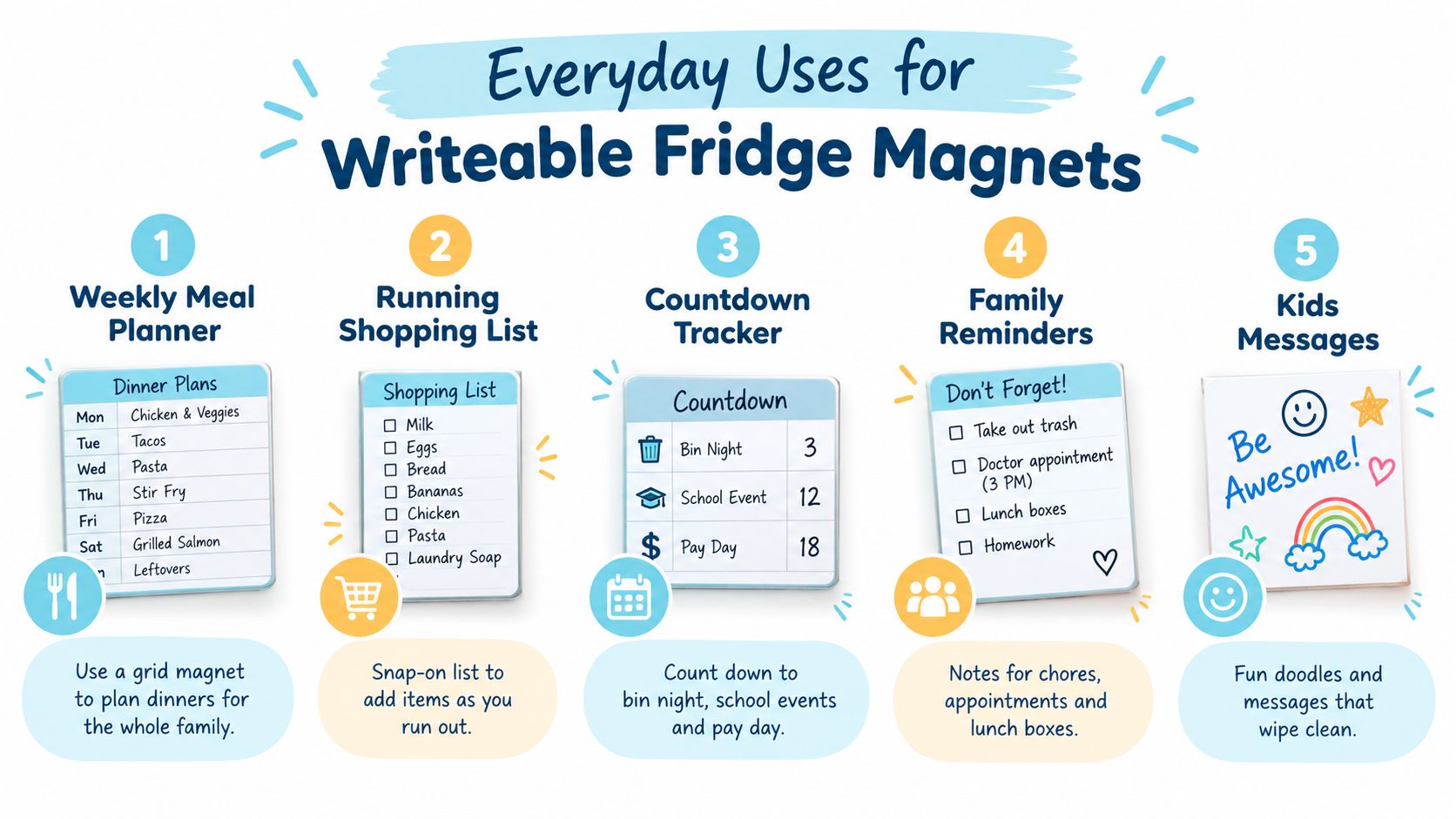
Start with a running shopping list. Give each household member permission to add items as they run out, then wipe the list after the supermarket trip. A larger panel works better than several tiny tiles if the list regularly includes produce, pantry goods and forgotten barbecue supplies.
A grid-style panel can handle a weekly meal plan. Write dinners across the top or divide the surface into days, then change meals without printing a new sheet. Smaller write-on magnets can mark bin night, school events, appointments or a countdown to the next family outing.
Useful family ideas
- Meal planning: Keep the week visible beside the recipe cards so everyone knows what's for dinner.
- School routines: Add reminders for library books, sports gear and lunch boxes.
- Children's practice: Use compatible washable writing products for letters, sight words and simple drawings.
- Household messages: Leave short notes that don't justify a text message, such as “back soon” or “please feed the dog”.
- Event tracking: Mark birthdays, visitors and weekend jobs where the whole family can see them.
Marker habits that prevent frustration
Use standard whiteboard markers on glossy dry-erase faces. Liquid chalk suits products specifically made for that medium, especially dark chalkboard surfaces. Don't use permanent pens unless you deliberately want the message to stay.
Australian product guidance also points out that dark or laminated surfaces may need a suitable cleaner to avoid staining or edge lift. This Australian guide to magnetic whiteboards treats markers as product-specific rather than interchangeable, which is the sensible approach.
For a visual demonstration of household organisation ideas, watch the short video below.
Safety, Surface Compatibility and Care
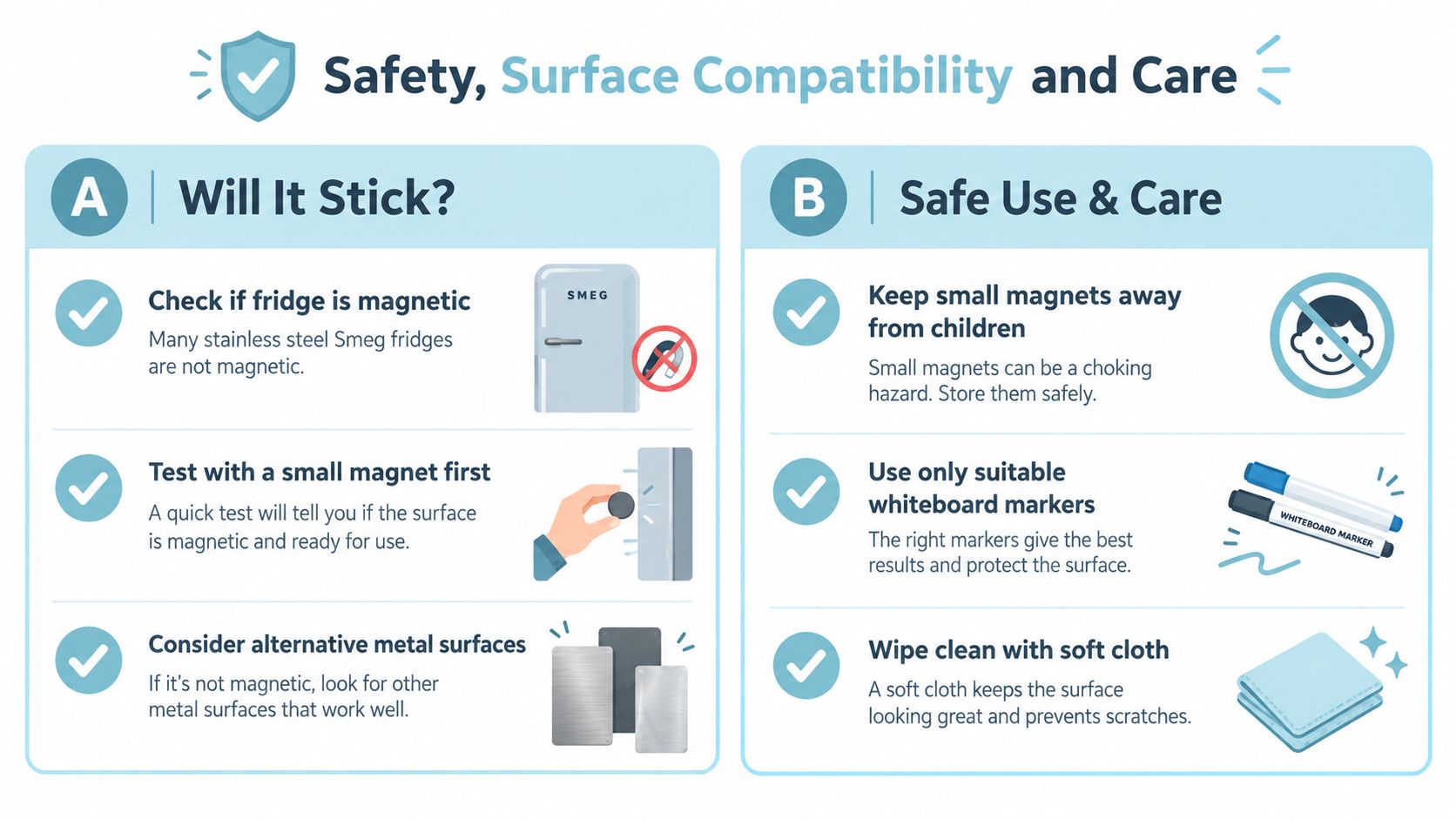
A magnet only works if the surface accepts it. Many stainless-steel fridge doors are non-magnetic, although the exact construction varies. Test a small ordinary magnet on the door before buying a magnetic board, and try the side panel if the front doesn't attract it.
If the door fails the test, an adhesive-backed board may be the practical answer. You can also use a suitable steel plate on another kitchen surface, provided it's securely installed and won't damage cabinetry. Product listings in Australia distinguish between true magnet-backed sheets and whiteboard material that needs sticky backing. One listing explicitly warns that its sheet is not a magnet, while another notes that a whiteboard magnet may stick to steel but not stainless steel. This Australian sticky whiteboard sheet listing illustrates why the product description deserves a close read.
Surface check: Clean and dry both the fridge and the magnetic product before testing. Dust, moisture, curves and coated finishes can reduce contact and make edges lift.
Magnet safety around children
In Australia, products containing magnets and intended for children under 14 must carry clear warnings and age grading, and loose or poorly secured magnets are specifically flagged as hazardous. The Australian product-safety guide for toys with magnets recommends careful attention to how magnets are fixed.
Australia also bans small high-powered magnets above a magnetic flux index of 50 [kG² mm²] when they fit the small-parts cylinder and are supplied in groups of two or more. Swallowed magnets can attract across intestinal tissue and cause severe internal injury. The small high-powered magnets ban makes the design implication clear. Choose bonded magnetic sheet or a permanently fixed magnetic layer, not loose rare-earth spheres or detachable multi-piece components.
Keep the surface usable
Wipe with a soft cloth and mild soapy water when needed. Avoid abrasive cleaners on melamine-style surfaces, and don't soak laminated edges. Store chalkboard panels flat so they don't warp, and replace any product with a peeling laminate, damaged backing or fading coating.
For a decorative Australian option that suits a retro kitchen or coastal display, explore fridge magnets in Australia, while keeping children and pets away from loose magnetic parts.
DIY Writeable Magnets with a Coastal VW Twist
A homemade writable magnet can fit neatly into a coastal kitchen without looking like office equipment. Start with flexible magnetic backing, cut simple tiles to roughly 6 x 9 cm, and apply chalkboard vinyl or dry-erase film to the face. Lightly sand the edges so the corners don't catch, then test the tile on the fridge before making a full set.
For a VW-inspired finish, keep the artwork simple. A horizon line, split-screen Kombi silhouette, or faded bus outline can sit at the top of the writing area without taking over the useful space. A white paint marker gives the design a weathered sign feel, while a clear matte spray can help protect the decoration once the artwork has dried.
A second handmade option
Blank terracotta discs make cheerful herb labels. Apply self-adhesive magnet to the back, paint the face with chalkboard paint, and write “basil”, “mint”, or “oregano” with a suitable chalk marker. Keep every coat thin and allow it to cure fully before putting the discs near heat, steam, or the espresso machine.
The finished set can sit alongside timber, white ceramics and surf-style accents. For more inspiration in that relaxed decorating direction, browse vintage home accessories. A small Kombi silhouette beside the weekly menu is enough to suggest the road without turning the kitchen into a showroom.
Your Writeable Magnet Questions Answered
Will a dry-erase magnet stick to stainless steel? Usually not, because many stainless-steel panels aren't magnetic. Test the door with a small magnet first, then consider an adhesive-backed board or another steel surface.
Which marker should I use? Choose a standard dry-erase marker for a glossy whiteboard face. Use a white chalkboard pen or liquid chalk on a surface designed for chalk products, and follow the product instructions rather than assuming every marker is interchangeable.
How can I remove ghosting? Start with a dry cloth and the recommended whiteboard cleaner. For a stubborn mark, use a tiny amount of methylated spirits on an appropriate cloth, then wipe the surface clean and test an inconspicuous area first.
Can children use writable magnets? They can, provided the magnetic layer is firmly bonded, the product is suitable for their age, and an adult supervises use around babies and pets. Keep loose magnets away from anyone who might swallow them, and store finished panels flat and away from heat.
Volkswagen Memorabilia offers VW-themed fridge magnets, coastal home décor and licensed diecast pieces that bring the same practical nostalgia into your kitchen, shelf or display cabinet. Visit Volkswagen Memorabilia to browse Kombi Samba Bus and Beetle models, surf-inspired accents and giftable VW memorabilia for your next relaxed home project.