
Best Diecast Car Brands Australian Collectors Trust

You're standing in front of a crowded diecast wall, or scrolling a long online category page, and every box starts to blur together. One Kombi looks brilliant in the photo, another Beetle has a nicer badge, and somewhere in the mix there's a licensed piece that'll make a VW nut smile for years, plus a lookalike that won't hold up once it's out of the packet. That's the problem with choosing the best diecast car brands in Australia, the good ones aren't just prettier, they're more consistent, better licensed, and usually better value when you care about display quality and resale later.

For Australian VW collectors, the licensing filter matters just as much as the brand name. A properly licensed Volkswagen Beetle model or VW Kombi diecast Australia piece carries the details that make the shape feel right, while the wrong one can look flat, vague, or off in the paint and markings. If you've ever hunted for a buy diecast Kombi gift or tried to build a shelf of VW memorabilia collectibles, you already know that brand reputation, scale choice, and finish quality all pull together.

The brands that matter most in the local scene tend to sit in two camps. At the entry end, you get the mass-market names that collectors recognise straight away. At the other end, you get the display-grade makers that collectors trust when they want a model to look good under close inspection, not just from across the room.

Walking Into a Diecast Shop and Feeling Overwhelmed

A first visit to a diecast aisle can feel like opening a VW show swap-meet crate and finding thirty versions of the same van. One box says 1:18, another says 1:43, a third promises opening doors, and the labels start competing with the nostalgia. Before long, the shelf stops looking like a shopping trip and starts looking like a test of patience. That's usually the moment collectors realise they're not just buying a miniature car, they're buying a mix of scale, finish, licensing, and brand discipline.

For Australian buyers, the strongest brands are the ones that make the decision easier. Hot Wheels and Matchbox are often the doorway in, because they're visible, familiar, and easy to recognise in mass retail, while collectors hunting a display piece want stronger detail and better scale consistency. Reputable diecast sourcing guides keep circling back to 1:12, 1:18, 1:24, and 1:43 as the core scale bands. That is the practical spread most local buyers use when they compare shelf space, detail, and price tiers.

Why the VW angle changes the choice

VW collecting is different from generic car collecting because the badge matters. A licensed Volkswagen piece with accurate markings, clean paint, and the right proportions feels like memorabilia, not just a toy with a familiar silhouette. That distinction is especially important for Beetles and Kombis, because their shapes are so iconic that any weakness in tooling stands out fast. A soft roofline, a lazy badge, or a sloppy window frame can ruin the whole model.

Practical rule: if the model doesn't look right before you read the box, the box probably won't save it.

The guide below favours pieces that hold up in real homes, on real shelves, and at real Australian shows. It gives you a way to judge the best diecast car brands without falling for box art or nostalgia alone, and it keeps the VW Kombi and Beetle at the centre of the comparison where they belong.

The Six Rules for Judging a Diecast Brand

A diecast brand earns trust through consistency. One good release can be a fluke, but a brand that keeps its proportions, print quality, and licensing in line across different ranges is doing the work collectors notice. I judge brands on six practical rules because that is the fastest way to separate shelf candy from pieces that still look right after a few years on display.

Start with scale and body construction

The scales most collectors keep circling back to are 1:18, 1:24, 1:32, and 1:43. Larger scales usually give you more interior depth, sharper panel lines, and hardware you can see, while smaller ones suit tight shelving or a clean themed row. A sealed 1:43 model can still be excellent, but a 1:24 Samba Bus with opening doors and a detailed cabin gives you more to inspect up close, especially when the body shape carries the whole appeal.

Check licensing before you admire the paint

A properly licensed model should carry the right logos, badges, and markings. That matters fast with VW pieces, because the badge is part of the value, not just the shape. If the licence looks vague, the markings look improvised, or the branding feels like a close enough copy, the model belongs in the maybe pile rather than the buy pile. For Beetles and Kombis, licensing usually tells you more about the collector credibility of a piece than the box art does.

Judge finish, seams, and tooling precision

Collectors should be looking at smooth hinges, tight seams, realistic paint, and tampo work that sits where it should. Better tooling usually means cleaner panel lines, more accurate wheel-arch geometry, and less paint bleed on two-tone liveries. That shows up quickly on Kombi and Samba Bus replicas, because the body is simple enough that even small flaws stand out the moment the model is under good light.

A strong diecast brand does not hide behind nostalgia, it earns trust in the details you can see under light.

Keep value in mind, not just appearance

Price-to-detail ratio is the quiet test many buyers skip. Some models cost more because they are better made, some cost more because they are scarce, and some cost more for no strong reason at all. A 1:24 Majorette Kombi at $15-20 can deliver more detail per dollar than a 1:18 loose-cast at the same price, especially if the larger piece is rough on paint, thin on licensing, or weak on finish. The better brands make the price feel fair because the scale, parts count, and finish quality match what is in the box.

Mass-Market Diecast Brands Worth Your Money

The entry-level tier is where most collectors start, and it's still where a lot of families buy gifts without overthinking it. Hot Wheels and Matchbox lead that conversation because they're widely recognised and easy to spot, especially in mixed retail environments. They're the brands most casual buyers already know, which makes them useful for play, gifting, and simple desk displays.

The familiar names

Hot Wheels is the brand you buy when you want instant recognition and broad availability. Matchbox tends to sit nearby in the same conversation, often appealing to buyers who want a practical, familiar miniature rather than a showcase model. Both are strongest when you're after affordable entry points, mixed packs, or impulse buys that don't demand a big shelf commitment.

Majorette, Welly, and Bburago usually sit a touch higher in perceived detail, depending on the release. They can be a smart middle step for buyers who want a little more realism without jumping into premium pricing. For VW fans, the key question isn't whether the badge is known, it's whether the specific release gives you a convincing Beetle or Kombi shape with decent printing and reliable proportions.

Mass-market diecast brands at a glance

Brand Common scales Typical price band (AU) VW models available
Hot Wheels Smaller play scales, often loose mix packs Entry-level Occasional VW-inspired castings and themed releases
Matchbox Smaller play scales, often loose mix packs Entry-level Occasional VW-inspired castings and themed releases
Majorette Mixed small scales Entry to mid VW-style replicas may appear in selected lines
Welly 1:24 and smaller display-friendly options Entry to mid Beetle and Kombi-style pieces appear in some ranges
Bburago 1:24 and display-oriented small scales Entry to mid VW replicas appear selectively

These brands make sense when you want something easy to source, easy to gift, and straightforward to display. They're not usually the final stop for a serious VW collector, but they're often the right first stop.

Premium Diecast Brands for Serious Collectors

Once you move into the display-grade tier, the mood changes. Collectors start caring less about brand familiarity and more about mould accuracy, part count, and how the model looks under closer inspection. That's where names like AUTOart, Minichamps, Kyosho, Solido, and Oxford Diecast come into their own.

Where detail starts paying for itself

The premium brands often do their best work in 1:18 and 1:43, because those scales suit either dramatic display presence or tighter shelf planning. AUTOart and Kyosho are especially respected when a buyer wants stronger tooling and more refined surfaces, while Minichamps remains a familiar benchmark for collectors who like accurate proportions and a serious presentation. Solido and Oxford Diecast bring good value for collectors who want convincing models without chasing the highest end of the price ladder.

For VW replicas, premium brands often make more sense than they first appear. A Kombi or Beetle has a clean, familiar shape, so a good premium mould can look especially convincing without needing the visual drama of a modern supercar. In plain terms, you often get more real-world presence per scale centimetre because the design is iconic and the details are easier to read.

Why premium can still be the better buy

The payoff isn't just surface detail. Better licensed models tend to hold up better in the collector market because scarcity limits supply, while strong finish quality keeps the model attractive in the used market. Australian collectors who care about long-term value usually lean toward the brands that control release quality rather than flooding the market with uneven batches.

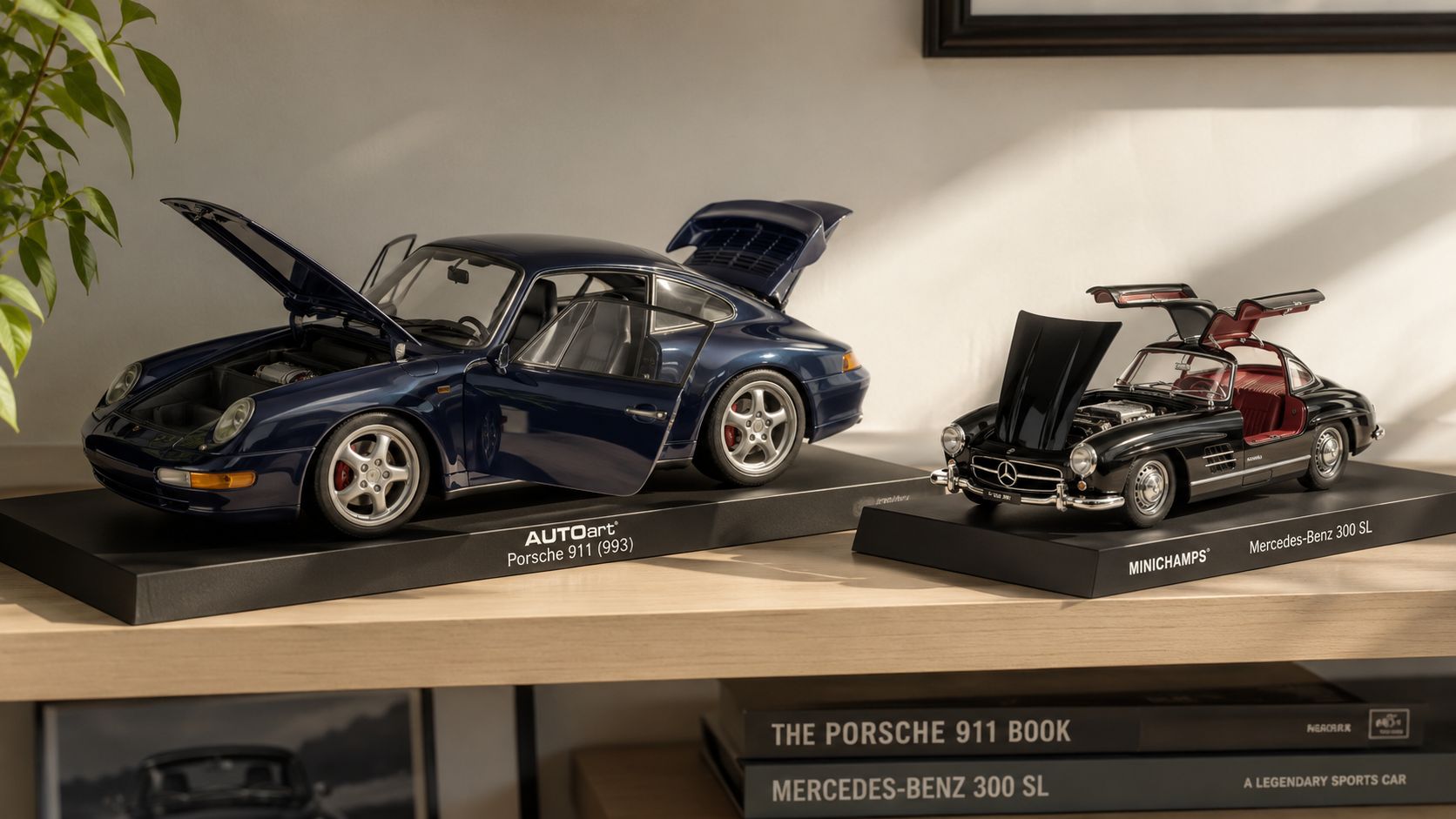
A display shelf featuring an AUTOart Porsche 911 993 model and a Minichamps Mercedes-Benz 300 SL diecast car.

Premium doesn't always mean perfect, but it usually means the brand has spent more time on the bits collectors notice first, badge detail, glazing, seam work, and paint finish. That's why serious VW buyers often end up here.

How the VW Kombi and Beetle Stack Up Across the Brand Ladder

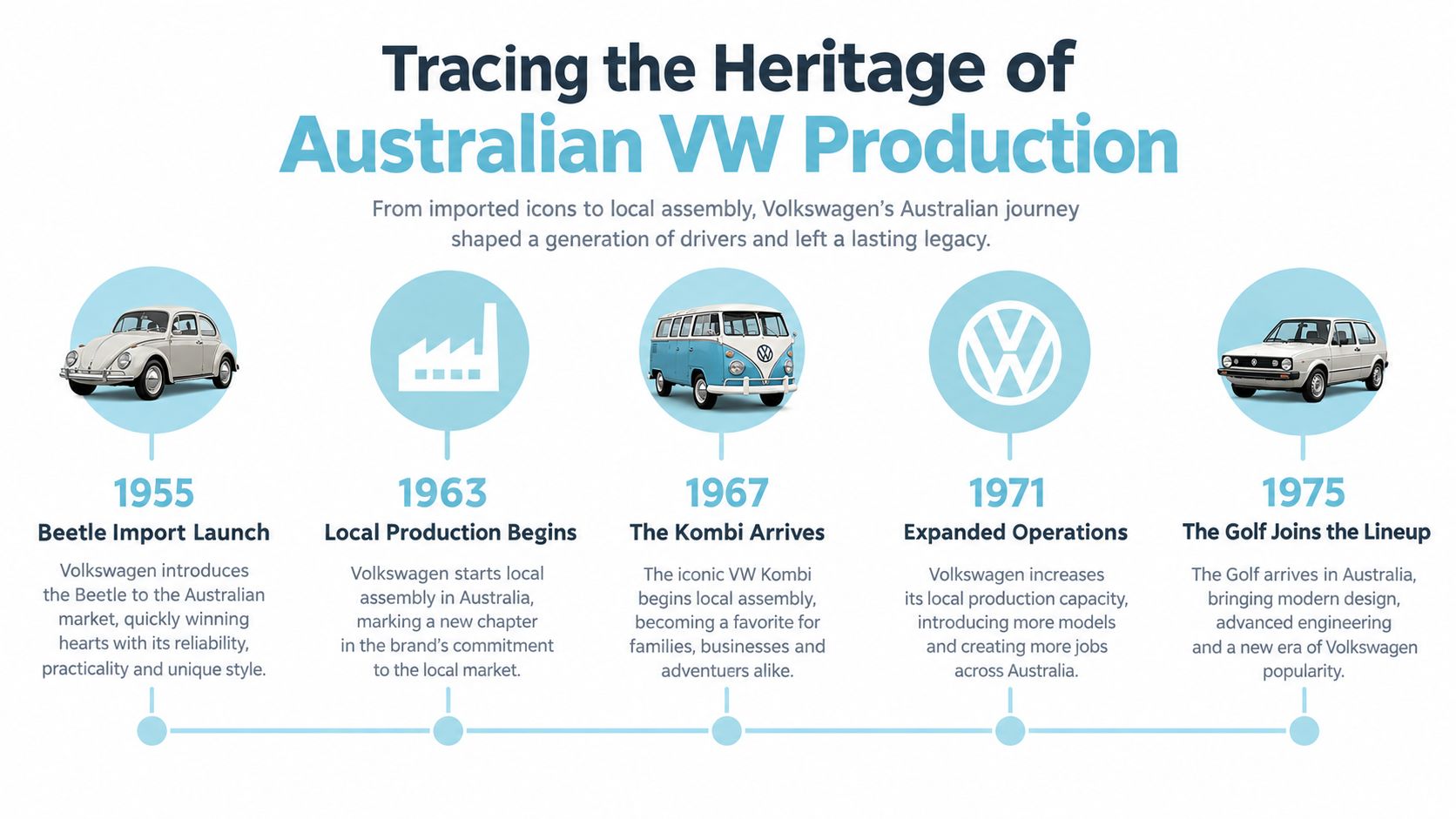
The Volkswagen story gives diecast collecting its emotional centre. The Volkswagen Beetle ran from 1938 to 2003 and total production passed more than 21.5 million vehicles, which explains why the shape lands so hard with collectors across generations (VW Beetle production history). The Volkswagen Type 2, often called the Kombi, Bus, or Transporter, entered production in 1950, and the early split-window versions are prized because they're instantly recognisable on a shelf or at a show (VW Type 2 history).

Where each VW shape tends to sit

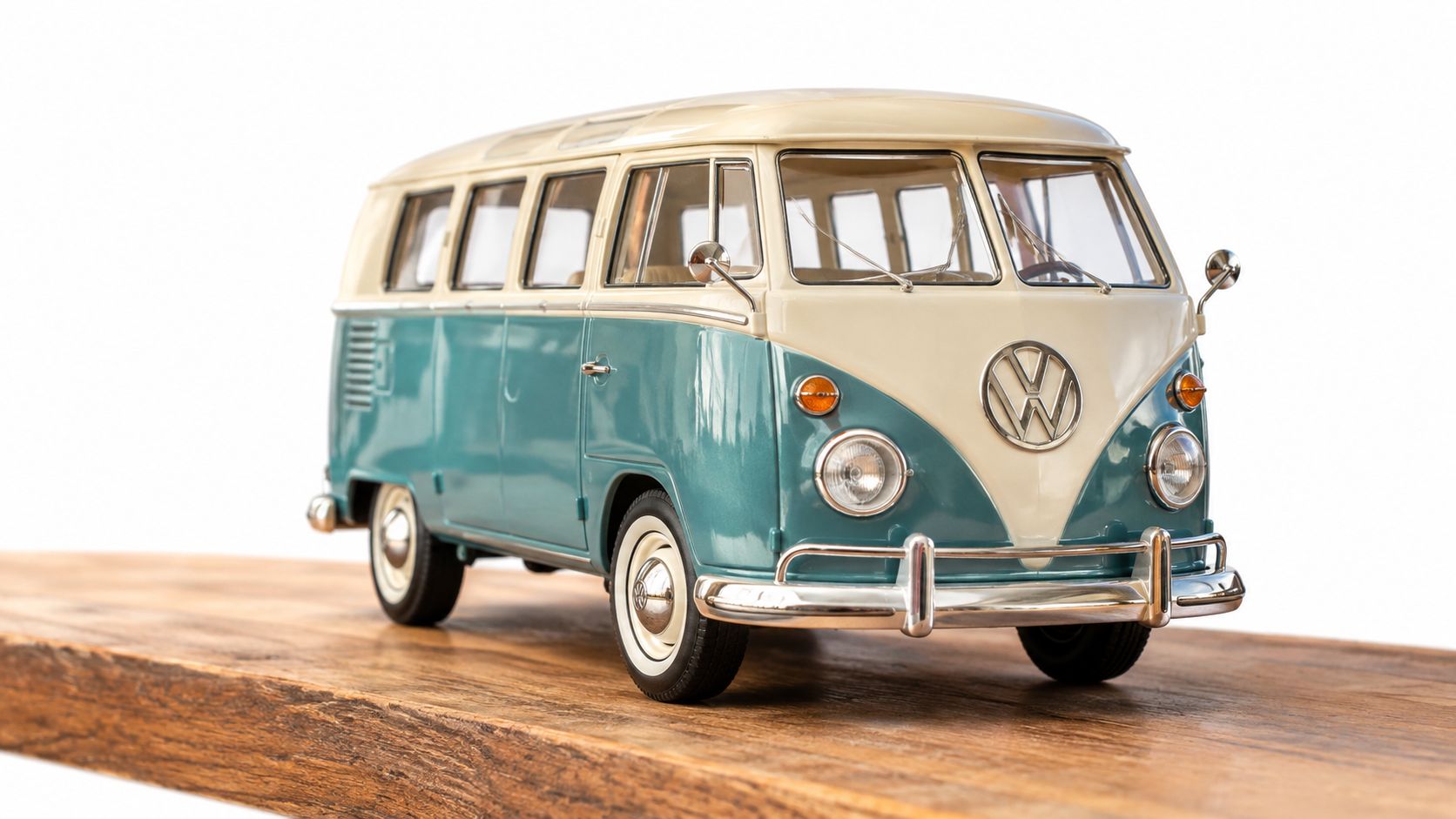
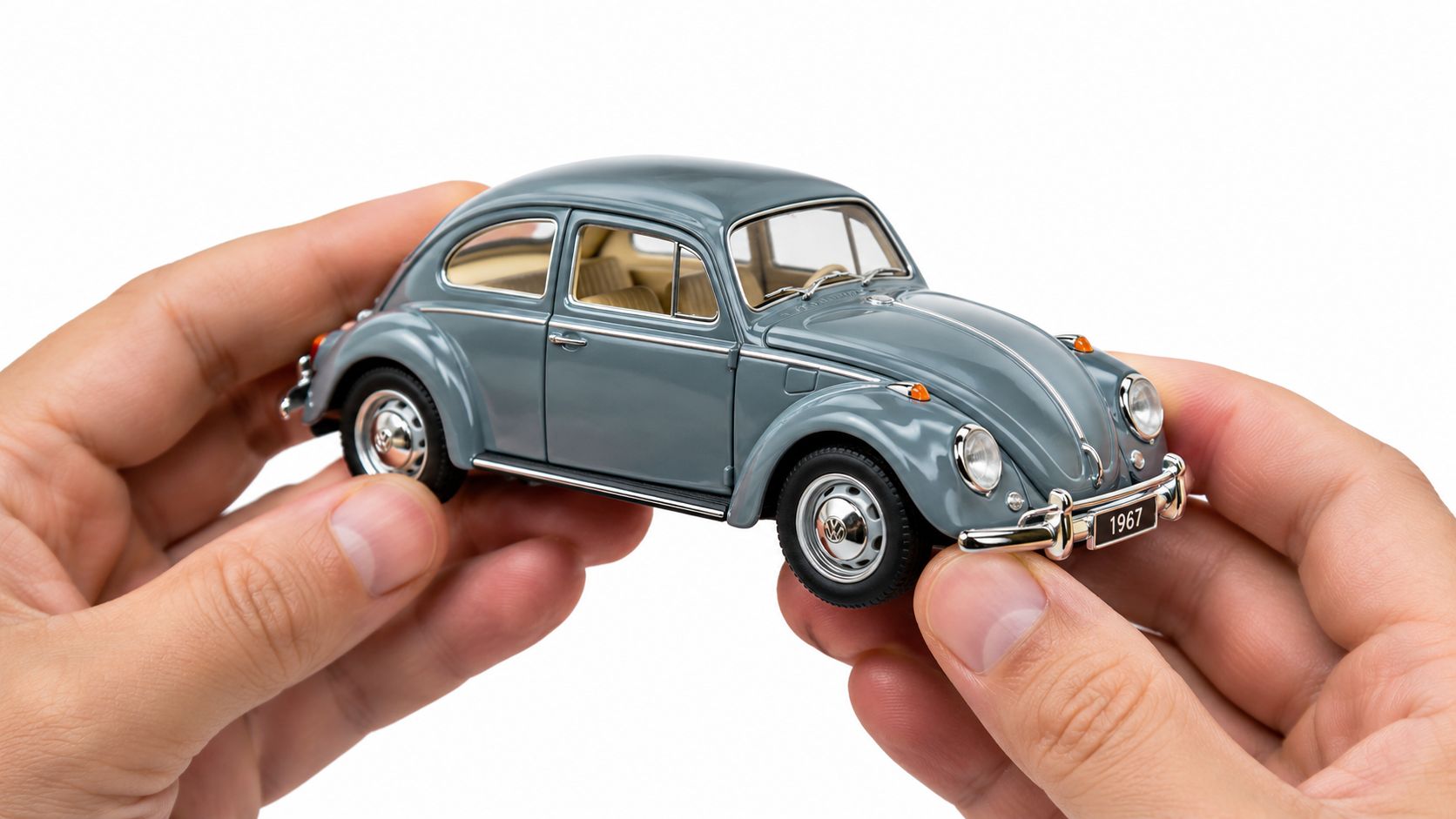
A 1962 Kombi Samba Bus usually makes the strongest impression in premium or strong mid-range form, especially when the brand gets the trim and glazing right. A 1967 Beetle can look excellent even in a smaller scale if the proportions are disciplined and the paint is clean. Flower Power variants sit somewhere between nostalgia piece and display model, and they can be a lot of fun when the colour treatment is tasteful rather than loud.

Australian collectors who want locally stocked licensed pieces often look for models like the 1:24 Samba Bus (KT7005WF) and 1:32 Blacktop Kombi (KT5376D). Those sit neatly in the middle of the market, where display appeal and affordability can coexist without asking you to commit to a huge cabinet. If you want a deeper VW-only browse, the VW Beetle models range is a useful reference point for seeing how different Beetle interpretations stack up.

The licensing filter matters even more here because VW badges, trim, and proportions are such a big part of the emotional hit. A licensed model feels like a small piece of VW history, while a generic lookalike just borrows the shape.

What to Look for When Buying a Diecast as a Gift

Gift buyers usually don't need to become diecast experts. They just need a model that looks right, feels solid, and lands with the person opening the box. A thoughtful 1:32 or 1:24 piece often gives more display pride than a flashy unlicensed 1:18 model, especially when the recipient cares about the badge as much as the body shape.

The quick in-store checklist

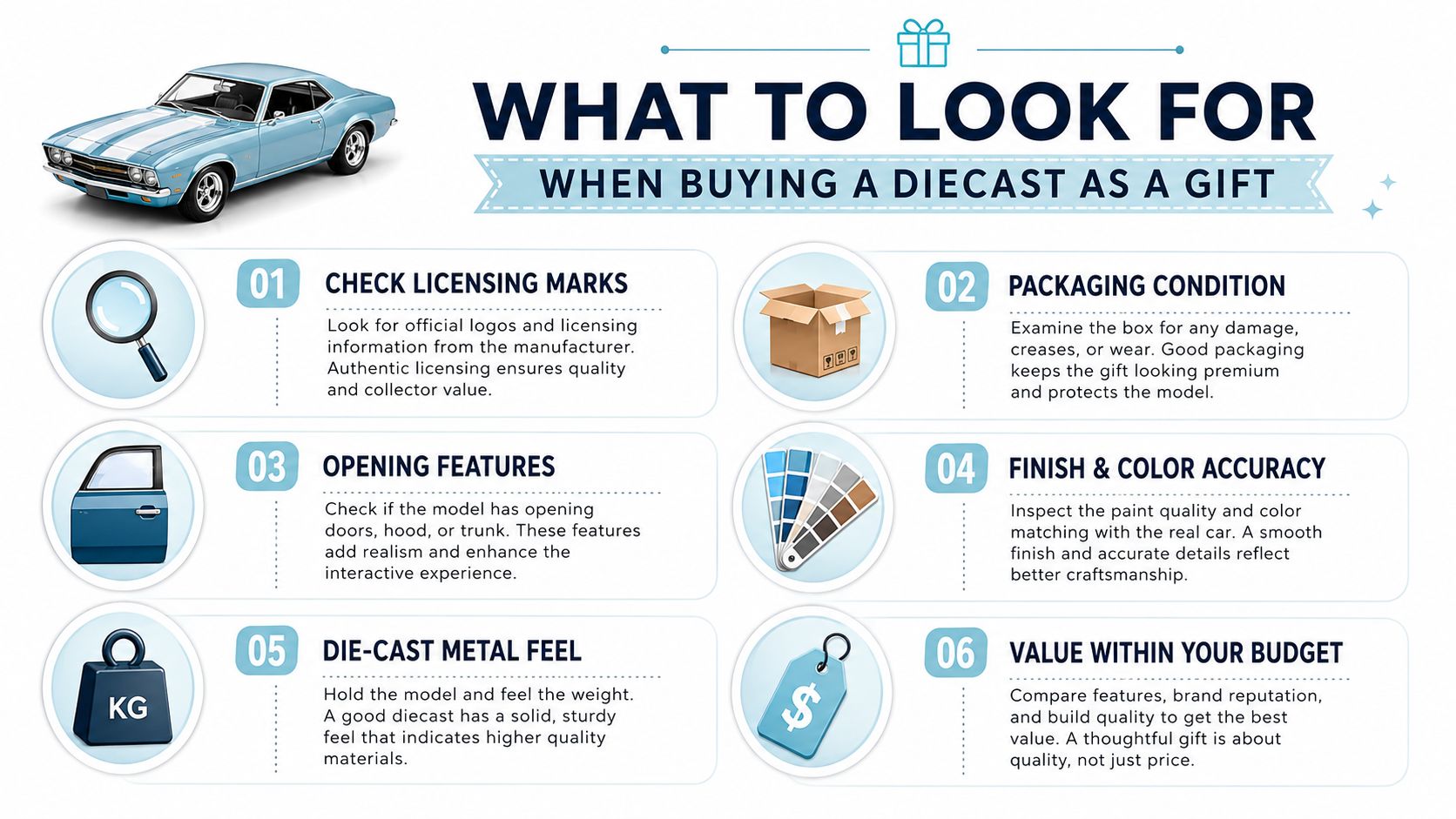
An infographic titled What to Look For When Buying a Diecast as a Gift featuring six tips.

A gift worth keeping usually ticks these boxes:

  • Check licensing marks: Look for the Volkswagen branding and any clear approval indicators, because that's the easiest way to avoid a lookalike.
  • Inspect the packaging: Crushed corners, loose windows, or torn seals can spoil a present before it's even opened.
  • Test the features: Opening doors, working hatches, or pull-back action should feel smooth, not gritty or loose.
  • Study the finish: Paint should look even, with clean colour separation and no obvious bleed on two-tone VW vans.
  • Feel the weight: A die-cast metal body has a different presence from a light plastic toy, and that difference matters on a shelf.
  • Match the budget to the display: Don't overpay for size alone. Spend for licensing and finish first.

Choose the scale the person can actually enjoy

A big model can be brilliant, but only if the recipient has room to show it off. If they live in a tighter apartment or already collect other VW memorabilia, a tidy 1:43 or 1:32 piece can be the smarter gift because it fits into a themed shelf without crowding everything else. That's especially useful when you're shopping for someone who likes the look of a Kombi but doesn't want a model taking over the room.

Why Smaller Scales Can Be Smarter Choices in Australia

A lot of buyers assume 1:18 is always the gold standard. It isn't. In Australian homes, especially where shelf space is limited, a well-made 1:32 or 1:43 can be the better fit because it's easier to build a coherent display without sacrificing the rest of the room.

Smaller doesn't mean lesser

The best smaller-scale pieces still rely on the same fundamentals, licensing, finish quality, and consistent tooling. When those are strong, a compact Beetle or Kombi can look just as satisfying as a larger model from across the room. That's why collectors often treat smaller scales as part of a curated display rather than a compromise.

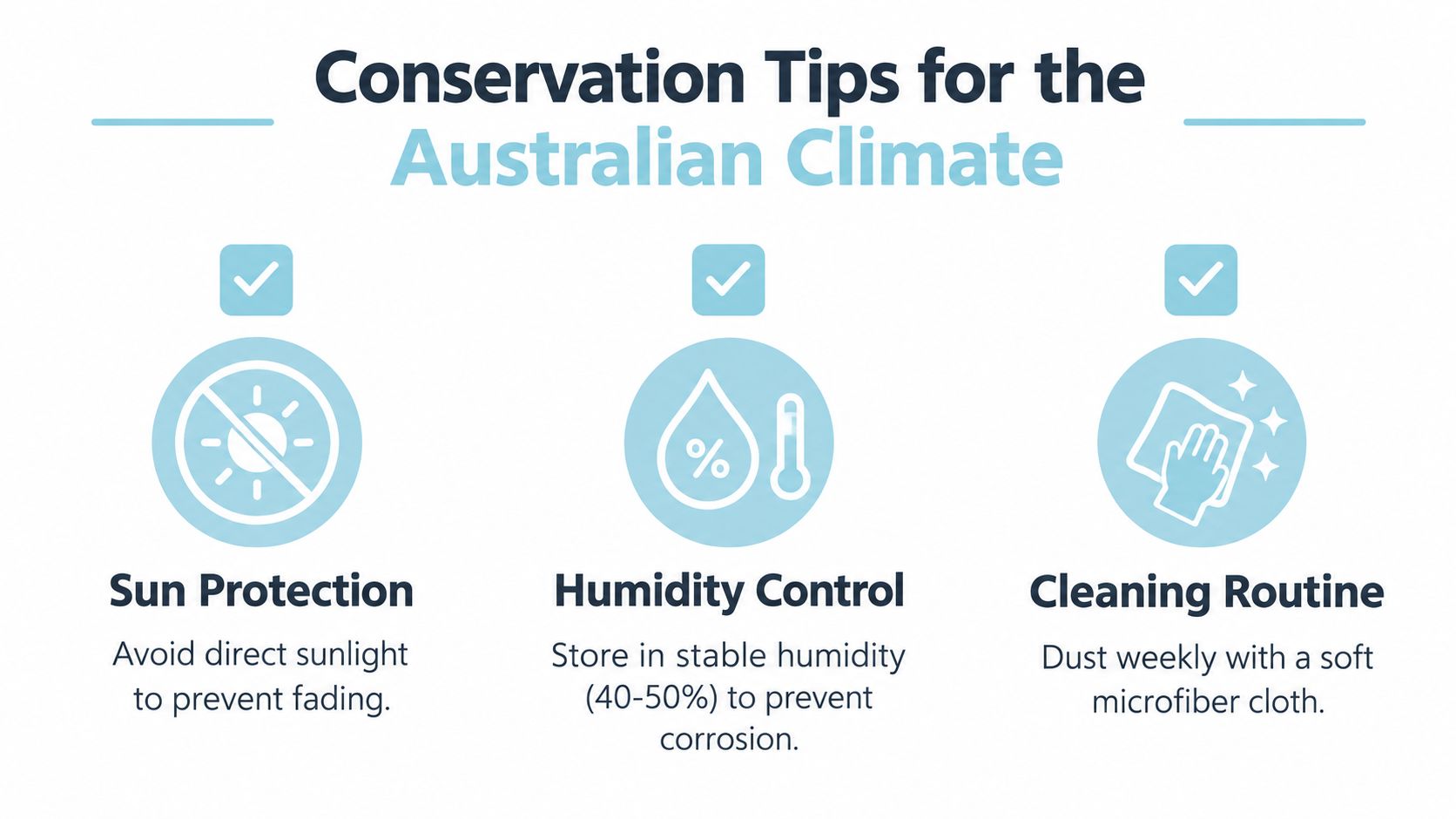
Australian buyers also need to think about the environment. In humid coastal homes, paint and chrome wear become more visible over time, so a model with solid finish control and sensible storage needs can age better than a larger piece that's harder to keep pristine. The practical result is simple, a smaller premium model can be the smarter long-term buy if you value condition and display discipline.

Value and space work together

Resale value doesn't belong only to large display pieces. Limited-run models in smaller scales can hold value well when the licensing is strong and the release is controlled, because buyers still chase scarcity and finish quality. If you want a deeper primer on the category itself, the diecast model car overview is a handy starting point before you commit to a scale.

If the shelf looks cleaner, the collection usually feels better too.

For Australian collectors building a VW theme, smaller scales let you mix Beetles, Kombis, and surfy special editions without crowding the bonnet line of the whole room.

Building Your Collection and Where to Start

The simplest way to build a good collection is to make three decisions in order. First, choose your scale. Second, decide whether you want a mass-market brand or a premium release. Third, only buy models that carry the licensing and finish quality you'd be happy to display for years.

A varied VW shelf usually works best when it mixes body styles and moods. A Samba Bus, a Beetle, and a Flower Power variant create more visual interest than three nearly identical vans, and that's true whether you're collecting for yourself or buying a present. If you want to browse a broader local selection of Volkswagen diecast models for sale, the diecast models Australia category is a sensible place to compare scale, style, and release type.

A practical way to start

  • Pick one scale first: That keeps the shelf coherent and helps you compare models fairly.
  • Buy licensed VW pieces only: It's the fastest filter for quality and long-term satisfaction.
  • Mix one showpiece and one everyday piece: That balance keeps the collection interesting without draining the budget.
  • Choose models that match the owner's taste: A Samba Bus suits a surfy collector, while a Beetle often lands better with someone who loves pure VW heritage.

FAQ

What is the safest scale for a first VW diecast?
1:43 is usually the easiest starting point for compact displays, while 1:24 often feels more gift-friendly because it has a bit more presence.

Are licensed models really worth it?
Yes, because licensing helps separate genuine VW-branded collectibles from generic lookalikes, and that matters for display pride.

Should I always choose the biggest model?
No. Bigger only helps if the finish, licensing, and shelf space all make sense together.

What's the best brand for a Beetle or Kombi gift?
The best choice is the one that matches the recipient's taste, scale preference, and desire for licensed authenticity.

If you're ready to add a properly licensed Beetle or Kombi to your shelf, have a look through Volkswagen Memorabilia and choose the scale and model that feels right. A well-chosen diecast should look good in the box, look even better on display, and feel like a small piece of VW history every time you walk past it.

Panel Solar Water Heater Guide for 2026

A mate rolled into a beachside VW meet near Torquay in a sun-faded Kombi, slid open the side door, and out came a kettle, enamel mugs, and the kind of grin only an old Volkswagen seems to produce. Later that same arvo, the chat drifted from vans and road trips to rooftops and hot showers, and someone asked the surprisingly practical question: what makes a panel solar water heater work well in Australia?

That First VW Feeling

If you've ever heard an air-cooled Beetle burble into a driveway, you'll know the feeling. It's half memory, half mechanical music. One sound and suddenly you're back at a caravan park, a surf beach, or your uncle's shed with oil-stained hands and a kettle going.

That same Aussie affection for simple, durable gear is part of why solar hot water makes sense here too. Australia has a long history with solar water heating, with roots in the late 19th century and wider uptake through the 20th century as practical rooftop hot-water systems found their place in sunny detached housing, as outlined in this history of solar hot water development. The basic logic was beautifully straightforward. Dark surfaces soaked up the sun, water got warm, and clever refinements later improved storage and reduced overnight heat loss.

Why this story feels familiar

Old Volkswagens earned loyalty because they were honest machines. A panel solar water heater has a bit of that same charm. It isn't trying to be mysterious. Collector on the roof. Tank to store the heat. Pipes to move water. Controls to stop the whole lot wasting energy when conditions aren't right.

Practical rule: The best systems usually follow the simplest logic well, then add smart controls only where they solve a real problem.

That's especially true in a country where sunshine is more than scenery. It's part of daily life. If you've ever spent time dreaming about road trips and simple living through van life in Australia, you already understand the appeal of doing more with what the day gives you. Solar hot water taps into that same spirit.

A shed-chat way to think about it

This setup operates much like a classic Kombi. The idea is basic, but the good ones last because the details matter. On a solar hot water system, that means insulation, durable seals, corrosion resistance, and controls that know when to circulate heat and when to leave things alone.

That's where the story stops being nostalgic and starts being useful.

From the Highway to the Shelf Why We Collect VWs

People don't hang around old Volkswagens because they're the fastest thing on the road. They stick because these machines carry stories. The splitty parked under a gum tree at a country show. The Bug your neighbour drove for years. The Kombi that somehow made every camping trip feel bigger than it was.

Collecting follows the same instinct. Some people keep a shelf of miniature VWs. Others keep a mental shelf of practical, well-made systems they admire. A panel solar water heater fits that second category when it's done right. It has the same design satisfaction as a neat engine bay. Nothing flashy. Just parts working together with purpose.

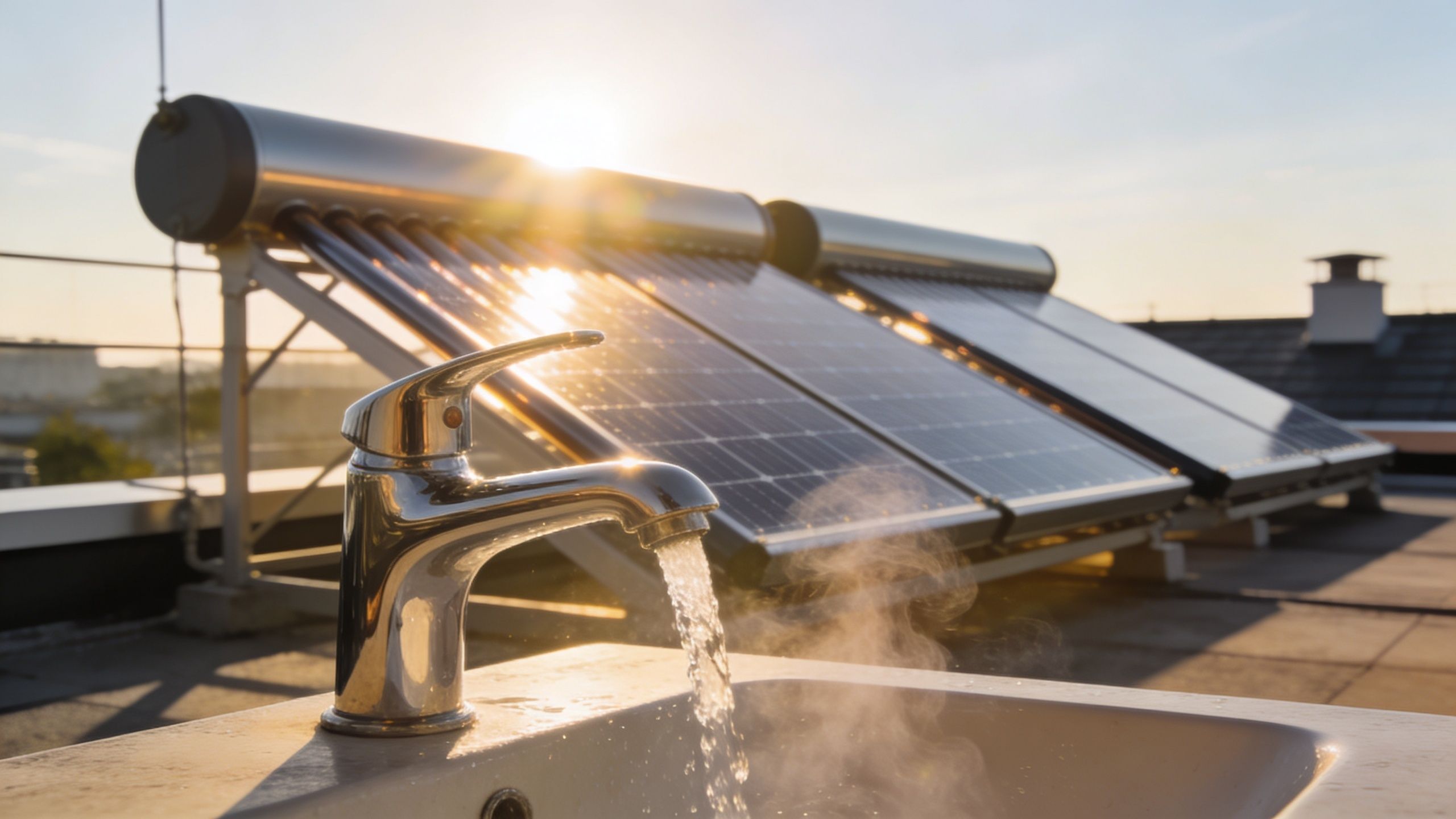
A chrome faucet with steaming hot water flowing, powered by a rooftop solar water heater system.

The appeal of proven design

Solar hot water isn't some brand-new fad that appeared because sustainability became fashionable. Clarence Kemp's 1891 Climax heater is widely cited as the first commercial solar water heater, and by 1897 roughly one-third of homes in Pasadena had solar hot water systems, according to this historical account of solar water heating milestones. Later, William Bailey's 1910 patent improved the format with copper pipes and a separate insulated storage tank. By 1920, his company had sold over 4,000 Day and Night units, and Florida saw around 100,000 units installed before World War II in the same source.

Those details matter because they show the panel-style setup became established long before modern green marketing got hold of it.

What collectors and homeowners both appreciate

Good design sticks around when it solves a real need. In this case, that need is hot water from sunshine, using a layout that people can maintain and understand.

A few reasons the panel format still earns respect:

  • It's legible: you can follow how the system works without needing a sales brochure to decode it.
  • It's adaptable: flat collectors, storage tanks, and circulation can be configured for different homes.
  • It rewards climate fit: sunny places give it the sort of working conditions it likes.

Some technology feels disposable. Solar thermal doesn't. Its appeal comes from proven mechanics and long familiarity.

That's probably why the conversation around it feels oddly similar to a bunch of VW owners talking about old buses. People trust things that have already proven themselves in practice.

Decoding the Diecast World Scales and Details

Walk around a VW show and you'll hear people compare details most outsiders never notice. Window trim. Badge placement. Correct wheel style. Solar hot water has its own version of that. From a distance, many rooftop systems look similar. Up close, the details tell you whether you're looking at a thoughtful install or a future headache.

The parts that define a panel solar water heater

At its heart, the classic arrangement is straightforward:

  • Flat-plate collector: the roof panel that captures solar heat
  • Storage tank: where that captured heat waits until you need it
  • Circulation method: either natural thermosyphon flow or a pumped active setup
  • Controls: the brains that decide when heat transfer should happen
  • Backup heating: useful when sunlight alone won't cover demand

For Australian conditions, durability is the line between “good idea” and “good investment”. The EPA-derived solar hot water system specification calls for a minimum design life of 20 years for solar hot water systems, with 12 years for solar swimming pool heaters, in this solar hot water system specification document. That same specification also calls for selective-surface absorber plates, non-degrading thermal insulation, and ports for collector temperature sensors and electronic differential controls.

VW Diecast Model Scale Comparison

Scale Typical Length (Kombi) Level of Detail Best For
1:18 Large display size High Desks, feature shelves, close-up admiration
1:24 Mid-to-large display size Strong Balanced display and affordability
1:32 Medium Moderate Casual collectors, mixed shelves
1:64 Small, pocket-sized Compact Multi-model displays, gifts, nostalgia jars

The table is about diecast scales, sure, but the lesson carries across. Size alone doesn't tell you quality. Finish, durability, and functionality do.

What separates a robust system from a rooftop ornament

High solar irradiance and repeated heating and cooling cycles punish weak materials. Seals can fail. Insulation can degrade. Components can age fast if they weren't selected for long service.

Here's what to look for in principle:

  • Absorber quality matters: selective surfaces help collectors do their job efficiently.
  • Insulation can't be an afterthought: if it degrades, stored heat slips away.
  • Sensors and controls aren't luxury extras: they help the system behave sensibly throughout the day.
  • Maintainability counts: if a component can't be accessed or serviced easily, small faults can linger.

Workshop note: A system built for Australian sunshine must also be built for Australian heat stress. Those are not the same thing.

That's the sort of detail that doesn't show in a glossy brochure, but it absolutely shows up over the life of the system.

Building Your Dream VW Fleet

Some collectors chase every Beetle variation they can find. Others focus on one lane only. Splitties. Samba buses. Surf liveries. A good solar hot water setup deserves the same clear thinking. Don't start with “what's popular?” Start with “what suits the home, the climate, and the way hot water gets used?”

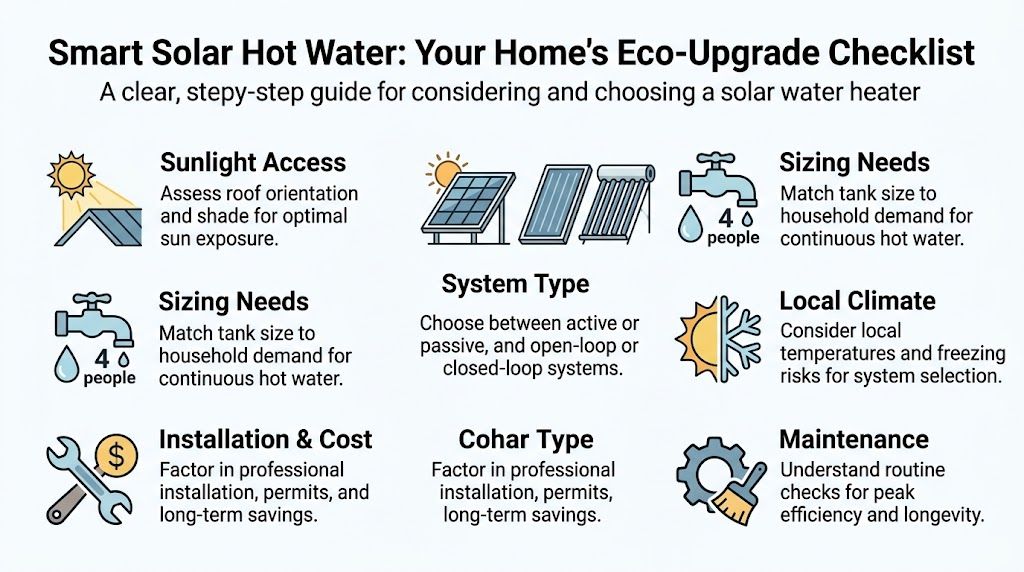
A checklist infographic outlining key factors to consider when choosing a solar hot water system.

Four good ways to think about system design

One home might suit a simple thermosyphon arrangement. Another may need active circulation and tighter control. Households differ, and that changes the best setup.

  1. Match the collector style to the site
    Roof orientation, shade, and available space influence whether a panel solar water heater will be straightforward or fiddly from day one.

  2. Plan for real usage, not ideal usage
    A home with regular morning showers, laundry, and family routines needs a system that handles practical demand patterns rather than showroom assumptions.

  3. Take summer seriously
    In parts of Australia, the challenge isn't squeezing every drop of heat out of winter. It's preventing too much summer heat, stagnation, or excess hot water production. General guidance acknowledges that steeper tilt can improve winter performance and reduce summer output, while flatter angles can boost summer gains, as discussed in this solar hot water tilt and seasonal control overview.

  4. Think beyond purchase day
    A maintainable system with sensible access and durable components often proves easier to live with than a more complicated arrangement that's hard to service.

A lot of people converting vans learn the same lesson when planning interiors. The cleverest setup on paper isn't always the nicest one to live with, which is why so many enthusiasts spend ages looking through van conversion ideas before committing to a layout.

Here's a solid visual primer before you go deeper into options:

Why hot-climate control deserves more attention

Australian summers can push systems into awkward territory if they're designed only for annual heat capture. Oversupply sounds nice until it means wasted heat, stressed components, or maintenance dramas.

Useful design responses can include:

  • Seasonal tilt decisions
  • Smarter controls
  • Collector shading
  • System draining approaches where appropriate
  • Thoughtful tank sizing
  • Backup integration

Not every home needs every strategy. But in hot, sunny regions, ignoring summer behaviour is a bit like building a show Kombi with no thought about how it handles on a long highway run.

Show Off Your Splitties and Bugs

A well-chosen system should look tidy on the roof and sensible on the spec sheet. The same goes for your collection at home. Display matters because it changes how often you enjoy the things you care about.

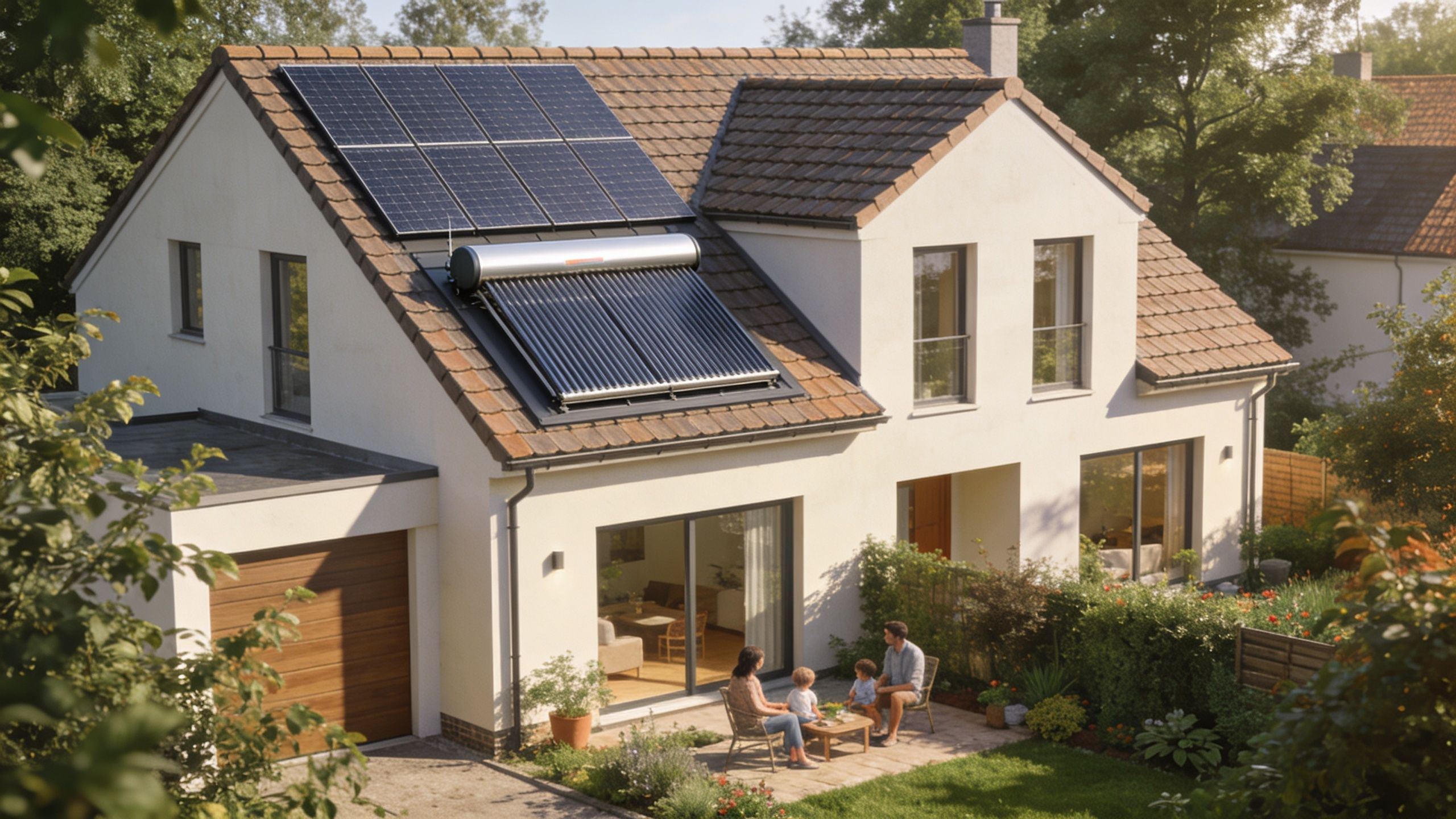
A modern house with solar panels and a solar water heater installed on the roof in a garden.

Display ideas that actually work

If you're showing off VW diecast, don't just line them up and hope for the best. Give them some atmosphere.

  • Floating shelves: perfect for grouping Beetles by colour or era
  • Desk feature piece: a larger Kombi model works brilliantly as a statement item
  • Bookshelf diorama: add a surfboard, a tiny road sign, or a beach postcard backdrop
  • Cabinet display: good for dust control and crisp presentation

The same visual logic applies when evaluating rooftop gear. Neat pipe runs, sensible placement, and uncluttered layout often signal that somebody thought the install through properly.

Keep colour and finish in good nick

Direct sunlight can be rough on diecast paint over time, and it can be rough on poorly chosen rooftop materials too. That's why storage and placement aren't cosmetic issues. They're preservation issues.

Keep display models out of harsh direct sun, and keep rooftop components specified for UV exposure and thermal cycling. Good looks last longer when materials match conditions.

A soft brush, microfibre cloth, and a steady hand usually do the trick for models. For solar hot water, regular inspection and sensible component choices do the equivalent job.

Frequently Asked Questions for Aussie Collectors

Is a panel solar water heater old technology or current technology?

Both, really. The idea is old, but that's part of its strength. The modern versions build on long-proven collector and storage principles rather than replacing them with something completely unfamiliar.

What control setup matters most?

For active systems, differential temperature control is a big deal. The Whole Building Design Guide explains that a delta-T controller starts the pump when the collector outlet temperature exceeds the bottom of the storage tank by about 6°C, and stops it when the gap falls to about 2°C, in this solar water heating control guide. That helps prevent pumping when useful heat transfer isn't really happening.

Why do people in hot parts of Australia worry about overheating?

Because too much heat can create its own problems. In very sunny conditions, collectors can face stagnation, excess production, and extra wear if the system isn't designed with summer behaviour in mind.

Can a properly integrated system cover much of a home's hot-water demand?

Yes, qualitatively it can make a meaningful contribution. The same Whole Building Design Guide source notes that, when correctly integrated with controls and backup heating, a system can serve up to 80% of hot-water demand in suitable conditions.

How long should a system be expected to last?

The benchmark used in the specification cited earlier is a minimum design life of 20 years for solar hot water systems. Actual service life still depends on materials, installation quality, operating conditions, and maintenance.

What should I ask before buying anything for home projects or collectibles?

Ask practical questions first:

  • Who supports it locally? Local help is easier when something needs attention.
  • Are replacement parts or matching items available? Continuity matters.
  • Will it suit the way you live? That applies to roof systems and shelf collections alike.
  • Can you maintain it without drama? If upkeep is awkward, small issues tend to get postponed.

For people who love practical fit-outs, road-trip living, and making things last, that same mindset also runs through topics like insulation for van projects.

If you're the kind of person who loves classic Volkswagens because they're honest, character-filled, and built around real-world use, you'll probably appreciate a well-designed panel solar water heater for the same reasons.


If you'd like to bring a bit more VW spirit into your shed, office, or lounge room, have a browse through Volkswagen Memorabilia. It's a ripper place to find licensed VW-themed gifts, diecast classics, and display-worthy pieces with local Australian stock and fast shipping, so you can start your own little fleet without the long overseas wait.