

You know the feeling. The Beetle's finally sitting right, the Kombi interior smells faintly of old vinyl and warm weekends, or the beach house entry is almost there, just waiting for that one piece that pulls the whole look together. Not a generic mat from a chain shop. Something with a bit of soul. Something that looks like it belongs beside salt air, timber floors, chrome hubcaps, and a shelf full of carefully chosen VW models.
That's where a customised floor mat earns its keep. It isn't just there to catch sand, road grit, or the drip from a wet esky. It's the finishing touch that tells people what you're into before you even say a word. In a classic Volkswagen, it can echo the curves and colours of the cabin. In a coastal home, it can carry that surfy, laid-back energy without looking kitschy.
There's a good reason this kind of product stands out. Australia's broader floor covering retail industry has been sliding, with a 3.1% annual decline between 2021 and 2026, yet it still represents $3.7 billion in 2026 across 2,049 businesses according to IBISWorld's Australian floor covering retailing profile. Mate, that tells you plenty. Buyers aren't rushing toward generic. They're hunting for pieces with purpose, fit, and personality.
That Finishing Touch for Your Ride or Retreat
A stock-standard mat does the job. A well-made customised floor mat does more than that. It ties the whole story together.
Take the classic VW owner who's spent months chasing the right trim, the right seat pattern, the right stance. Dropping in an off-the-shelf mat at the end feels wrong. Same with a coastal hallway styled with whitewashed timber, shell pieces, and vintage surf prints. A plain black rectangle kills the mood in two seconds flat.
Why generic often falls flat
Generic mats usually miss in one of three ways:
- The fit is sloppy. Corners ride up, edges curl, pedals catch, or the mat floats awkwardly in the room.
- The material is wrong. Too plush for a sandy entry. Too flimsy for a workshop. Too shiny for a period-correct cabin.
- The design says nothing. It fills space, but it doesn't add character.
A mat should look intentional. If it feels like an afterthought, it usually looks like one too.
That's why custom work suits VW people so well. Beetle and Kombi owners already think in details. They notice stitch lines, paint shades, hubcap styles, roof racks, and period decals. The same instinct applies to the floor.
Where it works best
A customised floor mat can earn its place in more than one setting:
| Setting | What matters most | What usually looks best |
|---|---|---|
| Classic Beetle cabin | Fit, pedal clearance, vintage feel | Period-friendly carpet or rubber-look finish |
| VW Kombi or Transporter | Coverage, durability, easy cleaning | Hard-wearing layered construction |
| Garage display corner | Sharp edges, logo clarity, visual impact | Branded or silhouette-led design |
| Coastal entryway | Sand control, colour stability, moisture handling | UV-stable, easy-clean surface |
If you're the sort who can spend ten minutes choosing between a surfboard rack and a stock roofline for your Kombi display, you'll appreciate this. The right mat doesn't just protect the floor. It anchors the whole vibe.
Choosing the Right Material for Your Masterpiece
Material is where good intentions either turn into a ripper result or an expensive annoyance. If you get this part wrong, the nicest design in the world won't save it.
For the VW cabin and workshop crowd
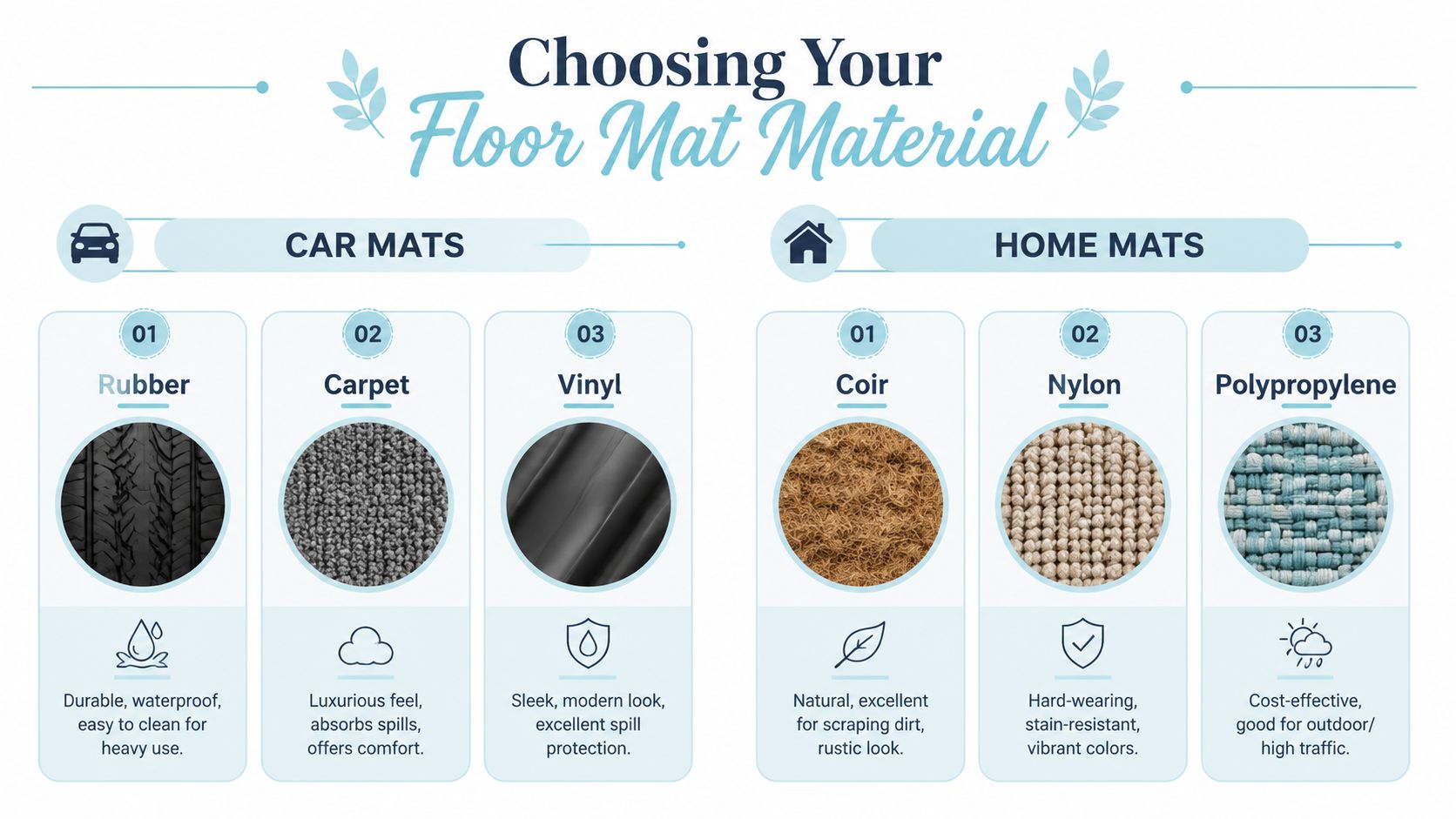
If the mat's going inside a car, shed, or service area, think first about mess, movement, and edge stability. In Australian custom roll-out applications, a triple-layer construction is commonly used: polypropylene on top, a closed-cell foam core, and a non-slip rubber backing rated to AS/NZS 4586 for wet slip resistance. One supplier states this setup reached a 94% success rate in containing spills up to 5mm depth during standardised testing, while 38% of early failures were tied to poor edge sealing that allowed liquid to wick underneath, according to EzyMats' custom roll-out mat product information.
That matters if your old VW sees wet shoes, oily tools, or the odd dribble from a leaky classic. It also matters if the mat sits under a display or workbench and gets a hiding.
For the beach house and coastal entry
Home use near the coast is a different beast. Salt in the air, high humidity, relentless sun, and sandy feet will sort the decent materials from the rubbish very quickly.
The safest call for exposed or sunlit coastal spots is UV-stabilised polyethylene. According to Mats R Us, it retains 87% of its colour after 2,000 hours of simulated Australian sunlight, while non-stabilised alternatives can lose over 60% of their colour in the same period. If your mat sits near a bright front door, under a louvre window, or in a sunny beach shack entry, that difference shows up fast.
Practical rule: For coastal styling, choose the material for sun and moisture first, then choose the colour and artwork.
If you're already matching the inside of your vehicle, it's worth checking related trim pieces too. A lot of enthusiasts pair floor treatments with automotive dashboard covers so the whole cabin feels thought-through instead of patched together.
What works and what usually doesn't
- Rubber or layered utility mats suit workshops, drivers, and messy jobs.
- Carpet-style mats suit show cars and tidy interiors, but they need the right backing and edge finish.
- UV-stabilised polyethylene suits bright coastal spaces where fading is the enemy.
- Cheap non-stabilised plastics often look tired long before the rest of the room does.
A flashy design on poor material is still a poor mat. Start with the abuse it'll take, then build the look from there.
Getting the Perfect Fit for a Classic or a Coastline
Fit is where plenty of custom jobs go sideways. The artwork might be spot on, but if the shape is off, the whole thing feels second-rate.
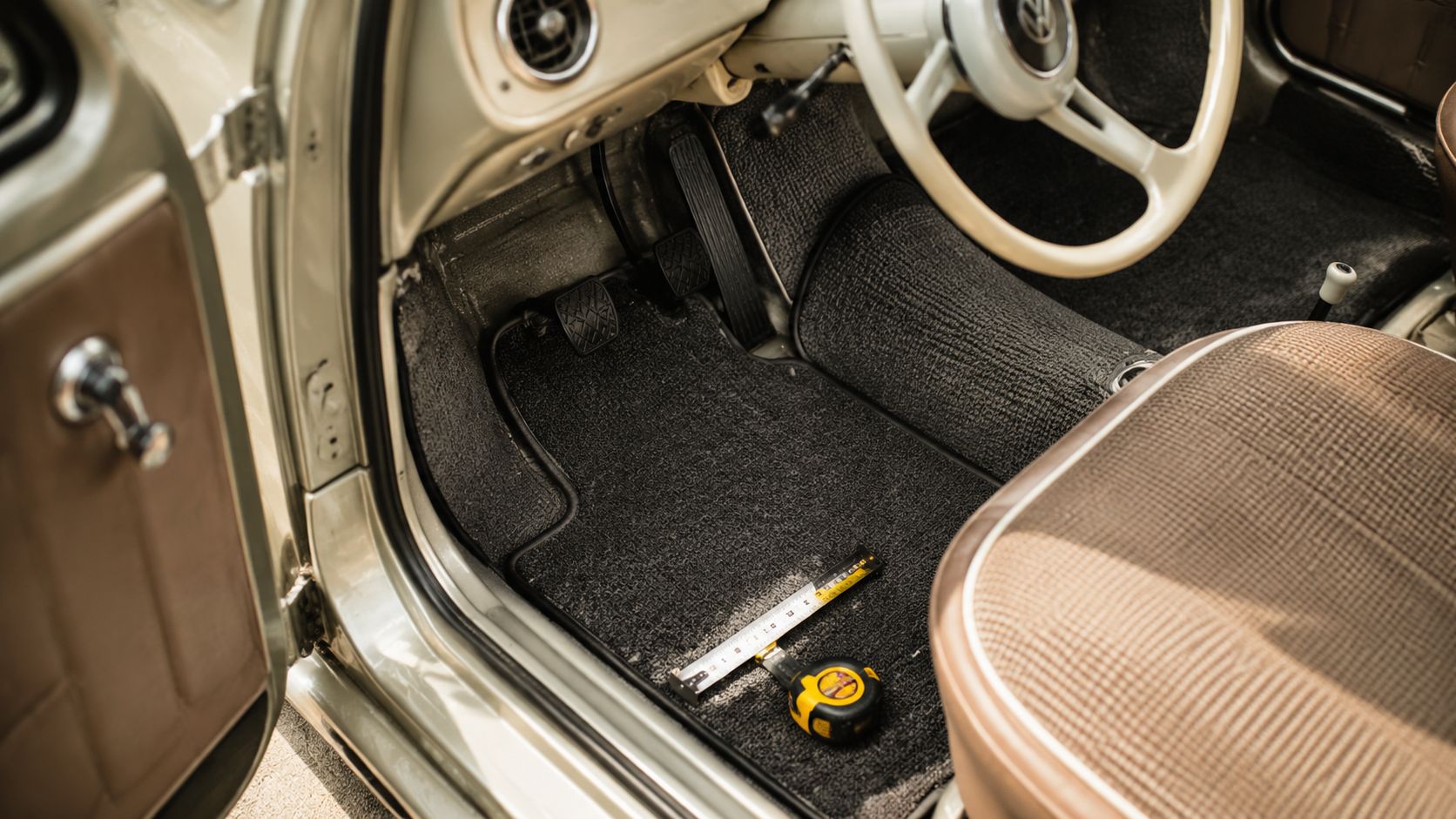
Classic Volkswagens are the big challenge here. There's a genuine gap in the local market for older models. Search data cited by Matcraft Australia's Facebook presence indicates 68% of vintage car owners are looking for non-destructive fitment for pre-1970s vehicles. That makes sense. Nobody restoring a tidy early Beetle or Kombi wants to drill fresh holes or butcher original rubber mounts just to hold a mat in place.
How to template a classic VW properly
For an older VW, don't trust a “close enough” template. Build one from the actual floor area.
- Use kraft paper or builder's paper and tape sections together until they cover the footwell.
- Mark pedal travel clearly so nothing fouls the accelerator, brake, or clutch.
- Trace around seat mounts, rubber studs, and tunnel edges without forcing the paper into unnatural lines.
- Cut slightly proud first, then trim back gradually.
- Test with the seats in driving position, not pushed back for convenience.
The trick is to respect the car. A proper customised floor mat for a vintage VW should sit securely without demanding permanent changes.
Sizing a mat for a coastal room
Home sizing is less mechanical, but it still needs discipline. A mat at the front door should look intentional, not like it shrank in the wash. In a hallway or beach-house nook, you want enough coverage to catch sand and frame the space cleanly.
Here's a simple check:
- At the entry. Make sure the mat looks centred to the doorway, not just the wall line.
- Under a bench or console. Let the mat extend visibly beyond the furniture so it reads as part of the styling.
- Near a display. Give diecast shelves or a surfy accent chair enough visual breathing room around the edge.
If your space leans more workshop or van-life than lounge room, van fit-out ideas can help you think about how floor areas, storage, and styling work together.
Don't measure the car or room once and call it done. Measure, mock it up, then look at it from standing height. That's when odd proportions show themselves.
Designing Your VW or Coastal Inspired Artwork
You can spot the good ones straight away. A mat under the pedals of a tidy Beetle, or by the door of a weatherboard beach house, says something before anyone notices the details. Get the artwork right and it feels personal. Get it wrong and it looks like a novelty gift that turned up in the wrong place.
A good starting point is whatever you already keep around you. The diecast on the shelf, the old club sticker, the faded photo of your Kombi at the coast. Those pieces usually reveal the shapes, colours, and era you care about, and that matters more than grabbing a random template with a surfboard or VW badge slapped on it.
Design directions that actually translate well
Floor mats reward bold, readable design. They sit low, cop dirt, and get viewed from standing height. That means the artwork needs to read fast.
The designs that hold up best usually fall into a few proven lanes:
- Vehicle silhouette. A Beetle side profile, Kombi front, or early bus roofline is clear and familiar without needing much detail.
- Coastal graphics. Clean wave lines, sun shapes, palm forms, and retro floral cues suit both a surf-inspired room and an old VW with a bit of personality.
- Personal references. A suburb name, trip slogan, shed name, or plate-style text gives the mat character without clutter.
- Period colour blocking. Cream, aqua, mustard, faded orange, seafoam, and sandy neutrals work because they connect classic VW paint culture with coastal interiors.
Mate, here's the trick. Pick one hero idea and one support idea. Kombi nose plus a subtle stripe. Beetle silhouette plus a dune colour palette. If you try to squeeze in flowers, waves, engine parts, number plates, and three fonts, the mat loses its punch.
Use your collection as a design brief
Collectors already have a design brief sitting on the shelf. Line up a few favourite models or bits of memorabilia and look for repetition. You might notice that every piece you love has rounded forms, two-tone paint, or that faded pastel look older Volkswagens wear so well.
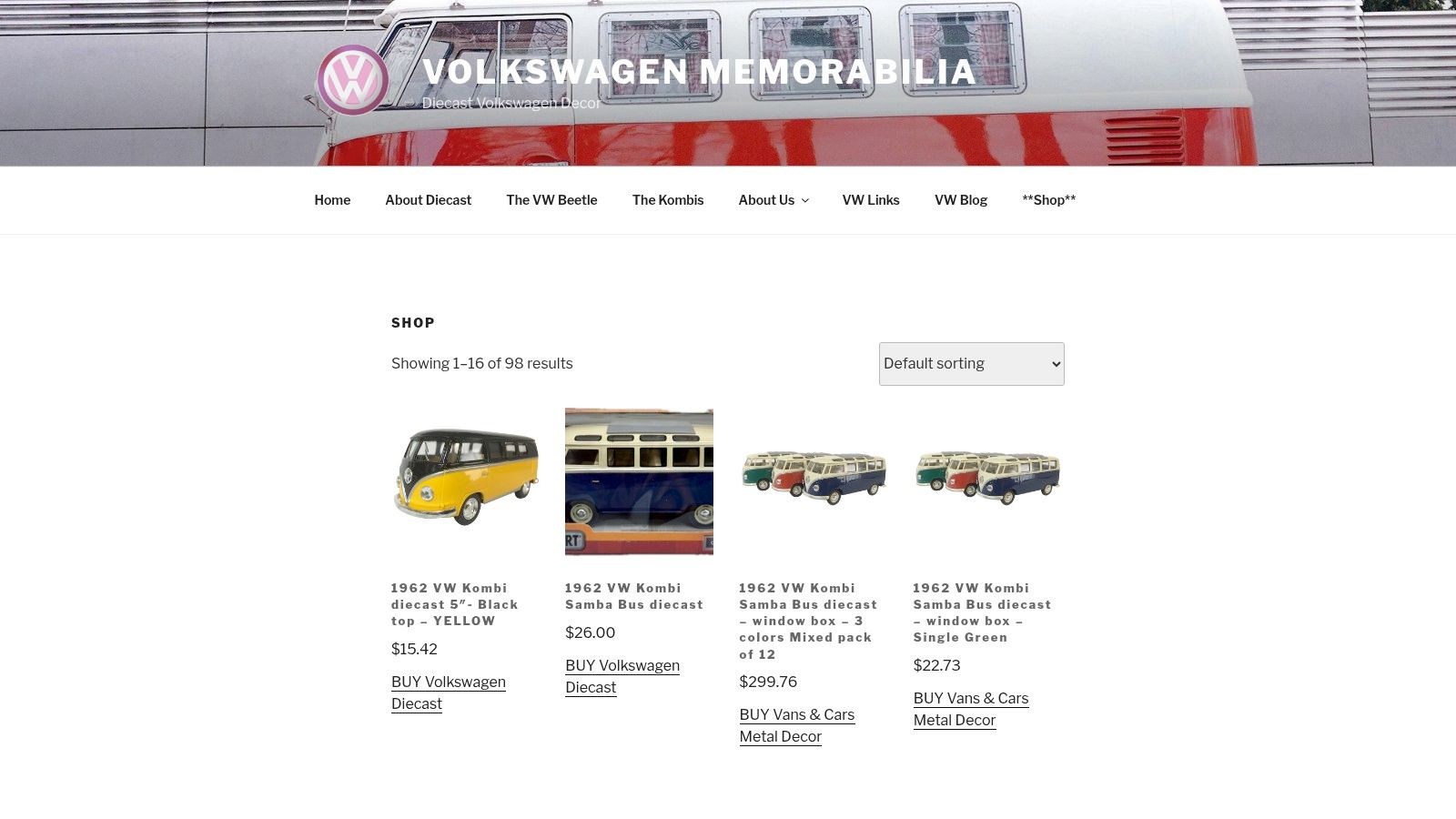
For inspiration, it helps to browse broader VW memorabilia collectibles and study the recurring colours and motifs across Kombis, Beetles, and garage pieces. That usually gives you a stronger direction than generic custom mat galleries.
The crossover with coastal styling is stronger than plenty of people realise. Both worlds like weathered charm, practical materials, sun-washed colour, and design that feels collected over time instead of bought in one hit. That shared character is what makes a VW-inspired mat work just as well in a beach house entry as it does in a classic bus.
Prepare artwork so the final piece looks sharp
Suppliers can tidy small issues, but they cannot rescue weak source art. Start with clean files and the finished mat has a far better chance of looking crisp.
- Vector artwork suits line work and logos best because the edges stay clean at different sizes.
- High-resolution raster files are fine for photos or textured artwork if the original image is sharp.
- Strong contrast matters because floor-level graphics lose definition quickly once dust and foot traffic enter the picture.
- Simple fonts beat ornate ones because script and thin lettering tend to blur or fill in.
- Limit the colour count if you want a classic look. Too many tones can make the design feel busy, especially in smaller footwells.
Here's a handy visual reference for VW-inspired styling and model cues:
A useful test is to print the design on plain paper and put it on the floor. Stand over it. If the shape still reads clearly and the text is easy to catch in a glance, you are on the right track. If it only works when you hold it at arm's length like an art print, simplify it.
The best customised floor mat designs feel tied to a real life. A Beetle in the shed. Salt on the doorstep. A bit of road-trip history under your feet.
From Design to Your Doorstep Ordering and Care
Ordering a custom mat is much easier when you know what questions to ask before you pay the invoice. The Australian automotive floor mat segment is already substantial, valued at USD 3.12 billion in 2024 and projected to reach USD 4.85 billion by 2033, growing at 5.2% annually, according to this Australian car floor mats market overview on LinkedIn. That tells you the category is active and competitive. You've got options, which is great, but it also means you need to separate the proper suppliers from the mobs who just print and pray.
What to ask before ordering
Start with the build, not the artwork mock-up.
| Ask this | Why it matters |
|---|---|
| How is the edge finished? | Weak edging shortens mat life and can lead to lifting |
| What backing is used? | Backing controls slip, shape retention, and floor compatibility |
| Is the material suited to sun, moisture, or workshop use? | A good print on the wrong substrate still fails |
| Can the fit be templated for older vehicles? | Essential for classic VW owners avoiding permanent modification |
| Is the stock in Australia? | Local supply usually means quicker delivery and easier problem-solving |
Printed, flocked, or inlaid
Each production method has its place.
- Printed mats suit colourful graphics and home decor themes. Best when the design itself is the hero.
- Flocked finishes can give a softer visual effect, though they're better in lighter-duty settings.
- Inlaid styles tend to feel more integrated and durable, particularly when you want a cleaner, more premium look.
For Australian buyers, local stock is worth favouring where possible. You'll usually get faster shipping, easier communication, and less mucking around if there's a fit issue or production question. That matters when the mat is part of a gift, a show setup, or a tidy-up before an event weekend.
Basic care that keeps them looking right
A mat doesn't need babying, but it does need sensible care.
- Shake or vacuum regularly if it lives in an entryway or garage corner.
- Rinse utility-style mats promptly after oil, sand, or salt exposure.
- Avoid harsh scrubbing on printed areas. Use a gentler clean so the artwork stays tidy.
- Dry fully before putting it back down, especially in humid coastal rooms.
The best custom mats age like old Volkswagens do. Not by accident, but because somebody kept on top of the basics.
Styling Your Space and Final Thoughts
Once the mat arrives and drops into place, the payoff is immediate. The cabin feels finished. The hallway feels intentional. The garage display suddenly has a centre.
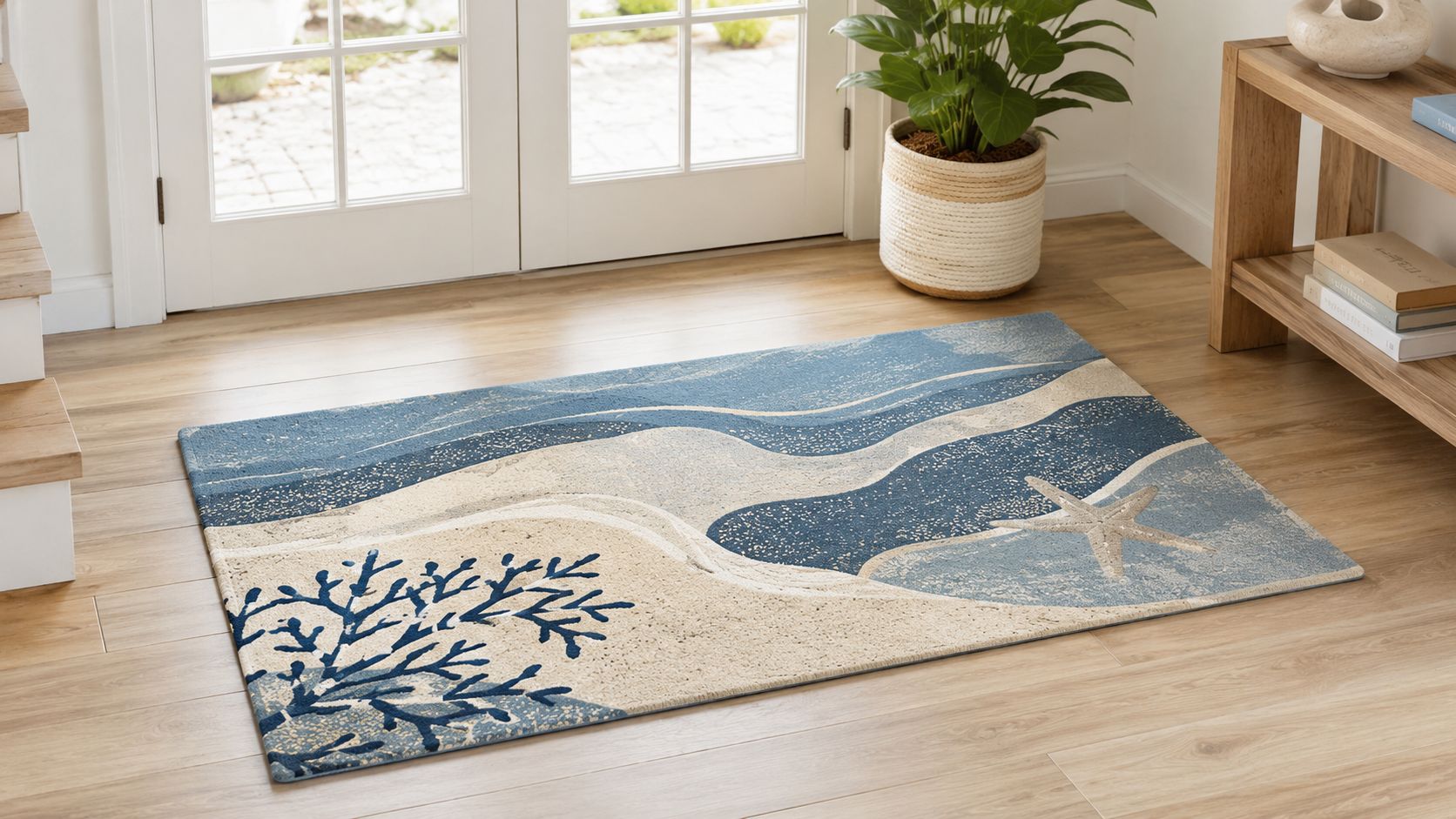
A classic Beetle looks more complete when the floor treatment matches the personality of the car instead of fighting it. A coastal corner feels warmer when the mat picks up the same easygoing lines as your wall art, model vans, or beach finds. That crossover is part of the charm. VW culture in Australia has always sat nicely beside surf culture and road-trip freedom.
That's especially true when you remember the local language around these vehicles. In Australia, the passenger van version was marketed as the VW Kombi, while the commercial variants were known as VW Transporters, as outlined in this Australian Kombi history note. That naming carries a whole mood with it. Kombi means beach runs, mates, boards, and long drives with nowhere urgent to be.
If you're styling a room around that spirit, coastal home decor ideas can help pull the rest together. The best result doesn't scream for attention. It just feels right the moment you walk in.
Frequently Asked Questions
Can I use the same design for a car mat and a home mat?
Yes, the artwork can carry across, but the build should change to suit the job. A Beetle front mat has to clear the pedals, sit flat over older floor pressings, and stay put when you climb in with sandy thongs or wet boots. A home mat has different problems. It needs the right backing for timber, tile, or polished concrete, and it usually wants a lower-profile edge where doors swing over it.
Mate, here's the trick. Keep the colours, linework, or VW and coastal theme consistent, then let the material and backing do the hard work for each setting.
What's the safest way to clean a printed customised floor mat?
Start dry. Shake out grit, vacuum with a plain head rather than a hard beater, and spot-clean before dirt gets ground into the print. For most printed mats, mild soap in lukewarm water works better than strong cleaners, because harsh products can dull the surface, stiffen the fibres, or weaken the edge binding over time.
Car mats usually cop heel wear, dust, and the odd bit of oil. Home mats near an entry cop salt, sand, and moisture. In both cases, soak less, scrub lightly, and let the mat dry flat before it goes back down. If the supplier gives care instructions for the print method, follow those over generic rug advice.
Are custom mats worth it for older Volkswagens?
Usually, yes. Older Volkswagens often have floor shapes, seat mounts, and pedal layouts that off-the-shelf mats never quite respect. A proper custom set sits cleaner, looks period-correct if that's the goal, and saves you from trimming corners just to make something “close enough” fit.
That matters more in classics than many owners expect. A bad mat can bunch under the pedals, curl near the heater channels, or look out of place against original trim. A well-made one can echo the cabin without pretending the car just left the factory. Same story in a coastal room. The custom route gives you the freedom to nod to Kombi culture without ending up with a loud novelty piece.
What should I budget for?
For a basic printed home mat or simple universal design, expect the lower end of the range. For a templated classic VW set, heavier carpet, better rubber backing, stitched edging, or inlaid rather than printed details, the price climbs fast.
As a rough guide, a simple custom home mat often starts around $80 to $150. A better-quality large home mat with denser pile or marine-friendly materials can land around $150 to $300. For vehicle mats, a basic custom pair or set can start around $150, while a multi-piece set made to suit an older Beetle, Kombi, or Transporter with proper templating and upgraded finishes can run from $300 to $600 or more.
The biggest price jumps usually come from three things. Complex patterns, especially multi-colour inlays. Custom templating for classics where no standard pattern exists. Better backing and edging, which is money well spent if the mat will see sand, wet feet, heavy use, or plenty of time in the sun.
A cheap mat can look fine on day one and turn shabby fast. The better buy is the one that fits properly, cleans up well, and still looks right after a season of road trips or summer traffic through the house.
If you're into classic Volkswagens, diecast collecting, or giving your space that relaxed Kombi-meets-coast feel, Volkswagen Memorabilia is well worth a look. The shop carries local stock, offers friendly Australian support, and has a strong range of licensed VW pieces, from diecast Beetles and Samba Bus models to beachy decor that fits the same laid-back lifestyle. If you're chasing inspiration for your next display, gift, or styling project, it's a top place to start.