
The Volkswagen Service Book: More Than Just Paper

A mate of mine bought an old Beetle out of regional NSW, drove it home grinning like he'd won Tatts, then found a dog-eared Volkswagen service book tucked beside the jack. The pages smelled faintly of oil and old paper, and every stamp felt like another chapter in the car's life.

Your VW's Dog-Eared Diary in the Glovebox

You know the feeling. You open the glovebox of a Kombi or Beetle that's seen a bit of sun, a few beach runs, maybe a family holiday or two, and there it is. Not flashy. Not rare in the usual concours sense. Just a worn little booklet with scribbled dates, odometer readings, workshop stamps, and the sort of honest grime that says this VW has been used the way Volkswagens should be used.
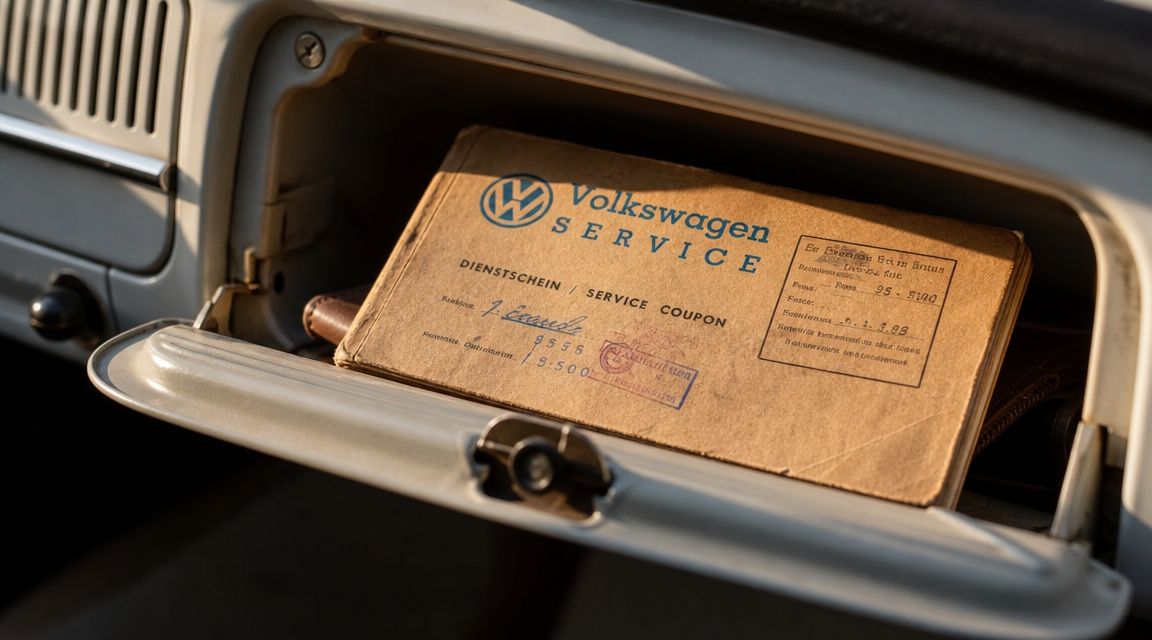
An antique Volkswagen service coupon booklet resting inside the open glove compartment of a vintage car.

For plenty of Aussie owners, the Volkswagen service book sits somewhere between workshop paperwork and family heirloom. It tells you who cared enough to keep the car on schedule. It hints at road trips, changing hands, periods of love, and sometimes those awkward years when the poor thing sat under a tarp behind the shed.

More than maintenance paperwork

A classic VW always carries a bit of mythology around with it. The service book keeps that mythology honest. If the seller says, “She's been looked after,” the little book in the glovebox is often where the truth lives.

A tidy service record doesn't just show what was done. It shows that someone kept paying attention.

That matters whether you're eyeing off a late-model Golf, a weekend cruiser Beetle, or a Kombi that still has sand in the floor channels. A service book is part keepsake, part evidence. In the VW world, that combination is gold.

Why enthusiasts keep them forever

Collectors hold onto odd bits of VW history all the time. Old brochures, dealer keyrings, workshop manuals, number plate surrounds. A service book belongs in that same emotional category, but with one big difference. It's tied to one exact car and its real life.

If you're lucky, the entries line up like a timeline:

  • First owner pride: Early stamps that show the car was serviced right on time.
  • Years of regular use: Odometer notes that creep up steadily and make sense.
  • Care beyond cosmetics: Mentions of scheduled inspections and routine items, not just emergency fixes.

That's why old hands at a show will leaf through a service book with the same interest they'd give original paint or factory trim. It's memorabilia, sure. But it's memorabilia that can still save you grief later.

What Is a Volkswagen Service Book Really?

At its simplest, a Volkswagen service book is your car's passport. It records where the car has been, when it was serviced, and what work was carried out so there's a traceable history rather than a string of vague promises.

In Australia, a Volkswagen service book is usually tied to the manufacturer's recommended maintenance schedule, often every 12 months or 15,000 km, and the entries generally note the date, odometer reading, and work completed, which helps verify maintenance in local driving conditions according to this overview of VW service history.
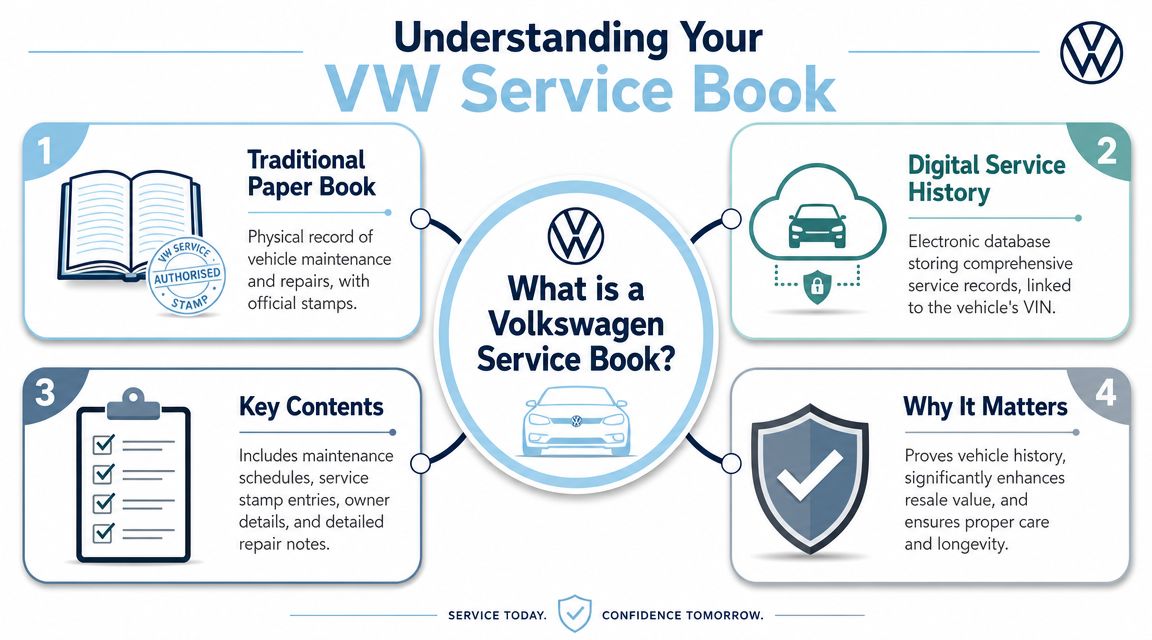
An infographic explaining the components and importance of a Volkswagen service book for vehicle maintenance and history.

What you'll usually find inside

Open one up and you're not looking for poetry. You're looking for the practical stuff that builds a believable timeline.

  • Owner and vehicle details: Enough information to tie the booklet to the car.
  • Service interval checkpoints: The milestones Volkswagen expects the vehicle to meet.
  • Workshop entries: Date, odometer reading, and what was performed.
  • Stamps or repairer records: A sign that a real business touched the car, not just a backyard promise.

Some books are neatly stamped. Some have handwriting that looks like it was done leaning over a bonnet in a hurry. That's normal. What matters is whether the story hangs together.

Paper book or digital trail

Older Volkswagens often relied on a physical booklet with stamps and handwritten notes. Later models may also have dealer-entered digital records rather than only a stamped book. The format changed, but the point didn't. You still want a clear maintenance story.

Practical rule: If the service history lets you follow the car year by year without guessing, you're on solid ground.

A good service book also reflects milestone maintenance, not just oil changes. Things like brake fluid changes, air-filter replacement, and scheduled inspections help build a fuller picture of the vehicle's condition. That's why seasoned buyers don't treat the booklet as a trivial extra. They treat it as part of the car's identity.

Why That Little Book Is Worth Its Weight in Gold

A Volkswagen can look brilliant in photos and still make your wallet cry later. Fresh paint, shiny hubcaps, detailed engine bay. Lovely. But if the service history is thin, buyers get twitchy for good reason.

That little book earns its keep when money and trust are on the table. A seller with organised records usually comes across as someone who cared for the car properly, not someone who polished over problems before listing it.
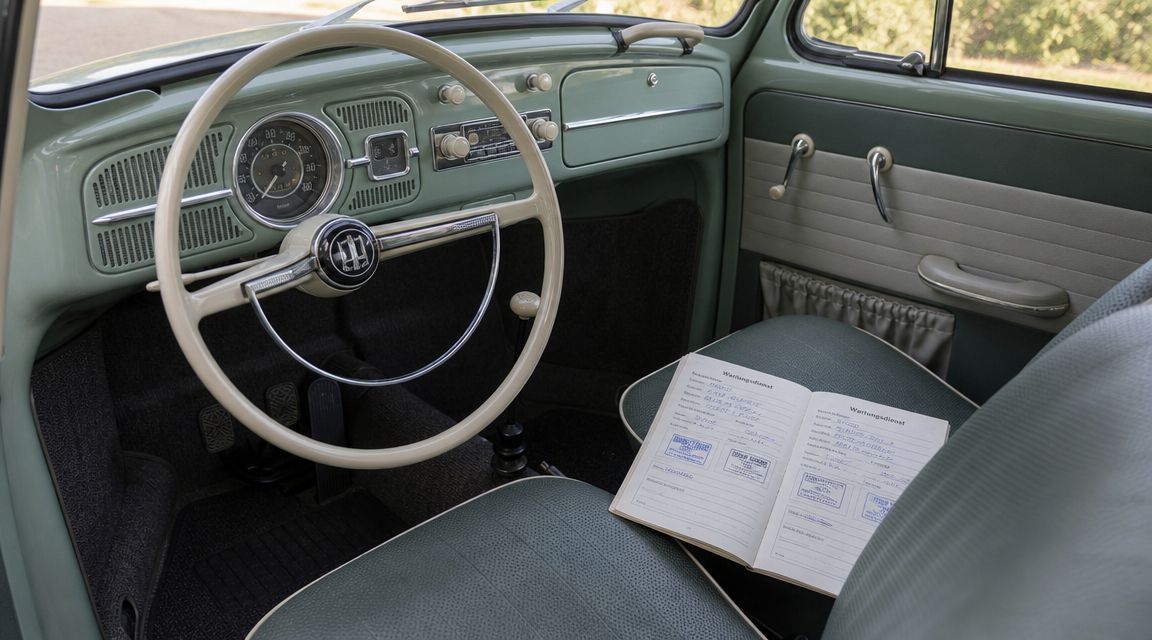
The interior of a vintage green Volkswagen Beetle featuring a service logbook resting on the passenger seat.

For buyers, it calms the nerves

Say you're inspecting a used Golf in Melbourne or a Passat on the Sunshine Coast. The seller says it has “full history”. Good start. Then you open the service book and see the intervals make sense, the odometer trail is consistent, and the work notes look credible. Straight away, the conversation changes. You're no longer buying a story. You're checking a record.

For plenty of people, that's the difference between confidence and caution.

For owners, it can support warranty discussions

For Australian Volkswagen vehicles, the service book is a key warranty-support document. It should show that logbook servicing was done at the prescribed intervals by a qualified repairer, and that history is often used to diagnose faults and validate claims, especially for powertrain issues, as Volkswagen's owner materials explain through its owners manual and vehicle information portal.

That means the service book isn't just nostalgic clutter in the glovebox. It's part of the technical paper trail. If a fault turns up, service timing and recorded work can matter.

What experienced owners check first

When club members talk through a used VW, the service book often comes up before modifications or stereo gear. They want to know:

  • Was it serviced on time: Gaps can raise questions that are hard to answer later.
  • Who did the work: Dealer, specialist, or qualified independent. The key is that the records are credible.
  • Does the book match the rest of the car: A spotless booklet paired with messy supporting paperwork deserves a closer look.

If you're sorting out maintenance, parts, or period-correct odds and ends for your VW life in general, it's worth keeping a trusted bookmark to VW parts in Australia. Not because a parts page replaces good records, but because organised owners tend to keep both the car and the paperwork in shape.

From Paper Trails to Digital Records

One of the most common yarns you'll hear from newer VW owners goes something like this. “The seller said it has full history, but there's barely anything stamped in the book.” That doesn't always mean trouble. Sometimes it means the car sits in the crossover era where paper and digital records overlap.

Volkswagen moved away from relying only on the old-school stamped booklet for some later vehicles. So now you've got a mix across the fleet. Older cars may have a proper paper logbook. Newer cars may have dealer-entered digital history. Some have both, but not in a neat, obvious way.

When the glovebox doesn't tell the full story

In Australia, there's often confusion about how VW paper books, dealer stamps, and digital records fit together. One of the most useful bits of guidance is this: if the book is missing or incomplete, owners can reconstruct service history through invoices and dealership records, and that evidence matters when assessing a used car's value and condition, as noted in Volkswagen contact and support guidance at Volkswagen customer support.

That's a relief for plenty of owners, because a missing booklet isn't always a disaster. Cars change hands. Booklets get lost during moves. Workshops close. Life happens.

How to rebuild the story

If you're dealing with patchy records, don't panic. Start gathering evidence that ties dates, kilometres, and work performed back to the car.

  • Pull together invoices: Old workshop bills can fill gaps even if the book is gone.
  • Call dealerships or repairers: They may be able to confirm prior servicing for that vehicle.
  • Check the handbook and VIN-linked information: That helps you match the car to the correct maintenance schedule.
  • Lay it out in order: A chronological folder often tells the story nearly as well as a stamped book.

Missing paper hurts less when the supporting paperwork is organised and believable.

That idea matters beyond buying and selling. It's part of how enthusiasts preserve a VW's story. A van halfway through a camper build, for example, still benefits from a tidy maintenance history. If you're dreaming about project life, van conversion ideas for VW lovers can be a fun rabbit hole, but even the coolest build starts with knowing the base vehicle's history.

Pro Tips for Buyers Sellers and Collectors

The old hands at Volksfest get a bit sharp-eyed concerning a Volkswagen service book. It can reassure you, but it can also raise questions if the details feel off. You don't need to be suspicious of every mark on the page. You just need to read it like part of the car, not as a separate prop.

A smiling Volkswagen service representative holding an open service logbook for a customer near a car.

If you're buying

Walk in with curiosity, not just excitement. Ask to see the service book before you get too distracted by the two-tone paint or fresh retrim.

A few signs are worth checking closely:

  • Inconsistent chronology: If dates and odometer readings jump around strangely, ask why.
  • Book looks newer than the car's story: A pristine booklet in a much older vehicle isn't automatically wrong, but it deserves backup paperwork.
  • Vague entries: “Service done” tells you far less than a proper note with date, kilometres, and work carried out.

Bring the service book into the same conversation as tyres, brakes, invoices, and registration papers. It should fit the broader story.

If you're selling

Present the service book like you would original manuals or factory accessories. Neat, complete, and easy to follow. Don't chuck a loose stack of receipts into a supermarket folder five minutes before the buyer arrives.

Try this:

  1. Cleanly organise the paperwork so the book, invoices, and inspection notes are together.
  2. Match entries to receipts where you can, especially if there's a gap in stamps.
  3. Be upfront about missing periods rather than hoping no one notices.

That honesty often lands better than bluffing.

If you're using an independent workshop

A lot of Aussie VW owners ask whether they must stick to the dealer network forever. The practical answer is that independent servicing can still protect the car's history when it's documented properly against the manufacturer's handbook and carried out by a qualified technician, as discussed in this independent servicing advice video.

That's good news if you've got a trusted VW specialist who knows these cars inside out.

If you're a collector at heart

Collectors understand provenance. That's why paperwork matters. The same instinct that makes someone value original brochures, dealer stickers, and period accessories also makes them value a believable service record.

And if your dream full-size bus is still somewhere over the horizon, browsing a Volkswagen bus camper can scratch that itch while you wait for the right real-world example to turn up with the right story attached.

Your Top Service Book Questions Answered

A few questions pop up again and again at swap meets, club runs, and cars-and-coffee mornings. Here's the quick-reference version.

Quick answers that save time

For specialised models like the e-Golf or hybrids, the service book matters even more because it should document specialist maintenance by trained technicians, and that record helps diagnose high-voltage faults where inspection history can be safety-critical, according to Volkswagen material reflected in this VW warranty policy document hosted by NHTSA.

Question Answer
Is a missing Volkswagen service book always a deal-breaker? No. It can be a problem, but it isn't automatically fatal if the owner can rebuild the history with invoices, workshop records, and other believable documentation.
Can I get a replacement service book? You may be able to obtain a replacement booklet for some vehicles, but a new book doesn't recreate the old history on its own. The supporting paperwork is what gives it value.
Do dealer stamps matter more than independent workshop records? Dealer stamps are familiar and easy for buyers to recognise, but qualified independent servicing with proper documentation can still support resale and compliance when it follows the handbook.
What should be recorded in the book? Date, odometer reading, and work completed are the essentials. Clear entries make the history easier to trust.
Are digital records enough for newer VWs? They can be, provided the digital history is accessible and lines up with invoices or workshop records.
Does this matter more for e-Golf and hybrid models? Yes. Those vehicles may require specialist servicing and a documented inspection cadence because high-voltage systems are safety-critical.
Why do enthusiasts treat a service book like memorabilia? Because it gives the car a personal history. It isn't just proof of maintenance. It's part of the vehicle's identity and provenance.

One last club-member tip

If the paperwork tells a clean, believable story, the car usually feels easier to own. Easier to service, easier to insure, easier to sell, and easier to enjoy without that nagging doubt in the back of your mind.

The best Volkswagens always seem to come with stories. The smart ones come with records too.


If you love the history behind real Volkswagens, you'll probably love the collectible side of the marque as well. Volkswagen Memorabilia is a top spot for licensed VW-themed gifts, Beetle and Kombi diecast models, and nostalgic display pieces that celebrate the same heritage we all yarn about at shows. Have a look through the shop if you're after a present, a shelf-worthy classic, or a little VW magic with local Australian stock and friendly service.


Boost VW Performance: Fuel System Cleaner Explained

You know the feeling. The sun's out, the Beetle or Kombi has finally rolled out of the shed, and the drive starts exactly how it should. A light mechanical hum, that old VW smell, and a grin you can't fake. Then at the first set of lights it coughs, idles a bit unevenly, or hesitates when you lean on the throttle. Not a disaster. Just your old dub having a quiet whinge.

That's where a fuel system cleaner can earn its keep. Not as a miracle cure, and not as a substitute for proper maintenance, but as one of those simple bits of workshop common sense that helps a classic Volkswagen stay sweet between bigger jobs. On old VWs, especially ones that don't get driven every week, stale fuel deposits can creep in. The trick is knowing when a cleaner will help, when it won't, and which type suits your engine.

The Heartbeat of Your Classic VW

A classic Volkswagen has a way of talking to you. Not with warning chimes and dashboards full of lights, but through little changes in sound and feel. A Beetle that usually settles into a cheerful idle might suddenly hunt a bit. A Kombi that normally pulls cleanly might feel flat for the first few minutes. Most owners know those signs straight away.

A close-up view of the rear engine air vents and taillights of a vintage beige Volkswagen Beetle.

On these cars, fuel quality and storage habits matter more than many people realise. Lots of our VWs spend part of their life tucked away under a cover, waiting for a Sunday run, a club cruise, or a local meet. That's part of the charm. It also means the fuel system doesn't always get the steady use modern cars enjoy.

Why old VWs respond differently

Air-cooled Volkswagens are simple, but they're not crude. Their fuel systems are sensitive in old-school ways. A tiny bit of varnish in a carburettor passage or a sticky needle and seat can be enough to upset idle quality and throttle response.

Practical rule: If a classic VW ran well, then got worse after sitting, fuel condition is one of the first things worth checking.

A fuel system cleaner is best thought of as a maintenance tool, not a rescue potion. It can help loosen light deposits and freshen up a car that's become a bit woolly through infrequent use. It won't fix split hoses, worn ignition parts, vacuum leaks, or a carb that's badly out of adjustment. That's the trade-off. Used at the right time, it's useful. Used as a substitute for diagnosis, it wastes time.

It's part of the ownership ritual

That's also why plenty of seasoned owners keep a bottle on the shelf. It sits in the same mental category as checking valve clearances, watching fuel lines, and listening for changes in the way the engine settles down after start-up. Small habits keep these cars happy.

And if you love the personality of an old VW, keeping the engine running cleanly is part of preserving what makes it special in the first place.

Reading the Signs Your Dub Needs a Dose of TLC

A dirty fuel system rarely announces itself with one dramatic failure. It usually sneaks up on you. The car starts and runs, but not with the same crisp feel it had a few months back. That's your cue to pay attention before a small annoyance becomes a driveway session.

What you'll usually notice first

On a classic VW, the common signs are more about behaviour than outright breakdown:

  • Lumpy idle at the lights. The engine still runs, but it sounds unsettled and doesn't quite sit where it used to.
  • Hesitation off the mark. You press the pedal and there's a flat little pause before the car picks up.
  • Sluggish response after sitting. It feels reluctant, especially on the first drive after a spell in the garage.
  • More fuel smell or fussiness during warm-up. Not always the cleaner's job, but worth noting as part of the picture.

For owners chasing mechanical bits as well as maintenance clues, it's worth keeping tabs on trusted Volkswagen Beetle parts sources so you can separate fuel issues from worn hardware.

If the engine feels “sticky” rather than broken, mild deposit build-up is a fair suspect.

The signs differ a bit by engine type

A carburetted Beetle or Kombi often shows its displeasure at idle and low-speed transition. Those circuits are fine and easily upset. Early injected Volkswagens, like an older Golf, can show rough running under load or inconsistent response through the rev range.

That said, don't blame the fuel system for everything. Old VWs love stacking faults. A slightly dirty carb, slightly tired points, and a tiny vacuum leak can team up and feel like one problem.

When cleaner won't solve it

Skip the bottle and inspect the basics first if you've got any of these:

  • Visible fuel leaks around hoses, pump, or carburettor
  • Cracked or hardened rubber lines
  • Obvious ignition issues such as misfire, weak spark, or poor leads
  • Heavy contamination in the fuel filter or tank sediment bowl
  • A carburettor that's flooding or badly out of tune

If the problem is mechanical, a fuel system cleaner won't magically smooth it out. It can help with light contamination. It can't replace hands-on fault finding.

Choosing the Right Brew for Your Engine

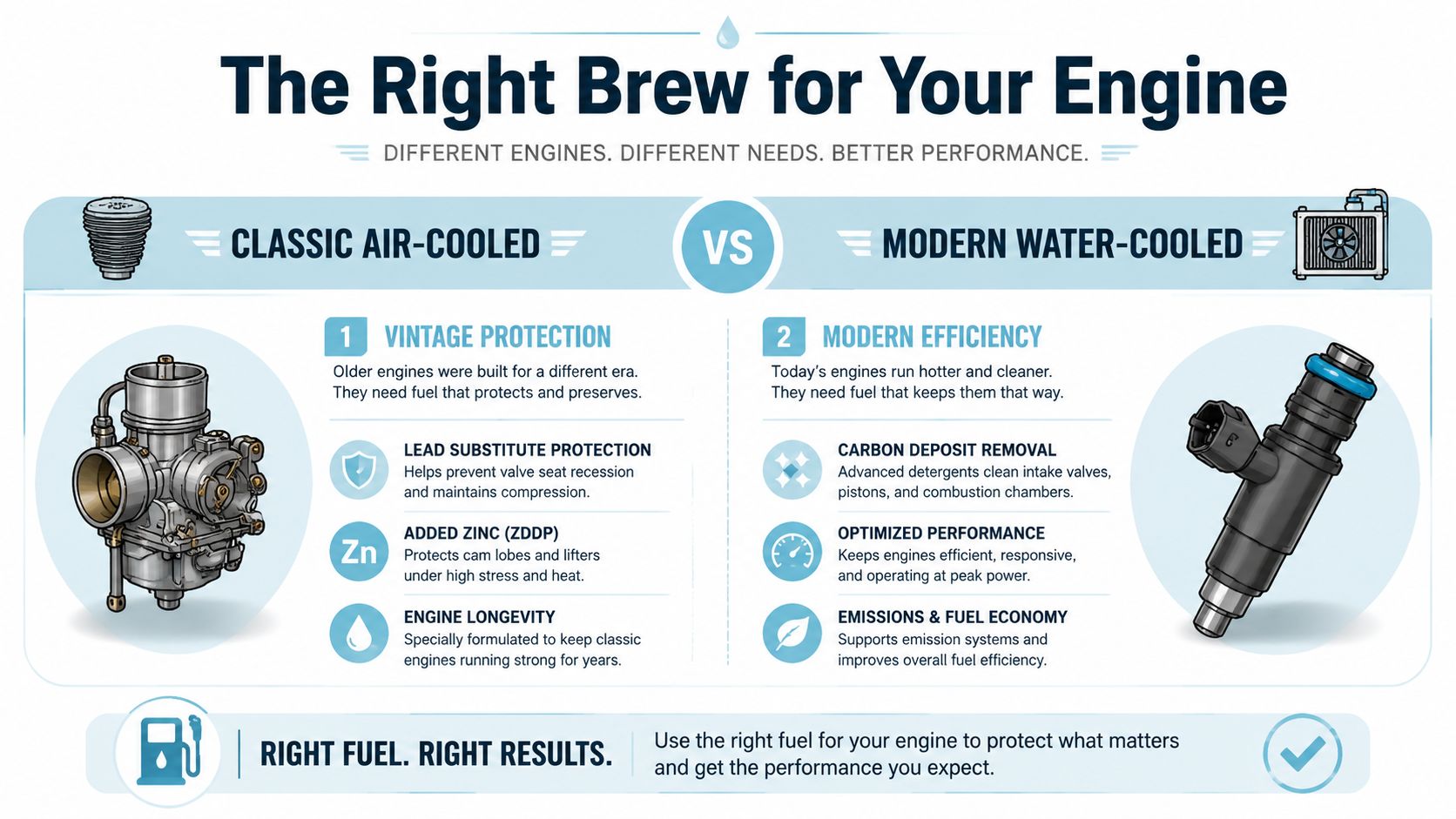
Generic advice on this topic usually proves insufficient. Not every fuel system cleaner suits every VW. A carburetted air-cooled engine and an early water-cooled injected engine may both burn petrol, but they want different things from an additive.

A comparison infographic between fuel requirements for classic air-cooled engines and modern water-cooled engines.

Air-cooled Beetles and Kombis

If you're running a classic air-cooled VW with a carburettor, your main enemy is often varnish and gum in small passages and jets. That's especially true if the car sits for stretches between drives. Chevron notes that carburettor varnish can begin to form in as little as 30 days with modern E10 fuels, reducing fuel flow and causing poor idling. That's directly relevant to classic air-cooled engines that aren't driven often, as noted by Chevron's Techron guidance.

For these cars, look for a cleaner that explicitly mentions carburettors or classic petrol fuel systems. You want something aimed at dissolving light varnish and keeping passages clear, not just injector-focused marketing.

Early water-cooled Golfs and injected VWs

On an injected VW, the concern shifts more toward injector cleanliness and spray quality. A cleaner made for injectors can make sense here, especially if the car feels uneven under load or dull on throttle response. Read the label carefully. If the bottle talks only about carburettors, it may not be the best fit for an injected Golf.

A good habit is to match the product to the hardware, not to the badge on the bonnet.

Quick Guide to VW Fuel System Cleaners

Engine Type Common Issue Look for Cleaners That Mention
Classic air-cooled Beetle or Kombi with carburettor Varnish, gum, poor idle after sitting Carburettor cleaning, fuel passage cleaning, classic petrol systems
Early water-cooled VW with fuel injection Dirty injectors, uneven spray, hesitant response Injector cleaning, petrol injection systems, intake deposit cleaning
Infrequently driven classic VW Stale-fuel deposits and rough running after storage Fuel system cleaning for stored vehicles or products suitable for preventative use

What works and what doesn't

A cleaner can help when the deposits are light and the rest of the engine is sound. It's a maintenance move. It's not a substitute for stripping and cleaning a badly fouled carburettor, replacing blocked filters, or sorting ignition faults.

Workshop view: The right product can tidy up a mildly dirty fuel system. The wrong product, or unrealistic expectations, just delays proper diagnosis.

Also keep your additive choices separate in your head. A friction-reducing oil additive such as Liqui Moly Cera Tec belongs in an engine-lubrication conversation, not a fuel-cleaning one. Mixing up those jobs is more common than you'd think.

The Weekend Ritual A Simple How-To Guide

Using a fuel system cleaner is one of the easier jobs you can do in the driveway. No special tools, no drama, and no need to overcomplicate it.

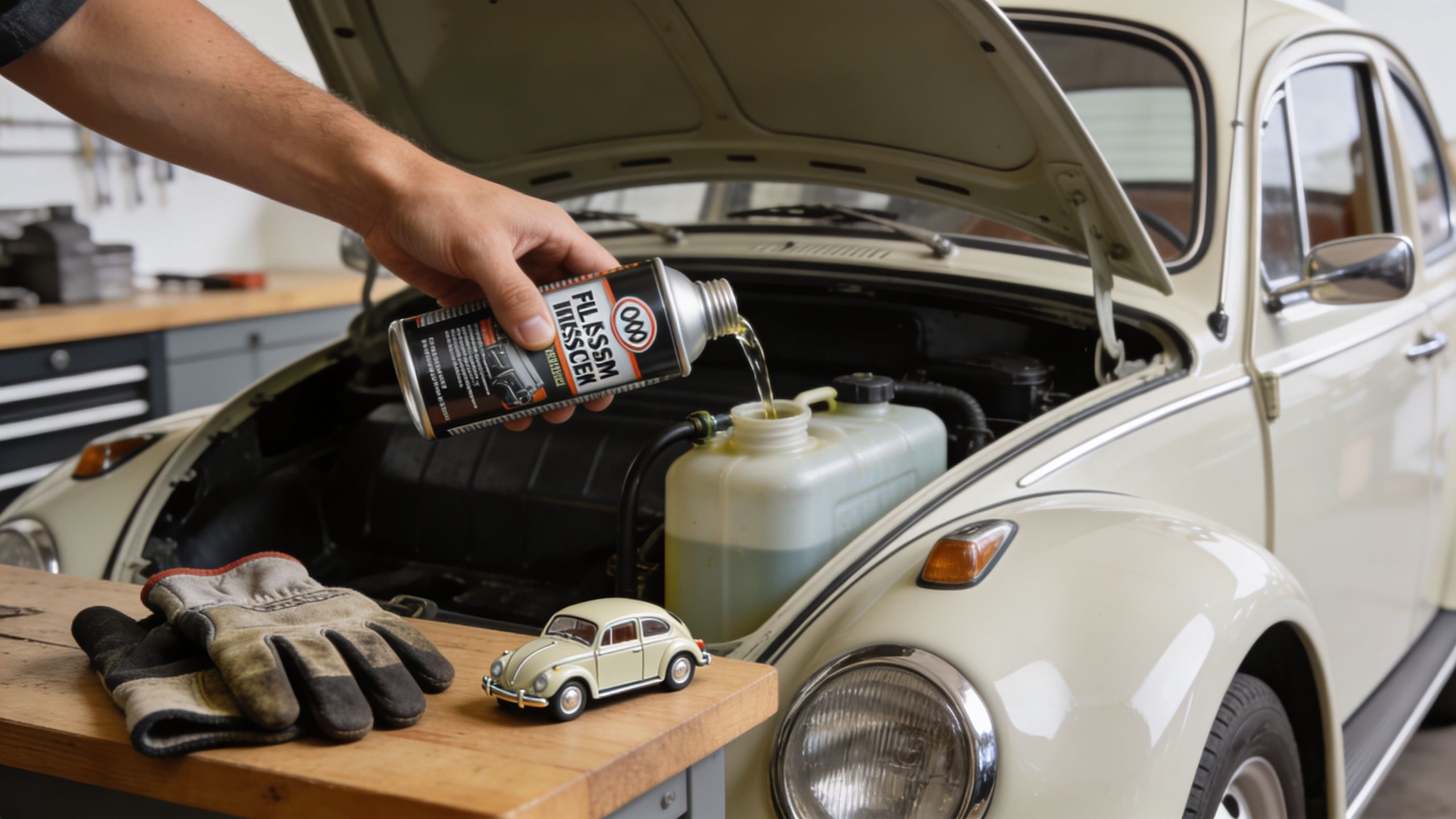
A person pouring fuel system cleaner into a vintage beige Volkswagen Beetle during routine engine maintenance.

Before you pour anything in

Read the bottle. That sounds obvious, but it's the step plenty of people skip. Different products are blended for different systems, and the maker's dose rate matters.

Keep a rag handy, wear gloves, and don't slosh the stuff onto paint. Old paint and fresh spills aren't great mates.

The simple driveway method

  1. Start with a low-ish tank
    You don't need to be on fumes, but adding cleaner before filling up helps it mix properly through the fuel.

  2. Add only the recommended amount
    More isn't better. Overdosing doesn't make it work faster, and on an old car it can create confusion if the engine starts behaving oddly for another reason.

  3. Fill the tank with fresh fuel
    Fresh fuel gives the cleaner the best chance to circulate evenly through the system.

  4. Take the car for a proper drive
    Don't just idle it in the driveway for five minutes. A decent run gets treated fuel through the lines, pump, carb or injectors, and into normal operating conditions.

  5. Pay attention over the next few drives
    Idle quality, start-up manners, and throttle pick-up are the first places you'll usually notice a change.

What a good run looks like

The best follow-up is a normal drive where the engine gets fully warm and spends time under varied load. Highway cruising helps. So does a mix of suburban stop-start if the issue has been most obvious at idle and low speed.

Here's a handy visual walkthrough if you like seeing the general process in action:

A few mistakes worth avoiding

  • Using cleaner to dodge tune-up work. If points, plugs, timing, or mixture are off, sort those first.
  • Treating ancient fuel as if cleaner will save it. If petrol has gone stale and the car has been parked for ages, draining and starting fresh may be the smarter move.
  • Ignoring the fuel filter. If the filter's dirty, inspect it. Cleaner can loosen deposits, and that can expose a filter that was already near the end of its useful life.

A clean, simple routine works best. Add it, fill up, drive it, then judge the result.

Keeping the Good Vibes Rolling A Maintenance Schedule

The smartest way to use fuel system cleaner is before the car gets crook, not after it's already carrying on at every traffic light. On classics, especially those that spend time parked, prevention is usually less painful than chasing symptoms later.

A sensible pattern for most classic VWs

Rather than tipping cleaner in at random, tie it to how the car lives:

  • Occasional drivers often benefit from using it as part of a regular pre-emptive routine, especially if the car sits between outings.
  • Weekend cruisers can work it into seasonal maintenance, alongside checks of hoses, clamps, timing, and oil.
  • More frequently driven cars may need it less often, but they still benefit from attention if the idle starts to lose its neat, familiar rhythm.

Look after the fuel system before it complains, and the rest of the car usually feels happier for it.

Think preservation, not just repair

That's the mindset with old Volkswagens. You're not just keeping transport alive. You're preserving something with history, character, and a very particular feel on the road. The same instinct that makes people admire a shelf display of a 1:24 scale Kombi Samba Bus applies here. Small details matter.

If you enjoy browsing the main VW shop or checking out the Volkswagen Beetle model collection, it's the same love of shape, story, and heritage. Looking after your car completes the picture.

For practical maintenance support on your vehicle, it also helps to know where to find dependable VW parts in Australia.

Got a Question Mate? Our FAQ

I used a fuel system cleaner and my VW still runs rough. What next

Go back to the basics. Check ignition first, then vacuum leaks, then fuel delivery hardware. On an air-cooled VW, points, plugs, timing, valve adjustment, and intake leaks can all mimic fuel-system trouble. If the cleaner made no difference at all, the fault may not be deposit-related.

Is fuel system cleaner safe for old rubber fuel lines

The cleaner isn't the first thing I'd worry about. The age and condition of the hoses matter more. If the lines are old, hard, cracked, or weeping, replace them before chasing additives. Use products clearly intended for petrol engines, and don't use mystery brews from an unlabelled bottle.

Can I use it in a freshly rebuilt engine

Usually, yes, but keep it modest and stick to the product directions. A freshly rebuilt engine still needs proper break-in habits, correct tuning, and careful checks for leaks or adjustment issues. Cleaner can help keep the fuel side tidy, but it shouldn't distract from the normal post-build inspections.

Is fuel system cleaner enough for a badly gummed-up carburettor

No. If the carb is heavily fouled, flooding, or blocked, remove it and clean it properly. A pour-in cleaner is for light deposits and ongoing maintenance. It can't replace a strip-down when the carb needs one.

Should I use cleaner before storage or after storage

If the car is going to sit, fuel quality deserves attention before storage. If it has already sat and now runs a bit ordinary, a cleaner may help if the problem is mild. If the fuel is clearly stale or the car has been parked for a very long stretch, start with fresh fuel and a proper inspection.


If your love of classic Volkswagens extends from the driveway to the display shelf, have a look at Volkswagen Memorabilia. It's a ripper spot for licensed VW gifts, collectables, and diecast favourites, with local Australian stock, fast shipping, and plenty of charm for Beetle and Kombi fans alike. Whether you're after a present for a VW mate or a new piece for your own collection, you can browse the range of Volkswagen diecast models, memorabilia, and coastal-inspired décor in one place.