You know the feeling. The cabin's been baking in the sun, the driver's bolster's gone shiny, and there's a bit of sand in the seams from the last beach run. In a Beetle, Kombi, Golf or Passat, that's usually the moment seat covers stop being an “extra” and start looking like a smart way to keep the car usable, tidy, and worth caring for.
The right Volkswagen seat covers do more than hide wear. They protect the original trim, make daily driving easier, and let a VW cabin feel personal without turning it into a gimmick. The wrong ones do the opposite, they bunch up, block access, and make the interior feel cheap the second you sit down.
Why Volkswagen Seat Covers Matter for Aussie Owners
A hot afternoon changes the way you think about a seat cover very quickly. If you've ever climbed into a Volkswagen after it's been parked outside and felt the seat back grab at your shirt, you already know why protection matters in Australia. Add UV, sweat, dust, sand, and the odd coffee spill, and the factory trim starts wearing the cost long before the odometer suggests it should.
That's especially true for cars that are still worked hard, not just admired. A Kombi used for weekends, a Golf that does the school run, or a Beetle that's parked at shows but still driven regularly all face the same slow damage.
Practical rule: if the seat cover only looks good in a product photo, it's probably not built for Australian use.
The aftermarket is already built around that reality. Recent automotive seat-cover research values the category at USD 6.8 billion in 2024 and projects USD 12.78 billion by 2035, with a 5.9% CAGR from 2025 to 2035, showing that buyers treat seat protection as a serious replacement-and-refresh purchase, not a novelty (Market Research Future). For VW owners, that matters because a good cover has to do two jobs at once, defend the original trim and still suit the car's character.
The practical question isn't whether to buy one. It's whether the cover matches the seat, the way you use the car, and the conditions it lives in.
Popular Materials from Neoprene to Leatherette
Pick the material first, and a lot of the rest becomes clearer. The cover has to feel right every time you climb in, but it also has to cope with a hot cabin, beach sand, wet gear, and the kind of regular use that slowly chews through factory trim. For Australian Volkswagen owners, the usual shortlist is neoprene, canvas, and leatherette, and each one suits a different mix of comfort, durability, and appearance.
Neoprene for wet, active weekends
Neoprene suits cars that regularly carry swimmers, surfers, dogs, or equipment that is still damp when it goes into the back seat. The material has a wetsuit-like feel, wipes down without fuss, and handles water exposure better than many fabric options, so it fits a Kombi used for beach trips or a Golf that spends its weekends near the coast.
There are trade-offs. Neoprene can feel warm in a parked car, especially after the interior has baked in the sun, and it rarely gives the most authentic classic look. It still makes sense if the main job is keeping salt, moisture, and sand from settling into the original upholstery.
Canvas for hard use and older-style utility
Canvas is the tougher, more work-focused choice. It suits overlanders, utility-minded drivers, and classic VW interiors that need a practical finish rather than a soft one. It usually breathes better than synthetic-look materials and carries a straightforward, honest appearance that fits older Volkswagens well.
The trade-off is comfort and polish. Canvas can look right in a hard-working Kombi or a Beetle that gets used regularly, but it will not deliver the same tidy, premium finish some owners want in a modern Golf or Passat. If the car sees mud, tools, pets, or repeated loading, canvas earns its place quickly.
Leatherette for a cleaner, smarter cabin
Leatherette gives you the easiest route to a neat, upscale-looking interior without the upkeep that comes with real leather. It suits owners who want the cabin to look sharp at a show or on a weekend run, while still being easy to wipe after daily use. Volkswagen Genuine Accessories for the Virtus describe seat covers as improving aesthetics and comfort, while also protecting against wear and dirt, which matches the practical job most buyers expect from this kind of product (Volkswagen Virtus accessories).
That said, leatherette has its own realities. In harsh Australian sun, a dark finish can heat up quickly, and cheap versions can feel slippery or look a little too glossy for a heritage VW cabin. A better-quality cover keeps the car looking cleaner, but it still needs to suit the seat shape and the way the car is driven.
A good material choice should suit how you actually drive, not how you wish the car lived.
For owners comparing cabin trim options, the Volkswagen interior accessories collection is a useful place to see how seat protection sits alongside other interior pieces.
Model-Specific Fitment for Classic and Modern Volkswagens
Volkswagen cabins are not all built the same, and that is where a lot of seat-cover mistakes begin. A classic Beetle or early Kombi has a very different seat frame, headrest arrangement, and upholstery shape from a modern Golf, Passat, or Tiguan. If the cover is not cut for the seat platform, it will wrinkle, slip at the base, or interfere with important fittings. In Aussie conditions, that poor fit also means more movement from heat, more dust working under the fabric, and more wear where the cover rubs on the seat.
Why universal covers usually disappoint
Universal covers promise convenience, but on a VW they often become a compromise. They can sit loose over contoured seats, fight with headrests, and leave awkward gaps around bolsters or split-fold backs. That is fine if you only want temporary protection. It is not what most enthusiasts mean when they want a proper fit.
Model-specific covers are a better match because they are built around the vehicle's seat geometry. VW Classic Parts lists a genuine Golf Mk4/Bora RECARO seat cover in leather and leatherette with exact dimensions of 610 mm by 550 mm by 40 mm and a weight of 0.81 kg, which shows how OEM parts are dimension-controlled rather than guessed (Volkswagen Classic Parts). That kind of detail matters more on a VW than on a generic hatch, because the seat shape, bolster depth, and trim layout vary so much between generations.
What to match before you buy
For Australian buyers, three fitment points matter most. First, check the exact vehicle platform and year. Second, confirm whether the seat has removable headrests or integrated ones. Third, make sure the rear bench still folds the way it should, especially in cars that use 60/40 or similar split layouts.
The seat base itself also needs attention. A cover that fits the cushion but misses the backrest tension points usually ends up looking baggy after a few weeks, and a rear cover that blocks the fold release becomes a daily annoyance. If the car carries kids, pets, tools, or surf gear, that trade-off shows up fast.
Aftermarket VW-fit systems often use rear-seat zipper architecture to preserve fold function and armrest use where fitted. That is useful in real life, because a seat cover that protects the cabin but kills cargo flexibility is a poor trade. In older VWs, correct cut-outs also help the cover sit neatly over slimmer frames and simpler trim. In newer models, the same logic helps the cover follow the seat contours instead of floating over them.
Best-fit habit: buy for the seat layout, not just the badge on the tailgate.
If you are comparing display ideas and cabin styling touches for a Beetle or Kombi, the vehicle interior accessories range is a handy place to start thinking about the overall look, not just the cover itself.
Safety and Compliance Considerations for Side-Airbag Seats
This is the part many casual buyers skip, and it's the one that matters most. A seat cover can look neat and still be the wrong choice if it interferes with side-airbag deployment, seat-mounted sensors, or child restraint access. In Australia, that's not a detail, it's a serious buying check.
What to ask for before you commit
A properly designed cover should preserve the factory seat's safety functions. VW Genuine rear-seat protection accessories specify access to seat-belt buckles, ISOFIX anchors, armrest and pass-through functions, and use durable polyester construction, which is a good example of how protection and practicality should coexist (VW rear-seat cover with GTI logo).
Look for these features in plain terms:
- Airbag-compatible seams, ideally breakaway or specifically shaped for side airbags.
- ISOFIX access slots or clear opening points for child restraints.
- Headrest and belt cut-outs that don't distort when tightened.
- Clear model notes for your VW platform, not vague “fits most” wording.
A four-point safety check
- Ask whether the cover is tested for side-airbag seats. If the seller can't explain the seam design, move on.
- Check child-seat compatibility. Rear seats used for kids need clean access to tether points and anchors.
- Confirm the fit around sensors and folding mechanisms. A cover shouldn't jam movement or strain the seat back.
- Avoid generic shells on airbag seats. A loose cover can shift, bunch, and compromise deployment geometry.
One Australian-fit concern is whether the cover is legal and safe with side-airbag seats and child-seat anchors, because many product listings stop at style and ignore restraint compatibility (airbag and ISOFIX fitment concern).
A cover that blocks a tether point or ignores airbag geometry is cheap only until it causes a problem.
Installation Overview and Common Troubleshooting
A good install starts before the cover goes anywhere near the seat. Clear the cabin, slide the front seats to give yourself room, and take the headrests off if the design allows it. That alone makes the rest of the job much cleaner, especially on tighter VW buckets where access around the bolsters is limited.
Work methodically. Feed the cover over the top, line up the headrest holes, and make sure any side-airbag seam sits where the seat expects it to be. Then smooth the base out before tightening the straps, because once the elastic is tensioned, wrinkles are harder to fix.
- If the cover slips on vinyl seats, roughing up the surface isn't the answer, the fix is usually better anchoring under the seat and tighter strap routing.
- If the backrest rides up, the shape is wrong for the seat or the lower ties aren't secured evenly.
- If rear zippers fight split-fold seats, pause and re-check whether the cover was cut for your exact 60/40 or 50/50 layout.
- If the belt latch sits awkwardly, stop and reopen the opening before you force anything through.
The same logic applies to other interior protection pieces, which is why matching products to the car matters across the cabin. If you're planning a broader refresh, the automotive dashboard covers collection can help you think about the dashboard and seats as one interior system instead of separate add-ons.
If the cover needs brute force to fit, it probably wasn't designed for your seat.
Call a trimmer if the seat shape is unusually modified, the cover tension is uneven after a proper install, or you're dealing with foam damage that needs repair before any cover will sit correctly.
Cleaning and Maintenance for Australian Conditions
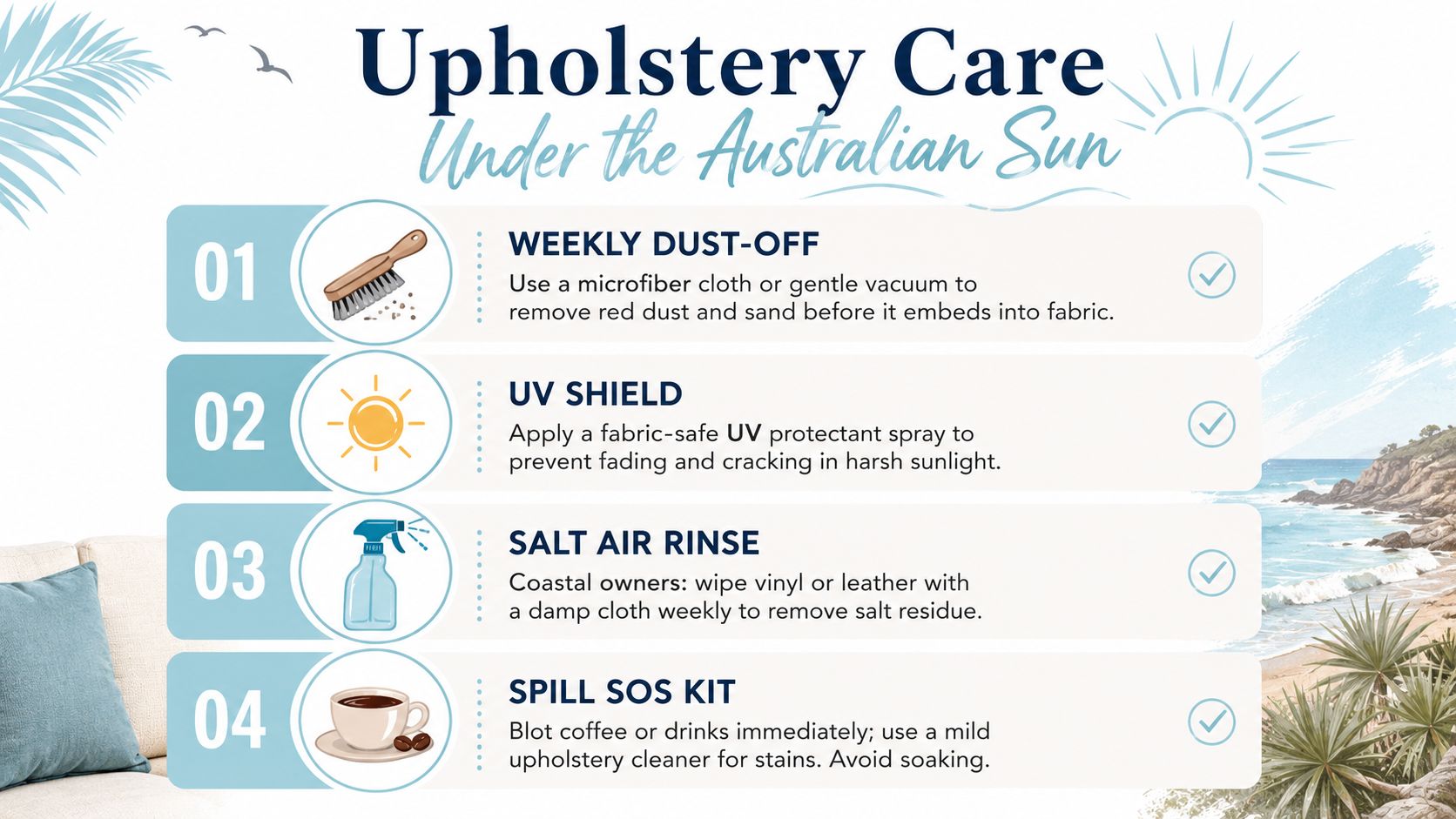
Australian conditions punish neglected interiors. UV fades colour, coastal salt leaves residue on surfaces, and red dust finds every seam you forgot to check after a long drive. The answer isn't complicated maintenance, just regular habits matched to the material.
For neoprene, use a gentle vacuum and mild soap, then let it dry properly before the next drive. For leatherette, wipe it with a damp cloth and use a suitable conditioner so the surface doesn't go dull or brittle over time. For canvas, spot-clean stains early and reproof if the fabric starts losing water resistance.
Keep a seasonal rhythm
- Spring dust-off: vacuum seams and brush out grit before it embeds.
- Summer sun care: park in shade where you can and use a fabric-safe UV protectant on suitable materials.
- Winter mud control: shake out floor dirt and clean transfers before they dry.
- Beach-day reset: tip out sand early, don't let it grind into the bolsters.
Avoid harsh solvents on leatherette and bleach on canvas. Those shortcuts tend to cause more damage than the stain you were trying to remove. The other habit that pays off is simple, park in shade when possible, because reducing UV exposure protects both the cover and the original trim underneath.
For owners pairing seat protection with coordinated cabin styling, the customised floor mat range helps keep the same practical mindset flowing through the rest of the interior.
Styling Ideas That Celebrate VW Heritage
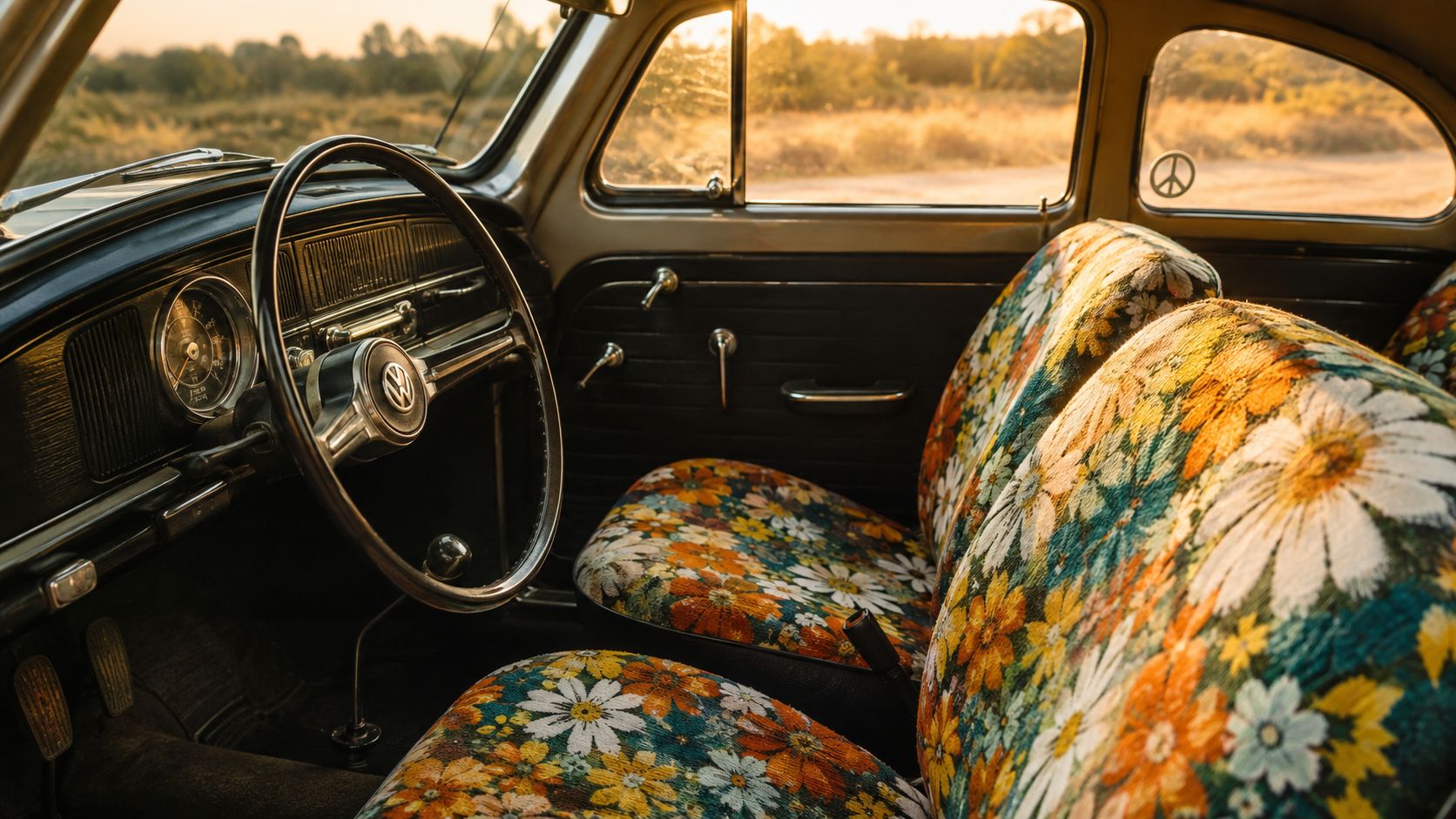
The fun part comes after fitment and safety are sorted. That's where a seat cover can nod to VW heritage without turning the cabin into a costume. A Beetle can wear a bit of retro floral energy, a Kombi can handle surf-inspired colour, and a Samba Bus can carry a two-tone scheme that feels faithful rather than forced.
The strongest interiors usually keep the graphics calm. Contrast stitching, a subtle embroidered logo, or a restrained pattern often ages better than loud prints that dominate the whole cabin. That matters if you care about resale and long-term enjoyment, because the nicest VW interiors usually feel like they belong to the car rather than to one trend.
A quick way to choose is to match the cover to the vehicle's personality:
- Classic Beetle, lean into warm, nostalgic colours and softer textures.
- Kombi or Type 2, choose beachy tones or surf-camp styling that feels relaxed.
- Modern Golf or Passat, keep the palette cleaner and let the fit do the talking.
The better styling choices echo the car's history instead of shouting over it. That's why a restrained VW motif tends to look more expensive than a busy print, even when both started from the same materials.
For more inspiration around cabin accents and themed pieces, the vehicle interior accessories collection is an easy place to compare what feels tasteful versus overdone.
Buying Checklist and Final Recommendation
Before you buy, check material, exact model fitment, airbag and ISOFIX compatibility, install effort, and cleaning commitment. That short list catches most mistakes before they become returns or regrets. If a product can't answer those five points clearly, it's probably not the right cover for your VW.
For classic Beetles and Kombis, prioritise shape and style. For modern Golfs, Passats, and other airbag-equipped VWs, prioritise safety geometry first, then look at finish. The best choice is the one that protects the car, suits your life, and still feels right every time you open the door.
If you're ready to compare VW-themed pieces, Volkswagen Memorabilia has a friendly range for enthusiasts, collectors, and gift buyers who want the heritage without the fuss. Take a look at Volkswagen Memorabilia and browse the shop for VW-inspired items that suit a classic build, a modern daily, or a Kombi-loving garage.