

The sun's already warming the bitumen, someone's polished a split-window Kombi to within an inch of its life, and you're standing there with a coffee thinking the same dangerous thought a lot of Aussie VW fans have had at one time or another.
What if this summer's the one?
Not just a Sunday cruise. Not just another wander through a show-and-shine lineup. A proper road trip. Coastline, camp chair, early starts, servo pies, and that feeling you only get when the road opens up and home gets smaller in the mirror. For some people, that dream looks like a tidy little caravan tucked behind the tow car. For others, it's a campervan with the kettle, bed and esky all riding along in one neat package, very much in the spirit of the old VW Kombi.
You can see both visions at any classic car gathering. One couple is talking about setting up by the beach for a full week, unhitching, then using the car to duck into town for fish and chips. Another bloke is grinning about pulling over near a headland, sliding open the side door, and being camp-ready in minutes. Same dream. Different machine.
It's no small conversation anymore, either. In Australia, the caravan-and-camping sector hit an all-time high in 2025, with almost 938,000 registered caravans and campervans, up 32% since 2019. In the same period, Australians took 17.3 million domestic overnight caravan-and-camping trips, according to Tourism Research Australia's caravan and camping data. That tells you this lifestyle isn't some fringe hobby. It's part of the national rhythm.
For VW enthusiasts, that makes the caravan vs campervan question feel even closer to home. The old Kombi didn't just transport people. It sold the idea that the trip itself could become the destination.
Introduction
At a VW meet, you can usually spot the two tribes without anyone saying a word.
There's the crew who love the thought of setting up a proper little base camp. They're the ones picturing striped awnings, folding tables, and enough room to stretch out when the weather turns. Their dream has a caravan in it. They like the ritual of arriving, levelling, unhooking, and settling in for a few days like they've borrowed a tiny beach shack.
Then there's the mob drawn to movement. They want to roll out early, stop when the scenery looks right, and keep things loose. That's campervan energy. Very Kombi. Very surf check at dawn, toast on the stove, and no mucking around with hitches before coffee.
Both styles make sense. Both tap into the same old VW feeling of freedom, simplicity, and making memories with less fuss and more flavour. The difference is in how you want your trip to unfold. Do you want your accommodation to stay put while you explore, or do you want your whole setup to move as one?
A good choice in the caravan vs campervan debate isn't about winning an argument. It's about matching the vehicle to the kind of stories you actually want to live.
That's where things get interesting for Australian Volkswagen fans. If you've always had a soft spot for a classic Transporter, a Beetle on holiday duty, or the romance of a Samba Bus pointed toward the coast, your answer probably isn't just practical. It's emotional too.
The Great Debate What is a Caravan vs a Campervan
Before the dream gets too far ahead of the driveway, it helps to get the basics straight.
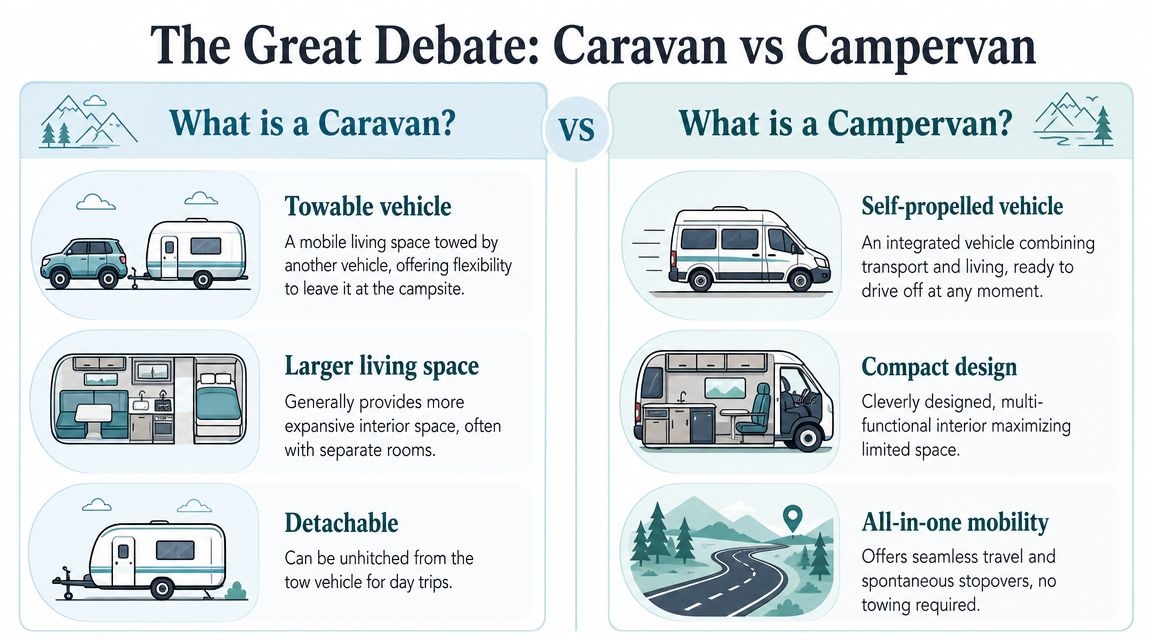
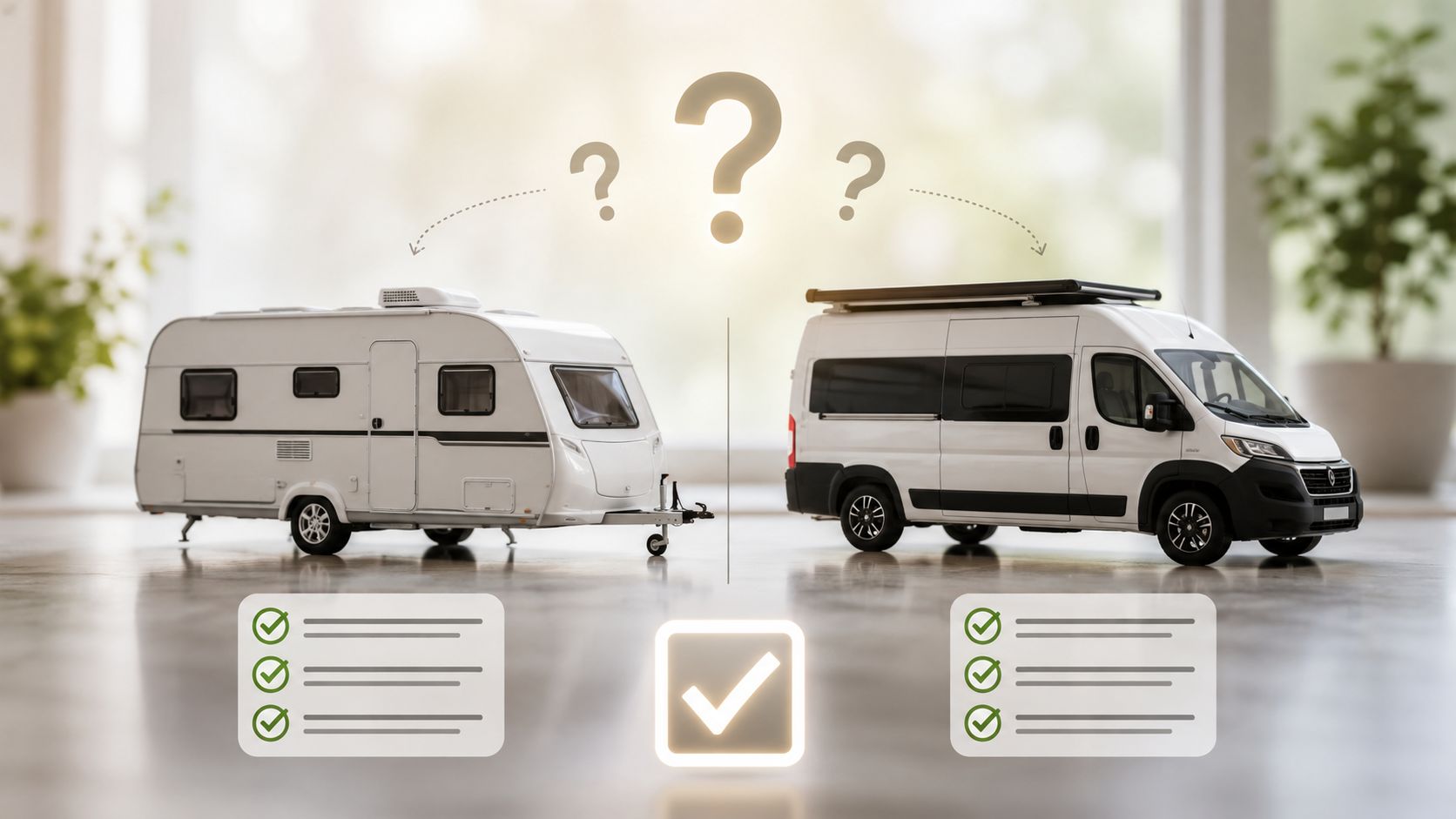
A caravan is a towable trailer. It needs a separate vehicle to pull it. A campervan is a self-contained motor vehicle with living space built in. That distinction is the heart of the whole caravan vs campervan conversation, and it shapes everything from driving feel to setup routine to what sits in your shed during the off-season. Volkswagen Australia lays out that difference clearly in its guide to caravan vs campervan.
| Feature | Caravan | Campervan |
|---|---|---|
| Basic format | Towable trailer | Self-contained motor vehicle |
| What you need | A separate tow vehicle | One vehicle only |
| Living style | More room to spread out | Compact, integrated living |
| Travel style | Set up camp, then unhitch | Stop and go more easily |
| Upfront cost feel | Usually lower without engine or drivetrain | Higher because it includes engine and drivetrain |
The practical split
In plain English, a caravan is more like bringing a little holiday cabin with you. A campervan is more like turning the vehicle itself into the holiday cabin.
That's why people often describe caravans as roomy and campervans as nimble. Volkswagen Australia notes that caravans usually offer more space for sleeping, cooking, living, and sometimes bathing, while campervans bundle travel and accommodation together in a way that suits flexible road trips.
Where price enters the chat
Upfront price is often the first reality check. Volkswagen Australia also notes that Camper Champ reports a brand-new campervan averages around $70,000 or more in Australia, before registration, insurance, and other fees, while caravans are generally cheaper because they don't include an engine or drivetrain. That's one reason plenty of buyers start by admiring the campervan dream, then take a long second look at caravans.
If your heart already leans toward the classic van shape, the enduring appeal of a VW-style camper is easy to understand. The old-school silhouette still says adventure in a way few vehicles can, whether you're admiring an actual one or browsing a Volkswagen Transporter camper collectible.
The Driving Experience Towing vs All-in-One Cruising
Ask anyone who's done both, and they'll tell you the biggest difference shows up before you've even reached the campsite.
With a caravan, the trip begins with a bit of choreography. Mirrors adjusted. Hitch checked. Corners taken wider. Fuel stops planned with enough room to get back out again. For some drivers, that's all part of the ritual. They enjoy the deliberate pace. Others find towing a bit tense, especially in traffic, crosswinds, or cramped coastal towns where every roundabout suddenly feels personal.
How a caravan feels on the move
Towing changes your whole mindset. You drive with more patience, and you think further ahead. That can be a pleasure if you like the slower, steadier style of touring.
A caravan also gives you a lovely perk once you arrive. Unhitch it, set up camp, and your tow vehicle is free for bakery runs, beach trips, or ducking into town without packing away the annex of your life.
How a campervan feels on the road
A campervan is more spontaneous. You turn the key and go. No hitching, no reversing a trailer into a tight site, no wondering whether that tiny scenic lookout car park was a terrible idea.
That all-in-one ease is why campervans feel so close to the classic VW spirit. A good campervan invites detours. It suits the sort of traveller who sees an empty stretch of coast and thinks, yep, let's stop here for a cuppa.
Practical rule: If you want each travel day to feel lighter and more flexible, a campervan usually feels easier. If you'd rather create a stable base and explore from there, a caravan often feels more comfortable.
There is one trade-off, though. In a campervan, your transport and your home are the same thing. If you want to drive to the shops, your whole camp goes with you. In a caravan setup, the house stays put.
That's why the best answer often comes down to personality. Some people love the motion. Some love the destination.
Living Space Layouts and Lifestyle Tradeoffs
Step inside both, and the caravan vs campervan debate stops being about vehicles and starts being about how you live.
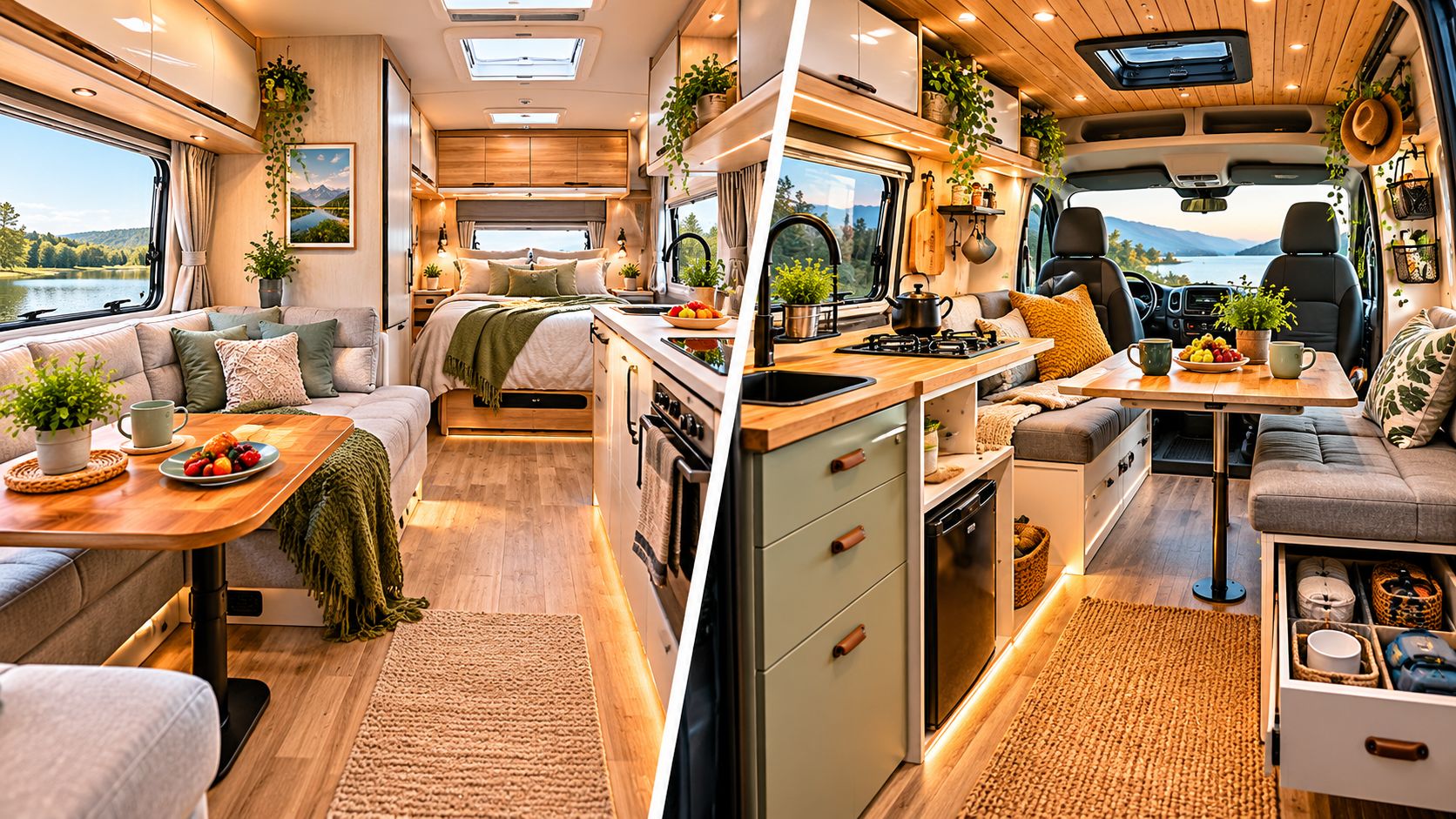
A caravan tends to feel more like a small holiday unit. There's often a stronger sense of separate zones. One person can read while another makes lunch. Kids can sprawl. Wet towels and sandy shoes don't take over the entire universe in quite the same way.
A campervan is different. It rewards people who appreciate clever design. Seats transform. Tables fold away. Storage hides in places you'd never expect. You don't get excess space. You get purposeful space.
The Kombi philosophy still matters
That's one reason VW fans are so drawn to campervans. The classic Kombi was a rolling lesson in intelligent packaging. It never pretended to be huge. It just made brilliant use of what it had.
That same design spirit still charms people now. You see it in modern camper layouts, and you see it reflected in the affection people have for van-shaped memorabilia, especially pieces inspired by tidy touring setups like the Volkswagen Crafter camper collectible.
If you want a quick visual reminder of why compact camper design has such a cult following, this clip captures the appeal nicely.
Who enjoys which layout
A caravan often suits travellers who value:
- Room to unwind: More physical separation between sleeping, dining, and lounging.
- Longer campsite stays: Better when you're settling in for several nights.
- Family practicality: Extra space makes shared trips easier to manage.
A campervan often suits travellers who care most about:
- Compact efficiency: Everything has a place and a purpose.
- Quick stopovers: Pull up, park, and start enjoying the location.
- Adventure rhythm: More movement, less setup.
Neither layout is objectively better. One feels like a small cottage on wheels. The other feels like a beautifully organised tool for chasing the horizon.
The Real Cost of Freedom Beyond the Sticker Price
Plenty of buying guides often go a bit soft. They talk purchase price, throw in a few comments about convenience, and leave the expensive part buried in the fine print of actual ownership.
The sharper way to think about caravan vs campervan is total cost of ownership. That means not just what you pay to get one, but what you keep paying to live with it in Australia over time. As noted in this ownership-focused comparison, campervans are registered and insured as motor vehicles, while caravans add trailer registration and insurance, plus the costs tied to a suitable tow vehicle.
What a campervan owner is really paying for
A campervan wraps a lot into one package. That's convenient, but it also means the vehicle side of the equation doesn't disappear.
Think about ongoing costs like:
- Registration and insurance: It's a motor vehicle, so those basics are part of the deal.
- Servicing: Engine, drivetrain, and vehicle systems need regular attention.
- Fuel use: You're moving the whole house every time you drive.
- Depreciation: The vehicle itself carries the wear of both travel and accommodation use.
What caravan owners can overlook
A caravan can look cheaper at first glance, and in some cases it is. But the long-run math depends heavily on the tow vehicle.
A realistic caravan budget needs to consider:
- Trailer costs: Registration and insurance still apply to the caravan itself.
- Tow vehicle demands: Not every family car is the right match for towing duty.
- Fuel and servicing on the tow car: Pulling a van changes how hard the vehicle works.
- Depreciation across the setup: You may be spreading value loss across more than one asset.
Don't ask, “Which one is cheaper?” Ask, “Which one makes better sense for the way I travel, store, service, and use vehicles already in my life?”
That question matters a lot. If you already own a capable tow vehicle and enjoy longer stays, a caravan may stack up nicely. If you prefer one integrated machine and frequent short escapes, a campervan may feel cleaner and simpler even if the upfront spend is steeper.
For people who love the camper lifestyle and the old VW travel aesthetic, it's easy to understand why the category keeps such a loyal following, both on the road and among collectors browsing VW campervans for sale in model form.
Your Perfect VW Adventure Guide
Some choices are easier when you stop thinking in categories and start thinking in weekends.
The weekend wanderers
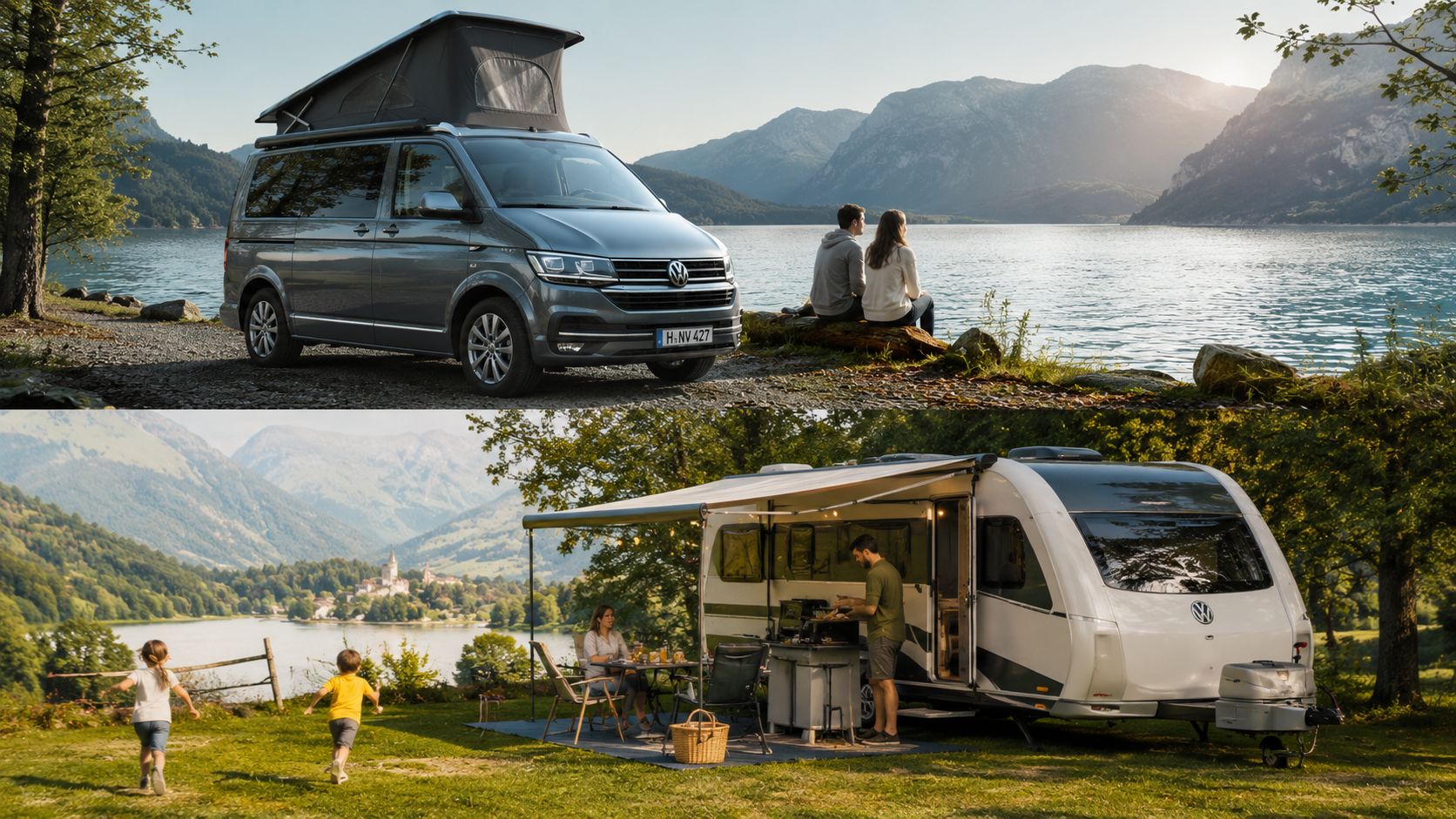
You've got a couple of days free, you like coastal roads, and half the fun is deciding on Friday morning where you'll sleep Friday night. You want less setup, more movement, and the freedom to change plans when the weather shifts.
That's campervan territory.
The whole thing suits the VW mindset beautifully. Slide into a parking spot, pop the side door, brew tea, watch the sunset. If your dream trip feels like a classic Kombi poster come to life, the campervan wins on vibe and convenience.
The school holiday base campers
Now think family mode. More bags. More snacks. More bodies. Someone wants an afternoon nap while someone else wants cards at the table and someone else is hunting for goggles.
A caravan starts to make a lot of sense here. The ability to leave the van set up and use the car separately is gold when the campsite becomes your temporary neighbourhood. You get a steadier home base and a bit more breathing room when everyone's indoors.
The festival and nostalgia crowd
This one's for the people who don't just want a holiday. They want a scene. They want bunting, camp chairs, old playlists, and a setup that feels like it belongs next to a row of Beetles and buses on a sunny oval.
A compact campervan often fits this life best. It's social, portable, and full of personality. It also captures the same spirit that makes classic VW memorabilia so appealing. The vehicle is part transport, part design statement, part memory machine.
A quick match guide
| Traveller type | Best fit | Why it suits |
|---|---|---|
| Couple doing short coastal escapes | Campervan | Easier movement and quick setup |
| Family building a holiday base | Caravan | More space and a separate car for outings |
| Event-goer or festival regular | Campervan | Compact, social, and easy to move |
| Traveller who likes staying put longer | Caravan | Better for settling in and spreading out |
There's no wrong answer here. There's only the one that matches your habits, your driveway, your budget reality, and the version of freedom you want.
FAQ Your Final Caravan vs Campervan Questions Answered
Do I need a special licence to tow a caravan in Australia
Licence rules can vary depending on the vehicle, caravan, and state or territory requirements. Check your local road authority before buying. Don't rely on general advice from forums or social media.
Which is easier to store at home
That depends on your property and access. A caravan takes up space as a separate unit, while a campervan combines everything into one vehicle. Measure your driveway, garage access, turning area, and height clearance before you fall in love with either option.
Can I use either for longer trips
Yes, but they suit different rhythms. A caravan is often more comfortable for extended stays in one place. A campervan usually suits people who like to keep moving and don't mind living a bit more compactly.
Which one feels more like the old VW adventure spirit
For many enthusiasts, the campervan gets closest to that classic Kombi feeling of travel and home blended together. But if your ideal trip includes a settled beachside setup and day drives in the car, a caravan can still deliver plenty of charm.
If you love the road-trip dream but also love having a tangible piece of VW history at home, have a wander through Volkswagen Memorabilia. It's a brilliant place to find licensed VW-themed gifts and display pieces, from Kombi-inspired collectibles to classic Beetle favourites, with local Australian stock, fast shipping, and the sort of nostalgic charm that keeps the VW spirit alive between adventures.