


I’ve stood beside plenty of Kombis at Aussie shows where the paint gleamed, the curtains looked perfect, and the owner conceded the first cold night inside felt like sleeping in an empty Milo tin. That’s the bit newcomers don’t see until the keys are in their hand and the sun drops.
The Dream vs Reality of Life in a Tin Can
A Kombi parked by the beach still does something to people. You hear the gulls, smell salt in the air, slide the door open, and for a moment it feels like every old surf film and family road trip memory has rolled into one little bus. That’s the dream that pulls so many of us in.
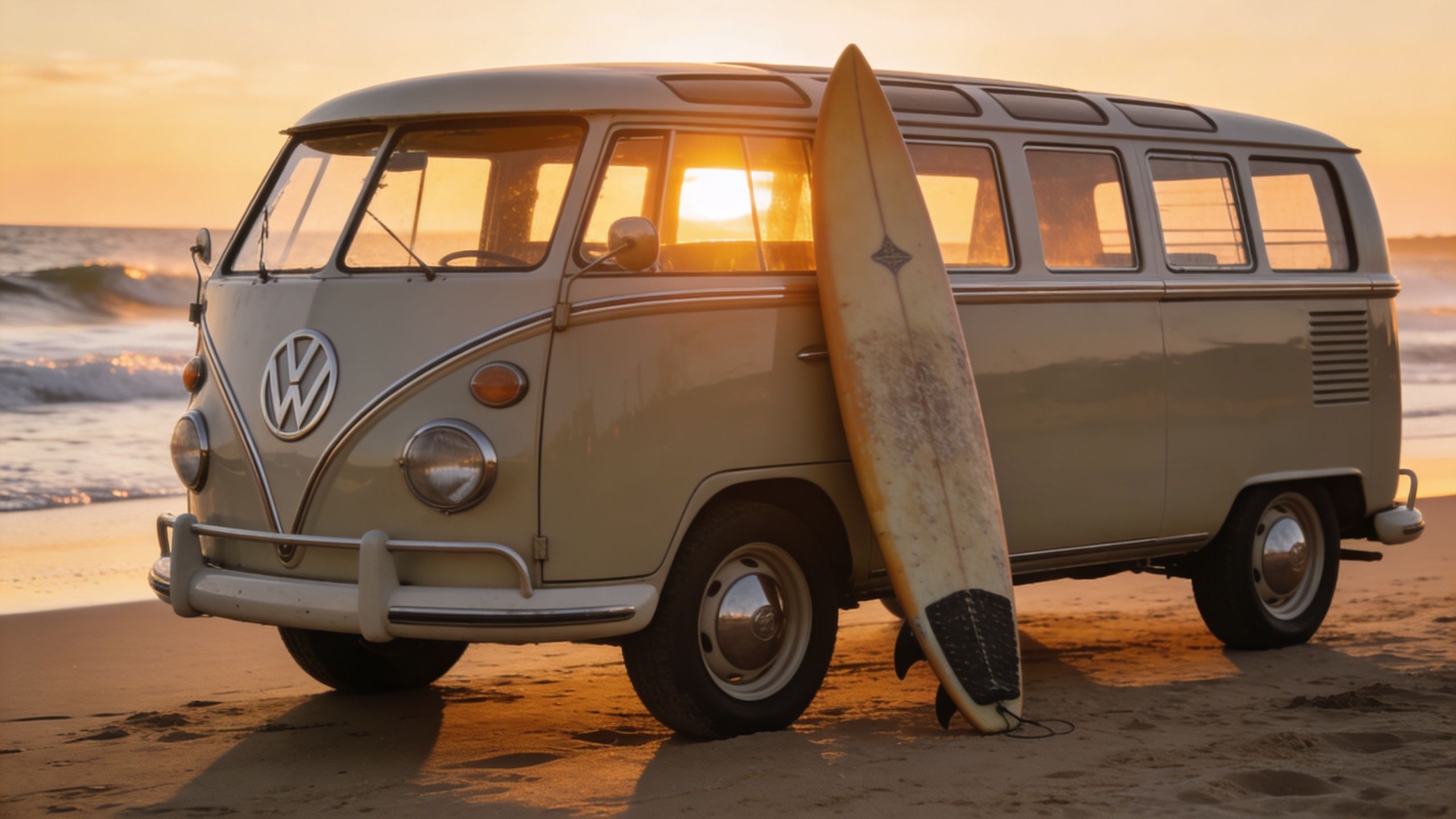
Then reality taps you on the shoulder. The same steel body that looks so charming in a car park at dawn can feel icy after sunset in the south, and by mid-afternoon it can hold heat like a camp oven. If you’re hunting for a van for conversion, that’s worth thinking about before you buy curtains, cushions, or a cute enamel kettle.
The beach fantasy meets the first rough night
I remember one mate with a tidy split-screen who’d built the inside beautifully. Timber trim, surfboard rack, period-correct touches. First winter weekend away, he rang me laughing through chattering teeth and said, “Turns out style doesn’t keep your feet warm.”
That’s the thing with insulation for van builds. It sounds technical, a bit dry, almost like something you’ll sort out later. But in a Kombi, it decides whether you’re making tea in comfort or wiping condensation from every panel before breakfast.
A classic VW can be a rolling daydream in the car park and a hard lesson by midnight if the shell is still bare metal.
Why this matters more in Australia
Australia gives your van every test in the book. Coastal humidity, inland heat, frosty mornings down south. A setup that feels fine on a sunny Sunday drive can feel miserable on an overnight trip when the weather turns.
That’s why insulation isn’t just a builder’s detail. It’s what turns an old tin can into a place you want to wake up in. For many of us, that matters as much as getting the right wheels or finding the perfect original badge.
Why Your Classic VW Deserves the Best Insulation
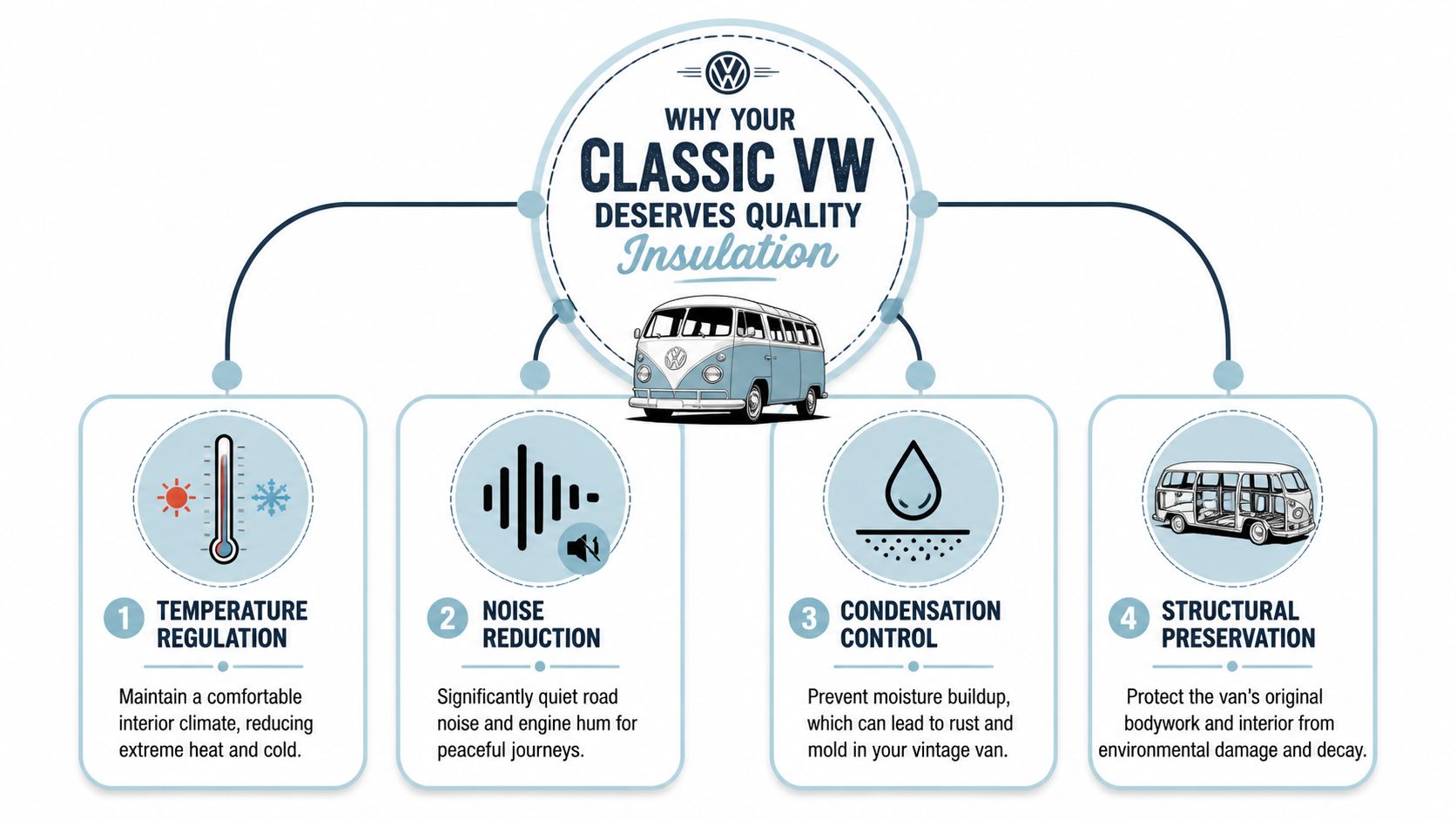
Classic Volkswagens have enormous charm, but they don’t hide their weaknesses. Those broad steel panels, those lovely windows, the curved ribs and cavities, they all make a vintage bus feel airy and iconic. They also make temperature control much harder than most first-time owners expect.
A useful reality check comes from FarOutRide’s insulation guide, which notes that a 2022 study highlighted uninsulated VW Transporters can lose up to 70% of their interior heat within 30 minutes in 5°C conditions. If you’ve spent a winter night in Victoria or inland New South Wales, you don’t need much help believing that.
Thin steel has character, not comfort
A Kombi body is basically a collection of thin metal panels with style for days and thermal manners of a biscuit tin. Metal carries heat and cold very efficiently, so the shell itself becomes part of the problem. Builders call that thermal bridging. Owners just call it “why is that panel freezing?”
The ribs and frame members do it too. You can insulate the cavities, but if exposed metal still connects inside to outside, temperature sneaks through the structure. That’s why good insulation for van projects is never just about stuffing fluffy material into empty spaces.
Condensation is the quiet villain
The other troublemaker is moisture. Cook inside. Breathe overnight. Bring in wet towels or salty gear. On a cool surface, that moisture turns into beads of water. In an old Volkswagen, those beads don’t just annoy you. They can sit against hidden seams and start the long, miserable path toward rust.
That’s what makes insulation a preservation job as much as a comfort upgrade.
- Bodywork protection keeps water from settling on cold interior steel.
- Interior longevity helps timber panels, trims, and fabrics stay healthier.
- Driving comfort improves because the van feels less echoey and less harsh.
- Seasonal freedom means you’re not limited to only the mildest weekends.
Practical rule: If you love your VW enough to wax the paint and chase rust spots early, you should care just as much about what’s happening behind the wall panels.
The collector’s mindset applies here too
Anyone who restores or collects old Volkswagens understands preservation. You don’t leave diecast models in harsh sun, and you don’t ignore moisture in a real Kombi. Proper insulation respects the vehicle’s age, its design, and its future.
It also lets you enjoy the very features that make a Samba or split-screen special. More glass, more light, more atmosphere. You just stop paying for that atmosphere with cold toes and damp bedding.
Your Top Insulation Choices for an Aussie Dub
Not every material suits every van, and that’s where people get tangled up. One owner wants a touring setup for mixed climates. Another wants a beach cruiser that can handle a blazing car park at lunch. A third wants something natural and simple that feels right in an old-school build.
For a classic VW, I’d narrow the field to three familiar characters.
The modern hero
3M Thinsulate SM600L has become a favourite because it’s light, flexible, and easier to work around Kombi curves than many rigid products. Campervan HQ’s guide notes that 3M Thinsulate SM600L offers an R-value of 5.45 per inch and is hydrophobic, resisting moisture absorption by over 90%, which is a big plus in humid coastal conditions.
That hydrophobic behaviour matters in old vans. If material hangs onto moisture, your wall cavities can become a hidden headache. Thinsulate’s flexibility also helps in those awkward corners and ribs where classic VW bodies rarely give you a square, simple surface.
If you’re building a touring Volkswagen Transporter camper style setup and want a strong all-rounder, this is often the easiest place to start.
The natural classic
Wool has a lovely fit with VW culture. It feels old-world, honest, and a bit closer to the handcrafted spirit many Kombi owners love. The verified background for this topic also notes Havelock wool has R-4 per inch performance in testing referenced there, and many owners like the natural feel and sound absorption wool brings.
Still, wool asks for care. In a humid van, especially one with patchy ventilation or old seals, moisture management becomes part of the job. I like wool for owners who are thoughtful about airflow and who want a material that matches a heritage-minded build.
The smart shield
For raw Aussie sun, reflective insulation earns its place. DIYvan’s Low-E Reflective Foam Core product page states that Low-E Reflective Foam Core Insulation reflects 97% of radiant heat. That makes it especially useful as a first layer against hot metal panels.
It isn’t the whole answer on its own for most vans, but as part of a layered setup it’s clever. Bond it to metal first, then add a bulk insulation layer over it. That’s a practical move for hot regions where radiant heat is the enemy before you’ve even parked long enough to boil the billy.
Aussie Van Insulation at a Glance
| Material | Best For | Pros | Cons |
|---|---|---|---|
| 3M Thinsulate SM600L | Mixed-climate touring builds | Flexible, moisture-resistant, light, easy around curves | Costs more than basic options |
| Wool | Heritage-style builds and owners who like natural materials | Natural feel, good fit with classic builds, useful sound softening | Needs thoughtful moisture management |
| Low-E Reflective Foam Core | Hot-climate vans and layered systems | Strong radiant heat control, handy first layer on metal | Usually works best paired with another insulation material |
Pick the material for your travel style, not for forum bragging rights. A coastal weekender and a year-round tourer don't need exactly the same answer.
The R-Value Riddle and Beating Condensation
R-value sounds more mysterious than it is. It's akin to the tog rating on your doona. The higher it is, the better that material resists heat moving through it. It’s a useful guide, but it isn’t the whole story in a van full of windows, steel ribs, door gaps, and odd-shaped cavities.
In a classic VW, the battle isn’t just “how warm is the insulation?” It’s also “where can heat sneak past it?” That’s why two vans with similar materials can feel very different in real life.
Why condensation sneaks up on Kombi owners
Condensation starts in ordinary ways. You boil pasta. Breathe through the night. Come back from a swim with damp towels. Warm moist air meets cooler metal, and the van starts sweating from the inside.
That’s bad enough on visible panels. It’s worse when moisture forms behind trim, around wheel arches, or inside doors where you don’t notice it straight away.
A sensible approach includes:
- Covering broad metal areas well so warm interior air meets fewer cold surfaces.
- Paying attention to doors and wheel wells because they’re easy to overlook.
- Using a reflective layer where it suits the climate to help block heat transfer at the shell.
- Keeping airflow in mind so moisture doesn’t linger after cooking or sleeping.
The floor dilemma in low-roof Volkswagens
Floor insulation sounds sensible until you sit inside a low-roof VW and realise every millimetre matters. Create Your Own Road Show’s guide points out that for height-constrained VW Samba Bus conversions, where the standard interior height is only 1.2-1.4m, adding 50mm of floor insulation can be a major compromise, and that some builders in milder climates choose thinner cork or just a reflective barrier to preserve headroom.
That’s a very Kombi-specific problem. In a taller modern van, you can throw insulation at the floor and carry on. In a Samba or older bus, you feel that lost height every time you bend, sit, or shuffle across the cabin.
Don’t insulate the floor by habit. Decide based on your climate, your height, and how you actually use the van.
A Weekend Warrior's Installation Guide
At a swap meet in Ballarat a few winters back, a bloke with a tidy Dove Blue splitty told me his bus always felt damp by Sunday morning, no matter how many blankets they packed. He had good insulation stacked in the shed, but the metal behind his panels was still wearing old glue, dust, and a few freckles of rust. That was the actual beginning of the job. Not the shopping. The prep.
Start with clean metal and a clear plan
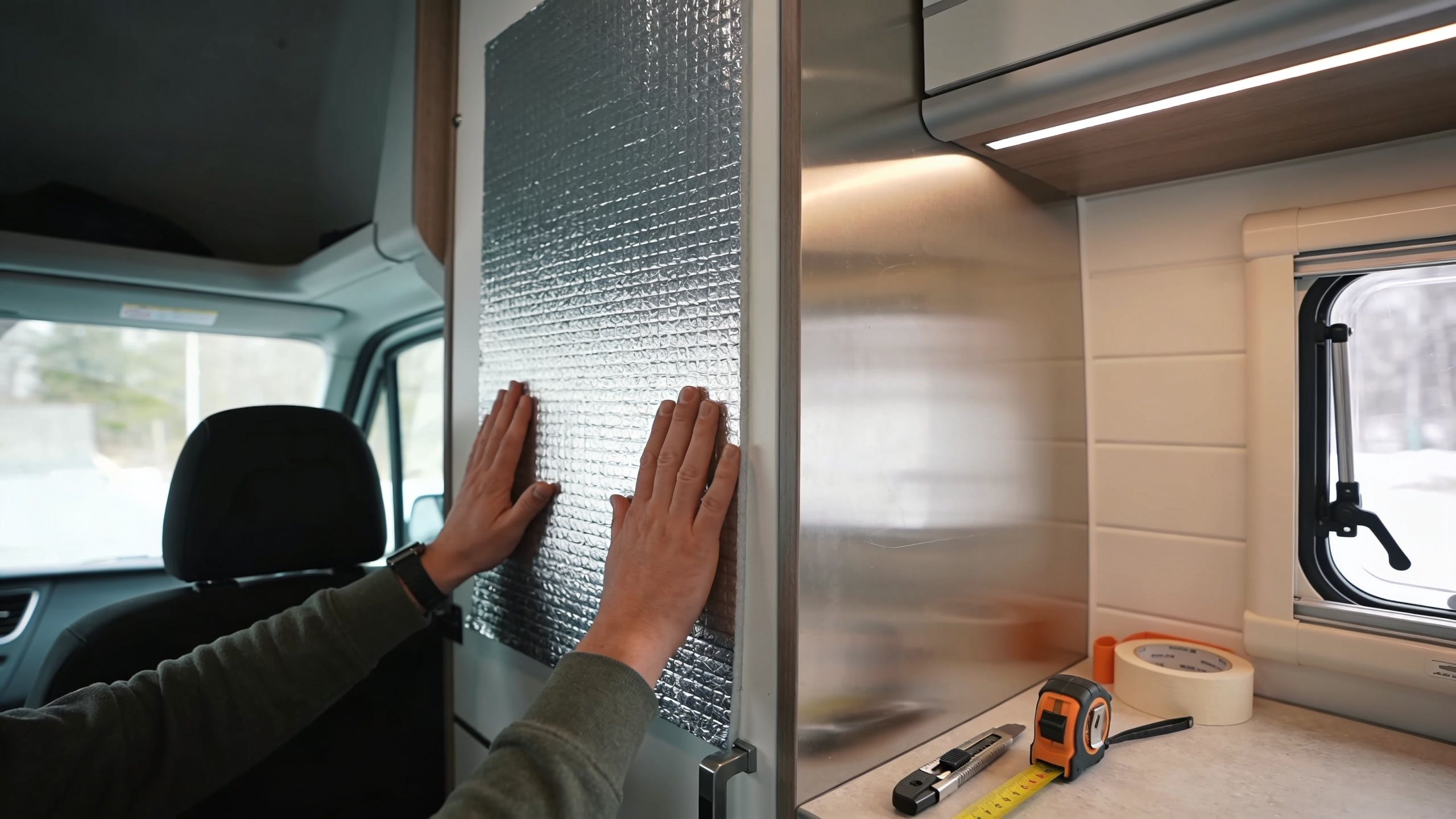
Pull the interior back and look carefully at what the old bus is telling you. Surface rust around a window lip, brittle adhesive on the roof, grime tucked into the ribs. Fix that first. A Kombi hides nothing for long, and any trouble you cover up today usually returns on the first cold trip away.
Then slow down and map the shell before you cut a single piece. Roof first, then side panels, doors, wheel arches, and all those curved little sections that make classic Volkswagens lovely to admire and awkward to line neatly. Cardboard templates help. So does marking each piece before the backing comes off.
For many Australian builds, a reflective first layer against the metal is a common way to handle summer heat, followed by a bulk insulation layer to soften temperature swings and road noise. That approach suits the old VW spirit well. You are not just chasing comfort. You are giving thin, echoing steel a kinder life.
Small habits make the finish neater
The owners who end up pleased with the result usually keep to a few simple habits:
- Test fit every section dry first so the shape is right before adhesive turns it into a wrestling match.
- Use a fresh blade often because clean cuts sit better around ribs, corners, and window frames.
- Work one panel at a time so you keep the layout tidy and avoid wasting material.
- Follow the adhesive instructions closely if you’re using products such as 3M 90 spray. Letting it tack off properly makes placement far easier.
One more trick. Leave drain paths, factory holes, and service access clear. The neatest install in the world becomes a headache if a door cannot drain or a panel has to be torn apart later to reach wiring.
Take your time around curves and ribs. A Kombi rewards care, and it absolutely exposes shortcuts.
If you want to watch someone working through the process visually, this walkthrough helps show the rhythm of the job.
Make it yours
A respectable insulation job does not ask for a fancy workshop. It asks for a free weekend, clean hands, patience, and the willingness to peel a piece back and trim it properly instead of pretending it will do.
That part matters more in a classic VW than in a newer van. These buses carry memory. Family holidays, long coastal runs, the smell of warm vinyl, little diecast models on a shelf that started the obsession years earlier. Fitting insulation carefully is part workshop task, part preservation. You are looking after the shell, yes, but you are also protecting the feeling that made you want the van in the first place.
When the panels go back on and everything sits right, you feel it straight away. The bus seems more settled. More finished. Like it is ready for another few decades of stories.
Stay Warm Stay Cool and Keep the Dream Rolling
A well-insulated Kombi feels different. The van settles down. It holds comfort better. It sounds calmer. You stop thinking so much about the weather and start thinking about where to pull up for the night.
That’s why insulation for van life isn’t just a technical chore. In a classic Volkswagen, it’s part comfort upgrade, part preservation work, part love letter to the vehicle itself. You’re not only making weekends easier. You’re protecting steel, trim, and all the small details that give an old bus its soul.
The best result is freedom
The right setup depends on how you travel. Some owners need a layered system for mixed conditions. Some need a radiant shield for hot coastal runs. Some will happily trade a little thermal performance to keep precious headroom in a low-roof bus.
What matters is that the van suits your life. Not someone else’s build thread. Not a fashion trend. Yours.
For more inspiration on the way Australians shape the road-going VW dream, have a look at van life in Australia. It’s a good reminder that these vehicles still do what they’ve always done best. They carry stories.
Why the effort is worth it
Every classic VW asks something of its owner. Time, patience, and a sense of humour help. Insulation is one of the jobs that gives back immediately. The first cool night you stay dry and comfortable, or the first hot afternoon when the interior doesn’t feel punishing, you’ll know where the effort went.
That’s when the dream stops being just a nice-looking bus and starts becoming a proper home on wheels.
If you love the Kombi spirit in full size and miniature, have a browse through Volkswagen Memorabilia. It’s a lovely spot to find licensed VW-themed gifts, classic diecast models, and display-worthy pieces that celebrate the same heritage we all chase on the road. For Australian enthusiasts, there’s the added comfort of local stock and fast shipping, which makes it easy to pick up a Kombi or Beetle model while you plan the next trip in your full-size vehicle.