
DIY Nautical Decor Ideas for Australian Coastal Homes

You've got a piece of driftwood by the back door, a jar of shells from the last beach walk and a rope coil that's been waiting for a purpose. The temptation is to throw them on a shelf, add a blue cushion and call the room coastal. That works for a season, but salt air, harsh sun, damp corners and unsuitable fixings can turn a charming display into a faded, rusty mess.

The best DIY nautical decor ideas for Australian homes balance maritime character with material performance. Reclaimed timber, harbour maps, natural rope, shells and lantern-style details can feel relaxed and nostalgic, but they need to suit the room, the local exposure and the way your household lives.

Why Nautical Decor Fits the Australian Coastal Lifestyle

Australia's relationship with the coast is more than a decorating trend. More than 80% of Australians live within the coastal zone, according to Geoscience Australia's coastal population research. The same source records approximately 700,000 residences within 3 kilometres of the shoreline and less than 5 metres above mean sea level.

That helps explain why nautical styling works in a compact suburban flat, a harbour townhouse or a weatherboard beach house. You don't need a huge verandah or uninterrupted ocean views. A framed map above a console, a wall-mounted oar in a hallway or blue-and-white textiles on a sofa can establish a coastal mood without taking up floor space.
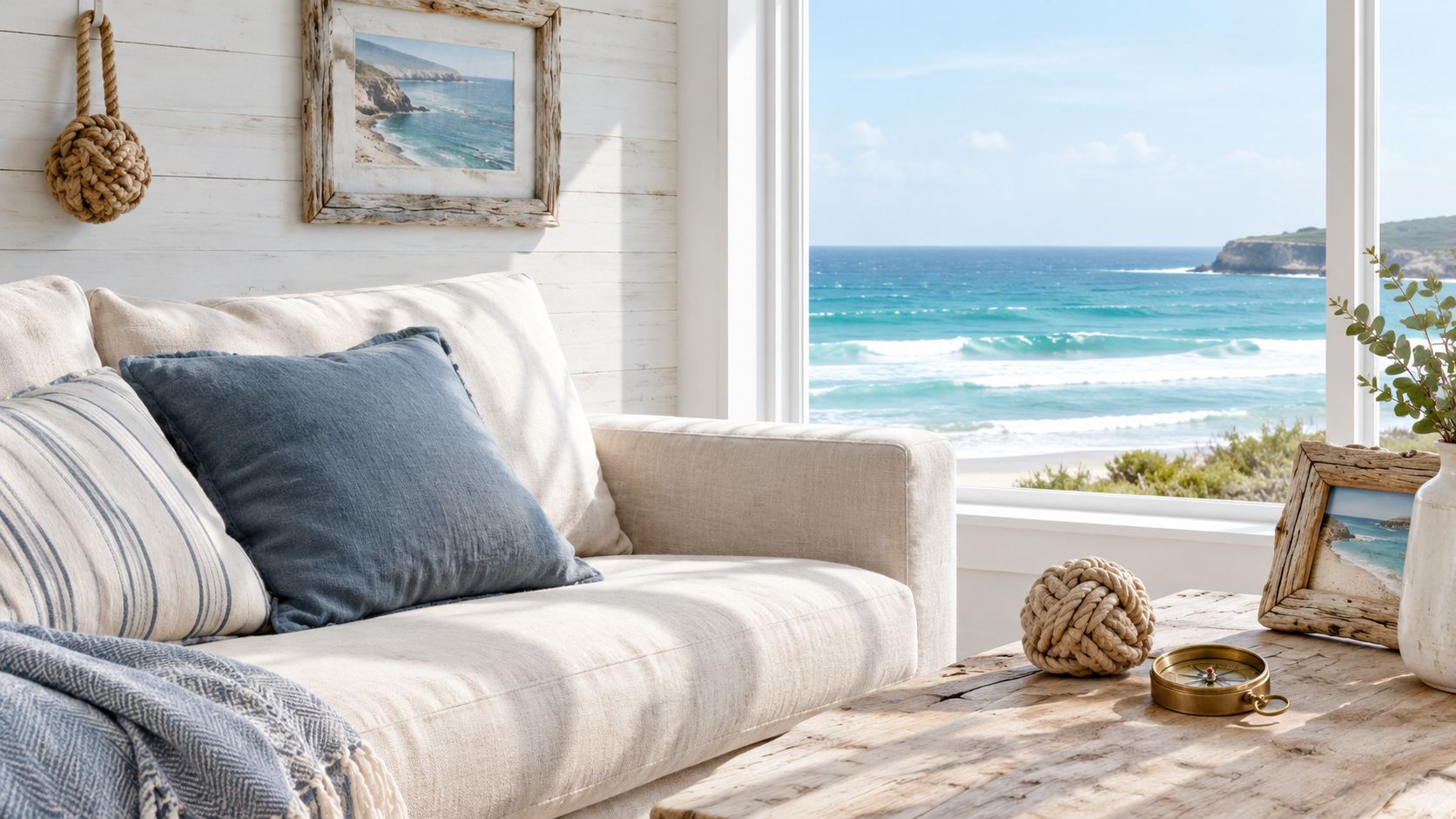
A cozy coastal living room featuring a sofa with blue cushions overlooking a scenic ocean beach view.

Build a local story into the room

A generic anchor motif can look pleasant, but Australian nautical decor becomes far more engaging when it reflects the places and stories around you. Surf culture, fishing communities, working harbours, river transport and lighthouse towns all offer visual references that feel familiar rather than imported.

Australia's maritime history gives you plenty to draw from. A National Maritime Museum research publication documents 71 designated maritime museums and collections, along with 232 sites or associations preserving maritime heritage across the country. Its records include connections to ports, navigation, shipbuilding, fishing and river transport, so a handmade display can reference much more than shells and sand.

A Queensland-inspired arrangement might use sun-washed timber, tropical ocean colours and a small sailing motif. A display influenced by a Victorian or New South Wales harbour could lean towards navigation charts, darker timber and working-vessel details. Even a simple signal-flag panel can give a wall display a sense of purpose.

Design principle: Choose one local reference, one natural material and one practical object. The result usually feels more authentic than filling a room with matching beach ornaments.

For a relaxed room with a surf-and-road-trip sensibility, these coastal home decor ideas can help you combine nautical details with nostalgic Australian styling. Keep the palette restrained, then let one or two handmade pieces carry the personality.

Choosing Materials That Survive Salt Air and UV Exposure

A material that looks weathered in a shop isn't necessarily weather-resistant. Near the coast, salt-laden air, humidity and ultraviolet exposure can attack timber coatings, adhesives, rope, paper, painted surfaces and ordinary metal hardware.

Start by classifying the installation site. The Western Australian Government's corrosion protection guidance recommends assessing corrosivity under AS 4312. Locations within 5 kilometres of a coast, tidal river, wetland or industrial area may need stronger corrosion protection than an inland room.

Match the build to the exposure

For an indoor wall away from open windows, a sealed hardwood frame and quality picture hardware may be sufficient. A bright bathroom, enclosed balcony or covered alfresco area needs more care. Use the following as a practical starting point:

  • Choose sealed hardwood or a corrosion-resistant substrate: Seal end grain before assembly, because exposed end grain absorbs moisture quickly.
  • Use 316 stainless-steel fixings: Screws, D-rings and hanging hardware made from 316 stainless steel are better suited to salt-exposed rooms than ordinary mild steel.
  • Close every penetration: Seal drilled holes and cut edges so moisture can't travel behind the finish.
  • Allow air to move: Don't trap condensation behind shells, rope, metal ornaments or a frame pressed tightly against a damp wall.
  • Inspect seasonally: Wipe salt from sheltered hardware with fresh water, then dry it thoroughly. Salt often remains on protected surfaces that rain doesn't wash clean.

Dissimilar metals create another avoidable problem. Decorative brass paired with mild-steel fasteners and aluminium components can accelerate galvanic corrosion in salty, damp conditions. Keep metal combinations deliberate, and follow the coating requirements supplied by the product manufacturer.
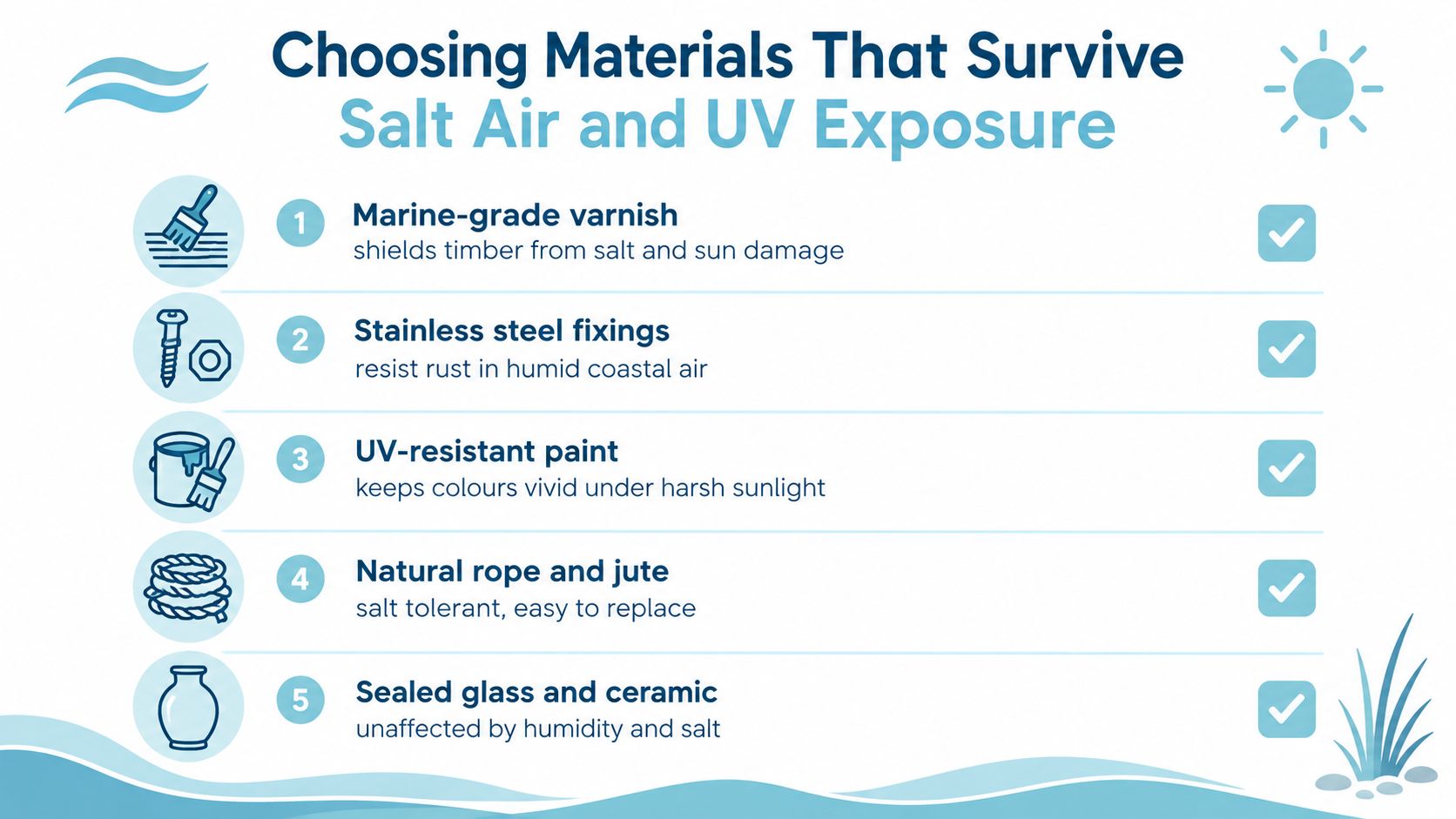
A five-point infographic detailing durable materials like varnish, stainless steel, and paint for coastal environments.

UV deserves equal attention. Paper charts can fade near a sunny window, ordinary paint can chalk and fabric rope can become brittle. Keep vulnerable materials indoors where possible, use a suitable clear protective coating and make exposed pieces removable so you can bring them inside during severe weather or rotate them away from direct sun. For smaller decorative pieces, nautical wall art for bathrooms can inspire moisture-conscious arrangements, but the same material checks still apply.

Three Practical DIY Nautical Projects for Every Room

The strongest nautical pieces usually have a reason to exist. A harbour chart can recall a favourite port, a rope mirror can suit an entryway and a shell arrangement can preserve the feeling of a beach walk without turning the room into a souvenir shop.

Wood is particularly effective because it connects directly with boatbuilding history. Before industrial manufacturing moved towards iron and later steel, ships were predominantly built from timber. The Maritime Heritage Association's discussion of wooden boatbuilding explains why reclaimed timber can suggest genuine maritime tradition rather than merely looking old.

Reclaimed timber harbour display

Use a clean reclaimed board, a printed harbour map, a small vessel model, natural rope, stainless-steel D-rings, fine sandpaper, a drill and a suitable timber sealer. Check the board for mould, pests, splinters and old coatings before sanding. If you can't identify the coating, don't aggressively sand it until you've established that it's safe to disturb.

Cut the board to a manageable size, soften the edges and seal every face, including the ends. Mount the map on a removable backing rather than gluing it permanently to the timber. Add a vessel model or a small navigation detail, then finish with a short rope loop or a restrained metal accent.

The Port Adelaide Nautical Institute offers a useful historical reference. It began in 1851 as a subscription library and started building a museum collection in 1872, as recorded in this National Maritime Museum publication on the institute's history. A small caption naming the port can give your display more meaning.

Rope-wrapped mirror

Start with a plain mirror, natural jute or hemp rope, a sharp utility knife, a low-odour adhesive suited to the frame material and a small brass-look compass or signal-flag detail. Lay the rope out first and test the pattern. A neat, tight wrap works better than a loose bundle, particularly in a bathroom where dust and moisture can collect between strands.

Apply adhesive in short sections, keeping the rope aligned as you work. Don't cover ventilation gaps or create a thick rear edge that prevents the mirror from sitting flat. Finish with one small maritime accent rather than several competing ornaments. For a coastal entryway, add a concealed hanging point and keep the mirror light enough for a secure wall fixing.

Shell and driftwood centrepiece

Use a sealed timber plinth, cleaned shells, a small lantern-style ornament and a piece of sound driftwood. Avoid placing shells where water can sit underneath them, and use removable museum putty or discreet mechanical retainers if the arrangement needs to travel.

A lantern can suggest lighthouse history without wiring anything into the house. Keep the feature purely decorative unless a licensed electrician handles any electrical modification. The finished centrepiece belongs on a console, coffee table or covered outdoor setting, but natural materials should come inside during prolonged wet weather.

For a lighter wall arrangement, shell wall art shows how shells can become a focused feature rather than loose clutter. The same principle applies to handmade work. Give each object breathing room, use one dominant shape and make maintenance straightforward.

Making Nautical Decor Low-Waste and Environmentally Smart

A beach-themed room can celebrate the ocean while relying heavily on disposable plastic. That contradiction deserves more attention. About three-quarters of rubbish on Australian coastlines is plastic, and Australian Parliament material summarising CSIRO findings notes that debris is concentrated near urban areas and largely comes from domestic, land-based sources.

That doesn't mean every synthetic material has an immediate alternative, but it does mean you should question decorative pieces that are designed to be replaced rather than repaired.

A practical material-impact check

Before buying supplies, ask:

  • Can I source it second-hand? Look for timber offcuts, old frames, used mirrors, metal trays and retired boating hardware.
  • Can I repair it? Choose screws, knots and removable mounts over permanent glue where practical.
  • Will it shed or degrade? Avoid glitter, PVC ornaments, disposable plastic shells and poorly sealed foam.
  • What happens to the offcuts? Separate timber, metal, glass and general waste so usable materials can be stored or recycled appropriately.
  • Does the coating suit the room? Check paint, varnish and adhesive labels before applying them indoors or near moisture.

Natural rope, recycled glass, second-hand metal and responsibly sourced timber can provide plenty of texture without adding more plastic ocean imagery. Reclaimed boards also bring marks and variation that manufactured “distressed” finishes often imitate poorly.

Design for removal and repair

A removable wall panel is more sustainable than permanently bonding shells to plaster or timber. Use a backing board, mechanical clips or reversible hanging points so you can replace a faded map, repair a broken rope section or rearrange the display when you move house.

The same approach works for a centrepiece. Keep shells in a shallow tray or on a sealed plinth, rather than gluing every piece into a fixed sculpture. If a component fails, you can replace that part without throwing away the whole project.

A coastal aesthetic should remind you of the ocean, not reproduce the waste problem found along its edges.

Buy-used-first sourcing also makes the work more personal. A second-hand timber frame from a local shop, an old metal object from a working harbour or a found piece of sound driftwood can tell a better story than a shelf of identical plastic anchors.

Safe Installation Practices for Coastal Home DIY

Beautiful materials won't compensate for a weak fixing. Before hanging an oar, model boat, rope installation or glass-filled display, weigh the complete object, including shells, backing boards and hardware. Choose a fixing rated substantially above that total load, then anchor into a stud or suitable masonry plug rather than relying on plasterboard alone.

Add a secondary retention cord where a falling object could injure someone. This is especially useful above seating, beds, stairs and children's areas. Keep the construction reversible where possible, so you can inspect the wall, replace corroded hardware or remove the display before a storm.

Use the right fixing for the wall

  • Stud-mounted displays: Use a screw long enough to achieve a solid bite into the timber, while avoiding hidden services.
  • Masonry walls: Select a masonry plug and screw combination matched to the wall material, then drill cleanly and remove dust from the hole.
  • Plasterboard-only locations: Use a load-rated cavity fixing for very light pieces, but don't hang a heavy vessel or glass arrangement from plasterboard alone.
  • Balconies and alfresco areas: Account for wind movement, not just static weight. A loose rope loop can become a hazard when the air picks up.

Electrical improvisation is another serious risk. Australian guidance says rewiring, installing power points and changing light switches are generally illegal for unlicensed DIYers. If you want a lantern, sign or nautical feature to illuminate, use a licensed electrician for any modification rather than joining wires inside a decorative object.

Drilling and sanding older Australian homes also require asbestos awareness. A national DIY renovation study found that only 5% of respondents identified asbestos as a potential DIY risk, compared with 22% who identified electrical work, according to this Australian DIY safety guidance. That gap matters because suspect fibre-cement, textured coatings or unknown insulation can be disturbed during an apparently simple wall project.

Check the building's age and renovation history before drilling. Wear eye protection and a suitable dust mask, don't disturb suspect sheeting and stop immediately if you uncover unknown material. The most common serious failures in a nautical installation aren't the decorative details. They're under-rated anchors, concealed asbestos and improvised electrical connections.


Volkswagen Memorabilia brings together licensed Volkswagen diecast models, including Kombi Samba Bus and Beetle pieces, alongside coastal home décor for displays that capture Australia's relaxed beach-and-road culture. Visit Volkswagen Memorabilia to browse local stock, practical gift ideas and fast Australian shipping, then choose a piece that gives your handmade nautical display a little more character.

Coastal Boho Wall Art: A Sun-Kissed Styling Guide

You know the feeling. You've come home from a beach run, kicked off your thongs at the door, and looked around the lounge thinking it still doesn't carry that same loose, sun-faded calm you get near the coast. The room's fine. It's tidy enough. But it doesn't feel like salty air, old road trips, market finds, and a weekend parked beside the surf in a faithful old Kombi.

That's where coastal boho wall art earns its keep.

Done well, it doesn't look like a theme. It looks lived in. It feels like a home with stories in it, the sort of place where a woven hanging can sit happily beside a weathered beach print, and where a small nod to classic Volkswagen life feels completely at home rather than bolted on for effect.

For plenty of us, that sweet spot is the main challenge. You want the relaxed beach-house mood, but you don't want a wall that looks like a souvenir shop. You want warmth, texture, and personality. Maybe even a little Surf Safari nostalgia. The good news is that coastal boho gives you room to do exactly that, whether you live two streets from the water or a long inland drive away.

Bringing That Sun-Soaked Vibe Into Your Home

A lot of people start with colour and get stuck there. They think coastal means blue cushions, a shell print, maybe a bit of driftwood, and job done. But the rooms that really work don't start with objects. They start with a feeling.

Think of the homes that stay with you after a weekend away. The ones with soft light, timber that looks slightly weathered, art that feels collected rather than ordered in one hit, and little details that hint at road trips, beach mornings, and family history. That's the spirit coastal boho wall art should bring into a room.

For VW lovers, that idea lands naturally. A classic Beetle or Kombi has never just been transport. It's memory, freedom, and design rolled into one. That same energy translates beautifully into interiors when you resist the urge to make every piece shout “beach” or “retro”. A room works better when it suggests a coastal life rather than spelling it out.

A helpful way to frame it is this: your wall art should feel like a personal album, not a styling checklist.

Coastal boho works best when the room feels collected over time, a bit like a well-loved VW that carries its history proudly.

That might mean a quiet shoreline print, a woven wall hanging from natural fibres, an old photo from a surf trip, or a subtle vintage automotive accent tucked among softer textures. If you're chasing ideas that tie beach living to classic VW nostalgia, these coastal home decor ideas are a good place to spark the look without drifting into cliché.

What the vibe actually looks like

  • Relaxed, not rigid. Straight lines and perfect symmetry can make the room feel showroom-stiff.
  • Personal, not generic. Pieces should say something about where you've been and what you love.
  • Layered, not overloaded. The best walls have breathing room.
  • Nostalgic, not novelty. A nod to surf culture or a vintage Kombi is plenty. Ten of them is a theme park.

That balance is what gives coastal boho wall art its charm. It's less about matching decor and more about building a space that feels as easy-going as a Sunday Volkswagen meet by the water.

The Building Blocks of Coastal Boho Style

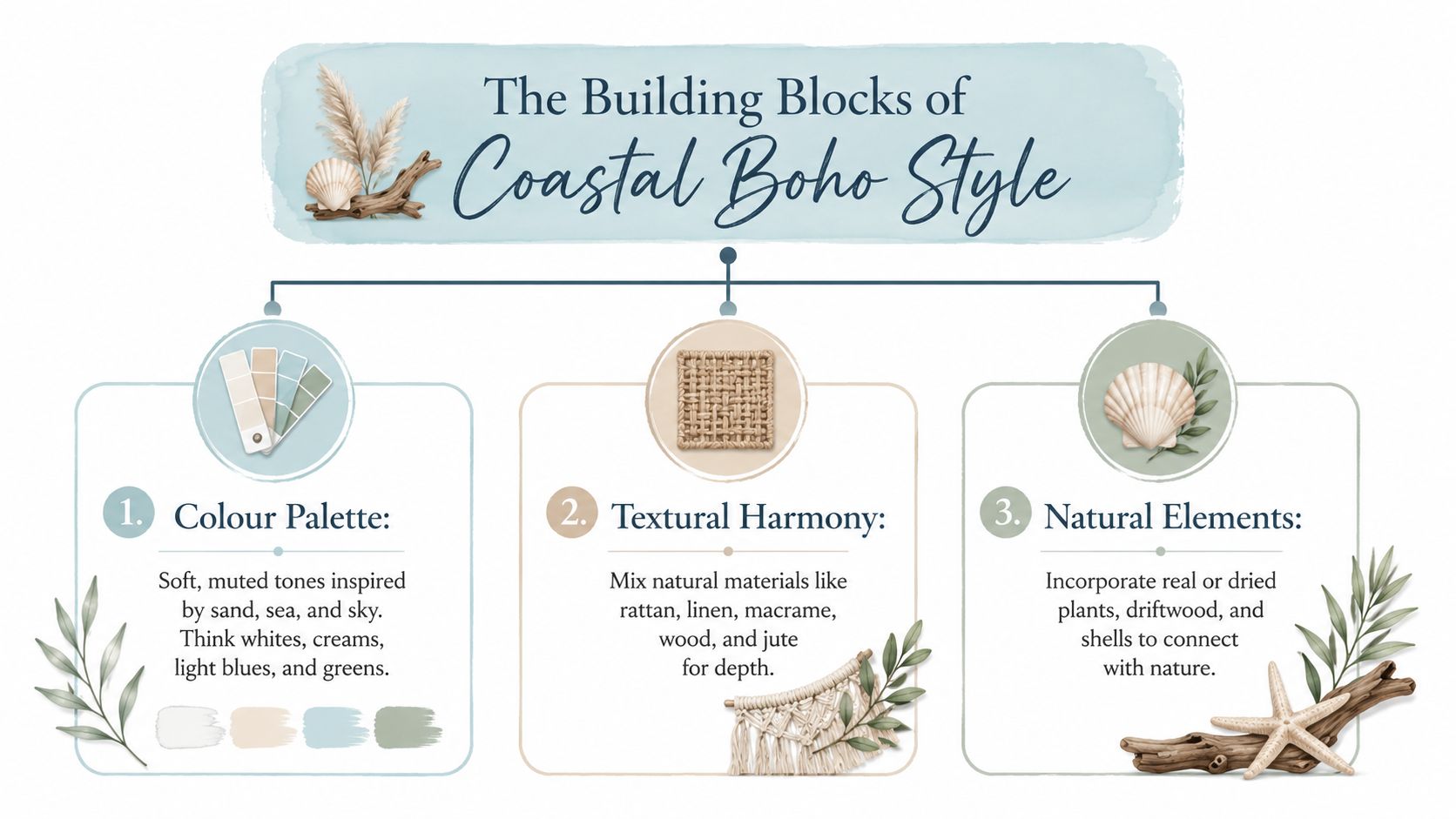
Coastal boho has a clear backbone. If you get the bones right, the room feels natural even before the art goes up. The strongest approach in Australia follows a simple layering method described in this Australian coastal boho wall art style guide: start with seagrass, raffia, jute, and driftwood, then add ocean elements like shells, coral, and sea glass, build over that with mushroom greys, warm stones, bleached woods, and pearl whites, and finish with touches of coral, aqua, or sea glass green spread through the space.

An infographic detailing the three building blocks of coastal boho style: color palette, textural harmony, and natural elements.

Start with colour that looks sun-washed

The best palette is quieter than many people expect. Bright nautical blue can push a room into holiday-rental territory fast. Coastal boho usually feels stronger when the foundation is neutral and a bit dusty.

A good working palette includes:

  • Mushroom and stone tones for softness
  • Bleached timber shades to echo weathered coastal materials
  • Pearl whites and warm creams to bounce light around
  • Aqua, coral, or sea-glass green as accents rather than dominant blocks

Since wall art rarely hangs in isolation, the colours in your prints, frames, fibres, and shelves all talk to each other. If the base palette is too loud, every added piece has to fight for attention.

Lean into texture before pattern

Texture is what keeps coastal boho from feeling flat. It also stops a neutral room from becoming dull. On a practical level, that means choosing surfaces and materials that catch light differently across the day.

Try mixing:

Element What it adds What to avoid
Woven fibres Warmth and movement Too many similar weaves together
Timber frames Structure and grounding High-gloss finishes
Linen or cotton art surrounds Softness Heavy synthetic shine
Driftwood and natural pieces Organic character Polished, overworked “beach” props

Practical rule: if every piece is smooth, printed, and framed, the wall will feel one-note. Add at least one tactile element.

That's one reason boho style room ideas often feel more inviting when they include mixed materials rather than only framed prints.

Use natural elements with restraint

Shells, coral forms, and sea glass can be beautiful. They can also tip a room straight into over-themed territory if they're used like costume jewellery. One or two natural references usually do more than a whole wall of obvious seaside motifs.

Think in layers instead of labels. A driftwood-framed print says more than a print of a giant shell. A raffia hanging beside a soft beach photograph gives you coastal mood without having to announce it.

Choosing Wall Art That Tells Your Story

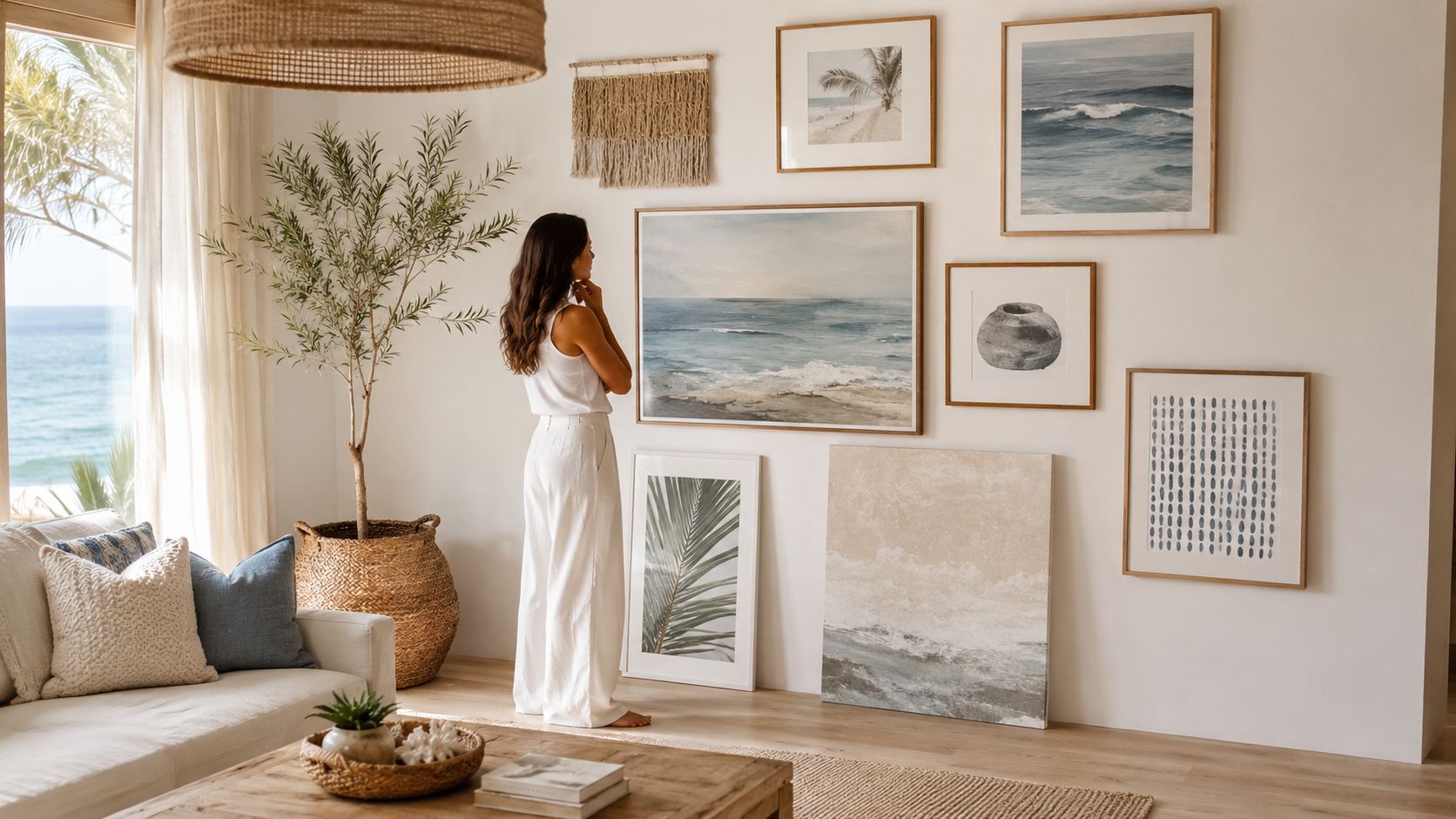
The smartest coastal boho wall art choices begin with one strong anchor piece. Not seven medium-sized maybes. One hero piece gives the room direction, then the supporting pieces can build mood around it.

That hero might be a quiet coastal photograph, a large neutral abstract with sandy tones, or even a print that nods to road-trip nostalgia, like a classic Kombi parked near dunes at sunrise. If it means something to you, it will outlast trend-driven art every time.

A woman admiring a coastal-themed gallery wall featuring landscape art and neutral decor in a beach house.

Why mixed media usually wins

The broader market is moving toward more personalised decorating. The Australia-New Zealand wall art market is projected to grow at a 6.1% CAGR from 2025 to 2035, and while canvas and digital prints remain dominant, macramé and fabric tapestries hold an estimated 18 to 20% share in 2024, which points to an ongoing appetite for tactile boho pieces, according to wall art market analysis from Future Market Insights.

That tracks with what works in real rooms. Prints bring imagery and scale. Textiles bring softness. Sculptural pieces add shadow and depth. When you combine all three, the wall feels far more settled and intentional.

A useful formula is:

  • One hero piece that sets the mood
  • Two to four supporting items in different sizes
  • At least one textured piece such as macramé, a woven hanging, or fabric art
  • One grounding element like timber shelving or a natural frame

Scale matters more than people think

A tiny artwork on a big wall rarely looks thoughtful. It usually looks temporary. On the flip side, oversized art in a tight room can swamp everything around it.

Use this quick guide:

Room situation Better choice
Wide sofa wall One large piece or a broad mixed-media arrangement
Small reading nook A pair or trio of smaller works
Entry wall Tall vertical art or a slim layered grouping
Bedroom above bed Soft, wider pieces with gentle contrast

Buy the piece that fits the wall, not just the one that looks good in your hand or on your phone screen.

The other key test is emotional. If the art could hang in anyone's beach house, it may not be the right piece. Coastal boho wall art lands best when it feels a bit personal, a bit imperfect, and tied to your own version of the coast.

Add Nostalgic Charm with a VW Twist

This is where things get fun.

A coastal boho space can carry classic Volkswagen details beautifully, but only if you style them like memories rather than merchandise. The aim isn't to build a “VW room”. It's to let old Kombi and Beetle cues sit inside a broader coastal story, the same way a surfboard or vintage market find might.

Australian interior design discussion around the Gold Coast mood makes that pretty clear. 68% of renters and homeowners in coastal Australian regions reject generic coastal art, preferring subtle colour pops and natural textures that feel lived-in rather than staged, as noted in this Gold Coast mood styling discussion. That's exactly the right lens for adding Volkswagen character. Keep it subtle. Keep it textured. Keep it real.

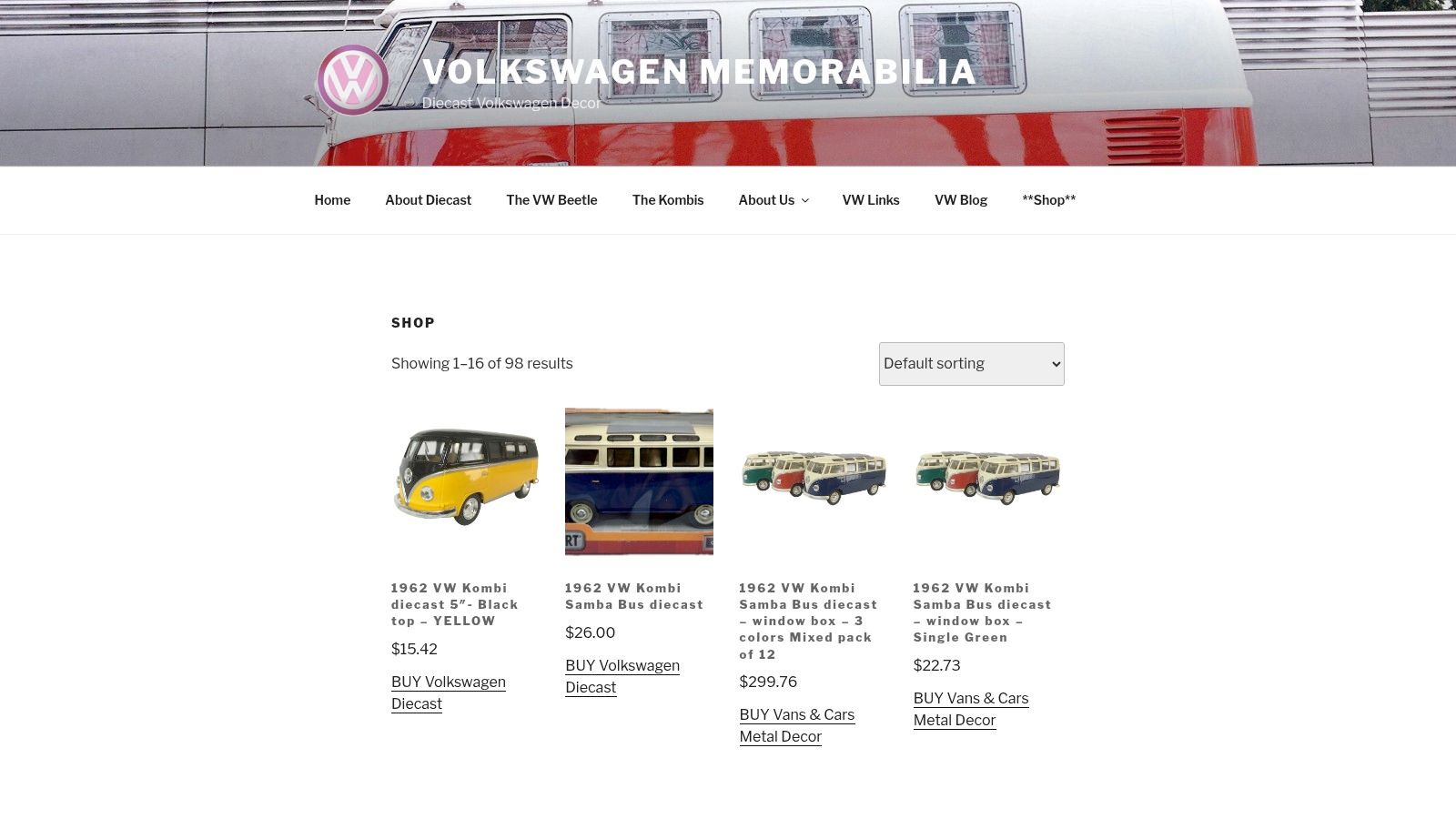
Screenshot from https://vwmemorabilia.com.au/shop/

What works in a Surf Safari look

A vintage VW element works best when it feels earned. Good examples include a licensed Kombi Samba Bus diecast displayed on a floating shelf beside coral-toned books, a framed photograph of a real Beetle from a family trip, or a retro metal sign paired with softer woven textures so the whole arrangement doesn't go hard and shiny.

Try these combinations:

  • A 1:24 Kombi on a timber shelf with a small shell dish and a linen-backed frame
  • A Beetle photo in a natural timber frame mixed into a neutral gallery wall
  • Retro VW metal decor balanced with raffia, jute, or macramé
  • Surf-inspired VW colour accents used sparingly through cushions, ceramics, or matting

If you like this crossover between coastal styling and motoring nostalgia, these living room wall accents with a relaxed VW feel show how the pieces can sit naturally in a home.

What doesn't work

The common mistake is stacking too many obvious references together. A wall with surfboard art, wave signs, shell garlands, blue-and-white stripes, three Kombi prints, and a “beach life” slogan doesn't feel relaxed. It feels crowded and overly literal.

A better rule is to let one VW item play the lead and let the others whisper.

A classic Kombi has enough personality on its own. It doesn't need a chorus line of matching props around it.

That's also why licensed pieces matter. They tend to have cleaner proportions and better detail, which helps them read as collectable objects rather than novelty filler. For readers searching terms like VW Kombi diecast Australia, Volkswagen Beetle model, or buy diecast Kombi, that distinction makes a big difference when the piece is part of your home styling rather than tucked in a display cabinet.

Curating and Hanging Your Coastal Gallery

Once you've picked the pieces, the last job is making them sit together properly. Good gallery walls look effortless, but they're usually planned with care. In Australian coastal boho projects, 87% of professional installations use mixed-media gallery walls, and 45% of installation failures come from improper mounting of natural material sculptures, according to Australian coastal boho installation benchmark data.

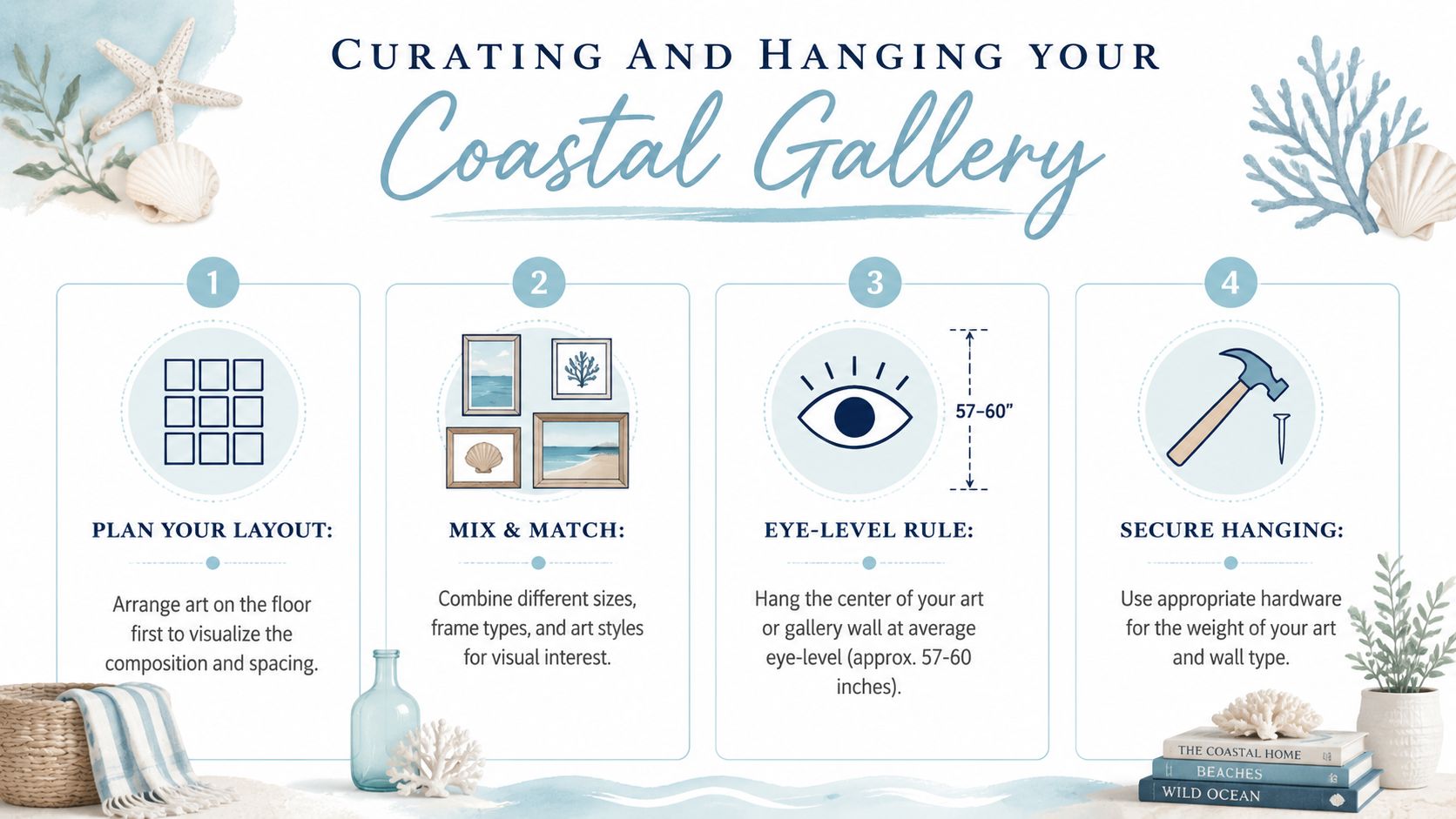
A four-step infographic guide on how to curate and hang a coastal themed gallery wall.

Build the layout on the floor first

Set everything out before you touch the wall. This saves a lot of unnecessary patching and helps you spot visual clashes early.

A practical order looks like this:

  1. Place the hero piece first and decide what it anchors.
  2. Add supporting works around it with varied shapes and sizes.
  3. Put textured pieces slightly off-centre so the wall doesn't feel too rigid.
  4. Step back and check breathing room between items.

Keep spacing generous

Crowding is the fast lane to a messy result. Natural materials need a bit of air around them, especially woven hangings and small sculptural pieces. If items are too close, the texture gets lost and the whole arrangement feels tense.

A mixed gallery often looks best when it includes:

  • Framed art for structure
  • Woven or fabric elements for softness
  • One small sculptural object for depth
  • A shelf or ledge if you want to rotate smaller accents over time

Hang with the right hardware

This part matters more than the styling. Driftwood, coral-inspired pieces, and mounted memorabilia can behave differently from standard frames. If the fixings aren't suited to the material and wall type, they can twist, drop, or pull away.

Worth remembering: organic materials often need more secure mounting than people expect, especially if they're uneven in shape or weight.

The final check is simple. Does the wall feel airy, personal, and a little nostalgic? If yes, you've nailed it. If it feels busy, themed, or overly matched, remove one or two obvious pieces and let the stronger ones breathe.


If you're ready to bring that laid-back Surf Safari mood home, Volkswagen Memorabilia is a cracking place to start. You'll find officially licensed VW memorabilia collectibles, coastal-friendly decor, and standout pieces for anyone looking for Volkswagen diecast models for sale, a Volkswagen Beetle model, or a proper VW Kombi diecast Australia display piece. The local stock and fast Australian shipping make it easy to style your space without the long wait, whether you're adding a subtle Samba Bus accent to a gallery wall or picking up a gift for the VW fan who already talks Kombis over every cuppa.