

You're standing in a bright Aussie room, probably with a shelf that already carries a diecast Kombi, a surf photo, and one or two bits you've moved around ten times because the balance still feels off. The fix is often simpler than another big buy. White home accessories can calm the scene, give your favourite VW pieces room to breathe, and make a coastal setup feel intentional instead of crowded.
That's the bit many overlook. White isn't just “safe”, it can act like the quiet mate at a car show who somehow keeps every conversation flowing, especially when your display mixes retro motoring, sand, timber, and a bit of nostalgia. In Australia, white still has staying power when it's used with intention, and it works best as a stable base rather than a default everywhere Abbey Hall Interiors.
The same goes for home styling more broadly. Australian households have grown over the long run, with the ABS reporting 10,944,300 households in 2021, up from 8,312,000 in 1991 Fortune Business Insights, and the home improvement market in Australia was projected at US$29.88 billion in 2025, rising to US$34.17 billion by 2030 at a 2.73% CAGR Mordor Intelligence. That backdrop helps explain why decorative pieces keep getting refreshed, especially the movable ones that let a room evolve without a full renovation.
Setting the Scene With White Accessories and a Classic Kombi
A white shelf in a sunlit lounge can do a lot of heavy lifting. Put a 1962 Kombi Samba Bus diecast, a rattan vase, and a black-and-white surf print together, and the room suddenly feels like coastal Australia met a Sunday swap meet in the best possible way. The white background doesn't compete with the model, it gives the little van its own patch of stage.
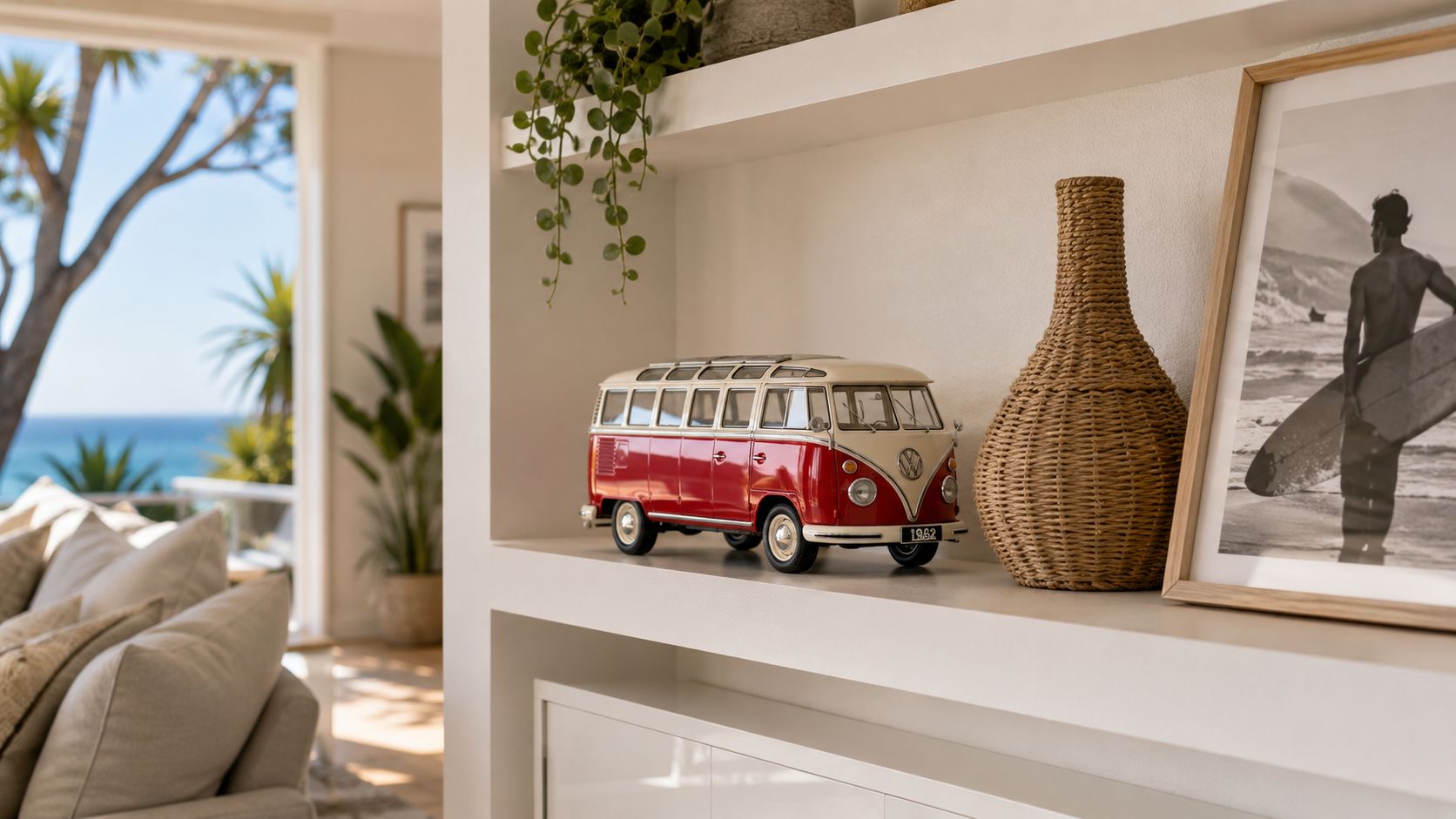
That's why white home accessories work so well in VW-inspired spaces. They keep the look light, and they let the details people care about, like a diecast roof rack, a surf decal, or a patina-coloured tin sign, stay in focus instead of disappearing into visual clutter. A white frame, a ceramic bowl, or a simple candle holder can act like the missing last piece in a display that already has personality.
Home decoration items with a coastal VW feel fit this approach because they're easy to shift around as the room changes. You can move a frame from the shelf to the hallway, swap a vase from the console to the coffee table, or bring in a seasonal accent without rethinking the whole room.
Practical rule: if the hero piece is bold, the surrounding white should be calm. That's how you make the display feel curated instead of busy.
A good white scheme doesn't shout. It gives your Kombi, Beetle, or surf memorabilia enough space to feel like the collector's pieces they are.
What White Home Accessories Actually Do in a Room
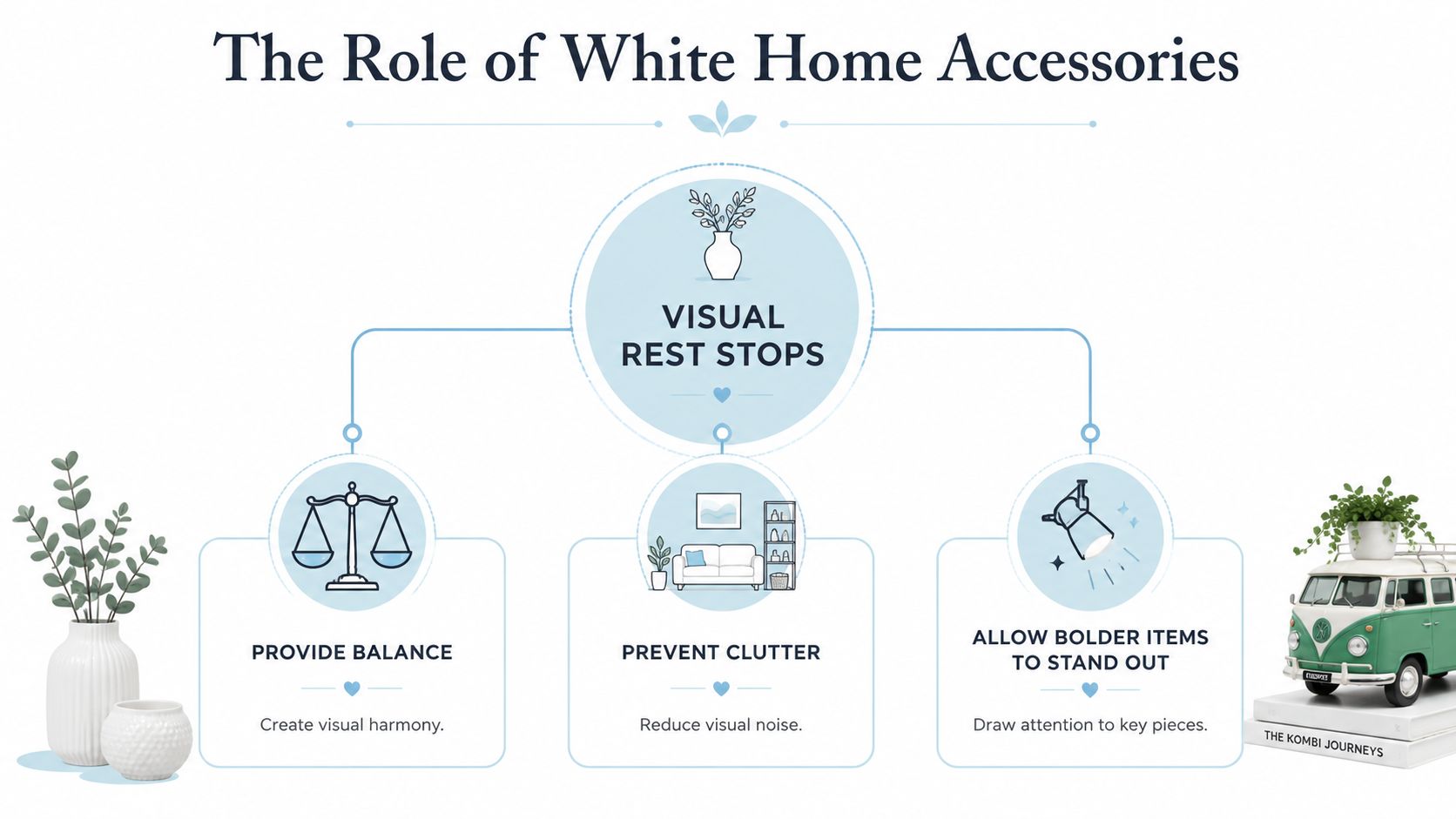
White pieces work best when you treat them as visual rest stops. If a green Kombi, timber shelf, and framed photo are all asking for attention at once, a white vase or tray gives the eye somewhere to pause. That pause matters because decorative objects are meant to be moved, replaced, and rearranged, which is exactly why accessories are such a flexible part of interior styling Home Accessories.
Start with balance, then add rhythm
One white object can soften a shelf. Three white objects, spaced well, can create rhythm. That's the point of repetition, not sameness, but a pattern the eye can follow without effort.
A simple setup might look like this. Place a white ceramic bowl on one end of a sideboard, a white photo frame in the middle, and a white lamp on the other end. The objects don't need to match perfectly, they just need to repeat the colour in a way that feels deliberate.
White works best when it connects the pieces you already love.
Why white feels so useful in Australian light
Australian daylight can be bright and unforgiving, especially in open-plan rooms and coastal homes. White surfaces help a room feel lighter, but they also need surrounding texture so the scheme doesn't go flat. White is described as a cornerstone colour when it's used with intention, which is a strong way of saying it's reliable, not boring Abbey Hall Interiors.
When white is doing its job, you notice the room feels easier to read. The Kombi still stands out. The shelf still feels tidy. The whole setup just looks like it belongs together.
The Four Categories Worth Collecting First
At a sunny car show, the easiest displays to admire are the ones that already know where to stand. A white vase beside a diecast Kombi, a framed surf photo on a timber shelf, and a soft textile under a metal accent can make a room feel collected without looking overworked. That same approach suits white home accessories at home, because the pieces stay easy to move, swap, and live with as the season changes.
The four categories below do the heavy lifting first.
Vases and vessels
A white vase is one of the cleanest ways to calm a shelf next to a diecast Volkswagen model. A tall vessel suits dried banksia, a squat ceramic piece works on a coffee table, and a textured form gives a room with smooth surfaces a bit more grip. White stoneware and ceramic are especially handy because they carry enough presence to be noticed, but they do not crowd out the model beside them.
Photo frames
Frames are the quiet achievers in a VW-friendly room. A slim white frame around a vintage VW poster, a surf photo, or a family holiday snapshot brings shape to a wall or shelf without making the display feel stiff. In a lounge with timber furniture, that white border can tidy the whole scene and let the memories, and the models, stay in focus.
Textiles
Cushions, throws, and table runners bring softness in a hurry. A white cushion with texture feels different from a flat white cushion, and that difference matters when metal models or glossy décor are already doing the visual talking. Textiles also make it easier to shift a room from relaxed summer styling to a slightly warmer winter look without replacing the whole setup.
Metal décor
A small white-and-metal accent can lift a quiet corner without stealing the show. Candle holders, trays, and framed pieces with silver or gold detail add polish near reflective surfaces or pale walls, especially when the rest of the room is already carrying a lot of white. If you want one compact accent that sits neatly on a shelf with retro pieces, white candle holders are a smart place to start.
Buyer's eye: choose pieces that feel easy to move, not precious to the point that you never touch them.
A good collection builds in layers. Start with one vase, one frame, one textile, and one metallic accent, then let the room show you what it needs next.
Choosing Materials and Finishes That Hold Up
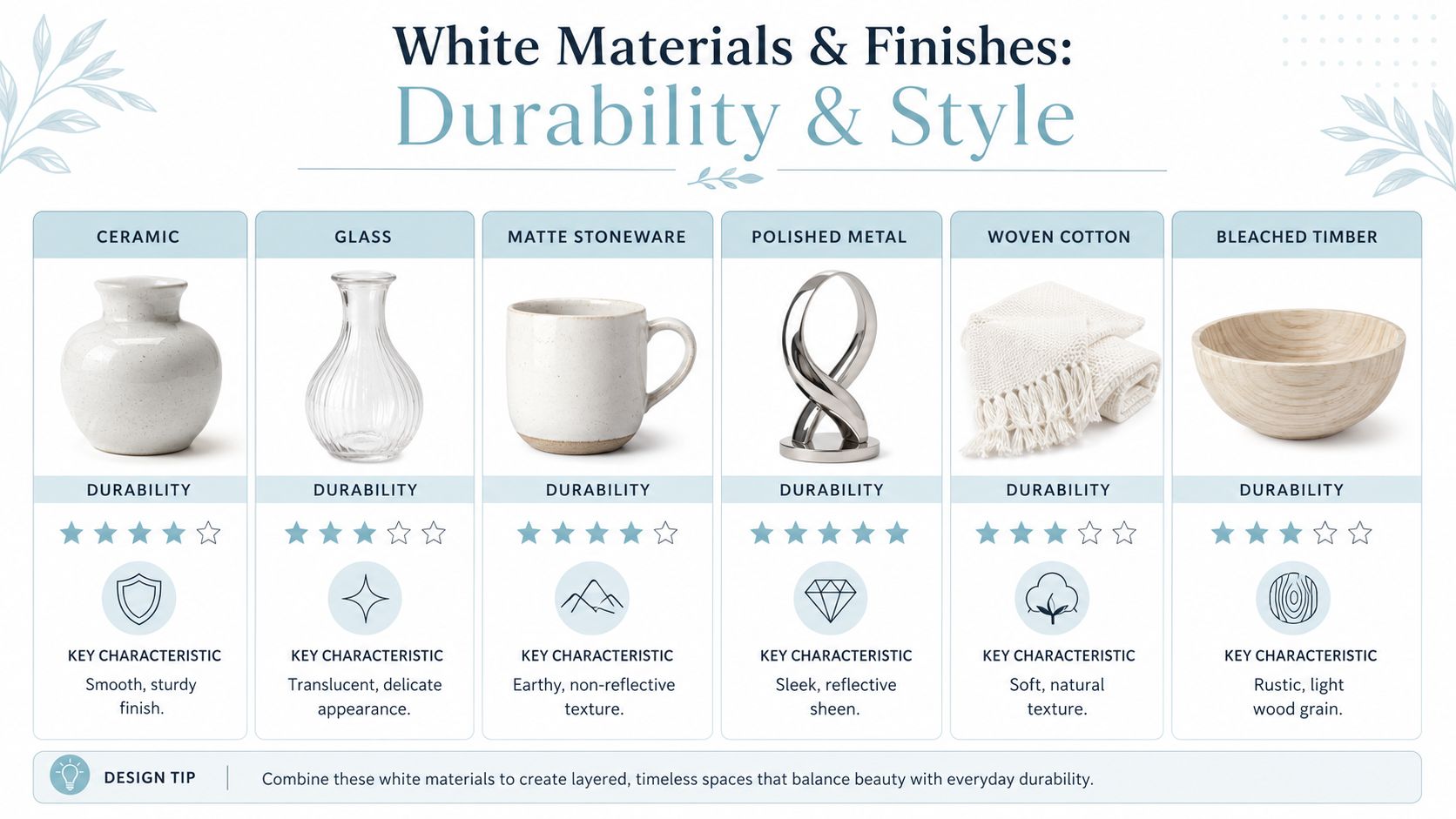
Not every white finish behaves the same way. A glossy ceramic vase catches light differently from matte stoneware, and a woven cotton cushion brings a completely different mood from a polished metal tray. If your room gets strong daylight, the finish matters as much as the colour.
Compare the finish, not just the shade
Ceramic feels crisp and sturdy, which makes it a strong choice for shelves and sideboards. Glass reads lighter and more delicate, so it's best where you want airiness more than visual weight. Matte stoneware has a calmer, earthier feel, which suits beachy interiors and doesn't demand attention every second.
Polished metal is the high-shine option, and it's the one that instantly sharpens a display. Woven cotton and bleached timber do something else entirely. They soften the whole room and keep white from feeling clinical.
| Material | Best use | Visual effect |
|---|---|---|
| Ceramic | Vases, bowls, candle holders | Clean and grounded |
| Glass | Small decorative vessels | Light and airy |
| Matte stoneware | Sculptural decor | Soft and earthy |
| Polished metal | Trays, frames, accents | Bright and reflective |
| Woven cotton | Cushions, throws | Relaxed and tactile |
| Bleached timber | Bowls, small objects | Natural and weathered |
The practical decorating rule is to layer different textures so the room does not feel cold or flat, with metal accents such as silver, copper and gold used to lift an all-white room Laurel Harrison. That advice matters more in Australia, where strong light can make flat surfaces look even flatter.
A textured white room feels finished. A smooth white room often feels unfinished, even if the colour choice is right.
Styling Tips for Coastal and Retro VW Interiors
A white accessory can look perfect in the shop and wrong at home if it's the wrong scale. Australian-style decor guidance emphasises choosing accessories that repeat the room's existing colours and fit the scale of surrounding furniture, because overscaled white objects can dominate a space while undersized pieces vanish against pale walls and flooring Stone Gable Blog. That rule matters just as much for a Kombi display as it does for a lounge.
Use the shelf like a small stage
Start with the largest object first. If the diecast Kombi is the hero, give it some breathing room on both sides, then build around it with one taller white piece and one lower white piece. That change in height keeps the eye moving and stops the shelf from looking like a straight line of objects.
A few practical moves help:
- Repeat the room colour: if the room already leans white, sand, and timber, keep the accessories in that family so the display feels coherent.
- Leave gaps: a little open space around the model makes the piece look more deliberate.
- Mix heights: pair a low tray with a medium vase and a taller frame or lamp.
- Avoid wall-to-wall clustering: too many white pieces in one corner can make the rest of the room feel unbalanced.
White ceramics work especially well near VW memorabilia because they echo the clean curves of the cars without copying them. A Beetle poster, a shell dish, and a white frame can sit together without looking themed in a heavy-handed way.
If you want a small accent that fits the same idea, white candle holders can anchor a console or dining table without stealing the show.
Visual trick: if everything is lined up at the same height, the display goes flat. Let one piece rise, one stay low, and one sit in between.
That simple variation gives a shelf the kind of easy rhythm you see at a good car meet, where no two builds are exactly the same but the whole lineup still makes sense.
Caring for White Pieces in Australian Sun and Sea Air
White looks clean for about five minutes in a coastal home if you ignore the sun and dust. UV exposure, airborne salt, and everyday wear can dull pale finishes quickly, and that's exactly the maintenance question a lot of white decor content skips over Houzz Australia. If you want the pieces to keep their brightness, you've got to choose and care for them with a bit of intent.
Match the material to the spot
Put wipe-clean ceramics and glass in brighter, busier areas. They're easier to freshen up after dust, fingerprints, or the odd splash. Keep textiles away from direct sun if you can, especially cushions that sit close to a window, because pale fabric can look tired faster in a bright room.
Metal frames and accents need a different approach. They usually look best with a gentle polish and a soft cloth rather than aggressive cleaners. Woven pieces and timber accents are more forgiving in a relaxed room, but they still benefit from being rotated now and then so one side isn't doing all the work.
Keep the routine simple
A quick weekly wipe is better than a big rescue clean later. Check window-adjacent pieces for fading, move fragile objects out of direct sun if the room gets harsh afternoon light, and refresh textiles before they start looking dusty rather than soft.
A small care routine protects the look you've built. It also makes white feel more liveable, which is the whole point. You want a room that looks collected, not a showroom that no one can relax in.
Vintage home accessories care is worth thinking about for the same reason. A little maintenance keeps the display from losing its edge.
Seasonal Styling and Where to Shop Next
White accessories earn their keep when the seasons change. At Christmas, they let greenery, baubles, and warm lights do the talking. In summer, they keep the room feeling breezy. In cooler months, they stop heavier colours from making the whole space feel closed in.
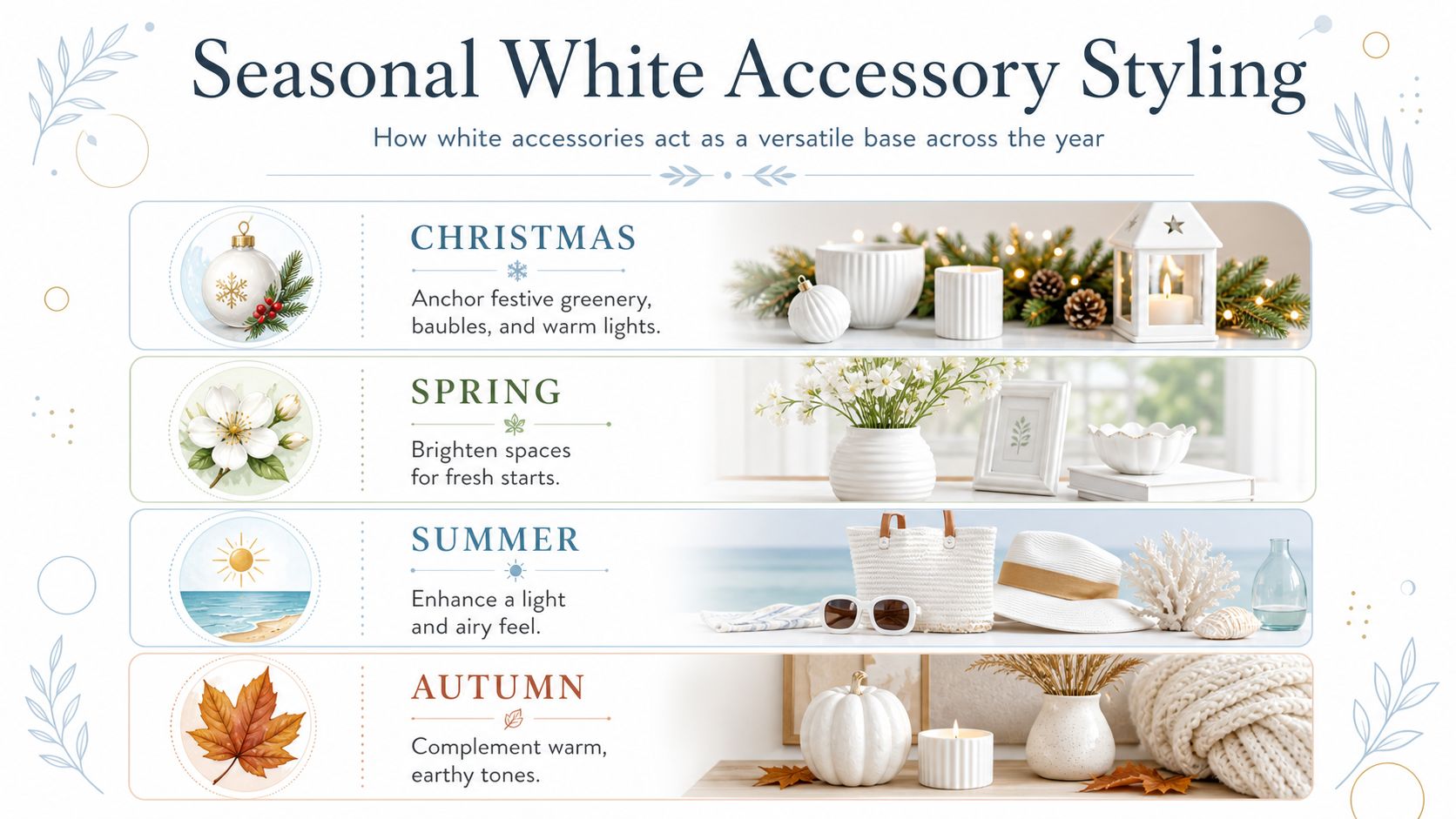
A simple seasonal swap can be enough. Change a cushion cover, swap a vase insert, or move a white tray from the coffee table to the hallway console. White gives you that flexibility because it sits under whatever else you want to celebrate.
For VW lovers, that flexibility is handy. A Kombi diecast, a Beetle model, and a few white coastal accents can carry a room through Christmas lunch, a summer BBQ, and a quiet winter evening without needing a full restyle. That's the charm of a good neutral, it keeps the nostalgia front and centre.
If you're ready to build a display that feels more like a classic Aussie beach house than a cluttered souvenir shelf, take a look at Volkswagen Memorabilia. You'll find VW diecast models, white decor, and coastal pieces that suit collectors who want local stock, friendly weekday support, and a style that feels right at home in Australia.
Volkswagen Memorabilia brings together licensed Volkswagen diecast models, coastal home accents, and gift ideas that suit real Australian living. If you're ready to add a Kombi, a Beetle, or a white decorative piece that gives your display a cleaner finish, visit Volkswagen Memorabilia and pick the pieces that make your shelf, console, or gift list feel spot on.