

A diecast model car is a miniature metal replica made by forcing molten metal into a precision mould, and common collector scales run from 1/18 down to 1/64. In plain terms, it's a small car you can hold in your hand, but when it's done well, it still carries the shape, character, and spirit of the original machine.
If you're standing in the shed, staring at a classic Beetle photo, or you've just spotted a tiny Kombi in a shop window and felt that little tug of memory, you already understand the appeal. A good diecast doesn't just look like a car. It brings back road trips, surf racks, Sunday markets, and the sound of an old VW engine on a bright Australian morning.
For plenty of us, that's where the collecting starts. Not with investment talk or display cases. Just with one model that feels familiar. A cream Beetle like your mum used to drive. A two-tone Samba Bus that reminds you of beach holidays. A little metal memory that somehow feels bigger than its size.
More Than a Toy What Makes a Diecast Car Special
The first time you pick up a nicely made little VW, you notice the weight before anything else. It doesn't feel like a throwaway trinket. It feels solid. The curved guards, the tiny bumpers, the cheerful face of a Kombi. That's why diecast has always lived in that lovely space between toy and keepsake.
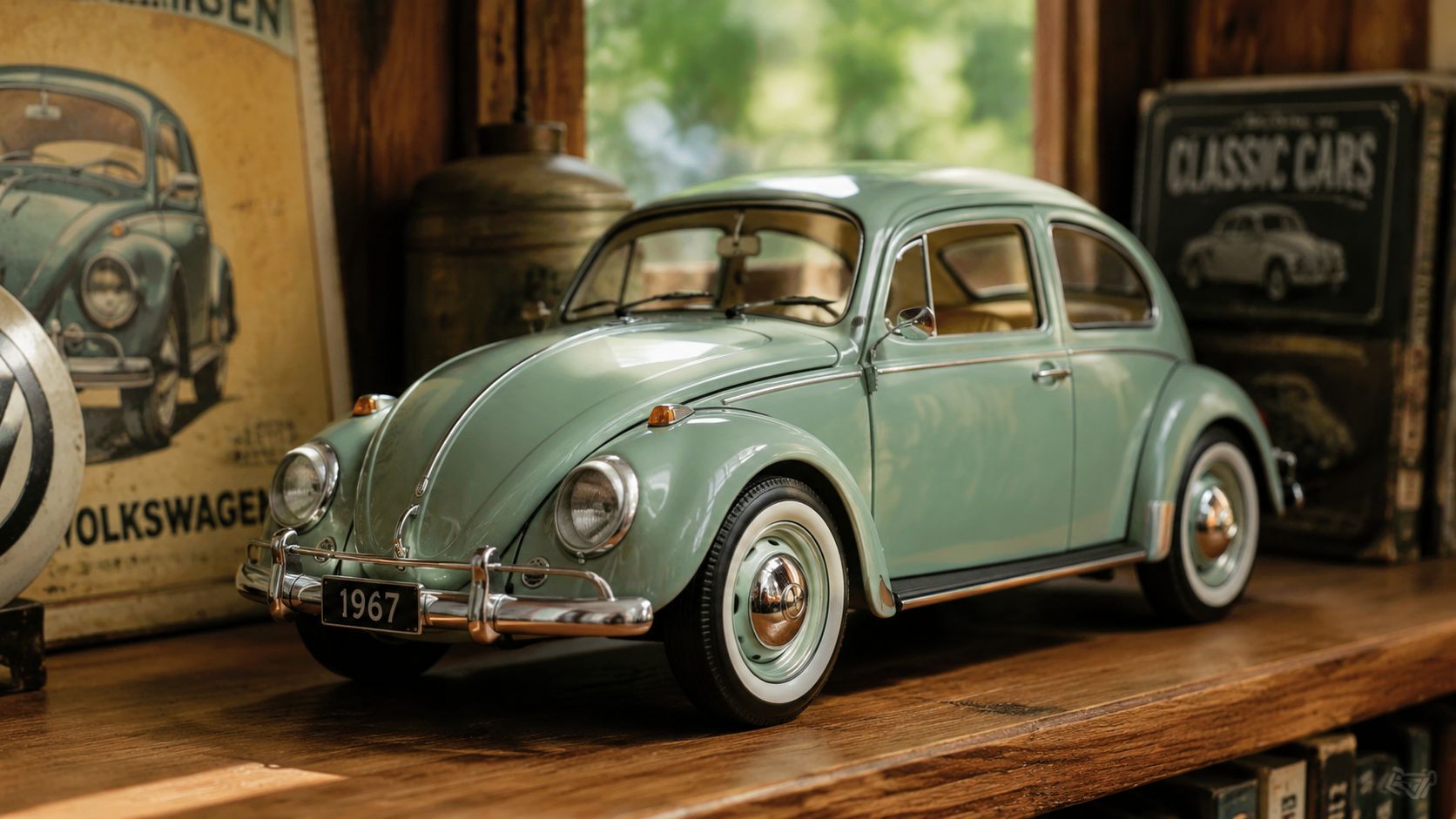
A diecast model car is a miniature vehicle replica made by forcing molten metal into a precision mould. That simple process is what gives the body its crisp shape and lets makers repeat it accurately across a whole production run. If you'd like a plain-English backgrounder, this guide on about diecast collecting is a handy place to start.
Why collectors get attached to them
A plastic toy might remind you of a car. A diecast often feels closer to a tribute.
That's especially true with classic Volkswagens. The Beetle and Kombi were never just transport in Australia. They were surf wagons, first cars, family runabouts, project builds, and festival favourites. Shrink one down into metal and you haven't lost the charm. You've concentrated it.
Some collectibles sit on a shelf. A diecast VW often sits in your life story.
A hobby with real history
This isn't some recent fad dressed up as nostalgia. According to the history outlined by ModelCars.com's diecast background article, the category has roots in the early 1900s, with diecast model cars as we know them today taking shape in the early 20th century after the technique was adapted for miniatures following World War I. In the hobby's commercial story, Meccano Ltd. launched early diecast vehicles in the 1930s, and Matchbox began in 1947, with its 1–75 series named because it always had 75 different vehicles in the range.
That history matters because it explains why people don't talk about diecast the same way they talk about ordinary toys. Collectors see these models as little pieces of motoring culture. For VW fans, that means a tiny Beetle can hold the same design magic as the full-sized car parked on the grass at a show.
From Molten Metal to Miniature Icon How a VW Diecast Is Born
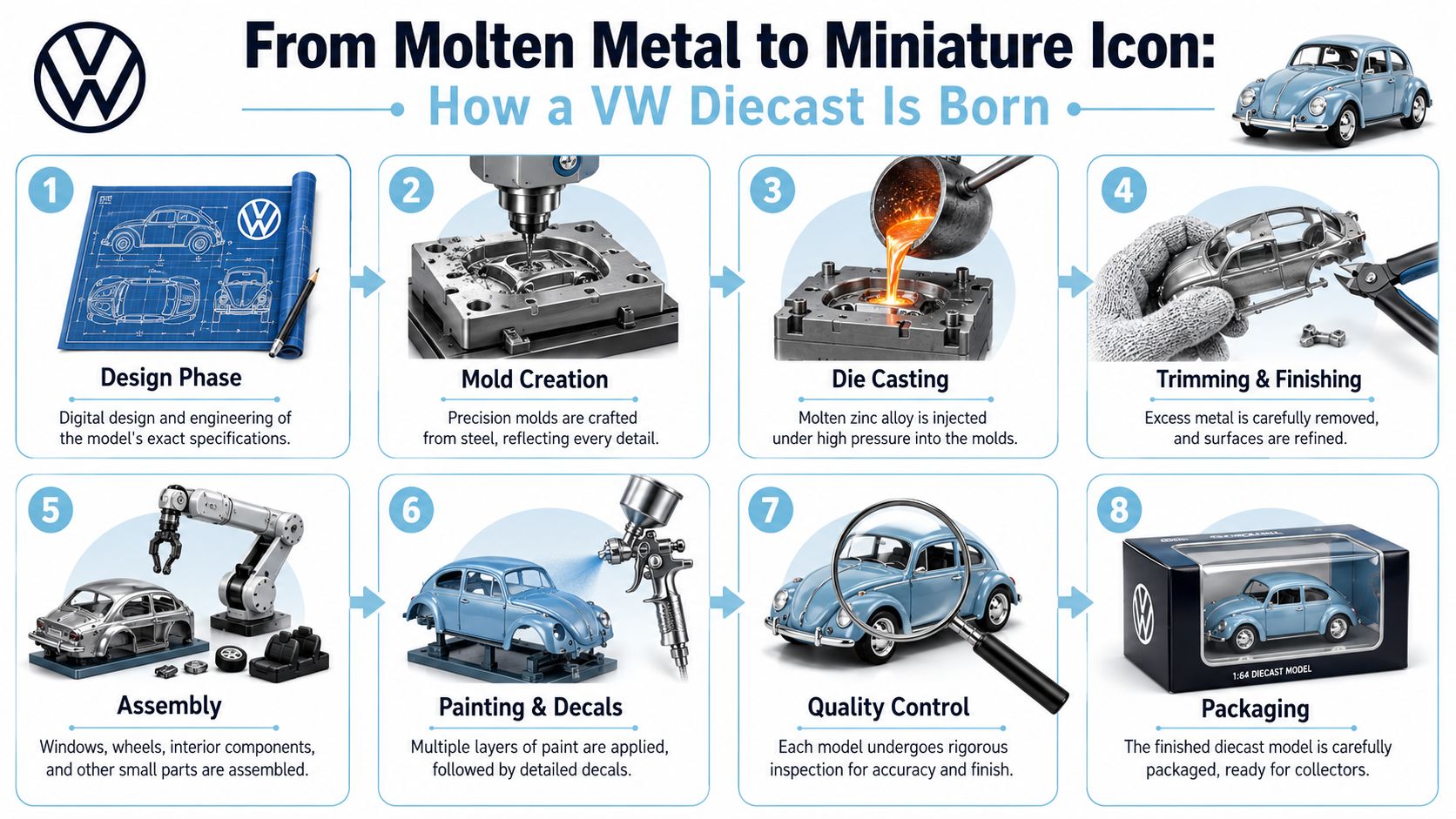
A diecast model starts life in a much more industrial way than one might expect. Before there's shiny paint or a split-screen windscreen, there's heat, metal, tooling, and a mould built to capture the shape properly.
The basic process in plain English
It involves repeatedly making the same tiny sculpture, yet with far greater precision than a handmade toy.
- The body is designed so the proportions look right.
- A mould is created to capture those shapes.
- Molten metal is forced into that mould under pressure.
- The casting is trimmed and refined so rough edges are removed.
- Parts are added, including wheels, glazing, interior pieces, and trim.
- Paint and printed details go on to bring the model to life.
According to AUTOBarn Model's guide to diecast realism and larger scales, this production method supports accurate body shells and fine exterior features, plus functional details such as opening doors, hoods, trunks, working suspension, and realistic interiors.
Why some models feel more premium
The finish is where a model either sings or falls flat. A great VW diecast has clean paint, tidy window fitment, straight wheels, and little touches that make you grin when you spot them. Door handles that look right. A dashboard that doesn't feel like an afterthought. A stance that matches the car's character.
Practical rule: If the body shape is wrong, no amount of shiny paint will save the model.
There's also a straightforward trade-off in the hobby. Larger, hand-finished models usually cost more because they use more material and labour, while smaller scales stay affordable and easier to stock, ship, and display. That's one reason you'll see collectors mix formats. One hero-piece on the shelf, then a row of smaller Beetles and Kombis for variety.
Speaking the Lingo A Guide to Diecast Scales
If you're new to collecting, scale can sound more confusing than it is. Once you know the trick, it becomes simple. In diecast, the smaller denominator means the larger model. So a 1:18 Kombi is bigger than a 1:64 Kombi.
For VW fans, scale shapes the whole collecting experience. A big model gives you presence and detail. A small one gives you variety and easier storage. This Volkswagen model cars scale guide makes that easier to visualise if you want to compare sizes before buying.
What the numbers feel like in real life
According to this diecast scale size guide, a 1:18 model is typically about 9 to 12 inches (25 to 30 cm) long, while 1:64 models are about 2.5 to 5 inches long. For Australian collectors, that matters because 1:18 works beautifully as a showcase piece, while 1:64 is the practical favourite when space, shipping volume, and mixed collections matter more.
| Scale | Approx. Length (Kombi) | Best For |
|---|---|---|
| 1:18 | about 25 to 30 cm | Feature display pieces with more visible detail |
| 1:24 | mid-sized shelf display | A balanced choice for desks, gifts, and casual collectors |
| 1:43 | compact collector display | Traditional display cabinets and classic collector setups |
| 1:64 | about 2.5 to 5 inches | Building a broader collection without filling the house |
A simple way to choose
- Want one centrepiece? Go larger and let it own the shelf.
- Buying a gift? A mid-sized Beetle usually feels substantial without demanding too much space.
- Planning a whole VW lineup? Smaller scales make it easier to collect different colours and body styles.
Starting Your VW Collection What to Look For
The smartest collectors don't start by asking, “What's cheapest?” They ask, “What feels right in the hand, and what will still make me smile in a year?” That question usually leads to better models.
In Australia, people often talk about diecast through the lens of collecting and valuation rather than factory output. Scale, rarity, and condition shape how a model is judged. The market itself is commercially significant too. Warwick & Warwick's diecast guide notes that the global automotive diecast scale model market was estimated at USD 3,695.6 million in 2025 and projected to reach USD 5,385.1 million by 2034, which is a projection that points to sustained collector demand.
The signs of a quality model
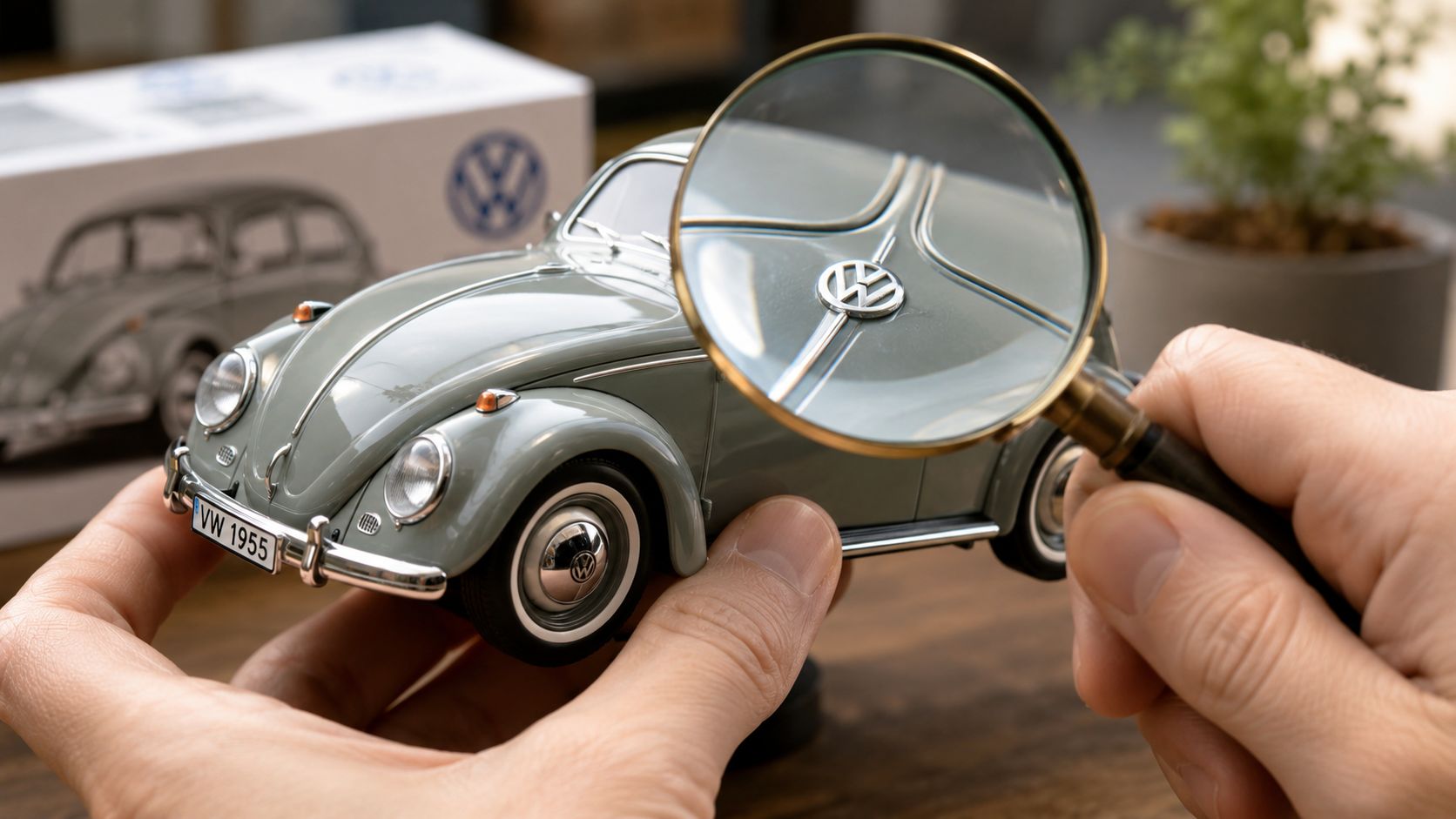
When you inspect a Beetle or Kombi, slow down and look closely.
- Body shape: Does the silhouette feel true to the actual VW?
- Paint finish: Look for even colour and tidy edges around windows and trim.
- Printed details: Badges, lights, and number plate graphics should look sharp, not fuzzy.
- Moving parts: If the model includes opening panels, they should fit neatly.
- Tyres and stance: A VW should sit properly. If it looks awkward on the shelf, you'll notice every time.
A short walkaround can help train your eye:
Why licensing matters
A licensed model usually feels more trustworthy because the maker has had to respect the actual vehicle's identity. For a Volkswagen collector, that matters. The charm of a Beetle isn't generic. The lines, proportions, colours, and little signature details are what make it a Beetle.
Buy the model that tells a story you recognise. That's the one you'll keep reaching for.
Collectors also keep an eye on condition. A boxed model in clean shape generally appeals more than one with bent mirrors, rubbed paint, or missing trim. Even if you're not collecting for value, condition protects the pleasure of owning it.
Buying Your First VW Diecast in Australia
The easiest first purchase is the one that matches your taste straight away. If you love surf culture, a Kombi with a breezy coastal feel will probably grab you first. If your heart belongs to rounded guards and cheerful simplicity, a classic Beetle is hard to beat.
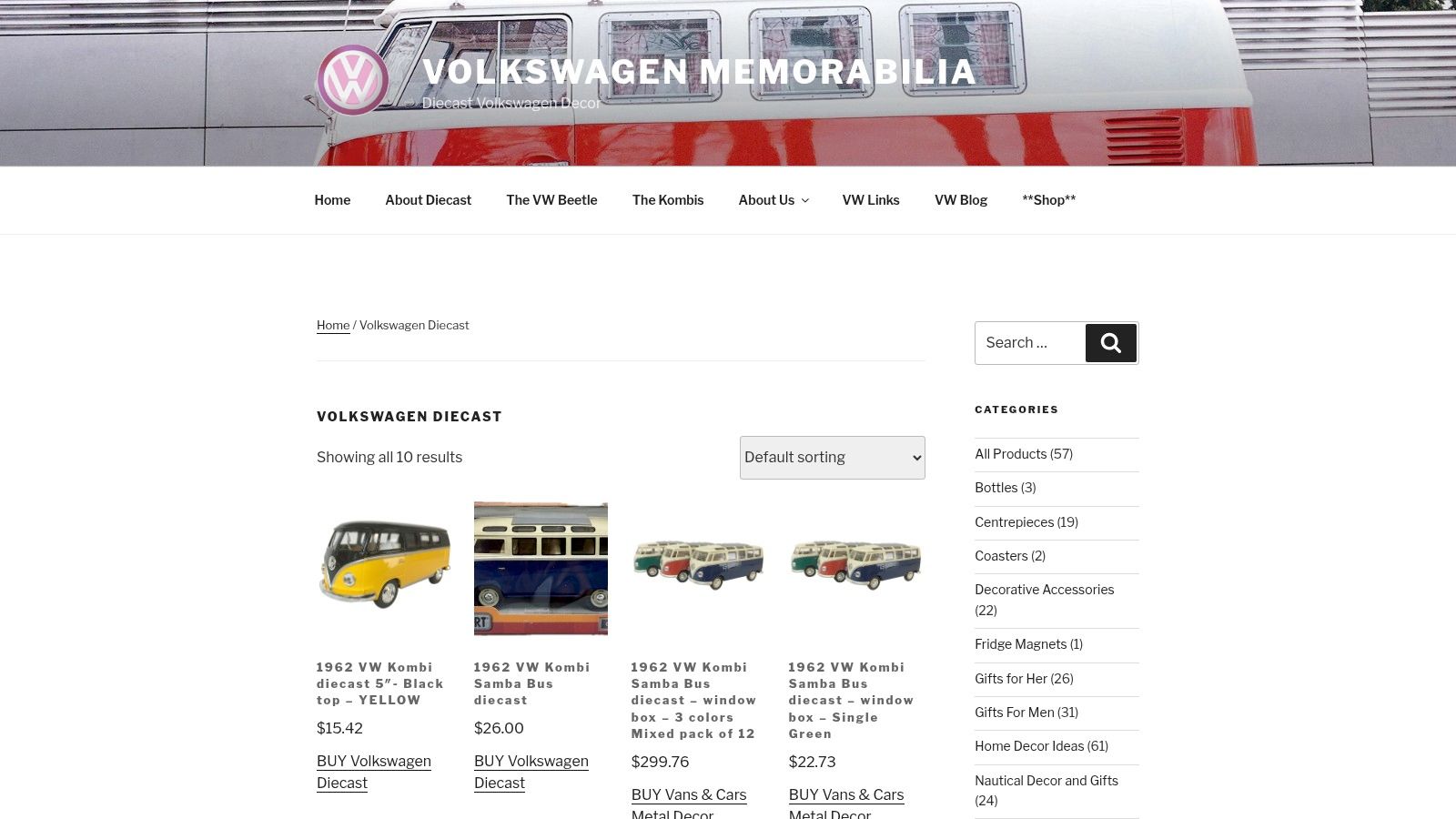
If you're browsing for a starting point, this collection of Volkswagen model cars shows the sort of variety that makes the hobby fun, from Beetles to Kombis and Samba-style favourites.
Diecast versus resin or plastic
One of the most useful buying questions isn't about colour or era. It's about material.
According to Hobbyco's guide to diecast versus model kits, diecast models are made using metal alloys, which gives them weight and durability and can allow for opening parts. Resin models are often lighter, more brittle, and commonly have sealed bodies. That makes diecast the better fit for collectors who want a model that feels sturdy and interactive.
Here's the practical version:
- Choose diecast if you like weight, durability, and moving parts.
- Choose resin if your priority is display detail and you don't mind a more delicate model.
- Choose a plastic kit if you enjoy building and painting rather than buying a finished piece.
A local buyer's checklist
Buying in Australia comes with a few everyday advantages when the seller holds local stock. Delivery is usually simpler. Support is easier to reach. You're also dealing with people who understand the local VW crowd, from show-day collectors to gift buyers hunting for the right Kombi.
Use this quick checklist before you hit buy:
- Match the model to the person: A desk gift needs a different scale from a cabinet centrepiece.
- Check the photos closely: Look for clear shots of the body, interior, wheels, and packaging.
- Read the description for features: Opening doors, surfboards, roof racks, or display plinths all change the feel of the piece.
- Think about where it will live: Shelf, office, workshop, display cabinet, or man cave.
A first diecast doesn't need to be rare to be special. It just needs to feel like your Volkswagen.
Your Diecast Questions Answered
How should I clean a diecast model car?
Use a soft dry cloth or a gentle duster for regular care. For awkward corners around mirrors, roof racks, or window trims, a soft brush helps lift dust without scratching paint. Keep models out of harsh direct sunlight if you want the finish and decals to stay looking fresh.
Dust them lightly and often. Aggressive cleaning usually does more harm than good.
Are diecast cars for kids or collectors?
Some are perfectly fine as playful display pieces, but many detailed models are better treated as collectibles. Small parts, fine mirrors, opening panels, and delicate trim mean a nicely finished Beetle or Kombi is often best for older kids, adult fans, or anyone who'll handle it carefully.
What's the best scale for a gift?
Think about where the gift will go. A larger scale suits someone who has a shelf or cabinet ready for it. A smaller scale works beautifully for an office, bookshelf, or collector who enjoys lining up several VWs together. If you know the recipient loves one specific real-world VW, matching the body style often matters more than chasing the biggest model.
How do I display a collection properly?
Enclosed cabinets are brilliant because they cut dust and let the colours pop. Open shelving works too, especially if you group models by theme, such as Beetles on one shelf and Kombis on another. Some collectors like to create little scenes with signs, surfboards, or garage-style backdrops so the models feel part of a story.
What makes a diecast model car feel valuable?
Not just price. Collectors usually care about condition, rarity, scale, accuracy, and emotional pull. A model can be modestly priced and still become a favourite because it reminds you of a real car, a family trip, or a chapter of your life.
If you're ready to find a model that brings those VW memories back, have a look through Volkswagen Memorabilia. It's a great spot to browse licensed Volkswagen diecast models, from Beetles to Kombis and Samba Bus favourites, with local Australian stock, friendly support, and pieces that suit collectors, gift buyers, and anyone who just wants a little bit of classic VW spirit on the shelf.