

G'day, mate! Picture this: the open road, the sun glinting off your dashboard as you cruise Australia’s stunning coastline or venture deep into the rugged outback. For decades, one vehicle has been the ultimate symbol of this freedom—the Volkswagen Transporter camper. This guide is for all of us who get a little buzz seeing one on the road, a deep dive into what makes the Transporter a true Aussie icon, a classic piece of rolling history that’s both your home and your adventure vehicle.
The Enduring Legend of the Volkswagen Transporter Camper
There's a unique magic to the Volkswagen Transporter camper, isn't there? It’s more than just a van; it's a promise of adventure, a canvas for your personality, and a connection to a community that spans generations. Here in Australia, it’s a core part of our culture, right up there with beach days and backyard barbies.
Think of this guide as your starting point, like chatting with a mate at Volksfest. We're here to explore its incredible journey from a humble workhorse to the ultimate symbol of freedom for today’s van life enthusiast.
From Humble Beginnings to Aussie Icon
The story began with a beautifully simple concept in the late 1940s. The original Type 2, which we all affectionately call the 'Splittie' for its split windscreen, was first designed as a practical and reliable work van. It wasn't long, however, before clever folks realised its true potential. With a bit of creative thinking, this box on wheels could be turned into a mobile home.
Today, that spirit of ingenuity is still alive and kicking, even as the technology has leapt ahead. The Transporter is still the go-to for those who hear the call of the open road. It's a vehicle that connects generations, from the surf trips of the 1960s to modern off-grid adventures powered by solar.
The Transporter's special appeal comes from its unique blend of practicality and personality. You can use it for daily tasks during the week and escape to a remote national park on the weekend. This versatility is what has cemented its status as an enduring legend.
More Than a Vehicle, A Way of Life
Owning a Volkswagen Transporter camper gives you a backstage pass to a passionate and welcoming community. It means swapping stories at a VW car show, sharing a knowing nod with another Transporter owner on the highway, and trading tips on the best hidden campsites.
This guide will cover everything you need to know about the Transporter experience.
- The Model History: A nostalgic journey through the generations, from the iconic T1 to the modern T6.
- Buying and Building: An exploration of your options, from purchasing a pre-built camper to starting a DIY conversion.
- Essential Features: A breakdown of typical layouts and must-have components for life on the road.
- Styling Your Ride: Inspiration and ideas for personalising your camper, including celebrating its heritage with classic VW memorabilia collectibles.
A Trip Through Time: The Generations of the Transporter
Every great family has a story, and the Volkswagen Transporter family tree is an absolute ripper. It’s a tale filled with classic designs, clever engineering, and a whole lot of Aussie spirit. So, let's wind back the clock for a nostalgic road trip through the generations of this incredible Volkswagen Transporter camper.
Each model brought something new to the party, building on the legacy of its predecessor while carving out its own place in our hearts and on our roads. From the original icon to the modern workhorse, this is the story of how a humble van became a legend.
The T1 ‘Splittie’ (1950–1967): The Original Icon
This is the one that started it all. Affectionately known as the 'Splittie' for its split front windscreen, the T1 is the unmistakable face of the 1960s counter-culture. With its charming, almost-smiling V-shaped front and that classic air-cooled engine chugging away in the back, it was the ultimate symbol of freedom and adventure.
Its bare-bones interior was a blank canvas, just waiting for owners to create their own rolling homes. For many Aussies, the Splittie wasn't just a vehicle; it was a ticket to explore our stunning coastlines, a key part of the booming surf scene, and a truly beloved member of the family. Its simple mechanics meant you could often fix it on the side of the road with a basic toolkit and a bit of know-how.
The T2 ‘Bay Window’ (1967–1979): A Roomier Ride
As the swinging sixties gave way to the seventies, the Transporter evolved. The T2, or 'Bay Window', swapped the split screen for a large, single curved windscreen, which gave you a much better view of the road ahead. It was a bit bigger, a touch more powerful, and a whole lot more comfortable than its older sibling.
The Bay also introduced creature comforts like improved suspension and the option of an automatic gearbox, making it a far more capable tourer for those long Aussie road trips. It quickly became a fixture at campsites and surf breaks from Bells Beach to Byron Bay, cementing the Volkswagen Transporter camper as the go-to ride for a generation of adventurers.
The T3 ‘Vanagon’ (1979–1992): The Boxy But Brilliant Classic
The T3, also known as the Vanagon in some markets, marked a real design shift. It traded the classic curves for a distinctly boxier, more angular shape, which meant heaps more interior space. This was a game-changer for camper conversions, allowing for more ambitious and comfortable layouts than ever before.
Early T3s kept the air-cooled engine, but later models introduced water-cooled engines, offering better performance and reliability for tackling Australia’s vast distances. It was a brilliant bridge between the classic era and the modern Transporters we know today, still loved for its rugged charm and practicality.
For a quick look at how these vans stack up over the years, check out the table below.
Volkswagen Transporter Generations at a Glance
| Generation (Nickname) | Production Years | Key Feature | Aussie Cultural Impact |
|---|---|---|---|
| T1 (Splittie) | 1950–1967 | Iconic split windscreen | The original surf bus and symbol of 60s freedom. |
| T2 (Bay Window) | 1967–1979 | Single curved windscreen | A more comfortable tourer that dominated coastal campsites. |
| T3 (Vanagon) | 1979–1992 | Boxy shape, more space | The practical choice that opened up bigger conversion potential. |
| T4 | 1990–2003 | Front-engine, FWD design | Revolutionised interior layouts with its flat floor. |
| T5 | 2003–2015 | Efficient TDI engines | The modern van-lifer's choice for reliability and comfort. |
| T6 / T6.1 | 2015–Present | Advanced tech & driver aids | A refined, car-like experience with classic van DNA. |
Each model clearly builds on the last, adding new features while keeping that essential Transporter spirit alive and well.
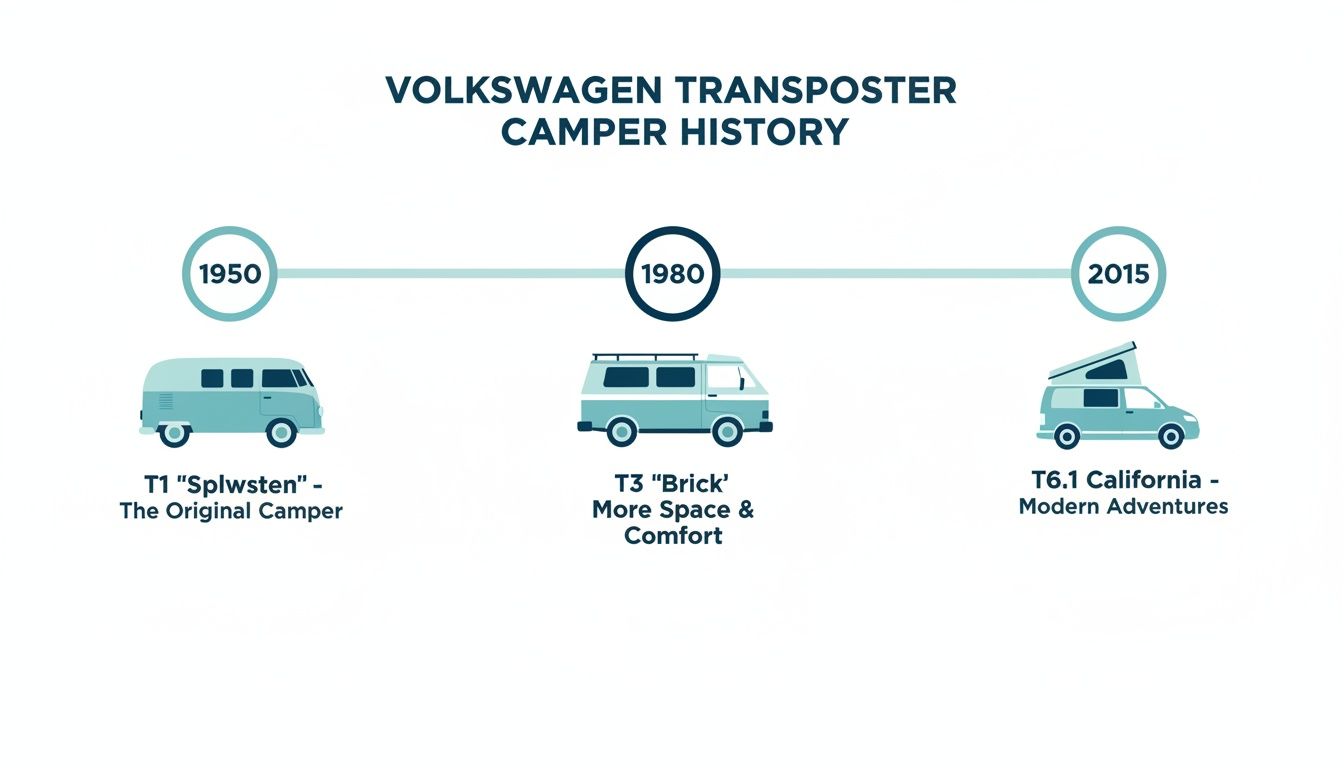
The T4, T5, and T6: The Modern Era
The T4 (1990–2003) was a massive leap forward. Volkswagen moved the engine to the front and switched to front-wheel drive, a move that created a completely flat floor throughout the van and totally revolutionised campervan design possibilities.
The T5 (2003–2015) refined this winning formula. It introduced powerful and efficient TDI diesel engines, advanced safety features, and a much more car-like driving experience. It quickly became the darling of the modern van life movement in Australia, offering the perfect blend of reliability and comfort for DIY builders and professional converters alike.
The T6 and T6.1 (2015–present) have continued this evolution, packing in the latest technology, driver aids, and even more refinement. They are sophisticated, comfortable, and incredibly capable, yet they still carry that unmistakable Transporter DNA.
The love for these vans has deep roots down under. In 1954, the Volkswagen Transporter debuted in Australia, winning us over with its ruggedness—perfect for our outback roads and coastal adventures. While its UK launch that same year saw only 786 units sold, our passion for practical, versatile vehicles meant our love affair with the Kombi was a story of steady growth. Thousands were exported here by the early 1960s to meet the demand from our farmers, surfers, and budding campervan converters. You can dive deeper into the early days and read more about the VW camper van's history on justkampers.com.
Each generation tells a part of a larger story—one of freedom, travel, and community. Whether you're drawn to the vintage appeal of a Splittie or the modern comforts of a T6, you’re part of a legacy that has been roaming Australia’s highways and backroads for over 70 years.
Finding or Building Your Dream Transporter Camper
So, you've decided a Volkswagen Transporter camper is for you. Good on ya! The next big choice is how to get one. You have two main paths: buying a pre-converted camper that's ready to go, or building your own from a base van.
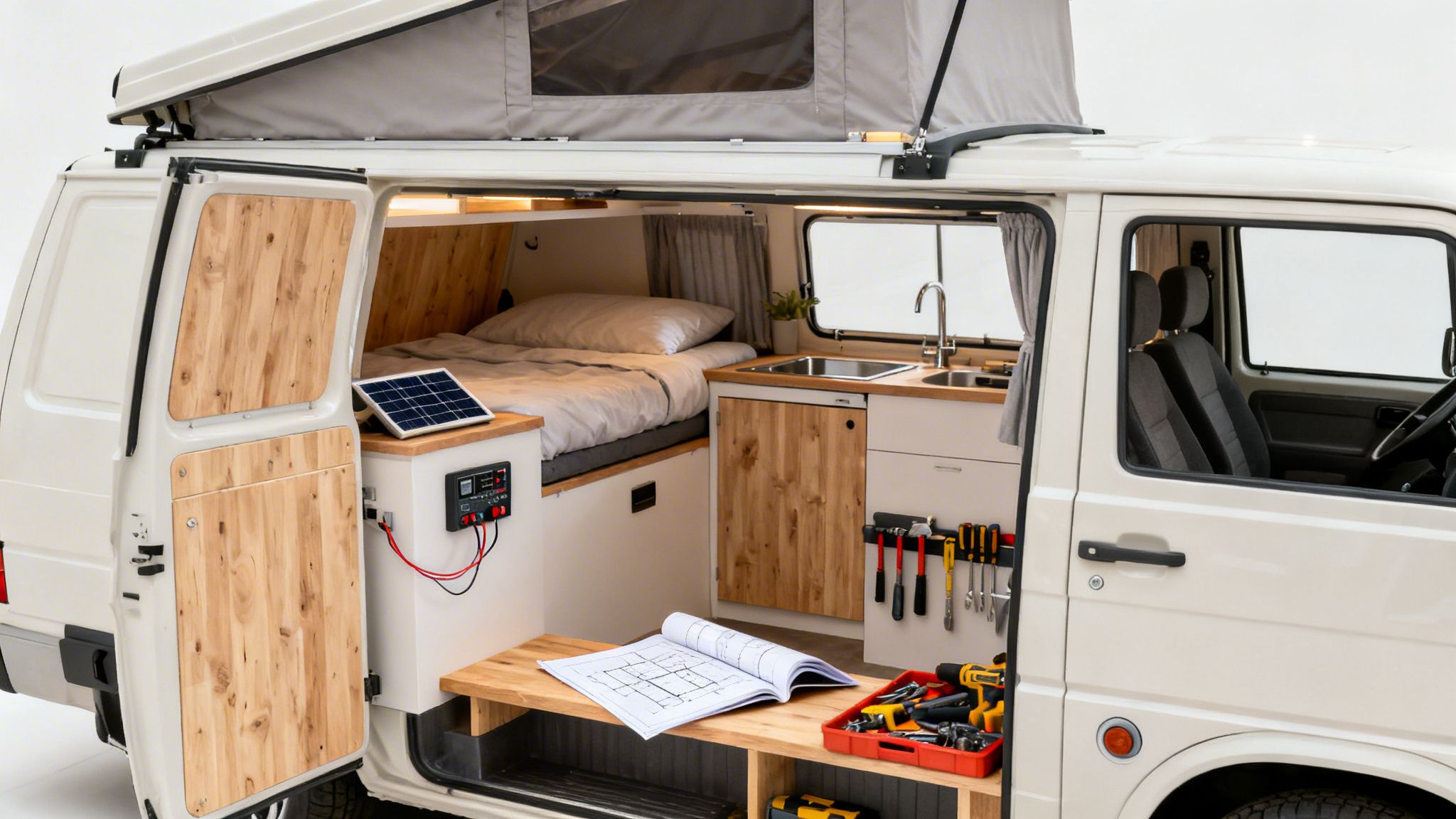
Buying a finished camper is the fast-track option. It’s professionally built and ready for immediate adventures. Building your own is a custom project where you control every detail, creating a van that is uniquely yours.
Both options have their merits, depending on your budget, timeframe, and how hands-on you want to be.
The Turn-Key Option: Buying a Pre-Converted Camper
A professionally converted camper offers the massive benefit of being adventure-ready from day one. Here in Australia, the market includes factory-built models and brilliant custom versions from local specialists.
- Factory-Built (e.g., VW California): The premium option, built by Volkswagen themselves. The fit and finish are exceptional, with all components designed to work together seamlessly. Expect a higher price tag.
- Professional Australian Converters (e.g., Trakka): These local companies have decades of experience building campers for Aussie conditions. Their vans are tough, practical, and often feature incredibly smart layouts.
When inspecting a used camper, check the fundamentals. Review the service history, inspect for rust around wheel arches and window seals, and test drive it to check the engine and gearbox. Test every single camper component, including the pop-top roof, fridge, water pump, and all electricals.
The DIY Adventure: Building Your Own
Building a Volkswagen Transporter camper yourself is a seriously rewarding project that gives you total creative control over the final layout. The first step is to choose a good quality base van.
The T5 generation (2003–2015) is a super popular choice for conversions in Australia. It was a bestseller, with over 150,000 units registered locally by 2020. During this time, the VW California model became a huge hit, making up 25% of all campervan sales in 2010. Many T5s were fitted out by Aussie converters like Trakka, adding pop-top roofs, kitchens, and solar systems ideal for touring.
Your choice of base van is a key decision. A high-roof "hi-top" gives you permanent standing height. A standard van with a pop-top is more discreet and can access underground parking.
With your van sourced, the conversion involves several key stages:
- Insulation and Sound Deadening: Essential for comfort in Australia’s climate and for reducing road noise.
- Pop-Top Roof: A major upgrade that adds a second bed and valuable headroom.
- Layout and Cabinetry: This is your chance to design the interior, from a classic side-kitchen layout to a fully custom setup.
- 12V Electrical System: The heart of your off-grid capability, powering lights, the fridge, and charging points. A solid system is crucial for freedom on the road.
Whether you buy or build, you're joining a great community of VW camper enthusiasts. For more tips on finding a vehicle, check our guide on what to look for when a Volkswagen bus camper is for sale.
Keeping Your Transporter Ready for Adventure
Owning a Volkswagen Transporter camper is a real labour of love. Like any good relationship, it needs a bit of attention to keep it happy. The good news is, a bit of regular care is all it takes to make sure your van is always ready for that next trip up the coast or out into the bush.
Whether you've got a classic air-cooled Kombi or a modern TDI, you need to understand its unique needs. These vans are more than just vehicles; they have their own personalities and quirks.
Classic vs Modern Maintenance
The work needed to keep a classic T1, T2, or T3 running is worlds apart from a modern T5 or T6. Think of them as different generations of the same family—they share a bloodline, but have completely different needs.
An older air-cooled Transporter, for example, is a much simpler machine. You’ll get to know these jobs pretty well:
- Regular Oil Checks: The old engines are famous for leaving their mark. Checking oil levels often isn't just a suggestion, it's essential.
- Carburettor Tuning: A well-tuned carby is the secret to a happy engine. It's a rewarding skill to learn how to dial it in just right.
- Valve Adjustments: This is a routine job that keeps the engine running smoothly and is a key part of classic VW ownership.
The modern TDI Transporters (T4, T5, and T6) are far more complex. They’re incredibly reliable, but they come with service needs that often require specialist tools and diagnostic gear.
A few things to keep on your radar include:
- EGR Valves: These emissions parts can get clogged with carbon over time. They'll need a clean or a replacement to keep the engine breathing properly.
- Dual-Mass Flywheels (DMFs): If you've got a manual, the DMF can wear out. You’ll notice it as a rattle or vibration when using the clutch.
- Timing Belt/Water Pump: This is non-negotiable. Stick to the replacement schedule (usually around 100,000 km) to avoid catastrophic engine failure.
Finding a Mechanic You Trust
While you can do plenty of checks yourself, every Transporter owner needs a good mechanic. The best you can find is a specialist who lives and breathes VWs. They know the quirks of each generation and can spot a problem long before it becomes a major headache.
A good VW mechanic doesn't just fix what’s broken—they help you look after your van for the long haul. They get the history and will work with you to keep it safe and on the road.
Don’t just head to any old workshop. Your best bet is to ask for recommendations from local VW clubs or online forums. That community connection is one of the best investments you can make for your van's health.
Pre-Trip Checks for Peace of Mind
Before any big trip, a quick "pre-flight" check can save you a world of hassle. It only takes five minutes and gives you the confidence that your van is as ready as you are.
- Fluids: Check your engine oil, coolant, and windscreen washer fluid.
- Tyres: Look at the pressure (don't forget the spare!) and check for wear or damage.
- Lights: Do a quick walk-around. Are all your headlights, taillights, and indicators working?
- Wipers: Make sure the blades are in good nick and clear the screen without smearing.
- Listen: When you first start it up, just listen. Any new or strange noises are worth a quick look before you hit the highway.
This simple routine is a great way to stay in tune with your Volkswagen Transporter camper and make sure the only thing you have to worry about is the beautiful Aussie road ahead.
Styling Your Rolling Home with VW Memorabilia
Alright, you’ve got the van sorted. Now for the fun bit—making it feel like yours. Your Volkswagen Transporter camper isn't just a way to get from A to B; it's your home on wheels, a blank canvas waiting for a splash of personality.
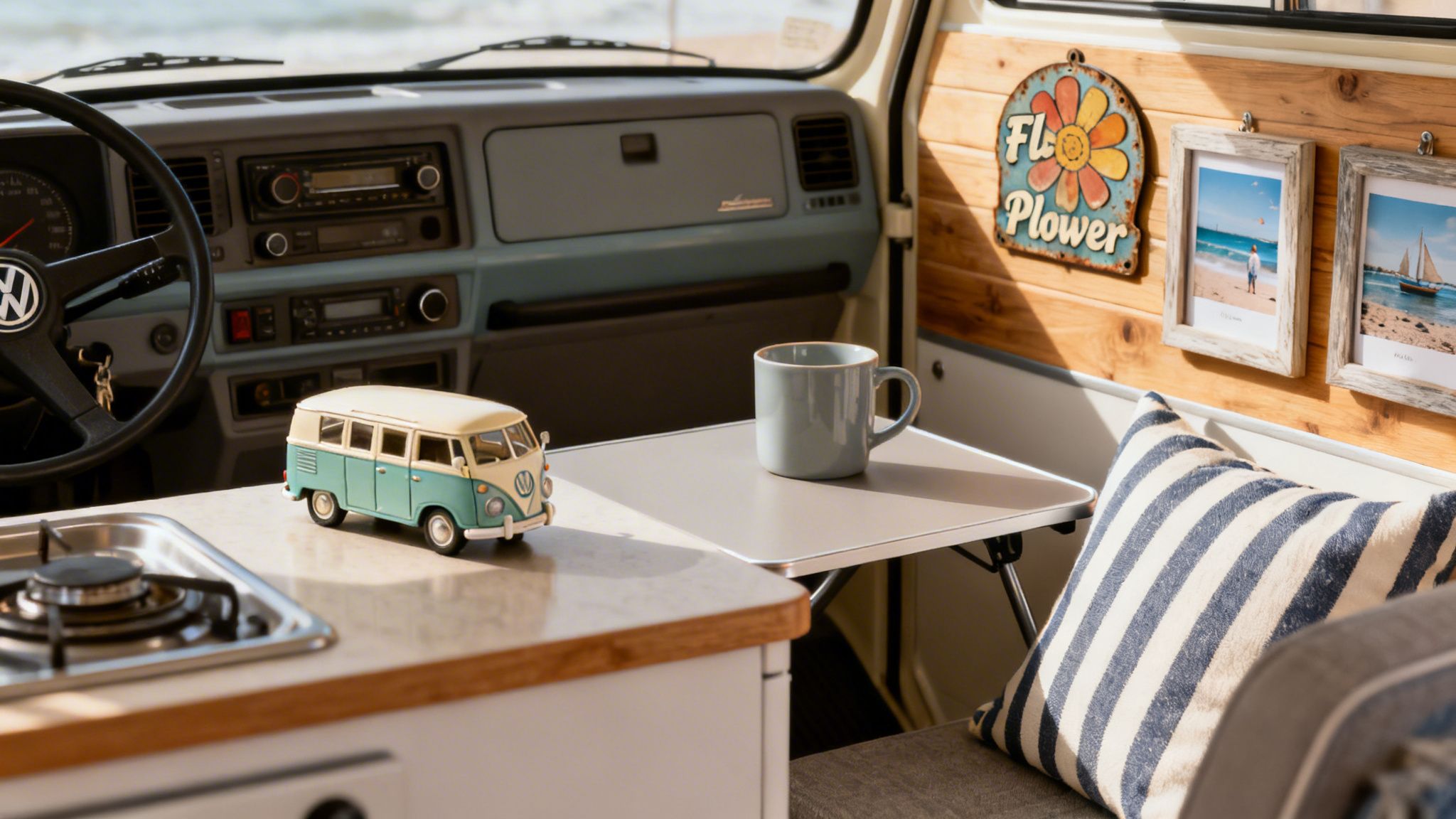
This is about more than just chucking a few cushions in. It’s about creating a space that captures the spirit of the VW legacy and your own love for the open road. It's that feeling you get when you slide the door open to a view of the beach, and the inside of your van feels just as good as the outside.
Celebrate the Heritage with Diecast Models
A brilliant way to honour the brand's history is with a few well-placed diecast models. These aren't just toys; they’re little metal tributes to decades of iconic design.
Think about a classic 1:24 scale 1962 Kombi diecast model sitting on the dash, its bright colour catching the sunrise. Or maybe a few tiny Beetles arranged on a shelf above the bed. They’re fantastic conversation starters and a cool, constant nod to the history you’re now a part of.
These models are more than just decoration. They’re a tribute to the road-tripping soul of Volkswagen. A miniature Samba Bus on your kitchenette bench is the perfect homage.
They neatly connect your modern T6 to the pioneering spirit of the original Splitties that first forged the tracks for adventurers like us.
Create a Coastal Vibe
For so many of us in Australia, van life and the coast go hand in hand. Bringing that laid-back, beach shack vibe inside your Transporter is a great way to keep that holiday feeling rolling, no matter where you've parked up for the night. The look is light, breezy, and full of character.
Here are a few simple ideas to get you going:
- Nautical Photo Frames: What better way to display your favourite travel snaps? It’s a great method for keeping those top memories in sight.
- Quirky Fridge Magnets: That 12V fridge door is prime real estate! Cover it in fun VW or beach-themed magnets to stick up postcards and reminders.
- Vintage-Style Metal Signs: A retro surf sign or a ‘Flower Power’ plaque screwed to a cabinet door adds an instant hit of nostalgic charm.
You can find all sorts of affordable bits and pieces to build a look that’s all you. For a bit more inspiration, have a look at our collection of vintage home accessories, which are perfect for adding character to a small space.
At the end of the day, styling your Volkswagen Transporter camper is about filling it with things that make you happy. It’s about weaving together the story of your van, your adventures, and your place in the VW community into a space that feels perfectly, and uniquely, you.
Why the Transporter Remains Australia's Favourite Campervan
What makes the Volkswagen Transporter the absolute go-to for Aussie adventurers? It’s not just a van. From coastal highways to the red dirt of the outback, it’s a true cultural icon and a rolling ticket to freedom.
It's the ultimate all-rounder. Use it for the school run and weekly shops, then come Friday afternoon, it’s your escape pod for a weekend away. That do-it-all nature is what makes the Volkswagen Transporter camper such a special part of our motoring history, connecting generations of Aussies with the great outdoors.
An Unbeatable Legacy Down Under
The numbers don't lie. Since the 70s, these vans have defined Aussie camper culture. There are over 300,000 registered across the country, making up a massive 35% of all camper conversions.
Even back in the T3 era during the mid-80s surfing boom, sales were through the roof. Today, pre-loved Transporters still outsell their closest rivals by a huge 2:1 margin. This deep-rooted history is why they’re still the undisputed choice for any adventure. You can read more about the rich history of the VW van on rvshare.com.
This legacy goes beyond sales figures; it’s about a shared spirit. It’s that feeling you get when you see another VW on the road and exchange a friendly wave. To dive deeper into this culture, check out our guide on the essence of van life in Australia.
It’s a connection forged over decades of shared adventures, passed down from one generation to the next. The Transporter isn't just a van; it’s a cherished member of the family.
Your passion for this iconic vehicle deserves to be celebrated. As Australia’s premier destination for officially licensed Volkswagen memorabilia, we invite you to explore our incredible collection. We’re Aussie importers with local stock, so you can find the perfect piece of VW history for your own collection and get it shipped fast. It’s the ideal way to keep that spirit of adventure alive, even when you’re not on the road.
Volkswagen Transporter Camper FAQ
Got a few questions about kicking off your Volkswagen Transporter camper journey? You're not the only one! It's a big, exciting world out there. Here are some quick, clear answers to the most common queries we get from fellow enthusiasts.
What is the Best Transporter Model for a First-Time Camper Owner?
That’s a great question, mate! For first-time owners after a sweet spot between modern reliability, comfort, and a reasonable budget, the T5 generation (2003–2015) is hard to go past.
These vans have tough, efficient TDI engines, a car-like feel on the road, and a massive community for parts and advice. They are modern enough to be dependable for long trips, but they’ve been around long enough that good, pre-loved examples are accessible. Plus, their flat-floor design makes them a fantastic base for a DIY conversion if you go down that track.
How Much Should I Budget for a Decent DIY Camper Conversion?
The cost of a DIY camper conversion can vary wildly, a bit like asking, "how long is a piece of string?" Still, you can definitely make a solid plan. A basic setup with a bed, some storage, and simple electrics might start from $5,000 to $10,000, assuming you already have the van.
A more comprehensive build with insulation, a pop-top roof, a quality 12V system with a fridge, and custom cabinetry can quickly climb to $20,000–$40,000+.
Our best tip? Budget for each stage of the build separately (electrics, insulation, cabinetry, plumbing) and always add a 10-15% contingency. Unexpected costs always pop up!
Are Older Air-Cooled VW Campers Reliable for Long Trips Around Australia?
Absolutely, with a bit of a reality check! An air-cooled classic like a Splittie or Bay Window can definitely tackle a lap of Australia—plenty have done it. It’s just a different kind of travel.
- Pace: You won’t be doing 110 km/h up hills. These trips are all about taking it slow and savouring the journey.
- Maintenance: You need to be comfortable with basic mechanics or have a good budget for specialist repairs. Regular checks for oil and tuning are part of the deal.
- Simplicity: Their simple design is a huge plus. Many issues can be fixed on the roadside with a basic toolkit and a little know-how.
With proper preparation and a go-slow attitude, a classic VW camper makes for an unforgettable adventure.
What Are the Key Differences Between a Transporter, a Caravelle, and a Multivan?
This often confuses people! They all share the same base van but are kitted out for different jobs:
- Transporter: This is the workhorse. It’s the base commercial panel van, perfect for tradies or as a blank canvas for a custom Volkswagen Transporter camper conversion.
- Caravelle: Think of this as a people-mover or minibus. It's designed to carry up to nine people in comfort, with more windows and interior trim than a Transporter.
- Multivan: This is the luxury version. It has a premium interior with features like swivelling seats, a fold-out table, and high-end finishes, designed as a versatile family vehicle.
At vwmemorabilia.com.au, we share your passion for the entire Volkswagen family, from the hard-working Transporter to the iconic Beetle. As proud Aussie importers with local stock and fast shipping, we’re the best place to find your next treasure. Find the perfect VW Kombi diecast model in Australia to complement your van or home, and keep the spirit of the road alive.