
Liqui Moly Injection Cleaner: A VW Guide for Aussies

You know the feeling. The Beetle fires up, the Kombi settles into its familiar note, and for the first few minutes everything seems fine. Then you pull away from the servo, give it a bit of throttle, and the old dub just feels a touch flat. Not broken. Not dramatic. Just not as crisp, eager, or smooth as it used to be.

That's often where Liqui Moly Injection Cleaner earns its keep. It's one of those simple maintenance jobs that can help a petrol VW feel cleaner in the way it runs, especially if the engine has spent a lot of time on short trips, club runs with plenty of stop-start, or weeks sitting between weekend outings.

That Feeling When Your Dub Starts to Lag

A lot of VW owners notice the change before they can name it. The idle isn't terrible, but it's a bit fussier. Throttle response feels woolly. Starting takes that fraction longer on a cool morning. Your classic still gets smiles at the lights, but behind the wheel you know it's not quite on song.

That matters with Volkswagens because they're more than transport. The Volkswagen Beetle was produced for 65 years globally from 1938 to 2003, growing from its 1930s German origins into a symbol of freedom and counter-culture that's recognised around the world, as noted in this history of the Volkswagen Beetle. When you own one, or even a later VW that carries the same spirit, you don't ignore those little signs.

The sort of symptoms owners notice first

  • Lazy pickup: It doesn't leap off the mark the way it did a few months ago.
  • Uneven idle: Not a full miss, just a slight shudder or wobble.
  • Reluctant cold starts: It catches, but not with the usual confidence.
  • A less happy engine note: Seasoned VW ears pick this up fast.

I've always looked at fuel system cleaning as a bit like clearing dust out of a treasured shed radio. It may still work, but once it's cleaned properly, the whole thing comes back to life with less fuss.

A good VW tells you how it's feeling. You just need to listen before the small roughness turns into a bigger drama.

For many petrol Volkswagens, especially those used as weekend cars or daily drivers in mixed conditions, Liqui Moly Injection Cleaner for VW owners is a sensible first step before chasing more involved fixes. It's not magic in a bottle. But used for the right engine and for the right problem, it can be a tidy, low-effort way to bring back some of that smooth, willing feel that makes a dub such a pleasure to drive.

Why Your VW's Engine Deserves a Regular Cleanse

Deposits build slowly. That's why so many owners miss them. You don't wake up one morning to a completely different engine. Instead, the fuel system gathers tiny bits of grime over time, and the car loses that clean, easy-running character in small steps.

With a petrol VW, that matters because the engine rewards precision. Clean delivery helps the motor idle more steadily, respond more cleanly, and burn fuel more tidily. If you think of the fuel system like the inside of a set of old pipes, an injection cleaner helps shift the muck before it hardens into a bigger nuisance.
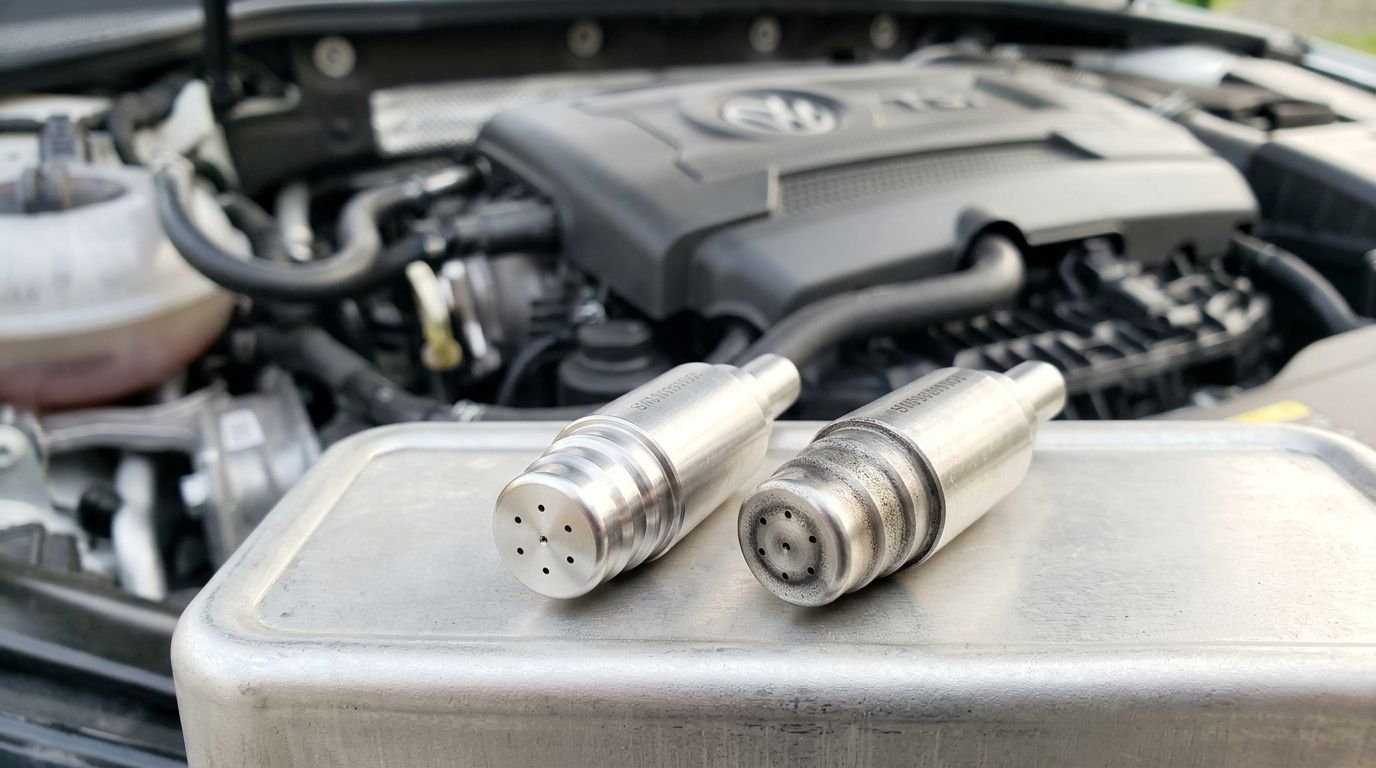
Two fuel injectors, one clean and one dirty, resting on a metal container in front of an engine.

What a cleaner is really doing

It's not a substitute for proper mechanical work. If you've got split hoses, ignition issues, worn components, or stale fuel, a bottle won't fix that. What it can do is help remove deposits from the parts it's designed to treat, which often sharpens up how the engine behaves.

One practical result stands out. Users report live fuel consumption at idle dropping from 0.7 L/H to 0.6 L/H after using Liqui Moly Injection Cleaner, which points to a measurable improvement in real-world efficiency, according to this user-reported fuel consumption example.

Where it makes sense

Situation Why a cleaner can help
Weekend VW that sits a lot Fuel system deposits can build while the car sees irregular use
Daily driver in traffic Repeated short runs can leave the engine feeling less crisp
Car with mild roughness Cleaning can be a sensible first move before deeper diagnosis

Practical rule: Use a fuel cleaner for deposits. Use a workshop diagnosis for faults. They aren't the same job.

That's why I see cleaner as part of maintenance, not as a rescue mission. If you're already looking after the rest of the car, pairing fuel system care with broader engine protection products like Liqui Moly Cera Tec for smoother running can make your maintenance routine a lot more rounded.

Picking the Right Potion for Your Volkswagen

Not every VW should get the same bottle. Many owners make a mistake in this regard. The cleaner has to match the engine and the problem, otherwise you're wasting time and sometimes chasing the wrong fault altogether.

For classic Beetles, Kombis, and many petrol Volkswagens, a petrol injection cleaner is the obvious lane. For diesel models, you need a diesel-specific product. Sounds simple, but the modern VW world adds a wrinkle with direct injection engines.
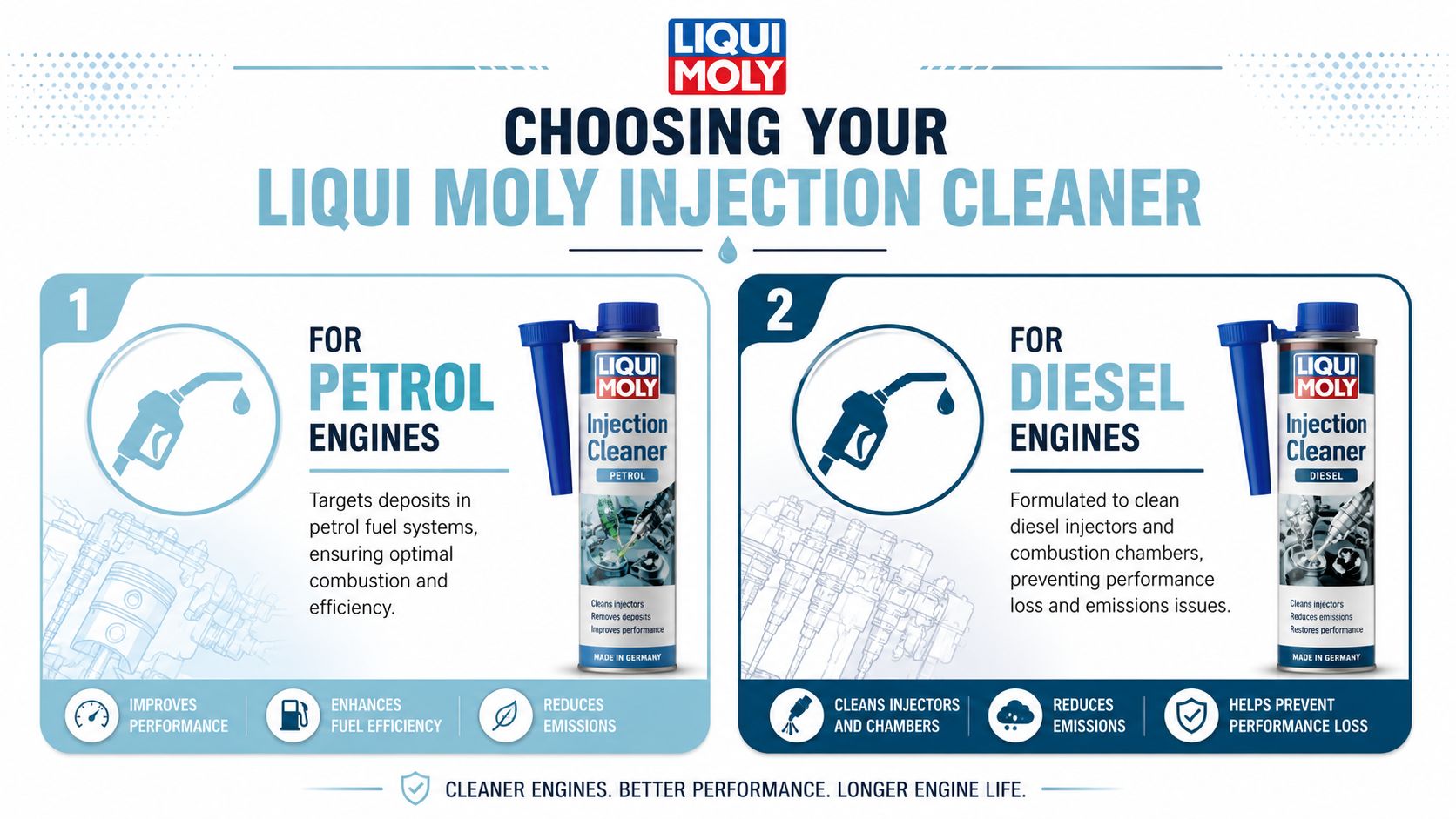
A comparison guide for Liqui Moly Injection Cleaner products, showing options for petrol and diesel engine fuel systems.

Petrol, diesel, and where people get caught

Here's the straightforward version.

  • Classic petrol VW
    Beetles, Kombis, and older petrol Volkswagens are the natural fit for a petrol injection cleaner.

  • Modern diesel VW
    Use the correct diesel treatment. Don't mix categories and hope for the best.

  • Modern direct injection petrol VW
    This particular aspect requires owners to slow down and read carefully.

A 2024 Australian automotive technician survey found that 68% of direct injection vehicle owners misdiagnosed fuel system issues due to using cleaners ineffective for direct injectors, which is a strong reminder to choose the right product for the right system, as mentioned in this Australian technician survey reference.

What it can do and what it can't

If you've got a VW with FSI or TSI hardware, don't assume every injection cleaner does every job in the system. A standard tank additive may help the parts it reaches, but it won't solve every direct injector issue. That's where a lot of frustration starts. The owner expects a full cure, the symptom stays, and then everyone blames the product.

If the engine is direct injection, check exactly what the cleaner reaches before you pour it in.

That kind of careful thinking is the same mindset you want when sourcing quality components and accessories for a VW build. If you're tracking down bits for maintenance or restoration, Volkswagen parts in Australia are worth choosing with the same care you'd give to fuel additives. Right tool, right engine, right result.

A Simple Weekend Guide to Using Injection Cleaner

This is one of the easiest jobs you can do in the driveway. No special tools, no dismantling, no greasy afternoon underneath the car. Just a bit of care and a decent drive afterwards.
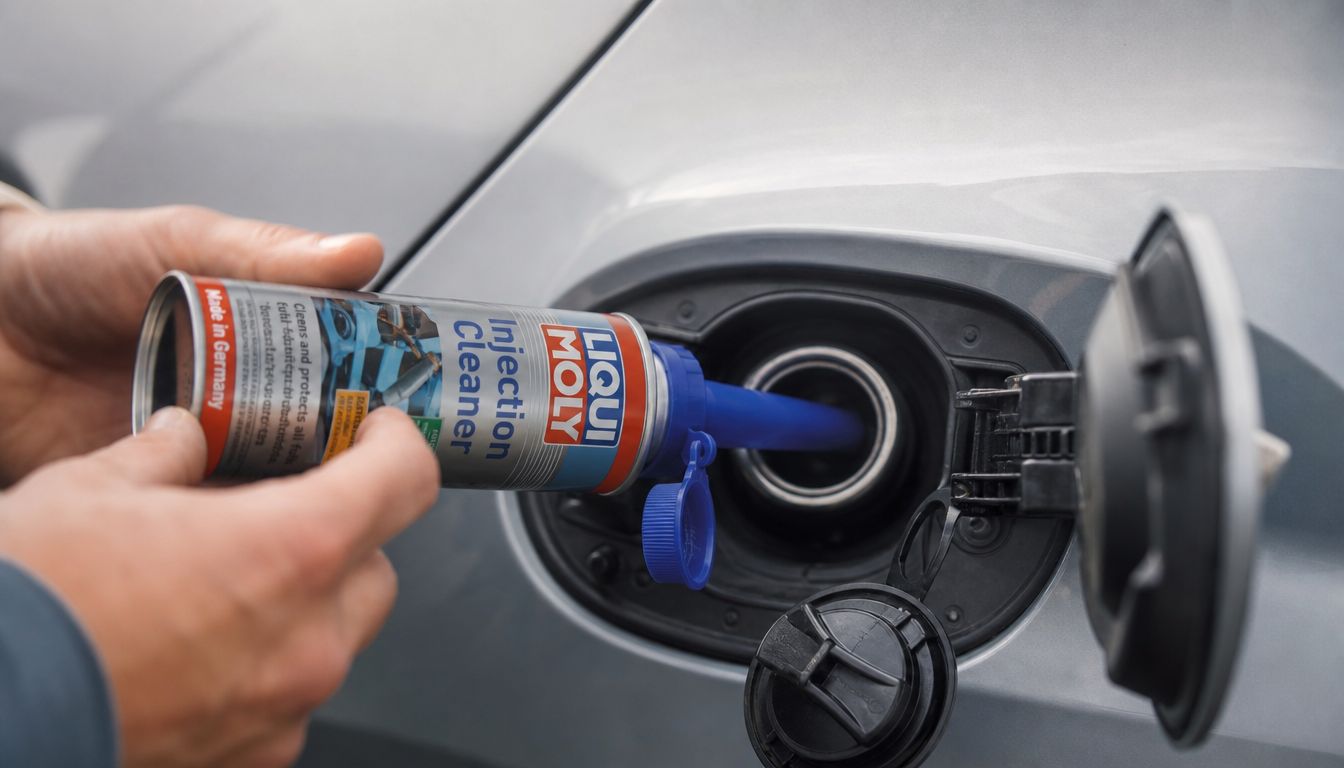
A person pouring Liqui Moly injection cleaner additive into a car's fuel tank filler neck.

Start with the fuel level

For Liqui Moly Petrol Injection Cleaner, product code 2786, the guidance is clear. The vehicle should have at least 30 litres of fuel before adding the 300 ml bottle, and the cleaning effect is stated to last up to 2,000 km, according to the product details for Liqui Moly Petrol Injection Cleaner 2786.

That fuel level matters because it helps the additive mix properly through the tank as you drive. Tip it into nearly empty fuel and you're not giving the product its best shot.

Pour it in cleanly

Use the whole bottle as directed for the tank volume it's intended to treat. Don't overthink it. Just make sure the filler area is clean, the cap area isn't full of grit, and you don't spill the stuff all over your paintwork.

A quick routine helps:

  • Park level: It makes pouring easier and less messy.
  • Check the label: Confirm you've got the petrol product for a petrol VW.
  • Add before a drive: Let the car circulate it properly instead of leaving it to sit for ages.

Then go for a proper run

Once it's in, the best thing you can do is drive the car. Not a tiny loop around the block. Give it a decent run so the cleaner gets the chance to move through the system under real operating conditions.

For a classic VW, that might mean a morning run along the coast or a country road stretch where the engine gets fully warm. For a modern VW, a solid mixed drive is usually better than endless stop-start suburb crawling straight after adding it.

Don't add injection cleaner and then leave the car parked all weekend. Let it work.

What to watch for afterwards

You're not looking for fireworks. You're watching for subtler improvements.

Sign after treatment What it may suggest
Smoother idle Deposits may have been affecting fuel delivery
Cleaner throttle response The engine is fuelling more evenly
Easier starting Mild fuel-system fouling may have eased

If you're doing the job on a Saturday arvo, there's every chance you'll end up browsing the Volkswagen shop collection afterwards while the kettle's on. That's part of the fun of VW life. A bit of tinkering, a bit of planning, and maybe the next road trip in the back of your mind.

Pro Tips for Long-Lasting Engine Health

The bottle gives you the basics. Real-world VW ownership in Australia adds a few wrinkles. Heat, short trips, traffic, long storage periods, and the way many enthusiast cars get used all change how long any cleaner's effect really feels.

One local factor matters more than most. Data from the Australian Automobile Association shows that 62% of Australian drivers operate in urban stop-start conditions, which can reduce the effective lifespan of fuel cleaners to under 1,200 km, rather than the longer interval claimed under more ideal driving, as noted in this AAA fuel system maintenance reference.
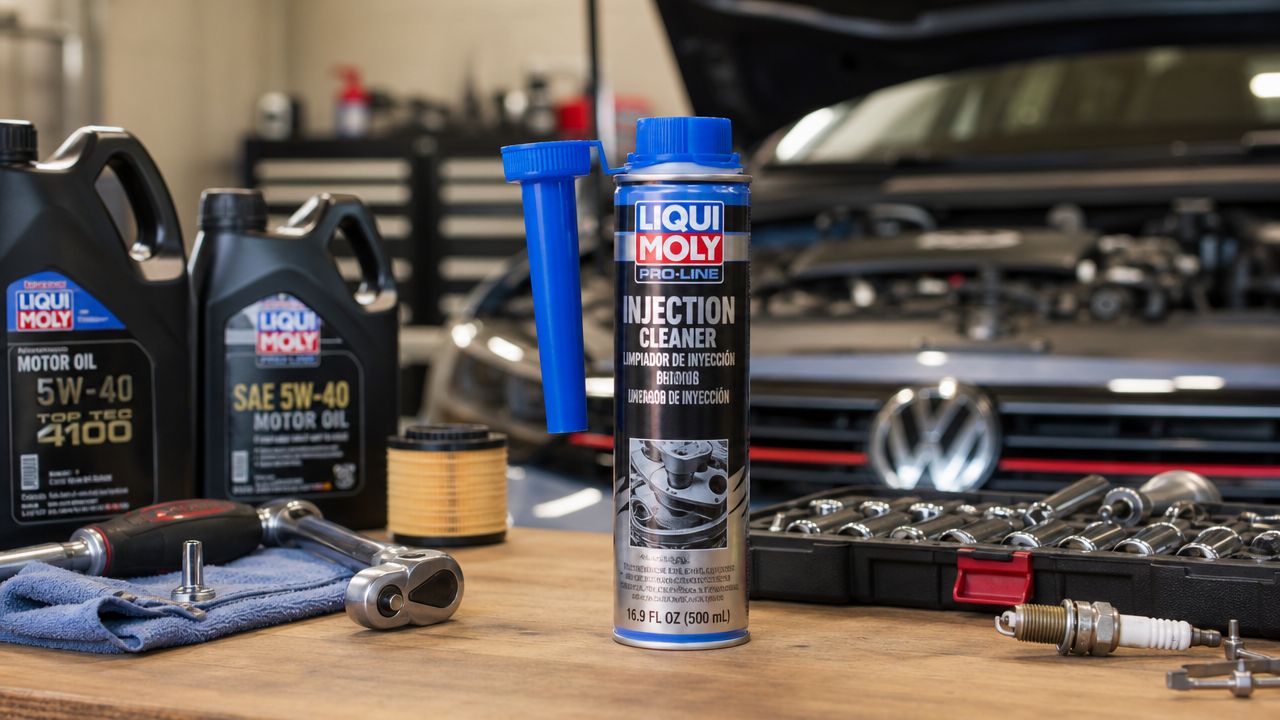
A Liqui Moly injection cleaner bottle stands on a wooden table with automotive repair tools and motor oil.

Match the cleaner to your driving

If your VW spends most of its life in traffic, school runs, quick coffee dashes, and short errands, don't assume the longest advertised duration will match your reality. Urban use is harder on the whole routine.

If your car gets long highway runs and regular exercise, the cleaner has a better chance to do its job under steadier conditions. That's why two owners can use the same product and come away with different impressions.

Habits that help

  • Add it before a decent drive: A cleaner works better when the engine gets fully warm and stays there.
  • Don't use it to avoid diagnosis: If there's a real fault, sort the fault.
  • Keep the rest of servicing current: Spark, timing, filters, and fuel quality still matter.

If you don't notice much

That doesn't always mean the product failed. It may mean deposits weren't the main issue. Vacuum leaks, tired ignition parts, stale fuel, old hoses, or carburettor and tuning problems can all mimic fuel system roughness in a classic VW.

For gift hunters who love the VW scene as much as the workshop side of it, VW-themed gifts for men can be a top shout when you want something with a bit of personality and heritage attached.

Your Top Questions Answered

Is Liqui Moly Injection Cleaner safe for an older VW?

Generally, for a petrol VW using the correct petrol product, it's intended for fuel system cleaning through the tank. The bigger issue with older cars is often the condition of hoses, seals, and the rest of the system. If those parts are tired, address them as part of normal maintenance.

Can I use it if my VW only gets weekend drives?

Yes, that's often when it makes the most sense. Cars that sit between outings can benefit from a cleaner, provided you follow it with a proper drive rather than letting the car continue to sit.

Will it fix rough running in every case?

No. If deposits are the cause, it may help. If the problem is ignition, vacuum leaks, poor tuning, or a mechanical fault, you'll need to fix that directly.

Is it suitable for direct injection VWs?

Be careful here. Some owners assume one cleaner handles every direct injection issue. It doesn't. Check exactly what the product is designed to clean on your engine type.

Can I combine it with other additives?

You can, but don't turn your fuel tank into a chemistry set. Add one product with a clear purpose, then judge the result properly.

What's the sensible mindset with this stuff?

Treat it like maintenance, not a miracle cure. For many VWs, that's exactly where it shines.


If you love the whole Volkswagen world, from keeping actual vehicles running sweetly to celebrating the shape and story on your shelf, have a look through Volkswagen Memorabilia. It's a ripper spot for VW memorabilia collectibles, Volkswagen diecast models for sale, and gift ideas with genuine VW charm, with local Australian stock and fast shipping that makes buying easier. Whether you're after a VW Kombi diecast Australia collectors will proudly display, a Volkswagen Beetle model for the study, or you're ready to buy diecast Kombi pieces that capture the spirit of the marque, the shop is packed with licensed favourites for enthusiasts who want a bit of VW magic at home.

G13 Coolant VW: Your 2026 Guide to G12 & Mixing Rules

You're probably here because you've popped the bonnet, stared at that coolant bottle, and thought, “Righto, is this G13 stuff the right one for my VW?” That's a fair question. Volkswagen coolant names can feel like a raffle ticket, especially when you've got a cherished Beetle, a tidy Golf, or a Kombi that means more to you than most modern cars ever could.

For a lot of Aussie VW owners, maintenance isn't just a chore. It's part of the relationship. You hear it in the engine note, feel it in the steering, and spot it in the little habits each car develops over time. That's true whether you're keeping a daily driver happy or preserving a weekend classic that turns heads at every servo stop.

The Heartbeat of Your Beloved VW

There's a certain feeling only a Volkswagen gives you. Windows down, sun out, the road unwinding ahead, and that familiar sense that the trip matters just as much as the destination. A Beetle does it. A Kombi absolutely does it. Even a newer VW still carries a bit of that same spirit.

A vintage blue and white Volkswagen bus driving along a scenic coastal road during a bright day.

Volkswagen's roots in Australia run deep. Volkswagen assembled Knocked Down kits of the Beetle in a factory located in Clayton, Victoria from 1954 until 1976, producing a unique Australian model known as the “Clayton” that used parts from both the Beetle and Kombi, as noted in this history note on the Clayton-built VW. That kind of local story is part of why so many of us feel connected to the badge.

Why coolant matters to the bigger story

Looking after your VW is part of preserving that heritage. Coolant might not be as glamorous as polished hubcaps or a two-tone paint job, but it keeps the engine stable when the weather turns fierce and traffic turns ugly. Get it right, and your car stays happy. Get it wrong, and small issues can snowball.

Workshop wisdom: The best-maintained VWs are usually owned by people who pay attention to the simple stuff before it becomes expensive stuff.

That same eye for detail is what draws people to old service records, model histories, and memorabilia. If you love the backstory as much as the drive, a genuine Volkswagen service book keepsake is the sort of thing that feels right at home next to your keys and garage shelf.

Real care beats guesswork

A lot of coolant trouble starts with guesswork. Someone tops up with “something close enough”, or follows a generic online tip that doesn't match their VW's actual spec. That's where understanding G13 coolant in a VW becomes more than a technical detail. It's just good ownership.

What Exactly Is This G13 Coolant

You're at the parts counter, the bottle says G13, it's violet, and suddenly a simple coolant top-up feels more fiddly than choosing the right hubcaps for a Beetle resto. Fair question. G13 is Volkswagen's own coolant specification, and the spec matters more than the colour on the label.

At its job, coolant does two things. It manages engine temperature, and it helps protect the inside of the cooling system from corrosion. In a VW, those jobs need to happen across a mix of metals, seals, hoses, and passages that were designed with a specific coolant chemistry in mind. That is why grabbing any pink or purple bottle off the shelf can turn into a costly guess.

What makes G13 different

G13 coolant became the VW standard for many later vehicles and is known for using glycerin in its formula. In plain English, it was developed as a newer alternative to earlier VW coolant types while still giving strong protection inside the cooling system.

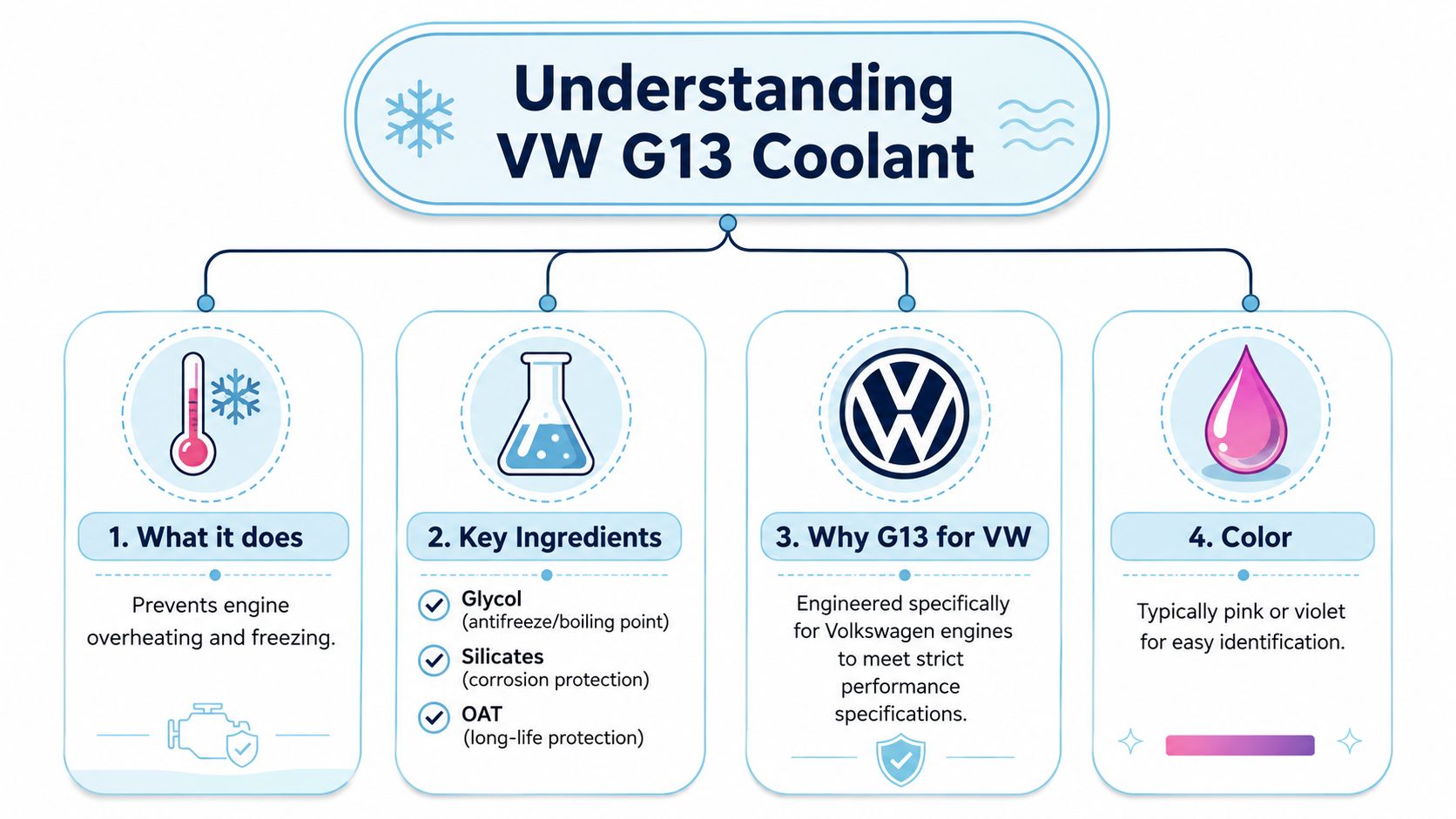
An infographic titled Understanding VW G13 Coolant explaining its function, ingredients, performance, and distinctive pink color.

You'll usually spot it by its violet colour, but colour is only a clue. The definitive sign is the approval on the bottle. If your VW calls for G13, look for VW TL 774-J on the container. That is the bit that tells you the coolant matches the factory spec, not just the marketing on the front label.

For owners who enjoy getting the right bits for their car, the same way you'd chase the correct badge or trim for a scale model shelf display, checking proper VW parts and coolant specs in Australia is part of doing the job properly.

Why VW specified it

G13 was designed to suit the materials used in many newer VW cooling systems, including lightweight alloys that need the right corrosion protection. That matters because modern Volkswagens pack a lot into a tight engine bay, and the cooling system has to stay clean and stable over time, especially in Aussie heat.

This is also where some owners of older favourites get caught out. A modern Golf, Passat, or Tiguan may require G13, while an older VW may have been built around a different coolant spec altogether. If you love the brand from full-size Kombis to diecast shelf pieces, this is one of those details that separates careful ownership from guesswork.

Where people get tripped up

The biggest trap is trusting the shade instead of the specification. Two bottles can look nearly identical and still use different chemistry.

A quick check keeps you out of strife:

  • Read the approval code on the bottle: Look for VW TL 774-J if your vehicle calls for G13.
  • Check your handbook or coolant reservoir label: VW usually tells you the required spec clearly.
  • Match the coolant to the car, not the bottle colour: Violet does not automatically mean correct.
  • Be extra careful with older VWs: Age, previous repairs, and past top-ups can leave a mixed history in the system.

G13 is a Volkswagen coolant specification, not just a purple liquid. Treat it like any proper VW part. The label and approval matter more than the look.

G13 vs The G12 Family A Simple Guide

Plenty of VW owners hit this point and hesitate. You spot G12, G12+, G12++, G13, and G12 EVO on the shelf, and a simple coolant buy suddenly feels like reading the fine print on a rare parts box at a swap meet.

The names sound like close cousins because they are from the same VW coolant family. The catch is that family members do not all get along once they are mixed in the same system.

The mixing rule that matters most

A common mistake for Australian owners is assuming G13 works with every older G12 version. It does not. This Champion Lubes note on G13 compatibility explains that G13 is backward compatible with G12++ but not compatible with G12+.

That single detail saves a lot of grief.

If you top up the wrong spec, you are not just taking a punt on colour or branding. You are mixing chemistries that may not protect the system the way VW intended. On an older car with an unknown service history, that is a bit like fitting the wrong gasket because it looked close enough in the packet. It might hold for a while, but you would not bet your favourite Kombi on it.

VW Coolant Compatibility Chart

Coolant Spec Colour Base Mix with G13?
G12 not specified here glycol-based older family Avoid
G12+ not specified here older G12 family No
G12++ not specified here later G12 family Yes
G13 violet glycerin-based same spec
G12 EVO not specified here newer alternative for some post-2020 models Check vehicle requirement before use

A plain-English way to read that chart

Here is the simple version. G12++ and G13 can generally live together. G12+ and G13 should not. If your car already has G13 in the expansion tank, do not assume any bottle with "G12" on it is close enough.

That is where owners of older Beetles, Golfs, and Kombis with mixed maintenance histories can get caught. A previous owner may have topped it up with whatever was handy, and now you are trying to decode years of shortcuts. If you are sorting parts as carefully as you curate your shelf of classic VW diecasts, the same rule applies here. Details matter. A helpful VW parts guide for Australian owners can make the broader maintenance side easier when labels and superseded part specs start getting messy.

What about G12 EVO

G12 EVO adds another wrinkle to the story. VW introduced it for some newer models, so owners around the later model-year transition can see conflicting advice if they rely on bottle names alone.

The safe approach is dead simple. Check the exact coolant spec listed for your model year and engine, then buy to that approval rather than the family name. That keeps your real VW running sweet, and it is the same mindset that makes collecting VW memorabilia fun too. The joy is in knowing the details, not guessing at them.

Signs Your VW Needs Some Coolant TLC

Your VW usually gives you a few hints before coolant trouble turns serious. The trick is noticing them early and not brushing them off as one of those “old car things”.

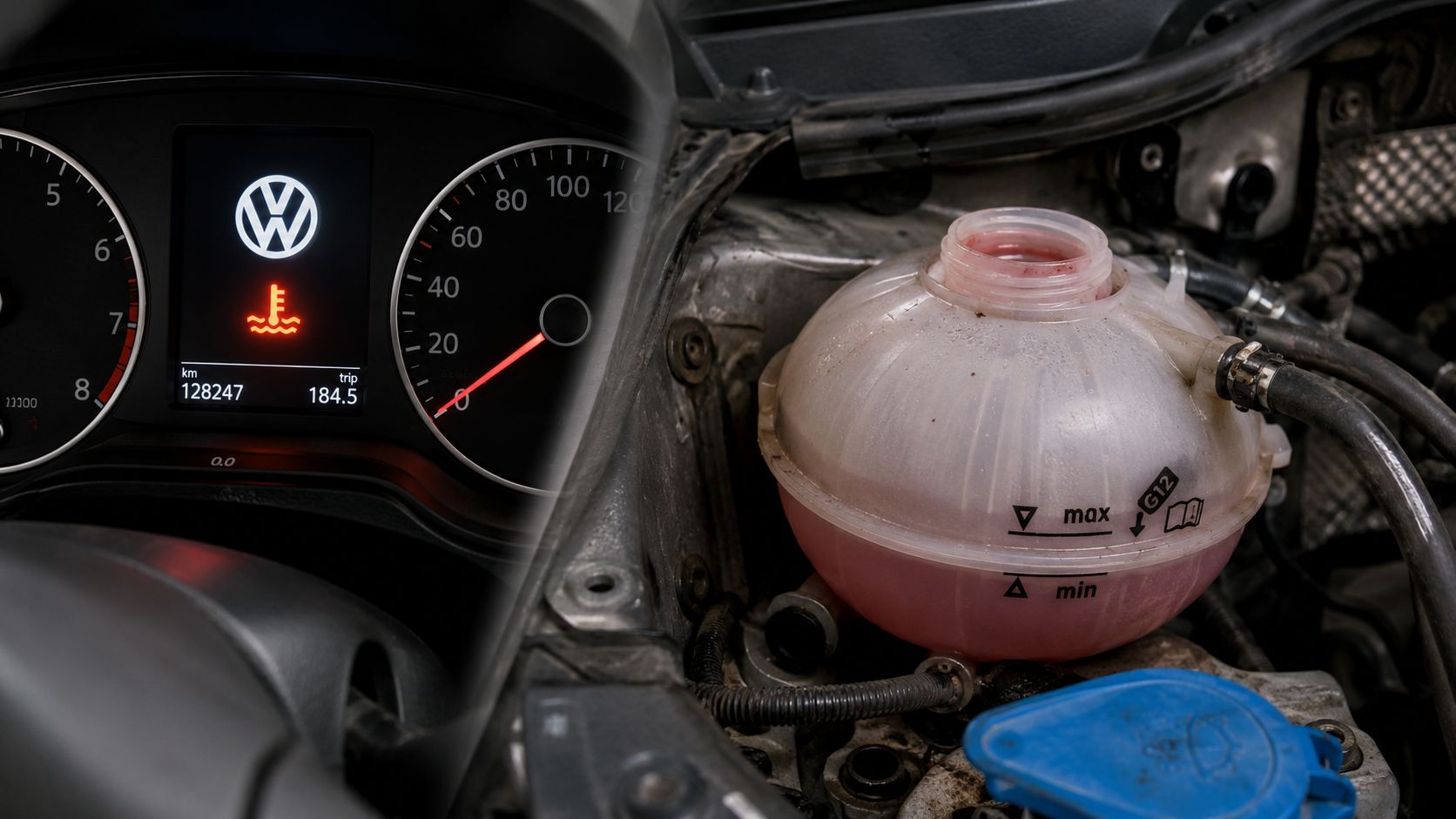
A car dashboard displaying a coolant temperature warning light next to a Volkswagen engine coolant reservoir tank.

What to watch for

A low coolant level in the reservoir is one of the clearest signs. If it's sitting near or below the MIN line when the engine is cold, it deserves attention. Murky or odd-looking coolant can also suggest the system needs a closer look.

Then there are the signs you notice after a drive:

  • Warning lights: The temperature light on the dash is your car asking for help.
  • Sweet smell: That can point to a coolant leak.
  • Puddles under the car: Especially if they appear regularly in the same spot.
  • Running hotter than usual: Even without a warning light, a change in behaviour matters.

A quick owner check

Pop the bonnet only when the engine is cold. Check the reservoir level and have a look at the colour and clarity. If anything seems off, don't just keep topping it up forever. Repeated loss usually means there's a leak or another issue behind it.

This short video gives a handy visual reference for what owners are usually checking around the reservoir and warning signs:

If your VW keeps asking for coolant, the job isn't to become faster at topping up. The job is finding out where it's going.

How to Safely Top Up or Change Your Coolant

You've just rolled back into the driveway after a Sunday run, the engine's ticking as it cools, and the reservoir level looks a touch low. That's the moment to slow down and do the job properly, not have a crack at it while everything is still hot and pressurised.

Coolant work is a bit like caring for a good diecast model on the shelf. Rush it, use the wrong stuff, or force parts that should be handled gently, and you can turn a simple tidy-up into damage you didn't need.

Safe top-up routine

For a basic top-up, patience is your best tool. Wait until the engine is completely cold. A hot cooling system can spit boiling coolant with enough force to ruin your day.

Then work through it in order:

  1. Park on level ground. That gives you an honest reading at the reservoir.
  2. Check the coolant spec on the bottle and your VW requirements. Colour alone is a dodgy guide.
  3. Look at the reservoir before adding anything. If the level is only slightly under the mark and the coolant still looks clean, a top-up is usually straightforward.
  4. Add the correct coolant slowly. Bring it back to the proper line, not above it.
  5. Refit the cap firmly. After that, monitor the level over the next few drives.

Keep it simple. If the level drops again soon after, the mission has changed from topping up to finding the cause.

When a full change makes more sense

A full coolant change is the smarter call when the fluid looks contaminated, the service history is a mystery, or someone has added the wrong type at some point. Hoping mixed coolant will sort itself out is a classic way to create more work later.

Draining and refilling sounds easy on paper, but VWs can trap air in the system if the refill process isn't done properly. Air pockets act like empty spots in the engine's cooling jacket. The coolant can't carry heat away evenly, and temperatures can climb in ways that catch owners off guard.

That's why plenty of enthusiasts are happy doing checks and top-ups at home, then hand the full flush to a workshop that knows Volkswagens well.

A good rule of thumb

Here's the practical split:

  • Low level, correct coolant, clean reservoir: A careful top-up is usually fine.
  • Unknown coolant already in the system: Identify it before adding anything.
  • Mixed or suspect coolant: Book a flush and refill.
  • Coolant keeps disappearing: Track down the leak first.

If you're in that maintenance headspace already, it can also be handy to read this fuel system cleaner guide for VW owners. Same idea, really. Small preventative jobs help keep an old favourite running sweet.

Know when to call in a specialist

There's real satisfaction in lifting the bonnet and doing the simple jobs yourself. That hands-on connection is part of VW ownership, especially if you're the sort of person who can talk Beetles, Golfs, and Kombis for hours at a showground coffee cart.

But no one gets extra points for guessing with coolant. If you're unsure about the spec, the refill method, or whether the system has been bled properly, get a trusted mechanic involved. A careful workshop bill beats cooking an engine, and it keeps your real VW ready for the road while the miniature one on the shelf keeps telling the same story at home.

Keep the Passion Alive On and Off the Road

You finish a coolant check on Saturday morning, wipe your hands, and hear that familiar VW tick as the engine settles. That little moment is part of the joy. Looking after a Volkswagen has always been more than basic maintenance. It is how owners keep the story going for the next cruise, club meet, or beach run.

That story has deep roots. The Kombi (Type 2) grew into a cultural icon during its later generations, and in Australia it became tied to surf trips, road adventures, and that easy-going VW spirit, as outlined in this history of the Volkswagen Kombi. You can still feel it at any showground. A tidy Kombi or Beetle rolls in, heads turn, and suddenly everyone has a memory to share.

Screenshot from https://vwmemorabilia.com.au/shop/1962-vw-kombi-samba-bus-diecast/

That is why the practical side and the nostalgic side fit together so well.

Keeping the right coolant in your real VW protects the engine that carries your family, your mates, and your memories. A well-made model on the shelf does something different. It keeps the shape, colour, and character of the marque close by when the car is tucked in the shed. One is workshop care. The other is a reminder of why you bothered learning any of this stuff in the first place.

Quick answers owners often ask

Can I mix G13 with G12+?
Best not to assume. Check your owner's manual or confirm the approved spec for your exact VW before mixing any coolant types.

Is G13 the same as any purple coolant?
No. Colour helps identify coolant, but the VW approval matters far more than what it looks like in the bottle.

Should every older VW switch to G13?
No. Older Volkswagens can have different material and system requirements, so it pays to match the coolant to the car, not the trend.

Is G13 still relevant for many Australian VWs?
Yes, for plenty of later-model Volkswagens. Your engine code, build year, and service information should always have the final say.

If you enjoy the hands-on side of VW ownership and the history that comes with it, a good diecast piece can scratch the same itch between drives. Have a look at Volkswagen Memorabilia if you fancy a Beetle, Kombi, or Samba Bus on the shelf to match the one in your heart.