

G'day mate! Let's have a yarn about a car that truly captured the hearts of Aussie drivers – the Volkswagen Golf Mk7. This wasn't just another hatchback; it was a game-changer. A car defined by its sharp German engineering, a surprisingly premium feel, and beautifully balanced performance. The Mk7 really set a new standard for small cars when it launched, and it's no surprise it's still a massive favourite among enthusiasts today.
The Volkswagen Golf Mk7 Arrives Down Under
Picture it: early 2013. The Aussie car scene was buzzing. A new player had just landed on our shores, and it wasn’t just another hatchback—it was a declaration of intent. The Volkswagen Golf Mk7 had finally arrived, carrying a mountain of hype and VW’s bold ambition to completely shake up the small car market.
This wasn't just a simple facelift of the much-loved Mk6. It was a complete, ground-up reinvention. Built on the then-brand-new MQB platform, the Mk7 promised to be lighter, stronger, and far more efficient. For Aussie VW fans, it felt like the future had landed. The car was sharper, more refined, and packed with tech you'd normally only realise was missing from your car after seeing it in a much pricier European sedan.
The excitement wasn't just bubbling up in enthusiast forums, either. Volkswagen Group Australia had massive plans, setting its sights on winning over thousands of new owners. This launch was more than just a car release; it was a cultural moment. It was a sign that top-tier German engineering was suddenly within reach for a lot more people.
Setting The Sales Pace
The initial demand was absolutely electric. Volkswagen Group Australia aimed high, setting a bold target to sell between 19,000 and 22,000 cars in its first year alone. The early sales figures proved this wasn't just wishful thinking.
An incredible 60% year-on-year surge was clocked in the first quarter, with 1,560 cars finding homes in January, 1,780 in February, and another 1,250 in March. This flying start was even more impressive considering some early supply chain issues from the main factory in Wolfsburg, which only made that first batch of Mk7s feel even more special.
Of course, the performance models were always going to be a huge part of the Mk7 story in Australia. Right from the get-go, the legendary GTI and the all-wheel-drive Golf R were expected to account for at least 15% of all sales. It just goes to show how much performance is baked into the Golf’s DNA and how much we Aussies love a proper hot hatch.
A Modern Classic Is Born
That initial wave of enthusiasm perfectly set the stage for the Mk7’s lasting legacy. It wasn't just a sales hit; it was a car that genuinely connected with people. It was stylish enough for the city grind, practical enough for a weekend getaway, and—in GTI or R trim—more than thrilling enough for a proper blast on a winding country road.
The arrival of the Mk7 wasn't just about a new model. It was about recapturing that promise of freedom and fun that defined the classic Beetles and Kombis before it. It perfectly fused that cherished heritage with modern-day performance.
This unique blend of practicality and passion is exactly what makes the Mk7 a modern classic. Even years on, it’s a car that still turns heads and rewards its driver every single time. It’s this specific moment in Aussie VW history that makes collecting memorabilia from this era so special. Owning a detailed diecast model of an early Golf Mk7, like the beautiful Volkswagen Beetle models we stock, is like holding a piece of that original excitement in your hands.
This design philosophy—practical, stylish, and fun—is a common thread in VW’s history. You can see a similar spirit in our tribute to the classic Volkswagen station wagon models.
Decoding The Mk7 Trims And Model Years
Alright, let's get down to the nitty-gritty. Choosing a Volkswagen Golf Mk7 comes down to understanding the different personalities in the lineup. Each model, from the base workhorse to the tech-loaded tourer, was built with a specific driver in mind. Getting to grips with the Australian range is the key to finding the perfect one for you.
The Mk7 family tree in Australia is quite diverse. Each branch offers that same core VW engineering excellence, just packaged slightly differently. It all starts with the humble, yet brilliant, entry-level models.
The Core Model Range
The range kicked off with the 90TSI base model, the entry point into Mk7 ownership from 2013 to 2017. This was the trusty, no-frills option. It gave you everything that made the Mk7 great—a superb chassis, a quality interior, and that solid VW feel—without the extra bells and whistles. A genuinely brilliant hatchback for the daily grind.
One step up was the 90TSI Comfortline. For many Aussie buyers, this trim was the sweet spot. It built on the base model's solid foundation by adding a welcome layer of creature comforts. Things like alloy wheels, dual-zone climate control, and nicer interior finishes made it a much more pleasant place to be day-to-day. It was the sensible all-rounder.
At the top of the standard range, you had the 103TSI Highline. This was the one for buyers who wanted a more premium, almost executive experience. It came loaded with more features, a punchier engine, and luxury touches like Alcantara seats and advanced driver aids. A practical hatch with a definite touch of class.
Volkswagen’s strategy for the Mk7 relied on this broad spread of trims to capture different buyers, from the budget-conscious to the luxury-focused.
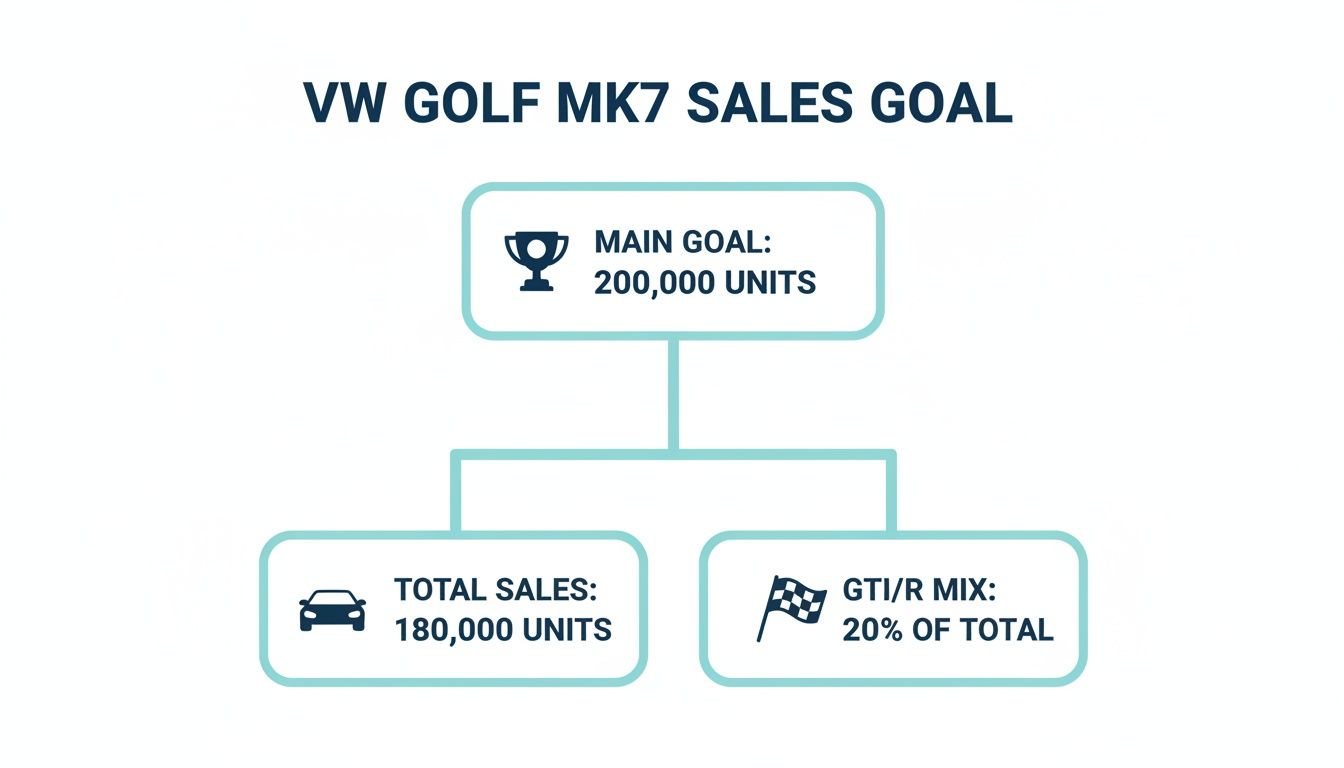
As you can see, VW's plan wasn't just about pure sales numbers. It was also about ensuring a healthy mix of higher-margin models, including the GTI and R, to make the whole program a success.
The Mk7.5 Facelift And Tech Upgrades
In mid-2017, Volkswagen rolled out the Mk7.5 facelift, a clever refresh for the whole lineup. The update was more about smart refinement than a complete overhaul. On the outside, the cars got sharper bumpers and modern LED lighting, but the biggest changes were found inside the cabin.
The key upgrades were:
- New Standard Engine: The old 90TSI and 103TSI engines were retired. In their place, a more powerful and efficient 110TSI engine became the standard for the Trendline, Comfortline, and Highline models.
- Upgraded Infotainment: The old systems made way for larger, glass-fronted touchscreens. Crucially, these new units came with Apple CarPlay and Android Auto as standard.
- Digital Dash: Higher-spec models, especially the Highline and the performance variants, could now be optioned with the fantastic Active Info Display. This fully digital instrument cluster made the old analogue dials feel instantly dated.
The Mk7.5 felt like Volkswagen had paid attention to owner feedback. They took an already great car and just made it better. The updated tech, especially the new infotainment and digital dash, was a huge draw that kept the Golf feeling fresh against its rivals.
To help you navigate the used market, this table breaks down the core Australian models available throughout the Mk7’s life cycle.
Volkswagen Golf Mk7 Australian Trim Comparison (2013-2020)
| Trim Level | Typical Engine | Key Features | Best For |
|---|---|---|---|
| 90TSI (Mk7) | 1.4L Turbo Petrol (90-92kW) | Basic essentials, quality build, excellent ride comfort. | The value-conscious buyer needing a reliable daily driver. |
| Comfortline (Mk7/7.5) | 90TSI / 110TSI | Alloy wheels, dual-zone climate, auto lights/wipers, rear-view camera. | The sensible buyer seeking the perfect balance of features and price. |
| Highline (Mk7/7.5) | 103TSI / 110TSI | Leather/Alcantara seats, satellite navigation, sunroof option, keyless entry. | The driver who wants premium features without the performance price tag. |
| Trendline (Mk7.5) | 1.4L Turbo Petrol (110kW) | Replaced the base 90TSI with a better engine and more standard kit. | The entry-point for the updated Mk7.5 range. |
This gives you a good starting point for figuring out which model ticks the right boxes for your needs and budget.
What’s Powering The Mk7?
Let's be honest, the true heart and soul of any great Volkswagen lies right there under the bonnet. For the Mk7 Golf, the range of engines on offer was nothing short of a masterclass in modern German engineering. It's time to get our hands a little greasy and chat about what really makes these brilliant little hatches tick. While it’s easy to admire the Mk7's sharp lines, understanding its powerplants is what truly connects you to the drive.
For most models, the story revolves around VW’s exceptional TSI petrol engines. Early on, we had the punchy 1.4-litre 90TSI and 92TSI units. These small-capacity turbo engines were a genuine revelation, giving you zippy performance that was perfect for darting through city streets, all while sipping fuel at a rate that could make a diesel owner look twice.
Then, when the Mk7.5 facelift rolled around, the standard engine got a brilliant upgrade to the even more refined 110TSI. This quickly became the default for the Trendline, Comfortline, and Highline models. It offered a noticeable boost in power and smoothness, cementing the Golf's reputation as a properly premium daily driver.
The Petrol Powerhouses
The real genius of the TSI engines is just how versatile they are. They’re quiet and incredibly frugal when you're just cruising along. But the moment you put your foot down, the turbo spools up and delivers a surprising shove of acceleration. It’s this fantastic dual personality that made them so loved by Aussie drivers.
- 92TSI: Found in the early base and Comfortline models, this little engine offered 92kW and a healthy 200Nm of torque. It was the perfect entry point, proving you didn't need a massive engine to have an engaging drive.
- 110TSI: As the star of the Mk7.5 update, this engine pushed power up to 110kW and torque to a very useful 250Nm. It felt more muscular right across the rev range, making highway overtaking effortless and city driving an absolute breeze.
For those of us doing big kilometres on country roads, VW also offered the TDI diesel engines. Famous for their immense low-down torque and incredible fuel efficiency on long hauls, they were a very sensible choice for long-distance commuters. While they weren't as popular as their petrol siblings, they offered a different flavour of performance—a relaxed, muscular surge that was deeply satisfying out on the open road.
The Legendary Performance Engines
Of course, no chat about Golf engines is complete without paying respect to the icons. This is where the real magic happens, where you can feel the engineering passion truly shining through.
The Mk7 GTI was powered by the now-legendary 2.0-litre turbocharged EA888 engine. This motor is a modern classic, celebrated for its incredible responsiveness, its willingness to rev, and its fantastic soundtrack. It delivered thrilling performance that was perfectly accessible for daily driving—a quality that has defined the GTI for decades. To see what makes this icon so special, you can explore our breakdown of the Golf GTI's impressive performance figures.
At the absolute peak of the mountain sat the Golf R. It took the GTI’s brilliant 2.0-litre engine and turned absolutely everything up to eleven, then paired it with a sophisticated 4MOTION all-wheel-drive system. The result was staggering, all-weather performance that could humble genuine sports cars.
It’s this deep dedication to engineering excellence, from the wonderfully efficient 110TSI all the way to the powerhouse in the Golf R, that makes the Mk7 so special. Appreciating this mechanical art is what drives us to collect memorabilia. A finely detailed diecast model of a GTI or a Golf R isn't just a toy; it’s a tribute to the incredible heart beating inside the real thing, much like the iconic VW Kombi Samba Bus diecast models that celebrate their own legendary engines.
Celebrating The GTI And Golf R Performance Icons
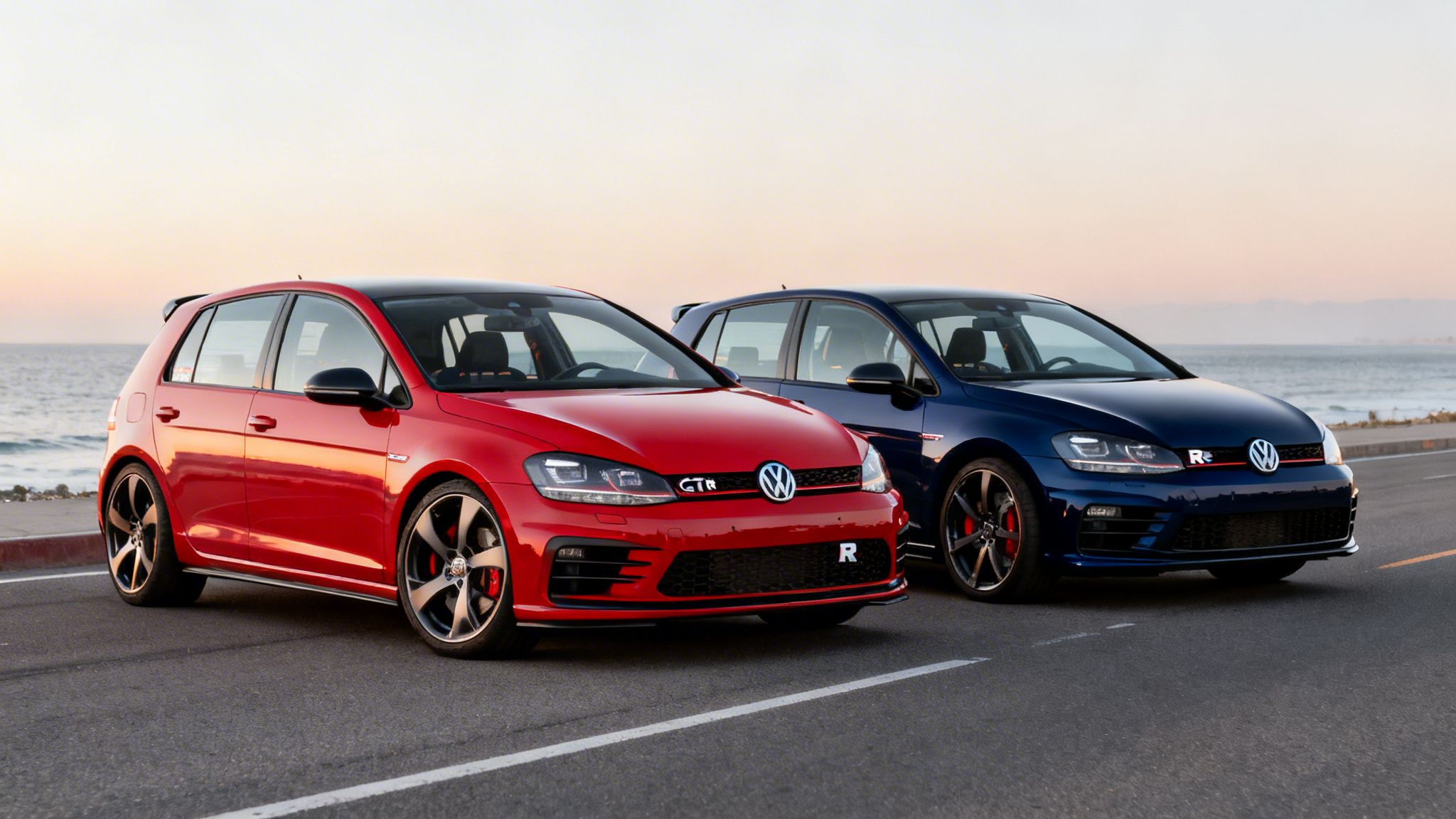
For so many of us VW fans, the story of any Golf generation really kicks off with two little acronyms: GTI and R. While the standard models are fantastic cars in their own right, these are the ones that get your pulse pounding. They’re the high-performance heroes of the Mk7 family, the cars that became instant legends on Aussie roads.
You can’t talk about hot hatches without talking about the GTI. The Mk7 wasn’t just a faster Golf; it was the ultimate all-rounder. It was the car you could happily potter around in all week and then, come the weekend, throw down a winding mountain road with a massive grin on your face. It perfectly nailed that “one car to do it all” philosophy.
Volkswagen took the already brilliant Mk7 chassis and dialled everything up to eleven. The steering felt sharper, the engine more eager, the whole experience just more alive. With its classic red pinstripe across the grille and those iconic tartan seats, it was a complete package that hinted at its performance without shouting about it.
The Golf R: An Everyday Supercar Killer
Then you have the other side of the performance coin: the mighty Golf R. If the GTI was the sharp, agile athlete, the Golf R was the undisputed heavyweight champion. It didn't just bend the hot hatch rules; it ripped them up, delivering performance that could genuinely embarrass supercars costing two or three times the price.
The secret sauce was its brilliant 4MOTION all-wheel-drive system. This gave the Golf R an almost physics-defying level of grip, letting it claw its way out of corners and launch from a standstill with an addictive ferocity. It turned the humble Golf into a true all-weather weapon, equally at home on a wet, slippery road as it was on a sun-baked racetrack.
The Golf R wasn't just fast for a hatchback—it was ferociously quick, full stop. It was the absolute pinnacle of the Mk7 platform, a showcase of Volkswagen’s engineering packed into a practical, five-door body.
The demand for these cars down under was simply off the charts. The Golf R, especially the Mk7 and 7.5, became a cult classic almost overnight. For years, supply couldn't come close to meeting the number of Aussies desperate to own one, creating long waitlists and a real sense of exclusivity. This scarcity just cemented its legendary status.
Capturing The Performance Legacy
Having a diecast model of a Mk7 GTI or Golf R on your shelf is more than just collecting. It’s a nod to this incredible era of performance. It’s a way to celebrate the cars that pushed the limits and captured the hearts of enthusiasts everywhere.
Whether you admire the GTI’s perfect balance or the R’s sheer, brutal dominance, these models represent the soul of the Mk7 performance story. And if you’re curious about where it all began, our look at the classic Golf GTI Mk6 is a great way to explore its celebrated history.
Keeping Your Mk7 Happy: A Real-World Guide
Right then, let's talk about keeping your Mk7 happy. Owning one of these is an absolute joy, but like any brilliant piece of German engineering, it needs a bit of understanding and care to truly shine. Think of it less as a list of chores and more like getting the inside scoop from a mate who’s spent years under the bonnet of these things.
This isn't about scaring you with a list of things that might go wrong. It’s the opposite. This is about empowerment. We're going to walk through the well-known quirks and common jobs, drawing on years of real-world feedback from owners and the mechanics who know these cars inside and out. A little bit of proactive TLC goes a long way to ensuring every drive is a good one.
Water Pump and Thermostat Housing
If you've spent any time on a VW forum, you've seen this one come up. A lot. The water pump and the thermostat housing it connects to are easily the most-discussed weak point on the whole platform. They’re often made of a polymer composite that, after thousands of heat cycles, can get brittle and decide it’s had enough.
The usual tell-tale sign is a slow coolant leak that you can’t quite pin down. You might catch a whiff of that distinct, sweet coolant smell after a spirited drive, or maybe you'll spot a small, colourful puddle under the front of the car. It's a known issue across the entire EA888 engine family, so you’re in good company.
What to look for:
- Keep an eye on your coolant reservoir. A quick glance every couple of weeks when the engine is cold is all it takes.
- If you spot a leak, don’t ignore it. Get it checked out by a specialist. A small weep can turn into a major headache if left alone.
- Smart money is on replacing the water pump and thermostat housing together. They live in the same spot, so doing both at once saves a heap on labour down the track.
Getting to Grips With the DSG Gearbox
That Direct-Shift Gearbox (DSG) is a masterpiece, isn’t it? The shifts are lightning-quick, and it’s fantastic for fuel economy. But it’s not a traditional automatic, and it needs a specific kind of love to stay healthy. The single most important thing you can do is stick to its service schedule religiously.
For most Mk7s with the wet-clutch DSG (that’s the DQ250 and DQ381 in the GTI and R), this means a full fluid and filter service every 60,000 kilometres. This is not optional. Seriously, skipping this service is the quickest way to turn a brilliant gearbox into a very expensive paperweight.
You might also notice some quirks at low speeds – a bit of a hesitation or a slight 'clunk' as it engages. That’s often just the nature of a dual-clutch system finding its feet. However, if you ever feel a serious shudder or the revs flaring without the car accelerating, get it looked at immediately.
Little Tech and Interior Gremlins
For a car packed with so much tech, the Mk7 is remarkably solid. But like any modern car, little electronic bugs and interior noises can pop up from time to time. These are rarely serious, but they're good to know about.
- Infotainment Glitches: Every now and then, the main screen might freeze up or go blank. Before you panic, try a simple reset—just press and hold the power button for about 10 seconds until the VW logo reappears. That fixes it 99% of the time.
- Rattles and Buzzes: Over time, you might notice a small rattle from a door card or a buzz from the dashboard trim on certain road surfaces. It's a common trait in many modern cars, and thankfully, they're usually easy to hunt down and silence with a little bit of felt tape.
To help you stay on top of things, here’s a quick-glance table for some of the most common checks and potential issues for Aussie owners.
Mk7 Maintenance Checklist and Common Issues
| Component | Potential Issue | Recommended Action / Check Interval |
|---|---|---|
| Water Pump / Thermostat | Coolant leaks (puddles, sweet smell) | Visual inspection every month. Replace if leaking. |
| DSG Gearbox | Shuddering, slipping, harsh shifts | Fluid & filter change every 60,000 km (for wet-clutch units). |
| PCV Valve | Rough idle, whistling noise, oil leaks | Inspect at each service. A common failure point on EA888 engines. |
| Carbon Buildup | Loss of power, poor fuel economy | On direct-injection engines. Consider walnut blasting every 80,000-100,000 km. |
| Infotainment System | Screen freezes or becomes unresponsive | Perform a soft reset (hold power button for 10 seconds). |
| Sunroof Drains | Water leaking into the cabin | Check and clear drains annually to prevent blockages. |
| Interior Trim | Minor rattles from dashboard or doors | Usually a simple DIY fix with felt tape. |
"The secret to a long and happy life with a Golf Mk7 isn't about worrying about what might break. It’s about respecting the engineering. Follow the service book, listen to what the car is telling you, and you'll be rewarded with one of the most rewarding drives on the road."
At the end of the day, don’t let this list put you off. The Mk7 Golf is a fundamentally tough and brilliantly put-together car. With an attentive owner and some basic preventative maintenance, it will deliver thousands upon thousands of kilometres of fun, reliable motoring. It’s earned its modern classic status for a reason.
How To Buy The Best Used Golf Mk7 In Australia
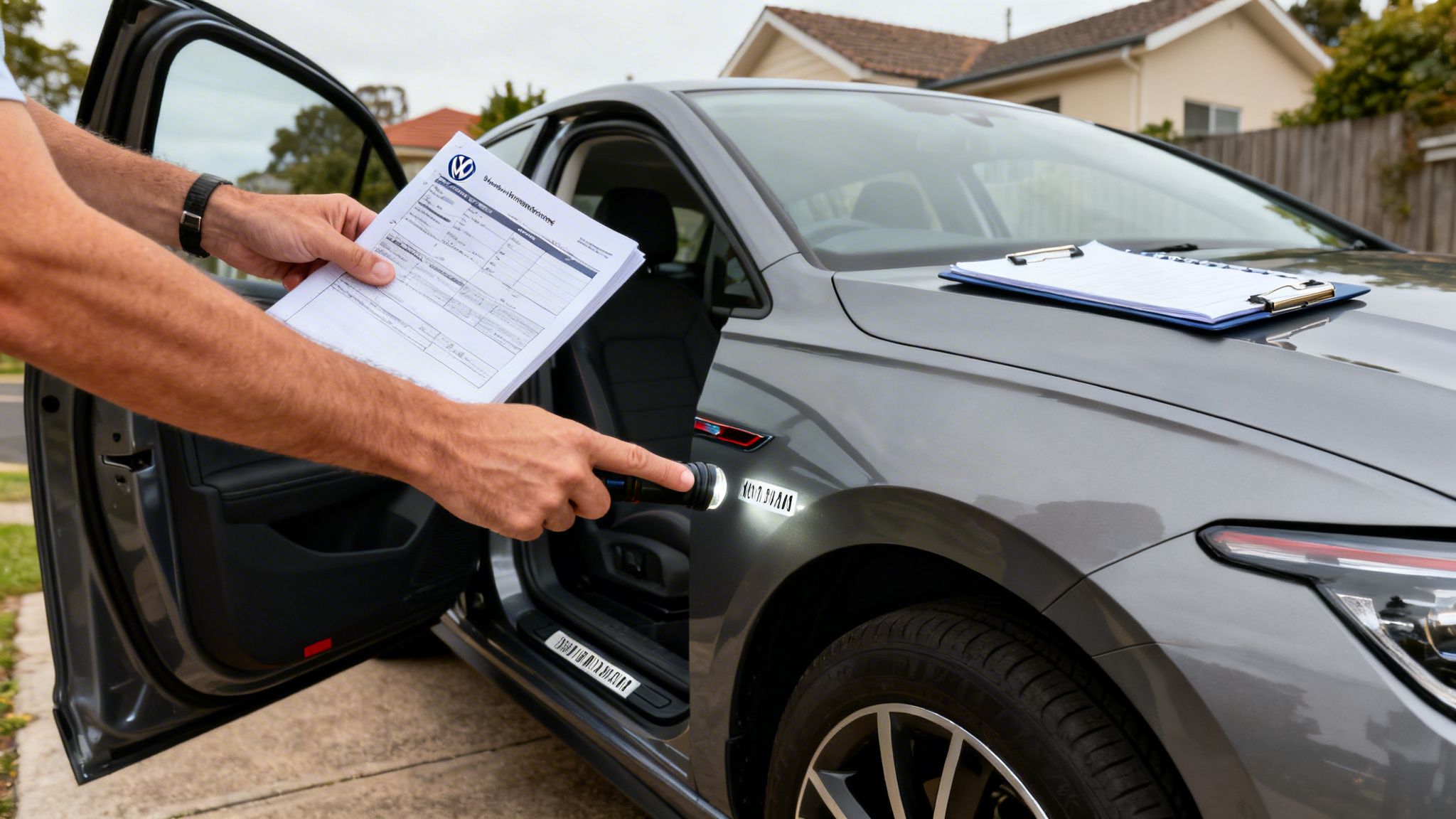
So, you've decided to pull the trigger on a Golf Mk7. Fantastic choice. Hunting for a clean example on the Aussie used market is half the fun, and with a little inside knowledge, you can land yourself an absolute pearler. Think of this as your pre-purchase checklist—a mate's guide to separating the gems from the duds.
First things first: the most crucial part of the car isn't under the bonnet, it's in the glovebox. A complete, stamped logbook is non-negotiable. You’re looking for consistent oil changes and, for DSG models, proof the gearbox was serviced every 60,000 kilometres. Honestly, this is the number one sign of a well-loved car.
Key Inspection Points
When you’re kicking the tyres, don't be shy. Get in there and have a proper look. Even if you're getting a professional pre-purchase inspection later (and you absolutely should), these quick checks will help you weed out the bad ones from the get-go.
- Check for Coolant Leaks: Pop the bonnet and scan around the coolant reservoir and under the engine. You're looking for any tell-tale pink or purple stains. The water pump and thermostat housing are known weak points, so even a hint of a leak gives you serious bargaining power.
- Test the Tech: Hop in the driver's seat and play with every button. Is the infotainment screen responsive? Does your phone pair with Bluetooth and Apple CarPlay/Android Auto without a fuss? Check the steering wheel controls, too.
- Listen for Noises: On the test drive, kill the radio and just listen. Tune your ears for any clunks from the suspension over bumps or weird whines from the engine bay. A healthy Golf should feel smooth and quiet.
Understanding Price and Value
What's a fair dinkum price? Here in Australia, a used Mk7’s value is a mix of its kilometres, model year, and trim level. It’s no surprise that a late-model Mk7.5 Highline with low kms will fetch a higher price than an early, high-mileage 90TSI.
There's a reason the Golf Mk7 holds its value so well. The timeless design, premium-feeling interior, and brilliant driving dynamics keep it in high demand, even as buyers flock to SUVs. It’s a testament to a car that just gets it right.
Even with the SUV craze, the Golf has shown incredible staying power. Data on Australian Volkswagen Golf Mk7 sales highlights its enduring appeal, bucking trends that have seen other passenger cars fall away. You can dig into more insights on the Golf's performance in the Aussie market over at goauto.com.au.
Ultimately, buying a used Golf Mk7 comes down to finding a car that’s been looked after. Prioritise that flawless service history above all else, get a professional to sign off on it, and you’ll be rewarded with one of the best all-rounders ever built. And once it's proudly parked in your driveway, you can celebrate by adding a perfect little Volkswagen diecast model to your desk—a mini tribute to your new pride and joy.
Your Golf Mk7 Questions Answered
The Volkswagen Golf Mk7 is a modern legend, and over the years we've heard just about every question you can think of at car shows and club meets. We’ve pulled together some of the most common ones to give you clear, straightforward answers for your own VW journey.
Is The Volkswagen Golf Mk7 A Reliable Car?
Yes, it certainly can be. A well-maintained Mk7 is a genuinely reliable car. Like any German-engineered machine, though, you can't skip the servicing. Sticking to the recommended schedule is the key to a happy ownership experience.
The well-known weak spots, like the water pump or the DSG mechatronics, are all thoroughly documented. A car with a solid service history will almost certainly have had these checked or sorted out already. It’s a tough platform that really shines when it's looked after.
What Is The Difference Between The Golf Mk7 And Mk7.5?
The Mk7.5 is the facelifted version of the Mk7 that landed in Australia around mid-2017. The changes were mostly about bringing the tech and styling up to date. From the outside, you’ll spot the Mk7.5 by its sharper front and rear bumpers and the sleeker, more advanced LED lights.
The real difference is inside. The Mk7.5 got a much bigger and better ‘Discover Pro’ infotainment screen, plus the option of the brilliant Active Info Display (the digital cockpit). The engine in the base model also got a nice bump, going from the 92TSI to the punchier 110TSI.
Which Mk7 Model Is The Best To Buy?
Honestly, the 'best' Mk7 really comes down to what you want to do with it. If you need a brilliant all-rounder, a Mk7.5 110TSI in Highline trim gives you an awesome mix of modern tech, performance, and fuel economy. For those chasing pure, unadulterated performance, the all-wheel-drive Golf R is the undisputed king of the lineup.
For that perfect sweet spot of daily driving fun and iconic hot hatch character, though, the GTI is a timeless choice that never fails to satisfy. No matter what, always put a car with a perfect service history at the very top of your list.
Whichever model you land on, you’re getting a fantastic piece of Volkswagen history.
Once you've found the perfect Golf, why not celebrate your new ride with something from Volkswagen Memorabilia? As a proud Aussie importer, we have local stock ready for fast shipping. Our shop is stocked with high-quality, officially licensed diecast models that perfectly capture the spirit of your favourite VW. Take a look at our collection of Volkswagen diecast models for sale and find the ideal tribute for your desk or garage.