A faded orange Kombi rolled past me near the coast one summer morning, boards on the roof and that familiar flat-four chatter in the background. Half the crowd turned their heads, and the other half smiled like they’d just remembered an old mate.
That’s the charm of Volkswagen model cars. A small Beetle on a shelf or a tiny Samba Bus in a cabinet can carry the same feeling as the actual vehicle: road trips, surf checks, family photos, first cars, and the sort of design you recognise from a mile away.
Holding a Piece of History in Your Hands
At a local show, you’ll often see it happen. Someone leans over a display table, spots a little pastel Kombi or a tidy Beetle in diecast, and suddenly they’re telling a story. It might be about learning to drive in Mum’s Bug, or chasing summer in a van that smelt faintly of salt, vinyl, and hot engine tin.
That’s why collecting volkswagen model cars feels different from collecting just any miniature. These aren’t only objects. They’re memory triggers.
The shelf that starts the yarns
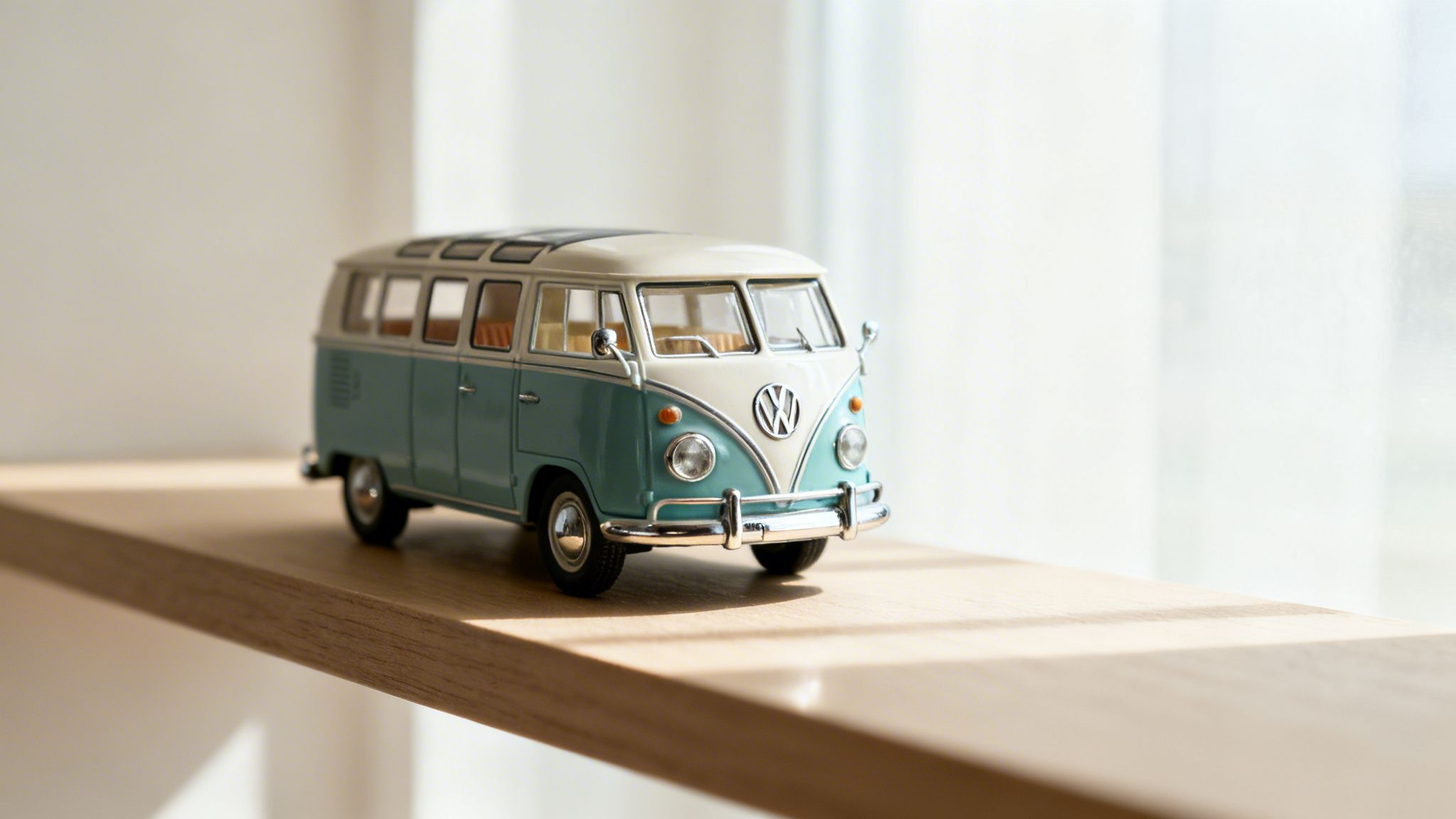
A fellow enthusiast once showed me a small lounge room display with three VWs lined up on a timber shelf. A cream Beetle. A bright Kombi. A later Golf tucked in beside them. Nothing fancy, just clean lines, good light, and enough space around each piece to let the shapes breathe.
Every model had a reason for being there.
- The Beetle reminded him of his dad’s old runabout.
- The Kombi stood in for years of beach holidays.
- The Golf marked the car he drove when life got busier, but the VW habit never left.
That’s the appeal. A collection doesn’t have to be huge to matter. One well-chosen model can say more than a packed shelf full of random pieces.
Collector’s truth: the best model in your cabinet is usually the one tied to a real memory.
Why miniatures hit so hard
Volkswagen design has always had a knack for sticking in your mind. The rounded Beetle roofline, the cheerful face of a split-screen van, the tidy confidence of a GTI. In miniature form, those details become even more lovable because you can hold them, turn them in the light, and notice things you’d walk past on a full-size car.
That’s part of the fun for Australian collectors. We don’t just admire the car. We place it in our own story. A diecast Beetle can evoke a country drive. A Kombi can turn a shelf into a tiny reminder of freedom, sun, and sand.
More than a hobby
Some people start with a gift. Others buy one model after seeing a real car at a meet. Before long, they’re looking for a matching colour, a favourite era, or the van they wish they’d never sold.
The hobby grows naturally because it feels personal. You’re not chasing numbers for the sake of it. You’re building a small, visible history of what these cars mean to you.
And if you’re the sort of person who slows down for an old VW rumbling through town, you already understand the appeal. A miniature lets you keep that feeling close, long after the show field empties and everyone heads home.
The Magic in Miniature Understanding Volkswagen Model Cars
If you’re new to collecting, the first thing to know is simple. Not all model cars are built the same, and that’s a good thing. Some are made to be centrepiece display items. Others are perfect for a bookshelf, desk, or a growing line-up of favourites.
The sweet spot is finding the size and finish that suits the way you want to collect.
Getting your head around scale
Scale tells you how much smaller the model is than the actual vehicle. Once you’ve seen a few side by side, it clicks quickly.
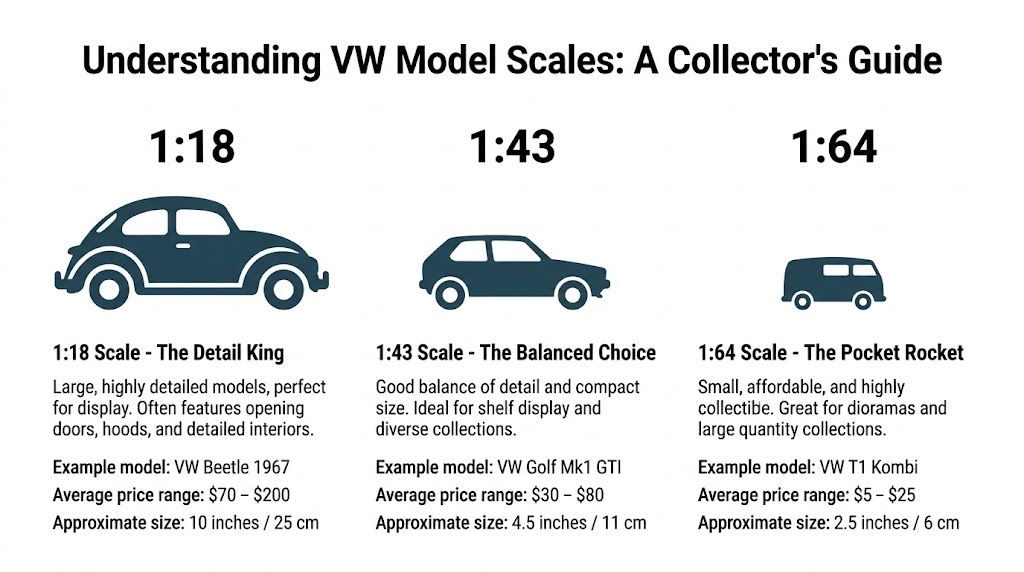
A handy way to think about common sizes:
| Scale | What it feels like | Best for |
|---|---|---|
| 1:18 | Big enough to show off on its own | Statement display pieces |
| 1:43 | Compact, but still detailed | Shelves, cabinets, varied collections |
| 1:64 | Small and easy to group | Dioramas, desk displays, mixed themes |
The infographic above gives a useful visual guide to 1:18, 1:43, and 1:64, including example VW models, approximate size, and typical price ranges.
Choosing the scale that suits your style
Some collectors love a larger piece they can inspect up close. A 1:18 Beetle often has the presence of a proper display object. It suits a study, living room shelf, or a cabinet where the curves and chrome can catch the light.
Others prefer variety. A 1:43 collection lets you line up different eras of Volkswagen without needing a whole wall of space. You can place a Beetle beside a Kombi, a Golf, and something more unusual without the display feeling crowded.
Then there’s 1:64, the playful scale. These are brilliant if you enjoy building little scenes, arranging beachy displays, or collecting lots of Volkswagens without overthinking it.
Small scale doesn’t mean small charm. Some of the happiest collections I’ve seen were built from modest little models grouped with care.
Diecast metal, plastic, and why finish matters
When people talk about diecast, they usually mean a model with a metal body. That gives the car a satisfying weight in the hand and often a more premium feel on display. Plastic parts still play a role, especially in mirrors, interiors, underbody details, and trim.
What matters most isn’t just the material. It’s the execution.
Look for:
- Clean paintwork with even colour and tidy edges
- Crisp trim detail around lights, windows, and badges
- Proportions that feel right when you view the model from the front and side
- Neat wheels and tyres that suit the era of the vehicle
A lovely model doesn’t have to be the biggest or the flashiest. It just has to capture the character of the actual car.
Why official licensing matters
For Volkswagen fans, officially licensed products are worth seeking out. They tend to honour the shape, branding, and visual details that made the original car special. That’s important when you’re collecting a Beetle or Kombi that means something to you personally.
A licensed model usually gives you more confidence in the basics:
- Body shape accuracy
- Authentic badging
- Era-correct styling cues
- A finish that feels considered rather than generic
That’s especially important if you’re buying a gift. Even a casual VW lover can spot when a model captures the spirit of the actual vehicle, and when it misses by a mile.
Legends of the Road The History of Our Favourite VWs
At a swap meet by the coast a few summers back, an old bloke in a faded Sunraysia cap picked up a tiny cream-and-blue Kombi, turned it over in his palm, and laughed. He said it looked exactly like the van his mates packed with boards and sleeping bags for a run up the New South Wales coast in 1974. A minute later, another collector wandered over, spotted a red Beetle on the same table, and started telling a story about learning to drive in one outside Newcastle.
That is how these little Volkswagens work. They stir up real roads, real holidays, real people.
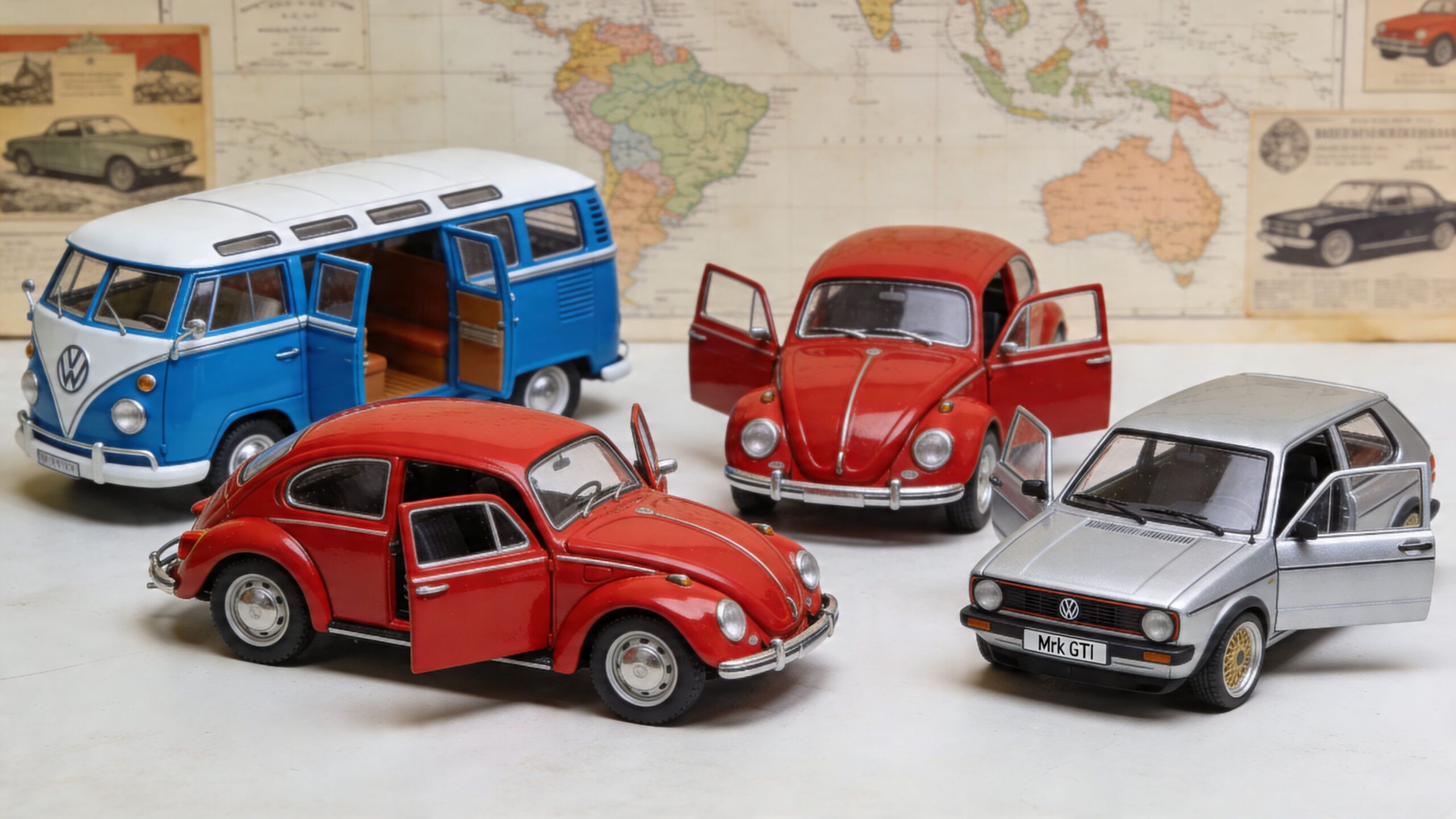
The Beetle that settled into Australian life
The Beetle, or Type 1, began in Germany before the Second World War and grew into one of the best-known cars ever built. Its simple rear-engined layout, rounded body, and stubborn reliability suited Australian conditions beautifully, from city errands to long country drives, as outlined in the Volkswagen marque history.
In Australia, the Beetle stopped being just an import and became part of the scenery. It turned up in family photos, outside weatherboard shops, at beachside caravan parks, and under gum trees with picnic rugs spread nearby. That familiar presence explains why collectors still reach for Beetle models first. The car already lives in memory before it ever lands in a display cabinet.
Why Beetles still look right in miniature
Some cars lose their charm when they shrink. The Beetle does the opposite.
Its curved roofline, upright guards, and friendly face hold together at almost any scale, so even a modest diecast can carry the character of the original. In a coastal home, a pastel Beetle looks easy and natural beside pale timber, woven textures, old travel postcards, or a shelf of shells and holiday snapshots. It has that sun-warmed, lived-in feel that suits Australian beach-house styling without trying too hard.
Collectors often favour 1960s Beetles for this reason. They bring back surf culture, simple family motoring, and the cheerful practicality that made the Bug feel welcome almost anywhere.
The Kombi that promised a better weekend
If the Beetle belonged to everyday life, the Kombi belonged to escape. It was the van parked near the dunes, the one with sandy thongs by the door and a kettle rattling in the back. Around Australia’s coast, it became tied to camping trips, market runs, road journeys, and that lovely sense that the day could stretch out a bit longer.
That warmth carries straight into miniature. A well-made Kombi model does more than mark a chapter in motoring history. It brings a whole scene with it.
One of the nicest examples is the travel-inspired van style that recalls long beach drives and holiday miles. The VW travel van collectible style suits that mood beautifully, especially if you are styling a shelf in a breezy coastal room or adding character to a holiday house nook.
Later, the Kombi took on a bigger role in popular culture. Music festivals, surf towns, handmade curtains, road maps folded in the glovebox. Those associations matter to collectors because they make even a small diecast feel full of life.
The overlooked heroes that deserve a spot
The Beetle and Kombi get the applause, and fair enough, but some of the most interesting Volkswagen model cars are the ones collectors overlook at first glance.
The Samba Bus is one. Those extra windows and two-tone paint schemes give it real presence on display, especially near framed beach prints or stacked vintage motoring books. A Type 3 can be another quiet favourite, particularly for collectors who like the less obvious corners of VW history. Even a later Golf can tell an honest family story in a collection where the brand spans generations instead of stopping in the air-cooled years.
These models add texture. They stop a display from feeling predictable.
Why the backstory changes the way you collect
A Beetle model means more when you know it mirrors a car that once sat in thousands of Australian driveways. A Kombi means more when you can almost hear the esky sliding across the floor and smell salt on the breeze. The story behind the model gives the object its weight.
That is also what makes Volkswagen model cars so enjoyable to style at home. You are not just lining up tiny vehicles. You are building a little memory wall. A soft blue Kombi on a white shelf can echo the coast. A bright Beetle tucked beside an old holiday photo can make the whole corner feel personal.
If you want a little moving backdrop while you browse the history and shapes of these classics, this clip fits the mood nicely.
A few classics that keep turning up in collections
Certain themes appear again and again, usually because they connect to a real memory or suit the way people live with their models at home.
The first-love Beetle
Chosen because it matches a family car, a first set of driving lessons, or the Bug someone always promised themselves.The beach-run Kombi
A natural fit for coastal homes, holiday cottages, or shelves styled with a relaxed Australian seaside feel.The Samba showpiece
Picked for colour, shape, and sheer presence. It often becomes the model visitors notice first.The unexpected later VW
A Golf or another newer model that rounds out the family story and gives the collection a broader timeline.
The best collections usually start with a grin. Then they gather history, one little Volkswagen at a time.
Starting Your Collection How to Buy Diecast VW Models
Buying your first diecast VW can be simple, but it helps to know what separates a keeper from a quick impulse buy. The easiest approach is to slow down and inspect the model the way you’d inspect a real classic. Stand back first. Then move in close.
If the shape feels right immediately, you’re usually onto something good.
Start with the body and paint
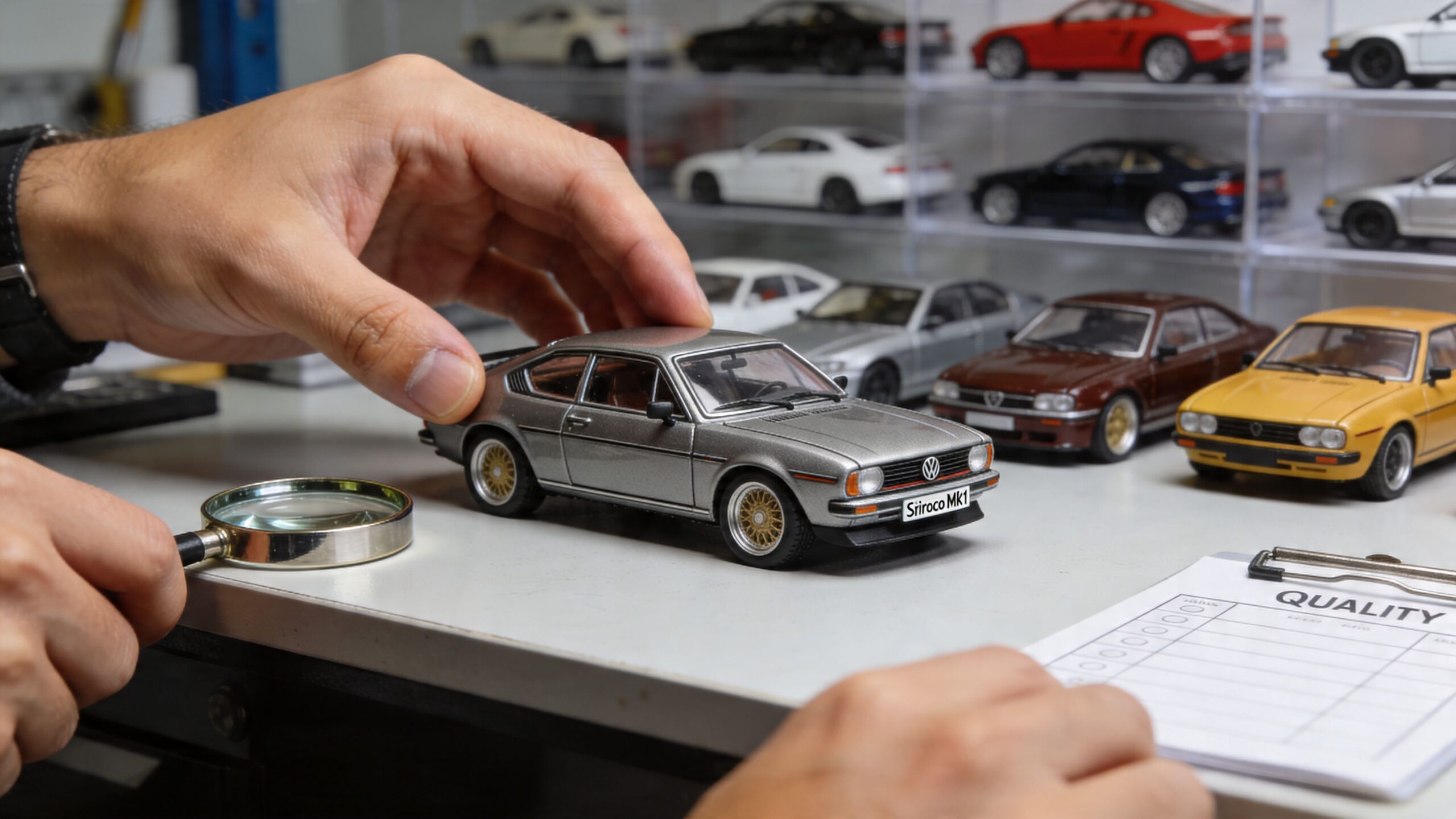
The paint tells you plenty. On a quality model, colour should look even across the panels, and trim lines should appear sharp rather than fuzzy. Two-tone Kombis are especially good at exposing sloppy work, so they’re a useful test case.
Check these points first:
- Panel finish should look smooth under natural light
- Window trim should sit cleanly against the body
- Badges and lights should appear centred and tidy
- Wheel stance should look natural, not crooked or toy-like
A Beetle can forgive a lot because the shape is so charming, but poor paint or awkward wheels will still pull you out of the illusion.
Then look at the details that create character
A good diecast doesn’t need every opening panel to be enjoyable, but details do matter. Mirrors, steering wheel shape, dashboard layout, seat pattern, and even the way the bumpers sit can tell you whether the maker really cared.
Some collectors love opening doors, bonnets, or boots because they add a sense of interaction. Others prefer sealed models with cleaner lines. Neither camp is wrong. It comes down to what you enjoy seeing on display.
One category that often appeals to collectors who like modern performance VWs is the Golf GTI Mk6 diecast range. It’s a good example of how later models can still carry strong personality in miniature.
Practical rule: buy the model you’ll want to look at often, not the one that only sounds impressive on paper.
A simple buyer’s checklist
When you’re comparing Volkswagen diecast models for sale, use this quick guide:
| What to inspect | What you want to see | Why it matters |
|---|---|---|
| Shape | Strong proportions and correct stance | Captures the real car’s personality |
| Paint | Even colour and neat separation lines | Makes the model feel premium |
| Interior | Visible steering wheel, seats, dash detail | Adds realism up close |
| Wheels | Era-appropriate style and tidy fitment | Avoids the toy-like look |
| Licensing | Officially licensed branding | Improves authenticity |
Why buying locally suits Australian collectors
For Australians, local stock has practical advantages. You can browse with more confidence, avoid the headache of waiting on overseas delivery, and skip the worry of surprise import issues turning a simple purchase into a drawn-out nuisance.
It also helps when you’re buying a gift and need it within a reasonable timeframe. A local retailer can make the whole experience feel less risky and more enjoyable, especially if you want support from someone who understands the VW scene here.
Buy with a theme in mind
Collections feel stronger when they have a thread running through them. That theme could be anything:
- Your family VW history
- Classic coastal vans
- A shelf of Beetles through the decades
- Hot hatches and GTIs
- Only blue-and-white models for a beach-house palette
That last point matters more than people think. If you’re styling a home as well as building a collection, colour and mood are part of the decision. A model that suits your space will get admired far more often than one tucked away in a box.
Beyond the Beetle Exploring Rare and Unique VWs
Every VW crowd has that moment when someone mentions a model you hardly ever see in the wild. Heads tilt. Phones come out. The conversation shifts from familiar classics to the oddballs and holy grails.
That’s where collecting gets even more interesting.
The Brazilian gems many Australians never meet
Among the most fascinating rare Volkswagens are the Brazil-exclusive cars that lived outside the usual Beetle-and-Kombi spotlight. The SP2 is a beauty of that world. Low, sporty, and distinctly different, it looks like the sort of car that should’ve become globally famous, yet it remained wonderfully obscure.
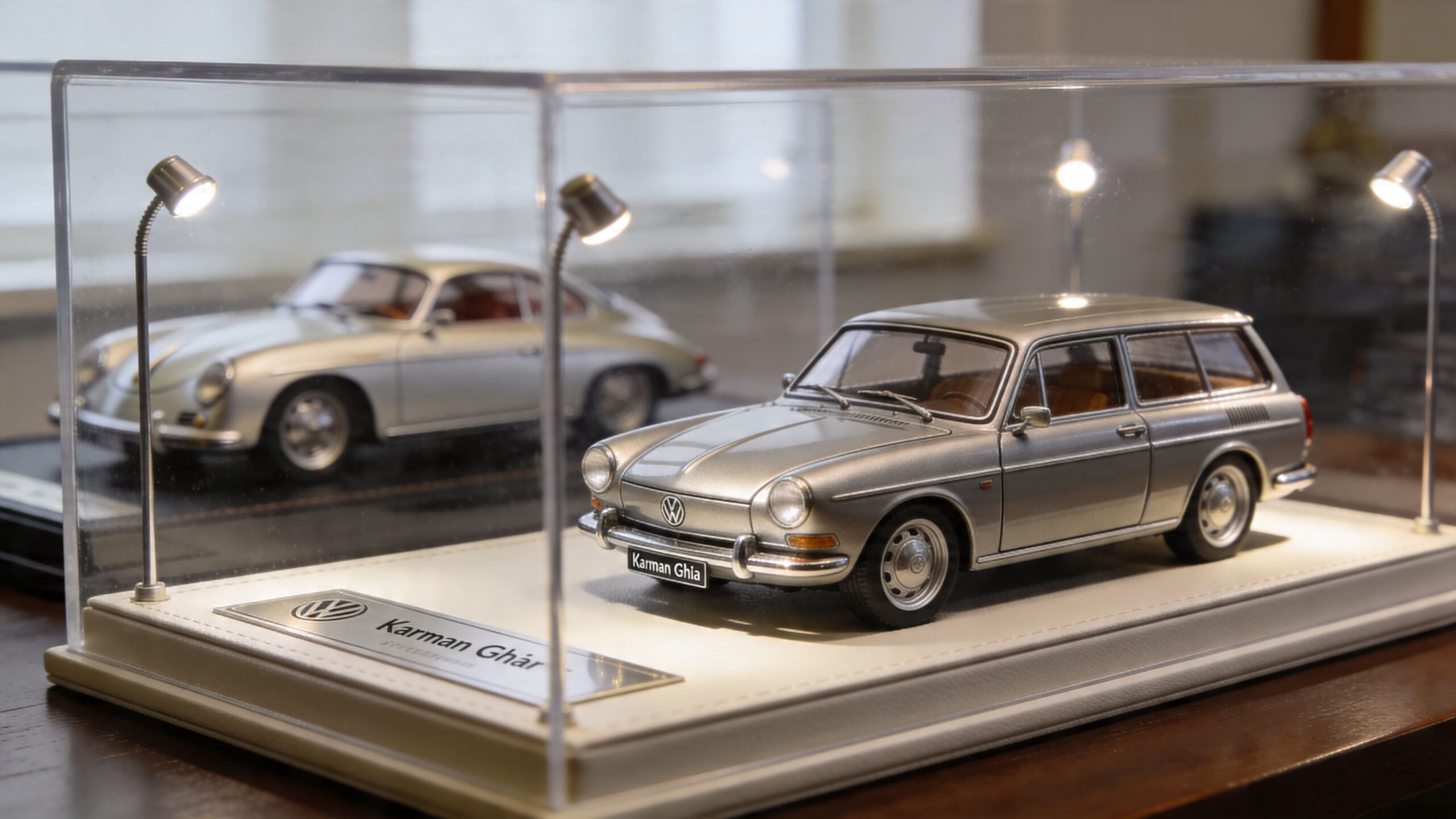
For Australian collectors, that scarcity adds to the intrigue. A noted gap remains in local content around these rare imports, particularly the SP2, and fewer than 1,000 are believed to survive globally, which helps explain why enthusiasts are so drawn to high-quality replicas of these overlooked classics, according to this look at rare Volkswagen models such as the SP2.
Why rare models make brilliant diecasts
Most of us won’t stumble across an SP2 at the shops or see a Brasilia parked at the local servo. That’s exactly why a model version has such appeal. It puts a hard-to-find chapter of Volkswagen history right in front of you.
Rare-model collecting has its own flavour:
- It sparks conversation because not everyone recognises the car straight away
- It widens your collection beyond the obvious fan favourites
- It lets you celebrate design variety within the VW family
A rare diecast can also stop a display from becoming too predictable. A row of Beetles is lovely. A Beetle beside a Kombi and an SP2 is a story.
The lesser-known Volkswagens often become the pieces seasoned collectors talk about longest.
Building personality into a collection
The smartest collections usually mix familiarity with surprise. You want one or two models that everyone loves instantly, then one that makes people lean in and ask, “What’s that?”
That’s the role of the unusual VW. It gives your shelf a twist.
If you’re shopping with that idea in mind, keep an eye out for:
- Regional oddities that weren’t common in Australia
- Body styles outside the usual lineup
- Colours and trims that show a different side of VW design
- Models with a real backstory, even if the average person hasn’t heard of them
That little element of discovery is one of the great pleasures of collecting. You’re not only preserving the icons. You’re rescuing the side stories too.
The Curator's Corner Caring For and Styling Your Collection
A Volkswagen model looks best when it feels considered. Not hidden, not cluttered, and not left to fade in a harsh patch of sun. A well-kept collection has a calmness to it. You can tell the owner enjoys the cars, but also respects them.
That matters whether you own one Samba Bus or a whole shelf of Beetles.
Keeping your models tidy and bright
Dust is the quiet enemy of diecast displays. It settles into window rubbers, wheel spokes, roof gutters, and all the little places that make a model look crisp when they’re clean.
A simple care routine goes a long way:
- Use a soft brush for regular dusting, especially around mirrors and trim
- Handle with clean hands so paint and clear parts stay looking fresh
- Avoid direct sunlight because long exposure can dull colour over time
- Store boxes carefully if you like keeping original packaging for future display changes
If a model has delicate pieces, resist the urge to over-handle it. A shelf favourite can still be enjoyed without being picked up every afternoon.
For collectors who want to improve how they maintain and present special pieces, guides focused on collectible care and vintage home accessories are useful for thinking beyond the purchase itself.
Styling volkswagen model cars in a coastal Australian home
The hobby finds its particular enjoyment. Volkswagen shapes suit coastal interiors beautifully because they already carry a relaxed, outdoor spirit. A Kombi naturally belongs near pale timber, white walls, ocean tones, and anything with a breezy holiday feel.
You don’t need a dedicated display room either. A few thoughtful placements can make the collection feel part of the home rather than separate from it.
Try these ideas:
Shelf vignette
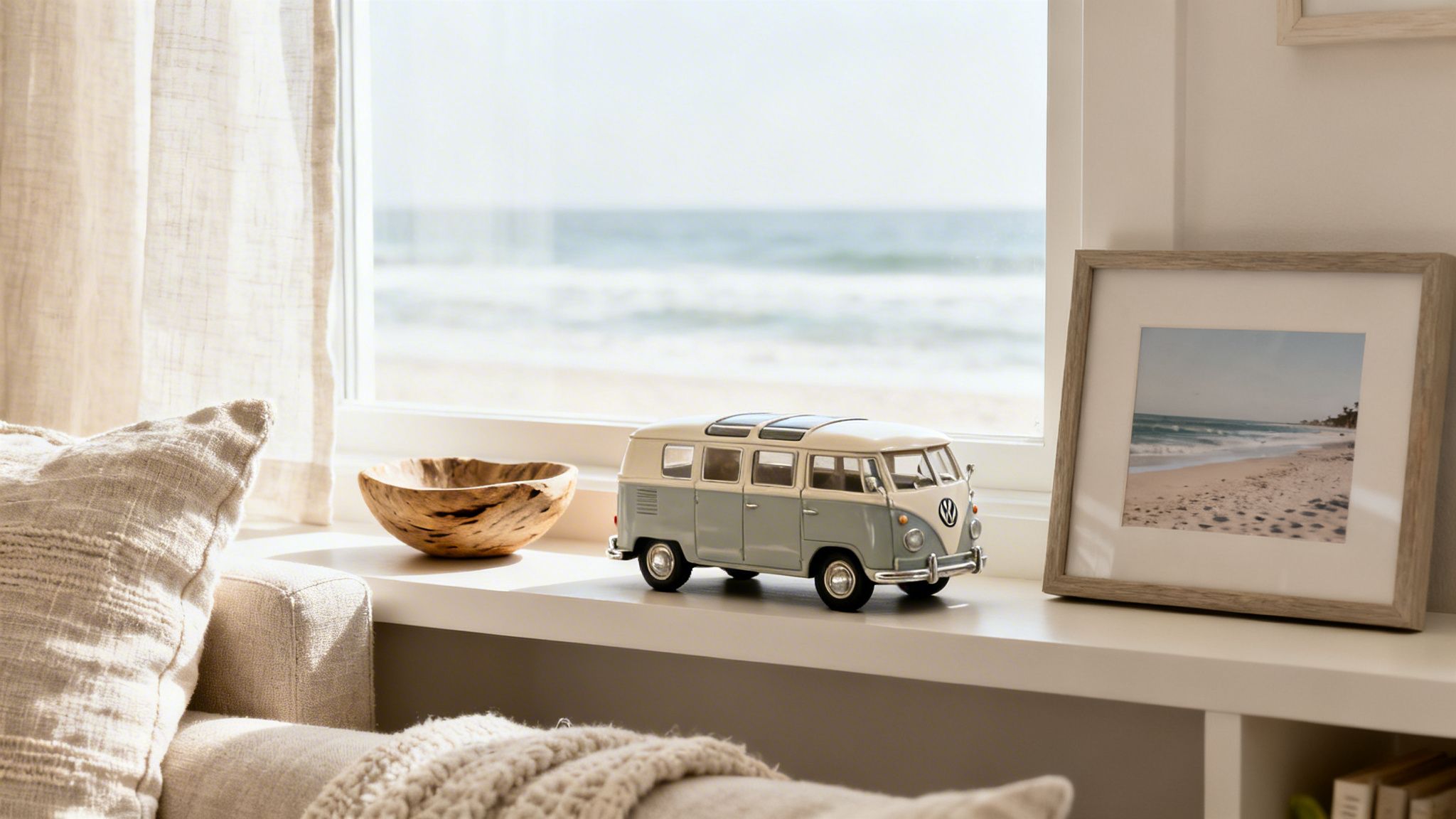
Place a blue or white Kombi beside driftwood, a framed beach photo, and a small stack of travel books.Console accent
Use a classic Beetle on an entry console to add warmth to a neat Hamptons-style space.Cabinet grouping
Gather three smaller VWs in similar tones for a more organised, gallery-like effect.Study desk character
A GTI or later-model Volkswagen can bring a touch of personality to a clean workspace.
Matching model type to room mood
Different VWs give off different energy. That’s worth using to your advantage.
| Model type | Display mood | Best setting |
|---|---|---|
| Classic Beetle | Friendly, nostalgic, soft-edged | Living room, study, hallway |
| Kombi or Samba | Relaxed, beachy, adventurous | Coastal shelves, holiday homes |
| Golf or GTI | Crisp, sporty, modern | Office, den, minimalist spaces |
| Rare VW | Curated, conversational, distinctive | Glass cabinet, feature shelf |
Less clutter, more story
A common mistake is trying to show every piece at once. The better approach is to give your favourites breathing room. One Kombi beside a shell, a book, and a framed print will usually look stronger than six cars packed wheel-to-wheel.
Rotate models seasonally if you like. Bring the surfy vans forward in summer. Give the Beetles centre stage when you want a softer vintage feel. That kind of movement keeps the display alive.
A collection becomes décor when each model has space to tell its own story.
Let the collection reflect you
The most memorable displays aren’t the most expensive ones. They’re the ones that reveal a person’s taste. Maybe you love white-and-blue coastal pieces. Maybe your thing is bright flower-power vans. Maybe every car on the shelf has to connect to a chapter of your life.
That’s what turns a collection into curation. You’re not merely storing miniature cars. You’re shaping a corner of home around memory, design, and the easy-going spirit that made Volkswagen culture so beloved in the first place.
The Perfect Present Finding a Gift for a VW Lover
A Volkswagen model car makes a good gift because it feels personal without being overcomplicated. Even if the person already has a shed, a project car, or a shelf full of automotive bits and pieces, a well-chosen VW miniature still lands nicely.
The trick is matching the model to the person, not just the badge.
Gift ideas by personality
For the practical gift buyer, this is usually the easiest way to decide.
For the hands-on restorer
Choose a model that resembles the car they own, owned, or are forever talking about finishing one day. Familiar body shape matters more than flashy packaging.For the surfie or beach-house dreamer
A Kombi or Samba Bus suits the mood perfectly. It feels relaxed, cheerful, and very at home among coastal décor.For the nostalgia seeker
Go for a classic Beetle. It’s the model most likely to trigger stories straight away.For the performance fan
A Golf GTI or another sportier Volkswagen gives the gift a sharper edge.
Gifts that feel a bit more thoughtful
Sometimes the best present isn’t the biggest model. It’s the one that shows you noticed the recipient’s taste.
A few reliable approaches:
- Match their colour palette if they’re into home styling as much as cars
- Pick a model with display presence if they already have a dedicated shelf or office space
- Choose a rare or unusual VW if they know the classics and enjoy something less expected
If you’re buying for someone just starting out, a small mixed selection can work nicely because it gives them a sense of variety from the start. If they’re already a serious collector, a more detailed centrepiece model often feels more special.
When in doubt, choose the car with the story
People remember gifts that connect to a real memory. The Beetle their parents drove. The Kombi they always wanted to road-trip in. The GTI they reckon was peak hot hatch.
That’s why buy diecast Kombi and Volkswagen Beetle model searches are so common among gift buyers. They’re not only looking for a miniature car. They’re looking for recognition.
A well-picked VW model says, “I know what you love.” That’s why it works.
Start Your VW Journey Today
A single VW model can change the feel of a room.
A turquoise Kombi on a white shelf brings a bit of Bondi into a study. A weathered-look Beetle beside a stack of surf books can turn an ordinary corner table into something that feels personal, sun-warmed, and lived in. For collectors, that first piece often starts there. With a car that suits the home as much as the heart.
If you’re ready to find that Beetle, Kombi, Samba Bus, or gift-worthy VW piece that brings the memories flooding back, have a browse through Volkswagen Memorabilia. It’s a local Australian shop focused on VW-themed diecast, gifts, and coastal-inspired décor, with local stock and fast shipping that make collecting a whole lot easier.