

You've got the pale sofa, a bit of rattan, perhaps a weathered timber coffee table, and one stubborn blank wall that still looks like the removalists only left yesterday. A generic shell print might fill it, but it won't say much about you. Beach wall art for a living room can do better when it brings together two proper Australian loves, the coast and classic Volkswagens.
A well-chosen Kombi or Beetle scene adds the relaxed feeling of a coastal drive, a surf check before work, or a sunny car show where everyone has a story about their old VW. The trick is keeping the room breezy rather than turning it into a souvenir shop. Choose one strong memory, give it room to breathe, and let the car carry the personality.
Why Beach-Style VW Art Nails That Coastal Vibe
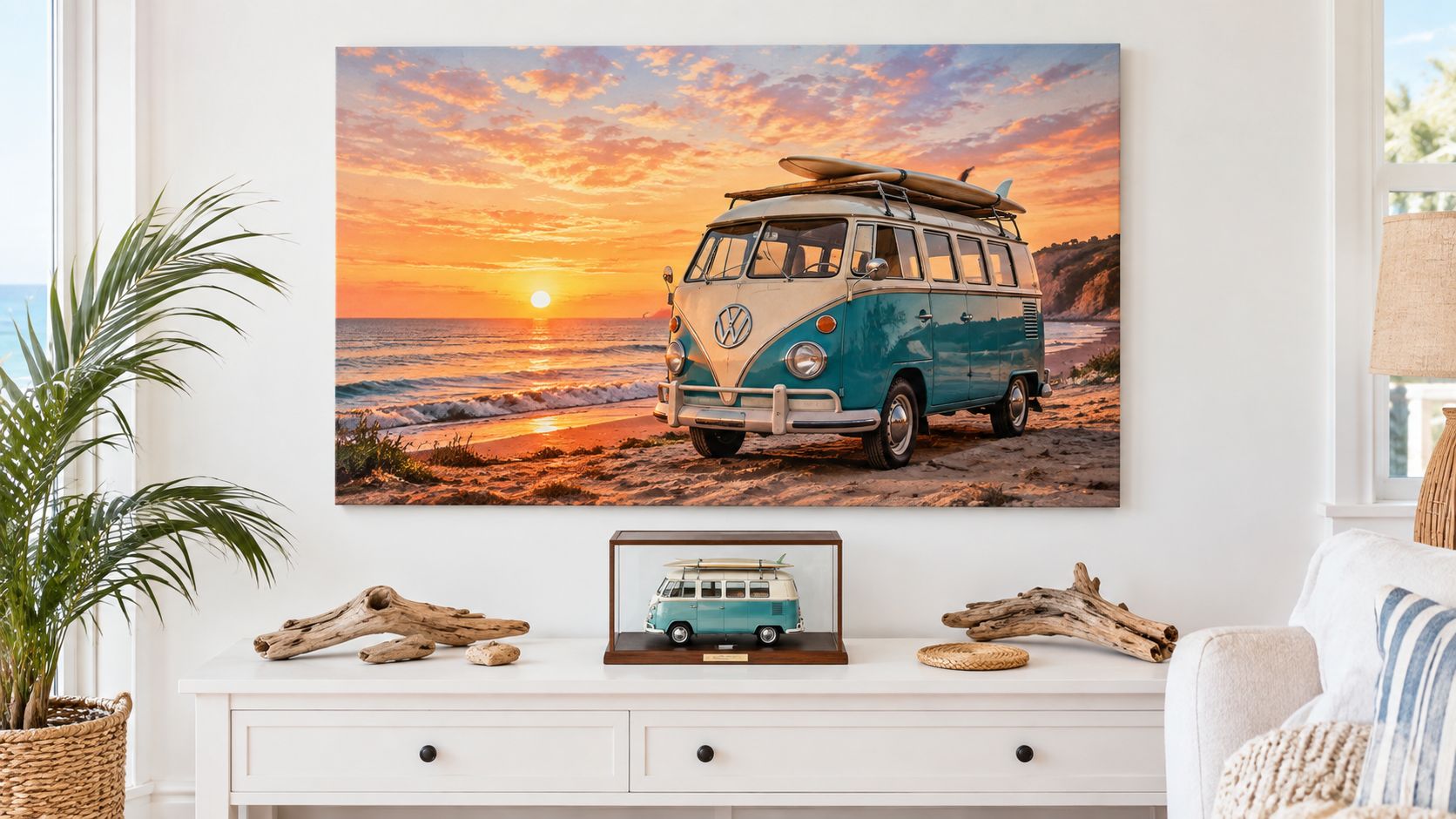
The strongest coastal rooms don't rely on a pile of obvious nautical symbols. They use light, texture and a sense of escape, then add a few objects with genuine meaning. A faded blue Kombi parked near the sand works because it brings a whole scene with it. You can almost hear the sliding door, smell the salt air and see a board strapped to the roof.
That story matters. A plain ocean horizon creates calm, while a VW in the frame adds movement and nostalgia. The result feels more personal than a mass-produced beach slogan, particularly for owners, collectors and anyone who grew up seeing Beetles and Kombis on Australian roads.
The room should feel lived in
A coastal VW print suits a lounge with natural fibres, white walls, pale timber and ocean blues, but it doesn't need to match every cushion. In fact, matching everything too closely can make the space feel staged. A canvas showing a weathered Kombi can soften a polished modern room, while a crisp illustrated Beetle can bring some fun to a more restrained palette.
Australia's renovation culture gives this style plenty of room to work. One market source describes Australia as having one of the highest renovation rates per capita among OECD countries, with one in three homeowners undertaking significant home-improvement projects annually, and projects the broader home décor market to reach USD 12.29 billion by 2031. The Australia home décor market overview also identifies wall art as the most popular wall décor category and highlights large coastal scene pieces as a recurring demand driver.
The useful test: if the artwork reminds you of a place, a car or a day you'd happily repeat, it will usually outlast a print chosen only because it matches the rug.
For a more personal starting point, browse this guide to coastal living room ideas with VW character. Keep the supporting décor quiet, then let the bus, Beetle or Samba take centre stage.
Picking the Right VW Motif and Scale
Start with the room, not the model catalogue. Look at the wall's available width, the furniture beneath it and the colours already doing the heavy lifting. A pale blue Samba Bus suits soft whites and sandy beige, while a Flower Power Beetle needs a little more visual confidence around it.
Match the motif to the mood
A Samba Bus brings holiday nostalgia and works especially well where the room already has timber, woven baskets or relaxed surf styling. A classic black-top Kombi feels slightly more graphic and can anchor a room with navy cushions or charcoal joinery. A Flower Power Beetle, particularly one shown with a surfboard, adds playful colour and suits a family lounge or collector's corner.
The car's finish matters as much as its colour. A distressed, vintage-looking image belongs with linen and raw timber. A clean, sharply rendered print looks better beside contemporary furniture. Don't place a busy floral Beetle against a wall already crowded with patterned cushions, framed photos and ornaments. The eye needs one obvious place to land.
| VW Motif | Best For | Colour Pairing |
|---|---|---|
| Pastel Samba Bus | Calm, airy lounges | White, sand and powder blue |
| Flower Power Beetle | Playful family rooms | Cream, coral, aqua and soft green |
| Black-top Kombi | More graphic coastal interiors | Navy, charcoal, timber and off-white |
| Surf-themed Beetle | Collector displays and relaxed beach rooms | Ocean blue, faded yellow and natural wood |
Get the scale right
A small print can disappear above a generous sofa, while an oversized piece can dominate a compact lounge. Horizontal artwork normally suits the long line of a sofa or console, especially when the image shows a Kombi travelling along a beach road. Vertical art can work beside a bookcase, doorway or tall cabinet, where it fills height rather than competing with furniture width.
Collectors often make the mistake of treating wall art and diecast models as separate themes. They work better when the wall image establishes the setting and the model provides the detail. A framed beach scene with a Samba Bus can sit above a shelf displaying a matching VW Kombi diecast Australia collectors' piece.
For a Beetle-led room, compare the available VW Beetle wall art with your existing display. A Volkswagen Beetle model on a shelf below the print creates a visual link without making the room feel like a showroom.
Focal Piece or Full Gallery Wall
A single focal piece is the safer option when the living room already has plenty happening. One broad Kombi canvas above a white settee can make the wall feel finished without adding another collection of competing shapes. It also gives the artwork enough space for the beach, sky and vehicle to read as one scene.
A gallery wall offers more personality, but it demands discipline. Three smaller surf-themed Beetle prints can look excellent when they share a frame style, visual weight or colour family. Mix too many scales, borders and unrelated images, though, and the coastal calm disappears under clutter.
Choose one statement when the room needs calm
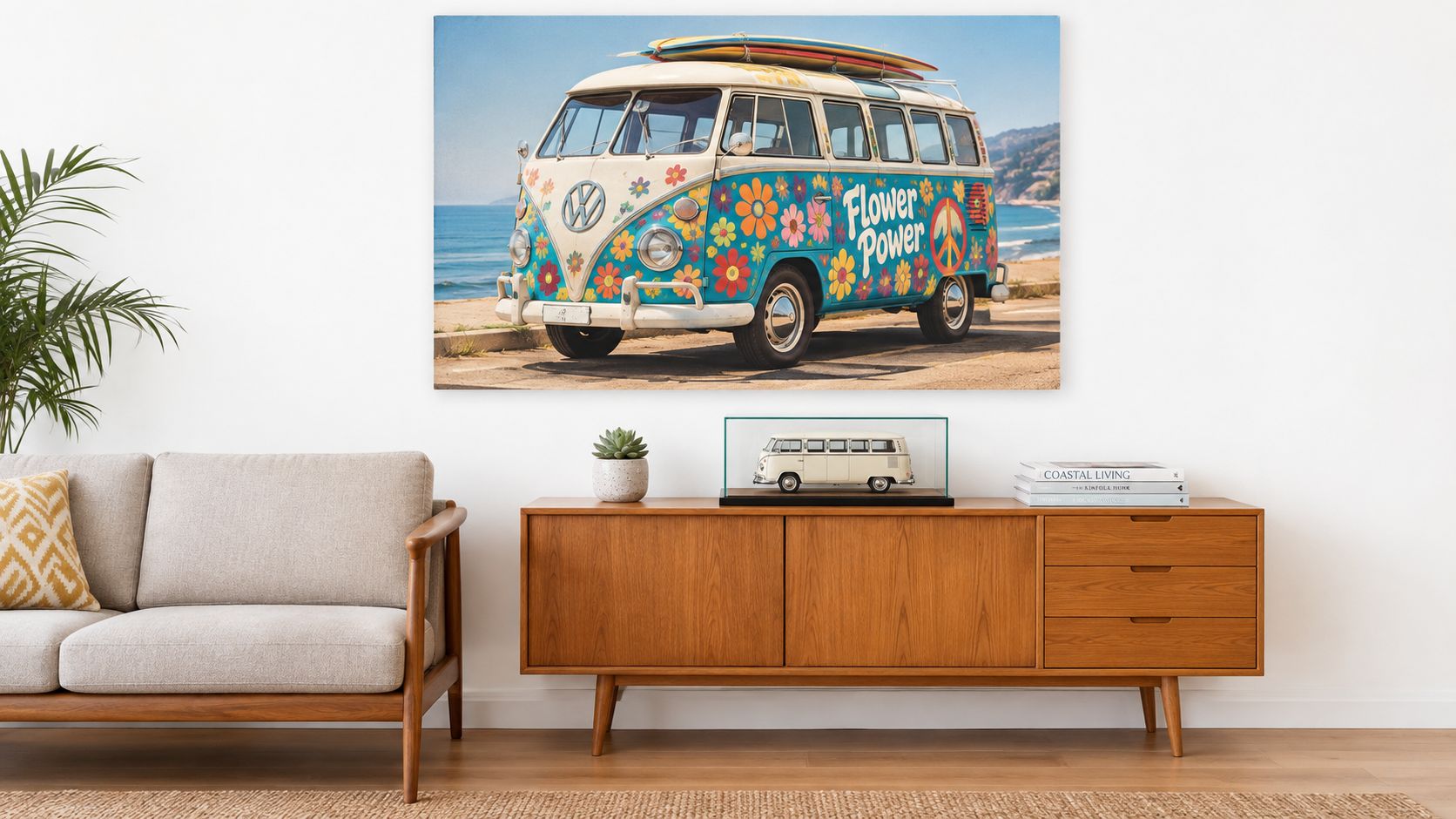
A large Flower Power Samba above a neutral sofa suits an open-plan area where the artwork needs to be seen from across the room. Keep the rest of the wall fairly clear. A low timber console, one ceramic vase and a small model Kombi are enough support.
This approach also works when the art is detailed. A large print gives the viewer time to notice the roof rack, surf gear, faded paint and coastal scenery rather than forcing all those details into a tiny frame.
Build a gallery when the collection has a story
A gallery makes sense when you already own several related pieces or want to show different sides of VW culture. Pair a beach Kombi with a Beetle road scene and a small detail print, but give the group a common thread. That might be a shared blue-and-cream palette, matching frames or a consistent vintage illustration style.
Lay the arrangement out on the floor before touching the wall. This lets you test whether the strongest image sits in the middle, whether the outer edges feel balanced and whether the group relates properly to the sofa below.
A gallery wall should look collected, not accumulated. If one piece only remains because you paid for it, it probably doesn't belong in the final arrangement.
Use living room wall accents to find the supporting shapes, but resist filling every gap. Negative space is what keeps a group of nostalgic images feeling considered.
Hanging Rules that Keep Your Beach Art Aligned
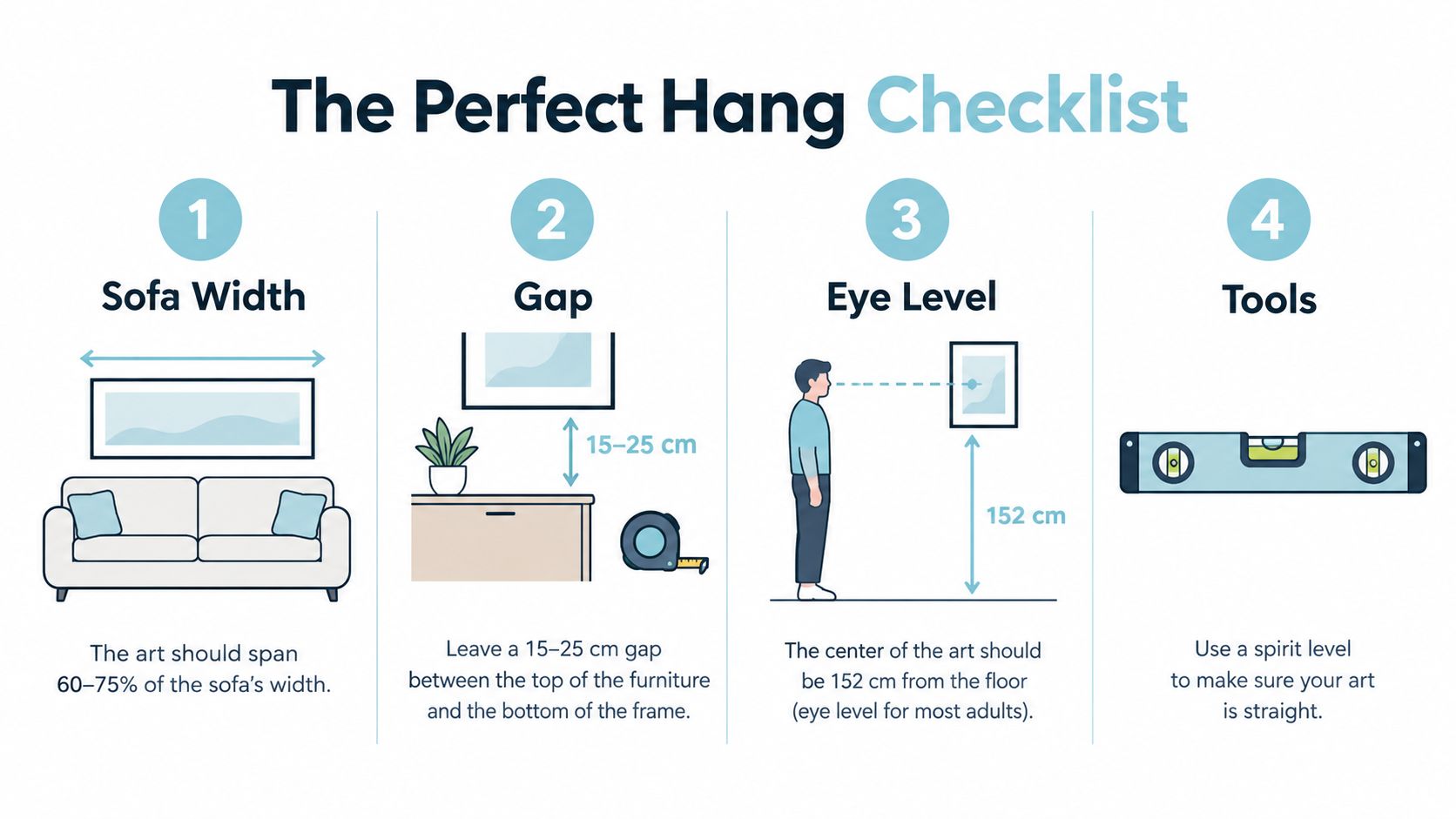
Good artwork can look wrong when it's hung too small, too high or slightly crooked. Coastal interiors depend on visual calm, so uneven spacing stands out quickly. Measure first, mark lightly and use a spirit level before committing to the wall.
A practical installation method is to size the artwork so it spans 60–75% of the furniture width, leave 15–25 cm between the furniture and the art, and place the artwork centre at roughly 152 cm from the floor. For a triptych, allow 5–8 cm between panels so the image reads as a connected scene rather than three unrelated slices. These measurements come from this Australian wall-art installation guide.
Measure the furniture relationship
Measure the sofa, sideboard or console beneath the artwork, then calculate the useful visual span rather than choosing a frame by guesswork. A very narrow image can float above a wide sofa. A frame that runs nearly wall to wall can make the furniture look undersized.
Use painter's tape to mark the proposed outer edges. Step into the room, sit on the sofa and view the shape from the places you use. The tape outline often reveals a scale problem before you drill a hole.
Treat the wall as part of the installation
Plasterboard needs more care than brick or masonry. Heavier framed beach prints may need a stud fixing or a specialist plasterboard anchor, and pieces above 5 kg should ideally be fixed into a stud or with a load-distributing plasterboard anchor, according to Australian hanging guidance from Emma Street Studio.
Lay a gallery composition on the floor first, then transfer the positions carefully. The same source notes that Australian picture-hanging services quote $30–$50 per frame, with minimum call-out fees of $80–$150, so batching several pieces together can make more sense than arranging a visit for one frame.
Number the backs of panels if you're working with a triptych, check the hanging hardware, and keep the spirit level handy. A beach scene should feel effortless once it's on the wall, not like it survived a rushed Saturday job.
Sourcing Authentic VW Memorabilia Locally
The coastal look works best when the VW element has proper character. Look for officially licensed Volkswagen diecast models, clear model identification and a finish that reflects the vehicle rather than a generic van shape. Collectors usually notice the small things first, including the badge treatment, body proportions, glazing, wheels and paint quality.
Australia's wall décor market is also shaped by imported finished products. One Australian market report estimates that 70–80% of finished modern framed wall art products are sourced from China and Vietnam, while framed canvas prints and multi-panel sets account for 55–65% of unit volume. The report projects market growth at a 4–6% compound annual rate from 2026 to 2035. Its Australia wall décor market analysis helps explain why shoppers see broad choices in ready-to-hang formats, sizes and finishes.
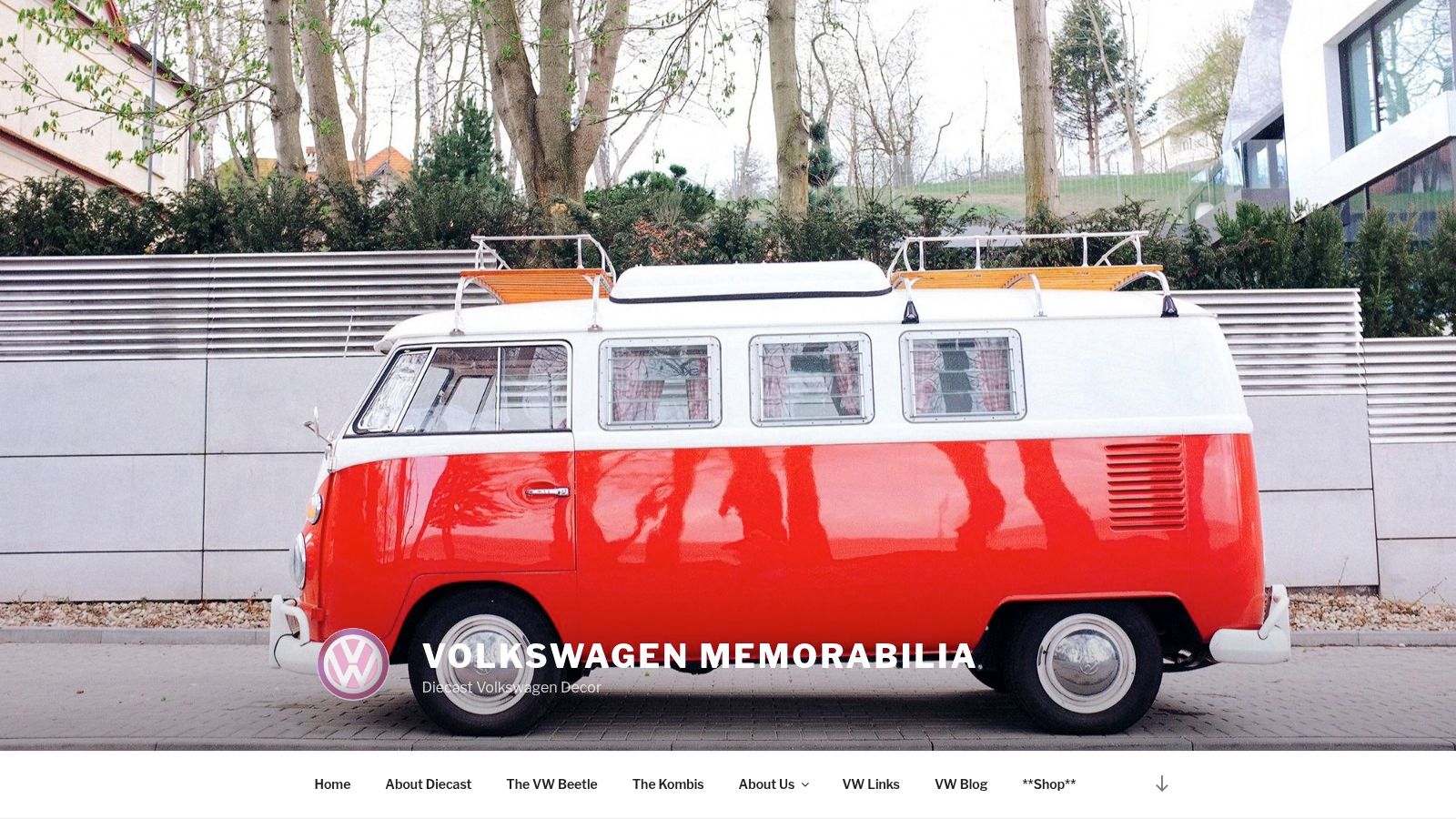
That variety is useful, but provenance still matters. A licensed Kombi Samba Bus diecast has a place beside coastal wall art because it connects the picture's relaxed road-trip mood with a real collector's object. A Flower Power Beetle can bring colour to a shelf, while a restrained beach print keeps the overall room from becoming too loud.
Why local stock makes collecting easier
Buying from an Australian importer or stockist gives you a practical advantage when you're styling a room for a birthday, house move or upcoming show. Local stock and fast shipping reduce the uncertainty that comes with waiting on an overseas parcel, while local support makes it easier to ask about finishes, model variations and availability.
A curated range also helps you build a collection with a proper thread. Start with one wall piece, add a matching Kombi, then look at Beetle models, metal décor or beach accents only when they earn their place. That approach keeps your VW memorabilia collectibles meaningful rather than turning the lounge into a parts bin.
Volkswagen Memorabilia brings together licensed VW diecast models, Kombi Samba Bus and Beetle pieces, plus coastal home décor for collectors and gift buyers. Visit Volkswagen Memorabilia to find a beach-ready wall accent and a diecast companion that give your living room a relaxed Australian VW story.