


You're standing beside a sunny oval, coffee in hand, while a freshly polished Beetle rolls past and a Kombi catches the light near the Show & Shine. Then, at a swap-meet table, you spot a tiny version of the same car. The paint is bright, the wheels sit just right, and suddenly you're remembering road trips, surfboards, family holidays and the particular charm of an old Volkswagen.
That's the magic of vintage diecast cars. They're small enough for a shelf, yet packed with design history and personal meaning. For Australian collectors, the story becomes even richer because Beetles, Kombis and locally made toys all belong to our own motoring past.
The Timeless Appeal of Vintage Diecast Cars
At a sunny car show, a blue-and-cream microbus model can draw a crowd before the full-size classics do. One collector spots the split windscreen; another recalls a Kombi packed with camping gear. A tiny licensed model turns into an easy yarn between strangers, linking display shelves with Australian road memories.
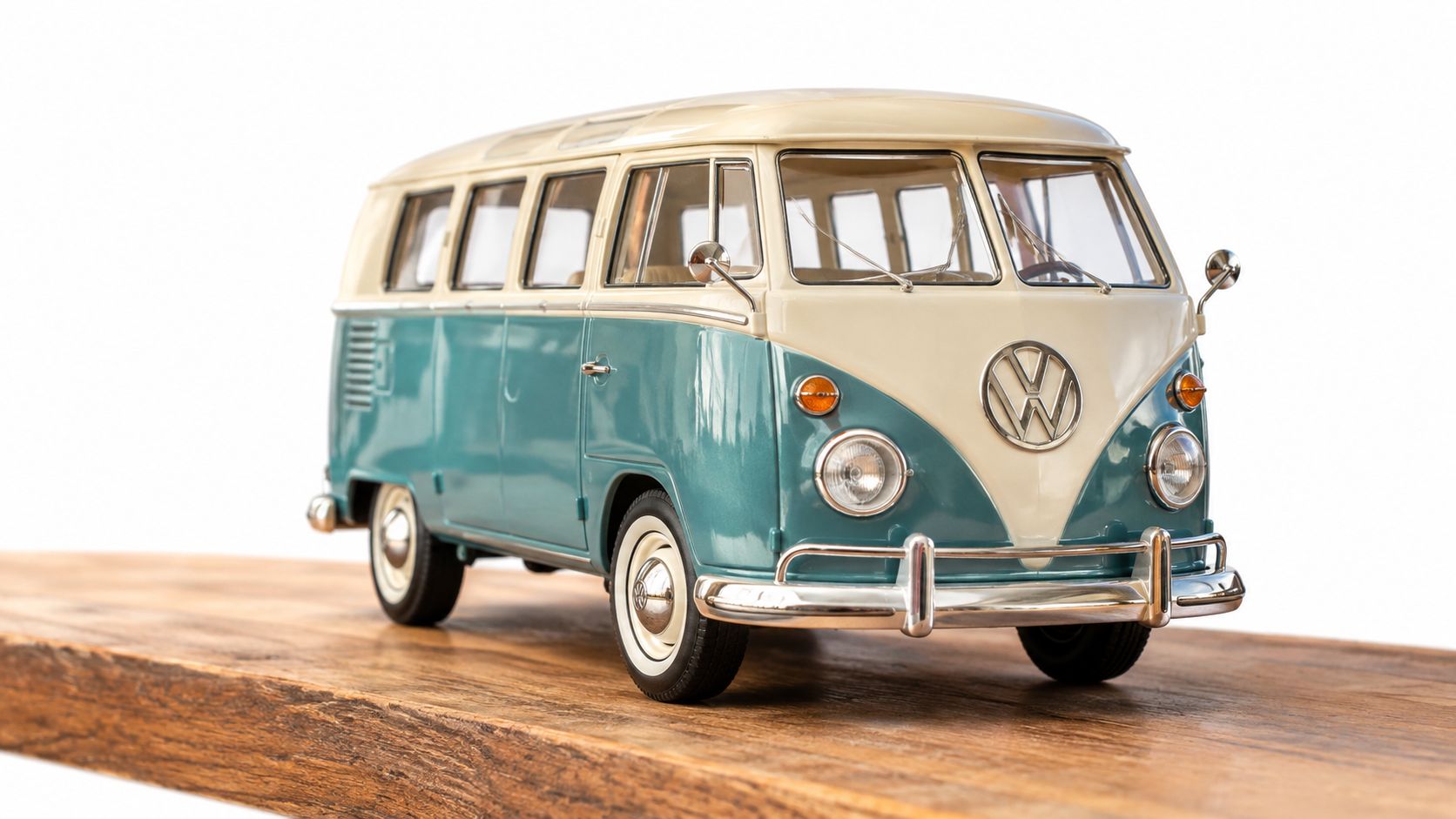
The charm reaches beyond nostalgia. A miniature Volkswagen holds shape, colour and character in a way a photograph cannot. The Beetle's rounded roof, the Kombi's upright body and the Samba Bus's bright windows remain recognisable in the palm of your hand. Each model records a piece of automotive design, while its scale makes it practical for a home display.
Australian collectors add another layer to the story. The Museum of Brisbane records that Melbourne toy maker Brentoy traded in the 1940s and produced diecast vehicles by the 1950s. It also identifies an Australian-made diecast Buick and a rare Planet die-cast toy made in Melbourne during that decade, described as one of only three ray guns known to have been produced in Australia. That early manufacturing story lives on in today's vintage Volkswagen memorabilia, where the same design heritage is preserved in miniature. For a detailed look at Australian diecast manufacturing history, see Australian diecast history and memorabilia.
More than a miniature car
Many collections start with one Beetle model, bought as a present or spotted at a local market. Then the search grows. A collector begins comparing body colours, wheel designs, packaging and scale, gradually building a personal timeline of Australian motoring memories.
A thoughtful gift can carry that same meaning. A licensed Kombi Samba Bus diecast might suit a long-time VW owner, a surf fan or anyone drawn to retro design. On a larger shelf, it can anchor a display devoted to Australian travel, coastal living, factory history or family holidays.
The best buying decisions usually begin with the story behind the model. Check whether its Volkswagen details, finish and markings match the version being represented, then choose a display spot that lets those details be seen. A good piece should look right from across the room and reward a closer look at the bonnet, windows and cabin.
Identifying Hallmarks and Choosing the Right Scale
Before buying, handle the model like a small piece of engineering rather than a novelty. Weight is the first clue, because a substantial metal body usually feels different from a lightweight plastic replica. It isn't proof of quality on its own, but it tells you to inspect the rest of the model closely.
Look along the roof, guards and doors for clean paint separation. On a Beetle, the curve of the front bonnet and the placement of the headlights should look balanced from both sides. On a Kombi, check the window surrounds, roofline and panel joins. Uneven paint, blurred badges or crooked wheels can reduce visual appeal, even when the model is otherwise sound.
A practical inspection routine
- Check the body: Look for chips, bubbling paint, corrosion and repairs that don't match the surrounding finish.
- Study the base: Manufacturer markings, scale information and licensing details can help distinguish a considered replica from an unmarked novelty.
- Test moving parts gently: Opening doors, bonnets and tailgates should move without scraping. Don't force a stiff hinge, particularly on an older piece.
- Inspect the cabin: Dashboard layout, seat shape and steering-wheel position should suit the actual Volkswagen being represented.
- Look at the wheels: Tyres should sit evenly, and the wheel design should match the model's period or stated version.
A specialist explanation of what makes a diecast model car useful can help new collectors understand the difference between construction, finish and scale.
Popular Diecast Scales for VW Collectors
| Scale | Approximate Size | Best For |
|---|---|---|
| 1:64 | Small, pocket-sized format | Dense shelves, play displays and mixed vehicle scenes |
| 1:43 | About 11 cm long, 3.5 cm wide and 3 cm high on average | Australian collectors seeking a balance of detail and display space |
| 1:18 | Larger presentation model | Close inspection of interiors, engines, wheels and opening features |
In Australia, 1:43 is described as the most popular diecast model car size. It's 43 times smaller than the actual vehicle, making it a practical benchmark for collectors who want clear proportions without giving an entire shelf to one model. Smaller scales generally sacrifice interior and chassis detail, while 1:43 can still show trim, body lines and paint separation accurately. These Australian scale dimensions and comparisons are outlined by Vintage and Classic Reproductions.
For vintage cars, 1:18 often reveals more engineering nuance. Australian diecast sellers note that old-school cars are commonly produced in 1:18, while racing cars are more often seen in 1:43. Larger models may include fabric seat belts, carpeted interiors and identifiable engine components, which helps when you're checking dashboard layout, wheel design and under-bonnet details. Muscle Car Magazine Australia provides local scale guidance for collectors comparing these formats.
Tracing the Heritage of Australian VW Production
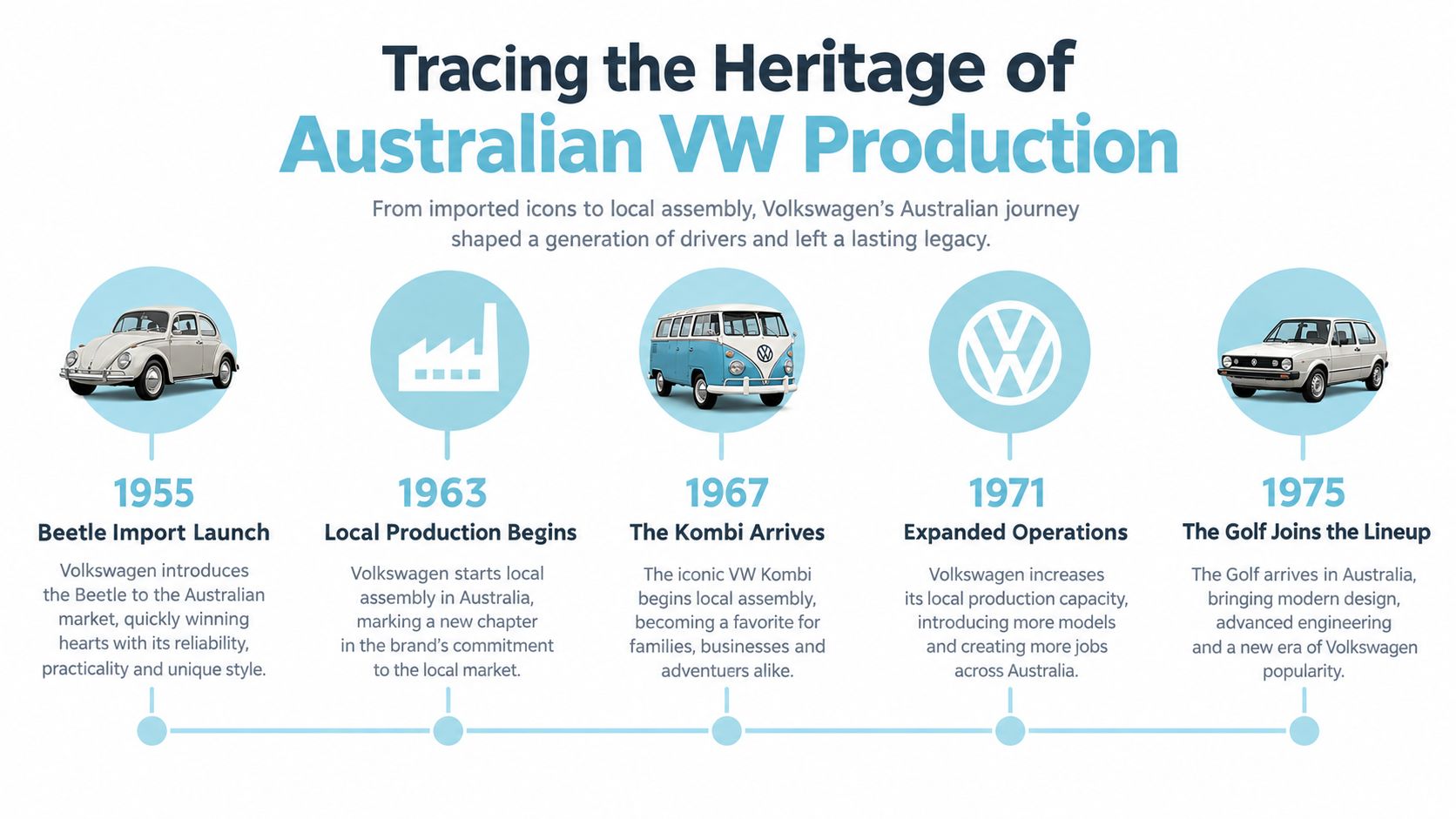
A tiny Beetle on a shelf can carry a surprisingly local story. The Volkswagen Beetle was formally introduced to the Australian market in 1953, and local assembly began at Clayton, Victoria, in 1954. By the mid-1960s, Australian content had risen to about 95%, and the final Australian-assembled Beetle left the line in July 1976, according to the Volkswagen Beetle production history.
Museum Victoria adds another layer to the account. Australia's first Beetles arrived through military and early import channels, with the first locally imported examples documented in late 1953. Production later began at the Martin & King factory in Clayton in 1959, and just over 260,000 Australian Beetles were made before local production ceased in 1968. Those differing milestones reflect the complicated transition between imported vehicles, assembly operations and local manufacture, which is exactly why provenance matters to collectors. The museum's account appears in The Volkswagen Beetle in Australia.
From Beetle to Kombi
The Kombi's story began in 1949, when Dutch businessman Ben Pon sketched the idea that led to Volkswagen's practical van. Volkswagen Australia records Australian assembly at Clayton from 1964 to 1977, giving local collectors another strong connection between the vehicle and Australian industry. The official Australian Kombi history is useful when matching a model's styling to its claimed era.
That history changes how a collector sees a Samba Bus. The model isn't merely a cheerful van with windows and bright paint. It represents a vehicle that carried families, tradespeople, travellers and surfers, while the Beetle became one of the most recognisable cars on Australian streets.
Local toy production developed alongside that motoring culture. Brentoy's Melbourne diecast work during the 1950s shows that Australian children were already encountering miniature metal vehicles made close to home. A vintage model therefore links two histories, the full-size Volkswagen's Australian journey and the country's own tradition of making small vehicles for curious hands.
Collectors who enjoy the broader wagon and van story can explore this heritage through station wagon Volkswagen memorabilia, especially when building a display around family travel and utility vehicles.
Valuation Basics and Navigating the Local Market
A swap-meet price is an asking price, not an automatic valuation. Australian listings show why collectors need to slow down and inspect the details. Current marketplace examples range from roughly AU$30 for generic vintage diecast cars on eBay Australia to about AU$180 for metal vintage Matchbox-style models, while Gumtree postings start from around AU$5. These figures come from scattered listings, not a market-wide benchmark, so treat them as orientation rather than a guaranteed price guide. See the available Australian vintage diecast listings before making comparisons.
What changes the price
Condition usually matters more than age alone. A well-preserved model with clean paint, straight axles and an intact interior will generally attract more interest than a supposedly rare piece with heavy corrosion or missing parts. Original packaging can also help, especially when it remains clean and clearly belongs to the model.
Rarity is more complicated than a bright colour. A Flower Power finish, Samba Bus styling or unusual Australian-market packaging may catch attention, but collectors should verify the manufacturer, licensing and production information before paying a premium. A familiar model with excellent condition can be a smarter purchase than an obscure one with an uncertain history.
Practical rule: Compare like with like. Match the scale, brand, condition, packaging and exact decoration before comparing prices.
For online buying, ask for clear photos of the roof, base, interior, wheels and any damage. Confirm whether the model is complete, whether the packaging is included and whether postage is separate. For local pickup, bring a small torch and inspect the underside without rushing. A bargain only works if the model suits your collection and won't require expensive restoration.
Australian hobby retail remains broad rather than forgotten. One major Australian retailer lists 27 Volkswagen diecast items, with scales from 1:64 to 1:18, and describes model cars as miniature replicas made through diecasting. Its catalogue also identifies limited editions as part of the market, showing how ordinary shelf pieces and more focused collector releases sit side by side. Browse the local Volkswagen diecast catalogue to see how varied the category can be.
Conservation Tips for the Australian Climate
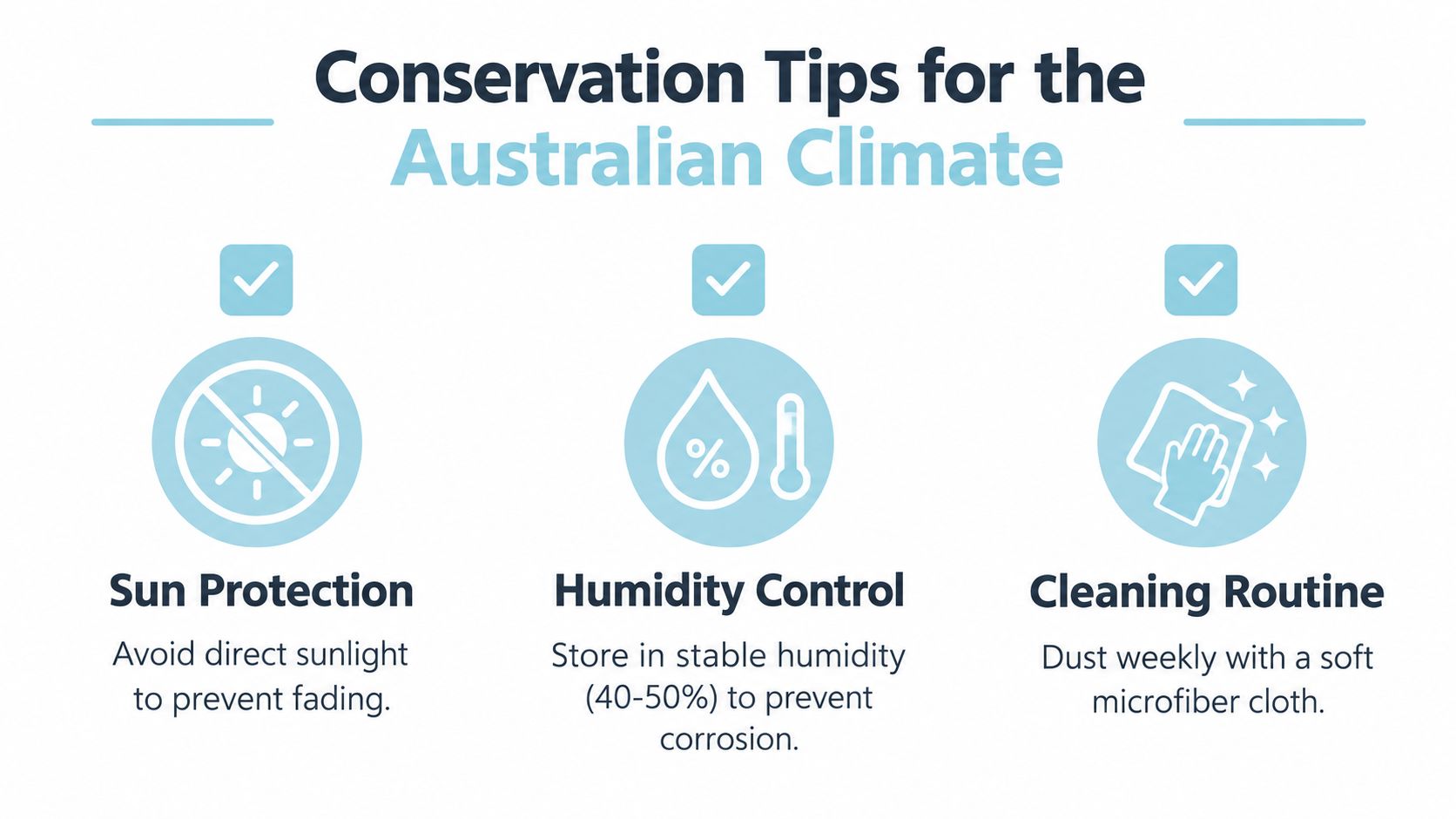
Australian sunlight can fade paint and weaken packaging surprisingly quickly. A model displayed near a bright window may look fine at first, then slowly lose the sharp colour separation that made it special. Stable conditions and gentle handling protect both appearance and enjoyment.
A simple care routine
- Choose the display position carefully. Keep models away from direct sunlight, heaters, damp walls and strong airflow. A glass cabinet in a shaded room gives you visibility without exposing the finish to constant UV.
- Dust with restraint. Use a clean, soft microfibre cloth and support the model underneath. For grille openings and window surrounds, a very soft brush can lift dust without scratching the surface.
- Avoid household cleaners. Sprays may affect decals, clear plastic and painted trim. If a model needs more than dry dusting, test any mild cleaning method on an inconspicuous area first.
- Keep humidity steady. The supplied conservation guidance recommends stable humidity of 40 to 50% to help reduce corrosion risk. A small room monitor can show whether your cabinet area is fluctuating.
- Exercise moving parts sparingly. Open doors and bonnets only when needed, and stop if a hinge catches. Repeated force can do more harm than a little stiffness.
Don't polish an old finish until you know what you're removing. Original patina may be part of the model's character, while an aggressive clean can erase decals, lettering or surface detail. Photograph the model before any restoration work, keep loose parts labelled and store packaging flat where possible.
A collection kept out of harsh light, dusted regularly and handled with clean hands will remain far easier to enjoy. Conservation isn't about making every model look brand new. It's about preserving the evidence of what the model is.
Sourcing Authentic Models from Local Importers
Buying locally gives Australian collectors practical advantages that overseas marketplace listings can't always provide. Local stock, domestic shipping and responsive support make it easier to check availability, resolve a damaged delivery or ask about a model before ordering. You're also less exposed to unclear descriptions, surprise freight costs and packaging that wasn't designed for a long international journey.
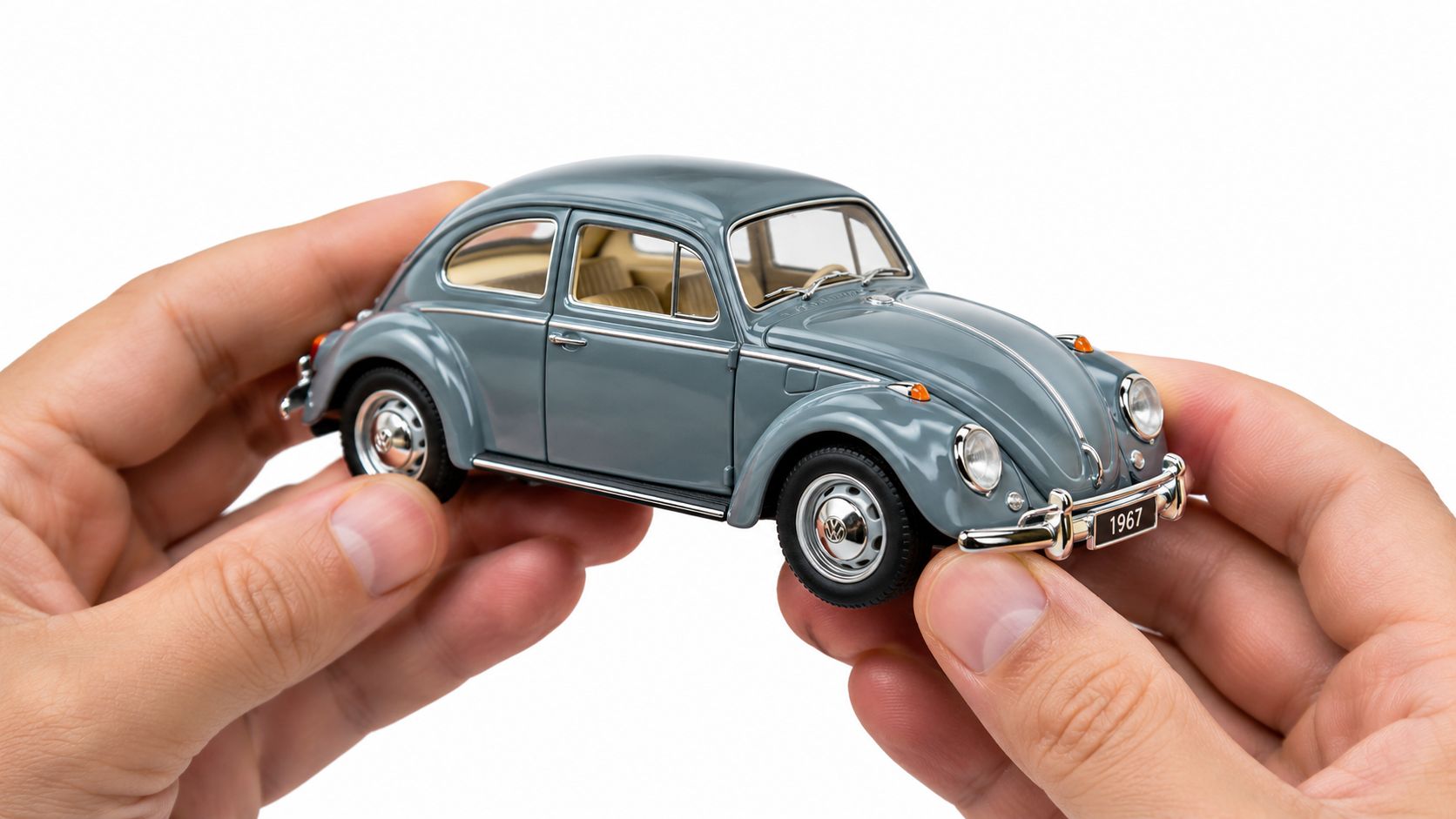
A dedicated Australian importer or specialist retailer should make licensing and product identity clear. Look for accurate Volkswagen branding, a named model variant, scale information and photographs that show the actual finish. If you're buying a Kombi Samba Bus diecast, check whether the description identifies the body style and whether the model arrives boxed, loose or as part of a mixed pack.
Local sourcing also supports a healthier community. Specialist sellers understand that a buyer might be choosing between a Beetle model for a birthday, a Samba Bus for a display cabinet or a surf-themed piece for a coastal room. That context leads to better advice than a generic listing with a single cropped photograph.
The following video offers another visual way to appreciate miniature Volkswagen design and presentation:
For Australian buyers searching VW Kombi diecast Australia, local availability can matter just as much as the exact colour. Fast shipping helps when a gift date is close, while local support gives collectors someone to contact if they need clarification. That's especially useful when building a themed group of Beetles, Kombis and Samba Buses rather than buying a one-off novelty.
Joining the Community and Showcasing Your Collection
A collection comes alive when it has a story to tell. Arrange a Beetle beside a Kombi, add a small surf-themed accent and leave enough space for each model's silhouette to stand out. A timber shelf can create a warm garage feel, while a glass cabinet gives detailed 1:43 and 1:18 pieces a clean display without inviting dust.
Australian VW events provide the perfect backdrop for that shared enthusiasm. Volksfest Australia describes its family-friendly festival as including a Show & Shine, market stalls, live music, food trucks, cruises, a display day and a VW swap meet. Its 2025 event was scheduled for 19–21 September, with awards announced for exceptional vehicles, according to the Volksfest Australia event information.
Collectors swap more than parts and prices at these gatherings. They trade stories about first cars, road trips, restoration jobs and the model that started it all. That community spirit is why a licensed Volkswagen diecast model makes such a thoughtful gift. It carries the look of the actual car, but it also leaves room for the owner's own memories.
Volkswagen Memorabilia offers licensed VW diecast models and memorabilia for collectors, gift buyers and fans of relaxed coastal style. Browse the curated range, including Kombi Samba Bus and Beetle pieces, at Volkswagen Memorabilia, and find a miniature Volkswagen with a proper place in your story.