
Coastal Wall Art for Living Room Styling

The sofa is in, the coffee table's found its spot, and there's still one broad, stubbornly blank wall staring back at you. You want the room to feel like a breezy beach house, but the last thing you need is a neon “Beach” sign beside a shelf packed with novelty shells. For a VW enthusiast, the better answer is a room with the calm of the coast and the character of a sunny surf trip in an old Kombi.

The right coastal wall art for living room styling can make that happen. Think soft horizons, weathered timber, ocean blues, and enough breathing room for a carefully chosen Volkswagen diecast model to tell its own story. The result feels less like a themed display and more like a relaxed beachside garage, collected over time by someone who knows the difference between genuine nostalgia and clutter.

Embracing the Modern Coastal Aesthetic

A classic Kombi parked near the water never needs much explaining. Its rounded silhouette, split windscreen, and cheerful paintwork already suggest open roads, salty air, and a weekend with nowhere urgent to be. Your living room can capture that mood without turning into a souvenir shop.

Modern coastal interiors favour quiet visual cues. A broad abstract seascape above the sofa can suggest the ocean through a soft horizon and layered tones, while pale timber, linen upholstery, and a single weathered accessory carry the beachside feeling through the rest of the room. A small Beetle print or restrained surf photograph can add personality without competing with the main artwork.

Australia's wall décor market is projected to grow at more than 5.6% CAGR from 2026 to 2031, with wall art identified as the most popular category and a shift towards softer coastal looks, neutral palettes, and abstract seascapes, as outlined in this Australian wall décor market overview. That direction suits VW memorabilia beautifully because both styles rely on shape, memory, and atmosphere rather than loud decoration.

Start with the feeling, not the theme

Choose art that gives you the same calm pause as looking across a beach at first light. Gentle horizon lines, sandy neutrals, faded blue, and generous negative space will sit comfortably beside a vintage-style Kombi model. Nautical details can appear as small accents, not a marching parade of anchors and ship wheels.

A floating shelf beneath the art gives your display a natural centre. Place the model slightly off-centre, leave clear space around it, and let the wall do some of the talking. More ideas for blending relaxed interiors and enthusiast pieces appear in these coastal home décor ideas.

Choosing Durable Art for Australian Climates

A beautiful print needs the right home. Australian coastal rooms can expose artwork to damp air, salt-laden conditions, and strong sunlight, so selecting the surface and frame should happen before you start drilling holes.

In coastal Queensland, sustained humidity above 70% can damage cheap canvas. In north-facing coastal homes in NSW and Victoria, UV exposure can fade dye-based inks within about 18 months, making pigment inks the preferred longevity benchmark, according to this Australian guide to surfing and seascape wall art.

A comparative graphic showing durable versus standard wall art designed for harsh Australian climates and weather conditions.

Match the material to the wall

Use the room's exposure as your starting point.

  • Humid coastal zones: Look for pigment-ink canvas printed on 380gsm or heavier poly-cotton, paired with kiln-dried pine framing. The substantial canvas and stable timber frame provide a more sensible foundation than bargain materials in damp conditions.
  • Bright, north-facing walls: Framed prints with acrylic glazing are a practical choice where direct sun reaches the artwork. Acrylic can help create a protective barrier while keeping the piece light enough for straightforward installation.
  • Shelves near windows: Keep diecast models away from persistent direct sun. A shaded wall, floating shelf, or enclosed cabinet will help protect paint finishes and small details from unnecessary exposure.
  • High-moisture rooms: In Queensland homes with heavier humidity, metal prints or moisture-resistant framed works can offer a more durable alternative.

The same thinking applies to a treasured Volkswagen Beetle model. It doesn't belong on a windowsill where afternoon sun hits it every day. Place it where you can enjoy the chrome, curves, and colour without asking the finish to battle the climate.

Mastering Layout and Colour Palettes

A large blank wall can make even a seasoned home mechanic hesitate. The trick is to give the wall one clear job. In an open-plan room, a broad seascape can anchor the sofa zone, while smaller pieces and a diecast display create a visual trail towards the dining or reading area.

A useful Australian sizing benchmark combines one statement piece at 1500 mm or more in width for open-plan spaces with 2–3 smaller supporting pieces. The recommendation also suggests a palette of roughly 60% neutral, 30% blue or sand, and 10% contrast, as described in this coastal wall art sizing and colour guide.

Build the wall in layers

Start with the dominant work above the sofa or console. A horizontal piece usually feels settled there because its shape echoes the furniture below. Stand in the doorway, then sit in the position you typically use. If the artwork disappears against the wall, it needs more presence. If it overwhelms the furniture, choose a calmer scale or simplify the surrounding pieces.

Use the colour balance as a visual guardrail rather than a strict decorating law:

Element Role in the room
Neutral tones Walls, upholstery, light timber, and the quiet background of the artwork
Blue or sand Ocean references, cushions, ceramics, and smaller coastal prints
Contrast A dark frame, rust-toned detail, red Beetle, or strong typographic accent

For a gallery wall, keep the major seascape as the visual anchor. Add supporting pieces with related tones, then position the model shelf below or beside the grouping rather than squeezing everything into one tight cluster. The eye should be able to rest between each element.

Blending VW Heritage with Beachside Vibes

A cream Kombi on a timber shelf, an abstract seascape above it, and a few pale ceramics can make a living room feel like a tidy beachside garage. The room carries memories of surf trips, coastal roads, and sunny servo stops, while the artwork keeps the finish calm and considered. The trick is editing the collection so each piece has a clear job.

A blonde woman in a bikini and shorts posing next to a vintage Volkswagen surf van.

A Samba Bus diecast model sits neatly beside an abstract ocean print because both create a strong horizontal rhythm. The bus adds colour, character, and nostalgia; the artwork gives the arrangement air and a quieter coastal mood. You can find more combinations in this wall accents for living room guide. A vintage Beetle can take a gentler role on a bookcase beside travel books, a framed photograph, or a small shell piece.

Give every collectible some breathing room

In diecast collecting, 1:24 scale models are usually about 6–8 inches long and offer a useful balance of detail and display size. This makes them well suited to living-room shelves, as explained in this diecast scale guide. The model has enough presence for its body shape, wheels, windows, and paintwork to be appreciated without taking over the room.

A simple arrangement might include:

  • One coastal artwork: Choose a soft abstract ocean piece as the backdrop.
  • One 1:24 Kombi: Set it on a floating shelf, with the nose angled slightly into the room.
  • One natural accent: Add a small shell, piece of driftwood, or pale ceramic form.
  • One practical object: Use a book, framed photograph, or low planter to make the display feel lived-in.

Practical rule: Let the model be the story, not the entire sentence.

A Flower Power Kombi can add a bright, playful note to a restrained wall. A cream or muted blue model will sit more within a polished coastal palette. Leave space around the vehicle, repeat one or two tones from the artwork, and keep the overall arrangement closer to an enthusiast's home than a crowded souvenir display.

Avoiding Common Coastal Styling Mistakes

Coastal styling goes off course when every object repeats the same message. A beach sign, anchor, rope detail, shell garland, surfboard print, and nautical clock may each look appealing on their own, but together they leave no room for interpretation. The viewer sees a theme before they see your personality.

The same problem affects VW displays. A shelf crowded with several bright vehicles, signs, badges, and unrelated trinkets can bury the charm of each model. A single Kombi with a clean backdrop often feels more special than a convoy squeezed shoulder to shoulder.
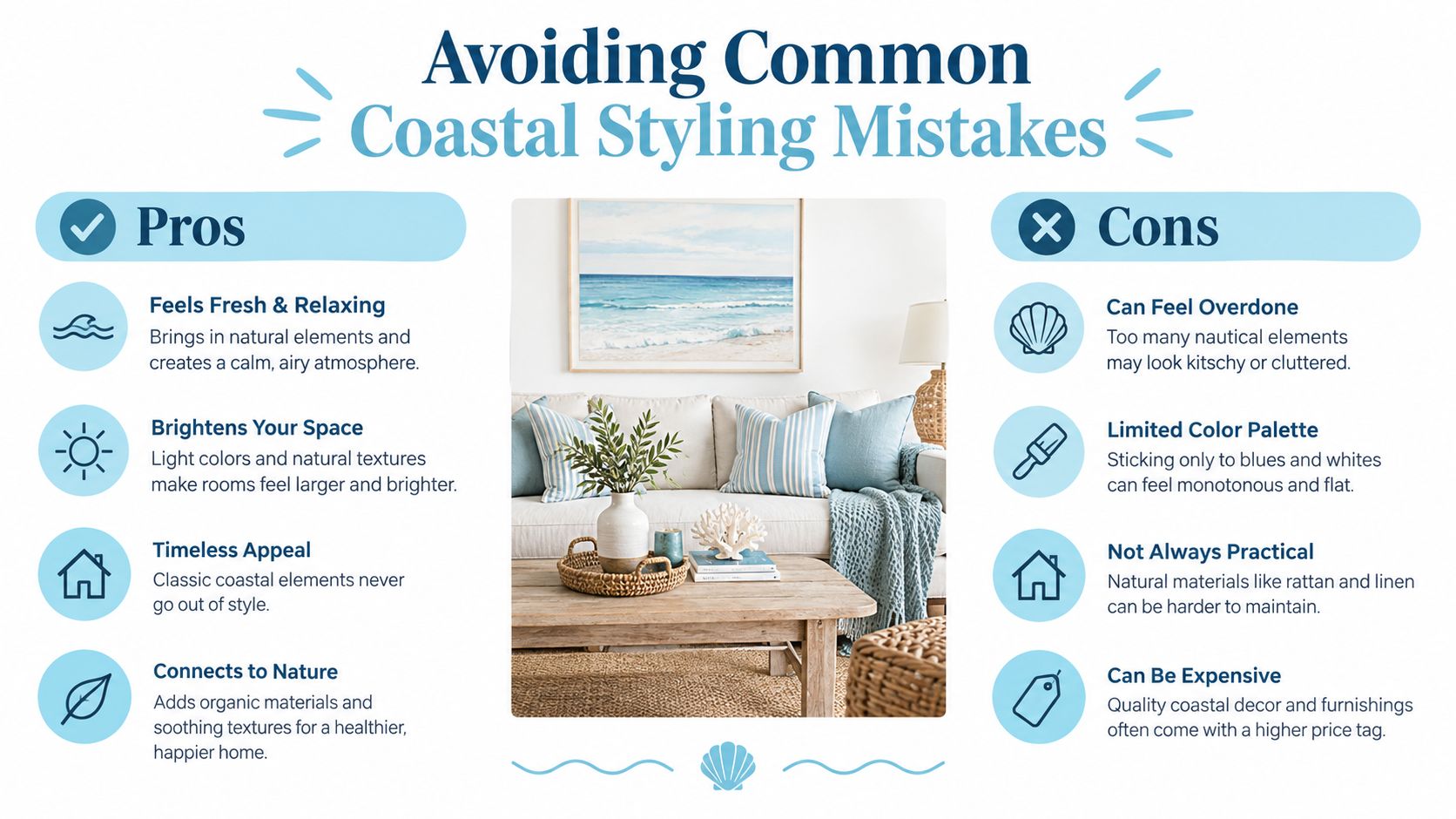
An infographic titled Avoiding Common Coastal Styling Mistakes comparing the pros and cons of coastal interior design.

Fix the display before buying more

Use this quick check when the room starts to feel busy:

  • Too many literal beach references: Remove the weakest sign or ornament and keep the pieces with texture, memory, or craftsmanship.
  • A model in direct sunlight: Move it to a shaded shelf or rotate the arrangement so the window no longer hits it.
  • Art competing with the television: Choose quieter tones or move the focal artwork to the wall opposite the seating.
  • Small pieces floating alone: Group them with a shared frame colour, shelf, or tonal connection.
  • No negative space: Clear one object from each surface and reassess the room from the doorway.

Framing also changes the conversation. A casual surf photograph can look more considered in a simple timber or white frame. Likewise, a bright Volkswagen model gains sophistication when the shelf beneath it is clean, the wall art has room around it, and the rest of the décor supports rather than copies its colour.

Bringing Your Coastal Vision to Life

A great living room display should remind you why you chose each piece. Perhaps the broad ocean print recalls early mornings near the beach. Perhaps the Kombi brings back family camping trips, a first surf holiday, or the day you finally spotted the right project vehicle at a car show. Those memories give the room its character, while the coastal palette keeps the overall result calm.

Start with the wall you notice most often from the sofa. Choose the artwork that makes you want to look up, then build around it slowly. A floating shelf, a licensed Volkswagen model, and one or two natural accents can create a convincing beachside garage feeling without overwhelming the architecture.

Let the collection grow naturally

A modern display doesn't need to be finished in one afternoon. You can begin with a statement seascape, add a Kombi when the right model appears, then introduce a smaller Beetle or a framed photograph later. This approach gives the room the collected quality that makes nostalgic interiors feel genuine.

Shells and starfish work best as punctuation. A modest shell wall art accent can echo the coastal artwork without turning the wall into a literal beach scene. Keep the frames and shelf finishes related, but don't force every colour to match. A little contrast makes the display feel assembled by a person, not generated from a catalogue.

Whether you're styling a new apartment, refreshing a long-empty sofa wall, or creating a gift-worthy display for a fellow VW fan, the strongest choices combine atmosphere with meaning. Coastal wall art sets the horizon. Volkswagen memorabilia adds the open-road memory. Together, they create a room that feels relaxed, personal, and unmistakably Australian.


Volkswagen Memorabilia offers licensed VW diecast models, including Kombi Samba Bus and Beetle pieces, alongside coastal home décor for relaxed beachside displays. Visit Volkswagen Memorabilia to find a model or coastal accent that gives your living room its own sunny road-trip story.

From Blank Walls to a Bay Window View: A Guide to Nostalgic VW Wall Accents for Your Living Room

G’day, mate! Had a squiz at that big, empty wall in your living room lately? It’s not just dead space, you know. It’s a massive canvas just waiting to tell a story—your story. For those of us with a bit of road trip spirit in our veins and a deep love for classic Volkswagens, wall accents are how we bring that passion indoors.

From Blank Walls to a Statement of Style

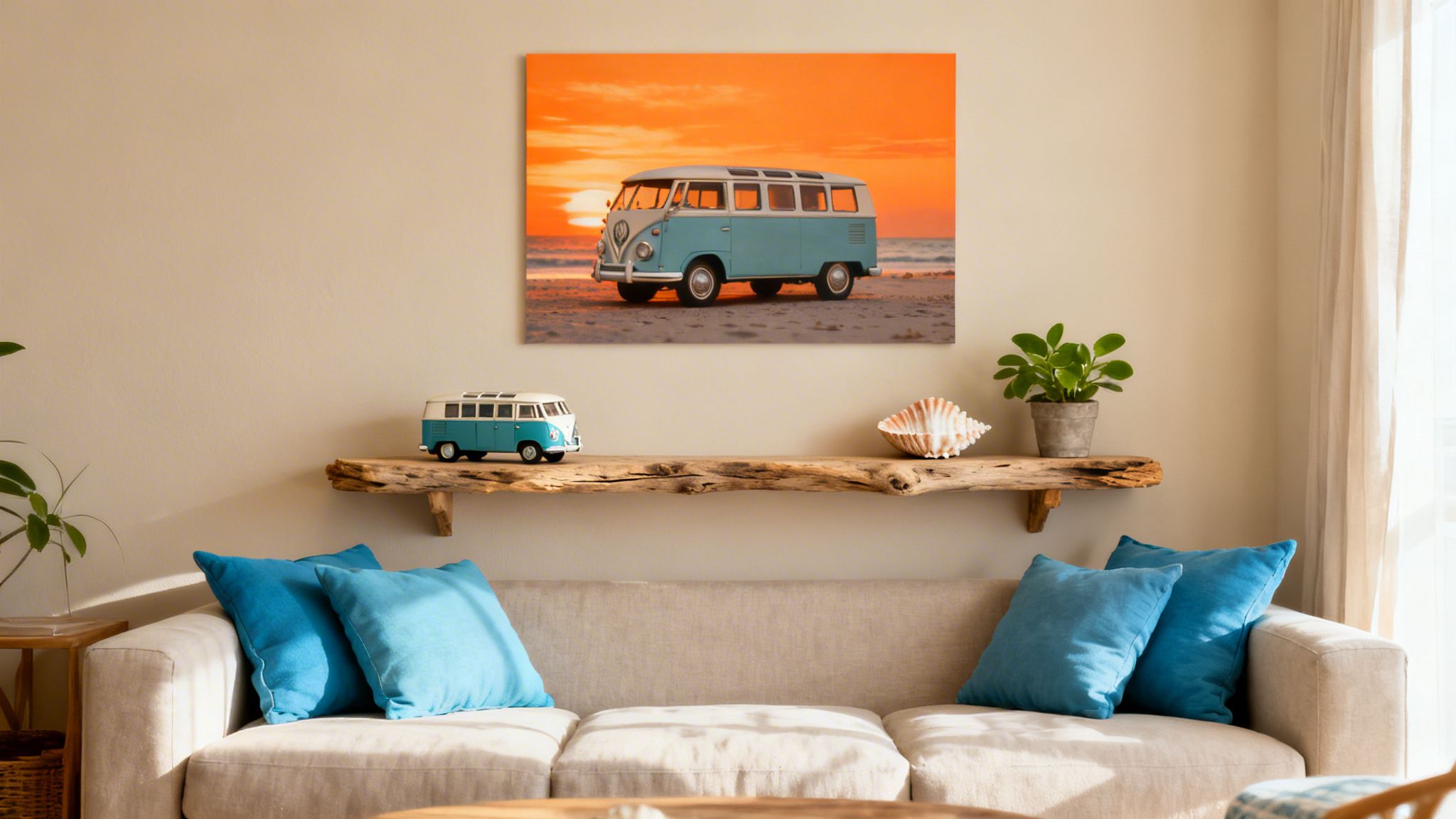
A cozy living room with a beige sofa, blue pillows, a rustic shelf, and beach-themed wall art.

Let's have a yarn about turning what you love into a real, tangible part of your home. This is about more than just whacking a nail in the wall and hanging a picture. We’re going to get into the nitty-gritty of choosing, arranging, and even lighting your wall decor to properly capture that free-wheeling vibe of a Kombi cruise down the Great Ocean Road.

It’s all about creating a space that feels like you. We’ll look at everything from picking a hero piece, like a stunning print of a 1962 Splitty, to mixing it with other elements for a look that feels both personal and wonderfully nostalgic.

Creating a Vibe That's Uniquely You

The best living room wall accent designs don’t happen by accident. They’re thoughtfully put together, like a well-restored Bug. It’s about weaving your passions into a story on your wall that makes sense and looks schmick. Luckily, the classic cool of VW culture just happens to pair perfectly with another Aussie favourite: laid-back coastal decor.

And that’s not just a gut feeling; it’s a massive trend. Across Australia, wall accents are a cornerstone of living room makeovers, especially as design tastes shift toward earthy, nature-inspired palettes. In fact, a huge number of Aussie interior designers are tipping that neutral, organic tones—think warm terracottas, muted olives, and creamy sands—are the go-to for living spaces.

This lines up beautifully with those classic surfy VW Kombi accents in rusty oranges and seafoam greens. You can get a better feel for these trends and see how our coastal home decor ideas can help bring this look home.

The goal is to make your walls the most interesting part of your home, sparking conversations and bringing back fond memories every time you walk into the room. Let's make that happen, hey?

Choosing a Hero Piece for Your Wall

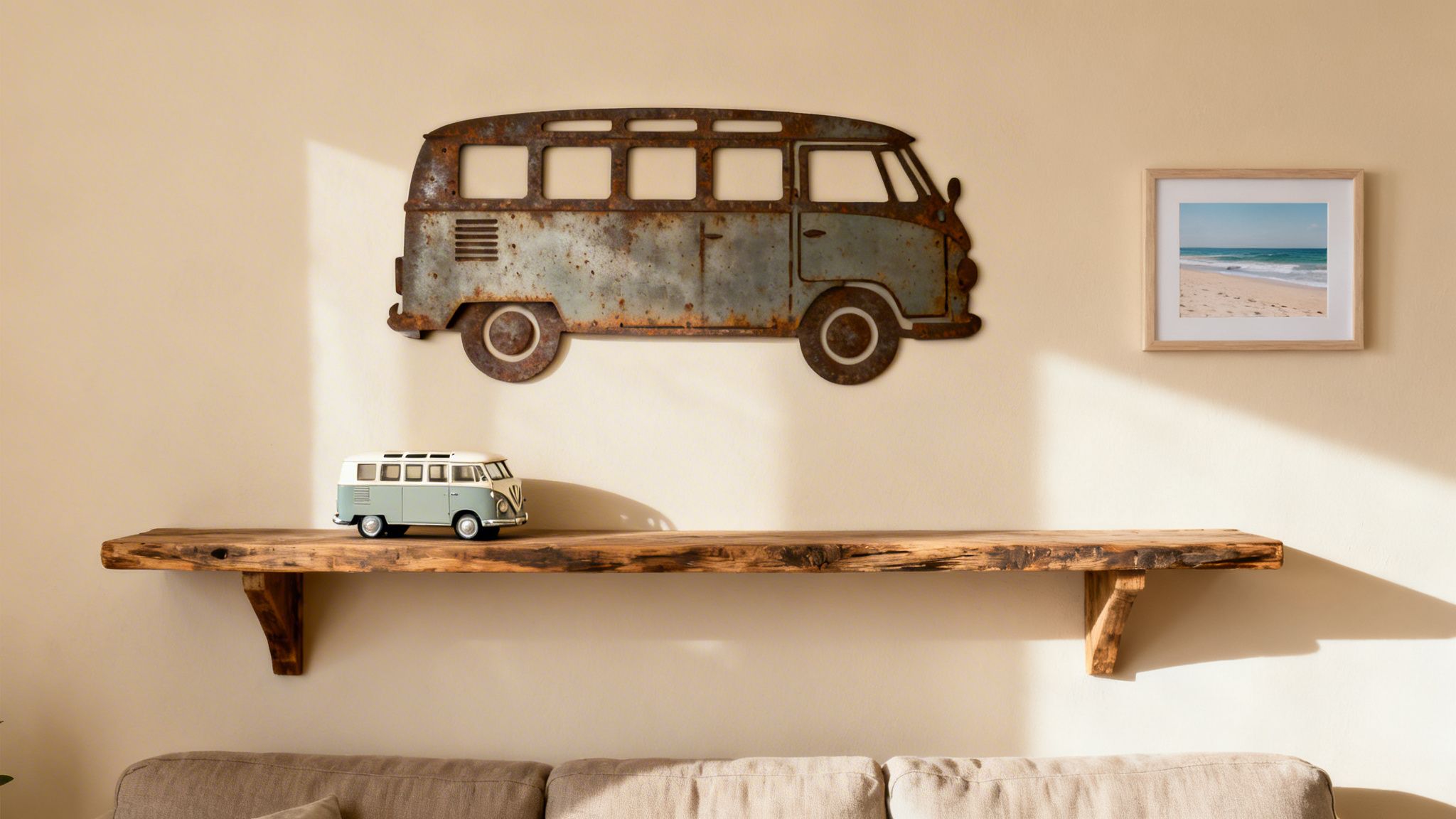
A cozy living room wall with rustic metal VW van art, a wooden shelf, and a framed beach photo.

Every great wall display starts with a hero piece. This is the anchor item that sets the tone and acts as the focal point for all your other living room wall accents. It’s the showstopper, the first thing people notice when they walk in.

For any VW enthusiast, this centrepiece should be something that truly represents your passion. It might be a sharp metal silhouette of a classic Beetle, a vibrant print of a Flower Power Kombi, or a dedicated shelf holding a prized 1:18 scale Kombi Samba Bus diecast model. It’s the piece you’ll look at every day, so make sure it's one you absolutely love.

This hero item will guide your choices for colour, style, and the overall story of your wall. Think of it as the chassis—everything else is built around it.

Finding Your Perfect Centrepiece

Choosing the right focal point is a personal decision, but a few practical considerations will ensure it works in your space. The goal is to balance an item you love with the scale and existing colours of your living room.

  • Consider the Scale of Your Wall: A large, empty wall will swallow a small print, just as a massive piece of art can overwhelm a smaller space. For a big wall, a large canvas or a substantial metal art piece makes a strong statement. On smaller walls, a detailed diecast model displayed on a floating shelf can have just as much impact. Think in metres, not just vibes!

  • Think About Visual Weight: A single, large statement piece immediately draws the eye and creates a clear focus. In contrast, a group of smaller items encourages a closer look, inviting people to explore the collection. Neither is better; they just create different effects, like the difference between spotting a lone Kombi on the highway versus a whole line-up at Volksfest.

  • Match Materials to Your Vibe: Taking a cue from modern Australian coastal design, materials like weathered metal and natural wood can add great texture. These elements complement the VW theme perfectly, giving the retro lines of a Kombi or Beetle a sun-bleached, salty-air character. Our guide to Boho wall art offers more ideas if you want to explore this style.

The best hero piece does more than just fill a space; it tells a story. It's what makes a guest stop and say, "That's fantastic, what's the story behind it?"

Don't hesitate to select an item that is a true reflection of your personality. Whether it’s a minimalist print or a quirky, colourful metal van, your hero piece is the heart of your display. Once it’s in place, you can begin adding the other pieces that complete the narrative.

Blending VW Nostalgia with Coastal Charm

Righto, you’ve picked your hero piece. It’s sitting there, ready to take centre stage. Now comes the seriously fun part—building a whole vibe around it. This is where we get creative and blend that adventurous spirit of a classic Volkswagen with the easy-going, relaxed feel of coastal decor.

Imagine pairing a bold, metallic VW van artwork with some subtle nautical touches. We're talking rustic driftwood frames holding photos of your favourite beach trips, or a small collection of seashells you've gathered over the years. It’s all about creating a personal story on your wall.

The secret to making it all work together is choosing a smart colour palette. Think of the colours you see on a perfect day down at the coast: sandy neutrals, ocean blues, and those brilliant sunset oranges. These colours can tie everything together beautifully.

Creating Your Style Recipe

You don’t need to be an interior designer to get this right. Think of it like a recipe—you just need the right ingredients. It’s about balancing different textures and scales to make sure your diecast models, wall art, and beach-found treasures all look like they belong together.

Sustainability is also becoming a huge part of how we decorate our homes. People are really starting to realise how important it is. In fact, trends show that Aussies are increasingly looking for eco-friendly décor. Pieces like hand-painted Kombi murals on recycled metal are a great example, showing a real shift towards conscious styling.

With so many Aussie home decorators now seeing wall accents as key to a wellness-focused living space, a VW-themed display is a perfect mix of feel-good nostalgia and timeless charm. For more on local trends, you can always check out Aussie design resources like Rug'n'Roll.

The trick is to create harmony without making everything match perfectly. A bit of contrast in texture—like a smooth diecast model next to a rough piece of driftwood—adds depth and makes your wall much more interesting.

Style Templates to Get You Started

To give you a head start, here are a few 'style recipes'. Use them as a starting point to cook up your own unique wall display.

VW & Coastal Wall Accent Style Recipes

Style Recipe Hero VW Accent Supporting Coastal Pieces Colour Palette
The Retro Surf Shack A colourful "Flower Power" Kombi print or metal art. A miniature surfboard, vintage-style beach signs, framed surf photos. Bright oranges, yellows, and turquoise against a white or timber backdrop.
The Coastal Explorer A detailed 1:18 scale Kombi Samba Bus diecast on a floating shelf. Old maps, a decorative compass, and jars of sand from different beaches. Deep navy blues, creamy whites, and brass or gold accents for a classic feel.
The Minimalist Beachcomber A simple, single-colour Beetle silhouette. A single piece of sculptural driftwood, a smooth sea-worn stone, black and white beach photography. Muted greys, soft whites, and natural timber tones.

These ideas are just here to spark your imagination. The best wall accents in your living room will always be the ones that tell your story.

So grab your hero piece, start layering in those coastal elements, and have some fun with it! Check out our collection of vintage home accessories for more inspiration.

Hanging Your Collection: The Nuts and Bolts

Alright, you’ve chosen your hero piece and rounded up a fantastic collection of coastal treasures. Now comes the practical part—getting it all up on the wall so it looks incredible and, more importantly, stays there. A bit of planning here makes all the difference, trust me. It’s what separates a professional-looking display from one that’s just a bit… wonky.

Before you even think about picking up a hammer, let's chat about placement. A golden rule I always stick to is hanging art at eye level. For most of us, that means the centre of your artwork or gallery arrangement should be about 145–152cm from the floor. This creates a really natural, balanced feel that just looks right.

Getting the spacing spot-on is just as important, especially when you're creating a gallery wall. You don’t want your VW memorabilia looking like it's stuck in peak hour traffic. As a good starting point, try to keep a consistent gap of around 5–8cm between each item. This gives every piece its own space to shine while still feeling like part of a cohesive collection.

Mastering the Layout and Hardware

Here’s my favourite trick for planning a layout without turning your wall into Swiss cheese: use the floor. Seriously, just lay all your pieces out and move them around until you land on an arrangement that makes you happy. Even better, trace each item onto paper, cut them out, and use a bit of painter's tape to stick the templates to the wall. You can live with it for a day or two and tweak things as much as you need.

Once you’re happy with the plan, it’s time to grab the right hardware. Please, don’t just reach for any old nail!

  • For Lightweight Prints: A simple picture hook is usually fine. I’ve even used sturdy Command strips with great success for lighter frames.
  • For Heavier Metal Art or Frames: You’ll definitely want a wall plug (sometimes called a drywall anchor) and a screw. This gives you a much more secure hold, which is essential for those precious metal Kombi silhouettes.
  • For Diecast Display Shelves: Always, always try to find a wall stud to screw into. It’s the single most secure way to hang a shelf that will be holding your prized Volkswagen diecast models.

The whole idea is to blend your standout VW accent with your coastal bits and pieces to create one unified look. It’s simpler than it sounds.

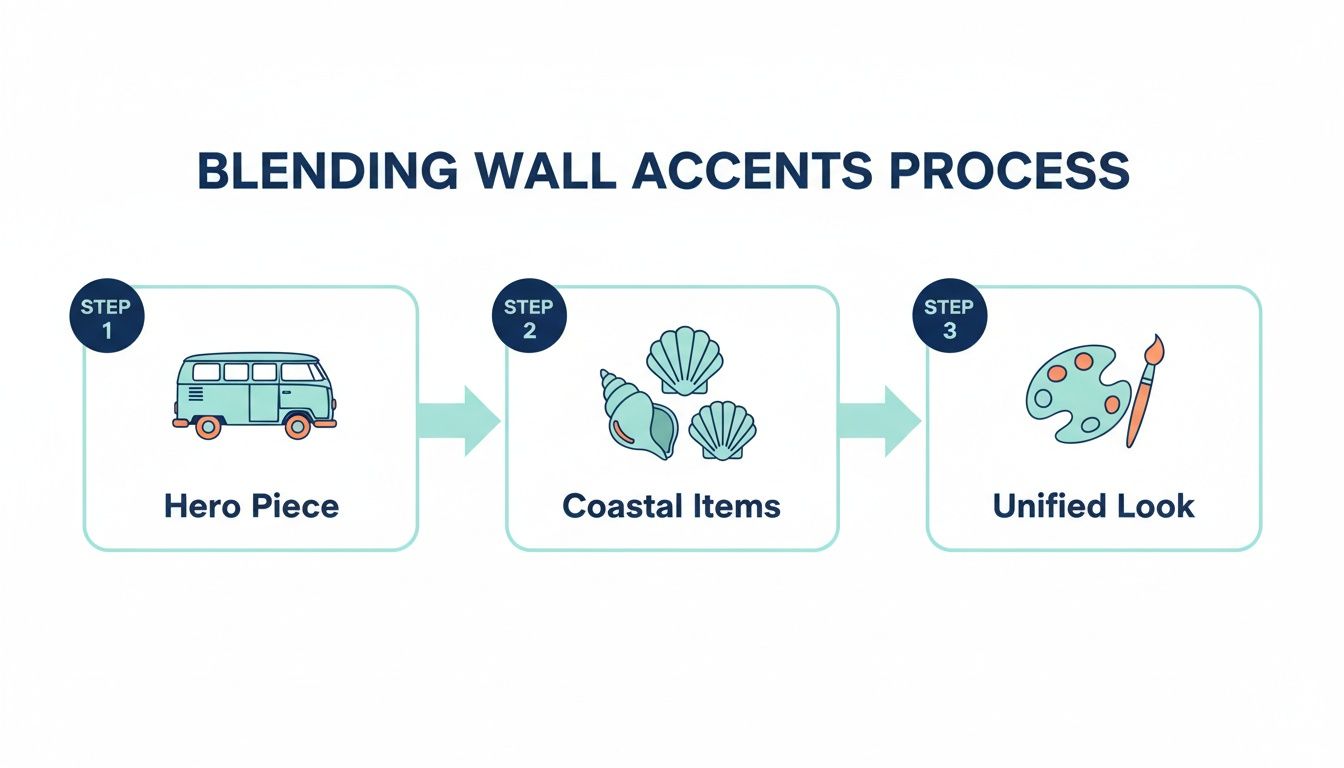
A three-step infographic on blending wall accents: hero piece, coastal items, and unified look.

This process really breaks it down: start with your VW hero piece, layer in those complementary coastal items, and then tie it all together with a consistent colour scheme. The result is a display that looks both personal and professionally styled.

Let There Be Light

Finally, never underestimate the power of good lighting. The right light can take a great display and make it absolutely spectacular. It’s what will make the chrome on a diecast Volkswagen Beetle model gleam and bring out the beautiful, rich colours in a sunset beach photo.

Think of lighting as the final polish. It's the finishing touch that elevates everything. A well-placed spotlight can draw attention to a single, special piece, while softer ambient light gives the whole wall a warm, inviting glow.

Consider installing a small, adjustable spotlight on the ceiling aimed at your hero piece. For a really classy touch, a slim picture light mounted directly above a special frame can look brilliant. Honestly, even a strategically placed floor lamp that casts a warm light upwards can make your living room wall accents feel so much more dynamic and atmospheric.

How to Grow Your Wall Collection Thoughtfully

For a real enthusiast, one piece is never just one piece. It’s the beginning of a story. Building up a collection of wall accents isn’t about just covering a blank wall; it’s about curating a visual history of your passion, one find at a time. It’s for those of us who see an empty space as an opportunity.

Whether you're all in on detailed diecast models, unique VW art, or coastal treasures, the aim is to expand your display with intention. A great collection feels like it has grown with you, reflecting your adventures and tastes from the VW Nationals to a weekend cruise.

Start with What You Love

The best collections come straight from the heart. Don't just grab something because it "fits" a theme. Only add pieces that genuinely get you excited. Stumbled across a rusty old sign at a swap meet that takes you back to your first car? That’s got more soul than anything you'll find in a big-box store.

Your wall should be a reflection of you. If you're a diehard Kombi fan, maybe you focus on collecting different scales or eras. If you love the classic Beetle, perhaps you gather memorabilia that charts its evolution. Let your passion be your compass.

Grow Your Gallery Wall Organically

A truly stunning gallery wall rarely comes together overnight. The most interesting ones look like they’ve been built over years, because they usually have been. Start with your main hero piece and a couple of supporting items, then slot in new treasures as you find them.

A gallery wall is a living project. Don't hesitate to shift things around, swap pieces out, or add new finds. This keeps your display feeling fresh and exciting—just like your passion for VWs.

One great approach is to rotate items with the seasons. A sunny, beach-themed display with surfy Kombis is perfect for summer. When winter rolls in, you could switch to more rustic scenes or a classic Volkswagen Beetle model set against a moodier backdrop.

Sourcing Quality Pieces Matters

As your collection expands, the quality and authenticity of each piece become more and more important. It’s what separates a fun hobby from a truly valuable collection. That’s why getting your gear from a dedicated, licensed Australian importer like VW Memorabilia makes all the difference.

When you buy diecast Kombi models or other VW memorabilia collectibles from a trusted source, you're investing in something that lasts. You get:

  • Authentic, licensed designs that properly honour the VW heritage.
  • Durable materials and craftsmanship built to stand the test of time.
  • The confidence that comes from fast, local shipping and backing an Aussie business that shares your passion.

Thoughtfully growing your collection of wall accents for your living room is one of the most rewarding parts of being an enthusiast. It’s a journey, not a race, so enjoy every step.

FAQs: A Quick Chat About Your Wall Display

Alright, you've got some great ideas brewing and you're ready to get started. But it's totally normal to have a few last-minute questions. Think of this as a quick chat over the bonnet of a Beetle at a car show—here are a few common things we hear from fellow VW and decor lovers.

How High Should I Hang My VW Wall Art?

Getting the height just right for your wall accents in the living room is crucial. The sweet spot is to hang your piece so its centre sits at eye level. For most of us, that’s about 145–152 centimetres off the floor. This makes it comfortable to view, whether you're standing up or kicking back on the sofa.

If you’re hanging something above your sofa, a good rule of thumb is to leave around 15-20cm of clear space between the top of the couch and the bottom of your art. This little gap helps connect the two visually without making your wall feel cluttered.

Can I Mix Different Materials and Themes?

Absolutely! In fact, mixing it up is what gives a wall display real character and texture. Imagine a sleek, metal Kombi silhouette hanging next to a weathered, framed print of Bells Beach and a small wooden oar you found on your travels. That’s the kind of display that tells a story.

The trick to making a mixed collection work is to find a common thread that ties it all together.

  • Shared Colour Palette: Try sticking to a family of colours, like ocean blues, sandy whites, and rusty oranges.
  • Consistent Theme: Make sure every piece feels like it belongs to the same story, for example "Aussie Surf Trip."
  • Similar Frame Style: Using similar frames—like simple timber or clean black—can unify even the most diverse collection of art.

Don't be shy about mixing it up. A wall with varied textures feels collected and personal, not like it came straight out of a catalogue. It tells a much more interesting story.

What's the Best Way to Plan a Gallery Wall Without Making Extra Holes?

The classic dilemma! No one wants a wall that looks like Swiss cheese. The simplest way to dodge this is to lay out your entire arrangement on the floor first. Fiddle with the pieces until you land on a balance you really love.

For a truly foolproof method, grab a big roll of kraft paper.

  1. Trace each of your art pieces onto the paper and cut them out.
  2. Use a bit of painter's tape (it won’t damage your paint) to stick the paper templates onto your wall.
  3. Now, just live with it for a day or two. This lets you move things around as much as you want without making a single hole.

Once you’re 100% happy with the layout, you'll know precisely where each nail or hook needs to go. It takes a little extra time upfront, but it saves a ton of patching and painting down the track.


Ready to build your own wall of VW history? At vwmemorabilia.com.au, we’re a local Aussie importer with a passion for authentic, officially licensed collectibles. As fellow enthusiasts, we stock the gear we love. Explore our full range of Volkswagen diecast models and memorabilia and find that perfect piece to kickstart your collection today. With stock right here in Australia, you'll get it fast