


You know the moment. You’ve parked the Kombi on the grass, the esky’s open, a few old hands are leaning over the engine bay, and somebody says, “Still sounds healthy, mate.” That little comment lands differently when you’ve spent years keeping an old Volkswagen on the road.
Classic VWs have a heartbeat all their own. A Beetle’s chatter at idle, a Kombi’s warm hum on a coastal run, that familiar mechanical soundtrack that instantly sends you back to family holidays, surf trips, and long country drives with the quarter windows cracked open. In Australia, that soundtrack also comes with a challenge. Heat, dust, stop-start traffic, and long distances all ask a lot of engines that were designed in a different era.
That’s where liqui moly ceratec gets interesting. Not as a magic trick. Not as a cure-all. More like a thoughtful bit of modern protection for old machinery that still deserves to run sweet.
That Unmistakable Sound Protecting Your VW's Heartbeat
A classic Volkswagen never sounds sterile. That’s part of the charm. Even a tidy Beetle with a careful owner still talks to you through the fan shroud, valves, gearbox, and exhaust note.
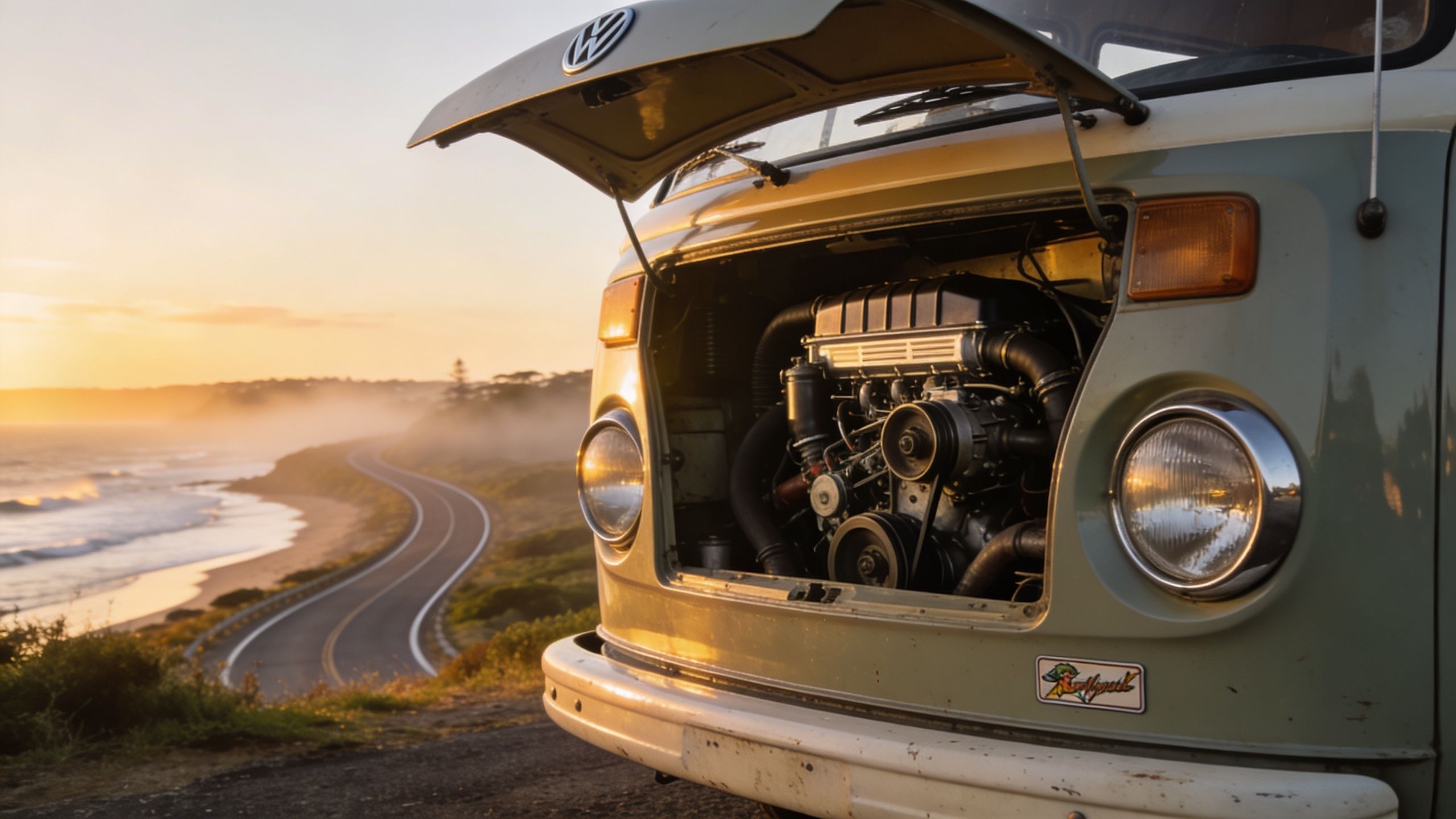
The problem is knowing the difference between healthy old-school character and wear slowly creeping in. Plenty of Aussie VW owners have had that quiet worry on a summer drive. The oil’s fresh, the tune feels right, but you still wonder how much protection those ageing internals really have when the day gets hot and the road gets long.
Why old engines need a bit of modern help
Classic Beetles and Kombis aren’t museum pieces to most of us. They’re driven. They sit in traffic. They head to shows. They do beach runs. They spend time in sheds, then get fired up again for a weekend cruise.
That means a lot of starts, heat cycles, and mechanical contact inside engines that may already have years of wear behind them. Good oil matters. Sensible maintenance matters more. But some owners also want an added layer of insurance.
Keep the nostalgia. Improve the protection.
That’s the appeal of liqui moly ceratec. Liqui Moly says it provides protection for up to 50,000 kilometres (30,000 miles), tied to a long history in friction modifiers dating back to the company’s founding in 1957, as outlined in the Liqui Moly company history.
Preserving more than an engine
For a lot of us, engine care isn’t only mechanical. It’s emotional. The same reason someone polishes the hubcaps properly or hunts down the right trim clips is the reason they care about internal wear. These cars carry memories.
A neat diecast Samba on a shelf looks brilliant. A real one rumbling happily down the coast is even better. If there’s a product that helps protect that experience, it’s worth understanding properly.
Unpacking the Blue Bottle What is Liqui Moly Cera Tec?
On a practical level, liqui moly ceratec is an oil additive made to reduce friction and wear inside an engine. You pour it into the oil, and it travels with that oil to the parts of the engine that live under the hardest contact.
For classic Volkswagen owners, that matters because our engines are asked to do old-school work in very Australian conditions. A Beetle heading inland on a hot day, or a Kombi sitting in slow holiday traffic with camping gear in the back, puts plenty of stress on ageing metal surfaces. Good oil is still the foundation. Cera Tec is an extra layer of protection working alongside it.
So what is actually in the bottle?
Liqui Moly describes Cera Tec as a micro-ceramic solid lubricant suspension based on hexagonal boron nitride. The particles are extremely fine, small enough to circulate with the oil rather than sitting uselessly in the sump.
That technical description can sound heavier than it needs to. The simple version is that it is made to help protect metal surfaces in the spots where oil film gets worked hardest. That makes it easier to understand why long-distance drivers, weekend cruisers, and owners of rebuilt air-cooled engines keep talking about it around the club stand.
What Cera Tec is, and what it is not
A lot of confusion starts because additives get lumped together as if they all do the same job. Cera Tec has a narrower role than that.
It is:
- A wear-reduction and friction-reduction additive
- Used with engine oil, not instead of it
- Relevant to owners who want added protection during heat, load, and repeated use
It is not:
- A substitute for the right oil grade
- A cure for worn bearings, low compression, or mechanical damage
- A cleaner for an engine full of sludge and neglect
That distinction matters with old Volkswagens. If your Beetle has a tired bottom end, no bottle will rebuild it. If your Kombi is healthy and well maintained, though, an additive like this can appeal for the same reason people fit head temp gauges or pay attention to valve clearances. It is about looking after what you have before trouble starts.
Why it gets attention in the VW crowd
Classic VW people notice small changes. We hear the idle at the lights. We feel the shifter buzz. We can tell when an engine sounds relaxed on the run home from a show at Ballarat or up the coast from Sydney.
That is why Cera Tec interests this crowd. It speaks to owners who do not treat these cars as disposable transport. They are preserving machines with stories attached, from sun-faded Beetles to beautifully restored split-window Kombis, and they want every sensible bit of protection they can get.
In that sense, the blue bottle is less about chasing miracles and more about helping an old engine live an easier life.
The Science of Smoothness How Cera Tec Protects Your Engine
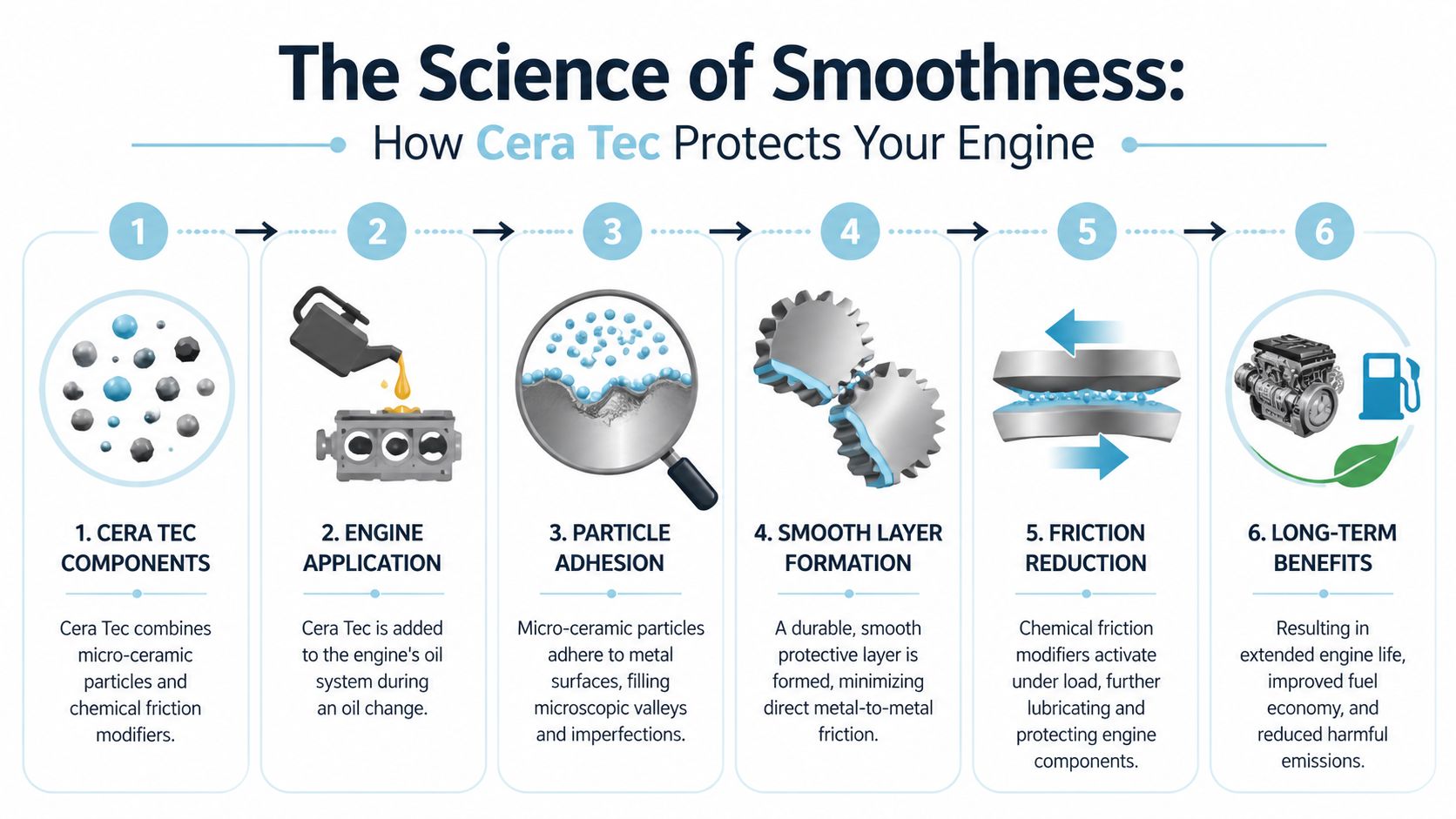
A healthy VW engine has its own music. You hear it in the even idle of a Beetle at the lights and in the steady hum of a Kombi settling into a long highway stretch. What Cera Tec aims to do is help that music stay clean by reducing the tiny metal-on-metal scuffing that builds wear over time.
The trick sits at a level you cannot see with the naked eye. Metal parts that look polished are still rough under magnification. Their surfaces are full of microscopic peaks and hollows. As pistons, cam followers, bearings, and other loaded parts move through hot oil, those little high spots can brush against each other. That contact creates friction, heat, and gradual wear.
What the ceramic part is actually doing
Cera Tec uses very fine ceramic material suspended in the oil. The technical term can sound heavy, but the working idea is simple enough. The additive is designed to settle onto heavily loaded metal surfaces and create a low-friction boundary layer where rubbing would otherwise be harsher.
A useful comparison is a stack of playing cards on a picnic table at a VW meet. Push down on the stack and the cards can still slide across one another with less resistance than two rough surfaces scraping together. In similar fashion, the ceramic structure helps parts move with less direct metal contact in those pressure points where engine wear often starts.
That matters in an older Volkswagen because these engines tell on themselves. A little extra friction can show up as a harsher mechanical note, a fussier feel when hot, or a sense that the engine is working harder than it should on a long summer run.
How the protection works in practice
The process is fairly straightforward.
You add it to fresh engine oil.
The additive circulates through the oil system during normal running.It reaches the surfaces under load.
Those are the contact areas dealing with pressure, sliding motion, and heat.A protective layer forms where it is needed most.
The goal is to reduce direct rubbing between metal parts.Less direct contact means less friction and wear.
That can help the engine feel freer and sound calmer over time.
For owners who spend weekends hunting down the right Volkswagen Beetle parts for a careful restoration, this idea makes sense. You are not chasing magic. You are reducing stress in the places that age an engine over time.
The filter question, answered plainly
Classic VW owners are right to be cautious here. If a product contains particles, the first question is obvious. Will it clog a filter or create problems in oil galleries?
Cera Tec is formulated as a very fine additive for use with engine oil, not as a gritty powder floating around the sump. As noted earlier, the particle size is extremely small, which is why enthusiasts interested in oil pressure and long-term wear do not treat it like an abrasive. In plain terms, it is made to work with the oil film, not fight it.
That distinction matters even more in Australia. Air-cooled Volkswagens often spend their lives in heat, dust, stop-start traffic, and long country drives between shows. Under those conditions, anything that helps preserve a stable, low-friction oil film in loaded areas has an obvious appeal.
What “smooth” usually feels like in an old VW
Smoothness in a classic Volkswagen is not luxury-car silence. It is subtler than that, and seasoned owners know the difference straight away.
It can mean a steadier idle at the servo after a hot run. It can mean less mechanical edge through the middle of the rev range. It can mean the engine feels less busy on a warm drive home with a headwind and camping gear in the back.
That is why people talk about this product in ordinary workshop language. They say the engine sounds happier, feels less strained, and settles into its work more easily. For a Beetle or Kombi that still has many Australian road trips ahead of it, that kind of smoothness is not a gimmick. It is the feeling of an old flat-four being treated with a bit of mechanical sympathy.
Why Your Classic Beetle or Kombi Engine Will Love Cera Tec
You can feel it halfway home from a summer show. The Kombi is loaded with chairs, a spare fan belt, and a box of swap-meet treasures. The road is hot, the wind is up, and that faithful flat-four is being asked to keep pulling hour after hour. In Australia, that kind of use is normal for an old VW, and it explains why careful owners look for sensible ways to reduce wear without changing the character of the engine they love.
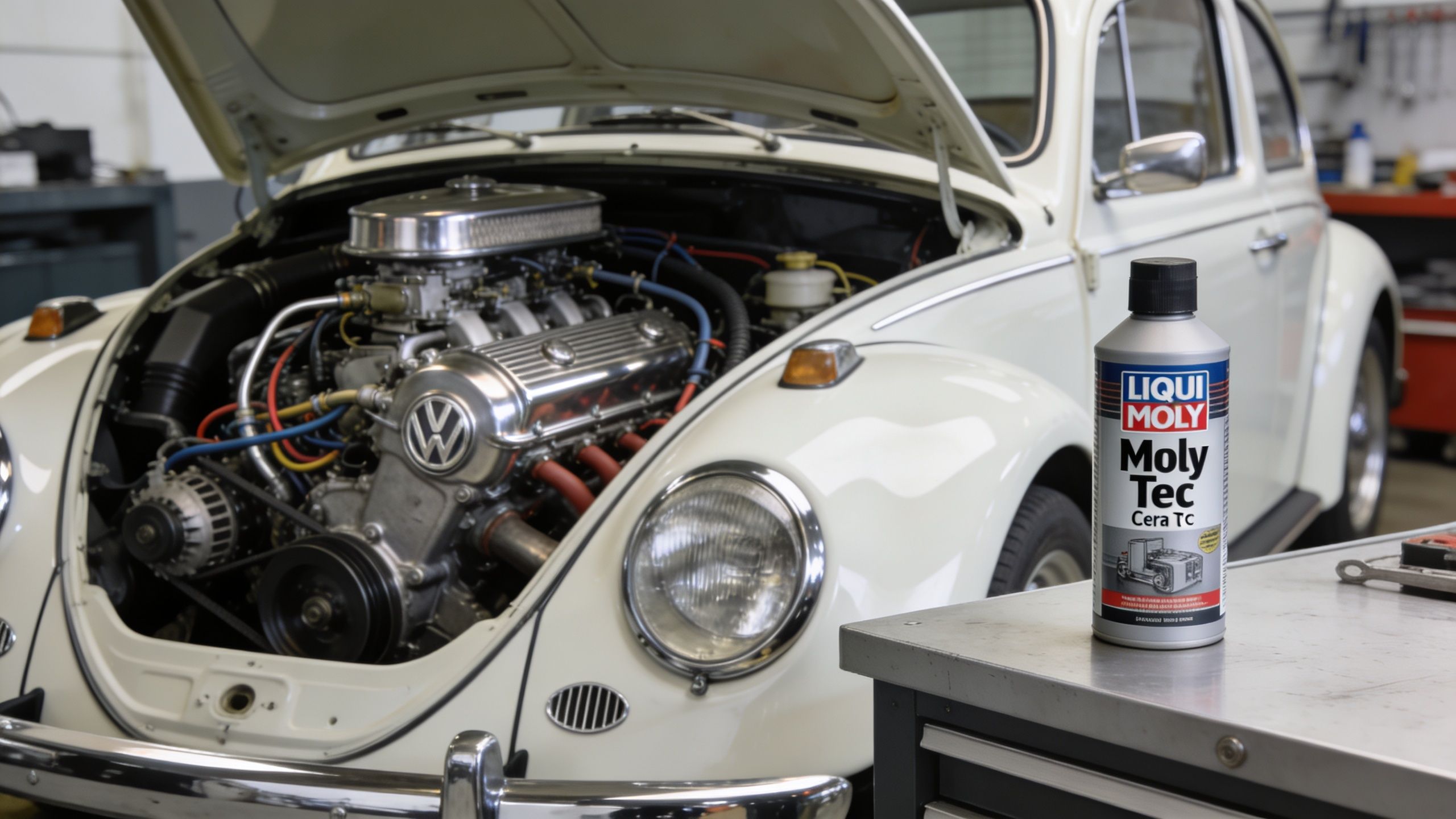
The air-cooled question nobody answers properly
A lot of Cera Tec advice is written for modern cars with water cooling, tighter packaging, and a very different driving life. That leaves classic Beetle and Kombi owners filling in the blanks themselves. If you own an air-cooled Volkswagen, you are not just buying an oil additive. You are deciding whether it suits an engine design that talks back through every tick, hum, and valve-train note.
That caution is part of the culture. Australian VW owners have usually learned the hard way that broad car advice does not always fit an old flat-four. A product can sound good on paper and still leave questions about summer highway runs, dusty regional roads, long periods between drives, or an engine built decades ago with service history that reads like a mystery novel.
Why classics are strong candidates
Older Beetle and Kombi engines often spend more time in the conditions where extra film strength and wear protection sound appealing.
They see repeated start-ups after sitting. They work hard in warm weather. They carry age in their bearings, cam surfaces, rings, and valve gear, even when they are well maintained. A fresh rebuild can benefit from careful lubrication choices, and a seasoned engine with plenty of honest kilometres can benefit too.
The easiest way to think about it is this. A modern hatchback often hides small mechanical roughness behind insulation and computer control. An old Volkswagen does not. It lets you hear and feel the state of the engine more clearly, which is why small improvements in the way it runs can matter so much to the owner.
The Aussie driving factor
Australia adds its own layer. Heat thins patience and punishes machinery. Dust finds its way into everything. Long distances turn a casual Sunday drive into sustained running at load, especially in a Kombi that pushes a lot of air and never pretends to be aerodynamic.
For an air-cooled VW, that matters. These engines rely heavily on stable lubrication while dealing with heat soak, traffic, and steady cruising in conditions that can be far harsher than the average overseas guide assumes. If you have ever driven a Beetle across town on a 35-degree day and then sat listening at idle, you already know how much confidence comes from an engine that sounds settled rather than tired.
Smoother operation matters more in an old VW
Smoothness in a classic Volkswagen is a preservation benefit as much as a comfort benefit. A sweeter-running engine tends to feel less stressed, and that changes the whole experience of driving the car. The gear changes feel kinder. The cabin feels calmer. You stop chasing every little noise because the engine has a more relaxed, even tone.
That matters for owners who see these cars as more than transport. A tidy Beetle or well-loved Kombi often carries family history, show memories, and the kind of charm that makes strangers wander over for a chat at the bakery or servo. Looking after the engine is part of looking after the whole story.
It suits the owner who thinks long term
Cera Tec tends to appeal to the same owner who keeps valve adjustments on schedule, listens for changes after every service, and would rather prevent wear than talk about it after a failure. It fits a maintenance mindset built on mechanical sympathy.
That same mindset usually extends beyond oil choice. If you are planning the next stage of maintenance or a proper tidy-up, having a reliable source for Volkswagen Beetle parts for long-term restoration and upkeep makes just as much sense. Additives are one piece of the puzzle. Good parts, careful servicing, and patient ownership are the rest.
Where people often get stuck
The sticking point is usually not whether wear protection sounds useful. It is whether a broadly marketed product really suits a specialist old engine. That is a fair question.
For many classic VW owners, the appeal of Cera Tec comes from that middle ground. It is not a magic fix for poor tuning, worn-out components, or skipped oil changes. It is a supporting measure for engines that are already being cared for properly. In a classic Beetle or Kombi living through Australian heat, dust, and long drives, that can be reason enough to give it a serious look.
A Simple Guide to Using Cera Tec in Your VW
Using liqui moly ceratec is refreshingly straightforward. No special tools, no mystery ritual, and no need to overthink it if your engine is otherwise healthy and your oil change routine is sorted.
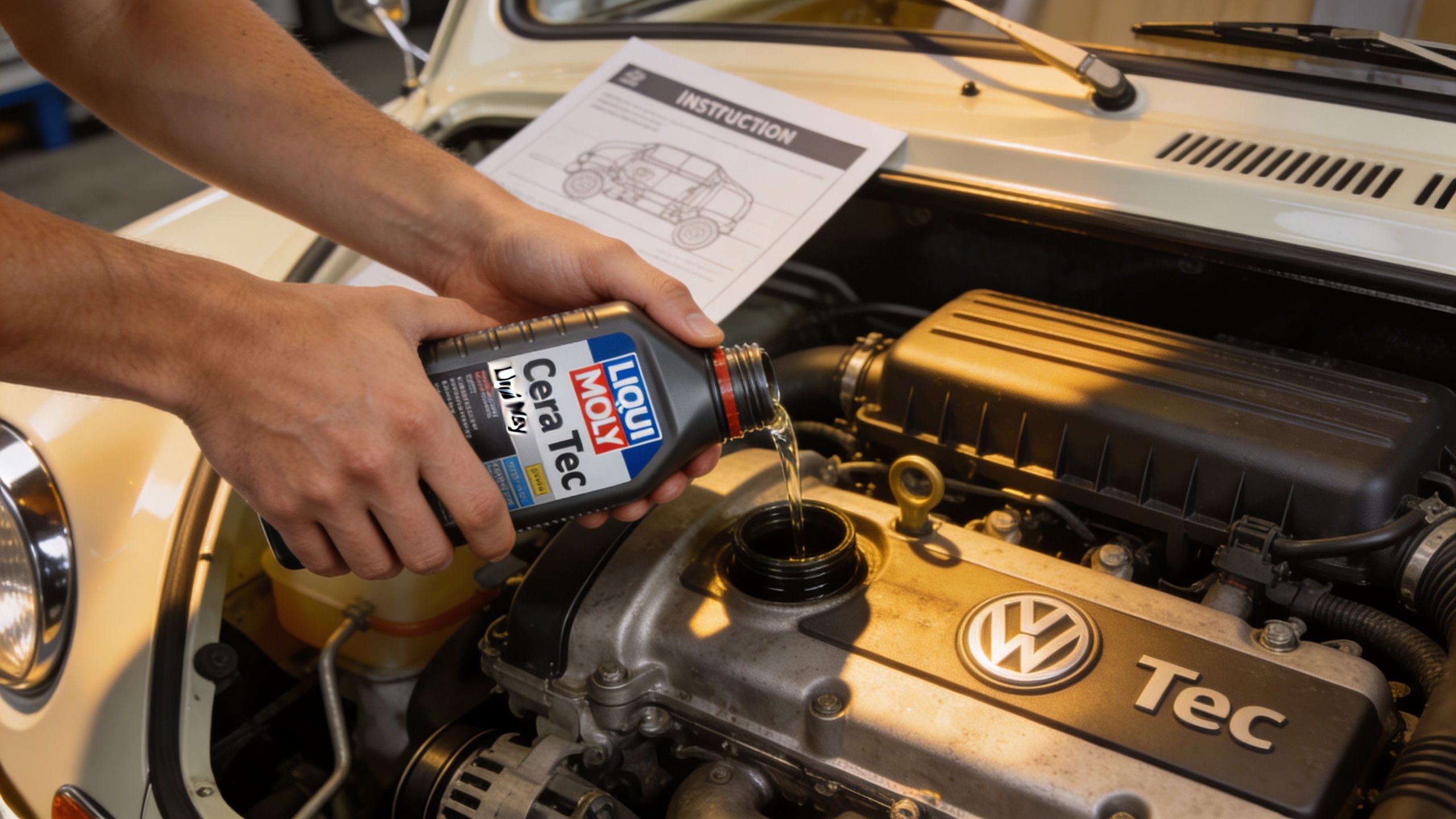
The key fact to know is this. A 300 ml can treats up to 5 litres of oil, and the product is described as self-mixing with long-term efficacy for up to 50,000 km, according to the technical specification summary for Cera Tec. For many classic Volkswagens, that dosage sits neatly within the sort of oil capacity owners are already working with.
Best time to add it
The cleanest way to use Cera Tec is during an oil change. That gives the additive fresh oil to work with and avoids mixing it into tired oil that’s already due for replacement.
If you’re doing the job at home, keep it simple:
- warm the engine first
- drain the old oil
- replace the filter or clean the screen as required for your setup
- refill with your chosen oil
- shake the bottle well
- add the Cera Tec
Cera Tec application at a glance
| Step | Action | Pro Tip |
|---|---|---|
| 1 | Warm the engine | A warm engine helps the old oil drain more completely |
| 2 | Drain old oil | Let it finish properly rather than rushing the job |
| 3 | Service the filter or screen | Match the process to your engine’s setup |
| 4 | Add fresh oil | Use the oil grade you already trust for your VW |
| 5 | Shake and add Cera Tec | Pour it in after the fresh oil |
| 6 | Run the engine | Let it circulate, then check the oil level again |
Don’t overcomplicate the dosage
A lot of owners talk themselves into confusion here. They start converting bottle size, sump volume, and leftover oil as if they’re launching a rocket.
The practical rule is easy. One can is sized to treat up to five litres. For many classic VW applications, that’s right in the zone. If you’re running an unusual setup, a bigger sump, or an engine build with different oil capacity, check your actual oil fill first and work from there.
To see the process in action, this clip gives a useful visual reference:
A few workshop-style pointers
Add it to fresh oil, not oil that’s at the end of its life.
A few more habits help:
- Shake the bottle well: You want the contents evenly mixed before pouring.
- Add it after refilling with oil: That makes it easier to judge the final level properly.
- Check the dipstick again after running the engine: Let everything circulate, then confirm the level.
- Stick to your normal service discipline: Cera Tec supports good maintenance. It doesn’t replace it.
If you enjoy doing your own servicing, keeping a stash of trusted VW Type 1 parts alongside filters, gaskets, and ignition basics makes life easier too. The less last-minute scrambling before a weekend run, the better.
Keeping It Safe and Genuine Important Considerations
A classic VW engine is a bit like an old family record player. Treat it with clean, compatible gear and it sings. Feed it the wrong stuff, or buy from a dodgy source, and the sweet note turns rough in a hurry.
That mindset suits Australian Beetle and Kombi owners better than blind faith in any additive. Our cars deal with hot summer runs, dust, stop-start traffic, and long country stretches where an air-cooled engine works hard for every kilometre. Cera Tec can be a helpful layer of protection, but only if the basics are right and the product in the bottle is genuine.
What matters more than brochure talk
Liqui Moly presents Cera Tec as a wear-reducing oil additive built around micro-ceramic solids and chemical friction modifiers. The useful takeaway for a classic VW owner is simple. It was designed to support lubrication, not to perform miracles.
That distinction matters. If your Kombi has low oil pressure, a nasty bottom-end knock, or years of neglected servicing, no additive is going to rescue it. A healthy or sensibly rebuilt engine is where a product like this makes the most sense, especially one that sees regular highway runs across warm Australian roads.
Common questions from air-cooled VW owners
Will it work with my oil?
Liqui Moly states that Cera Tec mixes with standard motor oils. That helps because classic VW owners often choose oil based on climate, bearing clearances, and how tired or fresh the engine is.
Still, use some judgment. If you already have a setup your engine loves, stick with the oil grade and service routine that have proven themselves over time. Cera Tec should fit into that routine, not replace your thinking.
Will it clog galleries or settle in the sump?
That fear comes up a lot, especially with older engines that have seen decades of use. The product is intended for oil system circulation, so the concern is less about normal use and more about engine condition. If the inside of the engine is full of sludge or debris, the answer is not a bottle. The answer is cleaning up the underlying problem.
Can it replace proper maintenance?
No.
Valve adjustments, ignition timing, oil changes, leak checks, and cooling tin in place still do the heavy lifting. Any seasoned VW owner at a car show will tell you the same thing while leaning on a sun-faded Beetle with a grin. The engines that last are usually the ones cared for consistently, not the ones treated with shortcuts.
Buy carefully and buy genuine
This part catches people out. If you decide to use Cera Tec, get it from a trusted seller with proper stock handling. Counterfeit fluids, old shelf stock, or poorly stored bottles are the last thing you want going into an engine that may already be running with tight tolerances, old seals, and hard-earned oil pressure.
Buying local also makes life easier for Australian enthusiasts. You get faster delivery, clearer support, and a better shot at receiving fresh, genuine product. It is the same logic many of us use when checking bodywork before buying a project. A careful look at a VW campervan rust inspection guide for Australian buyers can save you grief later, and the same careful approach applies to what goes into the crankcase.
A cherished Beetle or Kombi rewards patience. Choose parts and fluids the way you would choose a donor engine or an original badge at a swap meet. With a sharp eye, a bit of restraint, and good maintenance habits, you give that old flat-four its best chance of keeping that unmistakable VW heartbeat alive on Aussie roads.