Fire Extinguisher for Cars a Complete Guide for VW Owners

A Beetle at the far end of the paddock, the bonnet up, the sausage sizzle going, and someone spots that sharp smell of hot wiring. That is the moment a fire extinguisher for cars stops feeling like spare kit and starts looking like the thing that might save a weekend, and maybe the car too. In Australia, private cars generally do not have to carry one, but motorhomes and caravans are different because of extinguisher requirements under ADR 44/01.

For classic VW owners, that practical side matters straight away. A Beetle engine bay, a Kombi cargo area, or a Samba Bus full of treasured trim can turn a small flare-up into a costly mess if the extinguisher is buried under bags or wedged where nobody can reach it in time. If your VW has had modern touring gear added, it also makes sense to check a few related safety points, including the slimline lithium battery safety checklist, so the setup stays sensible as well as nostalgic.

Why Every VW Owner Needs a Fire Extinguisher

A Beetle owner at the far end of a grass field notices smoke curling from the engine lid, and the first thought isn't compliance, it's preservation. That's the heart of it. When you've spent years keeping an old Volkswagen alive, a small, contained fire is not just a safety issue, it's a question of whether the car drives home or goes onto a tow truck.

Car fires can move fast. One Australian safety guide notes they can double in size every 60 seconds (car fire extinguisher guide), which is why the effective strategy isn't heroic firefighting, it's having the right extinguisher within arm's reach and knowing when to back off. The advice is to use it only on something small and contained, then evacuate if the fire is already spreading.

Practical rule: if you'd need to open the bonnet, boot, or rear hatch and the smoke is already building hard, your best move is usually to get everyone clear and call 000.

For VW drivers, the old-school layout changes the stakes. A Beetle's rear engine, a Kombi's tight packaging, and years of road-trip clutter mean a loose extinguisher in the wrong spot can be useless at the exact moment you need it. That's why many owners think of it the same way they think about a good jack, a spare belt, or a clean service book, part of the car's survival kit, not an accessory.

Types of Fire Extinguishers Suitable for Cars

A car extinguisher has to handle a mixed bag of risks. In a VW, that can mean wiring faults, fuel vapour, upholstery, or a hot engine bay, so the agent inside matters more than the label on the front. For Australian vehicle use, dry chemical powder is the common fit because it can deal with several fire types and is easy to keep in the cabin, as noted in Australian vehicle extinguisher guidance.
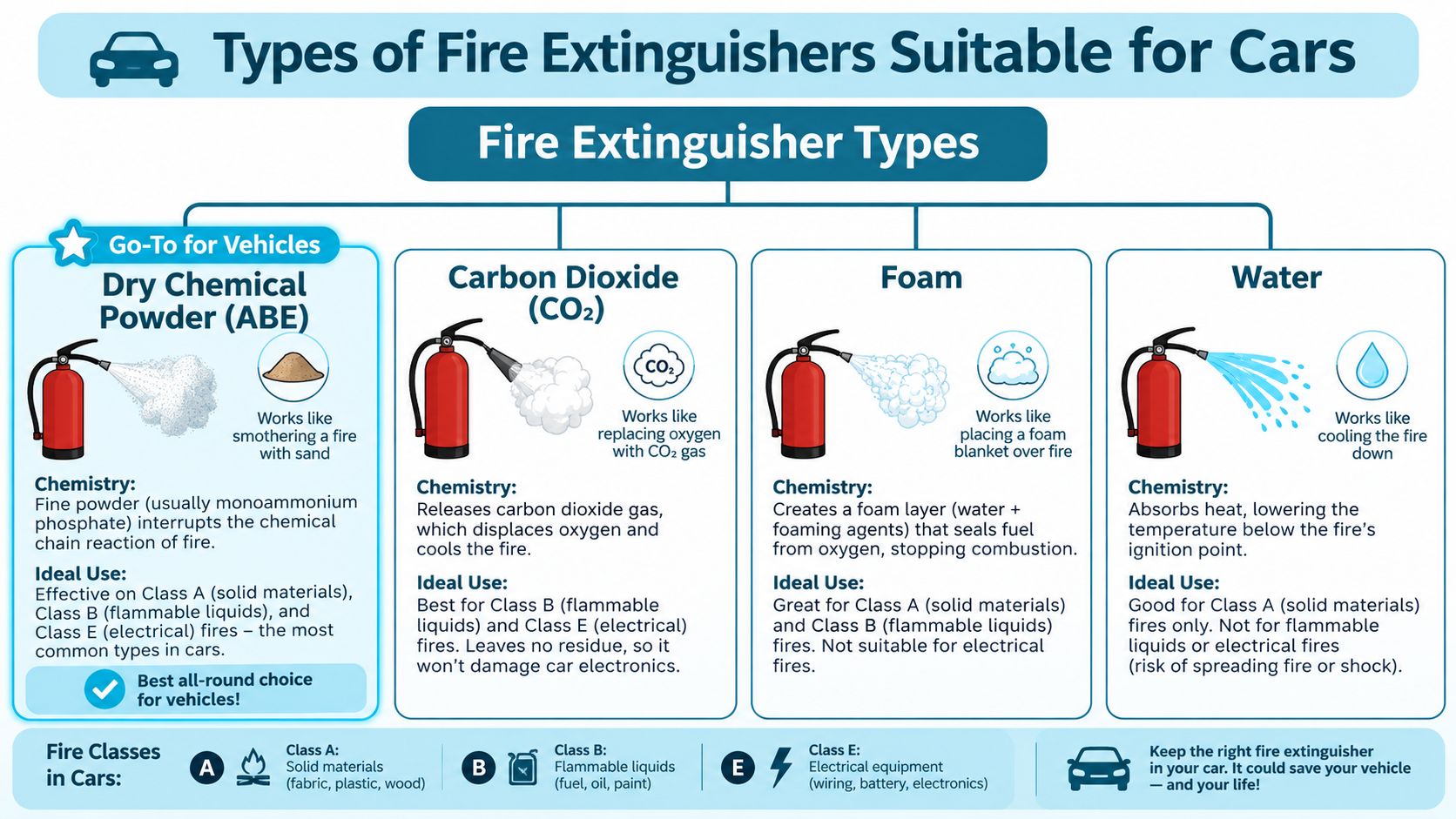
An infographic showing four types of fire extinguishers suitable for car emergencies, including dry chemical, CO2, foam, and water.

Dry chemical powder

Dry chemical powder works by interrupting the fire's reaction and covering the flames, a bit like dropping a controlled cloud right over the burn zone. For cars, ABE models are the usual pick because they suit Class A, B and E fires, which covers ordinary combustibles, flammable liquids, and energised electrical hazards. For a Beetle with ageing wiring or a Kombi carrying holiday gear and fuel fumes nearby, that broad coverage makes practical sense. Australian guidance also points to a 1 kg or 1.5 kg dry chemical powder extinguisher as a common vehicle choice because it is compact and suited to the mixed risks found in vehicles (Australian extinguisher market and vehicle context).

Carbon dioxide

CO₂ leaves no powder residue, which sounds tidy, especially around electrical parts or a dashboard full of old trim. It can suit sensitive equipment, but a classic VW usually needs something that covers a wider spread of possible fire sources. In a rear-engined car, a clean gas discharge alone is often a narrower tool than you want on a roadside stop.

Foam

Foam makes a blanket that helps separate fuel from oxygen. That helps on liquid fires, but a vehicle fire is often a mixed problem, not a neat fuel spill in a workshop. For a Kombi loaded up for a surf run, foam is useful in some settings, yet it is not the most flexible choice for the car itself.

Water

Water cools the fire, and on the right material that is exactly what you want. In a car, though, it has limits because it does not suit electrical faults or fuel-related flare-ups, so it is not the practical pick for classic VW touring. If you are dealing with a Beetle engine bay or a Kombi wiring issue, water is usually the wrong tool for the job.

Bottom line: for roadgoing Volkswagens, ABE dry chemical stays the strongest all-round choice because it gives the broadest usable coverage in a small package.

Reading Ratings and Certifications

Australian extinguisher labels can look like a jumble of letters unless you know what to read. The simplest way is to treat the letters as the fire family, and the number as the unit's practical scale. For vehicle use, the important bit is that the extinguisher is built to Australian expectations rather than chosen from generic overseas advice, because AS 2444 is the local reference for portable extinguishers and hose reels, including vehicle applications.

Extinguisher Class Ratings Risk Type Real-World VW Example
A Ordinary combustibles Seat trim, carpet, cardboard service records
B Flammable liquids Petrol around a fuel line, fuel drips near the engine bay
E Energized electrical equipment Wiring fault behind the dash, ignition-related electrical issue

What matters in a classic VW is matching the extinguisher to the kind of problem you're likely to face, not the kind you hope never happens. A Beetle with ageing wiring and a Kombi with long-road-trip fuel heat soak are different from a kitchen or workshop, so the label should reflect vehicle risk, not just general household use.

The certification side is just as important. An extinguisher can look brand new and still be the wrong type, the wrong size, or not suited to the vehicle environment. That's why local compliance matters, and why checking for AS 2444 alignment is a smarter move than trusting a bargain import with a fancy sticker.

Selecting the Right Size for Your VW Beetle or Kombi

A Beetle cabin and a Kombi cabin don't give you the same storage freedom, so size choice is really about access and reach, not just capacity. Australian guidance points to 1 kg to 1.5 kg ABE dry chemical extinguishers for in-car use, with the unit mounted where it's easy to grab, because cargo-area storage slows you down when seconds matter (size and mounting guidance).

Beetle first, Kombi second

For a Volkswagen Beetle model, a 1 kg unit usually makes sense because the cabin is tight, the mounting space is limited, and the aim is quick access rather than extra bulk. A 1.5 kg extinguisher can suit a Kombi better, especially when the van's carrying more gear, more passengers, or a full weekend load of chairs, tools, and camping bits.

Here's the simple comparison:

  • 1 kg unit: lighter, tidier, easier to tuck under a seat in a Beetle.
  • 1.5 kg unit: more reassuring for longer road trips in a Kombi, with a bit more capacity before the bottle is empty.
  • Either size: only works if you can reach it fast without unloading half the interior.

A good rule for VW owners is to think about where your hand naturally goes in a hurry. If the extinguisher sits in the boot under luggage, it might as well be in the garage. If it's under the front passenger seat or another clear, fixed spot, you've got a chance to act before the fire changes shape.

Mounting and Storing in Your VW Safely

An extinguisher that slides around the cabin isn't safety gear, it's a loose object waiting for a sharp stop. Australian vehicle-fire guidance says the unit needs to be quickly accessible from the driver's seat and secured so it can't become a projectile while you're driving. That's the same common-sense approach most VW owners already use for tools, speakers, and spare parts.
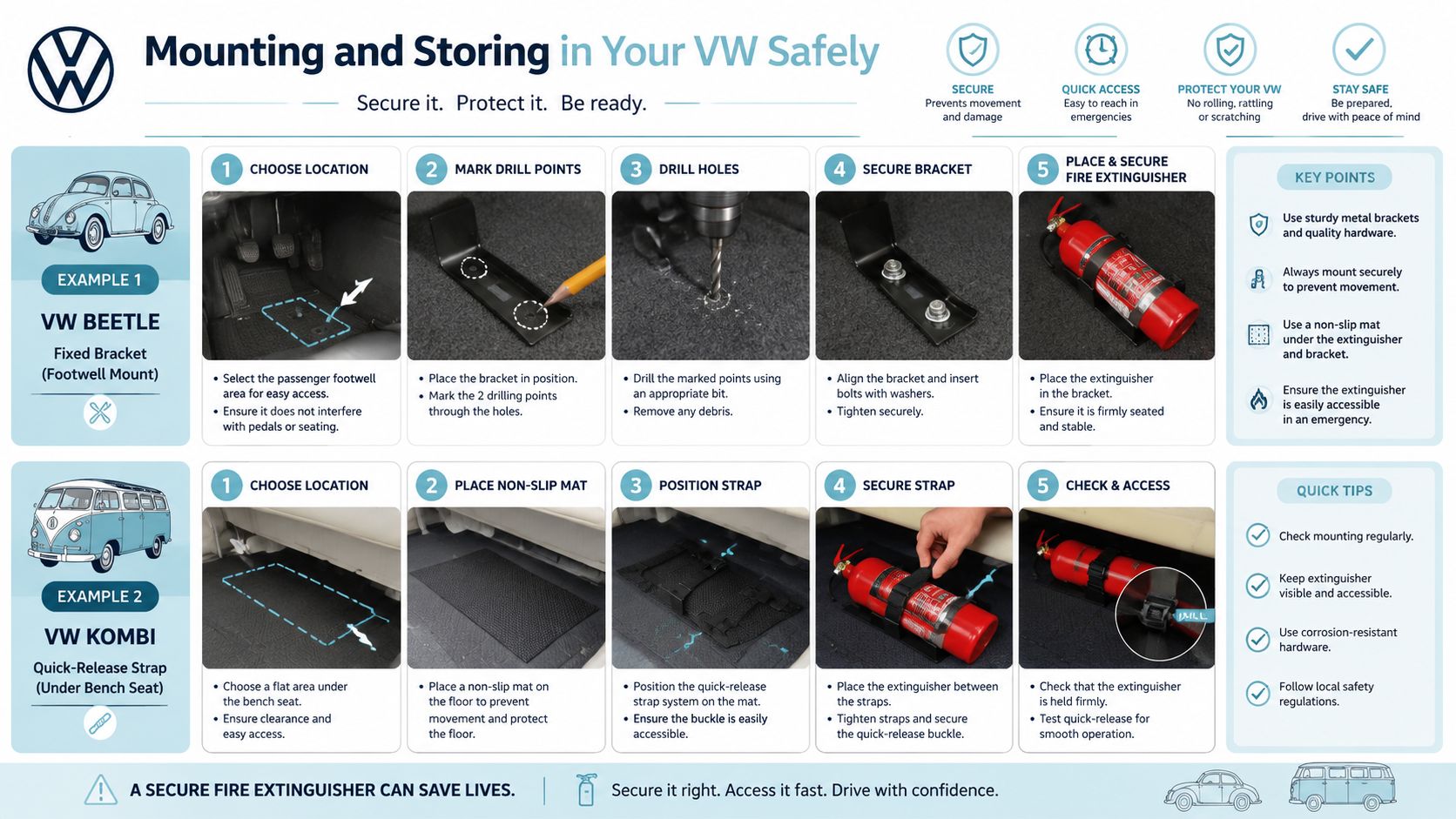
A safety infographic showing step-by-step instructions for mounting a fire extinguisher in VW Beetle and Kombi vehicles.

A Beetle and a Kombi need different mounting logic

A Beetle usually works best with a bracket in the footwell or another low, fixed location where the driver can reach it without twisting around. A Kombi gives you a bit more flexibility, so a quick-release strap under a bench seat can work well if it stays firmly clipped and doesn't interfere with passengers or luggage.

The right mindset is simple:

  • Choose a rigid mount: use a proper bracket or strap system that keeps the extinguisher from rolling.
  • Keep the path clear: don't bury it behind boxes, picnic gear, or spare parts.
  • Test the reach: sit in the driver's seat and make sure you can grab it fast.
  • Protect the interior: use a neat, fitted solution that suits the car's look without sacrificing function.

A clean mounting point under the front passenger seat is usually better than a prettier spot in the boot.

If you're the sort of owner who likes a tidy cabin, the bracket should feel like part of the car, not an afterthought. A practical accessory approach works nicely alongside restoration thinking, and a mounting idea similar to a high lift jack bracket setup can help you think about secure, fixed storage without cluttering the interior.

Using Your Fire Extinguisher with PASS Method

When a Kombi engine bay starts to flare, the best response is calm, fast, and low to the ground. The PASS method is the standard approach, and it's simple enough to remember even when your pulse is up. Use it only on a small fire you can reach, then stop if it isn't going out quickly.

The sequence is straightforward:

  1. Pull the pin. Break the seal and get the extinguisher ready.
  2. Aim at the base. Don't chase the flames at the top, aim where the fire is feeding.
  3. Squeeze the handle. Start the discharge in a controlled way.
  4. Sweep side to side. Cover the burning area evenly.

A few practical habits make a big difference. Stay low to avoid smoke, keep a safe distance from hot panels, and don't stand in front of a bonnet or hatch that can throw heat back at you. If the fire doesn't respond quickly, or you can see it spreading beyond a small contained area, get everyone out and call 000.

Practical rule: use the extinguisher for the first minute of a small fire, not for a full engine-bay blaze.

Maintenance and Inspection Tips

A car extinguisher only helps if it's still serviceable when you need it. Check the pressure gauge, the safety pin, and the seal on a regular basis, and give the cylinder a visual look over for dents, corrosion, or anything that looks out of place. If the unit has powder residue, clean the surrounding area so you're not mistaking old dust for a fresh leak.

Your monthly routine doesn't need to be fancy.

  • Read the gauge: make sure it's in the normal range.
  • Check the pin and seal: they should be intact and secure.
  • Look at the cylinder body: watch for wear, rust, or damage.
  • Confirm the mount: it should still be tight and not wobbling.

For a classic VW, there's one extra sanity check. Make sure stray powder hasn't coated anything important under the dash or around brake lines, because tidy storage is part of safe ownership. If you keep a restoration diary, service book, or digital log, record each check so you don't lose track of the unit's condition, and if you're using a proper logbook style record, the Volkswagen service book guide is a handy reminder of how neatly a well-kept car history can be organised.

Frequently Asked Questions

Can you service an old extinguisher canister? Sometimes, yes, but only if the cylinder is still in good condition and a qualified service provider says it's suitable. Will powder damage chrome or trim? It can leave residue, so clean-up matters after use. How long does an extinguisher last? Check the service status and replace or service it when the pin, seal, gauge, or cylinder condition tells you it's time. How do you dispose of an expired unit? Take it to a proper service or disposal point, don't just bin it.


If your Beetle, Kombi, or Samba Bus is part of the family, sort the safety kit before the next drive. Visit Volkswagen Memorabilia to browse VW-themed gifts, diecast models, and memorabilia that keep the passion alive while you gear up for the road.
A Camping Chair with Side Table for Your VW Adventures

You're parked on the grass at a sunny VW show, kettle just boiled, and someone three cars down has fired up a conversation about split screens, semaphores, and whether any modern van will ever have the soul of a proper Kombi. You reach into the back of the bus, pull out your chair, flip out the side table, and suddenly your whole patch feels sorted. Mug on one side. Sunnies on the other. Keys off your pocket. You settle in and the day starts properly.

That little ritual is why a camping chair with side table has become such a good fit for the Aussie VW crowd. It isn't only camping gear. It's part of the setup. It belongs beside a Beetle at a coastal lookout, outside a Kombi at Volksfest, or next to the esky while the kids chase each other between rows of chrome and two-tone paint.

A lot of people are leaning into that kind of outdoor comfort now. The global camping chair market was valued at USD 128.16 million in 2024 and is projected to surge to USD 210.53 million by 2032, driven by growing outdoor activity and demand for multi-functional furniture in places including Australia, according to Data Bridge Market Research on the camping chair market. That feels about right when you look around any beach car park or show field. We're all trying to travel lighter, relax better, and make a small space feel like home.

More Than Just a Seat Your Home on the Road

Last summer at a coastal meet-up, a bloke in a tidy cream Beetle rolled up with the kind of setup that makes you nod in respect. No fuss. No giant gazebo. Just a classic picnic rug, a striped cooler, and a sturdy chair with a fold-out side table parked neatly beside the car. By the time everyone else was balancing coffee cups on bumpers and searching the grass for dropped phones, he was already settled, chatting away like he'd been there for hours.

That's the charm of this sort of chair. It creates a little home base straight away. You're not just sitting. You're claiming a comfortable corner of the day, whether you're beside the show ’n' shine line or pulled up near the dunes with the back doors of the Kombi open.

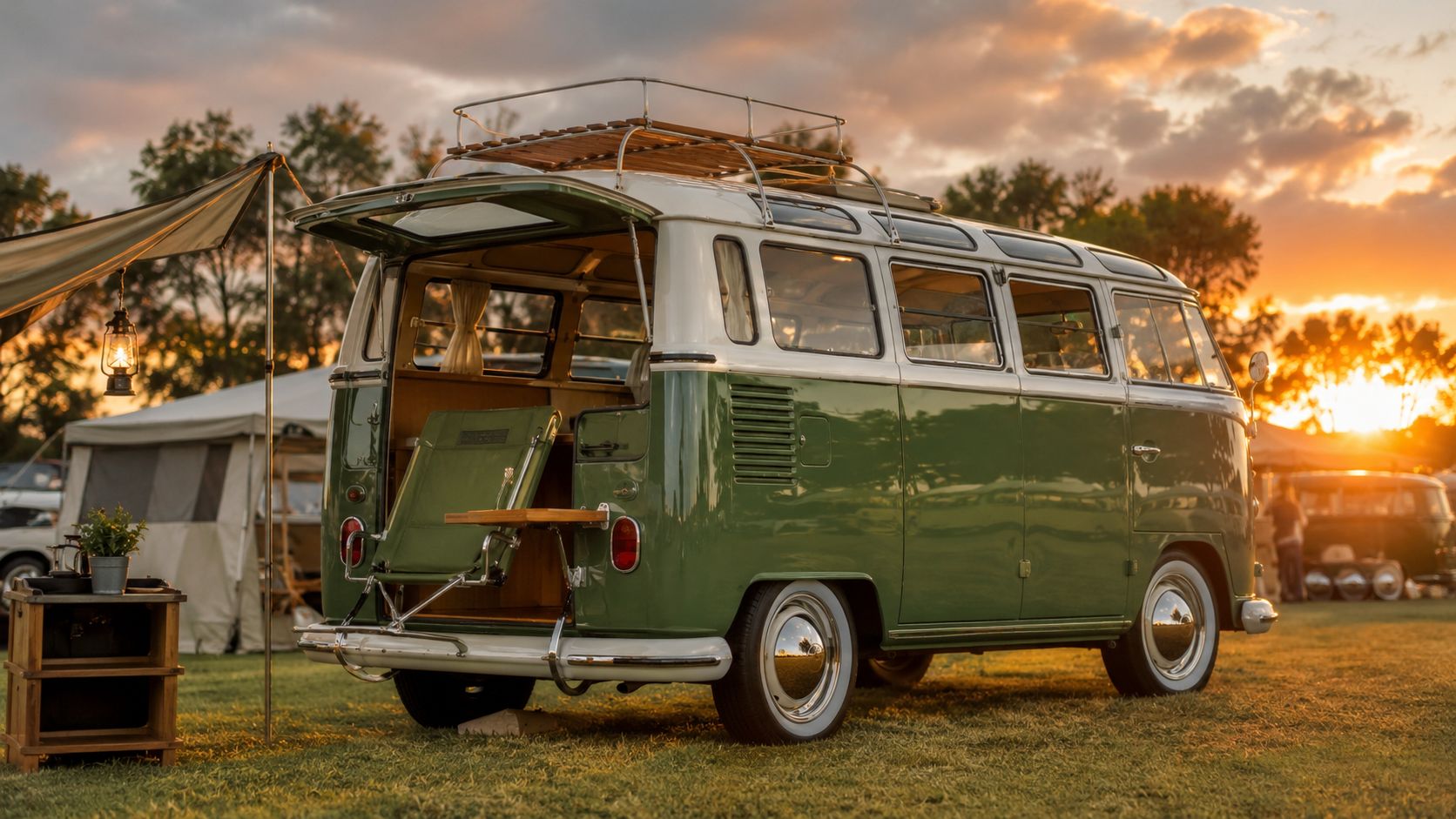
A vintage green and white Volkswagen camper van parked at a campsite during a beautiful golden sunset.

A small comfort that changes the whole stop

Classic VW owners already understand compact living. Beetles teach you to pack cleverly. Kombis teach you to make every bit of space count. A chair with its own table fits right into that mindset. It gives you a perch, a place for a drink, and a handy landing zone for the bits and pieces that usually end up in the sand or under the seat.

If you love the road-trip side of the hobby, there's a familiar rhythm to it. Pull over. Open the hatch. Set the chair. Put the cuppa down. Watch people wander over to yarn about their first Bug, their uncle's Bay Window, or the dream Samba they still hope to own one day.

Practical rule: The best camp gear for VW travel earns its space twice. Once for comfort, and once for convenience.

That's why this style of chair suits the scene so well. It feels organised without being flashy. It's useful at a campsite, but just as handy at a club run, swap meet, or beach picnic after a Sunday drive. If you enjoy road stories and old buses, there's a similar spirit in this look at van life in Australia and the open-road adventure.

Where the chair fits in the VW lifestyle

A good camping chair with side table works especially well for:

  • Car shows and Nationals days where you'll be parked for hours and want a proper spot to sit
  • Beach stops with a Kombi when you need somewhere to keep your drink and phone out of the sand
  • Scenic roadside breaks where a quick fold-out setup beats sitting on the grass
  • Backyard barbies when you want that same relaxed VW-and-coast mood at home

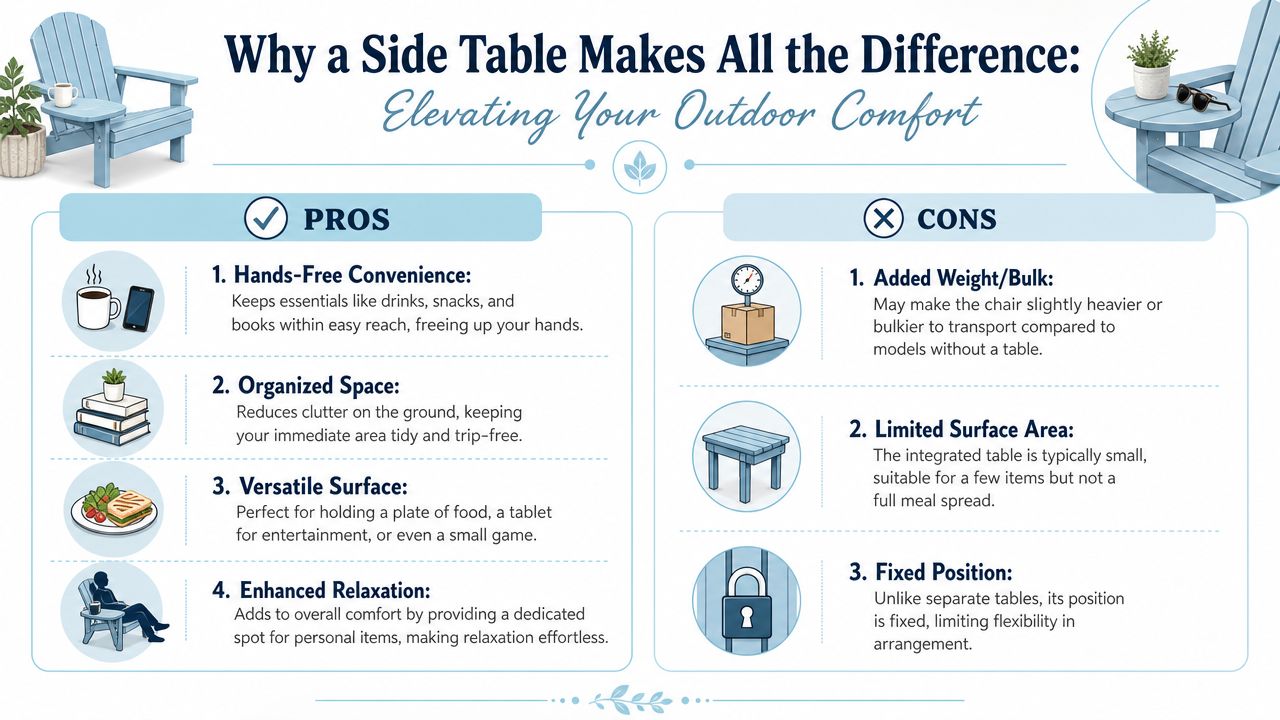
Why a Side Table Makes All the Difference

A standard folding chair is fine until you start noticing the little annoyances. Your coffee ends up on the ground. Your phone slips between the chair legs. Your keys jab your thigh because there's nowhere else to put them. Then the wind picks up and your snack napkin heads for New Zealand.

That's where the side table earns its keep. It handles all the tiny jobs that make a stop feel easy instead of messy.

An infographic detailing the pros and cons of using outdoor chairs with integrated side tables for relaxation.

The upgrade you notice all day

The attraction isn't hard to understand. Portable chairs and stools hold a 47.90% share of the global camping furniture market, and dedicated tables account for 14.8%, according to Future Market Insights on camping furniture. Put those two needs together and the appeal of an integrated table becomes obvious. People want a seat, and they want a surface.

At a VW event, that surface does more than hold a drink. It keeps your camera ready for photos. It gives your sunglasses a safe landing spot. If you collect models, it's even a tidy little platform for a quick snap of your favourite Volkswagen Beetle model or Kombi diecast against a car in the background.

Where it beats an ordinary chair

Some advantages are simple, but they matter:

  • Drink security so your mug or can isn't wobbling on uneven grass
  • Cleaner gear because your phone, wallet, and keys stay off dusty ground
  • Easy reach when you're in and out of the chair all afternoon
  • Tidier photos if you're styling a little display around your car

Keep the chair beside the vehicle, not behind it. You'll spend less time twisting around for your gear and more time enjoying the day.

There's also a quirky side to these tables that plenty of campers recognise. Some chairs include a circular holder meant for stemware, yet people often use these little cut-outs for odd bits and bobs instead. In real life, owners adapt gear to suit the trip. That's the sort of practical thinking VW people have always been good at.

A side table suits the way VW people gather

VW meets are social. You're rarely sitting alone for long. Someone asks about your wheels. Someone else wants to know the paint code. Another person notices the old dealer sticker on the rear window and suddenly you're twenty minutes deep into a story. A side table lets you stay in that conversation without juggling your belongings like a circus act.

That's why this feature stops feeling like an extra and starts feeling necessary.

Choosing Your Perfect Road Trip Companion

Not every chair suits every VW outing. The one that works beautifully beside a Splitty at a full-day show might be a pain to squeeze into a Beetle boot with tools, picnic gear, and a jacket stuffed around it. Choosing well comes down to a few practical details.

Start with the frame

Frame material shapes the whole experience. Steel usually feels more planted and confidence-inspiring, especially in a director-style chair. Aluminium tends to be lighter and easier to carry, which matters if you're loading up a smaller car or walking from the car park to the beach.

If you favour comfort and support over featherweight packing, a stronger frame can make sense. The KingCamp ASH C30 has a 200 kg weight limit, with a heavy-duty powder-coated steel frame and reinforced cross-bracing, which shows what sturdier engineering looks like in practice, as outlined on the KingCamp ASH C30 product listing.

What weight capacity really means

It is easy to glance at a weight rating and move on. It's worth pausing there. A higher capacity often points to more than just who can sit in it. It can also suggest how the chair handles getting in and out, leaning to reach for a drink, or shifting around over a long afternoon.

For VW touring, that matters. Sometimes you're not only carrying yourself. You've got a jacket over one arm, camera in your pocket, maybe a snack plate on the side table. A better-built chair tends to feel calmer and more stable through all that movement.

A chair that feels solid when you stand up from it is often the chair you'll keep using for years.

Don't ignore the pack-down shape

Classic Volkswagens reward compact gear. In a Kombi, you've got room, but it disappears quickly once the esky, bedding, and tools go in. In a Beetle, every oddly shaped item starts a negotiation with the boot lid.

Look for these practical signs:

  • Flat-folding design that slides beside other gear instead of fighting it
  • Reasonable carry weight if you often walk from parking areas to the event grounds
  • Firm side table that won't feel flimsy once it's loaded with the basics

If your trips usually include roadside lunches or simple camp cooking, a compact setup works especially well with an organised camping utensil set for road trips.

Table design matters too

Not all side tables are equal. Some are rigid and stable. Others are really just fabric organisers with a token cup holder. Think about how you'll use it.

If you mostly want a place for a mug, keys, and sunnies, a smaller table is enough. If you want to hold a plate, camera, notebook, or a diecast model for photos, a firmer hard surface feels much more useful.

Camping Chair Feature Comparison

Feature What to Look For Best For
Frame Powder-coated steel for strength, aluminium for easier carrying Shows, beach trips, regular use
Weight capacity A chair that feels stable when you sit, shift, and stand Long sits, larger users, gear-heavy days
Seat width Enough room to relax without perching on the edges Director-style comfort
Pack-down size Flat or compact folding shape Beetle boots, tightly packed Kombis
Side table Firm surface, sensible cup space, easy swing-out action Drinks, phones, snacks, display photos
Fabric Tough, easy-clean material that dries well Coastal trips, dusty events

From Surf Trips to Show and Shines

The best chair for a beach run isn't always the best one for a full day on the oval at Volksfest. That's where a bit of matching helps.

For the coast

If your favourite drives end at the water, go for something light enough to carry over sand and practical enough to wipe down after a salty afternoon. A lower-fuss chair works well here. You want it to set up fast, hold the essentials, and not feel precious.

The side table shines on these trips. It keeps your phone, car keys, and drink off the sand while you watch the surf roll in beside the bus.

For show days

Car shows ask more of a chair. You might be in it for hours, hopping up to admire an Oval, returning to chat, then sitting back down for lunch. A taller director-style chair usually suits this rhythm better because it's easier to get in and out of and tends to feel more supportive.

That's also the style that looks right beside classic Volkswagens. There's something about a neatly parked Beetle, polished hubcaps, and a proper camp chair that feels part of the tradition.

For home and everything between

Some chairs earn a permanent spot on the deck after a trip. That's not a bad sign. It means you picked something versatile enough to carry the same easy-going spirit from the road to home.

A camping chair with side table suits plenty of VW-centred moments:

  • Surf checks at dawn beside the Kombi
  • Swap meets and club runs where you want a dependable perch
  • Backyard display days with mates and model cars on show
  • Christmas and birthday gatherings when extra seating suddenly matters

It becomes less of a camping item and more of a familiar part of the lifestyle.

Styling Your Setup The VW and Coastal Way

A good setup has a bit of rhythm to it. The chair isn't trying to outshine the vehicle. It's there to complement it, the same way a striped beach towel suits a pastel Kombi or a faded canvas bag looks right beside an old Beetle.

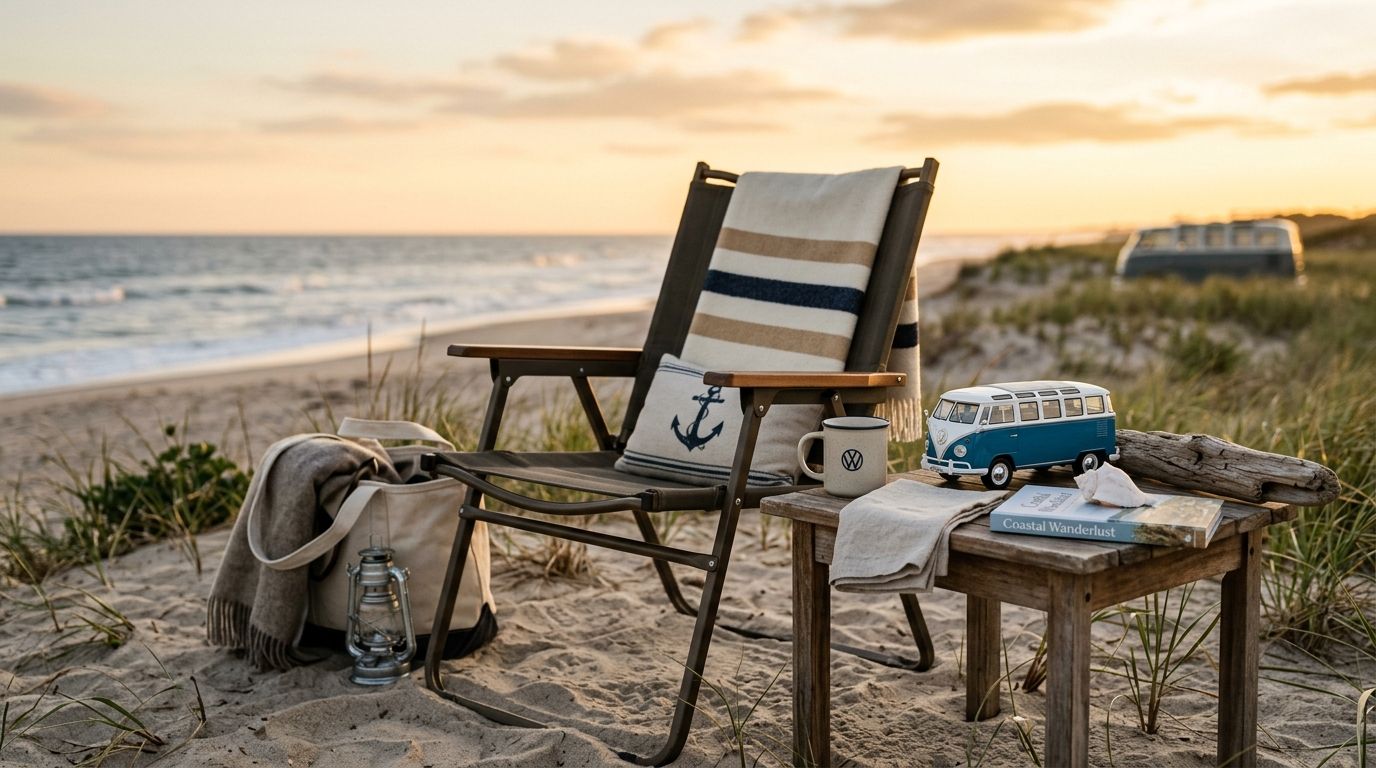
A rustic wooden folding chair and a small side table placed on a sandy beach at sunset.

Build around the car's colour and character

A Sea Blue bus, a cream Beetle, or a brighter retro finish each asks for something slightly different. Neutral chairs let the car do the talking. Soft blues, greens, and sandy tones lean beautifully into the coastal look many VW owners love.

The nicest setups usually keep things simple:

  • Match one accent colour from the car, not all of them
  • Use natural textures like canvas, timber-look accessories, or woven rugs
  • Keep the table uncluttered with only a mug, book, camera, or one display piece

A side table can also become a tiny stage. Put a small diecast there, line it up with the car in the background, and you've got one of the best photo opportunities of the day.

Why the old VW shapes still work so well

That connection runs deeper than style. The 1962 Volkswagen T1 Samba Kombi Bus was Volkswagen's second car model, evolving from the original Type 1 Beetle, a lineage noted in this video on the 1962 Volkswagen T1 Samba Kombi Bus. That shared design heritage is a big reason both full-size classics and their model versions feel so instantly recognisable.

If you collect, that history adds another layer to the scene. A split-screen Samba diecast on the side table beside a real Type 2 doesn't feel random. It feels like the story folding back on itself.

For a closer look at that kind of model presence, this clip captures the visual appeal nicely.

A full setup that feels lived in

One of the best-looking arrangements I've seen was beside a two-tone Kombi at a beachside meet. The owner had a simple navy chair with side table, a cream throw for the late arvo breeze, and a small VW model placed on the table while he chatted with passers-by. Nothing expensive-looking. Nothing overdone. Just thoughtful.

The best VW setups don't look staged. They look ready for another story.

That's the sweet spot. Your chair should feel like it belongs with the car, the coast, and the memories attached to both.

Care Maintenance and Perfect Gift Ideas

A chair that travels with you deserves a little care, especially after a beach run. Salt, sand, and damp fabric can shorten the life of even a decent frame if you chuck it straight back in the car and forget about it.

Keep it ready for the next trip

A quick routine helps:

  • Brush off sand early before it grinds into hinges and fabric
  • Wipe the frame down after coastal use, especially if it's been near salt spray
  • Dry it fully before folding it away for more than a day or two
  • Store it somewhere sheltered so the fabric and moving parts stay in better nick

If the side table swings or folds, check that area now and then. A bit of grit there can make a good chair feel old before its time.

Why it makes such a good gift

For a VW enthusiast, this sort of chair lands in a sweet spot. It's useful, a little nostalgic, and easy to picture in real life. It suits the person who goes to shows, the Kombi owner who loves the beach, and the collector who enjoys creating a full retro setup around their cars and models.

If you're buying for someone like that, it also pairs beautifully with model cars, coastal décor, or retro motoring gifts. A thoughtful place to start is this guide to unique gifts for car lovers with VW gift ideas.

Quick FAQs

Is a camping chair with side table better for car shows than a standard folding chair

Usually, yes. The side table gives you a dedicated place for a drink, phone, keys, and small items, which makes long show days much easier.

Is a heavy-duty chair worth it for occasional use

It can be, especially if you value comfort, easier standing, and a sturdier feel over the lightest possible pack weight.

Can a chair like this work for a Beetle as well as a Kombi

Yes, but pack-down shape matters more in a Beetle. Look for a flatter folding design that won't fight for boot space.


If your idea of a great day includes classic Volkswagens, coastal air, and a few well-chosen pieces that bring the whole scene together, have a look through Volkswagen Memorabilia. It's a local Australian shop with VW-themed gifts, licensed diecast models, Kombi and Beetle favourites, plus coastal-inspired décor that fits beautifully with the laid-back road-trip look. For collectors and gift buyers alike, local stock and fast shipping make it easier to find something special without the long wait.