You're standing in the lounge with a new canvas under one arm, a small Beetle model on the shelf and a blank wall that still feels like it belongs to someone else. The sofa is in place, the coastal cushions look cheerful, yet the room hasn't found its story. That's where wall art hangings can change everything. A woven textile adds softness, a framed print brings focus, and a carefully placed Kombi or Beetle display gives the space that familiar sense of freedom, travel and sunny Australian weekends.
Wall art hangings include far more than framed paper prints. You can work with canvas, timber, metal, woven fibres, textile pieces and mixed-media arrangements, then balance them with shelves, diecast models and beach-inspired accents. The trick is to choose the right material, get the scale comfortable and use fixings that suit the wall behind it.
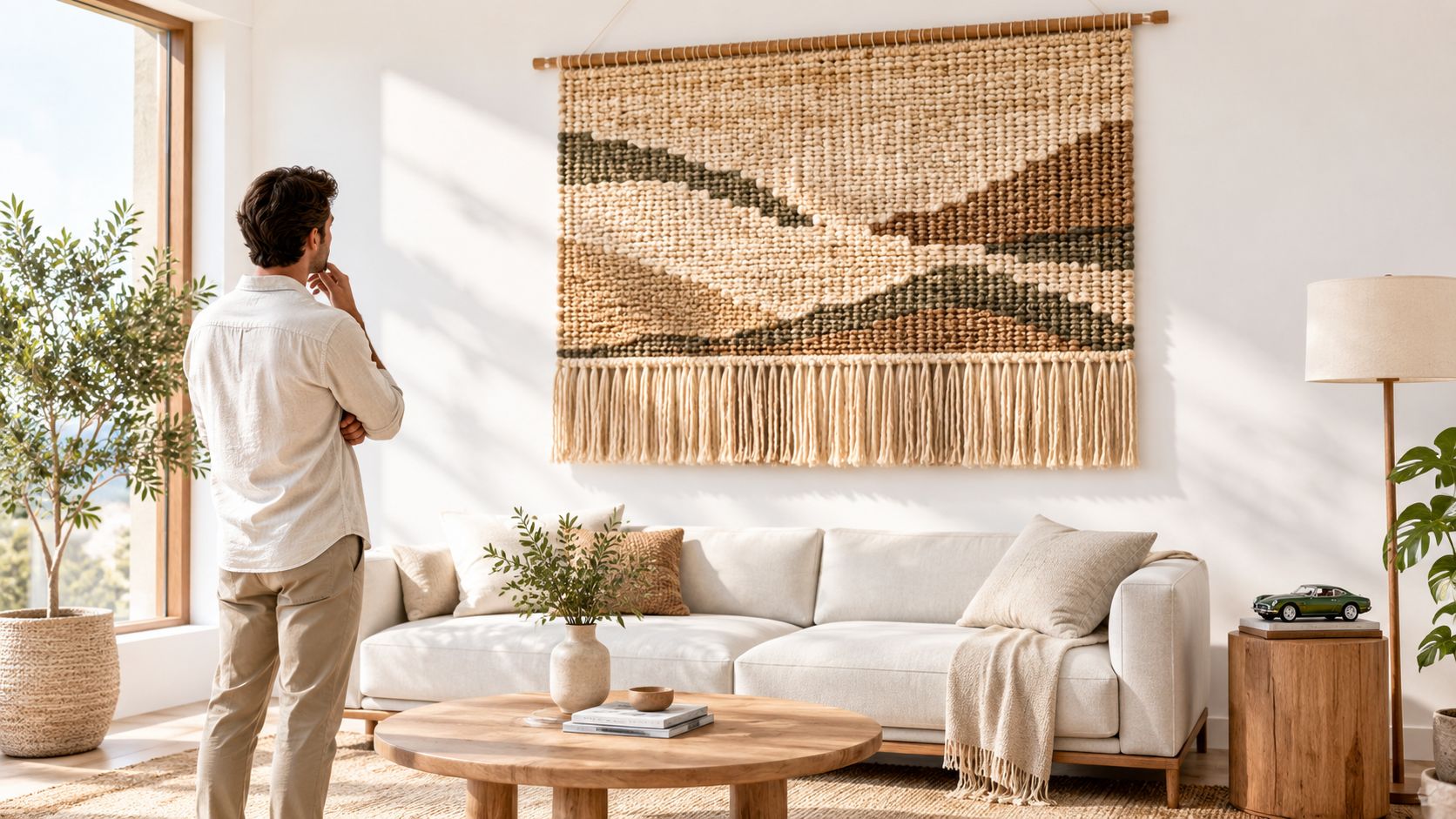
This guide will help you move from a bare wall to a relaxed, cohesive display. You'll learn how each material behaves, how to measure above furniture, how to hang art safely on plasterboard or brick, and how to combine retro Volkswagen character with coastal colour. For more inspiration before you pick up the tape measure, browse these wall decoration ideas, then return to the practical details that make a display work in everyday life.
Introduction to Wall Art Hangings That Transform Your Space
A blank wall can feel oddly loud. It catches your eye every time you walk past, especially in an open-plan Australian home where the lounge, dining area and entry need to feel connected. Many people leave art leaning against the wall because choosing the first piece feels permanent. In reality, a good display can evolve just like a well-loved Kombi, with small changes that add character rather than erase it.
Think of a wall as the backdrop behind a favourite story. A large canvas might recall a coastal drive, a woven hanging can soften a room filled with timber and glass, and a metal sign can bring the cheerful garage-and-beach feeling associated with classic Volkswagens. A licensed diecast model on a nearby shelf then works like a tiny piece of sculpture. It doesn't need to dominate the room. It gives the eye a detail worth discovering.
A useful starting point: choose one anchor piece, then let the surrounding objects support its colour, shape or mood.
Australia has a long relationship with decorative wall hangings. The National Museum of Australia's collection holds 250,000 objects, while Museum Victoria's textile collection documents 1970s wall hangings as part of post-war domestic design. The Australian Bureau of Statistics also recorded that over 80% of purchased art items were Australian-made, worth $137.9 million, with paintings accounting for $84.2 million, a useful reminder that locally made art has held an important place in Australian decorative buying. Those figures come from the historical context provided by the museum and ABS material, not from a rule about how your own home should look.
The best result usually feels collected, not assembled in one afternoon. Start with the wall's size and the furniture below it. Add a material that suits the room, leave enough breathing space around the art, and bring in VW memorabilia or coastal touches where they feel natural. A bright Samba Bus, a muted Beetle model or a woven piece in sandy tones can all belong in the same room when the palette and spacing are doing the quiet organising.
Understanding Wall Art Hangings Types and Materials
Material changes the mood of a room before you've considered the picture itself. Canvas feels relaxed and forgiving, metal adds a sharper graphic note, while woven pieces introduce texture that flat artwork can't provide. Australian industry reporting describes the market as structurally import-dependent, with 70–80% of finished products sourced from China and Vietnam, and estimates that framed canvas prints and multi-panel sets account for 55–65% of unit volume. The same industry market analysis projects nominal Australian-dollar growth of roughly 4–6% annually from 2026 to 2035, so ready-to-hang formats are likely to remain familiar choices for homes and hospitality spaces.
Canvas and framed prints
Canvas prints suit a casual lounge, hallway or beach-house bedroom because their surfaces soften an image and avoid the reflective glare that can come from glass. They work particularly well beside timber furniture, linen upholstery and a small row of diecast vans. A multi-panel canvas can stretch across a broad wall, but treat the panels as one composition when measuring the overall width.
Framed prints bring clearer edges and a more finished feel. Black frames can echo tyres, window seals and steel trim on a Volkswagen, while light timber frames sit comfortably with rattan, pale floors and coastal accessories. Glass adds weight and requires careful handling, so don't choose the fixing by looking only at the print size.
Metal and timber
Metal wall art has a natural connection with motoring spaces. It can look at home above a workbench, in a games room or near a display cabinet, especially when the design references a Kombi, Beetle, surfboard or old service station. Metal often has a crisp silhouette, so pair it with a softer woven item or canvas rather than filling the whole wall with hard surfaces.
Timber signs and carved pieces bring warmth and depth. They're useful for a narrow entry or a wall that already contains polished metal, because wood stops the arrangement feeling too cold. Check the back of the piece before mounting. A keyhole slot, sawtooth hanger or D-ring each calls for a slightly different positioning method.
Woven and mixed media
Woven wall hangings include macramé, tapestry, fibre art and textile panels. They're excellent for bedrooms, reading corners and relaxed coastal interiors, where movement and texture matter as much as colour. Keep them away from areas where they'll brush against lamps, fans or busy walkways.
Mixed-media walls combine materials rather than asking one item to do all the work. Try a canvas painting, a small metal VW sign, a timber piece and a textile accent, then repeat one or two colours across the group. This gives a display the variety of a car show lineup without making the wall look like a storage area.
How to Choose the Right Size and Style for Every Room
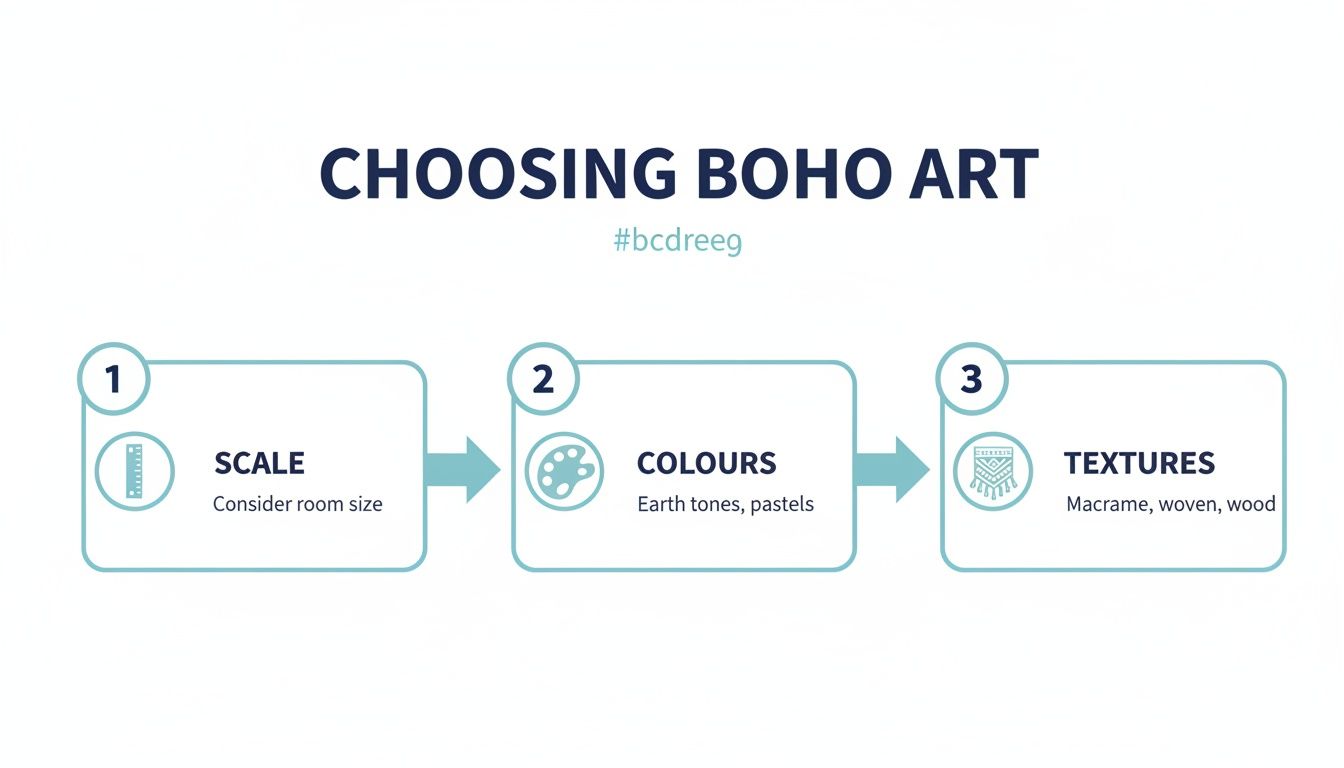
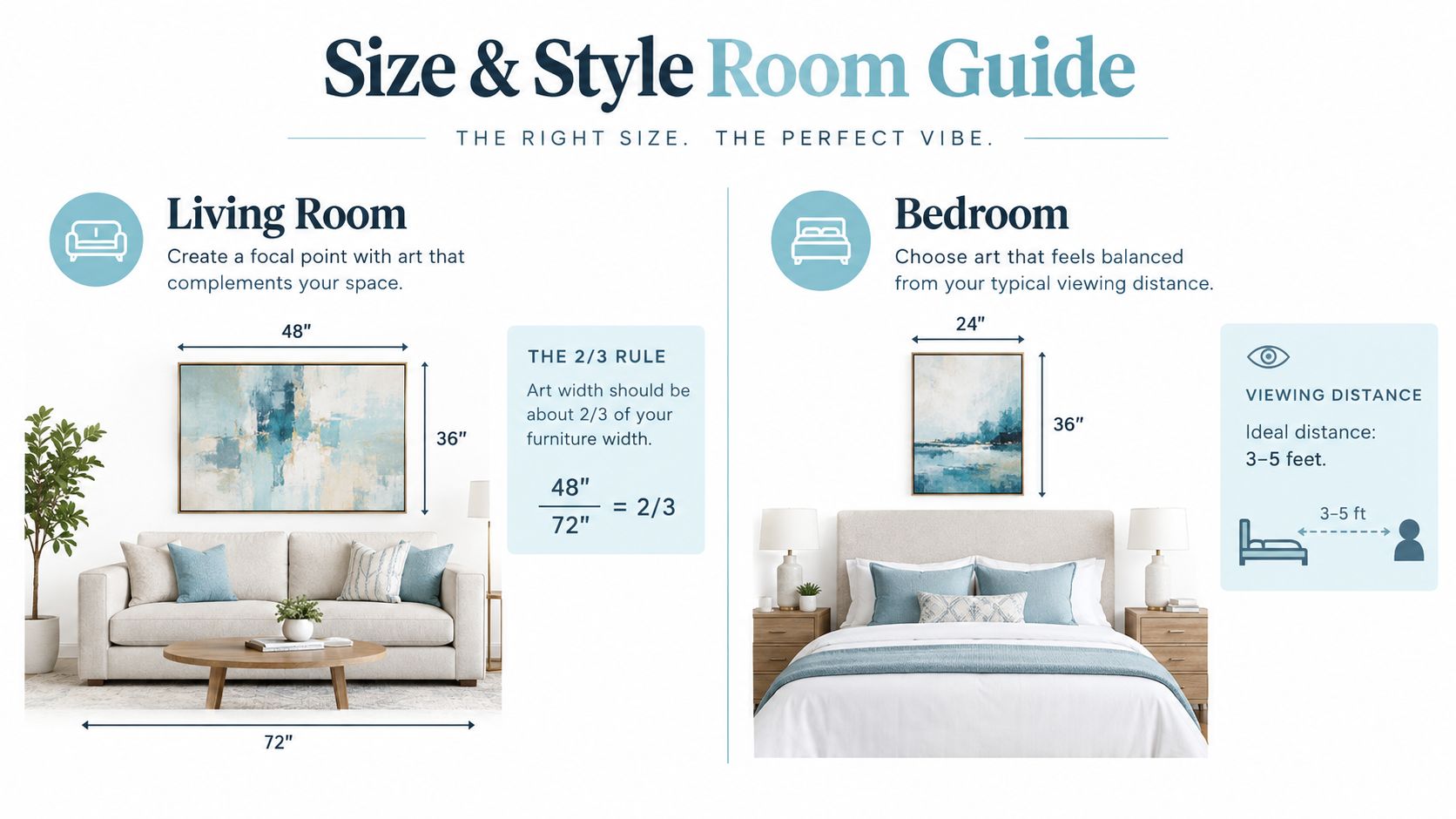
A wall can feel unfinished when a small print floats above a generous sofa. The opposite happens in a narrow passage, where an oversized canvas makes the walkway feel tight. Start with the furniture, then choose artwork that belongs to its available wall area. Measure the sofa, console, bedhead or sideboard, along with the clear space above it.
For everyday placement, centre the artwork at 145–150 cm from the floor and leave 20–30 cm above furniture. Treat these as useful starting points, not strict rules. A low seat, tall sideboard or high ceiling may need a small adjustment. The centre should sit where people can enjoy the piece comfortably, without craning their necks.
Match the mood to the room
A lounge can carry a confident coastal photograph, a wide canvas or a gallery wall with one strong centrepiece. Bedrooms usually suit quieter contrast, tactile textiles and softer edges. In a hallway, narrow vertical pieces guide the eye along the space. A dining area may work well with graphic metal art that sits comfortably beside timber and warm lighting.
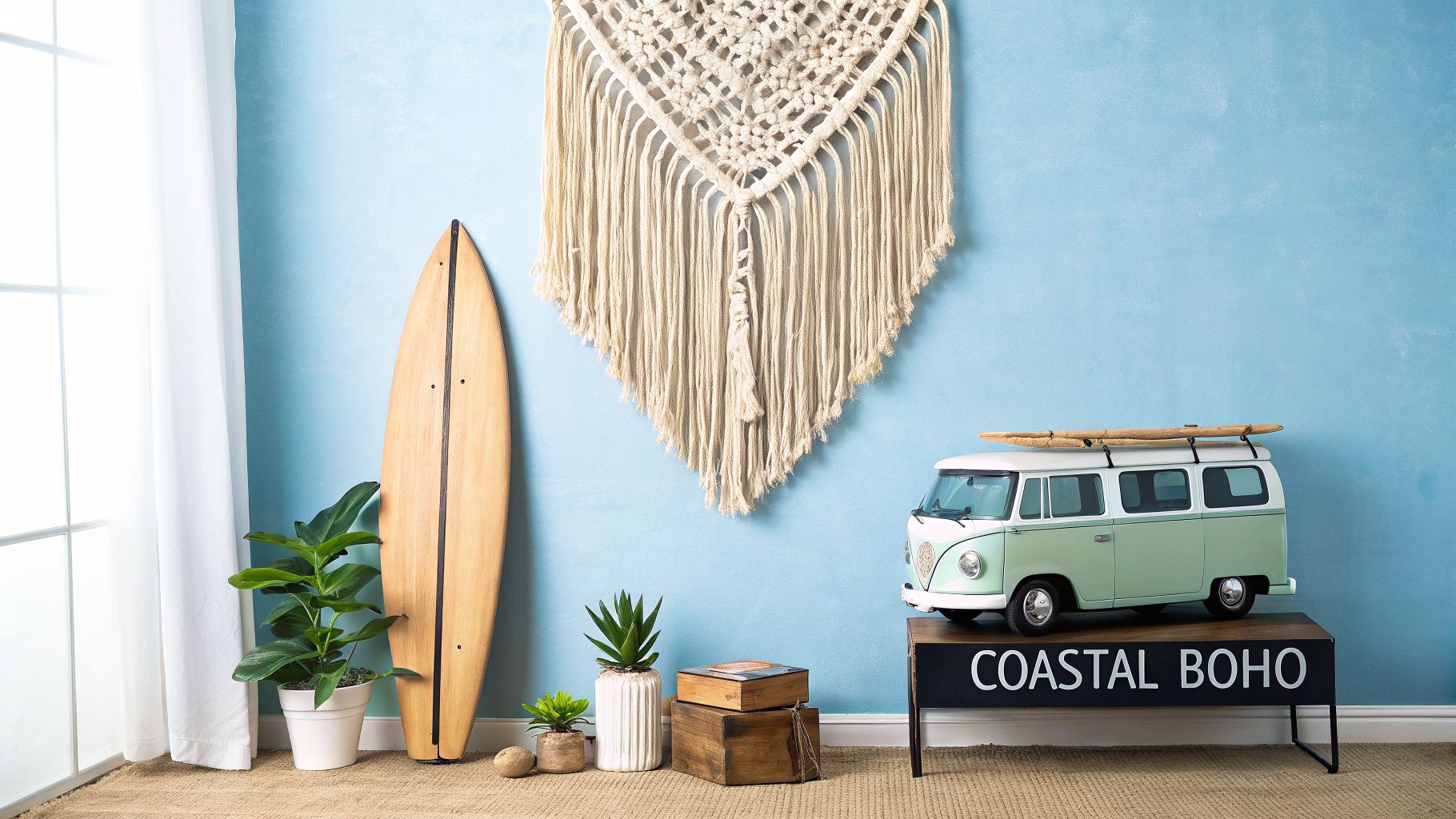
For a VW coastal room, settle the palette before adding the playful details. Sea blue, cream, sand, faded red and sun-washed yellow can connect a canvas with a Flower Power Kombi or classic Beetle display without making every object identical. Surfboard shapes, Australian scenery and old travel motifs bring the retro character naturally. A logo on every surface would make the room feel more like a showroom than a home.
Choose one large piece or a gallery wall
| Decision Factor | Single Oversized Canvas | Gallery Wall Mix |
|---|---|---|
| Visual effect | Creates one calm focal point with less visual noise. | Builds a layered story from prints, textiles, signs and objects. |
| Best location | Wide sofa walls, open dining areas and rooms needing a clear anchor. | Stairwells, hallways and larger walls where varied shapes can fill space. |
| VW styling | Pair with one carefully chosen Kombi or Beetle display nearby. | Add a metal sign, coastal print and small diecast model within the group. |
| Installation | Fewer fixing points, but the main piece needs solid support. | More measuring, with each item aligned to the overall composition. |
| Future changes | Easy to understand, but changing the focal image changes the whole mood. | Flexible, because you can rotate smaller pieces over time. |
A single oversized canvas suits a broad wall that needs one clear anchor. A gallery wall behaves more like a well-arranged VW meet, with each piece contributing to the full view. Mix a canvas, metal sign, woven accent and small diecast Kombi or Beetle, then repeat a colour so the display feels connected rather than crowded.
Lay the proposed gallery wall on the floor before making holes. Paper templates or masking tape can show the outer boundary, while a photograph lets you review the arrangement from a distance. Start with the largest piece, place the second substantial item away from it, and fill the remaining gaps with smaller vertical and horizontal works. Consistent colour usually matters more than identical frames.
A short visual demonstration suits hands-on learners. Use it alongside your measurements, and still check the fixing instructions supplied with your hardware.
Hanging Wall Art Like a Pro From Marking to Mounting
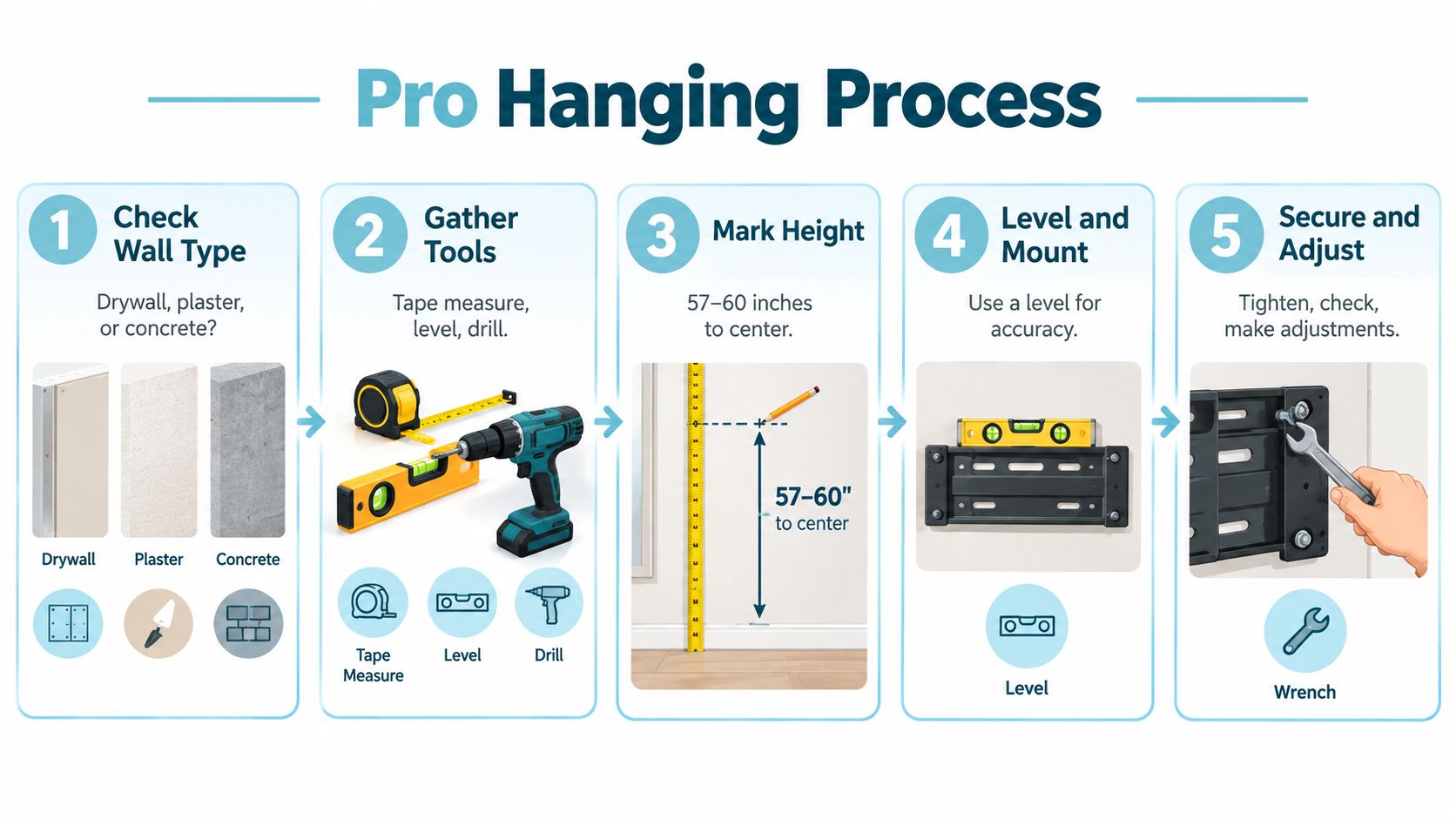
The safest hanging job begins before the drill comes out. Identify the wall substrate, check the artwork's hanging points and consider how the piece will behave once it's on the wall. A wide canvas may be light but still rotate or wobble if it hangs from one off-centre point.
Follow the wall before choosing the hook
Plasterboard is commonly the limiting surface in Australian homes. Practical guidance treats a single picture hook in plasterboard as suitable up to about 5 kg, while a dual-hook and wire setup can raise the working range to around 12 kg for a canvas measuring about 120 × 80 cm. On brick, red masonry plugs are cited at roughly 25 kg, which shows why the same frame can need different hardware in different rooms. See the Australian canvas hanging guidance for the substrate-specific examples.
Use a stud where practical, or select a fixing designed for the actual wall type. Don't rely on a generic nail for a framed print because the item feels manageable in your hands. Weight shifts when the artwork moves, and a failed fixing can damage both the wall and the piece.
Mark, mount and test
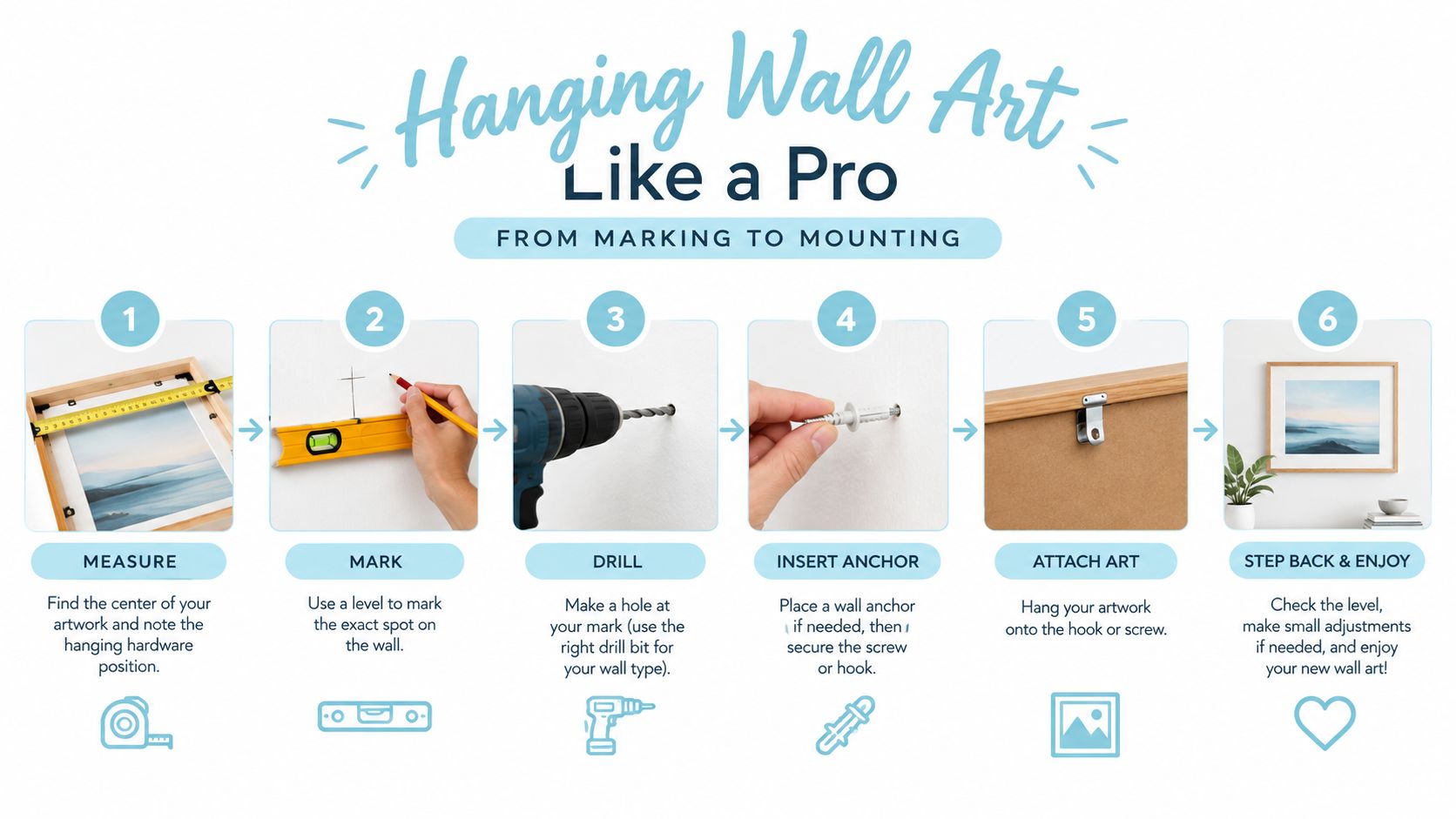
- Measure the artwork. Record its height, width and the distance from the top edge to the hanging wire or bracket.
- Mark the centre line. Use the intended centre height, then work backwards from the hanging point rather than guessing where the frame top will land.
- Check the fixing. Confirm the hook, plug, anchor or screw suits the wall and the load.
- Use two points for width. Two hangers spread the load and reduce rotation. Keep them level, then place the wire under gentle, even tension.
- Lift with care. Have another person help with large glass-fronted pieces or metal panels.
- Check the result. Step back, use a spirit level and press the lower corners gently to test for movement.
Practical rule: measure twice, make one mark, then test the wall fixing before trusting it with a treasured piece.
For specialist hanging systems, think in terms of the complete arrangement. One Australian supplier lists combinations as light under 10 kg, medium under 20 kg and heavy under 40 kg, while individual hook and wire pairings range from 5 kg on 1 mm Perlon wire to 20 kg on 2 mm wire. The hanging-system load guidance also recommends two hangers for better stability. That approach makes sense for a large wall display beside a prized Kombi model. The frame, wire, hooks and wall must work together.
For a VW-focused installation, this Volkswagen van wall-art hanging guide can sit alongside the general safety checks above. The cheerful part is choosing the position. The serious part is ensuring the artwork stays there.
Renter Friendly and Heavy Art Solutions for Australian Homes
Renters need to plan the wall before choosing the artwork. Check whether the lease permits hooks or adhesive products, whether the surface can support the fixing, and whether the wall can be returned to good condition. A rental-friendly VW coastal display might pair a lightweight canvas with a small woven piece and a diecast Kombi on a shelf, rather than placing heavy metal art above a sofa.
Australian renter guidance commonly discusses Command strips for canvases up to about 2 kg and picture hooks for frames around 5–7 kg. Suitability still depends on the product, wall finish and installation instructions. Read the bond-friendly renter guidance before applying anything to painted plasterboard or wallpaper.
A safer rental routine
- Read the lease first. Some agreements set conditions for hooks, adhesive products and wall alterations.
- Check the surface. Dust, fresh paint, textured finishes and wallpaper can change how adhesive behaves.
- Keep the load modest. Adhesive products suit lighter canvases, not heavy glass frames or substantial metal pieces.
- Photograph the wall. Take clear before-and-after photos to record its condition.
- Plan the make-good. Keep the original packaging and follow removal instructions slowly, without pulling adhesive away from the paint.
- Avoid risky locations. Do not place a poorly supported piece above a bed, cot, desk or busy walkway.
Heavy artwork needs a different plan. Australian trend reporting describes interest in oversized canvases, layered textures, woven hangings, metal art and mixed-media walls. One Australian source reports that its median order size moved from 60 × 80 cm to about 90 × 120 cm in 2026. Treat this as a market observation, not a rule for every Australian home. The Australian picture-hanging trends report also links current interest with Australian photography and Indigenous-owned or licensed works, where provenance deserves careful attention.
A broad canvas can wobble because its corners flex and its hanging point sits away from the wall. Two hangers reduce twisting, while suitable wire thickness helps carry the load. For heavier framed or metal work, choose a rated system instead of matching random hooks until one appears suitable. If the wall is uncertain or the piece is valuable, a professional installer is a sensible investment. In a retro-beach room, secure the artwork first, then let the canvas, metal and woven textures support the Kombi and Beetle display.
Creative Display Ideas for Gallery Walls and VW Coastal Mixes
A successful VW coastal wall feels like a memory board from a long road trip. It might combine a faded ocean photograph, a woven fibre panel, a small metal sign and a shelf holding a bright diecast Kombi. The collection works because each item shares a mood, not because every object comes from the same range.
Build around one travelling story
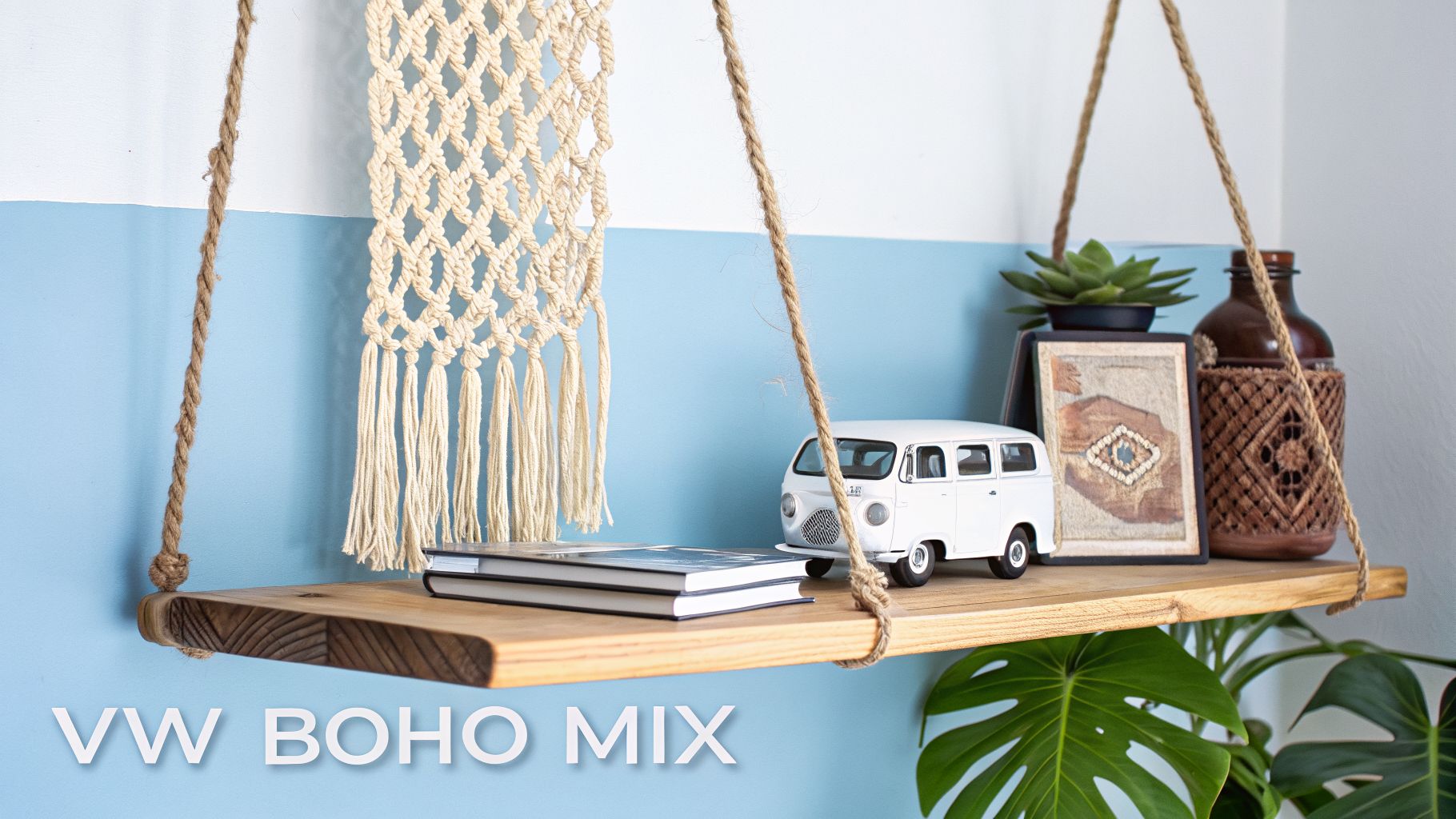
Start with a visual anchor. A framed Australian or surf image can establish the blue-and-sand palette, while a 1962 Kombi Samba Bus diecast model adds the unmistakable retro note on a shelf below or beside it. A Beetle model can sit slightly apart, giving the display a second shape and stopping the vans from forming a repetitive row.
Flower Power variants suit warmer palettes, especially cream, orange, yellow and faded red. A surfy van works with woven textures and pale timber. Keep the smaller models on a ledge or cabinet rather than attaching them to the wall, and give each one enough room to read as a miniature vehicle rather than a loose ornament.
Use a repeatable arrangement
Try one of these formulas:
- Anchor and satellites: Hang one broad canvas, then place a small woven piece and metal accent on either side. Repeat one colour in the diecast display.
- Tactile ladder: Arrange textile, canvas, timber and metal from largest to smallest as the eye travels up a narrow wall.
- Shelf-backed gallery: Install a slim picture ledge, lean framed pieces against the wall and place a Kombi model in front. Secure items if the shelf is in a busy passage.
- Asymmetrical cluster: Put the largest item slightly off-centre, then balance its visual weight with two smaller pieces, a circular object or a Beetle model below.
Leave comfortable gaps between pieces and keep the outer boundary deliberate. A gallery wall should look connected from a distance, then reward a closer look with details such as a licence-plate-style sign, woven knots or a tiny surfboard motif.
Lighting matters just as much as spacing. Avoid placing delicate textiles in harsh direct sun, and use warm, directional light to pick up the texture of canvas and metal. If your room already has several small objects, choose one stronger artwork instead of adding more pieces. The living-room wall accent ideas can inspire combinations, but your own collection should remain the deciding voice.
Caring for Your Wall Art and Styling Your Next Steps
Dust is the quiet enemy of a display. Use a soft, dry microfibre cloth on frames, timber and metal, and clean glass with the cloth rather than spraying liquid near the artwork. For canvas, brush gently with a clean, dry, soft brush. Don't press into the surface, especially if the print has raised texture.
Textile and woven pieces need a little breathing room. Keep them away from persistent humidity, steam and areas where they'll catch on bags or clothing. Coastal homes often have open windows and salty air, so inspect metal surfaces occasionally for residue and wipe them according to the maker's care guidance. Direct sunlight can fade prints and fabrics, so use blinds, curtains or a better position when the light is strong.
Keep the fixing part of the care routine
Check the top edge of every hanging when you dust. Look for a slipping wire, a hook that has shifted, a frame leaning forward or a canvas that has started to rotate. Large pieces deserve extra attention after moving furniture, cleaning walls or experiencing strong household vibration.
Let the collection evolve
A wall doesn't need to be finished forever. Rotate seasonal coastal accents, move a Beetle model from a shelf to a cabinet and let a new woven piece change the balance of an older gallery wall. Keep the main palette steady, then allow the details to carry the nostalgia.
Volkswagen's Australian story gives that styling a strong foundation. Volkswagen's official history describes German migrant Karl Regel arriving in Sydney with a right-hand-drive Beetle built in Stuttgart, which became one of the first Volkswagens registered in New South Wales. Full Beetle manufacture later ceased after a 6-year run at the Clayton plant, according to Volkswagen Australia's Beetle history. Museum Victoria records that the first Beetles were imported in late 1953, local production began at Martin & King in Clayton in 1959, and Australian production ended in 1968, with just over 260,000 Beetles made locally. Its collection history of the Australian Beetle preserves those details.
The story continued beyond the original car. Carsales records local content reaching 80% by 1962 and 95% in the mid-1960s, while Drive describes original Beetle production lasting 65 years from 1938 to 2003 and reports 9,848 new-generation Beetles sold in Australia from 2000 to 2017. Those Australian details are outlined in Carsales' Beetle history and Drive's account of the model's production. They're a lovely reminder that a small model on a shelf can carry a much bigger journey.
Visit Volkswagen Memorabilia to explore licensed Volkswagen diecast models, Kombi Samba Bus and Beetle collectibles, Vans and Cars Metal Decor, and coastal home accents that suit a thoughtfully hung display. With local stock, fast shipping and friendly Australian support, it's an easy place to find the next piece for your retro-beach wall or a gift for the VW fan who already has a favourite road-trip story.