

You're standing in the lounge, coffee in hand, and everything feels nicely pulled together. Soft whites, sandy tones, maybe a hint of pale blue. Then your eyes land on that bright supermarket tissue carton on the side table. It works, of course, but it doesn't belong.
That's the little decorating problem a cover tissue box solves. It's one of those small home upgrades that can make a room feel calmer, more considered, and a lot less cluttered without asking for a full styling reset. If you've already spent time choosing cushions, trays, lamps, or even a favourite retro print, a bare tissue carton can stick out more than you'd expect.
Australian shoppers are also buying tissues in a strong, long-running market. Industry data shows apparent tissue consumption rose from 274.1 thousand tonnes in 2014 to 314.8 thousand tonnes in 2019 and 335.1 thousand tonnes in 2024, while 2023–24 total tissue and tissue-products consumption reached about 470.0 thousand tonnes. Australians also consumed 13.0 kg of tissue per person annually, with decade-long per-capita growth averaging 2.1% a year, according to IndustryEdge's Australian tissue market overview.
That means the cover tissue box isn't some niche styling extra. It's a practical object in a home item most of us use every day. The trick is choosing one that fits your carton, suits the room, and won't become annoying to clean.
Why a Tissue Box Cover Matters in Your Home
A cover tissue box earns its place because it tidies up one of the most visible everyday items in the house. You don't notice a tissue carton much in the supermarket aisle, but at home it can interrupt the whole look of a bedside table, bathroom vanity, or coffee table.
The first win is visual. A cover hides branding, loud colours, and whatever random pattern came on the carton that week. Instead of a disposable box shouting for attention, you get something that blends into the room and feels like it was chosen on purpose.
The second win is practical. You keep buying the tissues you already like, then slip them inside a better-looking shell. That's usually easier than hunting for a carton design that happens to suit your home.
Why this small swap works
- It smooths out colour clashes. A neutral cover can settle down a busy room.
- It helps with seasonal styling. Swap linen in summer for a darker or warmer texture in winter.
- It protects the carton a bit. In family spaces, a cover can help stop the cardboard from looking squashed too quickly.
A good cover tissue box doesn't need to stand out. Its job is to help the room feel finished.
Three decisions matter most. Get the size right so tissues pull smoothly, choose a material that suits the room, then pick a style that supports your décor instead of fighting it.
What a Tissue Box Cover Actually Does
At its simplest, a cover tissue box is a rigid or semi-rigid shell that slips over a tissue carton. Most are open at the bottom or have a removable base or lid, and they leave the dispensing opening exposed at the top so the tissues still pull through normally.
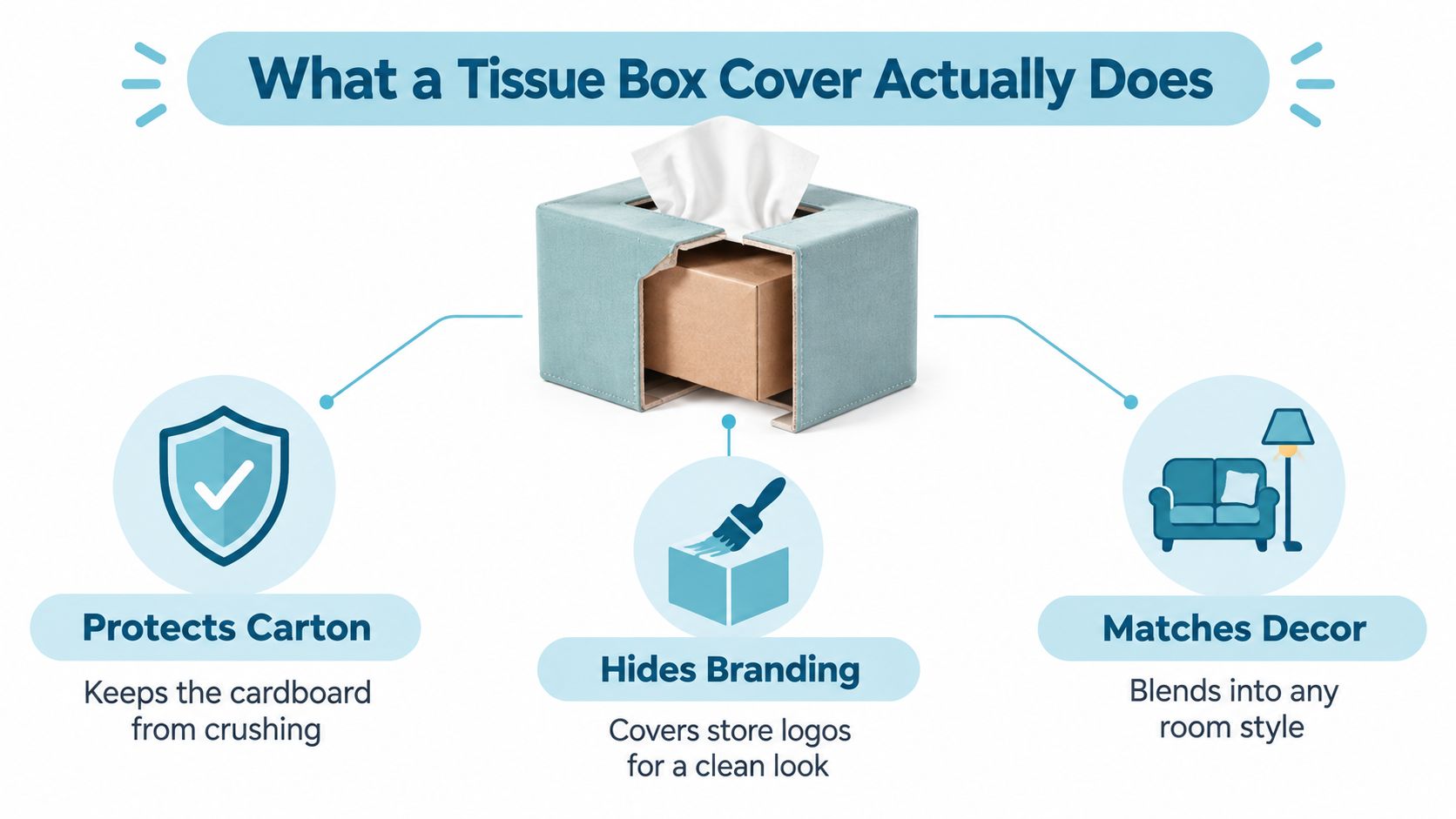
That sounds straightforward, but the better ones do more than hide cardboard. They also add a light layer of protection. If the cover is sturdy, it helps shield the carton from bumps, splashes, and the usual rough treatment that happens in bathrooms, cars, and homes with kids or pets.
Details buyers often miss
Some features make daily use much better:
- Weighted bases help stop the cover lifting when you pull a tissue.
- Non-slip pads keep it steady on polished timber, tiles, or stone.
- Removable lids make refilling easier, especially with snug designs.
- Smooth inner walls help the carton slide in and out without tearing.
Material matters here more than many shoppers realise. In Australia, tissue box covers made from textiles, plastic-coated fabrics, or related household furnishing materials can fall under the mandatory care-labelling regime, which means manufacturers and importers need durable care instructions that match the material and cleaning method, as outlined in the Australian mandatory standard for care labelling for clothing and textiles.
Why sturdiness changes the experience
A flimsy cover can warp, hold dampness against the carton, or start looking tired quickly. A sturdier option tends to keep its shape, feel better in the hand, and last through plenty of refill cycles.
Practical rule: If a cover looks lovely but seems awkward to refill or hard to clean, it won't stay lovely for long.
Comparing Popular Cover Materials
Material is where function and style finally meet. In Australian homewares, you'll commonly see multi-material constructions chosen for durability and moisture resistance, such as powder-coated metal bases with anti-rust coating paired with timber or veneer lids finished with polyurethane, along with solid plastic housings, as shown in Designstuff's tissue box specifications. Those choices matter because they help reduce corrosion, improve wipe-clean hygiene, and cope better in humid spots.
Some buyers want softness and texture. Others want something they can wipe in seconds. Neither approach is wrong. It just depends on where the cover will live.
Cover Tissue Box Materials at a Glance
| Material | Feel & Look | Durability | Humidity Response | Cleaning | Best Room |
|---|---|---|---|---|---|
| Linen or cotton blend | Soft, relaxed, coastal | Moderate | Better in drier areas unless cared for well | Spot clean or gentle wash if designed for it | Bedroom, lounge |
| Seagrass or rattan | Textured, beachy, warm | Good | Handles general humidity well but dislikes soaking | Soft brush, light wipe | Lounge, sunroom |
| Coated metal | Crisp, modern, tidy | Strong, though can dent | Suits humid rooms well if properly finished | Wipe clean | Bathroom, kitchen, office |
| Acrylic | Clean, light, minimal | Good for light everyday use | Generally fine if kept dry and clean | Wipe with soft cloth | Small spaces, desk |
| PU leather | Tailored, retro, slightly dressy | Good for everyday use | Better than plain fabric in touch-heavy zones | Damp microfibre wipe | Car, study, living room |
Quick room matching
If you want a simple rule of thumb, use fabric for softness, woven fibres for texture, and metal or acrylic for easy cleaning. PU leather sits nicely in the middle. It has a more polished look than linen and a more relaxed feel than glossy acrylic.
Australian shoppers often get stuck between appearance and practicality. That gap is real. Local product ranges run from seagrass and linen to coated metal, acrylic, ceramic, and PU leather, but cleaning and durability guidance is often thin, as seen across Australian decorative tissue box listings at French Knot.
Matching the Right Cover to Your Carton Size
Most buying mistakes happen. A cover can look perfect online and still be completely wrong once it arrives if the carton shape doesn't match.
Start with a tape measure. Measure the length, width, and height of the tissue carton you already use. Then look at the opening on top. If the carton has a raised plastic oval or a wide slit, make sure the cover opening lines up comfortably and doesn't pinch the tissues.
The three measurements that matter
- Length and width decide whether the carton will slide in at all.
- Height affects whether the top opening sits flush or sinks too low.
- Opening shape affects how easily the tissues dispense.
A frequent gap in Australian product coverage is sizing guidance. Listings show multiple formats and dimensions, including 13 x 12 cm linen covers, 13 x 17 x 13 cm cube covers, and 26 x 14 x 10 cm seagrass holders, but many pages don't clearly explain which tissue carton each one suits, as seen on Nanahuchy's Australian tissue box collection.
Common Australian Tissue Carton and Cover Sizes
| Carton Format | Typical Carton Size (cm) | Matching Cover Type | Best Room Placement |
|---|---|---|---|
| Slim rectangular carton | 13 x 12 cm | Narrow rectangular cover | Bedside table, guest room |
| Cube boutique carton | 13 x 17 x 13 cm | Cube cover | Lounge, powder room |
| Family-size rectangular carton | 26 x 14 x 10 cm | Longer seagrass-style holder | Family room, kitchen |
Measure the inside space of the cover, not just the outside dimensions. A pretty shell with thick walls can lose more room than you expect.
Leave a little breathing room so the carton slides in without force and the tissues pull up cleanly. If it's too tight, the cardboard buckles. If it's too loose, the whole thing can shuffle around the table.
Choosing a Style That Suits Your Décor
Once the fit is sorted, decorating gets fun. A cover tissue box can either disappear into the room or add a bit of personality, depending on what you want.
Coastal, farmhouse, minimalist, or retro
A coastal room usually suits bleached seagrass, whitewashed rattan, pale timber, or soft linen. Those finishes echo driftwood, sand, and relaxed beach-house textures. If you already gravitate toward shells, woven baskets, and chalky whites, this choice tends to feel effortless.
A farmhouse kitchen leans warmer. Distressed wood, gingham wraps, enamel-style finishes, and simple woven textures feel homely rather than staged.
For a minimalist space, powder-coated metal works beautifully. Matte black, soft grey, and warm taupe can settle into the background and keep the bench looking organised.
A vintage VW-inspired corner can handle a little more fun. Powder-blue finishes, retro prints, or a ceramic holder with a playful old-school feel can nod to surf culture and road-trip nostalgia without taking over the room. If you love bright but breezy styling, the tones in white home accessories show how calm neutrals can support quirky statement pieces elsewhere.
An easy styling trick
Pick one finish family and repeat it in small doses. If your tissue cover is woven, bring in one more woven note through a tray or basket. If it's matte metal, echo that finish with a lamp base or picture frame.
Choose a cover that sounds like the room around it. Soft rooms want texture. crisp rooms want cleaner lines.
Caring for Your Cover So It Lasts
A tissue box cover lasts longer when you treat it like any other useful décor piece. Dust, bathroom steam, and a bit of accidental splash are usually the culprits, not dramatic wear.
Simple care by material
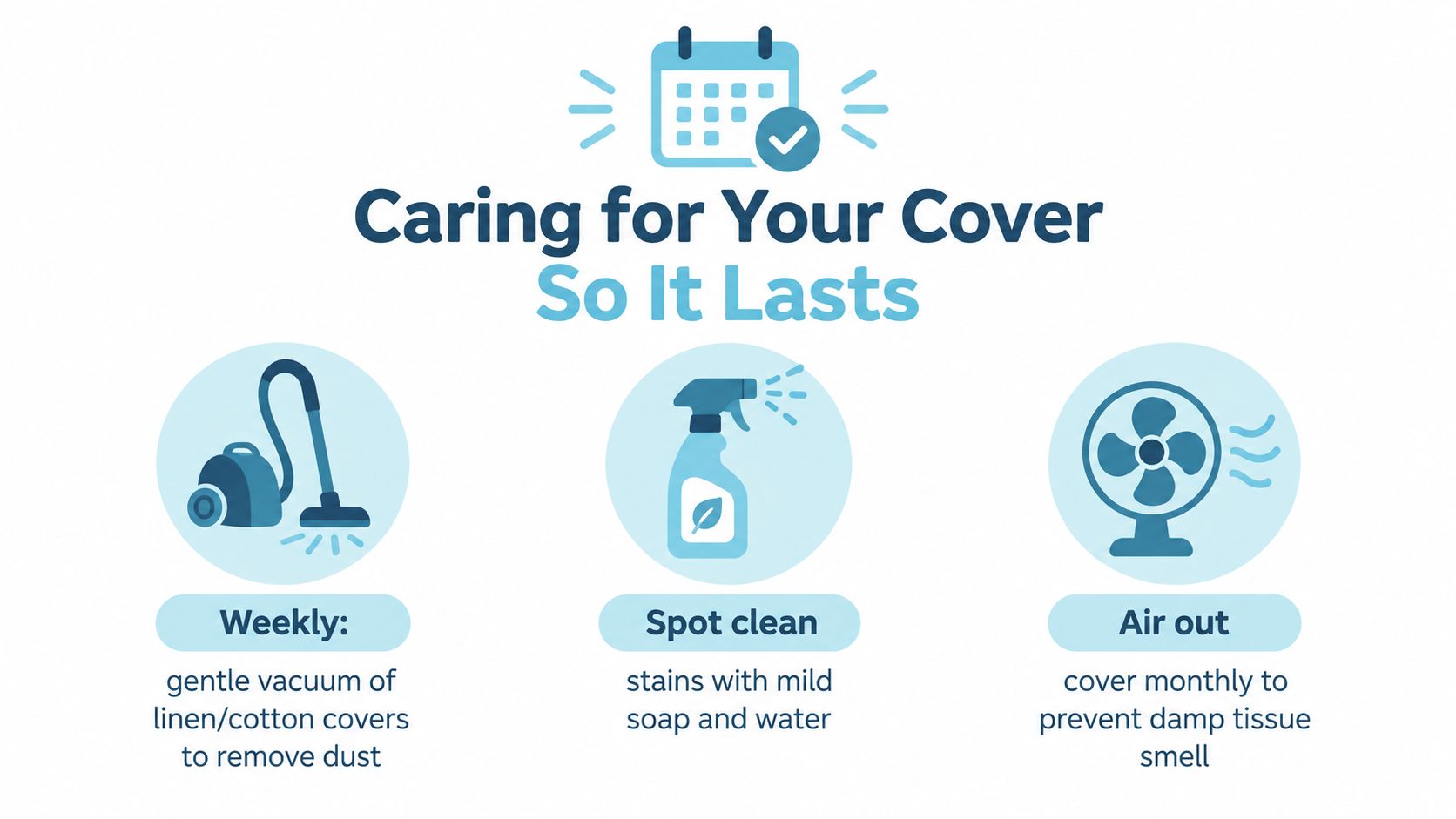
- Linen and cotton covers like a gentle once-over with an upholstery brush or soft vacuum attachment. If the maker allows washing, use a mild cycle and let the cover dry fully before refitting it.
- Seagrass and rattan need a soft brush and only a barely damp cloth. Too much water can leave the fibres unhappy.
- Coated metal and acrylic are the easiest. Wipe with mild soapy water and dry straight away.
- PU leather usually responds well to a damp microfibre cloth and light routine care.
A quick weekly clean is usually enough. In humid rooms, let the cover air out now and then so moisture doesn't linger around the carton.
Quick decision checklist
- Bathroom or coastal humidity: choose something wipe-clean or moisture-tolerant.
- Bedside comfort: softer textures usually feel nicer.
- High-touch family areas: go for surfaces that won't trap marks.
Easy DIY and Customisation Ideas
A plain cardboard sleeve is a perfectly good starting point if you'd rather customise than buy. DIY works especially well when you're matching a very specific colour palette or using leftover materials from curtains, wallpaper, or craft projects.
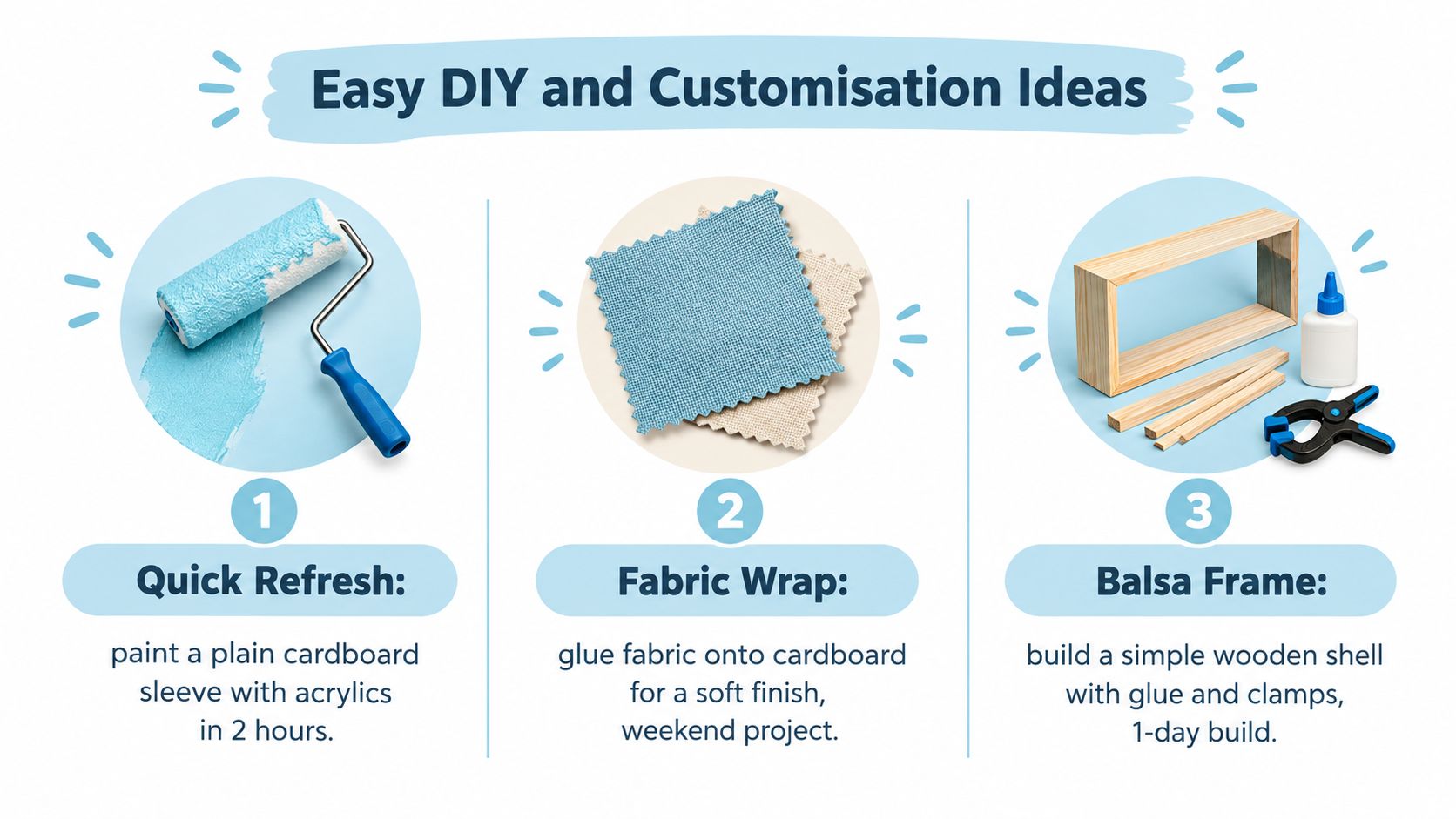
One option is the quickest. Acrylic paint gives you a fast makeover on a plain sleeve or timber shell. You'll want sandpaper if the surface is glossy, a primer if needed, acrylic paint, a small brush or roller, and optional stencils. The finish can look cheerful and crisp, though corners may chip over time if the cover gets knocked around.
Decoupage sits in the middle. Fabric scraps, wallpaper offcuts, wrapping paper, and a sealant can create something full of character. It's especially nice for guest rooms or craft corners. In humid bathrooms, though, the topcoat matters. Without it, edges can lift.
Here's a useful visual if you want to see a craft approach before choosing your method.
Three realistic DIY paths
Painted finish
Best for beginners. Quick setup, low mess if you plan well, and easy colour matching.Decoupage wrap
Great for pattern lovers. More forgiving than it looks, but you'll need patience around openings and corners.Full fabric wrap
Usually the most polished-looking homemade result. A single piece of linen or cotton, neatly pulled and fixed underneath, can look surprisingly refined.
If you prefer the warmth of timber but don't want to build from scratch, a ready-made wood tissue box cover can give you the same natural feel with far less weekend effort.
DIY versus ready-made
DIY is best when you want personality, exact colour control, or the fun of making. Ready-made wins when fit, durability, and low maintenance matter most. If the cover is heading into a steamy bathroom or busy family room, store-bought materials often cope better day to day.
Pulling It All Together at Home
The best cover tissue box choice usually comes down to three things. Fit, material, and style. If one of those is off, you'll notice it every time you reach for a tissue.
A neat home example helps. Say you want one cover in the lounge, one in the bathroom, and one on the bedside table. In the lounge, you might choose a woven or linen finish that ties into cushions and baskets. In the bathroom, a wipe-clean cover makes more sense because steam and splashes are part of the deal. On the bedside table, a softer fabric or gentle timber look can feel calmer and warmer.
A simple home styling routine
Check that the tissue opening sits neatly under the cover slot. If tissues snag, the fit is wrong or the carton has dropped too low.
Give woven and fabric covers a quick fluff or brush after damp weather, especially in coastal homes. Small maintenance habits stop that tired, slightly musty look before it starts.
If you like to shift your styling through the year, rotate covers with the seasons. Light woven textures suit bright summer rooms. Richer tones and smoother finishes can feel cosier when the weather cools.
For homes with a breezy beach-house feel, the textures and tones in coastal home accessories show how easily a tissue cover can become part of a bigger, relaxed decorating story.
The right cover doesn't scream for attention. It just makes the tissue box feel like it belongs. And when that happens, the whole room feels more settled.
If you love home pieces that mix relaxed coastal style with a bit of classic Volkswagen character, Volkswagen Memorabilia is well worth a look. You'll find VW-themed gifts, diecast models, and home décor that can sit beautifully alongside thoughtful details like a well-chosen tissue box cover, with local Australian stock and fast shipping that make browsing feel easy.