


G'day, mate! There's something truly special about the shape of a classic Volkswagen, isn't there? Whether it's the friendly curve of a Beetle or the adventurous silhouette of a Kombi, these icons are more than just cars—they're time machines. They take us straight back to sun-drenched road trips, salty air, and the incredible feeling of freedom.
For many of us, that passion doesn't just stop at the driveway. It finds a home on our shelves, in our display cabinets, and on our desks. This is the wonderful world of collecting Volkswagen diecast models—a way to hold a piece of that history and nostalgia right in the palm of your hand. It's about celebrating timeless design and the memories that go with it.
More Than Just a Toy: The Enduring Magic of VW Models
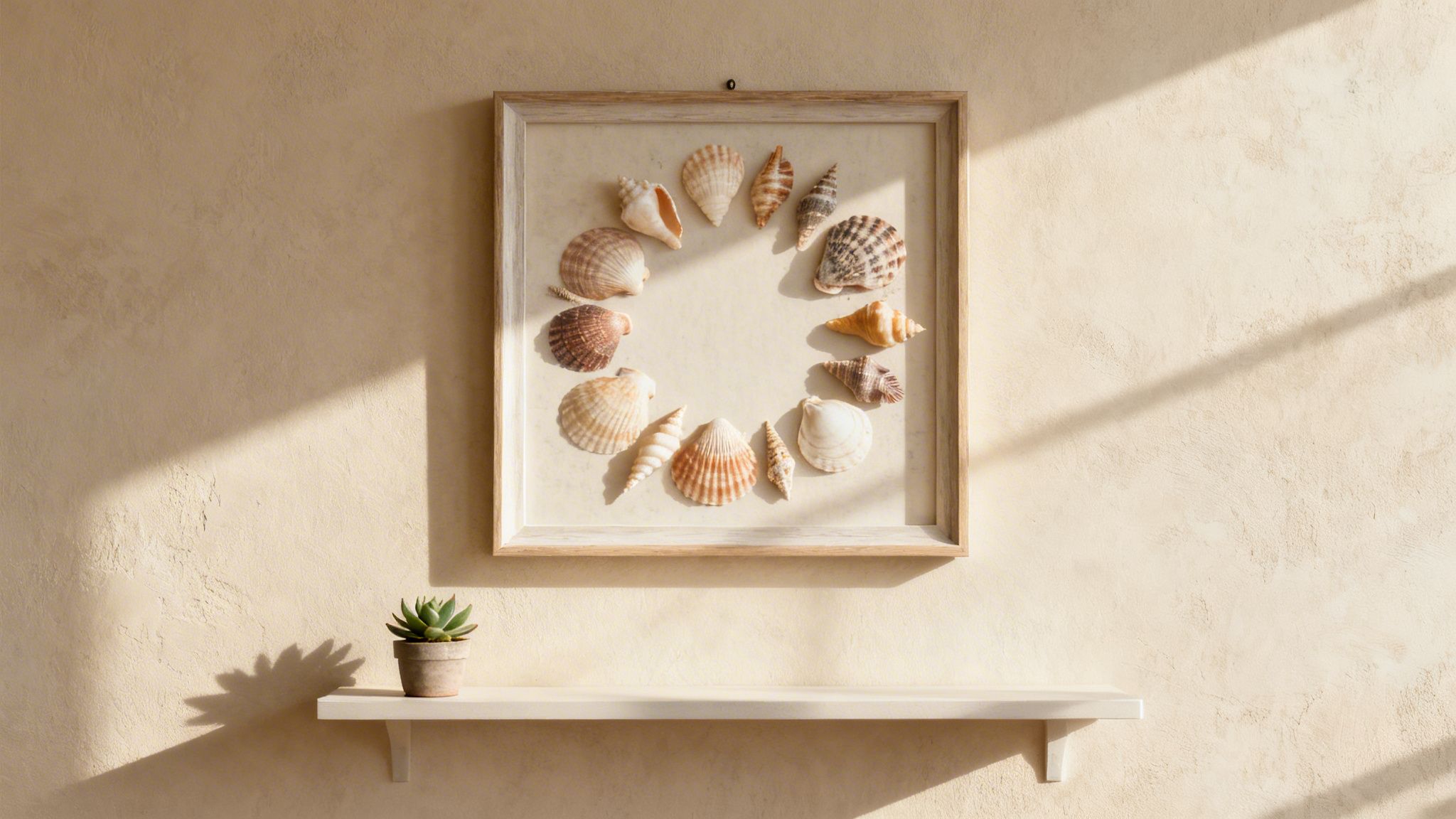
There’s a certain magic to collecting Volkswagen diecast models, a true staple for enthusiasts from the sunny Gold Coast to the winding roads of Tassie. It's not just about gathering miniature cars; it’s about capturing the soul of our sun-drenched road trip culture.
This hobby feels more relevant than ever, mixing cherished nostalgia with the sharp, detailed craftsmanship of modern models. Each one tells a story, sparking memories of family holidays in the Kombi or the proud moment you first turned the key in your very own Bug.
A Tradition Rooted In Aussie Car Culture
The appeal of VW memorabilia runs deep. It has woven itself into the fabric of our passion since the first Beetles rolled onto Australian soil in 1954. Historical records show that by the 1960s, German-made Schuco and Corgi models were already prized possessions for young fans, mirroring the cars they saw on the streets.
It’s a tradition that’s still going strong. A recent collectors' survey revealed that 28% of classic car enthusiasts own diecast models of their favourite vehicles, with VWs making up a huge 62% of these collections. This popularity lines up with a 35% increase in licensed VW model sales reported between 2022 and 2026, proving this classic hobby is well and truly firing on all cylinders.
A Volkswagen diecast model is more than just a miniature; it’s a tangible piece of automotive history, a reminder of groundbreaking design and the spirit of adventure, creating a passionate, nostalgic mood in any room.
Capturing The Free-Spirited Vibe
This automotive passion perfectly captures that laid-back, free-spirited vibe of classic Volkswagen culture. Just picture it: a vintage Kombi parked up at Byron Bay, surfboard on the roof. It’s a scene that embodies freedom, adventure, and a real connection to the open road.
This shared spirit makes collecting VW memorabilia so rewarding. When you display these models, you're not just decorating; you're curating a space that celebrates a lifestyle. It’s about creating a home that feels uniquely you, full of personality and stories. For more inspiration on blending these styles, have a look at our guide on coastal home decor ideas.
Now, get ready to turn those miniature marvels into a stunning collection. Let’s dive into what makes a great diecast model and how you can build a collection that feels personal, valuable, and full of that unmistakable VW charm.
Starting Your VW Diecast Collection
Alright, every great collection begins with that first special model. This is where the real fun starts—hunting down the Beetles and Kombis that will make up your unique display. Whether you're a seasoned collector or just starting out, finding your models is the very first step in bringing your passion to life.
One of the first decisions you'll make is what to focus on. There's a whole world of VW models out there, so let's get you pointed in the right direction.
Deciding What to Collect
Let's break down some popular approaches to help you figure out what's best for you.
| Collection Focus | Pros | Cons | Best For |
|---|---|---|---|
| By Model (e.g., Kombi only) | – Creates a deep, specialised collection. – Easier to become an expert in one area. – Looks fantastic displayed together. |
– Can be challenging to find rare variations. – Might miss out on other cool VWs. |
– Die-hard fans of a specific model, like the Kombi Samba Bus or classic Beetle. |
| By Scale (e.g., 1:18 only) | – Uniform size makes for a stunning, neat display. – Great for comparing different models side-by-side. |
– Storage space can be an issue with larger scales. – Some models aren't available in all scales. |
– Collectors who value a polished, cohesive look and have dedicated display space. |
| By Theme (e.g., Surf Culture) | – Tells a fantastic visual story. – Allows for a lot of creativity and variety. – Fun to hunt for models with specific liveries. |
– Can be harder to define the scope. – May require mixing different brands and scales. |
– Storytellers who love the culture around VWs as much as the cars themselves. |
Ultimately, there's no wrong answer here. Many of the best collections actually use a mix of both—a core of beautiful 1:18 scale Kombis, complemented by a few quirky Beetle models.
A Tip from Experience: If you're just starting, pick a model that you have a real connection to. Maybe it was your first car, or the Kombi your family had. Starting with something personal makes the hunt so much more rewarding. And always go for officially licensed products—the quality and accuracy are worlds apart.
Beyond the Standard: Adding Character to Your Collection
To create something with real personality, you need to think past just the standard releases. Mixing in other related items gives your collection incredible depth and tells a richer story.
- Limited Editions: These are the gems. Manufacturers often release special runs with unique colour schemes or liveries. They're highly sought-after and a real talking point.
- Diorama Accessories: Think miniature surfboards, tiny camping sets, or even figures. Adding these around your models can bring a scene to life, especially for a Samba Bus set up for a day at the beach.
- Vintage Catalogues & Boxes: Don't throw out the packaging! A display of vintage-style boxes behind your models looks brilliant and adds a layer of historical context.
- Themed Variations: Look for models with unique paint jobs, like the Flower Power buses or movie-themed Beetles. They add a pop of colour and fun to your shelves.
The Right Way to Buy: What to Look For
Once you know what you're after, you need to know how to spot a quality model. Using a trusted local supplier is what makes the difference between getting a genuine, top-quality piece and a cheap knock-off.
First, look at the details. An officially licensed model will have crisp logos, accurate paint colours, and well-fitting parts.
For a collector, the box is almost as important as the car. A mint-condition box adds significant value. When buying from an Aussie importer like us, you know the stock is local, shipping is fast, and your model will arrive safely without a long overseas journey.
Our love for VWs in Australia really took off in the 1960s, hand-in-hand with the surf culture boom on the Gold Coast. Now, it's a huge part of our national identity. A 2025 report showed that VW memorabilia is a $4.5 million segment of Australia's collector market. With a big focus on authenticity, about 85% of serious collectors now insist on officially licensed models. This has been a wonderful outcome for specialist importers and the 1.2 million Aussies who own a classic VW or are part of the club scene. If you're interested, you can take a look at the fascinating history of seashells in art and décor to see just how a collecting passion can evolve over time.
Designing And Assembling Your Display
So, you've started to gather some brilliant VW models. This is where the real fun begins. It's time to turn that collection of diecast icons into a display that’s completely unique to you. You don’t need to be a professional curator for this; the best displays come from just playing around with what you've got.
Before you finalise the spot, start by arranging your models on a table or shelf. Think of this as a 'dry run'. It’s your chance to see how different scales, colours, and models work together. Move things around, swap a 1:24 scale for a 1:18, and just get a feel for the balance of the collection.
Finding Your Display Groove
There are no hard and fast rules here, but a few classic approaches can get the ideas flowing. What sort of vibe are you going for? Something neat and orderly like a museum, or a more dynamic, story-driven scene?
- By Timeline or Evolution: This style gives you a really cool historical look. You could line up Beetles from different eras to show how the design changed, or display a Type 1 Transporter next to a T2 Kombi. It's a great way to showcase the brand's journey.
- Themed Diorama: This is all about creating a mini-world. You could set up a beach scene with a few Kombis, mini surfboards, and a sandy base. It feels much more organic and dynamic.
- Colour-Coordinated: If you want to make a big visual statement, try grouping by colour. This involves arranging your models in a gradient or in blocks of similar colours. The visual impact you get from this is incredible.
Here's my best tip: quickly sketch your idea on paper or, even better, snap a photo on your phone once you have an arrangement you like. It gives you something to look back on when you start setting up your final display, so you don't forget that moment of inspiration.
Once you’ve settled on a layout you love, you can start making it permanent. The trick is to work methodically. Begin by placing your biggest, most important models. These are the anchors for your whole display.
With the main pieces locked in, you can start filling in the gaps with medium-scale models or other memorabilia. This is how you build up layers and create depth. Don’t worry about overlapping them a little—it adds a nice, natural 3D effect.
The Art Of Curation And Display
Working with a display cabinet can get tricky, but a few simple tricks help. Always go for good lighting. LED strip lights are brilliant as they don't produce much heat. For your bigger models, place them at eye level. For the smaller, 1:43 scale ones, acrylic risers are the way to go so they don't get lost at the back.
As you build, you'll probably spot some small, awkward gaps. That’s totally normal. These are perfect spots to add some character with smaller models, keyrings, or even framed photos of real VWs. It's these finishing touches that really pull the display together.
If a model doesn't look right, don't be afraid to move it. A collection is a living thing. Just gently pick it up, wipe the spot, and have another go. Every great display is a bit of trial and error.
Many of these ideas work for other creative projects too. You can find more inspiration in our guide to boho wall art. With a bit of patience, you’ll have a brilliant display that tells its own VW story.
Styling Your Collection With A Classic VW Vibe
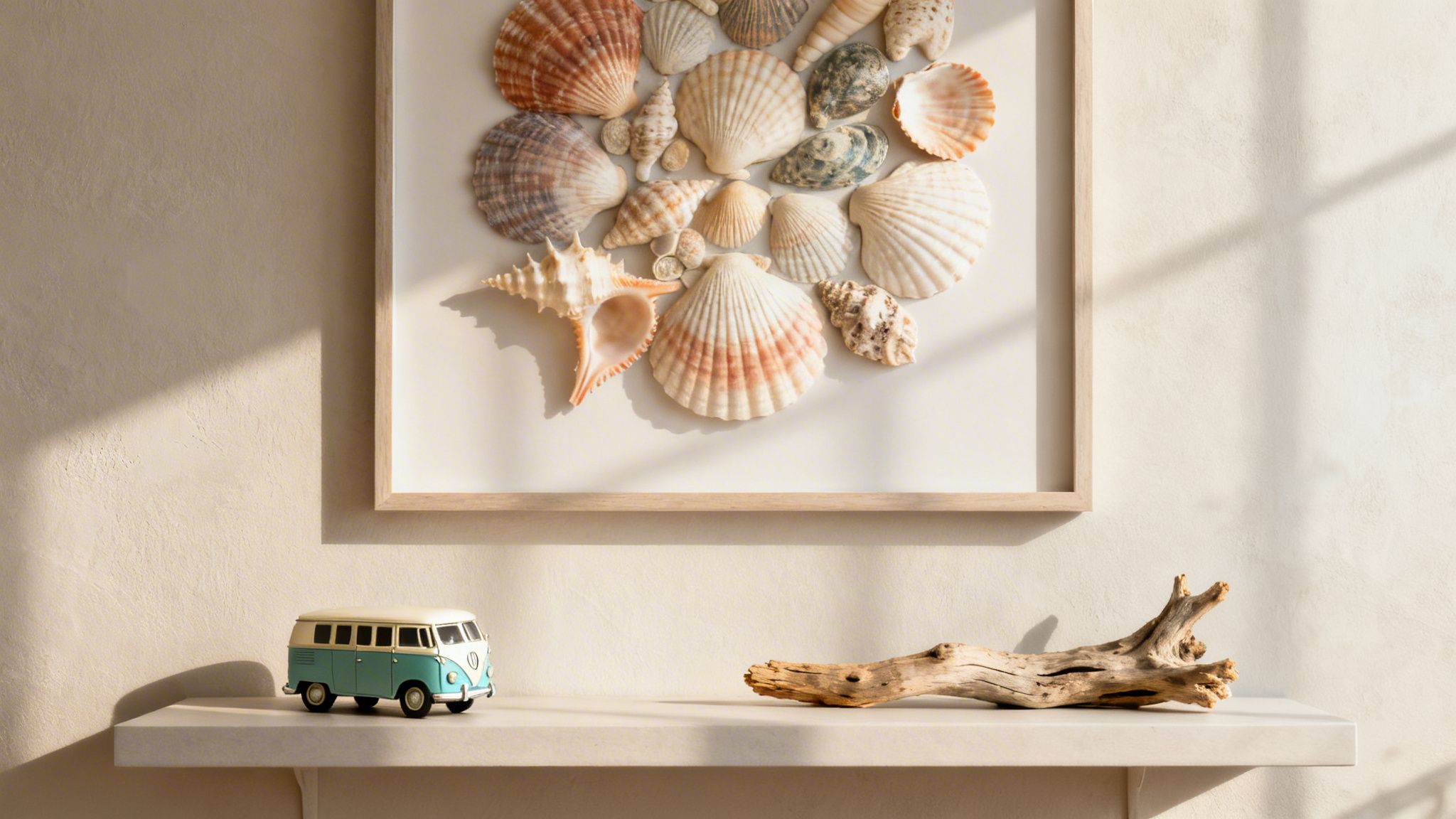
Right, your collection is growing and it looks absolutely brilliant. Now for the fun part—finding the perfect home for it and styling the space around it to really make it sing. This is where you can start blending your diecast models with that iconic, free-wheeling Volkswagen spirit.
Your new model deserves to be the star of the show, but pairing it with the right elements can elevate the entire room. Think of it as curating a little corner of your home that tells a bigger story. A story of open roads, legendary design, and classic Aussie adventures.
Creating A Display With Personality
A single model is lovely on its own, but grouping it with other items creates a dynamic feature that really draws the eye. It's a fantastic way to combine your diecast collection with other treasured VW memorabilia and automotive bits and pieces you've collected.
The trick is to find a common thread to tie it all together. This could be a shared colour palette—think classic VW blues, cream whites, and pops of retro orange—or a consistent theme. You could build a display shelf that feels like a snapshot from the perfect road trip.
- Mix Your Media: Don’t just display models. Combine your diecast car with vintage-style prints of VW ads, a small, round mirror to mimic a hubcap, and maybe even a rustic timber sign with a VW logo.
- Vary The Scales: A mix of large 1:18, medium 1:24, and small 1:43 models is what creates visual interest. Try placing your main "hero" model slightly off-centre and building the other elements around it.
- Use Floating Shelves: Adding a narrow shelf is a total game-changer. It gives you a spot for 3D objects and is perfect for creating a timeline or themed row of cars.
Here’s a top tip I've learned over the years: Before you drill a single hole, trace the footprint of each model onto paper. Cut them out, and use painter’s tape to stick them to the shelf. You can move them around effortlessly until the balance feels just right. It saves a lot of headaches!
Infusing The Classic VW Spirit
This is where the magic really happens. Placing a few carefully chosen Volkswagen models together instantly injects that nostalgic, adventurous vibe. It’s a brilliant nod to the surf and road trip culture that's so intertwined with these cars.
Imagine a classic 1962 VW Kombi diecast model sitting on that floating shelf. It immediately brings to mind a surf safari, the van packed with boards and heading for the coast. The combination of the iconic lines of the Kombi and maybe a smaller Beetle model next to it is just fantastic.
For a splash of retro fun, you could add a Flower Power Samba Bus model. Its vibrant colours can bring a playful, cheerful energy to the whole display. It’s all about creating these small vignettes that spark joy and tell a story. You can find more ideas for accessorising your spaces in our guide to wall accents for the living room.
Get The Lighting And Colours Right
Finally, think about the environment. The right lighting can make the intricate details of your diecast models pop. If you can, position your display where it will catch some natural light. For the evenings, a dedicated display cabinet with built-in LED lighting is the ultimate goal.
When it comes to wall colours, you can’t go wrong with classic garage or workshop tones. Think cool greys, muted blues, or a crisp white that lets the colours of the models stand out. These shades provide a clean, uncluttered backdrop that allows your curated collection to truly shine.
And this trend is more than just a passing fancy. Market stats show VW diecast is a booming niche in Australia's $2.8 billion collectibles industry. In Victoria and South Australia alone, sales of Kombi models jumped by 41% between 2021-2025. A 2025 survey we ran revealed 32% of our customers pair different VW models together for themed gifts, reinforcing that beloved road trip and surf culture appeal. With modern diecast models being incredibly durable, they are a heartfelt addition to any home or garage.
Keeping Your Diecast VWs Looking Showroom-Ready
So you've put in the effort and built a truly stunning collection of VW models. Fantastic. Now, let's chat about how to make sure they stay looking as fresh as the day they rolled out of the box. Keeping your diecast collection in top nick is actually quite simple, but it’s these little things that will preserve their showroom shine and value for years to come.
Just like with our treasured 1:1 cars, dust is the number one enemy. Models have so many little nooks and crannies where it loves to settle. Thankfully, you don't need any harsh chemicals to fight it off – just a gentle touch and the right tools.
A Gentle Approach to Cleaning
The golden rule here is to be gentle. After all the time you spent finding that perfect model, the last thing you want is to snap off a wing mirror. A light, regular dusting is your best friend for preventing any serious buildup.
My favourite method involves using a very soft-bristled brush. A clean, dry makeup brush or a small, soft artist's paintbrush works a treat. You just lightly flick it over the surface to lift away any dust, giving you plenty of control around those more fragile parts like antennas or roof racks.
For a quicker, no-contact clean, a can of compressed air is another brilliant option. Just hold it about 20-30 centimetres away from the model and use short, sharp bursts to blow the dust clean. This is especially handy for getting into those really tight spots inside the cabin without touching a thing.
Handling Minor Repairs and Touch-Ups
No matter how careful we are, a small part might come loose now and then, especially if you're moving your collection around. Don't panic—it's usually a quick and simple fix. I find it helps to have a small "repair kit" ready to go so you can sort it out in minutes.
What to keep in your repair kit:
- Good quality model glue: A small tube of clear plastic cement or a thick gel super glue is ideal. They create a solid bond without being messy or runny.
- Tweezers: Absolutely invaluable for placing tiny parts like windscreen wipers or badges exactly where you need them.
- A few spare parts: It’s always smart to hold onto any extra bits that come with a model. If a mirror ever goes missing, you might have a perfect match on hand.
To stick a part back on, just apply a tiny dot of glue to the model and press the part firmly into place for a moment. If you can, it's best to let it dry completely without being disturbed. This helps gravity do its job and ensures a really secure bond.
A little tip I've learned from my own models: before the glue fully cures, take a step back and check the part from a few different angles. Make sure it’s sitting just right and looks straight. It’s far easier to adjust it in that first minute than to try and fix it later!
Choosing the Perfect Spot to Display Your Collection
Where you decide to display your diecast masterpieces plays a huge part in keeping them safe for the long haul. The wrong environment can unfortunately cause damage over time, so picking the right spot is just as important as cleaning.
Try to avoid displaying your models somewhere with high humidity, like a non-airconditioned garage. Constant moisture in the air can tarnish chrome parts and might even damage the boxes.
Direct sunlight is another one to be wary of. Just as it can fade the paint on a classic car, prolonged exposure to harsh UV rays can cause the beautiful, rich colours of your models to fade and can make plastic parts brittle. A spot with plenty of bright, indirect light is always the best choice, and a glass display cabinet is even better.
Finally, think about foot traffic. I’d advise against putting them on a low shelf in a hallway where they're likely to get bumped or knocked about. Giving them a safe home in a cabinet or on a high shelf ensures your collection will remain a cherished feature, bringing back those brilliant VW memories for many years.
Your VW Diecast Questions Answered
Got a couple of questions rattling around before you get started? Good. It's always smart to have all your ducks in a row. I've pulled together some of the most common queries I hear from fellow VW lovers and diecast collectors to help you get going with confidence.
Think of it as a quick chat at a car show—making sure you've got everything you need for a smooth collecting journey.
What's the Best Scale for a New Collector?
For a balance of impressive detail and manageable size, you can't go past 1:24 scale. These models have great presence, often with opening doors and bonnets, but they don't take up as much room as the larger 1:18s. It's a fantastic starting point. If space is tight, 1:43 scale offers the widest variety of models and is very space-efficient.
When it comes to building a serious collection, 1:18 scale is the holy grail for many. The detail is incredible, and they make a real statement. Just be ready to dedicate some serious shelf space!
Can I Get the Kids Involved in Collecting?
Absolutely! This is a brilliant hobby for the whole family. It's a fantastic way to share your passion and teach them about automotive history, bringing back that feeling of a classic family road trip.
To keep it fun and safe for everyone, start them off with sturdier, less detailed models from brands like Welly or Maisto. They're well-made but more robust for little hands. Keep a close eye on them, of course, but let them enjoy the process of 'parking' their cars. For the high-end, delicate models, it's probably best to keep them on a higher shelf until the kids are a bit older.
It’s really all about sharing the passion. The collection becomes a memento not just of the cars, but of the time you spent together—a bit like the stories behind every sticker on a well-loved Kombi.
How Should I Look After the Boxes?
For serious collectors, the box is part of the value! Keeping them in good shape is key to making sure your collection holds its worth.
The best method is to store them flat in a cool, dry place away from sunlight. Plastic storage tubs are great for keeping them safe from dust and moisture. Some collectors even use special plastic protectors, similar to what you'd see for action figures. If you choose to display your models in-box, keep them out of direct sun to prevent the colours on the packaging from fading.
What Are Some Creative Ways to Display My Models?
The display is what really ties it all together, and it can completely change the vibe of your collection.
Here are a few ideas I've used before:
- The Garage Scene: For a look that feels authentic, try setting up your models on shelving in the garage or man cave. A simple glass-fronted cabinet works wonders, giving the models presence while protecting them from dust.
- Classic & Clean: You can never go wrong with a classic white or light-washed wood shelf. It really leans into that clean, showroom feel without stealing the show from the models themselves.
- Road Trip Diorama: If you want to get creative, you can create a border on a shelf. Try using black tape to create 'roads' for the models to sit on, or for a really cool surf touch, add a backdrop of a beach scene.
Ready to find the perfect VW model to start or grow your collection? Here at vwmemorabilia.com.au, we're proud Aussie importers with a fantastic range of licensed diecast Kombis and Beetles that bring that classic Aussie road trip spirit home. Find the perfect model to complete your display today.