Beach Wall Art for Living Room: VW-Inspired Coastal Style

You've got the pale sofa, a bit of rattan, perhaps a weathered timber coffee table, and one stubborn blank wall that still looks like the removalists only left yesterday. A generic shell print might fill it, but it won't say much about you. Beach wall art for a living room can do better when it brings together two proper Australian loves, the coast and classic Volkswagens.

A well-chosen Kombi or Beetle scene adds the relaxed feeling of a coastal drive, a surf check before work, or a sunny car show where everyone has a story about their old VW. The trick is keeping the room breezy rather than turning it into a souvenir shop. Choose one strong memory, give it room to breathe, and let the car carry the personality.

Why Beach-Style VW Art Nails That Coastal Vibe

The strongest coastal rooms don't rely on a pile of obvious nautical symbols. They use light, texture and a sense of escape, then add a few objects with genuine meaning. A faded blue Kombi parked near the sand works because it brings a whole scene with it. You can almost hear the sliding door, smell the salt air and see a board strapped to the roof.

That story matters. A plain ocean horizon creates calm, while a VW in the frame adds movement and nostalgia. The result feels more personal than a mass-produced beach slogan, particularly for owners, collectors and anyone who grew up seeing Beetles and Kombis on Australian roads.
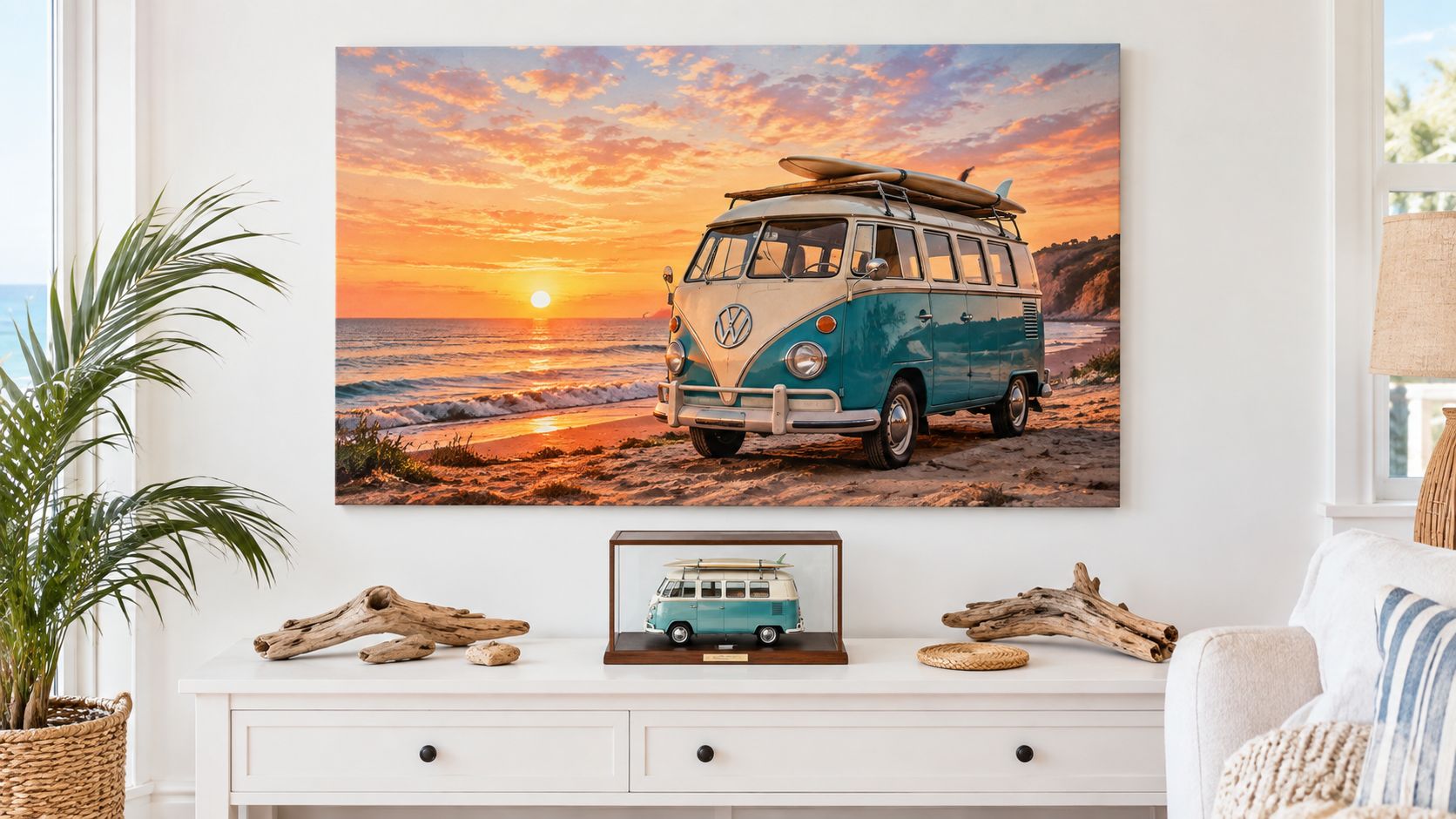
A canvas wall art of a blue Volkswagen bus on a beach displayed in a bright living room.

The room should feel lived in

A coastal VW print suits a lounge with natural fibres, white walls, pale timber and ocean blues, but it doesn't need to match every cushion. In fact, matching everything too closely can make the space feel staged. A canvas showing a weathered Kombi can soften a polished modern room, while a crisp illustrated Beetle can bring some fun to a more restrained palette.

Australia's renovation culture gives this style plenty of room to work. One market source describes Australia as having one of the highest renovation rates per capita among OECD countries, with one in three homeowners undertaking significant home-improvement projects annually, and projects the broader home décor market to reach USD 12.29 billion by 2031. The Australia home décor market overview also identifies wall art as the most popular wall décor category and highlights large coastal scene pieces as a recurring demand driver.

The useful test: if the artwork reminds you of a place, a car or a day you'd happily repeat, it will usually outlast a print chosen only because it matches the rug.

For a more personal starting point, browse this guide to coastal living room ideas with VW character. Keep the supporting décor quiet, then let the bus, Beetle or Samba take centre stage.

Picking the Right VW Motif and Scale

Start with the room, not the model catalogue. Look at the wall's available width, the furniture beneath it and the colours already doing the heavy lifting. A pale blue Samba Bus suits soft whites and sandy beige, while a Flower Power Beetle needs a little more visual confidence around it.

Match the motif to the mood

A Samba Bus brings holiday nostalgia and works especially well where the room already has timber, woven baskets or relaxed surf styling. A classic black-top Kombi feels slightly more graphic and can anchor a room with navy cushions or charcoal joinery. A Flower Power Beetle, particularly one shown with a surfboard, adds playful colour and suits a family lounge or collector's corner.

The car's finish matters as much as its colour. A distressed, vintage-looking image belongs with linen and raw timber. A clean, sharply rendered print looks better beside contemporary furniture. Don't place a busy floral Beetle against a wall already crowded with patterned cushions, framed photos and ornaments. The eye needs one obvious place to land.

VW Motif Best For Colour Pairing
Pastel Samba Bus Calm, airy lounges White, sand and powder blue
Flower Power Beetle Playful family rooms Cream, coral, aqua and soft green
Black-top Kombi More graphic coastal interiors Navy, charcoal, timber and off-white
Surf-themed Beetle Collector displays and relaxed beach rooms Ocean blue, faded yellow and natural wood

Get the scale right

A small print can disappear above a generous sofa, while an oversized piece can dominate a compact lounge. Horizontal artwork normally suits the long line of a sofa or console, especially when the image shows a Kombi travelling along a beach road. Vertical art can work beside a bookcase, doorway or tall cabinet, where it fills height rather than competing with furniture width.

Collectors often make the mistake of treating wall art and diecast models as separate themes. They work better when the wall image establishes the setting and the model provides the detail. A framed beach scene with a Samba Bus can sit above a shelf displaying a matching VW Kombi diecast Australia collectors' piece.

For a Beetle-led room, compare the available VW Beetle wall art with your existing display. A Volkswagen Beetle model on a shelf below the print creates a visual link without making the room feel like a showroom.

Focal Piece or Full Gallery Wall

A single focal piece is the safer option when the living room already has plenty happening. One broad Kombi canvas above a white settee can make the wall feel finished without adding another collection of competing shapes. It also gives the artwork enough space for the beach, sky and vehicle to read as one scene.

A gallery wall offers more personality, but it demands discipline. Three smaller surf-themed Beetle prints can look excellent when they share a frame style, visual weight or colour family. Mix too many scales, borders and unrelated images, though, and the coastal calm disappears under clutter.
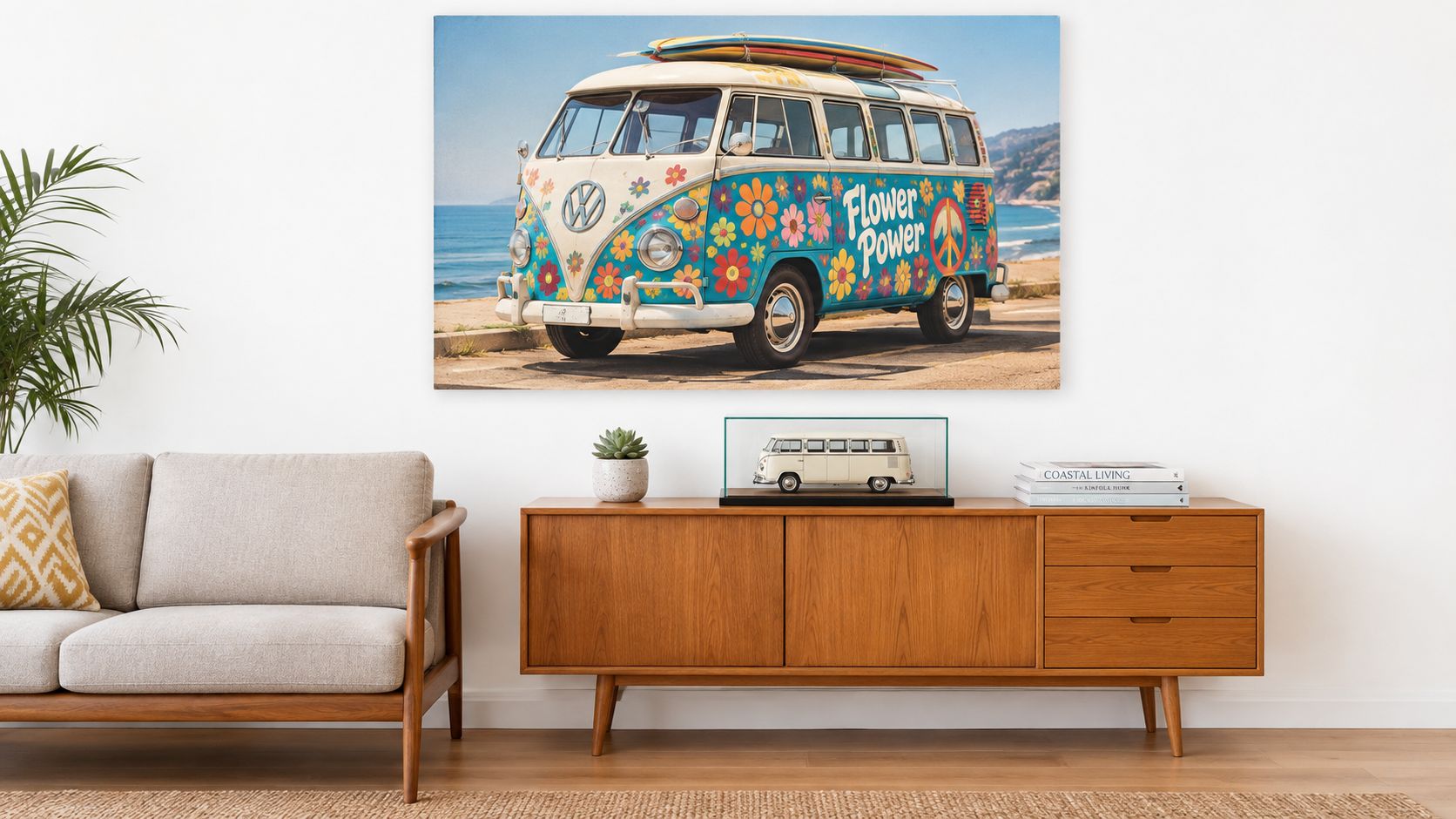
A living room interior featuring a wall art print of a vintage Volkswagen bus parked near the beach.

Choose one statement when the room needs calm

A large Flower Power Samba above a neutral sofa suits an open-plan area where the artwork needs to be seen from across the room. Keep the rest of the wall fairly clear. A low timber console, one ceramic vase and a small model Kombi are enough support.

This approach also works when the art is detailed. A large print gives the viewer time to notice the roof rack, surf gear, faded paint and coastal scenery rather than forcing all those details into a tiny frame.

Build a gallery when the collection has a story

A gallery makes sense when you already own several related pieces or want to show different sides of VW culture. Pair a beach Kombi with a Beetle road scene and a small detail print, but give the group a common thread. That might be a shared blue-and-cream palette, matching frames or a consistent vintage illustration style.

Lay the arrangement out on the floor before touching the wall. This lets you test whether the strongest image sits in the middle, whether the outer edges feel balanced and whether the group relates properly to the sofa below.

A gallery wall should look collected, not accumulated. If one piece only remains because you paid for it, it probably doesn't belong in the final arrangement.

Use living room wall accents to find the supporting shapes, but resist filling every gap. Negative space is what keeps a group of nostalgic images feeling considered.

Hanging Rules that Keep Your Beach Art Aligned

Good artwork can look wrong when it's hung too small, too high or slightly crooked. Coastal interiors depend on visual calm, so uneven spacing stands out quickly. Measure first, mark lightly and use a spirit level before committing to the wall.

A practical installation method is to size the artwork so it spans 60–75% of the furniture width, leave 15–25 cm between the furniture and the art, and place the artwork centre at roughly 152 cm from the floor. For a triptych, allow 5–8 cm between panels so the image reads as a connected scene rather than three unrelated slices. These measurements come from this Australian wall-art installation guide.

An instructional graphic showing four steps for hanging artwork, including measurements for sofa width, gaps, and eye level.

Measure the furniture relationship

Measure the sofa, sideboard or console beneath the artwork, then calculate the useful visual span rather than choosing a frame by guesswork. A very narrow image can float above a wide sofa. A frame that runs nearly wall to wall can make the furniture look undersized.

Use painter's tape to mark the proposed outer edges. Step into the room, sit on the sofa and view the shape from the places you use. The tape outline often reveals a scale problem before you drill a hole.

Treat the wall as part of the installation

Plasterboard needs more care than brick or masonry. Heavier framed beach prints may need a stud fixing or a specialist plasterboard anchor, and pieces above 5 kg should ideally be fixed into a stud or with a load-distributing plasterboard anchor, according to Australian hanging guidance from Emma Street Studio.

Lay a gallery composition on the floor first, then transfer the positions carefully. The same source notes that Australian picture-hanging services quote $30–$50 per frame, with minimum call-out fees of $80–$150, so batching several pieces together can make more sense than arranging a visit for one frame.

Number the backs of panels if you're working with a triptych, check the hanging hardware, and keep the spirit level handy. A beach scene should feel effortless once it's on the wall, not like it survived a rushed Saturday job.

Sourcing Authentic VW Memorabilia Locally

The coastal look works best when the VW element has proper character. Look for officially licensed Volkswagen diecast models, clear model identification and a finish that reflects the vehicle rather than a generic van shape. Collectors usually notice the small things first, including the badge treatment, body proportions, glazing, wheels and paint quality.

Australia's wall décor market is also shaped by imported finished products. One Australian market report estimates that 70–80% of finished modern framed wall art products are sourced from China and Vietnam, while framed canvas prints and multi-panel sets account for 55–65% of unit volume. The report projects market growth at a 4–6% compound annual rate from 2026 to 2035. Its Australia wall décor market analysis helps explain why shoppers see broad choices in ready-to-hang formats, sizes and finishes.

That variety is useful, but provenance still matters. A licensed Kombi Samba Bus diecast has a place beside coastal wall art because it connects the picture's relaxed road-trip mood with a real collector's object. A Flower Power Beetle can bring colour to a shelf, while a restrained beach print keeps the overall room from becoming too loud.
Screenshot from https://vwmemorabilia.com.au

Why local stock makes collecting easier

Buying from an Australian importer or stockist gives you a practical advantage when you're styling a room for a birthday, house move or upcoming show. Local stock and fast shipping reduce the uncertainty that comes with waiting on an overseas parcel, while local support makes it easier to ask about finishes, model variations and availability.

A curated range also helps you build a collection with a proper thread. Start with one wall piece, add a matching Kombi, then look at Beetle models, metal décor or beach accents only when they earn their place. That approach keeps your VW memorabilia collectibles meaningful rather than turning the lounge into a parts bin.


Volkswagen Memorabilia brings together licensed VW diecast models, Kombi Samba Bus and Beetle pieces, plus coastal home décor for collectors and gift buyers. Visit Volkswagen Memorabilia to find a beach-ready wall accent and a diecast companion that give your living room a relaxed Australian VW story.
Coastal Living Room: An Aussie VW Fan’s Guide

Saturday morning. The sun’s already warming the bonnet of a tidy old Beetle in the showgrounds, someone’s got a camp chair out beside a pastel Kombi, and the smell of coffee is drifting past polished hubcaps and folding tables full of parts, badges, and diecast treasures. You’ve had that feeling before. A bit of salt in the air, a bit of surf music in your head, and that quiet thought that the best parts of coastal Australia aren’t flashy at all. They’re easy, faded, sunlit, and full of stories.

That’s exactly what a good coastal living room should feel like.

Not a theme park version with rope knots everywhere and a random anchor on the wall. I mean a room that feels like the drive home from the beach in an old VW. Sandy feet. Windows cracked open. A board strapped overhead. A favourite song on. Maybe a little 1:18 Samba Bus on the shelf that reminds you of every road trip you wish you’d taken sooner.

Bringing the Beach and the Bug Indoors

A mate of mine on the NSW coast did this beautifully without making his lounge room look like a surf shop. He started with what he already loved. White walls that caught the morning light. A worn timber coffee table that looked better with every mark. One blue armchair. Then he added the pieces that meant something to him: an old beach photo from a family trip, a tray of shells his kids insisted on keeping, and a miniature Kombi in retro colours parked on a floating shelf above the telly.

The room didn’t scream “coastal styling”. It just felt coastal.

That’s why this look works so well in Australia. According to House Beautiful’s coastal design trends reference, over 85% of Australians live within 50 km of the coast, and coastal-themed renovations account for 22% of all interior updates in beachside suburbs, with average spending at AUD 12,500 per project. The same source ties the look back to the 1970s surf boom, which is probably why it feels so natural to pair it with classic Volkswagen culture.

What the room is really trying to capture

A coastal living room isn’t about copying a catalogue. It’s about bottling a familiar Aussie rhythm.

  • Lightness: Rooms should feel open, not stuffed with furniture.
  • Ease: People should be able to flop down after a swim without worrying they’re in a museum.
  • Memory: The best spaces hold objects that mean something, whether that’s driftwood, family beach snaps, or a VW Bus model that takes you straight back to the open road.

Coastal styling works best when it feels collected over time, not bought all at once.

The VW connection feels natural

Kombis and beach life belong together in the Australian imagination. You don’t need to force the link. It’s already there in surf history, road trips, roadside fish and chips, and those long summer drives where the trip mattered as much as the destination.

So if you’ve been wanting a coastal living room that feels more personal than generic seaside décor, start with that. Build a room around the feeling of freedom your favourite VW gives you. The beach supplies the calm. The Bug or Kombi supplies the character.

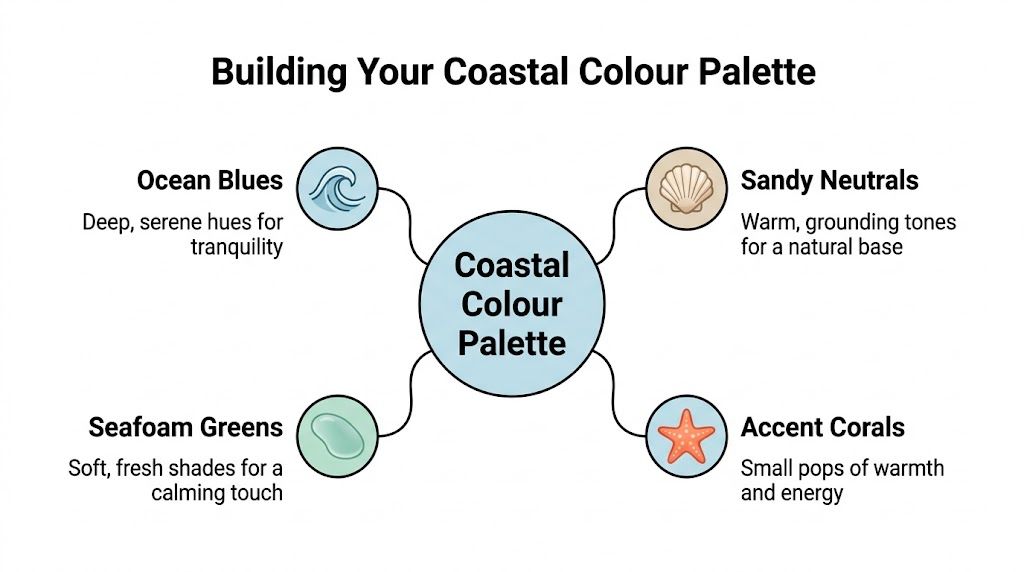
Building Your Coastal Colour Palette

The easiest way to get this look right is to start with the colours you’d see on a beach drive. Not just “blue and white” as a vague idea. Think bleached sand, cloudy sky, sea glass, old timber boardwalks, and sun-faded paint on a well-loved van.

A strong coastal living room usually begins with a quiet base. Soft whites. Sandy beige. Driftwood grey. Then you bring in colour carefully, the same way a classic VW paint shade wakes up a line-up at a car show.

A diagram illustrating the four main color categories for a coastal interior design color palette.

Start with the calm colours

There’s a reason these shades never go out of style. A 2024 University of Sydney study referenced here found that coastal-inspired interiors using blue-white-sand colour schemes can lower reported stress levels by up to 34%, and the same reference notes these palettes appear in 62% of Sydney’s eastern suburbs homes.

That tells you something many decorators forget. The palette isn’t only pretty. It changes how the room feels to live in.

Use this simple approach:

Colour family Best use in the room VW-inspired twist
Sandy whites Walls, larger sofas, curtains Keeps the room feeling airy around brighter collectables
Ocean blues Cushions, artwork, rugs Echoes surf culture without getting too nautical
Driftwood greys Timber finishes, shelving, occasional chairs Helps diecast displays feel grounded
Sun-washed accents Small décor pieces only Think muted orange, sea green, or mustard drawn from classic VW paintwork

Add personality from classic VW colours

At this stage, the room sheds its generic appearance.

A sea green note can come from a vase, a throw, or a framed print near a shelf of Beetle models. A burnt orange cushion can nod to a road-trip Westfalia without taking over the room. A soft yellow can lift a corner the way an old Samba Bus does in real life. You don’t need much.

Practical rule: Keep your big pieces neutral, then let Volkswagen colours appear in small, movable layers.

That way, if you add a bright diecast model or metal sign later, it looks intentional rather than crowded.

Avoid the “souvenir shop” trap

If every item is blue, white, and shell-shaped, the room gets tired fast. Coastal living rooms have more depth when the palette includes faded, earthy tones too. Timber, woven fibres, chalky ceramics, and old metal all help.

If you’d like more inspiration for combining beach tones with vintage vehicle character, this roundup of coastal home décor ideas is a handy jumping-off point.

The trick is balance. Let the room whisper “beach house”, then let one or two VW references tell the story.

Choosing Furniture for a Relaxed Layout

Furniture makes or breaks this style. You can have the right colours and the nicest accessories in the world, but if the room is blocked up with bulky pieces and awkward angles, it won’t feel coastal. It’ll just feel busy.

The best coastal living room layout gives people permission to settle in. That means generous seating, open walking paths, and tables that don’t feel too formal to use.

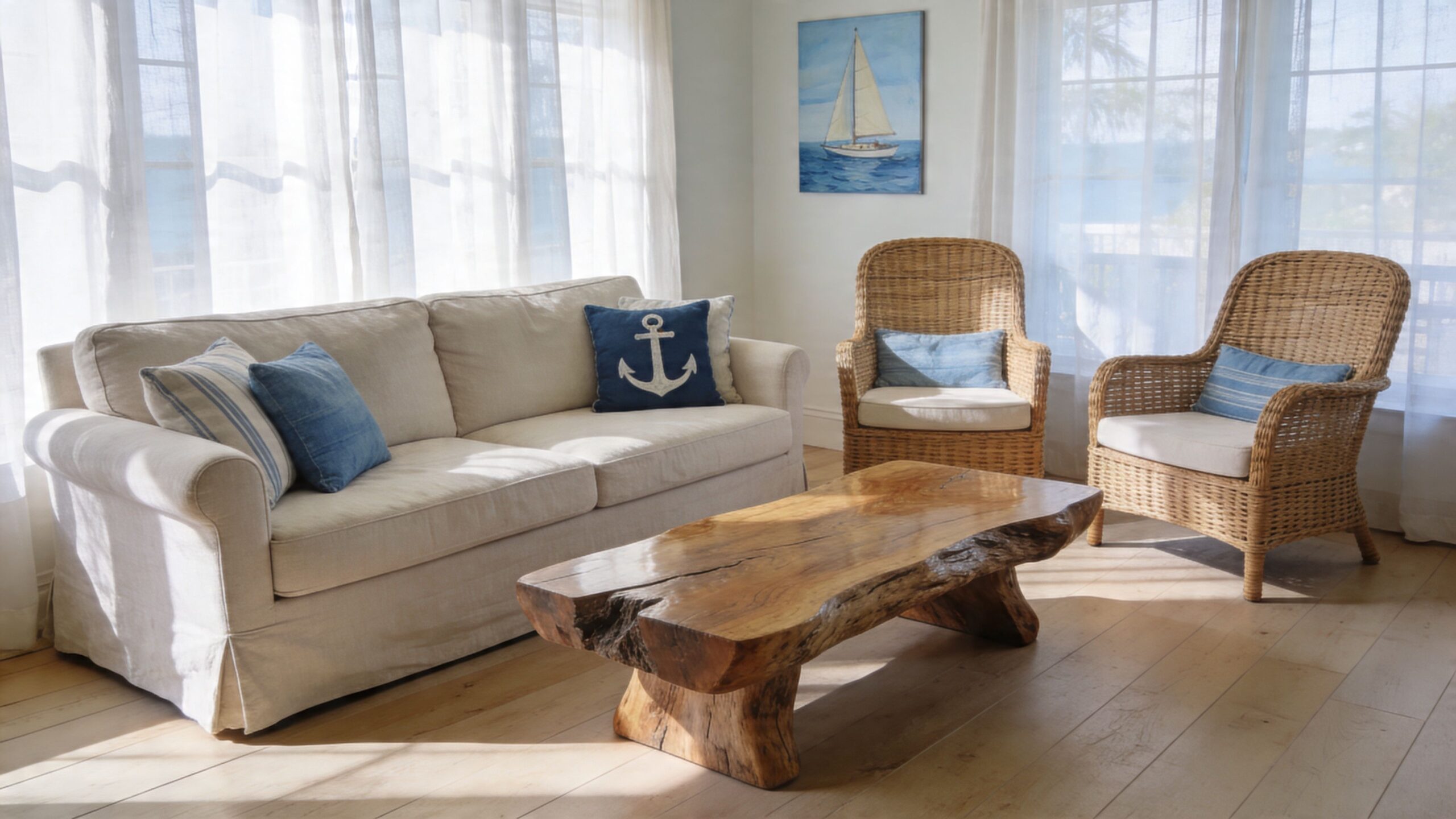
A bright coastal living room featuring a linen sofa, rattan chairs, and a natural wood coffee table.

Choose pieces that sit lightly in the room

A deep sofa in a pale fabric often does the heavy lifting. It becomes the place everyone gravitates to after a swim, during Sunday arvo cricket, or while talking rubbish about which year made the best Kombi front end.

Pair that with lighter-looking pieces:

  • Rattan or woven occasional chairs: They keep the room from feeling too square.
  • Natural timber coffee tables: Better if the finish is matte or slightly weathered.
  • Slim entertainment units: You want storage, but not a giant visual block.
  • Open side tables: Airier than thick, dark furniture.

The key isn’t matching sets. In fact, matching too much can make the space feel staged. A coastal room should feel assembled the way a good garage is. Useful, personal, and a little bit relaxed around the edges.

Arrange for conversation, not just the television

One of the most common mistakes is pushing every seat hard against the walls. That leaves a dead zone in the middle and kills the warm, gathered feeling. Pull the seating inward a little. Let the coffee table become the anchor.

A simple layout often works best:

Area Better choice Why it suits a coastal living room
Main seating One comfortable sofa Creates a calm visual base
Secondary seating Two lighter chairs Adds flexibility and openness
Centre Natural wood coffee table Gives room for books, trays, or a featured model
Corner Floor lamp or plant Softens edges without clutter

If you can walk through the room without weaving around furniture, you’re usually on the right track.

Let your future display pieces breathe

This matters more than people realise. If you know you want a shelf of Beetle models, a framed VW sign, or a standout Samba Bus on the coffee table, don’t fill every surface before those pieces arrive.

Leave a little negative space. It makes special objects feel curated. A floating shelf with one polished Kombi model and a small ceramic bowl often has more impact than a packed bookcase full of bits and pieces.

That’s the same logic restorers use with a classic car. Every detail shines more when it isn’t fighting ten others for attention.

Layering Textures and Natural Light

A coastal living room can look flat if everything is smooth and pale. Texture is what gives it soul. It’s the difference between a room that looks nice in a photo and one that makes you want to kick off your thongs and stay for another coffee.

Start with fabric that has a bit of visual softness. Linen-look curtains, a woven rug, cotton cushion covers, a knitted throw over the sofa arm. These layers help the room feel lived in, not clinical.

Texture should feel a bit imperfect

The best coastal rooms borrow from the natural messiness of the shore. Weathered timber. Basket weave. Slightly nubby fabric. Ceramic finishes that aren’t perfectly glossy. Those surfaces bounce light differently and stop the room from becoming one long stretch of flat beige.

Try combining:

  • A woven rug under a timber coffee table
  • Soft curtains that move easily with the breeze
  • A rougher basket or tray to hold remotes, books, or coasters
  • One chunkier throw for evening warmth and visual contrast

A room with all light, smooth finishes can feel cold. A room with mixed textures feels settled.

Use daylight like part of the décor

Natural light is one of the great heroes of coastal styling. Keep window treatments light enough to let brightness through. Avoid heavy, dark drapes that make the room feel boxed in. If privacy matters, choose a soft layer that filters sunlight instead of blocking it.

At night, you want the opposite mood. Warm pools of light. A floor lamp beside the sofa. A table lamp near a reading chair. A gentle glow that makes white walls feel creamy instead of stark.

Evening lighting should feel like the last light on the beach. Soft, warm, and easy on the eyes.

Keep surfaces calm

Texture does the work, so you don’t need every object to shout. A timber bowl, a stack of books, a simple framed coastal print, maybe a smooth pebble or shell collected on holiday. These small touches foster atmosphere.

And that quietness matters, because it gives your Volkswagen pieces the right stage later on. A colourful diecast model stands out beautifully when the materials around it feel natural and restrained.

Styling Your Volkswagen Memorabilia with Pride

Here, the room becomes yours.

Plenty of guides can tell you to buy a striped cushion, add some coral, and call it coastal. Very few tell you what to do if the object you really love is a classic VW Samba Bus, a Beetle model in seafoam green, or a metal wall piece that reminds you of old beach-town servo signs. That’s the fun bit.

A Surfing Australia survey and home décor trend reference notes that over 60% of surfers associate retro VW vans with the coastal lifestyle, and the same reference reports a 25% rise in VW-themed home décor sales in coastal NSW and QLD regions. That lines up with what plenty of enthusiasts already know in their bones. The Kombi isn’t separate from Australian beach culture. It’s right in the middle of it.

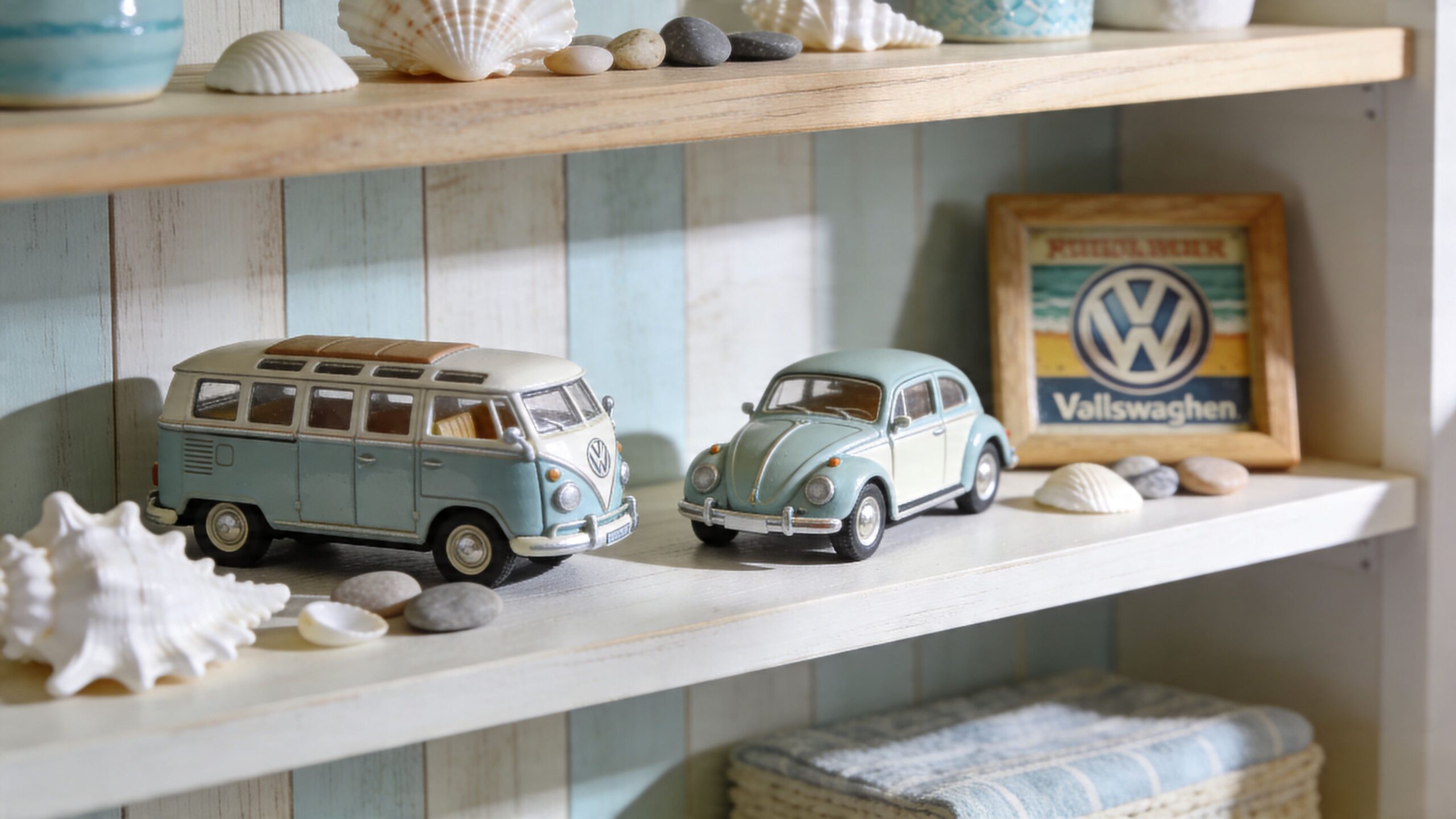
A coastal-themed shelf featuring miniature Volkswagen toy vehicles, seashells, smooth pebbles, and a VW picture frame.

Treat models like sculpture

A licensed diecast model shouldn’t be hidden away like an afterthought. If you’ve got a well-finished Kombi or Beetle, style it the way you’d style a ceramic piece or a small artwork.

Good spots include:

  • Coffee table centrepiece: One larger model on a tray with a book and a small bowl.
  • Floating shelf display: A single Samba Bus beside a coastal print or framed photo.
  • Console table feature: Great for an entry-adjacent living room where the model becomes a conversation starter.

The most effective approach is restraint. One standout model on a clean surface often looks more premium than six lined up wheel-to-wheel.

Build little stories, not clutter piles

A coastal living room looks best when display pieces relate to each other. A retro Kombi model beside sea glass, a smooth pebble, and a pale timber frame feels considered. The same model shoved between random candles and spare keys doesn’t.

Try one of these combinations:

Display spot VW item Coastal pairing
Shelf Flower Power Kombi Sea glass, shell, white ceramic vase
Coffee table 1962 VW Samba Bus diecast Large beach book, timber tray
Wall niche Beetle model Framed surf photo, small driftwood piece
Sideboard VW metal sign or frame Rattan basket, soft lamp, neutral bowl

If you lean more decorative than collector-focused, these wall accents for the living room can help tie a display area together without making it look overdone.

Mix scales with purpose

Scale matters. A larger model reads as a hero piece. Smaller ones work better grouped or tucked into shelves. If your room is already full of visual detail, choose one larger item. If the room is quite minimal, a short row of smaller Beetles can add rhythm without overpowering the space.

A good display should make a guest smile first, then lean in for a closer look.

That’s exactly what old VWs do in practice too.

Lean into surf history, not clichés

The strongest Volkswagen coastal styling usually nods to surf culture rather than obvious nautical themes. That means weathered finishes, sun-washed colours, old road-trip energy, and pieces that feel like they’ve travelled.

You might use:

  • a pastel Kombi model on a pale oak shelf
  • a framed black-and-white beach photo
  • one metal VW sign with a slightly vintage feel
  • a stack of magazines or books about classic cars, surfing, or road travel

What you probably don’t need is a room full of anchors, fish netting, or novelty signs about beach rules.

The old Kombi already brings enough story with it.

Make the display feel grown-up

This matters if you’re sharing the room with a partner, family, or if you want the space to feel polished rather than kitschy. Keep the palette controlled. Repeat one or two accent colours from the memorabilia elsewhere in the room. Choose shelves and frames that suit the furniture. Dust the pieces and give them breathing room.

Done well, VW memorabilia doesn’t look like a hobby that invaded the lounge. It looks like design with personality.

Your Shopping Checklist and Sourcing Tips

Once you know the mood you’re after, shopping gets much easier. You’re not just buying “beachy stuff”. You’re choosing a few foundational pieces, then adding layers that hold up to real Australian conditions.

That last part matters. Sun, humidity, and salty air can be rough on interiors, especially in coastal areas.

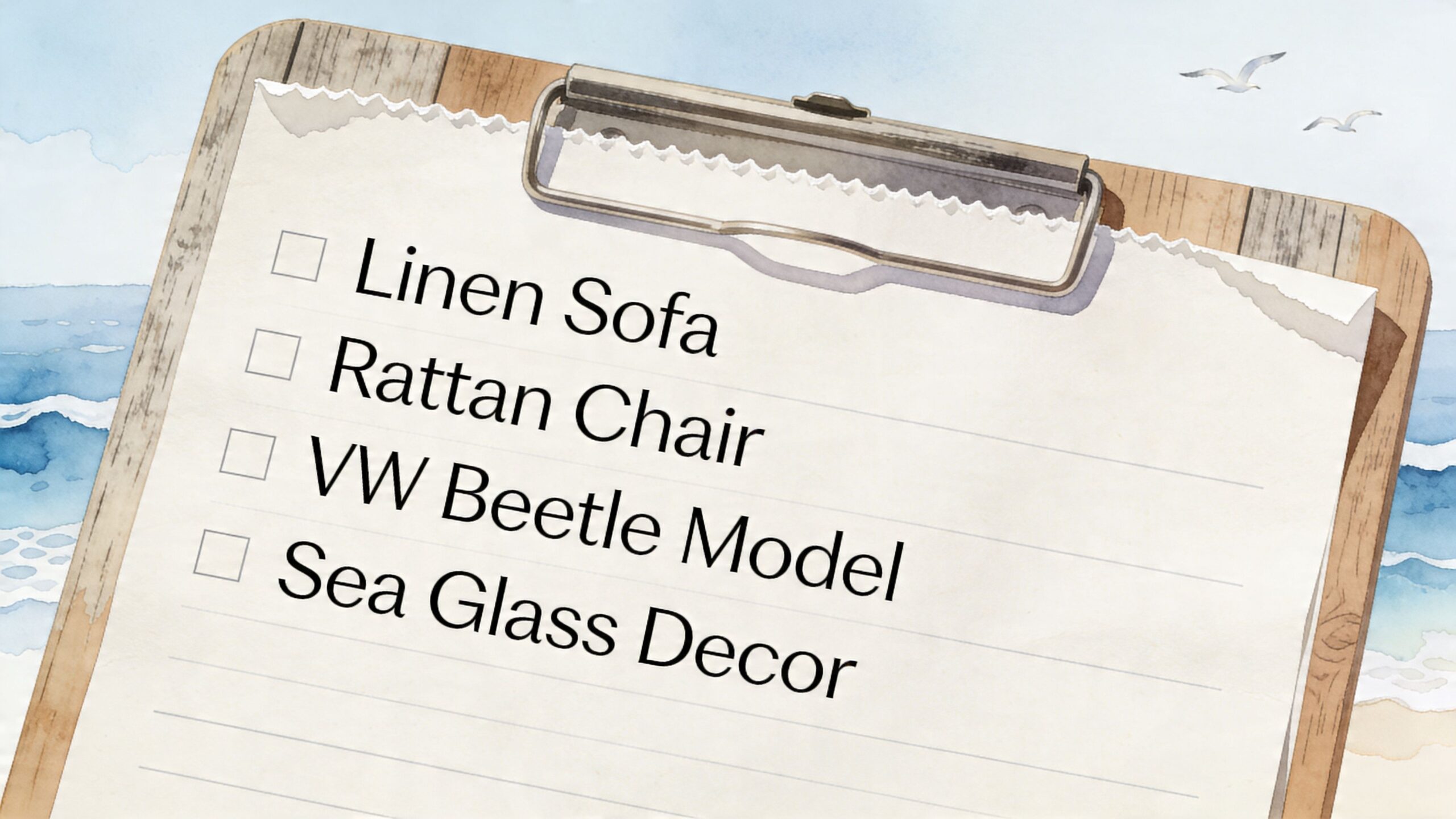
A wooden clipboard on a beach background features a checklist with linen sofa, rattan chair, VW beetle model, and sea glass decor.

Your coastal living room checklist

Use this as a practical starting point when you’re planning the room.

  • A soft neutral base: White, sand, or drift-toned walls and a main sofa in a calm shade.
  • Natural-looking furniture: Timber, rattan, or woven details that lighten the room visually.
  • Layered textiles: Curtains, rug, cushions, and a throw with enough variation to avoid flatness.
  • One hero VW piece: A Kombi or Beetle model that can anchor a table or shelf.
  • Supporting décor: Shells, pebbles, beach photos, ceramics, or framed prints with restraint.
  • Warm evening lighting: Lamps that soften the room after sunset.
  • Display surfaces: Shelves, trays, or sideboards with enough empty space around collectables.

Buy for coastal conditions, not only for looks

A CSIRO-related climate note referenced here says Australia’s humid climates can run 40% higher in humidity than global averages, and the same reference points to durable metal accents like VW diecast models and fridge magnets as a mould-proof, long-lasting alternative to fabrics that degrade more quickly.

That’s worth remembering when you’re tempted by delicate or high-maintenance materials.

A simple rule of thumb:

Item type Better for humid coastal homes Use with care
Accent décor Metal, ceramic, sealed timber Untreated soft materials
Collectables Diecast models, framed pieces Fragile fabrics in direct sun
Storage Baskets with airflow, open shelving Overstuffed enclosed corners
Soft furnishings Practical, easy-care fabrics Anything that traps moisture easily

Know where to save and where to spend

Save on trend-driven bits. Cushions, small vases, and decorative bowls can change with the seasons. Spend more carefully on the sofa, occasional chairs, and the display pieces you’ll keep for years.

If you’re hunting for character pieces, vintage-inspired options in vintage home accessories can help pull the room together without forcing it.

For VW collectors in Australia, buying from a local importer has obvious advantages too. Local stock means less waiting, easier support, and a better sense of what suits Australian homes and gifting occasions. That matters when you’re after licensed memorabilia and you want it to arrive quickly, especially if it’s meant for a birthday, Father’s Day, or a shelf you’ve finally decided to style properly.

Frequently Asked Questions

How do I stop a coastal living room from looking too themed

Keep the bigger pieces quiet and let the personality come from a few smaller items. Choose natural materials, restrained colours, and one or two memorable accents. A single Kombi model or VW wall piece has far more impact than filling the room with beach clichés.

What’s the best place to display a VW Kombi diecast model

A coffee table, floating shelf, console, or open bookcase works well. The main thing is visibility and breathing room. If the model is special, don’t bury it among everyday clutter. Give it a clear backdrop so the shape and colour stand out.

Which VW model scale suits a living room best

Larger scales usually suit coffee tables and sideboards because they read more like sculpture. Smaller scales work well on bookshelves, in wall niches, or grouped on a ledge. If you’re unsure, match the model to the distance from which it’ll be viewed. Bigger for a focal point, smaller for close-up shelves.

Dust is easier to manage when each model has a defined display spot instead of being scattered around the room.

Can I mix VW memorabilia with Hamptons or mid-century furniture

Yes, as long as you manage colour and proportion. Hamptons pieces can work if the room stays relaxed and not overly formal. Mid-century furniture often pairs beautifully with Volkswagen memorabilia because both share clean lines and a sense of retro optimism. Keep the palette cohesive and the result feels intentional.

How do I clean diecast models in a coastal home

Use a soft, dry cloth or a very gentle detailing brush for dust. Keep them out of direct harsh sun where possible. Avoid soaking them or using strong cleaners. If a model sits in a room that gets regular sea breeze, a light, consistent dusting is better than letting residue build up.

How many VW pieces should I put in one coastal living room

Less than you think. Start with one hero item and one supporting piece. Live with that for a while. If the room still feels sparse, add another. Collecting and styling both work better when they grow gradually.

Can a Volkswagen Beetle model work in a beach-inspired room, or is a Kombi better

Both work. A Kombi leans more obviously into surf-road-trip nostalgia. A Beetle can bring a sweeter, more compact note, especially on shelves, side tables, or grouped displays. Choose the one that means something to you. Personal connection always looks better than trend-chasing.


If you’re ready to turn that beach-and-bus feeling into something you can enjoy every day, have a look at Volkswagen Memorabilia. It’s a great spot for licensed VW gifts, surfy diecast models, coastal accents, and display pieces that suit Australian homes, with local stock and fast shipping that make collecting a whole lot easier.