A few summers back, I was parked near the coast with a coffee in hand when an old Kombi rolled past, boards on the roof and salt on the paint. Half the people nearby turned to look, and every one of them smiled.
That's the thing about the transporter combi van. It isn't just transport. It's memory, workhorse, road trip, surf wagon, family hauler, and for a lot of us, the shape that started a lifelong VW obsession.
That Feeling of Freedom When a Kombi Drives By
You know the scene. Early sun, a beach car park, kids kicking a footy, someone unpacking an esky, and then a VW van glides through with that unmistakable nose and cheerful stance. Even people who don't know a T1 from a T6 recognise the vibe straight away.
In Australia, the Kombi feeling has always been tied to movement. Not rush. Not commuting. Real movement. Heading up the coast, carrying mates to a market, loading tools on Friday and camping gear on Saturday. The transporter combi van became part of that rhythm because it fit real life so well.
I've spoken to owners at shows who remember them in completely different ways. One bloke remembers his dad's van full of ladders and paint tins during the week. Another remembers sitting on the rear bench with sandy feet after surf lessons. Same vehicle family, same basic idea. Different stories layered into the same silhouette.
That's why the Transporter matters. It's a van, yes, but it's also one of those rare Volkswagens that feels equally at home in a workshop driveway, a holiday park, or a collector's display cabinet.
Some vehicles get admired. A Kombi gets remembered.
A Journey Through Time The VW Transporter Story
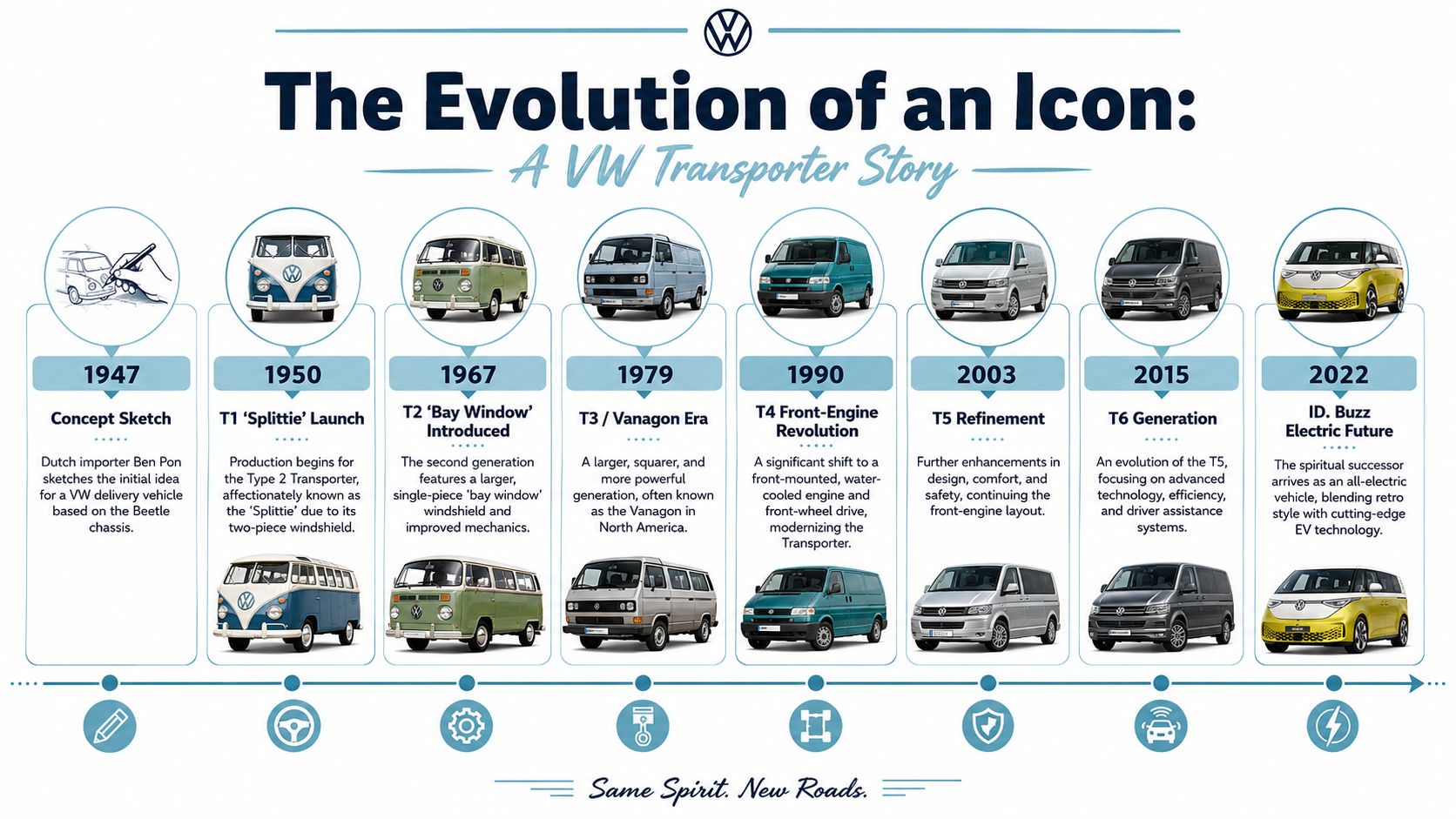
The Transporter story starts with a simple VW truth. If you build something honest and useful, people find all sorts of beautiful reasons to love it. What began as a practical van evolved into a whole family of shapes and personalities, from bare-bones load carriers to cheerful people movers.
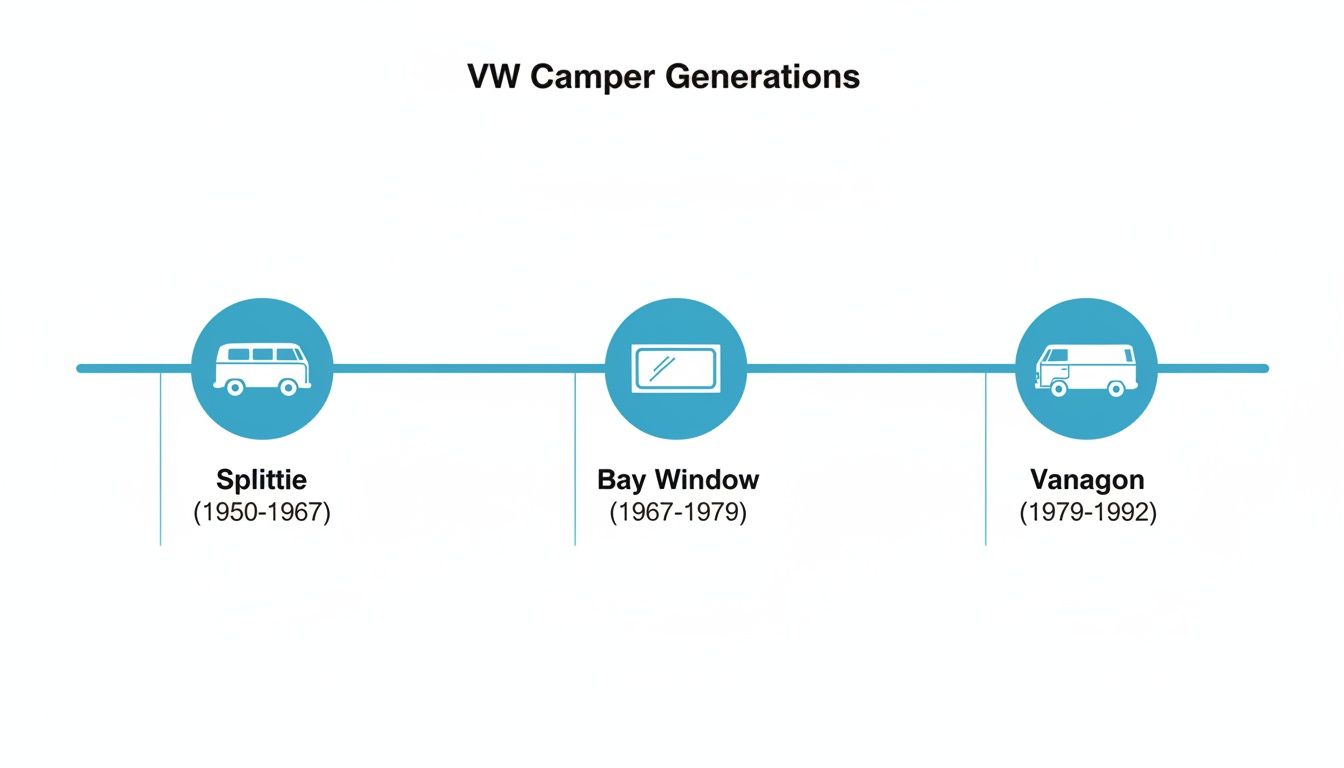
The earliest generations still define the iconic look associated with the term “Kombi”. The T1, often nicknamed the Splitty, has that charming split windscreen and rounded face that feels almost hand-drawn. The T2 Bay Window softened the same friendly idea into a wider, more open look. Later generations became squarer, smarter, and more modern, but they never lost the Transporter's core brief. Carry people, carry gear, and do it without fuss.
Why Australia Took to It
Australia has always had room for vehicles that can do more than one job. That helps explain why the Transporter became such a familiar sight here. The line has been on sale for more than 70 years and is widely described as the best-selling van in history, with over 12 million units sold worldwide according to the Volkswagen Transporter history overview.
That sort of long run matters. It means the van wasn't a fad or a niche curiosity. It became a benchmark. The same broad Transporter family has included panel van, kombi, window van and shuttle body styles, which is a big reason Australians kept finding new uses for it over the decades. If you collect miniature VWs, that long bloodline is part of the appeal too. You can see the family resemblance from one era to the next in a way few vehicle lines manage. It's part of what makes browsing classic Volkswagen Transporter camper pieces so satisfying.
More Than Counterculture
People often talk about the Kombi as a symbol of freedom, and fair enough. But that's only half the story. The other half is graft.
These vans earned their place because they worked. Tradies used them. Families toured in them. Beachside businesses packed them with gear. Support crews used them because a good van doesn't care whether you're hauling camping chairs or equipment boxes. That practical backbone is exactly why the romance has lasted.
What Exactly Makes a Transporter a Combi
A lot of people use “Kombi” as shorthand for any classic VW van, but the word matters. Combi comes from the idea of combination. Not full cargo van. Not full passenger bus. A transporter combi van sits right in the sweet spot between the two.
A panel van is mostly about load space. A microbus leans hard into carrying people. The Combi is the clever middle child. It gives you seats where you need them and usable cargo room behind them. That's why it has always suited Australian owners who don't live in neat little categories.
The Real Magic Is the Layout
Modern Kombi specifications show the same logic that made the format famous in the first place. In Volkswagen's Kombi material, the second row uses three individual seats, and reconfiguring them can create up to 4,343 litres of storage space according to the Volkswagen Kombi specification page. That one detail says a lot.
You can read that spec sheet in a very human way:
- For a tradie: seats for the crew on the way to site, room for gear on the way back
- For a surf run: people in the cabin, wetsuits and boards stowed without turning the trip into chaos
- For a family weekend: enough flexibility that nobody has to choose between bringing passengers or bringing half the holiday setup
Practical rule: If a van can switch roles without drama, owners keep it longer and talk about it more fondly.
That's the heart of the Combi idea. It doesn't ask you to own one vehicle for work and another for fun. It tries to cover both with one shape and a bit of clever packaging.
Why the Name Still Means Something
Even if you're mainly into diecast and memorabilia, understanding the Combi helps you spot why some models carry more emotional weight than others. A van that was designed to do a bit of everything naturally ends up in more family photos, more road trip stories, and more workshop memories.
That's why the transporter combi van has never been just a trim level to enthusiasts. It's a way of using a Volkswagen.
From Splitty to Samba Identifying the Icons
Collectors tend to fall for details first. A roofline. A window shape. The curve of the front badge panel. With classic VW vans, a few visual cues tell you almost everything.
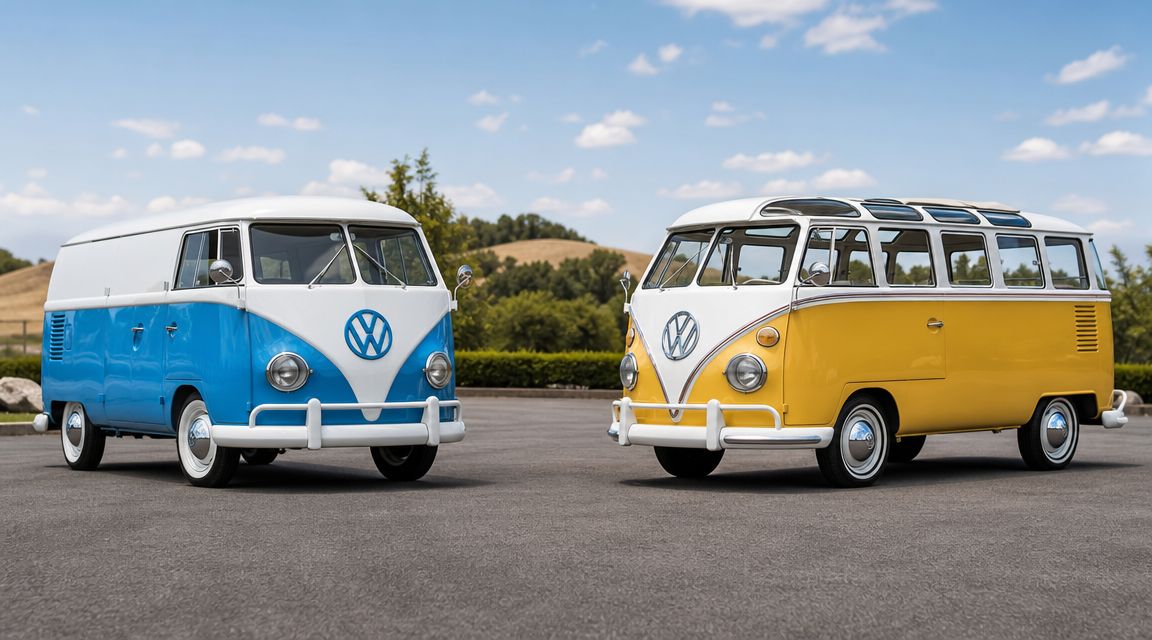
The T1 Splitty is the easy one to spot. Two-piece windscreen. Rounded body. A front end that looks friendly even standing still. The T2 Bay Window keeps the classic proportions but swaps in a larger single-piece windscreen, giving the face a more open look. Then there's the Samba, which takes the early bus formula and adds the sort of glass-heavy style that makes collectors go weak at the knees.
The Spotter's Guide
| Feature | T1 (1950–1967) 'Splitty' | T2 (1967–1979) 'Bay Window' |
|---|---|---|
| Windscreen | Split into two panes | Single large bay window |
| Overall feel | More rounded and early post-war charm | Slightly broader, more open-faced look |
| Collector appeal | Deep nostalgia and iconic silhouette | Strong road-trip character and classic surf culture presence |
| Common reaction at shows | People crowd around the front end | People imagine loading it for a weekend away |
The Samba sits in a special place because it captures the playful side of VW design so well. More glass, more light, more theatre. It feels celebratory before the engine even turns over.
Why These Variants Matter Beyond Looks
Classic shapes get the posters and the diecast releases, but the practical side still matters. For Australian buyers looking at a real-world Kombi format, payload and towing change depending on model and powertrain. Volkswagen material for TDI Kombi variants notes up to 1.28-tonne maximum payload and up to 2.8 tonnes towing capacity, with lower figures for BEV versions, as shown in the Transporter brochure.
That trade-off is part of the Kombi story. Add seats, and you shape the van around people. Prioritise load, and you shape it around work. The smartest owners always knew that, and the smartest collectors appreciate it too. These weren't pretty shells. They were proper working Volkswagens.
For a closer feel of why the early buses still charm people so much, this video is a nice little companion while you read.
Why the Samba Owns Shelf Space
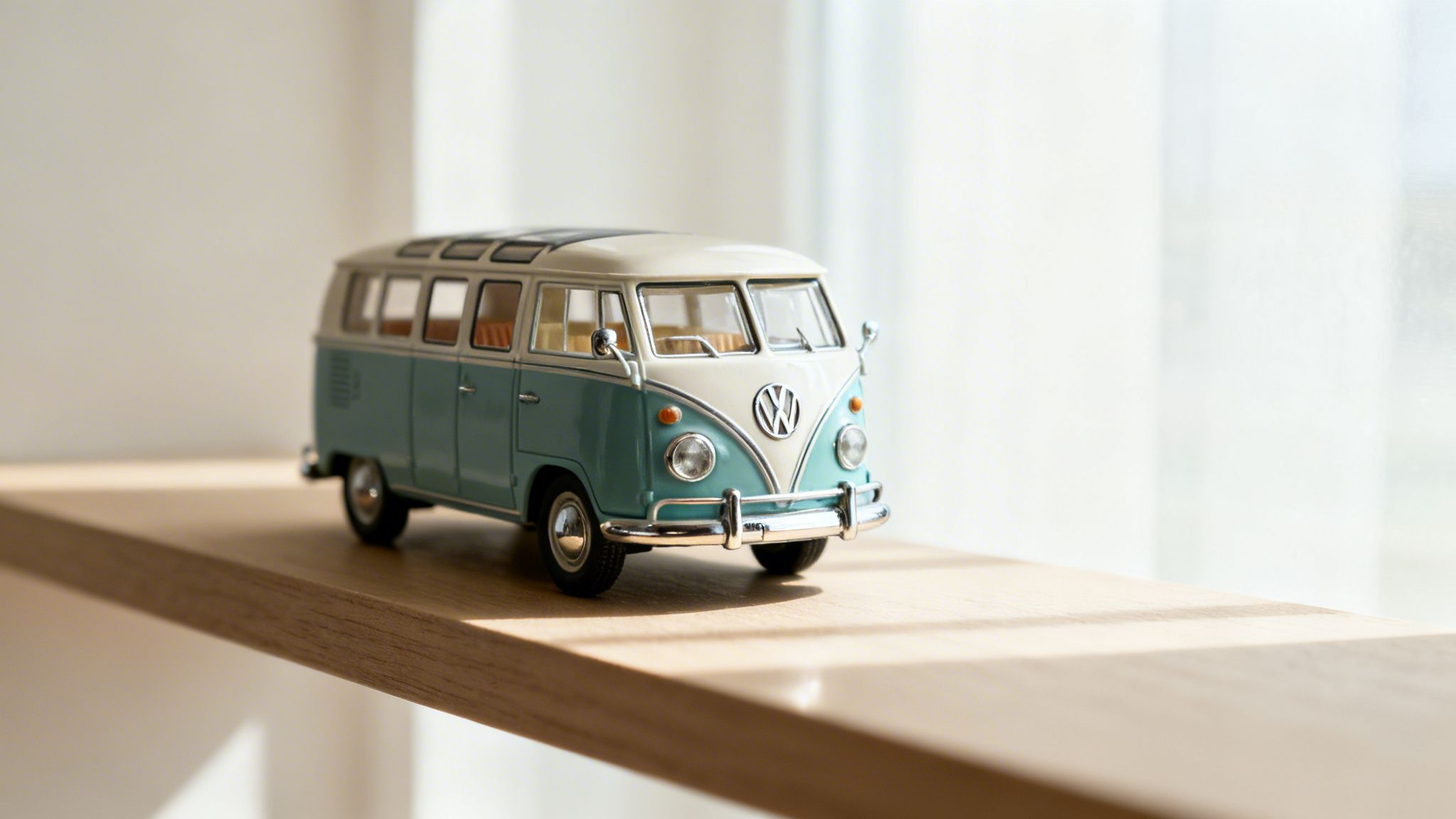
If you're choosing one diecast to represent the whole VW bus legend, a Samba is hard to beat. The windows, the roof treatment, the bright period colours, the sense of occasion. It turns a shelf into a story.
That's exactly why so many collectors start with a Volkswagen Samba Bus diecast model. Even in miniature, the design does what the van did. It draws people in.
Bringing the Legend Home Collecting VW Diecast Models
Owning a real Kombi is a dream for some people and a full-time project for others. Owning a good diecast is much simpler. You still get the shape, the paint, the history, and that lovely little jolt every time you walk past the shelf.
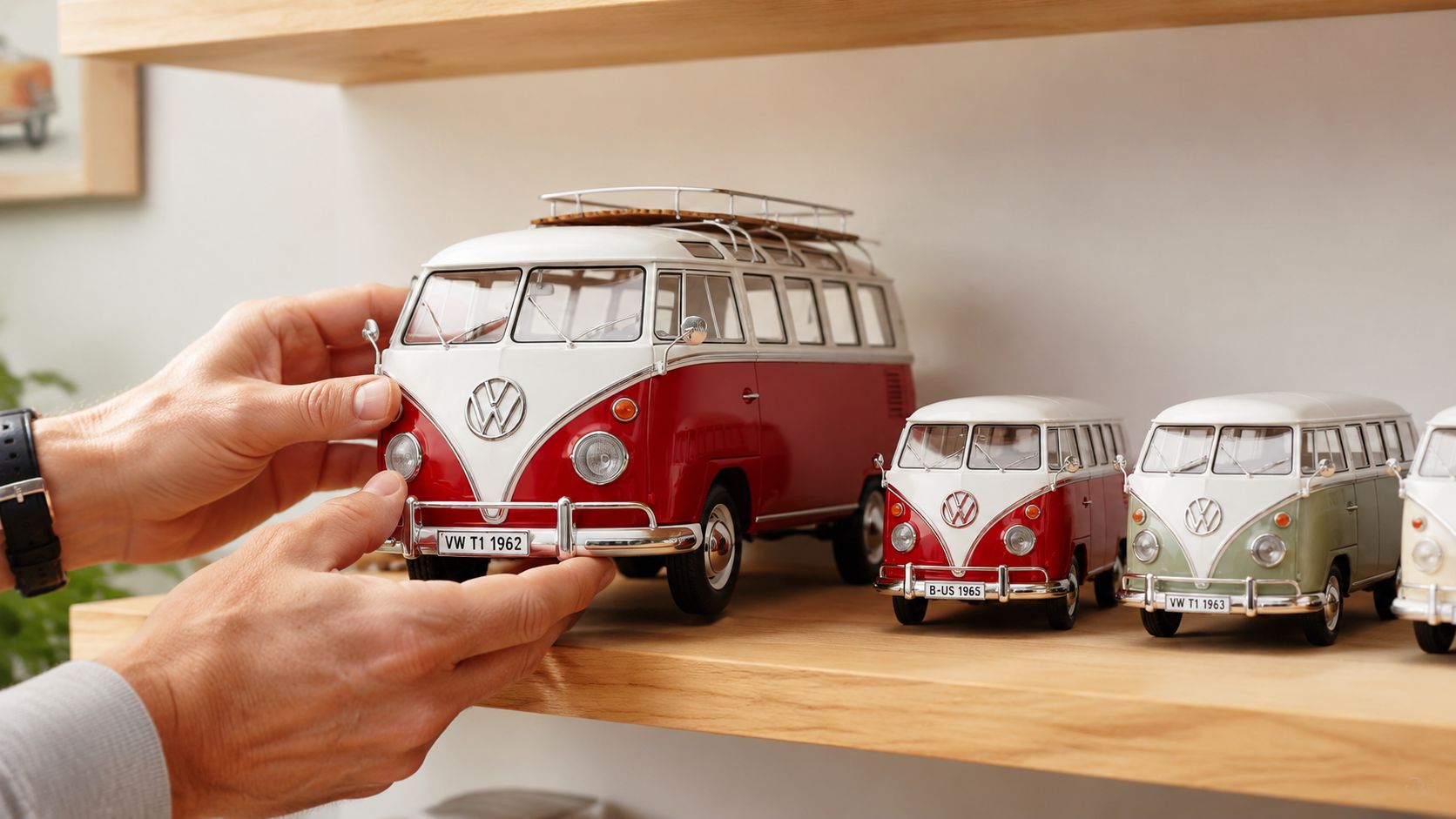
The appeal isn't just nostalgia. It's design appreciation. Modern Transporter variants still carry the practical DNA that made the old vans so beloved, with fuel consumption as low as 6.9 L/100 km and payloads over 1,000 kg in current-era examples, as outlined in the CarsGuide Transporter overview. Collectors see that lineage in miniature. The best models don't feel like random toy vans. They feel like scaled-down members of a long-running family.
What to Look For in a Good VW Model
A decent diecast tells the truth about the vehicle. That's what separates a shelf piece from a throwaway novelty.
- Licensed design: Officially licensed models usually get the proportions, badging, and trim details right
- Period-correct colour: Two-tone paint on a T1 or a bright surfy finish on a later bus can completely change the feel
- Display purpose: Some people want a clean collector piece. Others want something cheerful for a desk, a gift box, or a beach-house shelf
If you're starting out, it helps to browse a proper category rather than one-off listings scattered around the internet. The Volkswagen model cars collection is one example of a dedicated category where you can compare styles more easily.
Easy Picks for Different Collectors
Some collectors want strict classic accuracy. Others want fun.
- A 1962-style Kombi bus model suits the purist who loves early lines and two-tone charm
- A Samba Bus diecast works beautifully if you want the most instantly recognisable bus shape
- A Flower Power Beetle adds colour and a softer counterculture note alongside your vans
- Mixed displays with both a VW Kombi diecast Australia range feel and a Volkswagen Beetle model selection can tell the whole story of the brand in one cabinet
Buy the model that reminds you of a person, a trip, or a colour scheme first. The “perfect” collection usually starts with a memory, not a checklist.
For Australian buyers, local stock matters too. Faster shipping, easier support, and less waiting around all make collecting more enjoyable, especially when you're buying a gift or finishing off a display before an event.
Styling Your Space with VW Nostalgia and Coastal Charm
A good VW model shouldn't disappear into clutter. Give it a little room and it starts doing what a real Kombi does. It sets a mood.
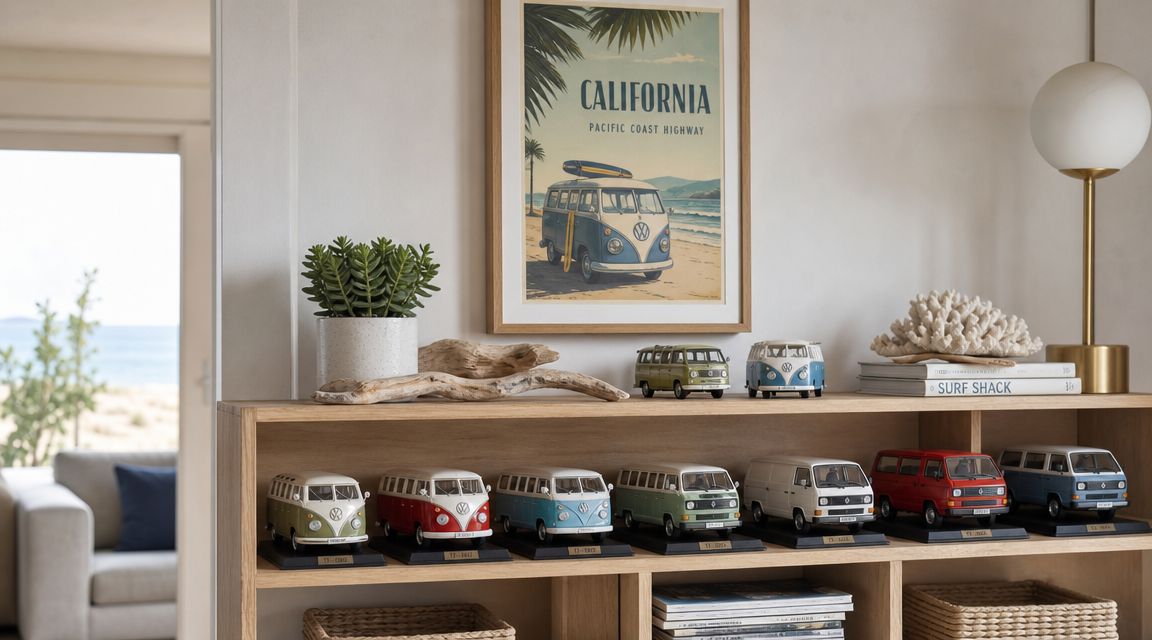
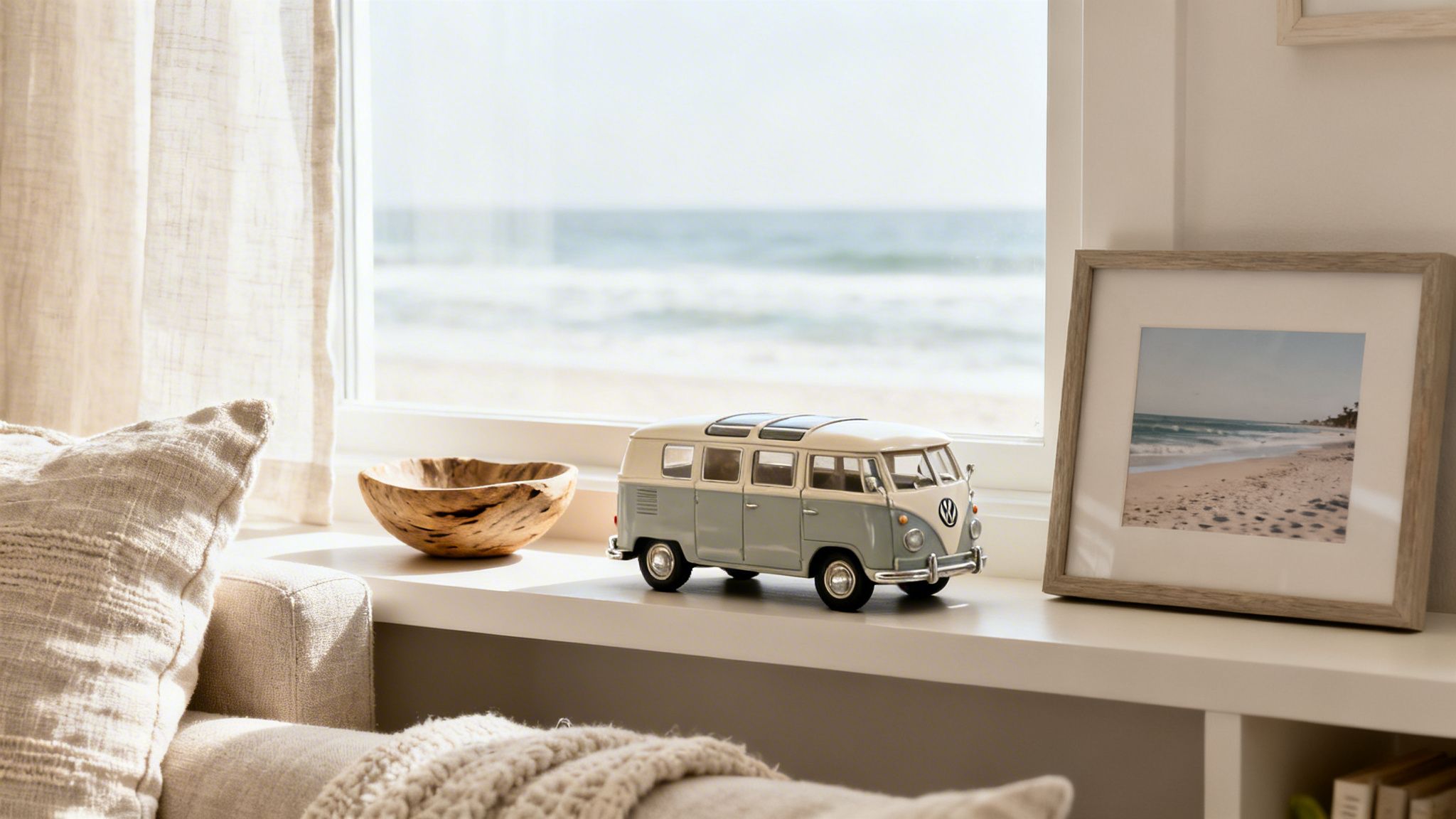
I've seen some terrific home setups over the years, and the best ones rarely look expensive or overthought. They look personal. A small shelf with a Kombi, a framed beach print, and a weathered timber finish can say more than a giant cabinet packed tight with models.
Display Ideas That Actually Work
- Coastal shelf: Pair a Kombi diecast with a surf-themed print, pale timber, and a small shell or driftwood accent
- Office corner: A Beetle or Samba on the desk adds character without turning the room into a showroom
- Gift vignette: A model van, a card, and a simple display stand can make a thoughtful present feel properly considered
Keep the Story Cohesive
Choose one mood and stay with it. If your van is bright and beachy, support it with coastal décor. If it's a more classic red-and-cream bus, lean into retro tones and old travel energy. The point isn't to make your home look like a museum. It's to create little pockets of feeling.
For people who enjoy mixing vehicle collectibles with beach-house styling, browsing vintage home accessories can help tie the display together without it feeling forced.
A Few Small Styling Tips
Leave breathing room around the model. A Kombi has character in its shape, and crowded shelves hide it.
Try raising one model on a small stand or stacked book. Use warm light rather than harsh white light. If you've got more than one VW piece, vary the heights so the display feels relaxed rather than lined up like stock on a store rack.
And if you've got kids or grandkids who are fascinated by the little vans, place one lower down where it can spark a conversation. Half the fun of VW memorabilia is the stories it starts.
FAQ
Is a Kombi the same as a Transporter?
Not exactly. Transporter is the broader vehicle line, while Kombi refers to the combination-style layout that blends passenger seating with cargo space.
What makes a Samba different from a regular bus?
A Samba is prized for its distinctive window-heavy style and its special visual character. It's one of the most recognisable and collectable classic VW bus variants.
Why do collectors love the Splitty so much?
The split windscreen, rounded body, and early VW charm give it a look that's instantly identifiable. Even people who aren't deep into VW history tend to recognise it.
Are diecast VW models worth buying if I'll never own a real Kombi?
Absolutely. For plenty of enthusiasts, diecast is the practical way to enjoy the design, heritage, and nostalgia without the cost and upkeep of a full-sized classic.
What should I buy first if I'm new to VW memorabilia?
Start with the model that means something to you. For many people, that's a Samba Bus, an early Kombi, or a Beetle in a colour they remember from childhood.
If you're ready to bring a bit of that VW spirit into your home, have a look through Volkswagen Memorabilia. You'll find licensed VW diecast, Kombi and Beetle favourites, and coastal-inspired pieces that suit collectors, gift buyers, and anyone who still smiles when a Kombi drives by.