

One of my favourite car-show moments is hearing a Beetle before I spot it. Across the grass, past the deck chairs and coffee vans, that light, busy thrum tells you exactly what's coming.
That's the charm of the vw beetle motor. It isn't just mechanical hardware. It's memory, personality, and for plenty of Aussie enthusiasts, the very heartbeat of a car that feels friendly the second it rolls in.
That Unmistakable Sound The Soul of a VW Beetle
Stand near a row of classic Volkswagens on a bright morning and you'll notice something straight away. No two cars feel exactly the same, but a Beetle always carries a certain warmth. The engine note is part sewing machine, part cheerful chatter, and completely its own thing.
That character comes from the Beetle's simple air-cooled flat-four layout. There's no radiator up front to define the car's story. The action sits at the back, tucked under that curved lid, whirring away with a kind of honest purpose. You hear the fan, the exhaust note, the slightly mechanical rhythm, and suddenly the whole car makes sense.
For Australian owners, that matters. A Beetle doesn't feel overcomplicated or precious. It feels usable. It feels like something you can park at a beach meet, drive to a club run, or spend a Sunday morning tinkering with in the shed.
Why the motor matters so much
The motor shaped the Beetle's entire identity:
- It gave the car its sound. You can often pick an air-cooled VW out of a crowd before you even see the badge.
- It made the car easy to understand. Open the rear lid and the layout is wonderfully direct.
- It built loyalty. Owners who learn one Beetle engine often stay hooked for life.
Practical rule: If you want to understand any Beetle, start at the rear. The engine tells you what era the car belongs to, how it drives, and how original it really is.
That same fascination carries neatly into collecting. People don't only admire a Beetle's shape. They love the details hiding under the lid, which is why so many model-car collectors hunt for miniature Beetles with engine bays worth peeking into.
The Heart of the Bug A History of Air-Cooled Power
You can trace the Beetle's personality back to a very simple engineering brief. Volkswagen needed a compact rear-mounted engine that could be built in huge numbers, serviced without drama, and keep working in everyday conditions. That is why the Beetle motor feels so honest. Every part of it was shaped by usefulness first.
The earliest production Beetles used an air-cooled flat-four of 985cc with 22.5 horsepower, and Volkswagen's own historical record notes a top speed of about 100 km/h for those first cars in 1938, according to Volkswagen's Beetle history.
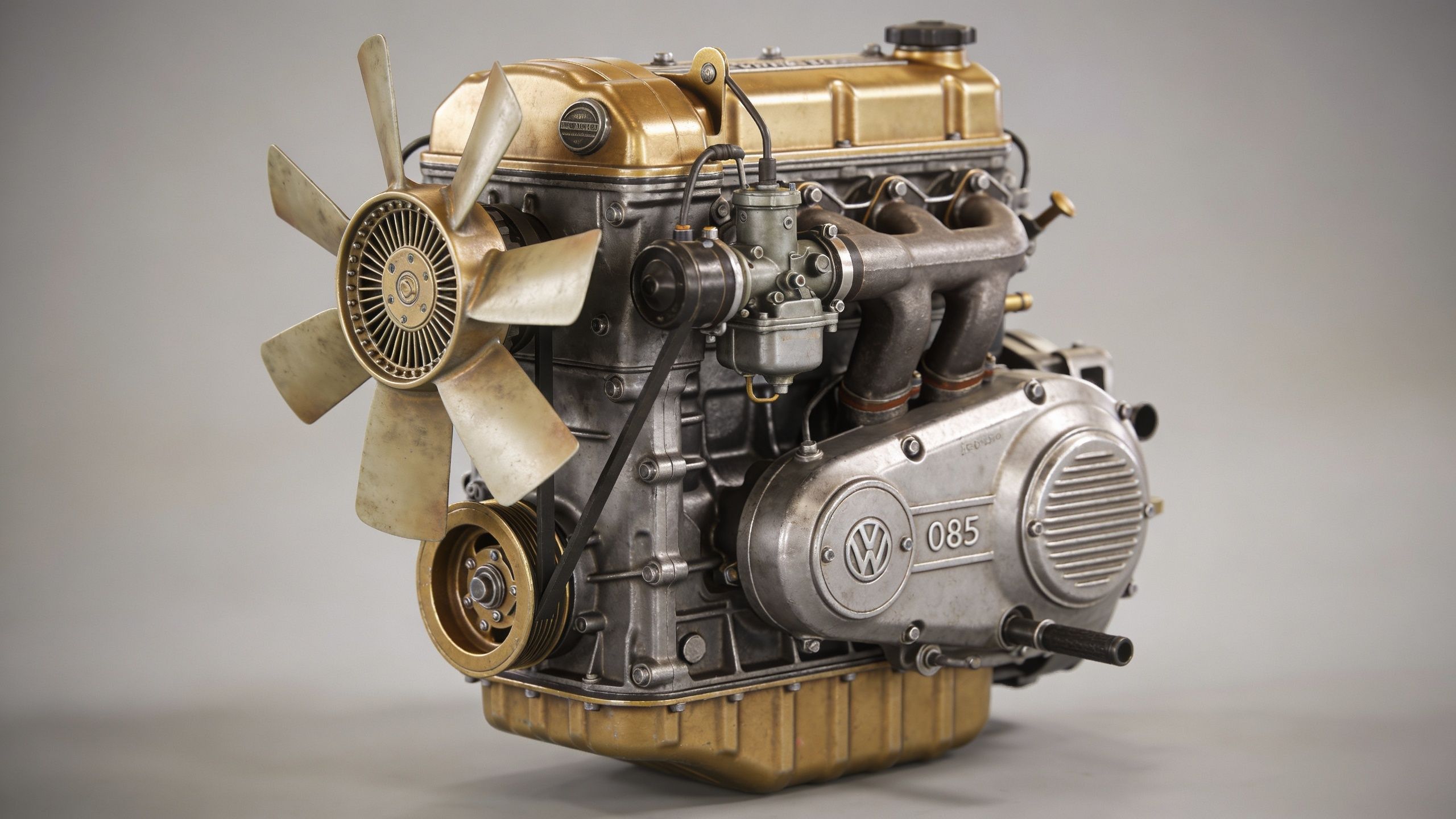
Those numbers look tiny now. In period, they made sense. The Beetle was light, and the engine was designed to pull steadily rather than sprint like a sports car. It behaved a bit like a loyal kelpie on a farm. Not flashy, always ready, and happiest when given a clear job.
How the motor grew with the Beetle
As the Beetle matured, the engine grew with it. Early wartime and post-war development led to larger versions, and by the 1950s the 1192cc engine had become one of the defining Beetle motors. Australian buyers came to know that engine well because it suited the car's whole character. It was simple, easy to service, and happy to spend years doing school runs, beach trips, and country miles.
That 36 horsepower 1200 is the point where many enthusiasts feel the Beetle found its rhythm. It gave the car enough extra urge to feel friendlier in traffic, while keeping the same basic recipe that made the flat-four so approachable in the first place.
There is a materials story here too. The crankcase used lightweight alloy construction, and later magnesium-rich cases helped keep weight down. That matters more than it first seems. Less weight hanging behind the rear axle helped the whole car feel more balanced than the raw engine figures suggest.
Then came the 1600, the motor many collectors chase
The later 1584cc engine gave the Beetle a more relaxed stride, especially in the 1970s. Horsepower figures for these engines can look confusing because different markets and years used SAE gross, SAE net, and DIN ratings, but the broad story is clear in The Autopian's explanation of Beetle horsepower ratings. The 1600 became the enthusiast favourite because it kept the Beetle feel while making the car easier to live with on faster roads.
That is also why 1600-powered cars often get plenty of attention at shows. They sit in a sweet spot between charm and usability. You still get the classic air-cooled layout, but with a bit more breathing room in everyday driving.
For owners trying to match a real car to its period details, a VW Type 1 engine identification guide helps make sense of the different engine families and codes.
Why this history matters to diecast collectors
Here is the fun part for model collectors. The changes in full-size Beetle engines often show up in miniature, and the better diecast makers know exactly which clues matter. A 36 horsepower era model should not have late dual-port style details under the lid. A 1970s Beetle model with a 1600 look should usually show the wider fan shroud and later engine-bay layout cues that collectors expect.
That makes the motor a quiet test of authenticity. Plenty of toy makers get the body shape roughly right, but the engine bay separates a generic Beetle model from one that feels properly researched. If you collect opening-engine diecasts, look for whether the miniature matches the era of the car rather than just wearing a vaguely air-cooled flat-four shape.
The actual Beetle earned its legend one engine revision at a time. The miniature world follows the same trail, just scaled down to something you can hold in your palm.
Spot The Engine How to Identify Your VW Beetle Motor
You lift the rear lid, have a stare, and then the questions start. Is it original? Is it a 1200, a 1600, or something built from mixed parts over the years? That confusion is normal, because Beetles have lived long lives and many have been repaired, upgraded, or rebuilt.
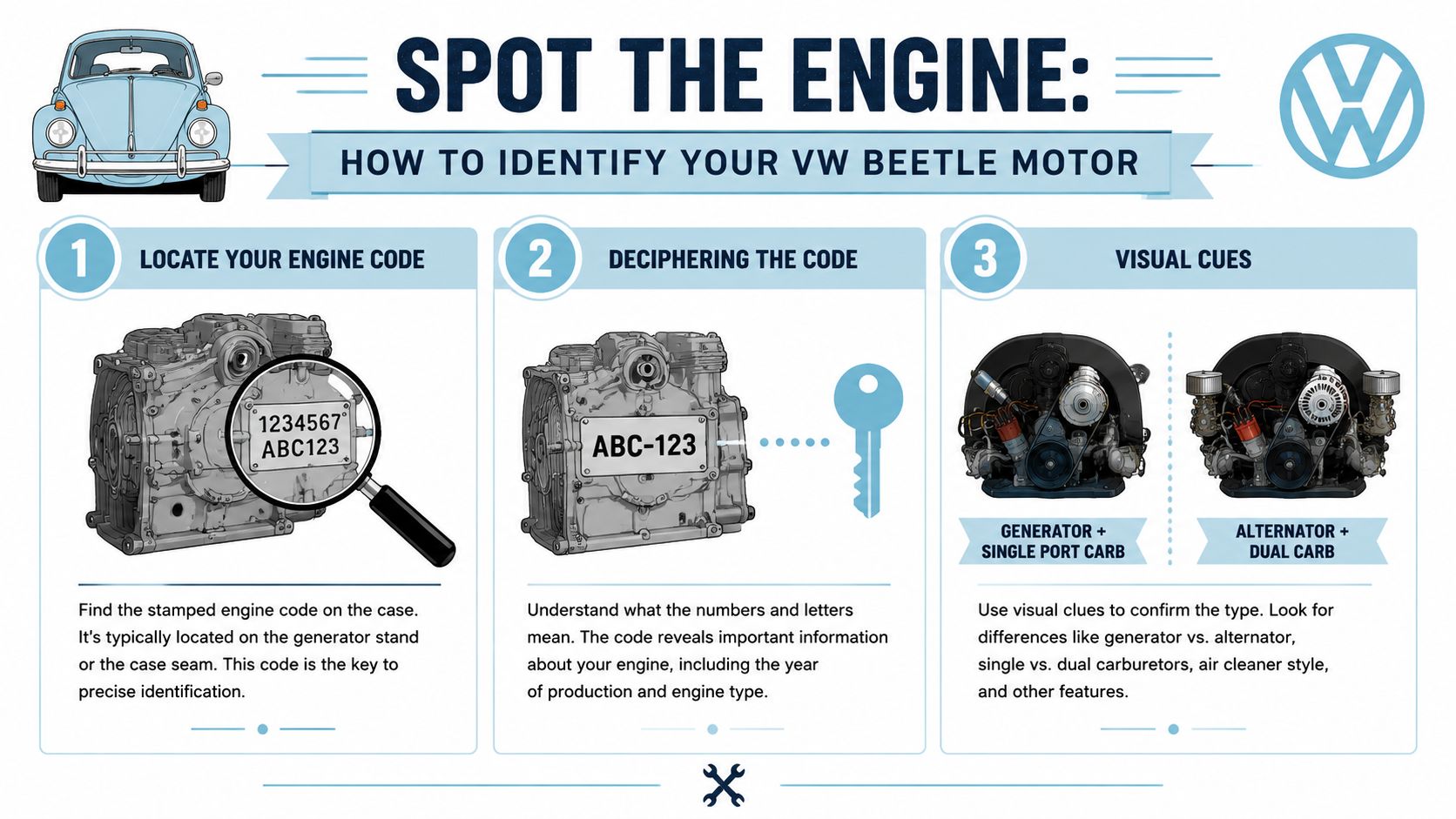
The best starting point is the engine code. If you want a handy reference for where to look and what the markings mean, this VW Type 1 engine identification guide is a useful companion.
Start with the stamped code
On a classic Beetle motor, the stamped engine number is the closest thing you'll get to a name tag. It helps identify the engine family and often points you toward the original displacement and era.
That said, don't stop there. Many Beetles now carry replacement cases, swapped carburettors, later fan shrouds, or upgraded ignition parts. A code can tell you where the case began. The rest of the engine tells you how the story changed.
Then look at the visual clues
A few details can quickly narrow things down:
- Single-port versus dual-port intake. A dual-port setup is a big clue you're looking at a later-style engine.
- Generator or alternator. That often reveals whether the charging system is closer to an earlier original setup or a later update.
- Fuel-injection hardware. On Australian late-model 1600 engines, Bosch L-Jetronic fuel injection marks a later configuration rather than the more familiar carburettor look.
- General neatness of the installation. A tidy, era-correct bay usually suggests careful restoration. Mixed finishes and odd parts often hint at years of practical repairs.
The 1600cc engine, at 1584cc, became the key late-model unit. In Australia it was common in late Super Beetles and produced 48 hp SAE net after 1975 with Bosch L-Jetronic fuel injection, which is one reason it remains such a favourite among local enthusiasts.
If the engine code says one thing and the hardware says another, trust your eyes as much as the stampings. Beetles are survivors. They often wear parts from more than one chapter of their life.
VW Beetle Engine Identification Guide Australian Models
| Displacement | Engine Code Prefix | Approx. Horsepower (HP) | Common Years (Australia) |
|---|---|---|---|
| 985cc | Early engine code varies by period | 22.5 hp | Early imported cars from 1947 onwards |
| 1192cc | Varies by case and market | 36 hp | From 1954 in Australian Beetles |
| 1584cc | Varies by version | 57 hp SAE gross to 60 hp in early 1970s versions; 48 hp SAE net in post-1975 Australian applications | Common in late-model Australian Beetles and Super Beetles |
A quick note on that table. The horsepower figures are useful, but they don't always compare cleanly because different rating methods were used over time. That's why one Beetle owner might call a 1600 a 60-horse motor and another calls it a 48-horse motor, and both can be talking about legitimate published figures from different standards.
Keeping the Legend Alive Common Fixes and Maintenance
The nicest thing about caring for a Beetle motor is that regular attention matters more than fancy tricks. These engines respond well to simple habits, done properly and done on time.
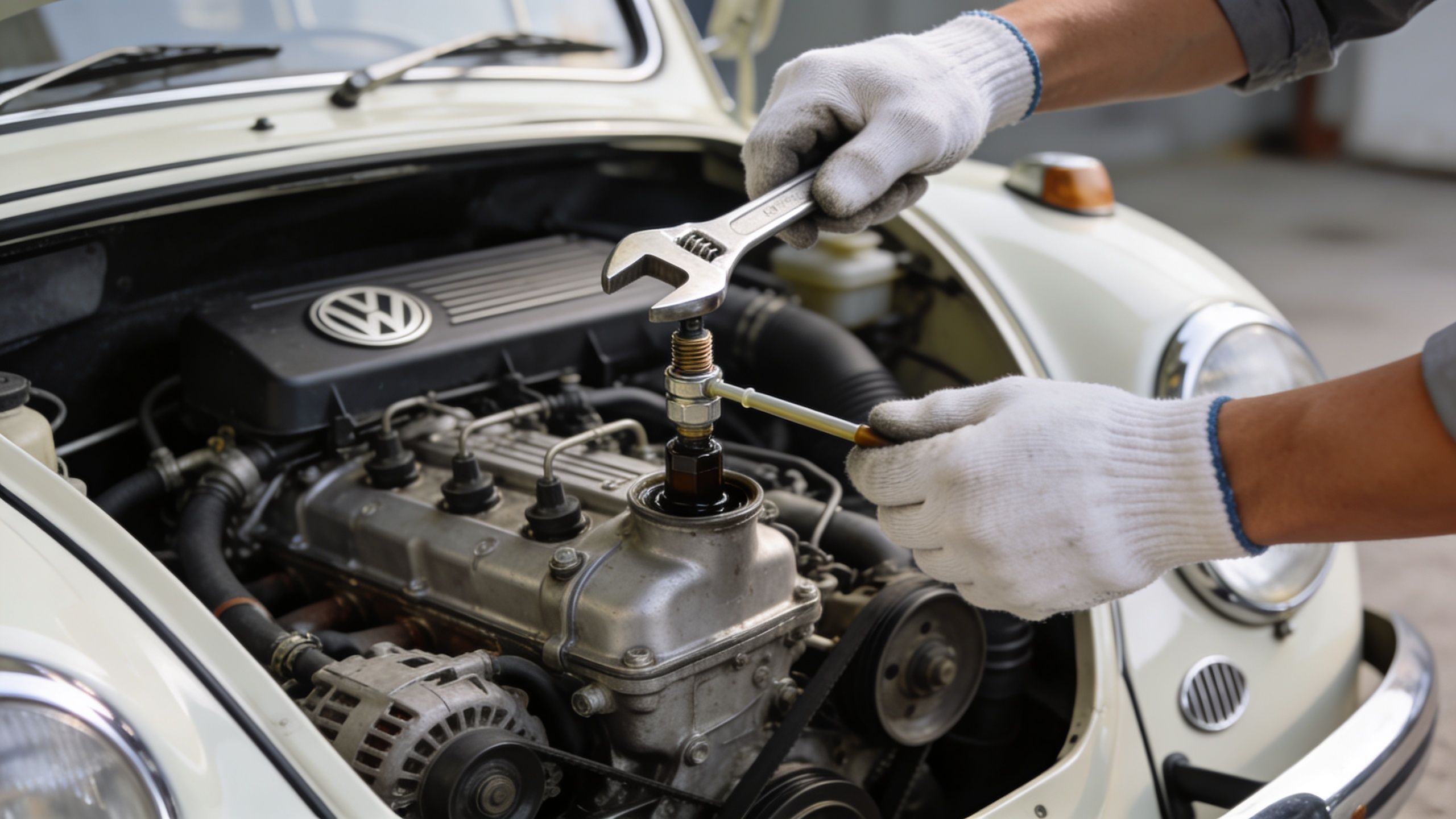
If you're still building confidence, a browse through VW parts Australia can also help you get familiar with the bits owners commonly replace during routine upkeep.
The basics that matter most
Most classic Beetle headaches start with neglected maintenance rather than dramatic failures. A healthy routine usually includes:
- Fresh oil and regular checks. Air-cooled engines rely on clean oil because oil does a lot of work in temperature control as well as lubrication.
- Valve-clearance checks. A noisy top end or hard starting can be a clue that clearances need attention.
- Ignition tune-ups. Old-school points, condenser, timing, and leads all need to be in decent shape.
- Watching for leaks. Beetles often mark their territory a bit, but fresh leaks deserve a closer look.
Points and dwell still matter
This is the bit many newer owners find mysterious. On a points-style ignition system, dwell angle is the amount of time the breaker points stay closed. For classic Beetles, the specified range is 44 to 50°, and setting it correctly affects ignition timing, fuel economy, and engine performance, as explained in this dwell-angle tuning video.
That's why old hands always talk about dwell and timing together. If the dwell is wrong, you can chase timing all afternoon and still not be happy with the result.
Workshop habit: Set dwell first on a points car. Then set timing. Doing it the other way around can waste your whole morning.
A visual guide can help if you prefer seeing the process before reaching for a feeler gauge or meter.
Common symptoms owners often misread
A Beetle that's hard to start, idles poorly, or feels flat doesn't automatically need a rebuild. Start with the small stuff.
- Rough idle can come from points adjustment, timing drift, or an air leak.
- Oil smell in the cabin might be a leak finding its way onto hot engine parts.
- Hesitation on acceleration often sends owners chasing carburettor problems when the ignition setup is the actual culprit.
The trick is not to panic. These motors usually reward patient, logical checks.
More Grunt Popular Upgrades and Modern Swaps
Some owners want a Beetle exactly as Wolfsburg intended. Others want a bit more urge on modern roads. Both approaches are perfectly fair, and the right choice comes down to how you use the car.
The beloved air-cooled 1600 sits in the sweet spot for many enthusiasts because it balances period feel with better flexibility than the smaller engines. It's also why plenty of performance-minded owners build on that foundation rather than starting from scratch.
Upgrades that keep the Beetle feel
Common improvements usually aim to preserve character while making the car nicer to drive:
- Electronic ignition for less fiddling than traditional points
- Freer-flowing exhaust setups for a livelier response and a stronger note
- Careful carburettor tuning rather than random parts swapping
- Stroker-style builds, with 1776cc and 1835cc being well-known choices in Beetle enthusiast circles
Those bigger builds can make the car feel more effortless, but they also move you further away from factory originality. If your Beetle is a preservation-minded car, that trade-off matters.
Swaps sound simple until the details arrive
Engine swaps are where a lot of owners hit a wall. Forum chatter often suggests some Volkswagen diesel long-blocks are interchangeable with minimal modification, with mentions that the oil pump pickup and oil pan may need swapping, but there's still a real lack of a proper compatibility matrix covering model years, installation angles, cooling differences, and Australian compliance questions, as discussed in this VW diesel forum thread about interchangeability.
That gap matters because a swap isn't only about bolting in an engine. You also have to think about fuel delivery, wiring, cooling strategy, mounts, and what the finished car will be like to register and maintain.
Originality gives a Beetle one kind of value. Usability gives it another. The smartest builds decide which one matters most before the first spanner comes out.
From Full Size to Fingertips The Motor in Miniature
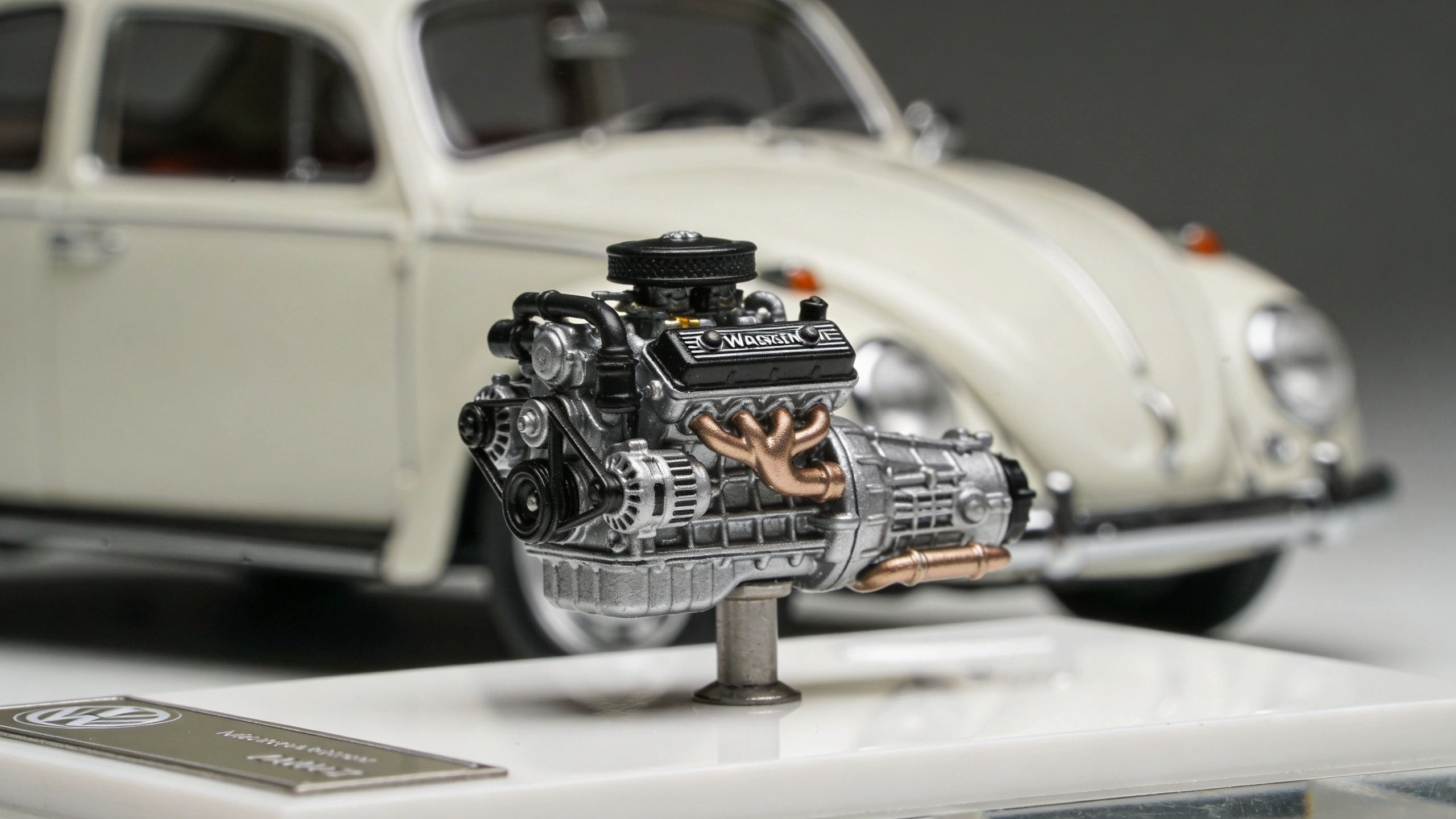
A good Beetle model does more than copy the roofline. It captures the spirit of the car, and that means paying attention to the engine. If a diecast Beetle has an opening rear lid, the little motor underneath tells you very quickly whether the maker understood the original or just filled space.
That's why collectors enjoy studying Volkswagen model cars collecting almost as much as the full-size cars. The joy is in the details.
What to look for in a great Beetle model
If you're buying for yourself or choosing a gift, pay close attention to these details:
- Opening engine lid. This is the big one. If it opens, you can enjoy the miniature motor.
- Correct fan-shroud shape. Even small differences change the whole look.
- Separate carburettor and air-cleaner detail. A crisp engine bay feels far more authentic than a single moulded lump.
- Era matching. Early cars and later 1600-based cars shouldn't all look the same underneath.
For diecast fans, the story becomes richer at this point. Once you know the difference between an early economy-focused engine and a later enthusiast-loved 1600, you start spotting those clues in miniature too. The model stops being shelf décor and starts feeling like a tiny history lesson.
Why collectors care about the engine bay
A Beetle's rear end is part of its personality, so a model that gets the engine compartment right feels complete. It also starts conversations. One person notices the engine lid props. Another spots the fan housing. Someone else starts telling a story about the family Bug they rode in as a kid.
That's when collecting becomes more than buying objects. You're collecting recognition, memory, and the little mechanical details that made the Beetle special in the first place.
If this article has stirred up memories of real Bugs, tiny engine lids, and sunny VW show days, have a look at Volkswagen Memorabilia. It's a great place to browse officially inspired VW-themed gifts, model cars, and display pieces for Australian enthusiasts who want local stock, fast shipping, and something that keeps the Beetle spirit alive at home.