

At a sunny Aussie car show, I once stopped dead in front of a vintage bonnet because the badge looked like it had just flown in from another era. The wings caught the light, the chrome had that old-school depth, and for a second the whole row of cars faded out. That's the magic of a car emblem with wings, it doesn't just decorate a vehicle, it tells you where the brand came from and what it wanted people to feel.
The Story Behind the Wings
A winged badge always makes a car feel like it has somewhere better to be. That's why the motif keeps showing up across luxury and performance marques, from Bentley to Aston Martin and beyond, where the wings have long been used to suggest speed, freedom, dreams, and exploration (car logos with wings).
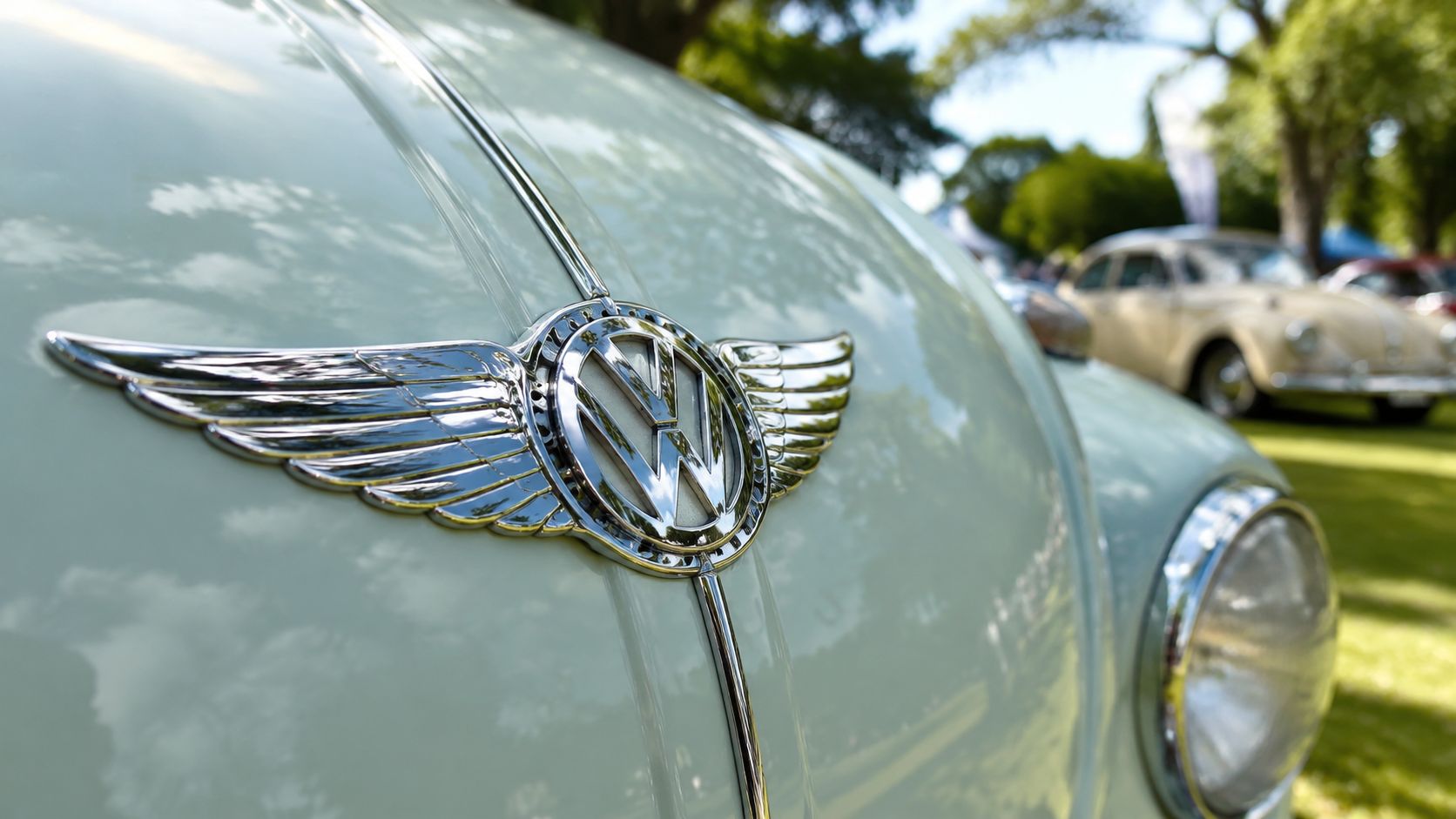
Why wings keep appearing on classic badges
The shape works because it says a lot in a small space. On a grille, wheel cap, or diecast bonnet, the silhouette has to read instantly, and wings do that without needing a long explanation. That's why winged marks often become the part collectors remember first, even when the rest of the branding changes around them.
Practical rule: if a badge uses wings as the main shape, it's usually trying to communicate motion, aspiration, or prestige, not a literal mechanical feature.
For Australian enthusiasts, that symbolism lands well because it feels at home beside the country's love of road trips, surf culture, and weekend cruising. A winged emblem on a polished classic can evoke the same mood as a Kombi parked near the coast, ready for an early start and a long drive. It's part of the visual language of motoring heritage.
There's also a collector's angle here. Once you start looking closely, the wings stop being simple decoration and become a clue about era, brand identity, and whether a piece belongs in a period-correct display or a modern reproduction box. That's where the fun begins for anyone who collects badges, brochures, or diecast models with real provenance.
A Century of Winged Emblems in Automotive History
Winged automotive branding didn't appear out of nowhere. It rose with the art-deco years, when designers favoured clean lines, motion, and the feeling that machines could carry people into a modern future. In that context, wings made perfect sense, they looked elegant, technical, and a little bit heroic.
The timeline that collectors keep coming back to
Aston Martin first adopted wings in 1927, Bentley's winged “B” became its official emblem in 1930, Chrysler added wings in the 1930s as a symbol of speed and modernity, and Mazda's first winged emblem appeared in 1936 (Aston Martin logo meaning). Those dates matter because they help separate early design language from later heritage revivals. In collector terms, that's the difference between a badge that belongs to the original period and one that merely echoes it.
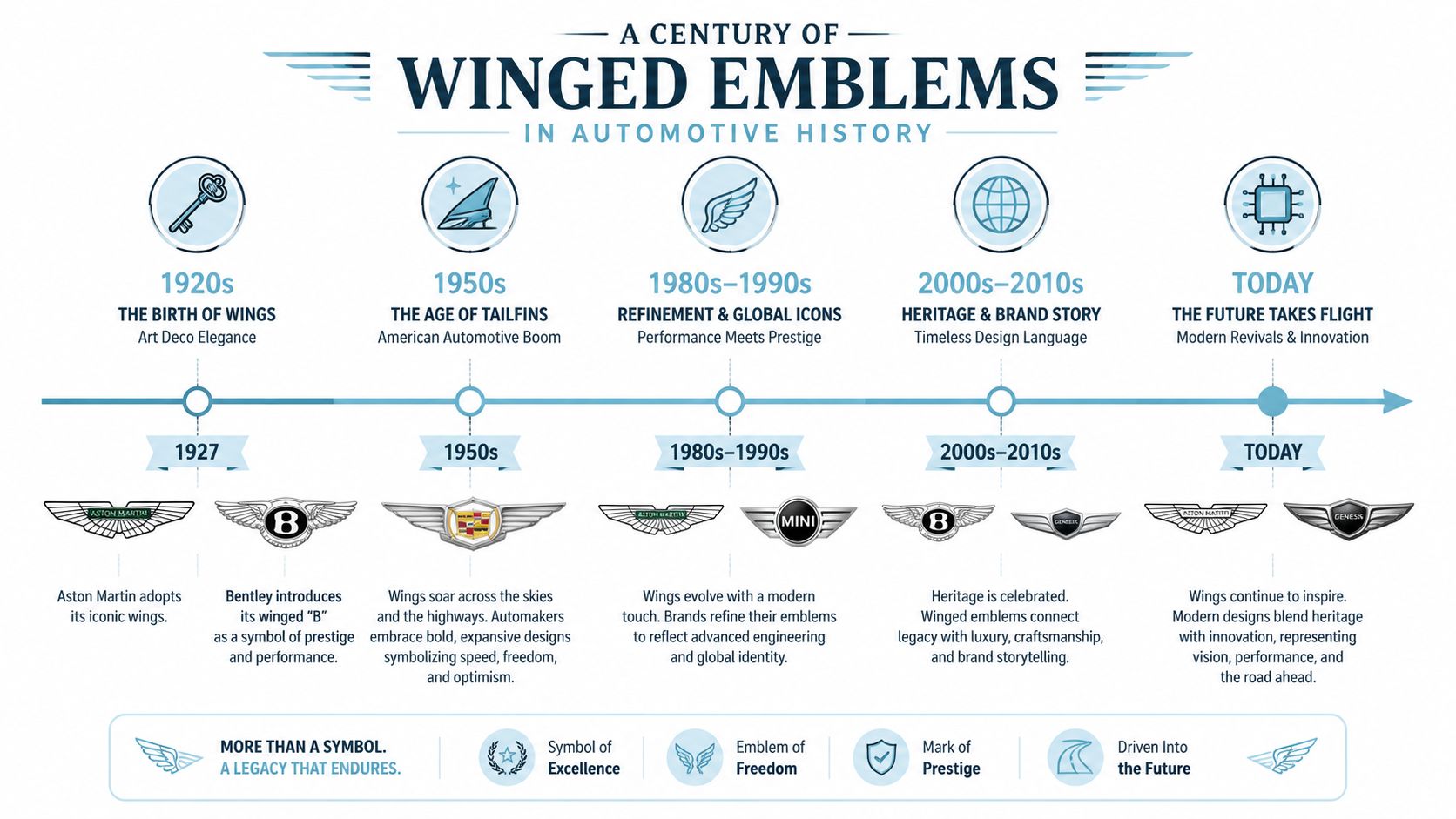
The Mazda story is especially useful because it shows that winged emblems weren't frozen in time. Mazda's wing theme began with an explicit idea of agility, speed, and ability to soar to new heights, then shifted into the modern curvy “v” form by 1997 (list of car logos with wings). That kind of redesign helps explain why a 1930s brochure badge looks so different from a later corporate emblem, even when both are trying to project the same broad idea.
For Australians who collect imported memorabilia, that timeline matters even more. Many British and American cars entered local enthusiast culture through postwar motoring clubs, restoration scenes, and memorabilia collecting, so the wing motif often turns up in local collections as a sign of age, class, or heritage. A winged badge on a vintage Bentley or Aston Martin is usually a historical marker, not a random styling flourish.
Famous Winged Logos and How to Spot Them
Bentley is the benchmark. Its logo uses a bold circular crest with outstretched wings, and it has been the official emblem since 1930. The wings point back to founder W.O. Bentley's service in the Royal Naval Air Service, where he developed engines for fighter aircraft (KBB luxury car logos).
What separates a true winged emblem from a wing-like badge
That aviation link gives Bentley's badge a stronger provenance story than a simple decorative motif. Aston Martin's wings are sleeker and more aerodynamic, while Chrysler's wing designs changed across eras to suit different styling trends. Mazda's winged forms began in a more direct way and later flattened out, which is exactly the kind of evolution collectors need to recognise when they're comparing a brochure, hubcap, or diecast bonnet badge.
| Iconic Winged Car Emblems at a Glance | |||
|---|---|---|---|
| Brand | Year Adopted | Key Visual Features | Heritage Connection |
| Bentley | 1930 | Circular crest, outstretched wings | Aviation and engineering history |
| Aston Martin | 1927 | Sleek spread wings | Early sporting brand identity |
| Chrysler | 1930s | Winged radiator-cap and badge variations | Speed and modernity |
| Mazda | 1936 | Winged and later oval-wing forms | Agility and upward motion |
Not every badge that looks airy is a winged emblem. Rolls-Royce is a good reminder, because its main logo is the interlocking double-R monogram, while the Spirit of Ecstasy is a hood ornament, not the primary logo (Alibaba logo insights). That distinction matters at shows and in online listings, where monograms, mascots, and winged badges can get mixed together.
For a deeper look at how branding language connects across marques, the Volkswagen logo history piece is a handy companion. It's a nice reminder that emblem design is never just about decoration, it's about identity, memory, and the story a maker wants the badge to tell.
Collector's eye: a genuine winged emblem should use wings as the dominant visual motif, not just a shape that vaguely suggests flight.
Authenticating Winged Badges for Your Collection
The tricky part is telling a period-correct badge from a modern reproduction. In the Australian market, that question comes up fast because so much buying now happens online, and the Australia Post eCommerce Industry Report 2025 says 8.4 million Australian households shopped online in 2024 (Man of Many on car emblems). When you're shopping from a listing photo, tiny differences start to matter.
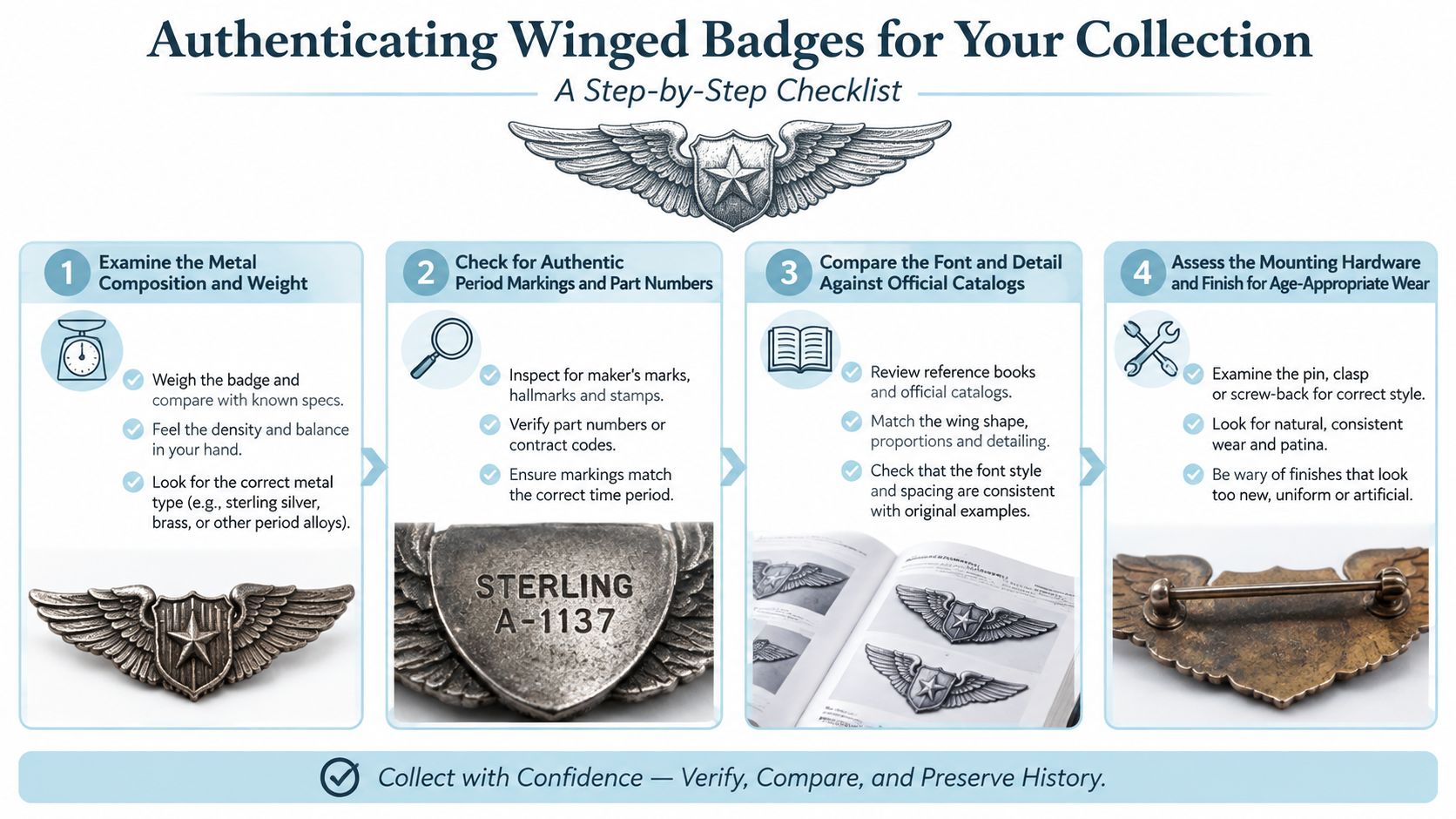
Four checks that save collectors headaches
- Examine the material feel. Authentic older badges usually have a different weight and finish than lightweight decorative decals.
- Look for period markings. Part numbers, maker marks, and mounting details often help place a badge in the right era.
- Compare the shape closely. Feather count, outline thickness, and text placement can shift between production runs.
- Check the hardware. Age-appropriate pins, clips, and wear patterns often tell a better story than the front face alone.
Minor changes aren't trivial here. Bentley's wing count has historically varied by model, and Mazda's winged forms changed significantly over time, so a “close enough” badge can still be wrong for a specific vehicle or restoration. That's why collectors who care about originality look beyond the front view and study the whole object.
Working rule: if the badge looks perfect but the mounting hardware looks too new, slow down and ask for better photos.
The Australian angle matters too, because online listings can blur the line between official memorabilia and decorative aftermarket pieces. A seller might use the right brand name but still offer a badge that's only inspired by the original. That's where careful comparison to catalog images, model-year references, and known production styles protects you from buying the wrong piece for your build or display.
For vintage pieces and memorabilia hunts, the vintage Volkswagen memorabilia category style of collecting is a good benchmark for how serious collectors think, period fit first, then condition, then presentation. That mindset works just as well for winged badges as it does for VW gear.
Displaying Winged Emblems in VW-Themed and Coastal Décor
Winged emblems look surprisingly good next to Volkswagen pieces, especially when the whole display leans into vintage travel and beachside nostalgia. A chrome badge, a diecast Kombi Samba Bus, and a Beetle model can sit together like a tiny garage story, one that feels right at home on an Aussie shelf, in a study, or beside coastal accents.
Small displays that feel personal, not cluttered
The best arrangements use height, texture, and a clear theme. A framed wing badge above a Volkswagen Beetle model gives the eye a focal point, while a Kombi on a lower shelf adds shape and movement. If the room already has beach tones, timber, linen, and sea-glass colours, the chrome and enamel details pop without feeling overworked.
A display also gets stronger when it mixes eras deliberately. A winged badge from a luxury marque beside a classic VW diecast creates a contrast between aspiration and everyday nostalgia, which is exactly why collectors enjoy these pieces so much. The result feels like a conversation between different parts of motoring history, not a random pile of shiny objects.
For coastal styling ideas, the coastal home decor ideas collection approach works beautifully with automotive memorabilia because both rely on light, space, and a sense of relaxed movement. Add a shadow box, a small framed print, or a surf-inspired backdrop, and you've got a display that feels curated rather than crowded.
A good shelf tells a story in three objects, a car, a badge, and one piece of décor that ties them together.
Start Your Winged Emblem Journey Today
A winged emblem is never just a shape. It carries aviation history, brand identity, and the kind of detail collectors love to study, especially when the goal is to separate a true period piece from a later reproduction. If you enjoy that mix of heritage and display appeal, pair your badge hunting with licensed VW diecast, a Kombi Samba Bus, or a classic Beetle for a setup that feels properly Australian and unmistakably nostalgic.
If you're ready to build a display with real character, visit Volkswagen Memorabilia for licensed VW diecast models, coastal décor, and gift ideas that suit collectors, restorers, and anyone who loves the look of old-school motoring. It's a great place to find pieces that sit beautifully with your favourite badges, and they're made for the kind of home display that still feels like a car show on a sunny weekend.