

You're standing on the grass at a VW show, coffee in hand, and your eye keeps drifting back to the same Kombi. It's not only the paint. It's not even the stance. It's the wheels. Clean, crisp, properly finished wheels that make the whole bus look sorted from nose badge to hubcap.
That's the funny thing with old Volkswagens. A Beetle can have lovely bodywork and still feel unfinished if the rims look tired. A Kombi can wear all the right trim and still miss that last bit of magic if the wheels are flaky, pitted, or dulled by years of weather. For plenty of Aussie owners, car rim powder coating is the point where a restoration stops looking “nearly there” and starts looking properly cared for.
I've seen it happen more than once. Someone rolls in with a sea-blue Beetle, original spirit intact, but the rims are scruffy from age and coastal air. A few weeks later, those same wheels come back with a smooth, even finish that ties the whole car together. It's the same satisfaction diecast collectors know when they find a licensed model with the correct wheel detail, the right colour, and proportions that just feel right. The small things carry the story.
That Show-Winning Shine Starts with the Wheels
Last summer at a sunny club meet, a bloke parked his cream-and-green Kombi beside a line of tidy Beetles. Nice bus. Honest bus. But what drew people in were the wheels. They weren't flashy. They were ideal. The colour sat neatly against the body, the finish looked tough enough for real driving, and the whole van had that calm, confident look that only comes from getting the details sorted.
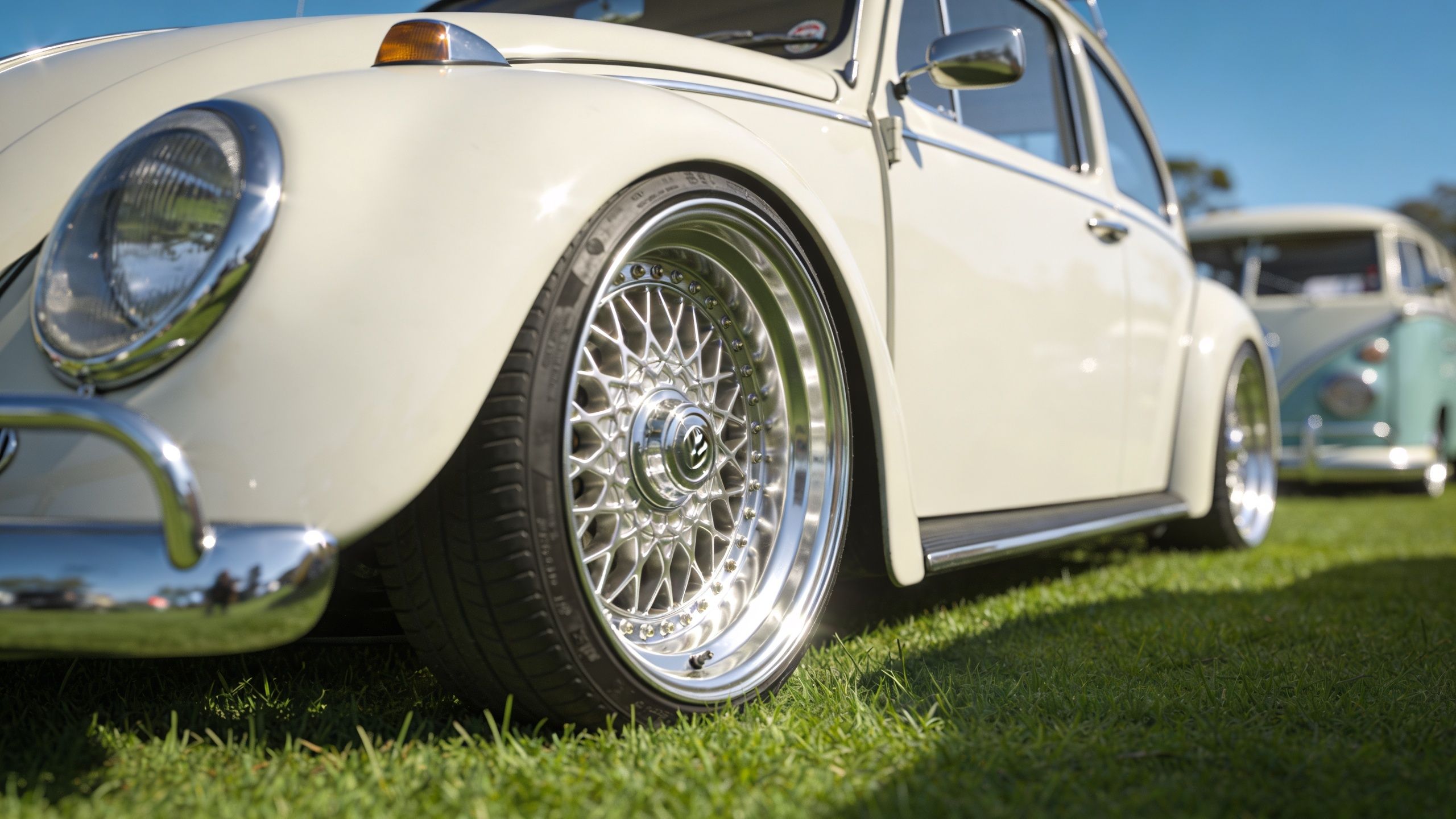
That's why wheels matter so much on a classic VW. The Beetle's shape is simple and friendly. The Kombi's side profile is iconic. Both designs leave the wheels fully in view, so every chip, stain, or patchy repaint shows up straight away. Good rims don't scream for attention. They subtly lift everything around them.
Why old Volkswagens show wheel flaws so clearly
A classic VW doesn't hide much. There's no oversized body kit, no giant guard flare, no modern fuss. The wheels sit there in plain sight, which means a rough finish can drag down the entire look.
A proper rim finish helps in a few ways:
- It sharpens the whole car's appearance. Even a driver-quality Beetle looks more deliberate with tidy rims.
- It suits real use. Many Aussie VWs still get driven to club runs, markets, beaches, and weekend meets.
- It matches the restoration mindset. You're not only fixing metal. You're preserving character.
A classic VW always tells on its wheels. If the rims are right, the rest of the car feels more believable.
For owners around the coast, there's another reason this matters. Salt air is hard on metal, and old rims cop plenty over the years. That's why powder coating has become such a familiar choice in the restoration world. It isn't only about shine. It's about giving those wheels a finish that can cope with the life they lead.
The same appeal collectors understand
If you collect VW models, you already understand the obsession. A licensed Beetle model with the correct wheel finish feels complete. A Samba Bus diecast with nicely presented rims looks more premium on the shelf. The full-size car works the same way. Wheels frame the whole personality of the vehicle.
That's what makes car rim powder coating so satisfying. It's practical, yes. But it also scratches that deeper itch every VW enthusiast knows. The urge to get the details right.
What is Rim Powder Coating Anyway?
Think of powder coating like giving a metal rim a dry, even skin, then baking it on until it becomes a tough outer shell. It isn't brushed on like old-school paint, and it isn't sprayed as a wet liquid finish in the usual sense. The coating starts as a dry powder, sticks to the metal through an electrostatic process, and then cures in heat.
That basic difference matters. Paint dries. Powder coating cures into a harder finish.
The simple version
If you dropped your old Beetle rims at a professional shop, the process would feel a bit like sending them off for a proper spa treatment with industrial tools. The wheel is cleaned back to sound metal, coated with powder, then baked so the finish flows and sets across the surface.
The result is a finish many VW owners choose because it looks neat and feels tougher in day-to-day use than a quick repaint from a spray gun in the shed.
Practical rule: If you want your rims to look good for more than one season of Sunday drives and wash days, preparation and curing matter just as much as colour choice.
Why it's not just “fancy paint”
Traditional paint has its place. It can be handy when you're chasing a very exact shade or dealing with a particular period-correct restoration approach. Powder coating works differently because the powder is applied dry and then cured under heat, forming a more substantial coating around the rim.
The process also carries genuine heritage. The powder coating story goes back to a fluidized-bed method patented in Germany in 1953, and the electrostatic spray method used for rims today was developed in the early 1960s. Under expert application, that finish can last 15 to 20 years, according to this history of powder coatings from PCI Media.
Why VW owners like it
Classic Volkswagen wheels live a hard life. They deal with brake dust, road grime, weather, and the occasional bump from a careless tyre fitter. Powder coating suits that reality.
Three reasons it makes sense on an old VW:
It gives a uniform finish
Good powder coating settles into a clean, even look that suits simple steel VW rims beautifully.It feels purpose-built for use
A restored Kombi isn't always a trailer queen. Plenty still head out for club runs and coast roads.It respects the car's honest charm
You can go factory-looking, subtle custom, or something a bit surfy without making the car feel overdone.
For many restorers, that blend of toughness and tidy presentation is exactly the point.
Powder Coating vs Paint vs Chrome Finishes
When you're choosing a finish for a classic VW wheel, there isn't one perfect answer for every car. The right call depends on how you use the car, where you live, and how faithful you want to stay to a period look.
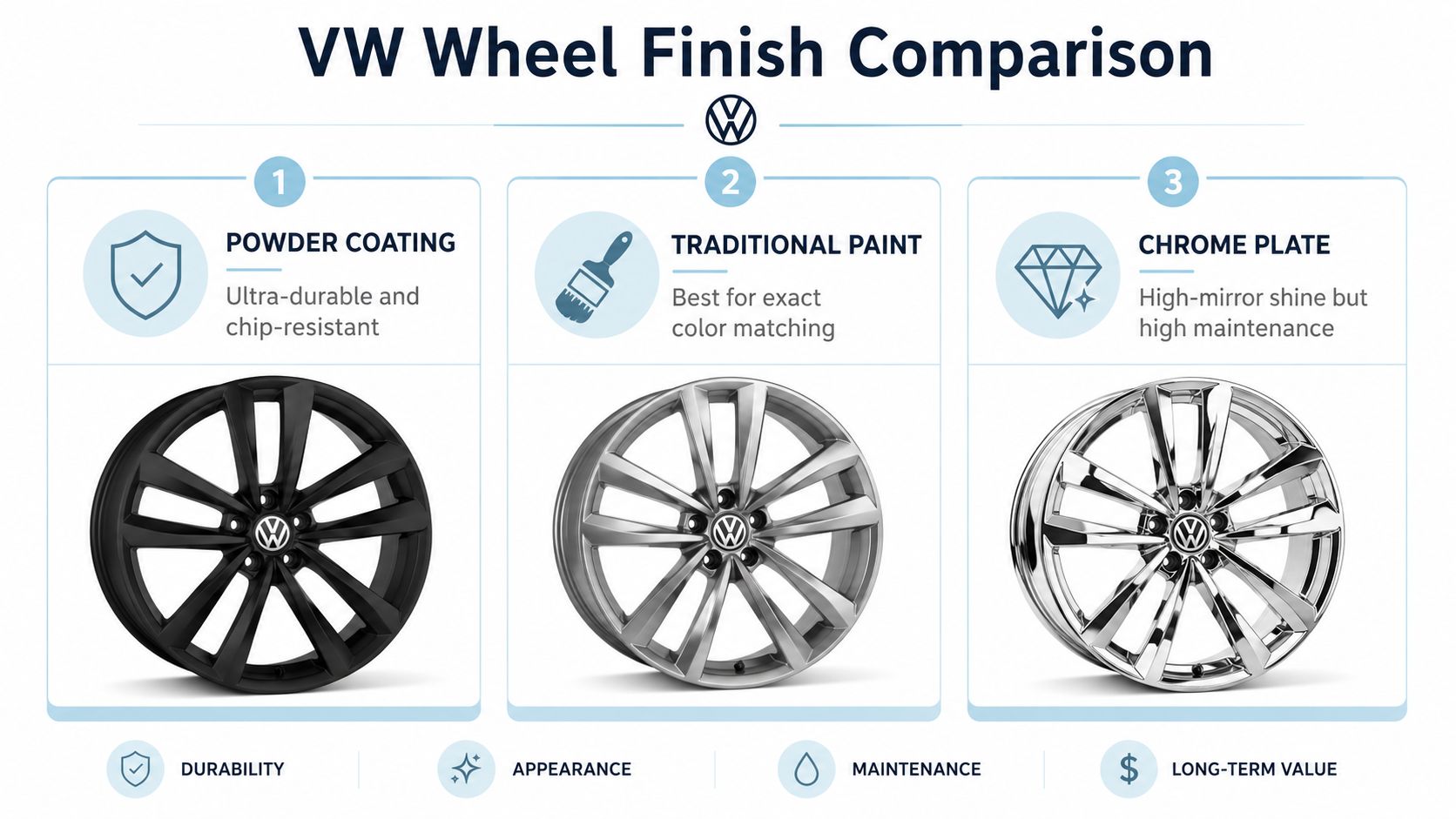
A neat stock Beetle heading to local shows may suit one finish. A Kombi that sees damp coastal air and regular road use may suit another. Chrome can look brilliant on the right build, but it asks for a different kind of commitment.
Rim finish comparison
| Feature | Powder Coating | Traditional Paint | Chrome Plating |
|---|---|---|---|
| Durability | Strong choice for regular driving and general wear | Can look excellent, but usually needs more touch-up care over time | Attractive but can become a maintenance-heavy option |
| Look | Smooth, tidy, modern or factory-style depending on colour | Best when you need close colour control | Bright, reflective, classic custom feel |
| Repairability | Damage often means refinishing the whole rim | Easier to touch up in smaller areas | Repairs can be fiddly and often need specialist work |
| Suitability for coastal driving | Popular with owners wanting added resistance to grime and weather | Usable, but prep and upkeep become more important | Salt and neglect can turn the shine into a headache |
| Style fit for classic VW builds | Great for stock restorations and tasteful customs | Strong for exact heritage-driven aesthetics | Best on select customs, Cal-look builds, or show-focused cars |
Which one suits your VW
If you've got a Beetle you drive often, powder coating usually makes a lot of sense. It gives you a durable finish and doesn't ask you to baby the wheels every time you head out for fish and chips or a Sunday run.
Paint still has a real place in the VW world. Some restorers prefer it when matching a factory-style colour scheme matters most. If your project is all about historical feel and exact visual tone, paint can be the path that keeps you happiest.
Chrome is the romantic choice. On the right Beetle, especially with period custom touches, it can look sensational. But chrome tends to suit owners who enjoy the upkeep and don't mind the extra attention it asks for.
The period-correct debate
Among the VW crowd, tastes run lively. One owner wants original-style silver centres and body-colour touches. Another wants satin black on a lowered street Beetle. A third wants enough sparkle to catch the eye from the burger van queue.
All fair enough.
The better question is this: what story is your car telling? A surf-themed Kombi, a club-plate Beetle, and a polished show custom don't need the same finish. Choose the one that suits the car's personality and the way you use it.
For a driven classic in Australia, the best wheel finish is often the one that still looks right after a season of real roads, not only under show judging lights.
The Journey of a Rim From Drab to Fab
A tired VW rim has a look about it. Faded paint, old grime in the corners, a bit of surface rust, maybe a scar or two from decades of tyre changes. Nothing dramatic. Just worn. Then it goes into a proper coating shop and starts its second life.
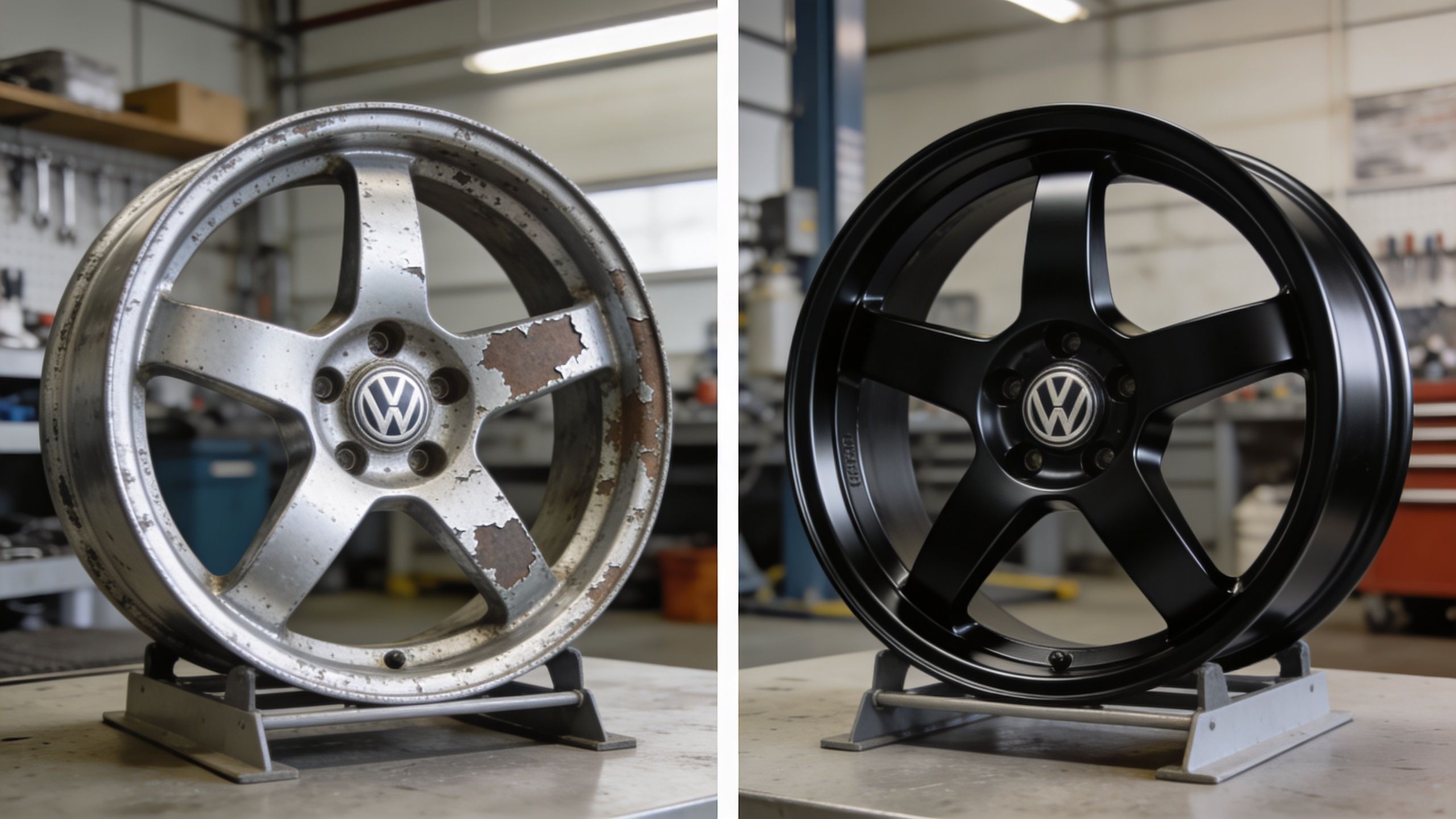
A good operator doesn't rush this bit. The glamour comes later. First comes the cleaning, stripping, and prep. That's the stage that decides whether the finish lasts or lets you down.
Step one is honesty
The rim has to be stripped back so the shop can see what's really there. Old coatings, corrosion, and built-up crud need to come off. Once the metal is properly exposed, any problems become obvious. That's when a decent shop can tell you whether the wheel is a good candidate for coating or whether it needs more serious attention first.
If you're restoring a Type 1 and chasing parts or inspiration while the wheels are away, it's easy to lose an hour browsing VW Type 1 parts and mentally planning the next little improvement.
Then comes the transformation
After prep, the powder is applied evenly over the wheel. This is the part many owners imagine first, but it only works well if the groundwork was done properly. The coating needs to sit consistently across edges, centres, and awkward little curves around the wheel face.
Then the rim goes into the oven. The process commonly involves a 20-minute bake at 400°F (204°C) according to TIGER's guide to powder coating wheels and rims. That curing stage is where the finish flows out and hardens into the final shell.
If you'd like to see the process in motion, this video gives a handy visual feel for how wheel refinishing comes together.
Why prep is everything
People often talk about colour first. The better shops talk about preparation first. That tells you plenty.
A lasting result usually comes down to:
- Clean bare metal. Old contamination under the coating is asking for trouble.
- Even application. Thin spots and rushed work show up later.
- Correct curing. The oven stage finishes the job properly.
You can spot a rushed wheel from a mile away after a bit of use. The finish starts telling on the process. A carefully prepared rim, by contrast, keeps that composed look that makes the whole VW seem more sorted.
Aussie Costs Colours and Pro Tips
Sooner or later every owner asks the same question. What's it going to cost me? In Australia, professional rim powder coating usually sits around AUD $150 to $300 per wheel, according to this Australian wheel powder coating guide. That local range is more useful than the US numbers floating around online, especially once labour and material realities here are factored in.
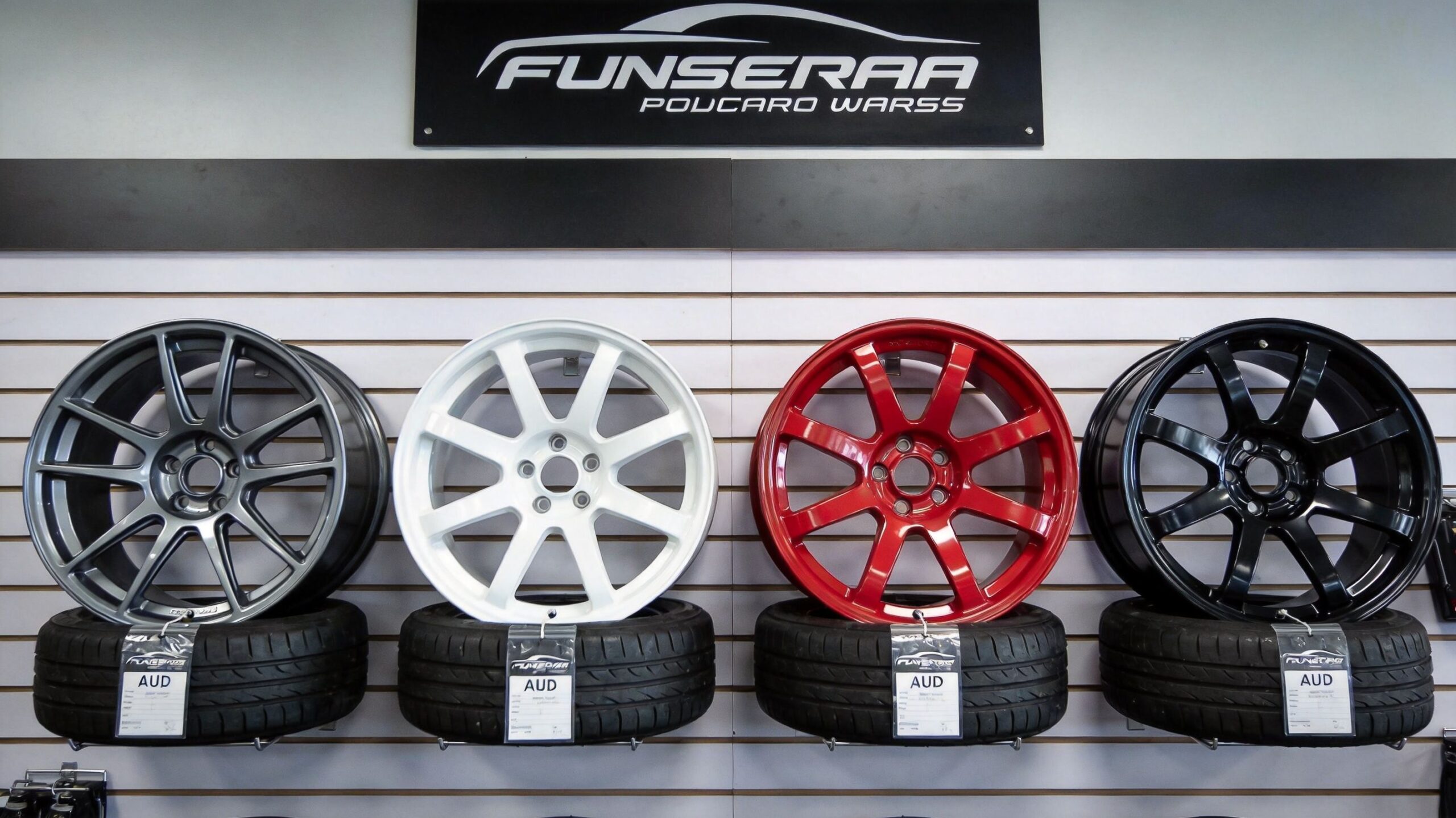
For a cherished Beetle or Kombi, that spend often feels reasonable when you consider how much visual weight the wheels carry. Cheap work can save money upfront, but old Volkswagens have a nasty habit of exposing shortcuts.
What affects the final price
Not all wheel jobs are equal. A set of rims with old corrosion, damage, or awkward previous coatings can ask for more labour than a cleaner set coming off a well-kept car.
A quote can also shift depending on things like:
- Wheel condition. Pitted or neglected rims usually need more prep.
- Finish choice. Simple colours are one thing. Specialty effects are another.
- Extra services. Dismounting tyres and handling related work can add to the bill.
For owners hunting trim, parts, and restoration odds and ends around the same time, VW parts in Australia is often part of the broader project planning conversation anyway.
Choosing colours that suit classic Volkswagens
This is the fun bit. Powder coating can go subtle or bold, and a classic VW can wear either if the rest of the build supports it.
A few combinations that usually work well:
- Stock-style whites and silvers suit tidy Beetles, especially if you want that factory-flavoured look.
- Soft creams and muted tones work beautifully on Kombis with a nostalgic, beachy personality.
- Dark finishes can sharpen a lowered Beetle or custom build without shouting.
The best choice usually comes from the car's existing character. If the body colour is already doing plenty, keep the wheels restrained. If the car is simple and understated, the wheel finish can add a bit of mood.
Take a sample, a painted panel, or at least a clear photo of the car in daylight when you talk colours with a coater. Old VWs deserve better than a guess made under workshop lights.
Coastal Australia needs a tougher conversation
If you live around QLD or NSW and your VW spends time near salt air, ask the coater about ceramic-infused variants. The same Australian source notes that coastal owners should consider them for added protection against salt and UV. That doesn't mean ordinary powder coating is pointless. Far from it. It means local conditions matter, and a good shop should be happy to talk openly about them.
This is also why professional application is worth serious thought. Small defects can mean redoing the whole rim rather than patching one little spot neatly. On a beloved classic, that's not where you want to cut corners.
Care Tips and VW Enthusiast FAQs
Once the rims are back on the car, the job isn't over. The good news is that looking after powder-coated wheels isn't complicated. What matters most is being regular and sensible about it.
Simple care that keeps the finish looking right
Wash off brake dust and road grime before they sit too long. Use gentle cleaning habits and skip the urge to attack the wheel with anything too aggressive. If you've just had a set done, treat them like the finishing touch they are, not like an afterthought below the guards.
A few habits go a long way:
- Rinse first. Loose grit can scratch any finish if you grind it in.
- Use mild products. Harsh cleaners can create headaches you didn't need.
- Dry the wheels properly. Water marks and trapped grime are easier to prevent than undo.
- Check for chips early. Small damage is easier to deal with before corrosion gets established.
If you're also juggling repairs and maintenance on the rest of the car, Volkswagen Beetle parts can be part of that same tidy-up mindset.
FAQ from the VW crowd
Will powder coating my original rims hurt my car's value
Usually, owners care most about whether the finish suits the car and has been done well. A clean, sympathetic wheel finish tends to support the overall impression of a cared-for vehicle. If you're building a highly originality-focused car, have a proper chat with your restorer or club mates about what finish best fits the car's history.
Can a small chip be touched up neatly
This is one of the trade-offs. Powder coating isn't as friendly to small spot repairs as regular paint. If damage is obvious, refinishing the whole wheel often gives the cleaner result.
What colours work best on a flower-power or surf-style VW
Pastel tones, cream wheels, whites, and soft contrasting colours often suit these builds beautifully. The trick is balance. Let the body and graphics lead, then choose a wheel finish that supports the vibe rather than competing with it.
Is powder coating worth it for a driven classic
For many owners, yes. It suits the way old Volkswagens are enjoyed. Driven to shows, parked by the beach, rolled into the shed, taken out again next weekend. That mix of presentation and resilience is why it keeps coming up in workshop chats.
There's a nice parallel here with collecting. Whether it's a full-size Beetle in the garage or a licensed Kombi on a shelf, enthusiasts respond to careful finish, correct detail, and that feeling that someone has taken the time to do it properly.
If that blend of restoration nostalgia and VW detail is your thing, have a look through Volkswagen Memorabilia. It's a great local spot for officially licensed VW-themed collectibles, including Kombi and Beetle diecast pieces that echo the same charm we all chase in full-sized vehicles. For anyone searching for VW Kombi diecast Australia, Volkswagen Beetle model, buy diecast Kombi, or Volkswagen diecast models for sale, it's a handy way to bring a bit of that show-day feeling onto your shelf, with local stock and fast Australian shipping.