

You've got the weathered timber shelf, the woven basket and the stoneware vase, but the room still feels one enamel sign away from becoming a country-themed set. That's a familiar problem for Australian homes, especially when coastal light, vintage finds and a love of classic Volkswagens all meet in the same living space.
The good news is that rustic home accessories don't need to look dusty, overloaded or trapped in an old farmhouse catalogue. With a lighter palette, deliberate empty space and one or two retro collectibles, weathered timber can sit comfortably beside clean-lined furniture, coastal textures and a beautifully finished Volkswagen model.
Setting the Scene for Rustic Style in Australian Homes
A sunlit Brisbane living room can carry plenty of rustic character without looking like a mountain lodge. Faded rope baskets might sit beneath bleached timber shelves, while a hand-thrown stoneware vase holds banksia stems near the window. On the wall, a single enamel sign hints at a coastal road trip. The pieces feel personal, but the room still has breathing space.
That balance matters because many Australian buyers enjoy the warmth of rustic styling but worry that too much distressed timber, dark metal and vintage signage will make a room feel dated. Current local interiors favour natural texture, warm earthy neutrals and heritage details with a modern twist, while cold whites and greys are being pushed aside, as discussed in Australian interiors trend commentary.
Rustic, but not theme-heavy
The modern approach treats rustic pieces as accents rather than a complete costume. A reclaimed frame can soften a white wall. A linen runner can warm a clean timber console. A small VW Kombi diecast can add a story about surf trips, road holidays and Australian motoring culture without turning the room into a showroom.
Australian design coverage has kept rustic and country-inspired accessories visible for at least a decade. A 2017 Australian homewares feature linked rustic vintage styling with “rough edges and raw materials”, while showing that the category crossed coastal, industrial and French provincial looks in Sydney, Melbourne and regional New South Wales. Its examples ranged from a $149 desk lamp and $149 crate on wheels to an $1,089 industrial bookshelf, demonstrating that rustic accessories span small decorative purchases and substantial statement pieces. See the Australian homewares reference for that local context.
The result can work in a Sydney apartment, a Noosa beach house or a Queenslander. Let the room feel collected, not matched.
What Counts as a Rustic Home Accessory
A rustic accessory gets its character from material, texture and craft, rather than a glossy, perfectly uniform surface. Look for visible grain, knots, hammer marks, uneven glaze, woven fibres and finishes that feel comfortable in the hand.
The main material families are:
- Timber: Solid wood, reclaimed boards, spotted gum offcuts, messmate, river red gum and pieces with visible saw marks or knots.
- Metal: Forged iron, galvanised steel and hand-hammered surfaces, usually with a matte, aged or lightly oxidised appearance.
- Ceramic and stone: Stoneware, terracotta, raw ceramic and organic forms that show subtle variation.
- Natural fibres: Jute, seagrass, rattan, sisal, pandanus, linen, hemp and hand-loomed wool.
- Leather: Natural leather that develops a patina rather than remaining perfectly smooth and uniform.
Read the finish first
Rustic finishes are usually matte, oiled, limewashed or lightly sealed. High gloss can work as a contrast, but a whole collection of shiny surfaces usually moves the room towards contemporary glamour rather than rustic ease.
Silhouette helps too. Chunky trays, imperfectly turned bowls, thick frames and practical storage pieces look more authentic than thin MDF objects with a printed “weathered” pattern. In humid coastal areas, genuine timber also gives you a better chance of repairing, sanding or refinishing the piece later.
Australiana adds another useful layer. Australian style commentary has connected natural-texture interiors with earthy palettes, timber, stone, linen, organic ceramics and native-inspired materials. Retail descriptions of Australiana décor also show how the look extends into practical giftware and everyday homewares, rather than stopping at furniture. Explore rustic and vintage Australian décor inspiration for examples of that wider design language.
Core Rustic Home Accessory Materials at a Glance
| Material | Typical Finish | Where It Works Best in AU Homes | Coastal Suitability |
|---|---|---|---|
| Solid timber | Oiled, raw, limewashed or matte sealed | Shelves, trays, frames and consoles | Good indoors, with moisture care |
| Reclaimed timber | Weathered, brushed or lightly sealed | Feature shelves, stools and display risers | Good when properly dry and sealed |
| Stoneware | Speckled, raw or satin glaze | Vases, canisters and bowls | Very suitable indoors |
| Jute and seagrass | Natural woven texture | Baskets, rugs and storage | Suitable in dry, ventilated spaces |
| Galvanised metal | Matte, zinc-toned or lightly aged | Planters, hooks and utility accents | Useful, but protect from persistent salt |
| Linen and hemp | Washed, soft and unstructured | Cushions, runners and bedding | Excellent for relaxed coastal rooms |
Blending Rustic With Coastal and VW-Inspired Decor
The easiest way to make rustic styling feel current is to stop every object from shouting at the same time. Heavy timber, dark metal, distressed signs and antique-style ceramics can all be attractive individually, but together they may create a cabin theme.
A better layout lets one influence lead and the other support it. If a timber coffee table is the visual anchor, coastal details can arrive through linen, rope, pale ceramics and bleached wood. If the room already has a light coastal base, rustic character can come from one chunky tray, a woven basket and a small retro vehicle.
Practical rule: Choose one dominant texture, then use contrasting accessories to give the eye somewhere else to travel.
Three useful pairings
Let one style lead. Use larger pieces to establish the room's main mood, then keep the secondary style to smaller objects. A linen sofa and pale walls can handle a darker reclaimed shelf, while a deep timber cabinet needs lighter ceramics and soft textiles around it.
Share a colour family. Soft white, sand, seafoam, charcoal and warm honey timber create an easy bridge between rustic and coastal décor. Match a VW model to one of those tones instead of choosing a colour that competes with every other object.
Mix finishes and scale. Pair rough reclaimed wood with smooth stoneware, or matte black metal with a glazed ceramic bowl. The contrast makes the arrangement feel edited rather than assembled from one range.
VW memorabilia fits naturally because classic Beetles, Kombis and Samba Buses combine rounded silhouettes with enamel, chrome and rubber details. Those surfaces echo galvanised hooks and weathered steel, while the vehicle shapes bring an easy holiday association. Australian shoppers looking for that blend can browse coastal home accessories with VW-inspired character.
Room-by-Room Placement That Feels Current
Rustic accessories work best when each room has a clear job for them. Don't scatter baskets, signs and timber objects across every available surface. Give each piece a role, then leave enough empty space for the room to feel useful.
Living room
Start with a reclaimed-timber coffee table and an oversized linen sofa. Add a woven jute rug, then choose two or three smaller pieces, such as a lantern, stoneware vase or timber tray. Keep a generous section of the tabletop clear so drinks, books and feet can share the space.
Bedroom
A raw oak or messmate bedhead gives the room warmth without needing a collection of matching furniture. Washed linen bedding in neutral tones keeps the texture soft, while one enamel bedside lamp or a small botanical print is enough above the bed.
Kitchen
Group useful objects rather than spreading them across the bench. A timber cutting board, stoneware canister and olive-wood utensil jar form a practical cluster, especially when placed beside a clean section of benchtop.
Entryway and outdoor areas
An entry console benefits from a small tray for keys, one ceramic vessel and a reclaimed-wood frame. Outdoors, weatherproof timber stools can become plant stands, while galvanised trough planters and warm festoon lighting add function without excessive decoration.
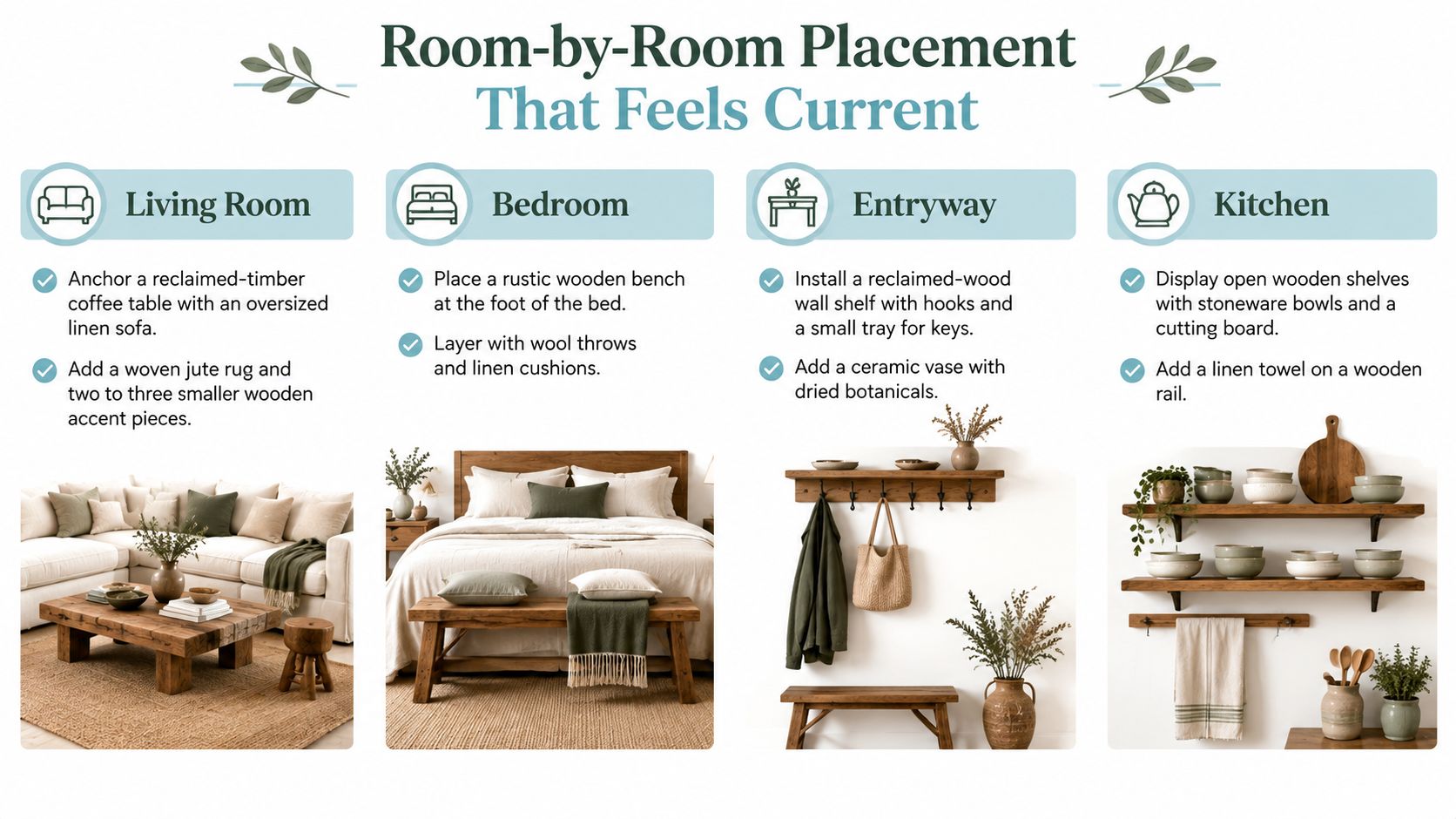
The same principle applies to a display shelf. Vary heights, keep the tallest object towards the back and avoid filling every gap. A small potted grass or dried botanical stem can soften timber and metal without adding another hard-edged object.
Using VW Diecast as Rustic Coastal Accents
At a sunny coastal car show, a well-placed Kombi model feels like a tiny piece of the scene brought indoors. On a rustic shelf, it needs scale, context and breathing room so it reads as a considered collectible rather than stray clutter.
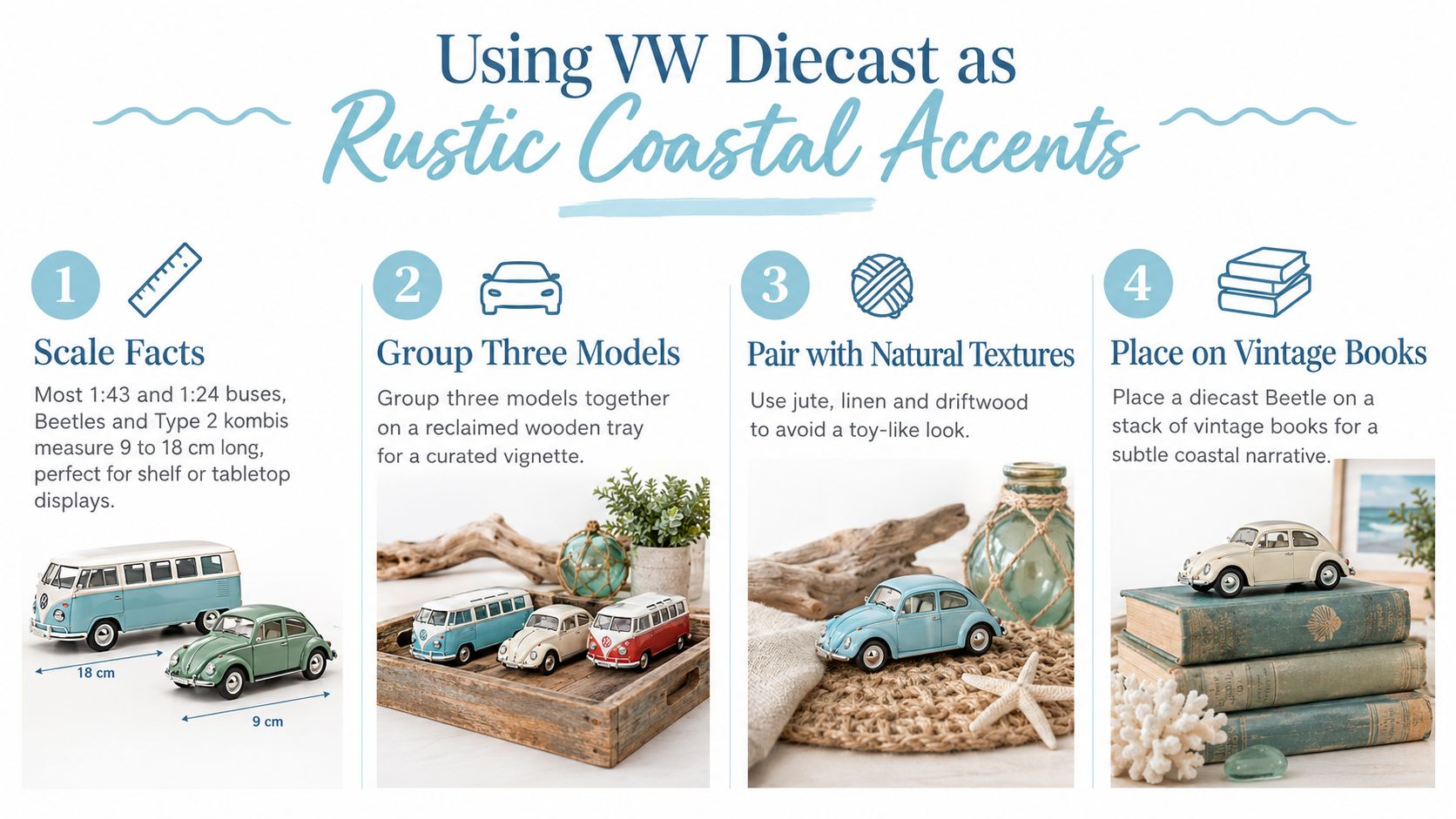
Measure the shelf before choosing the model. Our Kombi and Samba Bus listings show that a 1:18 diecast is typically about 24–30 cm long, while a 1:24 model is about 16–20 cm long, consistent with this Australian diecast scale guide. The larger scale suits a deeper bookcase or console, while the smaller model fits a narrow shelf or shadow box. For pieces that suit weathered timber, browse vintage home accessories that pair with reclaimed wood.
Build a small story
A reclaimed-timber shelf might feature a Kombi, Beetle and one small supporting object. Place the largest model slightly off-centre, add driftwood or a small potted grass, then use a ceramic dish low down to anchor the arrangement. Leave some timber visible. That open space works like the water around a jetty, giving each piece room to register.
The history adds substance beyond appearance. The Kombi and Type 2 story began in 1950, with the first vehicles made in September 1952 and Australian sales beginning in 1954. The T2 arrived in Australia in 1968, followed by German-imported T3 models from 1982, as recorded in Australian Volkswagen history.
The original-shape Kombi had an 18-year production life, with over 2.6 million built, including 725,000 for export markets. Volkswagen's total Kombi and Transporter output later passed 11 million, helping explain why a licensed model can carry genuine collector interest. Read the Kombi production history for broader context.
Choose a bus colour that repeats a cushion, vase or artwork. The model then joins the room's palette and keeps the coastal look current, rather than turning the shelf into a themed display.
Sourcing and Budget Tips for Australian Buyers
Start with a short list before you browse. Choose three to five hero pieces, such as a timber tray, woven basket, ceramic vessel, wall frame and one VW collectible. This stops attractive market finds from taking over the room because they share a distressed finish.
Spend where touch and attention meet
Put more of the budget into objects people handle or notice first. A well-made timber stool, a repairable frame or a licensed diecast model can justify a higher price because the material, finish and construction remain visible over time. Use op-shop finds, weekend markets and clearance pieces for supporting texture, especially when you're happy to repaint, sand or reuse them.
Australian sourcing is also useful for practical reasons. Local stock, faster shipping within Australia and domestic returns can make a licensed Volkswagen model easier to buy and support than an uncertain overseas listing. Don't assume a low sticker price is the cheapest option, because international freight, taxes and difficult warranty arrangements can change the final cost.
The Australian Furniture Association's guidance on material transparency and lasting furniture choices also reflects a broader buyer interest in secondhand goods, local production, repairability and end-of-life reuse. Those questions suit rustic styling particularly well because many timber pieces can be sanded, repaired or refinished.
| Sourcing channel | Price Range (AUD) | Authenticity | Convenience |
|---|---|---|---|
| Local specialist retailer | Varies by item | Stronger product and licensing information | Local stock and domestic support |
| Op shops and markets | Varies widely | Requires inspection | Immediate purchase, unique finds |
| Overseas marketplace | Varies widely | Check carefully | Shipping and returns may be complex |
| Large-chain clearance | Varies by item | Confirm materials and construction | Easy access, less individual character |
Use three simple rules: buy one signature item, repeat finishes rather than collecting identical objects, and check dimensions before checkout.
Caring for Timber Rustic Accessories in AU Climates
Timber is not a static material. It absorbs and releases moisture as indoor conditions change, so shelves, frames, trays and decorative objects can swell, shrink, crack or distort if they move between very different environments too quickly.
For typical Australian interiors, timber guidance places equilibrium moisture content around 8–14%, while sheltered exterior conditions sit around 12–18%. Prolonged moisture content above 20% creates conditions associated with fungal decay and mould growth, according to the Australian timber moisture guide.
Keep the room and object steady
Indoor furniture guidance commonly targets 40–60% relative humidity to limit shrink and swell movement. Solid timber intended for indoor objects is often specified near 6–9% moisture content, helping pieces settle into Australian interiors with less movement. See the wooden furniture care guidance for practical humidity and airflow advice.
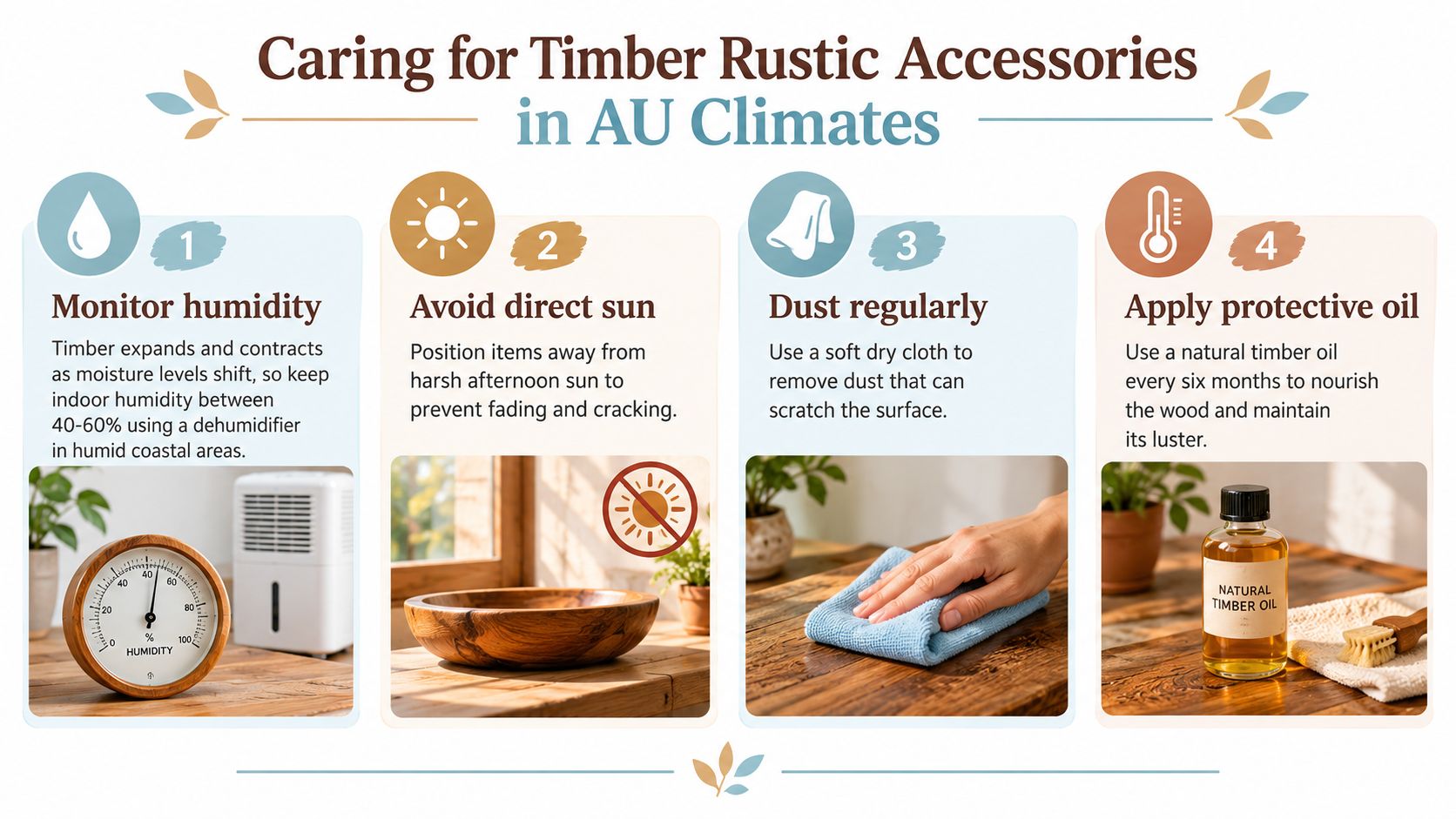
Keep pieces away from condensation-prone walls, bathrooms and direct windows. In muggy weather, airflow and a dehumidifier can help. Near the coast, wipe salt residue with a barely damp cloth and dry the surface immediately. A soft microfibre cloth is safer for routine dusting than abrasive products, and silicone polishes can leave an unsuitable film.
Raw timber may benefit from a suitable hard-wax oil or tung oil, while high-touch pieces can use a matte protective coating. Test any finish on an unseen area first, and follow the product instructions rather than treating every timber species identically. For a practical timber accessory with a clean display function, consider how a wood tissue box cover can add warmth without demanding a large surface.
Metal details, including diecast models, need a dry cloth and a dry room. Bathrooms and persistently damp areas are poor display locations because moisture can encourage corrosion on exposed metal components.
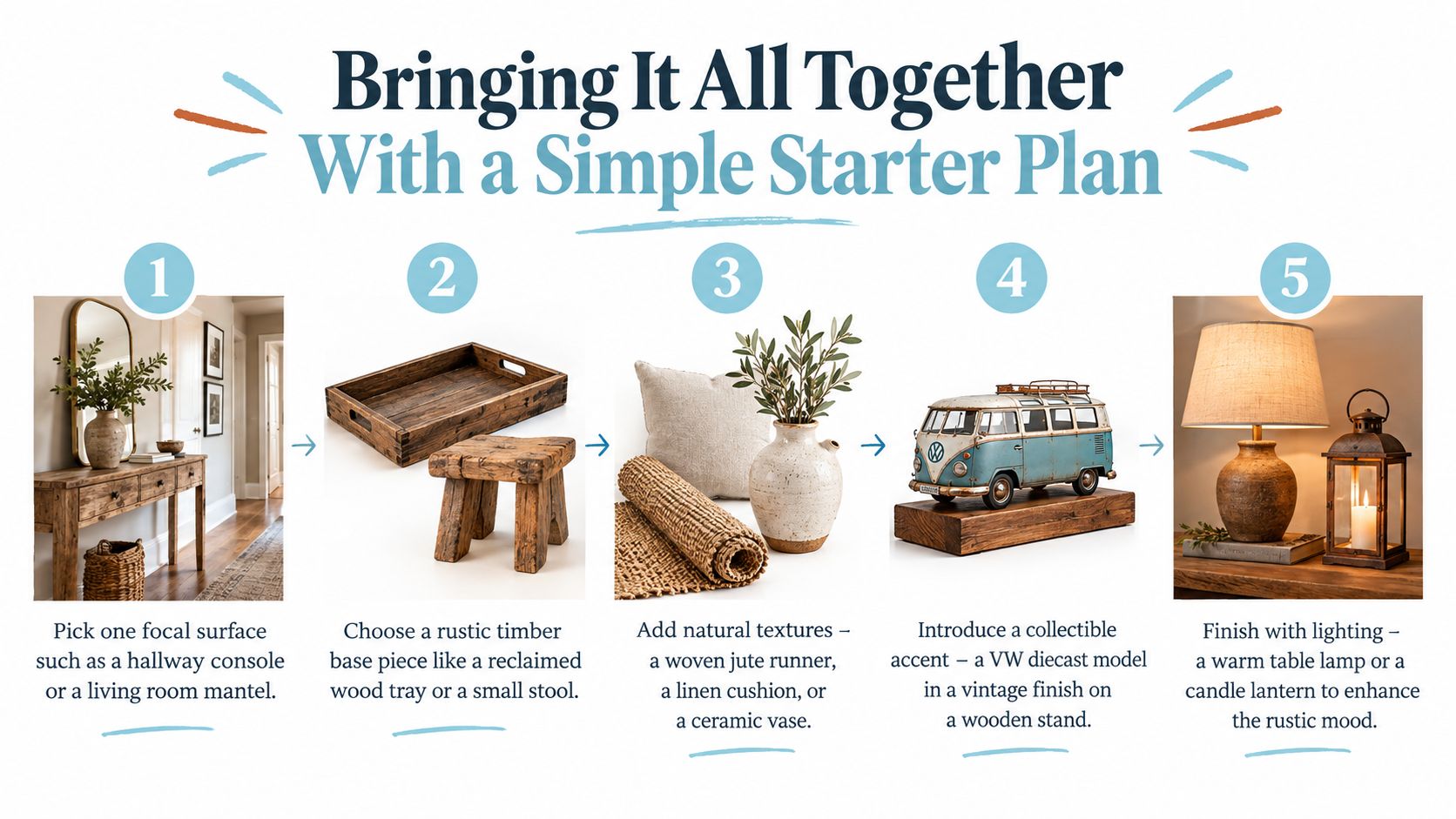
Bringing It All Together With a Simple Starter Plan
Refresh one surface first. A hallway console, floating shelf or living-room mantel gives you a contained project, and it's easier to judge whether the rustic mood feels relaxed or overdone.
Use this sequence:
- Choose the focal surface. Pick one console, shelf or mantel that already has useful breathing room.
- Add a timber foundation. Use a reclaimed-wood frame, chunky tray or small stool as the visual base.
- Layer one coastal texture. Try a linen runner, bleached cane bowl, jute element or pale woven basket.
- Introduce one VW collectible. Place a licensed Beetle, Kombi or Samba Bus diecast on a small timber riser.
- Finish with softness. Add greenery and a single ceramic vessel, then stop before every gap disappears.
Match the project to the room
For under $150, keep the vignette compact with one timber piece, one ceramic object and a smaller collectible. A $150 to $400 shelf refresh can add a stronger frame, woven texture and a more prominent VW model. A $400+ feature wall might combine substantial timber, lighting, wall art and several carefully spaced objects. These are useful planning brackets, not guarantees of what individual pieces will cost.
Care for the materials as you go. Keep timber stable, protect it from harsh sun and salt, and give diecast models a dust-free display position. The best rustic room doesn't look finished in a single afternoon. It gathers character through objects you enjoy seeing.
Volkswagen Memorabilia brings together licensed Volkswagen diecast models, Kombi and Samba Bus collectibles, Beetle-inspired pieces and relaxed coastal home décor for Australian collectors and gift buyers. Visit Volkswagen Memorabilia to find a display piece that adds genuine VW history to your rustic coastal styling, with local support and Australian shipping.