


The kombi's packed, the boards are tied down, and there's that familiar little rattle from somewhere behind the back seat that only an old VW owner could call charming. You've parked up near the coast, salt in the air, sun still warm on the duco, and the only question left is where you're sleeping when the light drops out. That's where a good tent for car boot earns its keep.
For a lot of Aussie VW people, camping gear isn't separate from the car. It becomes part of the whole ritual. The drive in. The kettle on. Sandy feet. Wetsuits hanging off a door. A hatch or tailgate shelter feels right in that world because it keeps things simple. You pull up, open the back, and your car becomes the heart of camp.
The Freedom of a Home on Wheels
I've always loved how a Volkswagen can make an ordinary weekend feel like a proper escape. A Beetle does it one way, all charm and cheek. A Kombi does it another, like it was born to carry boards, mates, and bad decisions involving one more beach track before dark.
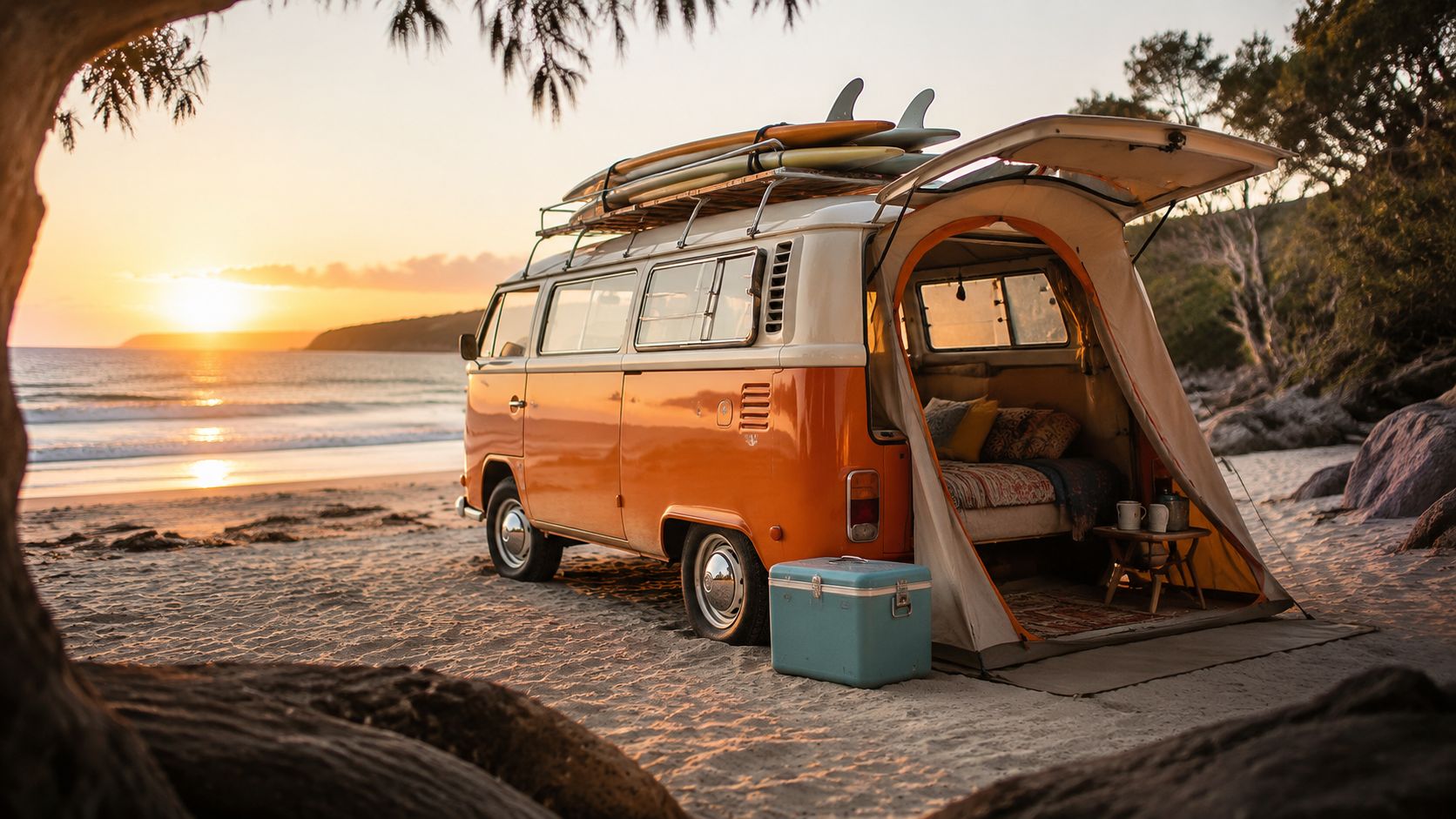
A mate of mine rolls up to surf comps in an old bus that looks like it's lived three different lives. By the time everyone else is fiddling with freestanding tents, he's already got the kettle boiling and a sheltered spot out the back for damp towels, bags, and the usual pile of beach gear. That's the appeal. A tent off the rear of the car doesn't just give you more room. It extends the feeling that your VW is already home base.
There's a long thread of that idea running through VW history. The old bus was never just transport. It was social. Practical. Relaxed. The 1965 VW Deluxe Micro Bus “Samba” was renowned for its 23 windows and giant sunroof, a design built around the need for a compact, comfortable, and efficient micro-bus in a form people hadn't really seen before, as noted in this look at the 1965 VW Deluxe Micro Bus Samba.
Why the idea suits VW life
A car boot tent makes sense for the same reason the Kombi still turns heads. It mixes usefulness with personality.
- You stay connected to your gear without trudging back and forth through a campsite.
- You get a change room and shade spot right where you need it after a swim or surf.
- You keep the camp compact, which suits weekenders who'd rather drive than build a small suburb out of poles and guy ropes.
The best camping setups don't feel separate from the car. They feel like a natural extension of it.
If you're deep into the road-trip side of the hobby, there's a good yarn in this piece on VW van life in Australia. It captures that same easy, rolling freedom that makes a rear tent such a neat fit for an old Dub.
What Exactly Is a Car Boot Tent
A car boot tent is basically a mobile annexe. It attaches to the rear of your vehicle and turns the open boot or tailgate area into sheltered living space. Instead of pitching a separate tent and keeping your car off to the side, you join the two together.
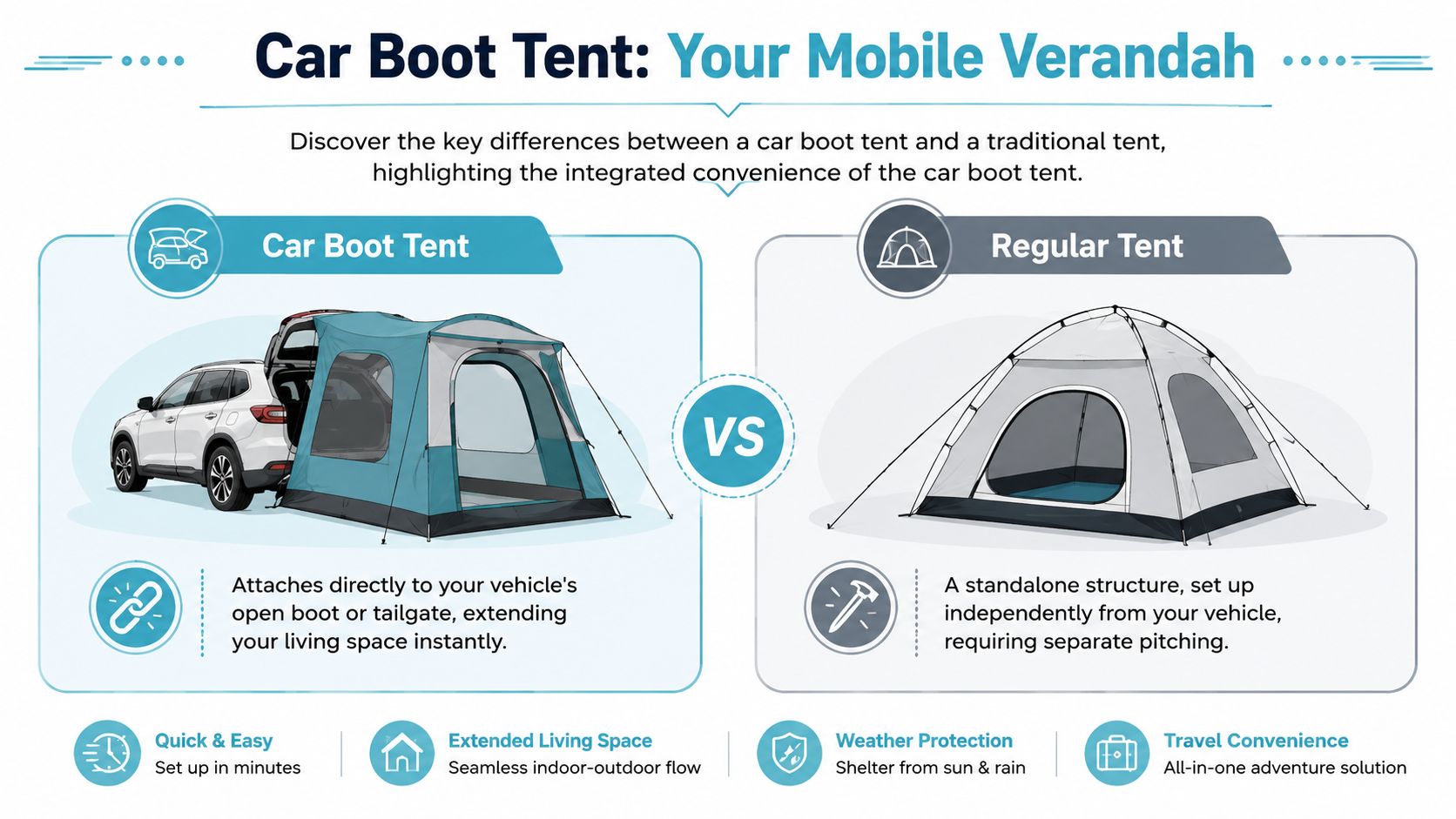
That's the main difference. A regular tent stands on its own. A boot tent uses the car as part of the setup. For beach days, markets, overnight stops, and casual touring, that can feel far less fussy.
Two common styles you'll see
Some rear tents are full enclosures. They create a proper room at the back of the car, handy for sleeping, changing, or keeping chairs and bags out of the weather. Others work more like an awning with walls, giving you cover and airflow without trying to become a second bedroom.
A practical way to think about it is this:
| Style | Best for | Feel at camp |
|---|---|---|
| Full rear enclosure | Overnight trips, family space, privacy | Like adding a room |
| Rear awning shelter | Day stops, shade, quick overnighters | Like adding a verandah |
Where they sit against rooftop tents
Rooftop tents have their own charm, especially if you like being up high. In Australia, some rooftop tents feature UPF 50-plus UV stability and double-stitched waterproof seams, and carsales.com.au's guide to rooftop tents notes that hardshell designs are more compact and durable, while softshell versions often give you a bigger bed and a lower buy-in, though they're usually slower to set up. The catch is obvious for classic VW owners. You must never exceed the roof load maximum.
That's why a boot tent often lands in the sweet spot. You don't load up the roof, you don't climb a ladder at midnight, and you still gain usable shelter.
Size and practicality
Some hatchback-style rear tents are built with a waterproof rating of 1500mm to 2000mm and dimensions around 300x150x210cm, with room to comfortably suit 4 to 6 people and fit many SUVs and vans, according to this rear hatchback tent product listing.
Practical rule: If your camping style is more “pull up and relax” than “build camp for an hour,” a rear tent usually makes more sense than a more complicated system.
If you like comparing styles before buying, this guide on van awning comparisons is a handy reference point.
Will It Fit My Bug or Bus
Classic VW owners get cautious, and rightly so. “Universal fit” sounds lovely on a product page, but a Beetle isn't shaped like a modern SUV, and a Kombi has its own lines, hinges, and quirks.
Start with the opening, not the badge
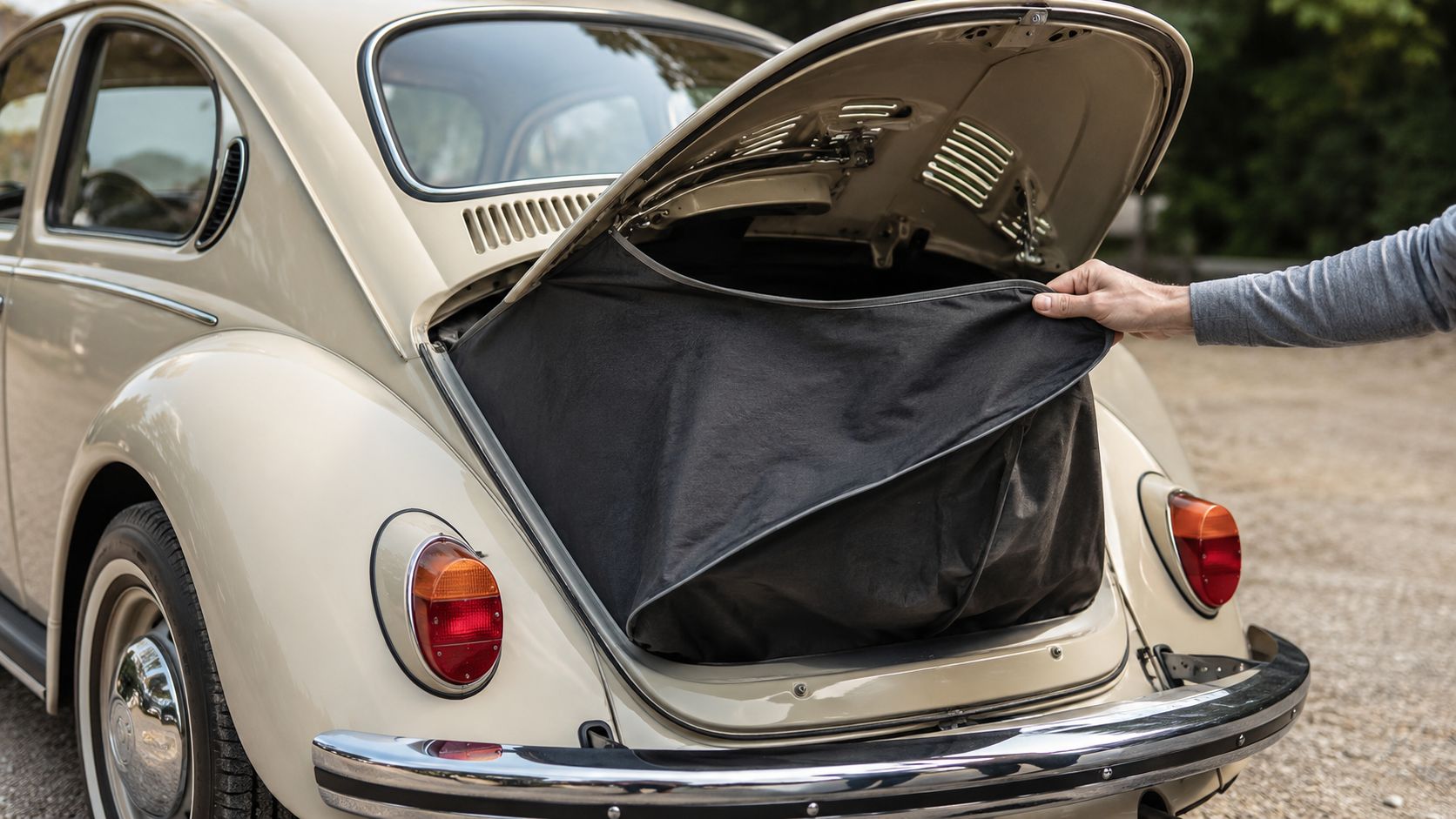
Measure the actual rear opening first. Don't begin with model names or assumptions. Grab a tape and check:
- Width across the opening at the widest usable point.
- Height from the ground to the top edge where the tent sleeve or attachment will sit.
- Clearance around bumpers, spare wheels, ladders, or racks that could interrupt a seal.
A classic Beetle owner may find the boot shape makes a full rear enclosure awkward. A Kombi or later hatch-style VW usually gives you a friendlier opening for this kind of gear.
Protect the paint and old trim
The thing nobody wants is campsite convenience at the cost of scratched original paint or tired rubbers. If your VW still wears older trim, test every contact point before a full trip. Soft cloth barriers, careful strap routing, and avoiding abrasive movement matter more on a vintage vehicle than on a late-model daily.
Some owners prefer attachment systems that avoid heavy tension across painted edges. Others are happy with straps so long as they can control where the load sits. The answer depends on your vehicle, not the marketing copy.
Here's a useful walk-through to keep in mind when you're visualising fit and setup on the car:
A quick fit checklist for old Volkswagens
- For Beetles: Check whether the tent expects a wide hatch opening. Many do.
- For Kombis and vans: Look closely at hatch height and how the fabric seals around corners.
- For modified cars: Roof racks, rear bars, or custom lights can interrupt a neat fit.
- For restored originals: Prioritise gentle contact points over absolute speed.
A “universal” tent can still be the wrong tent if your rear opening is narrow, highly curved, or precious enough that you won't relax once it's attached.
Key Features for the Perfect Coastal Getaway
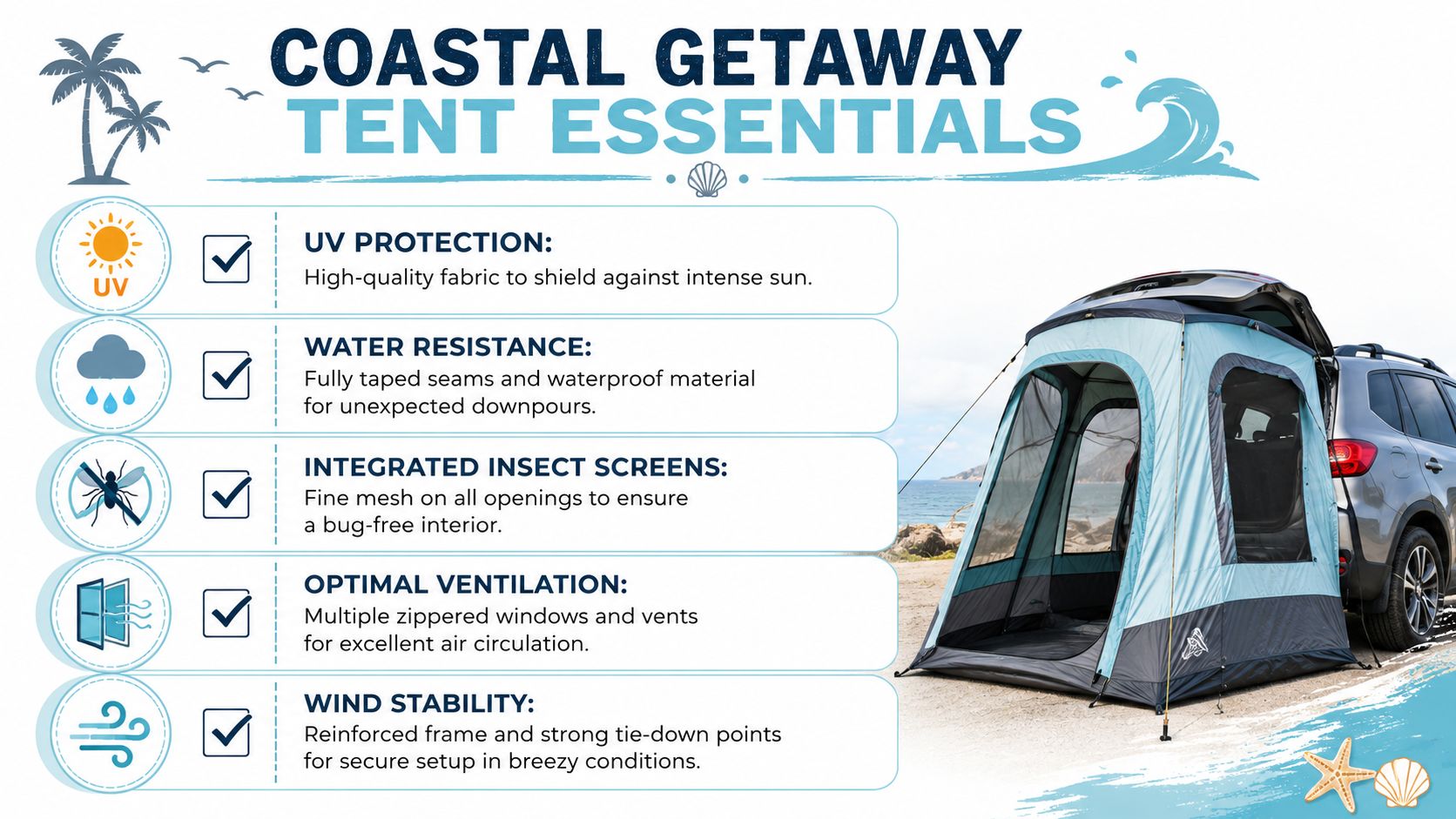
Not all rear tents handle Australian beach camping the same way. A calm inland overnight is one thing. A breezy, damp coastal site after a hot day is another entirely.
Weather protection that actually matters
Fabric quality is where a lot of cheap gear gives itself away. You want material that stands up to sun, shower, and repeated packing. Rooftop tent specs offer a useful benchmark here, with some Australian models featuring UPF 50-plus UV stability and double-stitched waterproof seams for durability in local conditions, as covered earlier in the rooftop tent reference.
For a rear tent, the principle's the same. The more punishment your weekends dish out, the more those build details matter.
Fast setup and stable attachment
One of the smarter modern developments is magnetic attachment. Some tailgate tents use a continuous magnetic strip, and this design can cut assembly time by approximately 40% compared with strap systems while remaining stable in winds up to 45 km/h, according to this tailgate tent field-test video.
That's a genuine quality-of-life feature. Less mucking around in a car park. Less flapping fabric while you sort poles. More time getting the camp chair out.
The shortlist I'd use near the coast
| Feature | Why it matters on a VW trip |
|---|---|
| UV-resistant fabric | Better for exposed beachside camps |
| Waterproof seams | Less stress when weather turns |
| Mesh openings | Helps the tent feel liveable |
| Simple attachment | Useful for quick stops and late arrivals |
| Solid frame and tie-downs | Better manners in coastal wind |
Good camping gear should disappear into the background. If you're thinking about it all night, it's not doing its job.
A buyer's eye, not a browser's eye
When you inspect a tent for car boot use, don't just ask whether it fits. Ask how it behaves. Does the fabric look like it can handle repeated folding? Do the poles feel like they belong outdoors? Do the openings give you enough control over airflow?
That's the same instinct collectors use when judging a licensed VW piece. Finish, detail, construction, and longevity always show its true quality.
Setup Pack-Down and Care Tips
A boot tent should be one of the easiest bits of gear you own. If setup feels like a wrestling match, something's off. Usually it's either the site, the sequence, or trying to rush before the car is parked square.
The easy setup rhythm
Start by parking as level as you can. Open the rear, lay the tent out behind the car, and identify the points that contact paint, trim, or glass before you tension anything. Build slowly the first few times. Familiarity is what makes a fast setup look easy.
A calm routine helps:
- Position first: Face the rear away from the strongest wind if you can.
- Attach lightly: Get the tent sitting in place before tightening every strap or point.
- Raise structure next: Poles and shape come after alignment, not before.
- Tension last: Fine-tune once the whole shelter is standing properly.
Pack-down without regrets
The biggest mistake is stuffing damp fabric away and promising yourself you'll sort it later. You won't enjoy the surprise. Dry it fully before storage whenever possible, then fold it with the attachment points tucked neatly so they don't rub or snag on the next trip.
Cleaning doesn't need to be dramatic. Brush out sand, wipe grime off contact areas, and inspect seams and stress points after each decent run. It's comparable to caring for old VW paint. Gentle attention beats heroic repair.
If a trip ends with wet gear, unpack it at home the same day. Future you will be grateful.
A few habits that save gear
- Use a ground check: Clear shells, sticks, and sharp rubbish before setup.
- Mind the duco: Don't drag wet, sandy fabric across paint.
- Store loosely if you can: Crushed gear ages faster.
- Borrow smart ideas: Some of the same practical thinking behind a Fiamma F45 awning applies here. Clean mounting areas, avoid rushed pack-downs, and keep moving parts and fabric dry.
FAQ for the Aussie VW Adventurer
Can I keep the boot closed for security
Usually, no. That's one of the most frustrating compromises with this style of camping. Most car boot tents need the boot or tailgate open to work, which leaves gear more exposed than many travellers like. It's a real concern in Australia, where 68% of camper survey respondents cited theft as a top issue during multi-day trips, and closed-boot solutions remain rare, as discussed in this community discussion on car tents that don't require an open boot.
If security sits high on your list, look hard at how much of your setup depends on leaving valuables in the car overnight. In practice, many owners shift important items forward into the cabin, keep the rear area tidy, and choose campgrounds with good visibility rather than total seclusion.
What about condensation on humid coastal nights
It's one of the classic pain points. The trick is airflow. If your tent has mesh panels, use them early rather than waiting until things feel clammy. Wet towels, damp wetsuits, and cooking too close to the sleeping area all make it worse.
The awkward bit is that the common workaround, opening things up further, can reduce privacy and make security feel shakier. That's why ventilation design matters so much when you're choosing gear in the first place.
Is a rear tent better for a Kombi than a Beetle
In most cases, a Kombi or hatch-style VW gives you an easier platform because the rear opening is more naturally suited to annex-style camping. A Beetle can still be part of a brilliant camp setup, but you may lean more toward awning-style shelter or simpler shade rather than a big enclosed rear room.
That doesn't make one more “VW” than the other. It just means the body shape steers the setup.
How do I make the campsite feel more Volkswagen
This is the fun bit. Keep it tasteful. A striped chair, a tidy enamel mug, a surf towel over the line, maybe a little nod to the cars you love back home. Plenty of people bring a favourite Kombi or Beetle diecast along for the dashboard or camp table, not because they need to, but because that's the whole point of the hobby. The car, the trip, the memory, the object. It all joins up.
The best VW campsites don't look staged. They just feel like the owner brought their world along for the weekend.
Is a tent for car boot use worth it for short trips
If you do quick overnighters, dawn surf missions, show weekends, or casual coastal runs, yes, it can be one of the handiest pieces of kit you buy. It's especially good when you want shelter without turning the trip into a full camping expedition.
The value isn't only in sleeping space. It's in convenience. Shade while you change. Cover while you sort gear. A dry spot when the weather turns ordinary.
Volkswagen lovers know the best gear does more than serve a purpose. It carries a bit of story with it. If you'd like to bring that same spirit into your home, shed, office, or gift list, have a look through Volkswagen Memorabilia. It's a local Australian shop with VW-themed gifts, licensed diecast favourites, Kombi and Beetle pieces, and the kind of stock that suits collectors who appreciate local stock and fast shipping without the fuss. If your weekends revolve around old Volkswagens, surf culture, and nostalgia, you'll feel right at home there.